Hunting Molokai’s Axis Deer Country
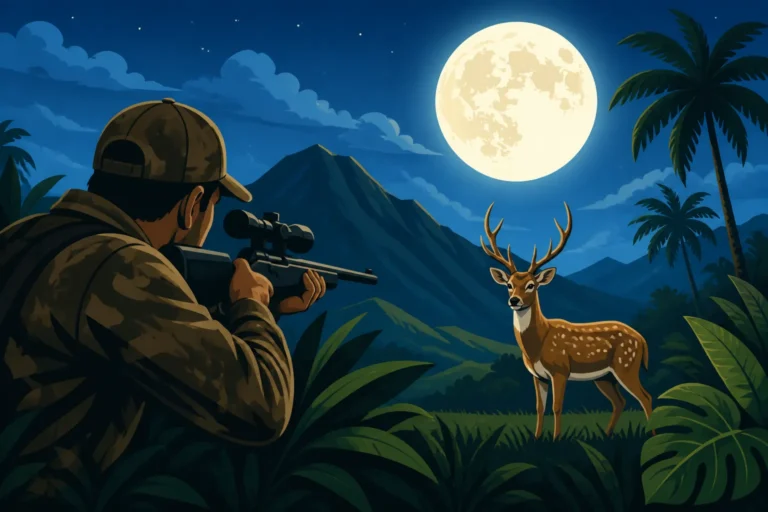
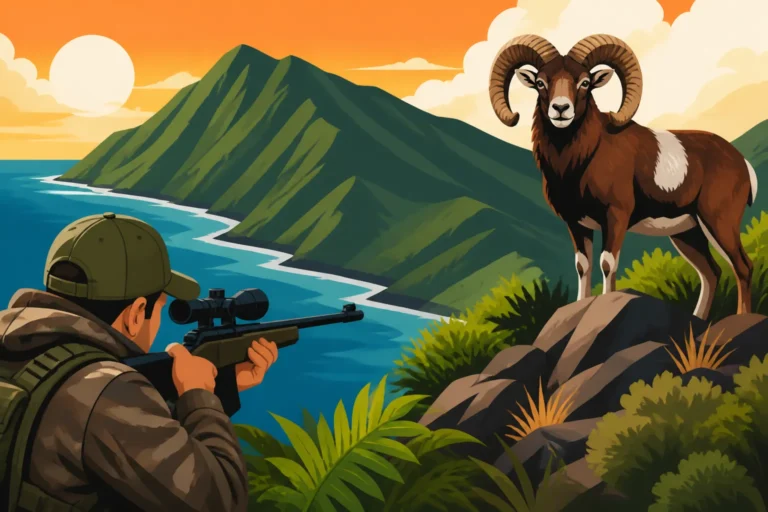
Hunting Molokai's famed Axis deer isn't just another island adventure; it's a test of skill, patience, and a deep respect for a truly wild place. Many hunters dream of pursuing these beautiful, elusive animals in such a remote setting, but the reality of Molokai's rugged terrain, unique access challenges, and the need for meticulous planning can feel overwhelming. This guide will walk you through everything you need to know, from understanding the land and its deer to navigating permits and making sure your hard-earned venison makes it home.
Understanding Molokai's Unique Axis Deer Landscape
Molokai, often called "The Friendly Isle," holds a special allure for Axis deer hunters. Unlike its more populated neighbors, Molokai retains much of its wild character, offering a challenging yet incredibly rewarding hunting experience. The island's geography plays a massive role in where the deer live, how they behave, and ultimately, how you'll need to hunt them.
The Island's Terrain and Its Impact on Deer
Molokai is essentially two volcanoes connected by a dry, low-lying plain known as the central valley. To the west, you have the older, drier West Molokai volcano, characterized by vast tracts of kiawe forest, open grasslands, and rolling hills. This leeward side is significantly drier, with less annual rainfall, which means water sources become magnets for deer, especially during extended dry spells. The deer here are masters of blending into the sparse, thorny vegetation, often moving in the early morning and late evening to avoid the heat.
On the eastern side, the landscape transforms into the East Molokai volcano, a much wetter, greener, and more rugged environment. Here, you'll find dense forests, steep gulches, and dramatic pali (cliffs) dropping into the ocean. While Axis deer prefer the drier, more open areas, you can still find them in the transition zones between the wet forest and the drier slopes, especially where there are pockets of browse. The challenging aspect of hunting this side is the thick cover, which makes spot-and-stalk hunting far more difficult and often calls for a different approach. The central plateau, connecting these two distinct regions, offers a mix of habitats, from drier brush to more moderate forest, and often serves as a transit corridor for deer moving between feeding and bedding areas. Understanding these micro-climates is paramount; a deer bedded in a kiawe flat on the west end is a completely different scenario from one browsing along a gulch rim on the east.
Population Dynamics and Deer Behavior on Molokai
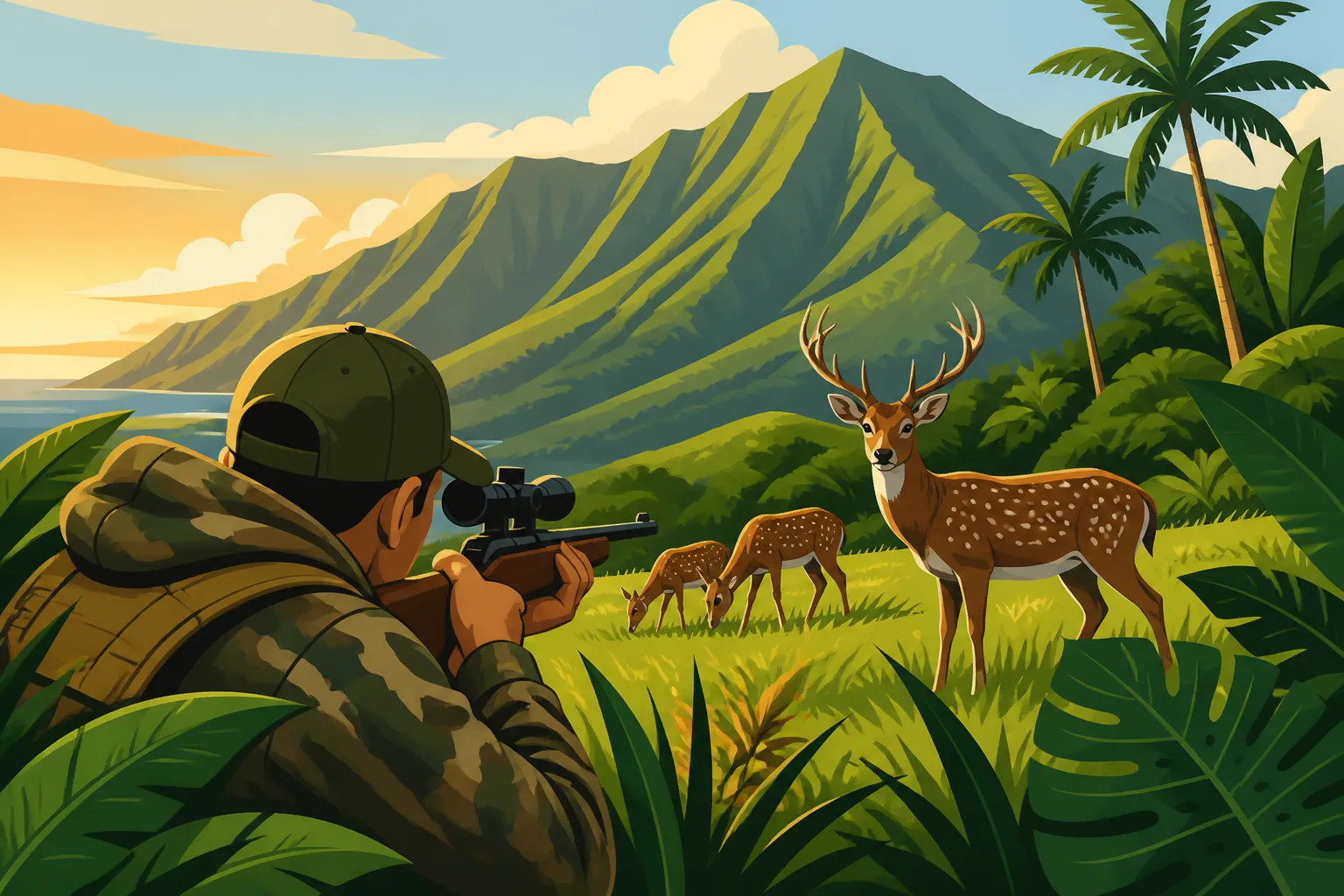
Molokai has a long-standing reputation for producing some of the largest-bodied Axis bucks in Hawaii. While Maui often gets the spotlight for sheer numbers, many hunters whisper about Molokai's "big-bodied Axis Bucks," and for good reason. Several factors contribute to this: genetics, diverse forage, and historically, perhaps slightly less hunting pressure than on some of the more accessible units on Maui. These deer benefit from varied vegetation, from native grasses and kiawe pods in drier areas to various forbs and shrubs. This rich diet, combined with ample space, often allows bucks to grow larger and carry impressive antlers.
The rut timing for Molokai Axis deer, while generally year-round like on other islands, can have peak periods influenced by rainfall and forage availability. Often, after significant rains that green up the landscape, bucks become more active in seeking out does. During these times, you might observe more vocalizations and territorial displays. Understanding these subtle shifts is key. During drier periods, deer tend to congregate more around reliable water sources. You'll often find them moving to water in the early morning or late evening, sometimes even during the middle of the day if it's hot enough. Learning to read Axis deer sign in dry country – fresh tracks around waterholes, rub lines on small trees, and well-used trails – becomes crucial. These animals are incredibly alert, with keen eyesight and hearing, making a stealthy approach absolutely essential. They often feed in open areas at dawn and dusk, retreating into thicker cover during the heat of the day.
Navigating Molokai's Hunting Units and Access
Hunting on Molokai, like other Hawaiian islands, requires careful planning when it comes to understanding hunting units and securing proper access. It's not as simple as just showing up with your gear; you need to know where you can hunt and what permits are required.
Public Hunting Areas and Permit Requirements
Molokai offers a few public hunting units managed by the Hawaii Department of Land and Natural Resources (DLNR), Division of Forestry and Wildlife (DOFAW). These include portions of the Molokai Forest Reserve and certain state-managed lands on West Molokai. Access to these public units typically requires a valid Hawaii hunting license and the appropriate Molokai permit-tag for Axis deer. You can usually find detailed maps and specific rules for these units on the DOFAW website or through resources like GoHunt Hawaii, which simplifies the process of purchasing licenses and checking unit information.
The application process for Molokai permit-tags often involves a lottery draw, especially for the prime seasons or specific unit accesses. It's critical to pay attention to the application deadlines, which are usually several months in advance of the hunt dates. Missing these deadlines means missing your chance for the season. Once drawn, you'll need to secure your physical permit-tag, which often has specific dates and unit restrictions. Always carry your hunting license and permit-tag with you in the field, as enforcement officers conduct regular checks. Remember, these public lands are open to all hunters who draw a tag, meaning you might encounter other hunting parties, especially on popular weekends. It's always a good idea to scout the unit beforehand if possible, or at least study detailed topographical maps, to understand the lay of the land and potential access points.
Gaining Access to Private Ranches
While public land offers opportunities, a significant portion of Molokai's prime Axis deer habitat lies on private ranch lands. Securing access to these private ranches can dramatically increase your chances of a successful hunt, often providing less pressured animals and more flexible hunting dates. Historically, some of the largest bucks have come from well-managed private properties.
The process for gaining access to Molokai private land typically involves contacting the ranch owners or managers directly. This can be challenging, as many ranches have established relationships with local hunters or specific outfitters, or they simply have limited availability. Some ranches might charge an access fee or require you to hire one of their designated guides. Patience and persistence are key here. Start your inquiries well in advance, and always be respectful and professional in your communication. Be prepared to discuss your hunting style, safety protocols, and what you hope to achieve. Building a good relationship with a landowner can open doors to future opportunities. The benefits of private land often include better road access, lower hunter density, and potentially higher deer populations. However, it also comes with a cost, which can range from a few hundred dollars for a day permit to thousands for a multi-day guided experience. Weigh these factors carefully based on your budget and desired hunting experience.
Essential Gear and Preparations for a Molokai Hunt
Molokai's varied terrain, from dry, dusty kiawe flats to rocky, sometimes muddy gulches, demands specific gear and meticulous preparation. Don't underestimate the challenges of hunting in a tropical environment; what works in the mainland mountains might not cut it here.
Weapon Choices and Ammunition Considerations
When it comes to legal weapons for big game in Hawaii, rifles are certainly popular, and a common choice for Axis deer on Molokai falls within the .270 to .30-06 caliber range. These calibers offer a good balance of flat trajectory and knockdown power for deer-sized game, often found at varying distances in Molokai's open and semi-open country. Many hunters also favor cartridges like the 6.5 Creedmoor or .308 Winchester for their accuracy and manageable recoil. Accuracy is paramount; Molokai's open areas can present shots ranging from 50 to 300 yards or more. Practice shooting from various field positions, including off a shooting sticks or a backpack rest, as benches are scarce in the field. Choose good quality expanding bullets designed for deer, as they will ensure clean kills.
For those who prefer archery, Hawaii offers generous archery season windows. A compound bow with a draw weight suitable for ethical deer hunting (typically 50-70 lbs) and a well-tuned arrow setup for Axis deer with sharp broadheads are essential. Fixed blade or mechanical broadheads are both effective, but ensure they are legal and practice with your chosen broadhead to confirm flight characteristics. Muzzleloader hunting in Hawaii also has its dedicated seasons. If you choose this route, a .50 caliber or larger muzzleloader with suitable projectiles will be required. Keeping powder dry on a wet forest hunt can be a challenge, so invest in waterproof containers and learn proper handling techniques. No matter your chosen weapon, ensure it complies with Hawaii's legal weapons by season regulations and that you are proficient with it before heading into the field.
Field Gear, Clothing, and Logistics
Your feet will be your most important tool on Molokai, so invest in quality, broken-in hunting boots with good ankle support. The terrain can be rocky, uneven, and covered in thorny kiawe, making sturdy footwear non-negotiable. Plan for both dry, dusty conditions and potentially wet, muddy areas, especially if you venture into gulches or higher elevations after rain. Layered clothing is key; mornings can be cool, but the sun quickly heats things up. Lightweight, breathable, moisture-wicking materials are ideal. Khaki, olive, or camouflage patterns that blend with dry brush are generally effective. Don't forget a wide-brimmed hat, sunglasses, and plenty of high-SPF sunscreen.
Hydration is critically important. Carry more water than you think you'll need, along with electrolyte supplements. A good day pack to carry water, snacks, a first-aid kit, a headlamp, and game bags is essential. Optics are your best friend for spot-and-stalk tactics on open country. A good pair of 10×42 or 12×50 binoculars and a reliable spotting scope are invaluable for glassing Molokai's open ridgelines and identifying deer at long distances. Since cell service is often unreliable or nonexistent in many hunting areas, a GPS unit or a reliable hunting app like OuterSpatial or onX Hunt (download maps beforehand) is crucial for navigation and staying found. A quality knife for field dressing, rope for packing out meat, and sturdy game bags are also non-negotiable. For logistics, consider renting a 4×4 vehicle, as many access roads on Molokai are unpaved, rough, and require high clearance. Flying to Molokai involves either a short inter-island flight from Oahu or Maui, or potentially a private charter. Remember to check regulations for inter-island travel with a firearm if you're bringing your own.
Effective Hunting Strategies for Molokai Axis Deer
Hunting Molokai Axis deer is a game of patience, stealth, and understanding their movements within the unique island environment. Whether you're in wide-open country or thicker brush, having a well-thought-out strategy will increase your chances of success.
Spot-and-Stalk Tactics in Open and Brushy Country
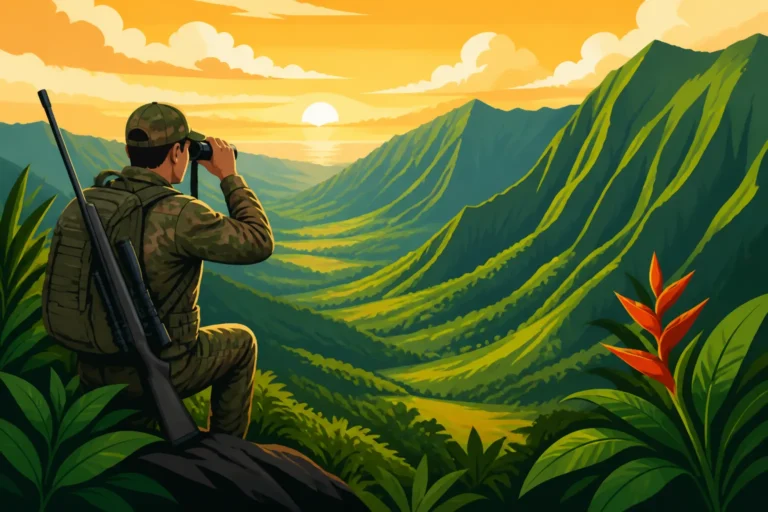
Molokai's drier, leeward side, particularly the west end, offers expansive views that lend themselves perfectly to classic spot-and-stalk hunting. This involves finding high vantage points at first light or late afternoon and meticulously glassing the landscape. Use your binoculars and spotting scope to systematically scan every fold, shadow, and patch of cover. Axis deer often bed down in sparse shade during the hotter parts of the day, so look for tell-tale shapes or flicking ears. Once a deer or herd is spotted, the real challenge begins: planning your approach. This requires careful consideration of the wind, terrain, and cover.
Molokai's trade winds can be your friend or foe, depending on your position. Always try to approach with the wind in your face or quartering. The island's thermals can also shift as the day warms up or cools down, making it crucial to be aware of how the air currents are moving. Use every bit of terrain feature – a small rise, a dry streambed, a kiawe thicket – to conceal your approach. Moving slowly, stopping frequently to glass, and minimizing noise are paramount. In thicker kiawe flats or dry gulches, where visibility is limited, you might need to employ a slower, more deliberate still-hunting approach, moving only a few steps at a time and pausing to listen and look for movement. These deer are incredibly wary, so any sudden movement or sound will send them bounding away. Patience is key; a stalk can sometimes take hours to execute properly.
Utilizing Water Sources and Feed Areas
In Molokai's often dry climate, water is a precious commodity, and understanding its role in deer movement is a powerful hunting strategy. During dry seasons, reliable water sources – whether natural springs, stock ponds, or even cattle troughs – become magnets for Axis deer. Concentrating your efforts around these areas, particularly at dawn and dusk, can be highly productive. Deer will often travel significant distances to water, creating well-worn trails that can indicate their travel routes. Setting up quietly downwind of a water source before first light or in the late afternoon can provide excellent ambush opportunities.
Beyond water, identifying preferred feed areas is also crucial. Axis deer are browsers and grazers, and their diet shifts with the seasons and available vegetation. Look for areas with fresh browse, such as new growth on kiawe, various forbs, and grasses that have greened up after rain. In agricultural areas bordering wildlands, deer might also frequent ranch pasture boundaries or old pineapple fields, especially at night. During the day, they will often retreat to thick bedding cover close to these feeding areas. Scouting for fresh tracks, droppings, and browse lines will give you valuable clues about where the deer are feeding and bedding. Pay attention to the transitions between different habitat types, such as the edge of a kiawe forest meeting an open grassland, as these ecotones are often active zones for feeding deer. Understanding why Axis deer rut timing is different and how that influences their movement patterns can also provide a strategic advantage, especially if you're targeting a mature buck.
Post-Harvest Care and Logistics on Molokai
Successfully taking an Axis deer on Molokai is just the first step. The real work begins after the shot, especially when dealing with Hawaii's warm climate and the logistics of getting your meat home. Proper field care is critical to ensure your venison is high quality.
Field Dressing and Cooling Meat in Tropical Heat
Hawaii's heat and humidity are unforgiving to game meat. As soon as your animal is down, the clock starts ticking. The absolute priority is to get the animal field dressed as quickly as possible. Remove all internal organs immediately to allow the carcass to begin cooling from the inside out. Carrying a sharp, clean field dressing knife and some latex gloves is always a good idea. Once field dressed, if feasible, get the animal to a shaded, breezy spot. The next critical step is quartering the animal. This means breaking it down into manageable pieces – usually two hindquarters, two front shoulders, and the backstraps and tenderloins. This allows for maximum airflow around the meat and is often necessary for packing meat out of a Hawaii gulch or remote area.
Even after quartering, the meat needs to cool rapidly. Many hunters will immediately place quarters into breathable game bags to protect them from insects and dirt while allowing air circulation. If you have access to ice, pack it around and within the game bags, especially in a good cooler. A trick is to use frozen water bottles or gallon jugs, which last longer than loose ice. Cooling meat fast on a Hawaii hunt is paramount; neglecting this step can lead to spoilage very quickly. Some hunters even carry a small, portable shower bag to rinse off any residual blood before bagging, further helping to prevent bacterial growth.
Transporting Meat Off the Island
Once your Axis deer is processed and cooled, the next hurdle is transporting it, especially if you plan to take it off Molokai or back to the mainland. For inter-island travel on a Hawaii hunt, you'll need to adhere to specific agricultural inspection requirements. All meat must be properly packaged, typically in sealed, leak-proof coolers or insulated boxes. It's often recommended to freeze the meat solid before transport to help it maintain temperature.
When flying between islands or back to the mainland, check with your airline regarding their specific policies for transporting game meat. Generally, meat must be frozen solid and packed in an airline-approved cooler or shipping container. Some hunters opt to use a local game processor on Molokai or Maui (if transporting to Maui first) who can professionally cut, wrap, and freeze their meat to USDA standards, often assisting with packaging for air travel. Remember, there are often rules on selling wild game meat, so this is typically for personal consumption. Ensure you have your hunting license and tag information readily available, as you may need to provide proof of legal harvest during agricultural inspections or airline check-in. This final logistical step is just as important as the hunt itself to ensure your hard-earned venison makes it to your freezer in prime condition.
Molokai Hunting Aspects Comparison
| Aspect | Public Hunting Units (e.g., Molokai Forest Reserve) | Private Ranch Lands (e.g., West Molokai Ranches) |
|---|---|---|
| Access | Lottery draw for permits, designated entry points. | Direct arrangement with landowner, potentially guided. |
| Hunting Pressure | Can be higher, especially on weekend and holiday hunting rules | Generally lower, more controlled hunter numbers. |
| Cost | Hawaii hunting license + permit-tag fee. | License + permit-tag + private land access fee/guide fee. |
| Terrain | Varied, from dense forest to dry slopes. | Often encompasses prime Axis habitat, more manageable. |
| Success Rate | Dependent on hunter skill, scouting, and pressure. | Often higher due to lower pressure and better management. |
| Services | No amenities, purely self-guided. | Some may offer guides, lodging, or meat processing. |
| Flexibility | Fixed season dates, unit restrictions. | More flexible dates and areas, subject to ranch rules. |
Disclaimer
Please be aware that hunting regulations in Hawaii are subject to change. Always consult the most current Hawaii Department of Land and Natural Resources (DLNR) Division of Forestry and Wildlife (DOFAW) regulations before planning any hunting trip. This guide is for informational purposes only and does not supersede official state regulations.