Shotgun Rules for Game Mammals
Navigating the unique hunting regulations in Hawaii can feel like trying to untangle a particularly stubborn fishing knot, especially when it comes to understanding what you can and can't use for game mammals. Many of us come from places where shotguns are strictly for birds or small game, so the idea of using one for a wild pig or even a deer in Hawaii can be confusing. This guide is here to unravel those rules, specifically focusing on the ins and outs of shotgun legality for game mammals in the islands, so you can hunt confidently and ethically.
Understanding Hawaii's Shotgun Rules for Game Mammals
When you're out in the field, whether it's the thick guava tangles of a pig hunt or the open kiawe flats for an axis deer, knowing your legal weapon limits is paramount. Hawaii's Division of Forestry and Wildlife (DOFAW) sets out very specific guidelines, and for shotguns, it boils down to a few critical distinctions. It's not as simple as just grabbing your scattergun; the type of shotgun, the ammunition, and even the species you're pursuing all play a role. Many hunters get tripped up here, assuming a shotgun is a shotgun, but the regulations dive a bit deeper than that.
The primary rule to engrave in your mind is that buckshot is generally prohibited for taking game mammals in Hawaii. This is a crucial departure from what many hunters might be accustomed to in other states. Instead, if a shotgun is allowed for game mammals, it's almost exclusively when loaded with slugs. This isn't just a suggestion; it's a hard and fast rule designed to ensure clean, ethical kills on larger animals. Think of it like this: buckshot spreads, leading to potential wounding over a larger area, while a slug acts like a single, large bullet, intended for precise energy transfer. This distinction often surprises new hunters or those visiting from the mainland, highlighting why it's so important to dig into the local regulations before you even pack your bags.
Shotgun Legality by Species: A Closer Look
The specific rules for using a shotgun for game mammals vary not just by island and hunting unit, but also by the species you're targeting. It’s not a one-size-fits-all situation, and understanding these nuances is key to staying within the law and ensuring a successful hunt.
Feral Pigs and Goats: Where Shotguns Often Fit In
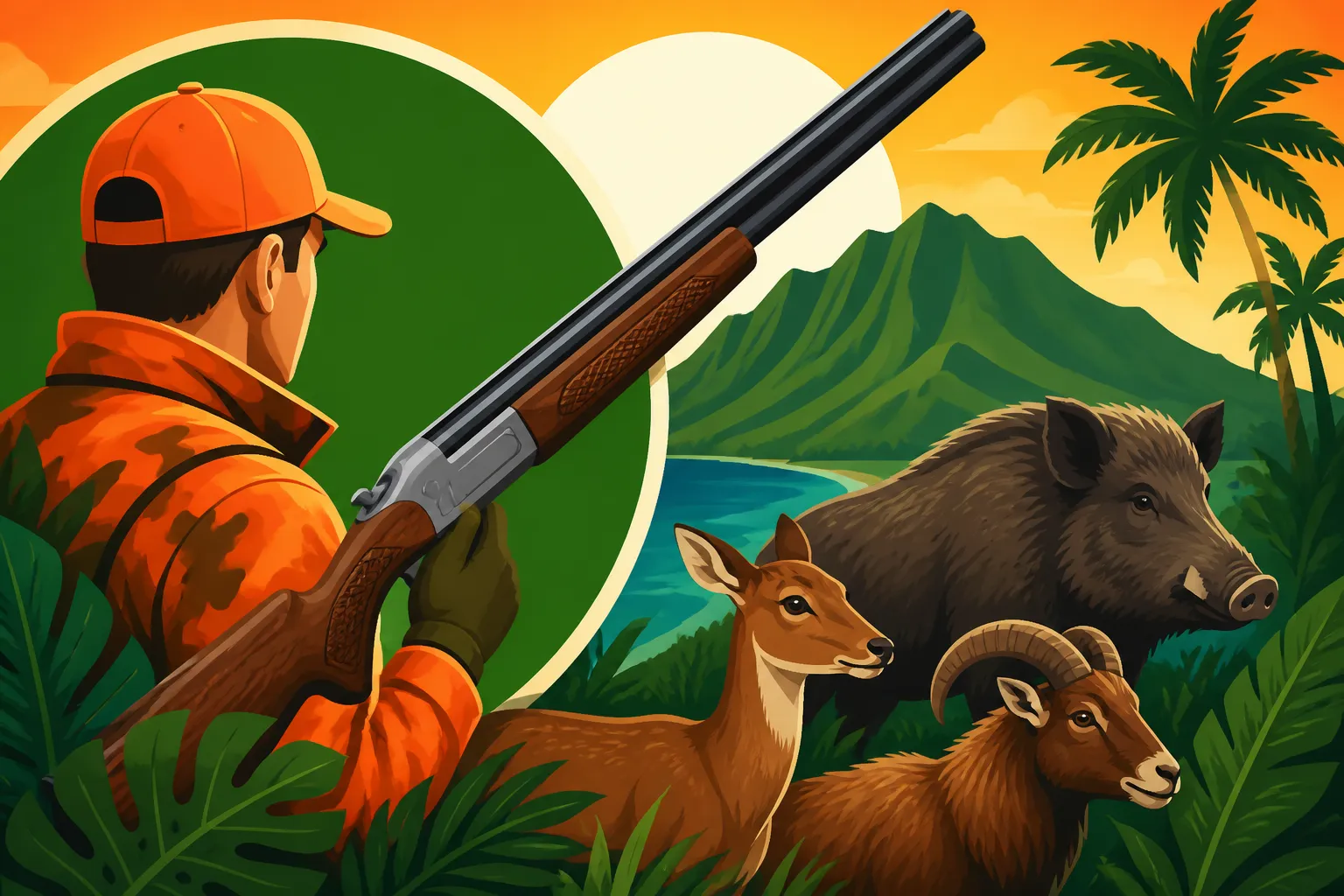
For most hunters in Hawaii looking to use a shotgun for game mammals, feral pigs and goats are usually the primary targets. These animals often inhabit dense, brushy terrain where shots are typically close-range, making a slug-loaded shotgun a viable option. Imagine tracking a big boar through a jungle-like gulch on the Hilo side of Hawaii Island, where visibility is limited to a few yards. In such scenarios, a powerful slug can be highly effective.
DOFAW regulations generally permit the use of shotguns for feral pigs and goats, provided you are using single projectile ammunition, meaning slugs. This means no buckshot, no birdshot, just slugs. The common gauges, like 12-gauge or 20-gauge, are typically acceptable, but always double-check the latest Hawaii's Legal Weapons by Season information for any changes. It’s important to match your slug type to your shotgun barrel – a smoothbore barrel will typically shoot Foster slugs best, while a rifled barrel is designed for sabot slugs, which offer better accuracy at slightly longer ranges. For pigs, especially when hunting with dogs, the close-quarters nature of the encounter means a shotgun can be a powerful and effective tool, assuming you have proper shot placement. Similarly, when hunting goats in the steep, rocky terrain of, say, Kauai's canyons, you might find yourself needing a quick, decisive shot at relatively close range. Again, slugs are the only legal option here.
Axis Deer and Mouflon Sheep: More Restrictive Use
When it comes to the larger game mammals like Axis deer and Mouflon sheep, shotgun use becomes much more restrictive, and in some cases, outright prohibited depending on the specific hunt and unit. These animals, particularly Axis deer, often occupy more open terrain where longer shots are common. A shotgun, even with slugs, has a more limited effective range compared to a rifle, and its accuracy at distances beyond 75-100 yards can be questionable, making ethical shots challenging.
For Axis deer, found on islands like Maui, Lanai, and Molokai, shotgun use for general season hunts is typically not the preferred or even permitted method, and you'll find most hunters opting for high-powered rifles or bows. However, there might be very specific, limited drawn hunts or special access areas where shotguns with slugs are explicitly allowed. These are rare exceptions, though. For example, some management areas might have specific rules for youth hunts or disabled hunter opportunities that might temporarily allow shotguns, but this is not the norm. Always, and I mean always, consult the specific hunt rules and unit pamphlets available through DOFAW or via resources like GoHunt before planning an Axis deer hunt with a shotgun.
Mouflon sheep, typically found in the high-elevation, open, and rugged terrain of Hawaii Island, present similar challenges. Shots on a Mauna Kea mouflon ram can be long and demanding, often exceeding the practical and ethical range of a shotgun slug. It's rare to find a legal season or unit where shotguns are permitted for Mouflon sheep, again due to the nature of the hunt and the animals' habitat. Most mouflon hunts are geared towards rifles or muzzleloaders, as outlined in guides like Mouflon Sheep Hunting on Hawaii Island.
Black-Tailed Deer: A Unique Case
Kauai's Black-Tailed deer are Hawaii's only deer species not named Axis, and they present another unique situation. These deer are generally hunted in dense forest or canyon country, which might seem suitable for a shotgun. However, like Axis deer, regulations for Black-Tailed deer hunts on Kauai are generally tailored towards rifles and archery equipment. If shotguns are ever permitted, it would be with slugs only and under very specific, likely drawn hunt conditions or within particular units. Given their habitat, understanding Black-Tailed Deer Hunting in Hawaii is crucial, and it's highly advised to assume shotguns are not a primary legal weapon unless explicitly stated otherwise for a specific hunt.
Ammunition and Performance: Slugs Are Not All Equal
Once you understand that slugs are the only legal shotgun ammunition for game mammals in Hawaii, the next step is to understand their performance characteristics. Not all slugs are created equal, and choosing the right one for your shotgun and the intended game can significantly impact accuracy and effectiveness.
Slug Types and Barrel Compatibility
There are primarily two types of shotgun slugs you'll encounter:
- Foster Slugs: These are traditional "rifled" slugs, designed to be fired from smoothbore shotgun barrels. The "rifling" on the slug itself is actually there to help it compress and pass through chokes, not to impart spin. They are relatively inexpensive and perform well at shorter ranges, typically up to 75-80 yards, making them suitable for pigs in dense cover.
- Sabot Slugs: These slugs are designed for rifled shotgun barrels. The slug itself is smaller than the bore and encased in a plastic sabot (a "shoe") that engages the rifling, imparting spin for greater accuracy and a flatter trajectory. Sabot slugs, when paired with a rifled barrel, can extend the effective range of a shotgun to 125 yards or even slightly more, depending on the load and shooter. They also tend to have better ballistic coefficients and carry more energy downrange.
The key takeaway here is barrel compatibility. Firing sabot slugs from a smoothbore barrel will yield poor accuracy, and firing Foster slugs from a rifled barrel can cause leading and reduced performance. Always match the slug to your barrel. When considering the ethical aspects of hunting, ensure you've practiced extensively with your chosen ammunition to understand its limitations.
Practical and Ethical Range Limitations
Even with the best sabot slugs and a rifled barrel, a shotgun is fundamentally a shorter-range weapon than a rifle. While modern slugs can be surprisingly accurate, consistently making ethical shots on game mammals beyond 100-125 yards is challenging for most hunters. In the rugged, undulating terrain of Hawaii, accurately judging distance can be tough, and pushing the limits of your shotgun's effective range increases the risk of wounding an animal rather than making a clean kill.
For example, when hunting Hunting Pigs in Hawaii's Rainforest Gulches, where shots might be 10-30 yards, a slug-loaded shotgun is perfect. But for something like Spot-and-Stalk Axis Deer in Hawaii across an open lava field or pasture, a rifle is almost always the more ethical choice. Always know your personal maximum effective range, and stick to it. This means practice, practice, practice at the range, and being honest with yourself about your capabilities.
Navigating Regulations and Resources
Understanding Hawaii's shotgun rules is just one piece of the puzzle. The overarching framework of permits, licenses, and specific unit rules dictates when and where you can hunt.
The Importance of Current Regulations
Hawaii's hunting regulations, like those in many states, can change. Seasons might shift, unit boundaries might be adjusted, and weapon rules can sometimes be updated. It's imperative that you always consult the most current Hawaii Administrative Rules (HAR) and any Public Hunting Area (PHA) announcements from DOFAW. You can often find these detailed regulations on the official DOFAW website.
Before every season, I make it a point to download the latest hunting regulations pamphlet. It’s like a bible for hunters here. While online searches are helpful, having the official pamphlet is your best bet for the most accurate and up-to-date information. Pay close attention to the sections on Hawaii Game Mammal Seasons and Hawaii's Hunting Units and How They Work, as these will often contain weapon-specific allowances or prohibitions.
Licensing, Permits, and Check-In Procedures
To legally hunt any game mammal in Hawaii, you'll need a valid Hawaii hunting license and, for most species on certain islands (like Axis deer or Mouflon sheep), a specific permit-tag. You can conveniently acquire these through the online GoHunt portal. GoHunt makes the process incredibly straightforward, allowing you to purchase licenses, apply for drawn hunts, and secure your permit-tags all in one place. It's a lifesaver compared to the old days of needing to visit a physical office.
Furthermore, many public hunting units in Hawaii require you to Checking In and Out of Hawaii Hunting Units for every hunt. This often involves using a check station or, increasingly, the OuterSpatial app. Always check the rules for your specific unit. This process isn't just bureaucratic; it's how DOFAW monitors hunter activity, collects harvest data, and ensures safety in the field. Forgetting to check in or out can lead to fines, so don't skip this critical step!
Table: Shotgun Legality for Hawaii Game Mammals (with Slugs)
| Game Mammal | General Legality (Slugs Only) | Common Hunting Terrain | Primary Alternative Weapons | Key Considerations |
|---|---|---|---|---|
| Feral Pig | Permitted | Dense jungle, gulches, thickets | Archery, Rifle, Dog & Knife | Excellent for close range, thick cover. |
| Feral Goat | Permitted | Steep cliffs, canyons, dry brush | Archery, Rifle | Effective in steep terrain with precise shots. |
| Axis Deer | Rarely Permitted | Open flats, sparse forests, pastures | Archery, Rifle, Muzzleloader | Check specific unit/draw rules; longer range often needed. |
| Mouflon Sheep | Rarely Permitted | High elevation, open lava, mamane | Archery, Rifle, Muzzleloader | Not suitable for typical long-range alpine shots. |
| Black-Tailed Deer | Rarely Permitted | Dense forests, canyons (Kauai) | Archery, Rifle, Muzzleloader | Check specific unit/draw rules; generally rifle/bow country. |
Note: "Rarely Permitted" implies that while some specific, limited hunts or units might allow shotguns with slugs, it is not the general rule, and hunters should always confirm current regulations for their specific hunt.
Before you head out, whether you're bringing a shotgun, rifle, or bow, remember your Hawaii Blaze Orange and Safety Rules. Safety first, always. And if you have any doubts, don't hesitate to reach out to a local DOFAW office. They are there to help ensure everyone understands the rules and has a safe, legal hunt.
Disclaimer
Please remember that hunting regulations are subject to change. While every effort has been made to provide accurate and up-to-date information, it is the individual hunter's responsibility to consult the most current official Hawaii Department of Land and Natural Resources (DLNR) and Division of Forestry and Wildlife (DOFAW) regulations before engaging in any hunting activity. This guide is for informational purposes only and should not be considered a substitute for official legal documentation.