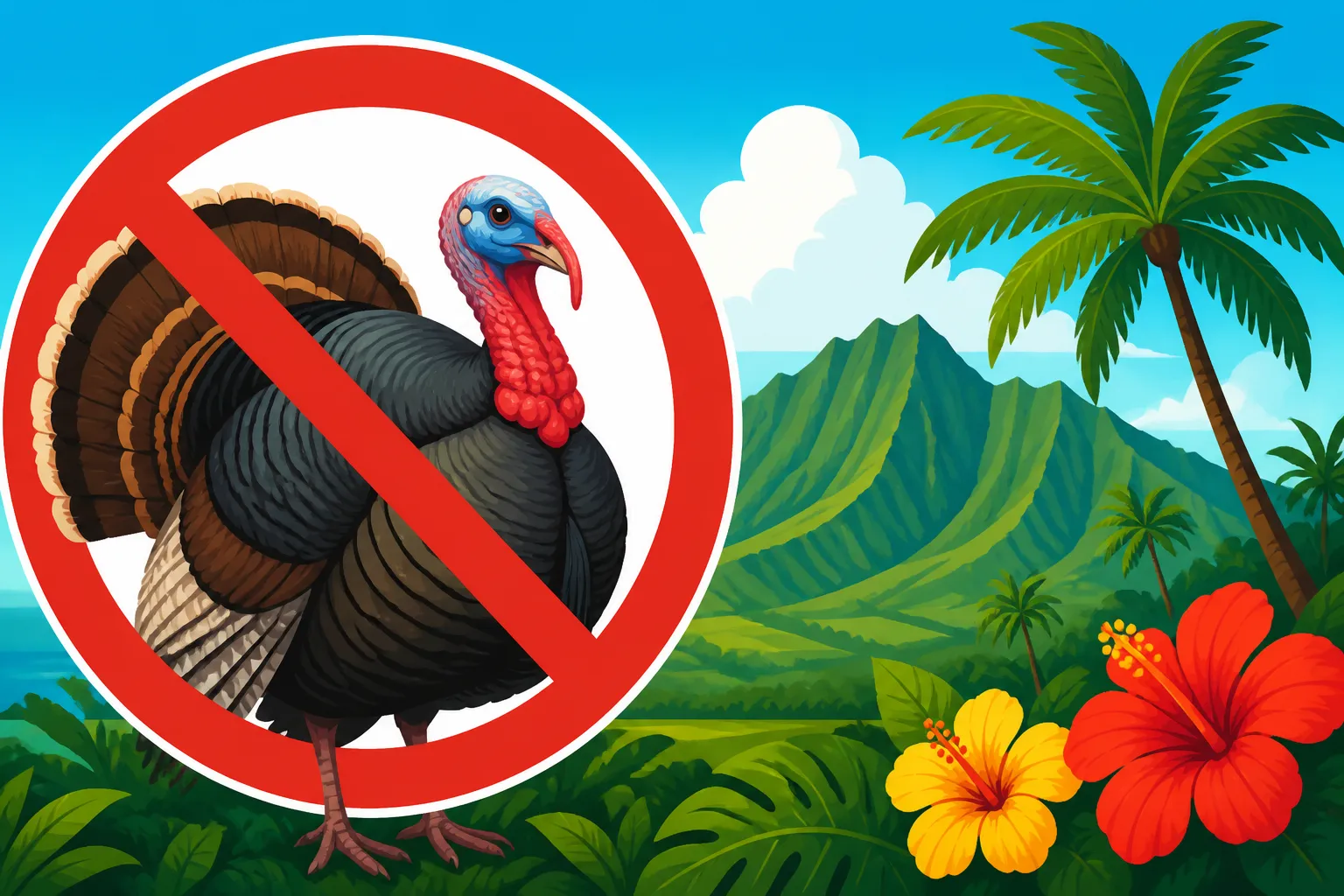
Why Wild Turkey Is Closed in Hawaii
It’s a common sight for many hunters, especially those visiting or new to the Big Island, to spot a majestic wild turkey strutting across a dry pasture or through the edge of a koa forest, and an immediate thought sparks: "Can I hunt that?" Unfortunately, despite their visible presence and the hunting opportunities they offer on the mainland, wild turkey hunting remains firmly closed in Hawaii. This comprehensive guide will dive into the fascinating history of these birds in the islands, explore their current status, and explain the critical conservation reasons that keep them off the legal game list, offering a realistic look at why things are the way they are.
Understanding Hawaii's Wild Turkeys
When you think of wild turkeys, Hawaii might not be the first place that comes to mind, but they've been a part of the island landscape for quite some time. Their journey here, much like many of our other game species, is a tale of introduction and adaptation.
The Arrival of Turkeys in the Islands
Wild turkeys (specifically the Rio Grande subspecies) weren't always here; they were introduced to Hawaii in the early 1960s, primarily on Hawaii Island (the Big Island). This wasn't a random occurrence but a deliberate effort to diversify the hunting opportunities available in the state. Historically, game bird introductions were a common practice to establish huntable populations for recreation and food sources. The hope was that these robust birds would thrive in certain habitats, much like other introduced species have.
They were released in areas with suitable habitat, particularly where there was a mix of open grazing lands and adjacent forest cover, offering both food and roosting sites. Think of the expansive ranch lands and forest edges on the slopes of Mauna Kea and Mauna Loa, or the dry leeward sides of the island. The initial releases were small, a cautious experiment to see if the birds could establish a self-sustaining population. While the intent was to eventually have a season, the complex ecological balance and the needs of a growing population always had to be the priority.
Where Hawaii's Wild Turkeys Live
Today, the primary population of wild turkeys in Hawaii is found exclusively on the Big Island. You'll often spot them in the drier, upland regions, particularly around the ranches and forests on the slopes of Mauna Kea and Mauna Loa. Areas like the Pohakuloa Training Area, the mamane-naio forests of Mauna Kea, and the vast open pastures of Parker Ranch are prime locations where these birds roam. They favor a mosaic landscape—places where grasslands meet forested areas, providing them with insects, seeds, and fruits for foraging, and tall trees for roosting safely at night.
They're not widely distributed across all islands; attempts to establish populations on other islands either never happened or simply didn't take hold successfully enough to warrant a hunting season. So, when people talk about Hawaii's wild turkeys, they're almost always referring to those majestic birds on Hawaii Island. If you're out scouting for mouflon sheep on Mauna Kea, you might just get a glimpse of a flock of turkeys at first light, a testament to their successful adaptation to this unique environment.
Their Current Status and Population Trends
The wild turkey population on the Big Island has indeed established itself and continues to persist. However, the exact population numbers can fluctuate based on environmental conditions like drought, which impacts food availability and nesting success. The Hawaii Department of Land and Natural Resources (DLNR), through its Division of Forestry and Wildlife (DOFAW), closely monitors these populations. While there isn't a precise, island-wide census released regularly, their assessment indicates that the population, while stable in some areas, isn't robust enough or widespread enough to sustain regulated hunting pressure.
Unlike some game birds that have established very strong numbers, the wild turkey populations, while visible, are not considered to have reached a threshold that would allow for consistent, ethical harvest across public hunting units. This careful monitoring is part of DOFAW's broader mandate to manage all game species responsibly. This ongoing evaluation is why hunters won't find wild turkeys listed among the species available during Hawaii Game Bird Seasons and Bag Limits.
Why the Seasons Remain Closed
The absence of a wild turkey hunting season in Hawaii isn't due to a lack of interest from hunters, but rather a carefully considered decision based on conservation principles and scientific assessments.
Conservation Goals and Management Challenges
DOFAW's primary goal for any introduced species that becomes a game animal is to ensure a healthy, sustainable population that can withstand hunting pressure year after year without declining. For wild turkeys in Hawaii, several challenges contribute to their closed status. Firstly, their distribution is relatively limited to specific areas on the Big Island, rather than being widespread across suitable habitats. This concentration means that any hunting pressure, even light, could disproportionately impact local populations.
Secondly, the overall population numbers, while present, are not considered high enough to allow for a harvest that would satisfy hunter demand without risking the long-term viability of the species. Unlike some other game birds that reproduce rapidly and have extensive ranges, the wild turkey population dynamics in Hawaii require more conservative management. There's also the question of habitat suitability; while they've adapted well to certain niches, expanding their range significantly might be difficult in Hawaii's diverse and often fragmented landscapes.
The Role of the Department of Land and Natural Resources DOFAW
DOFAW is the state agency responsible for managing Hawaii's wildlife, including all game species. Their decisions regarding hunting seasons, bag limits, and whether a species can be hunted at all, are rooted in scientific data, population surveys, and long-term conservation strategies. For wild turkeys, DOFAW has maintained a closed season because current data doesn't support opening one. This isn't a judgment against hunting, but a pragmatic conservation decision. They are continually assessing populations through various methods, but until specific benchmarks are met, the season remains closed.
DOFAW also manages other game birds, such as francolins, pheasants, and doves, which do have established seasons and bag limits. The criteria for opening a season are strict: the population must be self-sustaining, resilient to harvesting, and adequately distributed to support public hunting opportunities across designated units. This due diligence ensures that when hunters do head out, they're participating in a responsible and sustainable activity. When you purchase your Hawaii Hunting Licenses and What They Cost, or apply for a Hawaii Game Bird Stamp, you're contributing directly to these management and conservation efforts, even for species like the wild turkey that aren't currently hunted.
Legal Framework and Species Protection
Under Hawaii's hunting regulations, wild turkeys are explicitly listed as a closed species. This legal designation means that it is unlawful to hunt, capture, or harass these birds. This legal framework is essential for protecting species that are either rare, have struggling populations, or have not yet reached a point where they can be sustainably managed for hunting. It's similar to how certain native birds are completely protected under federal and state law, but in the case of wild turkeys, it's about population management for an introduced species.
The regulations are clearly outlined in the Hawaii Administrative Rules and are communicated through DOFAW's annual hunting announcements and their website. Hunters must always abide by these rules, and any violation can lead to significant penalties. This strict adherence helps maintain order and ensures that all hunters respect the delicate ecological balance that DOFAW strives to maintain across Hawaii's Hunting Units and How They Work. Even for species like pigs or goats, where hunting is often encouraged for ecological reasons, there are still specific legal weapons by season and bag limits that must be followed.
The Path to Potential Future Opportunities
While wild turkey hunting is currently closed in Hawaii, it doesn't mean the door is shut forever. Conservation is a dynamic field, and with proper management and favorable conditions, things can always change.
Population Benchmarks for Future Consideration
For DOFAW to even consider opening a wild turkey season, specific population benchmarks would need to be consistently met over several years. This typically involves:
- Robust and Growing Numbers: The population would need to show significant and sustained growth, indicating that the birds are not just surviving, but thriving and expanding their range. This isn't just about seeing more turkeys, but about scientific data confirming strong recruitment rates (young birds surviving to adulthood) and healthy breeding populations.
- Expanded Distribution: A huntable population needs to be distributed across enough accessible public hunting land to support recreational hunting without putting undue pressure on localized groups. If turkeys are only found in a few small pockets, opening a season would concentrate hunters, which is usually not sustainable.
- Ecological Impact Assessment: Before introducing any new hunting opportunity, DOFAW would also assess the broader ecological impacts. While turkeys are generally considered less impactful than, say, feral pigs, any new hunting activity requires careful consideration of its effects on the ecosystem, especially given Hawaii's unique biodiversity.
These benchmarks are not arbitrary; they are based on established wildlife management principles used worldwide to ensure sustainability. It’s a slow, deliberate process, not something that happens overnight.
Community Engagement and Hunter Perspectives
The hunting community in Hawaii is incredibly passionate, and many hunters are keenly aware of the potential for a wild turkey season. Should DOFAW ever consider opening a season, there would undoubtedly be extensive public outreach and community engagement. This process would involve public hearings, opportunities for hunters to provide input, and transparent communication about the scientific data supporting the decision.
Organized groups like the Hawaii State Archery Association or local chapters of national hunting organizations often play a role in advocating for new opportunities or providing feedback on proposed regulations. While organizations like GoHunt are fantastic resources for planning hunts and understanding regulations elsewhere, in Hawaii, the direct engagement with local DOFAW offices and public forums is key for specific species management decisions. Hunters are often the eyes and ears on the ground, and their observations, combined with scientific data, can be invaluable. It’s also crucial that hunters understand the broader context, including why a species like the wild turkey is closed in Hawaii, and how their participation in other hunts, like Hunting Hawaii's Feral Pigs or Hawaii Game Bird Hunting, contributes to overall wildlife management.
Ongoing Monitoring and Management Efforts
DOFAW's work is continuous. Even without an open hunting season, wildlife biologists and technicians are out in the field, monitoring the health and distribution of wild turkey populations. This ongoing effort might include:
- Opportunistic Sightings Data: While not a formal census, observations by field staff and even reported sightings from the public can help track general trends.
- Habitat Assessments: Evaluating the quality and extent of suitable turkey habitat, and understanding how environmental changes (like invasive plant spread or drought) might affect it.
- Disease Monitoring: Keeping an eye out for any signs of disease that could impact the population, a critical aspect of managing any wildlife.
It's through this persistent, behind-the-scenes work that DOFAW ensures that if conditions ever become suitable for a wild turkey season, they will have the data and management plans in place to do so responsibly. In the meantime, hunters can enjoy the diverse opportunities for other species, such as hunting Hawaii's Feral Goats or even the coveted Axis Deer Hunting in Hawaii, knowing that all these activities are managed with a commitment to long-term sustainability.
| Species | Status in Hawaii | Primary Habitat | Hunting Season |
|---|---|---|---|
| Wild Turkey | Closed Season | Hawaii Island: Dry uplands, forest edges, ranchland | None |
| Axis Deer | Open (limited) | Maui, Molokai, Lanai: Dry forests, kiawe flats | Varies by unit |
| Feral Pig | Open (widespread) | All major islands: Wet forests, gulches | Year-round |
| Mouflon Sheep | Open (limited) | Hawaii Island, Lanai: High elevation, lava fields | Varies by unit |
| Feral Goat | Open (widespread) | All major islands: Cliffs, dry valleys, canyons | Year-round |
| Francolin | Open Game Bird | All major islands: Grasslands, brushy areas | Weekends only |
| Pheasant | Open Game Bird | All major islands: Agricultural, forest edges | Weekends only |
| Chukar | Open Game Bird | Hawaii Island: High elevation, arid slopes | Weekends only |
Disclaimer
The information provided in this guide is for general informational purposes only and is not intended as legal advice. Hunting regulations in Hawaii are subject to change by the Department of Land and Natural Resources (DOFAW). Always consult the most current Hawaii Administrative Rules and official DOFAW publications before planning any hunt. Ensure you have the proper licenses, permits, and landowner permissions as required.