Hunting Hawaii’s Volcanic Terrain
Hunting Hawaii's volcanic terrain isn't just a walk in the woods; it's a test of grit, gear, and mental fortitude. The unforgiving landscapes of sharp a'a lava, rolling pahoehoe flows, and steep cinder cones can humble even the most experienced mainland hunter, presenting unique challenges from extreme weather swings to literally shredding your boots. This guide will meticulously break down what it truly takes to succeed and survive when you venture into Hawaii's rugged volcanic hunting grounds.
Understanding Hawaii's Volcanic Landscape
When you picture Hawaii, you probably think of lush beaches and vibrant green forests. But step into the hunting units of the Big Island, Maui, or even parts of Lana'i, and you'll quickly discover a world sculpted by fire. This isn't your grandfather's deer country. The volcanic terrain presents a brutal beauty that demands respect and a completely different approach to hunting. Forget what you know about soft forest floors or rolling plains; here, every step is a deliberate calculation.
The Different Types of Lava Formations
Hawaii's volcanic land is incredibly diverse, and understanding the two primary types of lava flows is crucial for any hunter. Each presents its own set of challenges and opportunities for finding game. It's not just "rock"; it's a living, breathing, ever-changing environment that dictates animal movement and your own hunting strategy.
First, you have pahoehoe lava, often described as smooth, ropy, or pillowy. Imagine a vast, undulating sea of solidified molasses. This type of lava, while still incredibly hard, offers a slightly more stable walking surface. You might find pockets of soil and vegetation in the cracks and depressions, making it attractive to grazing animals. However, it can also be deceptively slick when wet, and its uneven surface can still trip you up if you're not paying attention. Game animals, like axis deer or mouflon sheep, often traverse pahoehoe with surprising ease, sometimes using its contours for cover, making a stalk challenging as they can disappear over a "rope" with incredible speed.
Then there's a'a lava, which is the stuff of nightmares for footwear and ankles. This is the sharp, jagged, clinkery, and utterly brutal lava that feels like walking over broken glass. Every step is a potential ankle-twister or boot-shredder. Traveling through a'a is slow, noisy, and exhausting. You'll hear the crunching and clattering of loose rock with every movement, making quiet stalking nearly impossible unless you are incredibly patient and pick your path with surgical precision. Animals, especially feral goats, are incredibly adept at navigating this punishing terrain, often disappearing into the labyrinthine folds and fissures that make up an a'a flow. Understanding these differences isn't just academic; it dictates your route, your speed, and ultimately, your success.
High-Elevation Alpine Zones
Beyond the lava flows, Hawaii's volcanic terrain includes breathtaking high-elevation alpine zones, particularly on Mauna Kea and Mauna Loa on Hawaii Island. We're talking about altitudes that reach well over 8,000 to 13,000 feet, where the air is thin, and the climate is starkly different from the coastal lowlands. This is the domain of the majestic mouflon sheep. If you're considering mouflon sheep hunting on Hawaii Island, these high country units will be your playground.
The terrain here is often characterized by cinder cones, vast pumice fields, and ancient lava flows, many of which are much older and more weathered than the recent flows seen at lower elevations. Vegetation is sparse, consisting mainly of hardy grasses, mamane trees, and various shrubs that cling to life in this harsh environment. The ground underfoot can be rocky, loose, and incredibly steep, making ascents and descents a true test of endurance. These areas often experience dramatic temperature swings; a sunny morning can quickly give way to freezing winds, rain, or even snow, requiring careful attention to your layering system.
Hunting in these alpine zones means glassing vast, open landscapes. Animals here are often exposed, making long-range spotting crucial. However, the lack of cover also means they can spot you from a mile away. The challenges of Hunting Hawaii's High Elevation Alpine Ground are immense, from the physical demands of altitude to the unforgiving environment, but the reward of spotting a trophy ram against the backdrop of a Hawaiian volcano is unmatched.
Lowland Dry Kiawe Forests
As you descend from the high-elevation zones or move to the leeward sides of islands like Maui, Lana'i, and the Big Island, the volcanic terrain transforms into a different kind of challenge: the lowland dry kiawe forests. Here, the lava flows are often older, more weathered, and partially covered by dense thickets of kiawe (mesquite) trees and other drought-resistant vegetation. This is prime habitat for Axis Deer Hunting in Hawaii and also a popular spot for feral goats and pigs.
Walking through these kiawe forests can be brutal. The trees are covered in razor-sharp thorns, capable of piercing tough denim and even some leather. The ground is still rocky, often a mix of older pahoehoe and a'a, hidden beneath a canopy of branches and thorny debris. Visibility is often limited to mere yards, making traditional spot-and-stalk difficult. Instead, it often becomes a game of still-hunting, moving slowly and quietly, trying to pick out the subtle twitch of an ear or the flick of a tail in the dense cover. This is where you might find yourself Hunting Hawaii's Dry Kiawe Forest, pushing through thick brush that scrapes and snags at every turn.
Water sources in these drylands are scarce and often become crucial focal points for game, especially during prolonged droughts. Learning to read Axis Deer Sign in Dry Country around these precious resources can be the key to success. The air can be thick with heat and humidity, adding another layer of physical challenge to an already demanding environment. The contrast between the stark alpine zones and these thorny lowlands couldn't be more pronounced, yet both are definitively "volcanic terrain" and demand unique hunting approaches.
Gear Up for the Lava: What to Pack and Wear
Hunting Hawaii's volcanic terrain is not the place to skimp on gear. The ground itself is designed to destroy your equipment and exhaust your body. You'll be crossing jagged lava, dealing with thorny kiawe, and facing unpredictable weather that can swing from scorching sun to chilling rain in a matter of hours. Proper preparation, especially regarding what you wear and carry, isn't just about comfort; it's about safety and success.
Footwear is Non-Negotiable
This is perhaps the single most critical piece of gear you'll consider for a volcanic Hawaii hunt. The wrong boots will not only make your hunt miserable but can also end it prematurely due to injury or equipment failure. I've seen too many hunters, fresh off the plane, show up in lightweight hiking boots or even sneakers, only to have them shredded within the first few hours on a'a lava. This terrain isn't just hard on your feet; it’s aggressively destructive to materials.
You need boots that are, first and foremost, rugged and durable. Look for full-grain leather, reinforced toes, and high-abrasion-resistant materials. A stiff sole is absolutely essential. Flexible soles, while comfortable on dirt trails, will allow the sharp edges of the lava to jab into your feet, leading to bruising and fatigue. A stiff shank will protect your arches and provide stability on uneven surfaces. Consider boots with a higher ankle collar for added support, as twisted ankles are a common occurrence when Walking Rough Lava Without Wrecking Your Boots. Brands known for mountaineering or heavy-duty backpacking boots often fit the bill better than typical hunting boots designed for softer forest floors. Pay attention to the lug pattern on the sole; deep, aggressive lugs provide better traction on loose cinder and rock. And for the love of all that is sacred, break them in before you arrive! Nothing ruins a hunt faster than blisters the size of quarters.
Layering for Extreme Climate Swings
Hawaii's weather, especially in its volcanic hunting units, is a master of disguise. You can start your day in the cool, crisp air of a high-elevation sunrise, sweat through a scorching mid-day stalk across an exposed lava field, and then find yourself shivering in a misty rain shower as the afternoon clouds roll in. Effective layering isn't just a good idea; it's vital for staying comfortable, dry, and safe.
Your base layer should be moisture-wicking synthetic or merino wool. Cotton is a definite no-go as it holds moisture and will chill you to the bone when wet. Over that, a mid-layer for insulation, such as a fleece jacket or a lightweight puffy, can be shed or donned as temperatures change. For your outer layer, a packable, waterproof, and windproof jacket is indispensable. Even if the forecast looks clear, localized showers are common in the mountains, and the wind can pick up to surprising strengths. Don't forget durable, breathable pants. While jeans might seem tough, they'll chafe and retain moisture; instead, opt for synthetic hunting pants with reinforced knees and seat that can stand up to the abrasion of rocks and thorns found in the lower, brushier areas. And yes, consider wearing gaiters to protect your shins from scrapes and keep loose volcanic grit out of your boots.
Essential Navigation and Safety Gear
Beyond clothing and footwear, a few key items will make your volcanic hunt safer and more effective. The sheer vastness and often featureless nature of some lava flows can be disorienting, and cell service is notoriously unreliable in remote areas. This is not the place to rely solely on your phone.
A reliable GPS device or a robust app like onX Hunt is paramount. Make sure you've downloaded offline maps of your specific hunting unit before you leave an area with Wi-Fi. It's too easy to get turned around, especially when traversing irregular lava formations or pushing through dense kiawe. A physical map and compass, and knowing how to use them, should always be your backup. Pack plenty of water – more than you think you'll need. The dry heat, exertion, and reflective qualities of lava can lead to dehydration quickly. A good hydration pack or multiple water bottles are a must. High-energy snacks, a first-aid kit, a headlamp, and a signaling device (whistle or satellite communicator) are also critical. Many local hunters utilize the OuterSpatial App to check in and out of Hawaii's Hunting Units and access maps, making it a valuable tool to add to your digital arsenal. A well-stocked pack, even if it feels heavy, could be the difference between a successful hunt and a serious predicament.
Hunting Strategies for Volcanic Terrain
Hunting in Hawaii's volcanic terrain demands a strategic shift from typical mainland hunting methods. The unique landscape, dense vegetation, and animal behavior sculpted by these environments mean you need to adapt, think creatively, and be prepared for strenuous effort. It’s not about covering miles quickly; it’s about covering them smart and efficiently.
Spot-and-Stalk in Open Lava Fields
The open expanses of old lava flows, particularly in high-elevation mouflon country or vast, drier lower-elevation units for axis deer, are perfectly suited for spot-and-stalk tactics. However, this isn't the gentle rolling hills of Montana; it's a field of jagged, broken rock, or smooth, undulating pahoehoe that offers deceptively little cover. The key here is patience and optics.
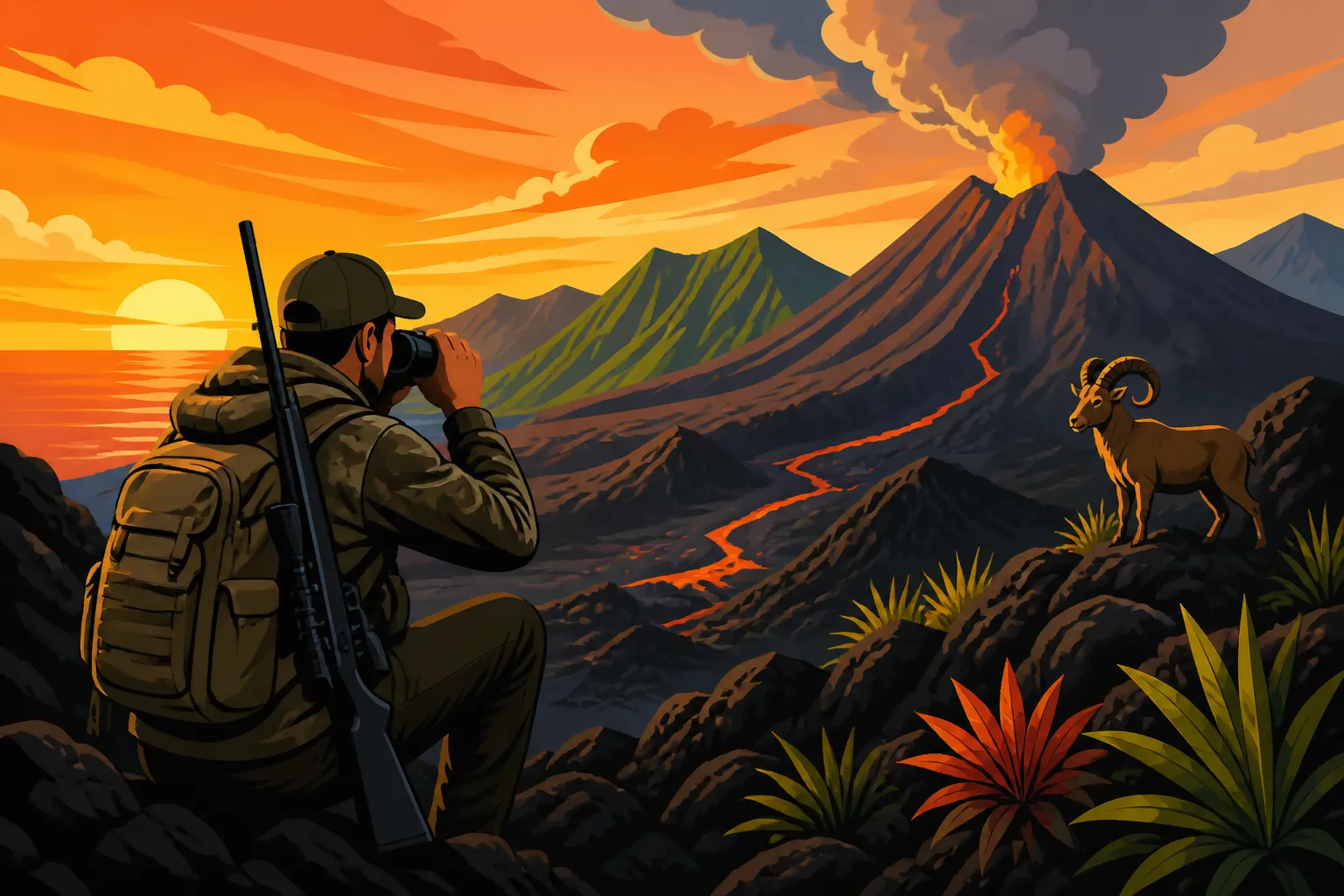
You'll spend a significant amount of time glassing, often from high vantage points that allow you to survey vast tracts of land. High-quality binoculars and a spotting scope are indispensable when Glassing a Lava Flow for Mouflon Rams or distant axis deer. The light can be intense, reflecting off the dark lava, so good eye protection is also crucial. Once you've spotted an animal, the real challenge begins. Approaching game over lava means meticulously picking your route to minimize noise and remain out of sight. The undulating contours of pahoehoe can provide good, albeit temporary, cover, allowing you to move from one fold to the next. For a'a, it’s a slow, deliberate crawl, trying to avoid dislodging loose rocks that will broadcast your presence. Remember that animals in these open environments are incredibly alert due to the lack of dense cover, and any misstep will send them bounding across the landscape. Planning your approach to utilize the wind and any available shadows is critical for success in these exposed areas.
Still-Hunting Through Kiawe and A'a
When you venture into the lowland dry kiawe forests or dense pockets of older a'a lava that have begun to grow vegetation, still-hunting becomes your primary tactic. This is a far cry from the expansive glassing of the open flows; here, you're operating in much tighter quarters, often with limited visibility. The terrain is brutal underfoot, and the vegetation is even more so.
Still-hunting involves moving extremely slowly, taking a few steps, then pausing for several minutes to observe, listen, and scan for any sign of game. The goal is to blend into the environment and catch animals unaware. In kiawe, the thorny branches can make silent movement nearly impossible, so choosing your path carefully, stepping over rather than on branches, and even crawling through dense spots is often necessary. Animals like feral pigs and Axis Deer, accustomed to this thorny jungle, will often rely on their hearing and scent to detect threats. When Still-Hunting a Guava Thicket for Pigs, you'll need to be mindful of every crackle and rustle. Pay close attention to subtle movements in the brush, the glint of sunlight off an antler, or the dark shape of a pig rooting in the shadows. Reading Pig Sign Along a Muddy Trail or checking for fresh droppings and tracks in the sparse dirt patches can reveal recent animal activity, helping you narrow down areas to focus your efforts. This method requires immense patience and an intimate understanding of the animal's habits in such dense, abrasive cover.
Utilizing Water Sources and Kipukas
In Hawaii's drier volcanic hunting units, water is life, and game animals know it. Identifying and targeting natural water sources can be incredibly productive, especially during the hotter, drier months. These can range from small springs or seeps in shaded gulches to stock ponds on ranch lands bordering public hunting areas.
Hunting a Water Source in Dry Hawaii Country requires stealth and often an early start or late finish. Animals will typically visit water in the cooler parts of the day, at dawn or dusk, or even at night. Setting up downwind and overlooking a known water source, if regulations allow, can be an effective ambush tactic. Just be mindful of other hunters who might have the same idea. Beyond water, kipukas are unique features of Hawaii's volcanic landscape that offer sanctuary and sustenance. A kipuka is an island of older, often vegetated land that has been surrounded by more recent lava flows. Essentially, they are "islands" of forest or grassland within a sea of barren lava. These patches of richer habitat provide food, water, and cover, making them magnets for game. Learning to identify and target Hunting a Hawaii Lava Kipuka can be a game-changer. Animals will often retreat into kipukas for bedding during the day or feed within their boundaries, using the surrounding lava as a natural, albeit rough, travel corridor between these fertile islands. These spots are crucial, especially when traversing vast, otherwise desolate lava plains.
Target Species in Volcanic Environments
The challenging volcanic landscapes of Hawaii host a variety of game animals, each uniquely adapted to survive and thrive in these demanding environments. Understanding the preferred habitats and behaviors of these species is fundamental to a successful hunt. Whether you're chasing high-country rams or lowland deer, the volcanic terrain plays a significant role in where you'll find them.
Mouflon Sheep on Mauna Kea's Slopes
If you're dreaming of a true high-country challenge, the mouflon sheep of Hawaii Island's Mauna Kea slopes should be at the top of your list. These magnificent animals thrive in the harsh, high-elevation alpine zones discussed earlier, often ranging between 8,000 and 13,000 feet. This isn't just hunting; it's mountaineering with a rifle or bow. For a deeper dive, check out Mouflon Sheep Hunting on Hawaii Island.
Mouflon are incredibly hardy and agile, perfectly suited for navigating the steep, rocky slopes, cinder cones, and ancient lava flows of Mauna Kea. They primarily feed on the sparse grasses, shrubs, and mamane trees found at these altitudes. Finding them often involves extensive glassing of vast, open landscapes, typically at first light or last light when they are most active. During the heat of the day, they might bed down on shaded slopes or within the sparse mamane forests. The air is thin, the sun is intense, and the weather can change rapidly, often requiring hunters to layer up and down multiple times in a single day. A successful Mouflon hunt demands peak physical conditioning, excellent marksmanship for potentially long shots, and an unwavering determination to push through the physical discomfort of high altitude and rugged terrain. Identifying a trophy ram by Judging a Mouflon Ram's Horn Curl from a distance is a skill honed over many hours of glassing.
Feral Goats in the Canyons and Cliffs
Feral goats are perhaps the quintessential volcanic terrain dwellers. These incredibly resilient and adaptable animals can be found across several islands, but they truly master the art of survival in the steep canyons, gulches, and sea cliffs carved by volcanic activity and erosion. If you're looking for an action-packed, physically demanding hunt, Hunting Hawaii's Feral Goats in their vertical world is an experience you won't soon forget.
Goats are masters of vertical movement, often seen defying gravity on seemingly impossible ledges and cliff faces. They thrive in areas with minimal vegetation, browsing on whatever sparse plants they can find, including thorny kiawe and various grasses. On the Big Island, you'll find them in the dry leeward gulches and coastal areas. On Maui, they inhabit the steep slopes of Haleakala and the rugged coastline. Kauai's dramatic Na Pali coast and Waimea Canyon also hold significant populations. Hunting them often involves arduous climbs and descents, negotiating loose rock, and navigating extremely steep terrain. Spot-and-stalk is a common method, but it often morphs into a careful descent or ascent into their world. They are keen-sighted and can detect movement from afar, but their curiosity can sometimes be used to a hunter's advantage. While often dismissed as "easy," hunting a big billy goat in its home territory is anything but.
Axis Deer in Leeward Drylands
While axis deer are not exclusive to volcanic terrain, many of Hawaii's most productive axis deer hunting units are situated on the dry, leeward sides of islands like Maui, Lana'i, and parts of the Big Island, where the landscape is characterized by older, more weathered lava flows covered by kiawe, buffelgrass, and other dryland vegetation. When the focus is on Axis Deer Hunting in Hawaii, these specific environments become incredibly important.
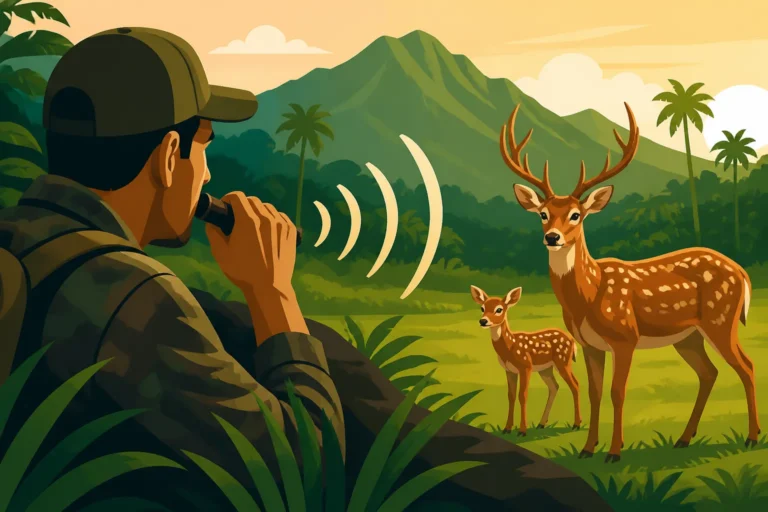
These areas, often referred to as "dry country," present their own set of volcanic challenges. The ground is still rocky, uneven, and can be incredibly abrasive, but it's often covered by dense, thorny kiawe forests or open pastures dotted with scattered trees and lava outcroppings. Axis deer are masters of camouflage in this environment, their spotted coats blending seamlessly with the dappled light and shadows of the kiawe. They are also incredibly wary, especially the larger bucks, and will use the dense brush for cover to evade hunters. Understanding their patterns of movement between bedding areas in thickets and feeding grounds in more open, grassy patches, or near scarce water sources, is key. Reading Axis Deer Sign in Dry Country, like tracks, rubs, and droppings, becomes crucial. Hunting here often involves a mix of slow still-hunting through the thickest cover and patient glassing of open lanes or waterholes. They can be found where the volcanic slopes transition into flatter plains, making these areas an ideal blend of rugged and relatively open terrain.
Navigating the Challenges of Lava Hunting
Hawaii's volcanic hunting units aren't just beautiful; they're incredibly challenging. Beyond the thrill of the hunt, you'll face environmental obstacles that demand careful planning, physical resilience, and a deep respect for the land. Ignoring these challenges can quickly turn an exciting adventure into a dangerous situation.
Physical Demands and Hydration
There's no sugarcoating it: hunting on lava is physically demanding. Period. Even seemingly "flat" pahoehoe flows are an endless series of uneven surfaces, requiring constant attention to your foot placement and engaging stabilizer muscles you didn't even know you had. A'a lava is even worse, turning every step into a calculated effort, often resembling walking on jagged concrete. Add to this the steep ascents and descents of cinder cones or gulches, and you've got a full-body workout that will test your endurance.
The heat and humidity of Hawaii, particularly in the lower elevation units, exacerbate these physical demands. Even at higher altitudes, the intense sun reflecting off dark lava can quickly lead to overheating. This combination of strenuous activity and environmental factors means hydration is not merely important, it's absolutely critical. You will sweat more than you anticipate. Carry significantly more water than you think you'll need, and consider electrolytes to replenish what your body loses. Don't wait until you're thirsty; sip water consistently throughout the day. Getting the Most From a Hawaii Weekend Unit often means planning for the energy output required, not just the time available. Many mainland hunters underestimate the physical toll of this terrain, leading to early fatigue and potentially dangerous situations if they push too hard without adequate hydration. Regular breaks in the shade, if you can find any, are also essential to manage your core temperature.
Avoiding Dangerous Fissures and Cracks
One of the less obvious but potentially most dangerous aspects of hunting on newer or less weathered lava flows is the presence of hidden fissures, cracks, and lava tubes. These can range from small, ankle-twisting crevices to deep, cavernous openings that could lead to a serious fall. The ground can be deceptive, sometimes appearing solid until a step reveals a weakness.
Especially on the Big Island, where active volcanic processes are ongoing, new cracks and fissues can appear, and old ones can be obscured by vegetation or loose rock. Always be vigilant about where you're stepping. When crossing areas of broken lava or older, vegetated flows, keep an eye out for tell-tale signs of instability, such as subsidence or unusual rock formations. If you're moving through a previously un-scouted area, it's wise to tap the ground with a hiking pole or stick ahead of you to check for voids, especially when the ground is obscured by grass or thin brush. Never try to jump across a fissure unless you have a clear, stable landing zone and are absolutely certain of the depth. A twisted ankle is bad enough, but a fall into a deep, unseen crack could have much more severe consequences. These hidden hazards underscore the importance of slow, deliberate movement and constant situational awareness when traversing volcanic terrain.
Respecting the Land and Cultural Significance
Hawaii's volcanic landscapes are not just hunting grounds; they are places of profound cultural and spiritual significance for Native Hawaiians. Mauna Kea, for example, is considered sacred. When you're Hunting Hawaii's Volcanic Terrain, you're stepping onto land that holds deep meaning for the local community, and approaching it with respect is paramount.
This respect extends beyond simply following hunting regulations. It means understanding that certain areas, even within public hunting units, might be considered wahi pana (sacred places) or contain archaeological sites. Leave no trace of your presence – pack out everything you pack in, including all trash and spent casings. Avoid disturbing any rock structures, petroglyphs, or other cultural artifacts you might encounter. Engage with local hunters and community members with humility and an open mind. Learn about the 'aina (land) and its history. This isn't just about being a polite visitor; it's about being a responsible hunter who contributes positively to the conservation and cultural preservation of Hawaii. The unique history of Why Every Hawaii Game Animal Was Introduced also speaks to the complex relationship between humans, the land, and introduced species, which is important context for any hunter. Demonstrating respect for the land and its people enhances your experience and helps ensure these hunting opportunities remain open for future generations.
Field Care and Extraction in Rough Terrain
You've done the hard work: endured the brutal terrain, stalked your animal, and made a clean shot. Now, the real challenge begins – getting your hard-earned meat off the mountain or out of the lava field. Field care and extraction in Hawaii's volcanic terrain present a unique set of logistical hurdles, especially given the heat, remoteness, and ruggedness of the landscape.
Rapid Field Dressing in High Temperatures
Hawaii's warm climate, even at higher elevations, means that proper and rapid field dressing is absolutely critical to preserve your meat. Unlike cooler climates where you might have a few hours before spoilage becomes a serious concern, in Hawaii's heat and humidity, that window shrinks dramatically. You simply cannot delay. The moment your animal is down, the clock starts ticking. For many, Field Care in Hawaii's Heat and Humidity is a skill learned through necessity.
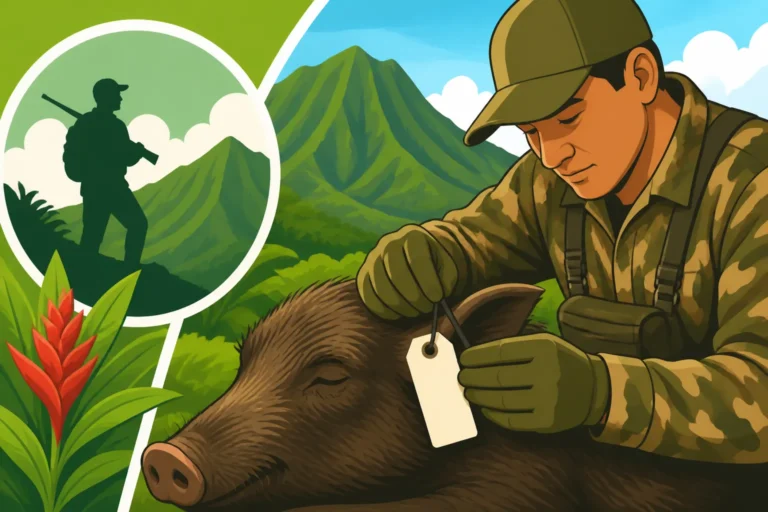
Begin by immediately gutting the animal. This removes the internal heat source, which is the primary driver of spoilage. Work quickly and cleanly. If you're on a flat lava flow, positioning the animal to allow blood to drain away is important. For larger animals like axis deer or mouflon, consider splitting the sternum and pelvic bone to allow for maximum air circulation, though this can be difficult without a saw or heavy-duty knife. Wiping out the cavity with a clean cloth to remove any remaining gut material and blood will also help cool it. If possible, prop the cavity open with sticks. Getting the hide off as soon as possible is the next crucial step. The hide insulates the animal, trapping heat. Skinning, quartering, and getting the meat into game bags that allow for airflow will dramatically increase your chances of bringing home high-quality venison. If there's any breeze, strategically hang the quarters in the shade to maximize cooling.
Packing Meat Out Over A'a and Pahoehoe
Once your animal is field-dressed, the daunting task of packing it out begins. Packing Meat Out of a Hawaii Gulch or off a remote lava flow is often the most physically grueling part of the entire hunt. The terrain itself adds significant difficulty, turning a seemingly short distance into an epic trek. This is where fitness, good gear, and smart planning truly pay off.
A sturdy frame pack is non-negotiable. Trying to haul heavy meat over a'a lava with a flimsy daypack is a recipe for disaster and injury. You'll need game bags that are durable enough to withstand the abrasive rock and dense kiawe. Mesh bags are ideal as they allow air to circulate and promote cooling. For larger animals, you'll likely be quartering the animal and making multiple trips, or, if hunting with a partner, dividing the load. Even if you're strong, the uneven and treacherous nature of the lava will slow you down considerably. Every step must be deliberate to avoid falls that could injure you or damage your meat. Consider wearing sturdy gloves to protect your hands when navigating through thorny brush or sharp rock. If you are fortunate enough to hunt a unit accessible by a 4WD road, plan your kill zone and extraction route to minimize the distance you have to carry meat by foot. Sometimes, even seemingly small animals like goats can feel like a ton of bricks when you're hauling them over miles of jagged volcanic rock under the Hawaiian sun.
Planning for the Unexpected
Even with the best planning, hunting in Hawaii's volcanic terrain means preparing for the unexpected. Things can and do go wrong, and having contingencies in place can be a lifesaver. This is especially true for remote, difficult-to-access units.
First, communication is key, even if you don't have cell service. Carry a satellite communication device (like a Garmin inReach or a Zoleo) for emergency communication. Let someone responsible know your detailed hunt plan, including your specific unit, expected return time, and a contingency check-in. This way, if you don't return, someone knows where to start looking. Second, be prepared for equipment failure. A torn boot sole, a broken pack strap, or a lost piece of essential gear can happen in this abrasive environment. Carry basic repair items like duct tape, zip ties, and a multi-tool. Third, consider the weather. Sudden, localized storms, heavy rains that turn trails into slick mud, or dense fog can appear with little warning, complicating navigation and travel. Always have extra layers and a rain jacket, even if the forecast is clear. Lastly, know your physical limits. Pushing too hard, especially when exhausted, can lead to poor decisions and accidents. If you're tired, take a break. If a situation feels unsafe, turn back. Hawaii's volcanic terrain is beautiful, but it's unforgiving, and a healthy dose of caution and preparedness is your best hunting partner. Before you head out, make sure your Hawaii hunting licenses and what they cost are in order through services like GoHunt Hawaii, as any issues there can stop your hunt before it even starts.
Disclaimer
Hunting is a challenging and potentially dangerous activity. This guide provides general information and recommendations only. Hunters are solely responsible for understanding and adhering to all current Hawaii Department of Land and Natural Resources (DLNR) hunting regulations, obtaining necessary licenses and permits, and ensuring their own safety and preparedness in the field. Conditions can change rapidly, and personal judgment, experience, and fitness are crucial. Always hunt ethically, respectfully, and safely.