Hunting a Kiawe Flat for Axis Deer
Hunting Axis deer in Hawaii can be an incredible challenge, especially when you find yourself navigating the dense, thorny kiawe flats that are so common in the drier, leeward areas of the islands. It’s easy to feel overwhelmed by the impenetrable thickets and the elusive nature of these deer in such cover. This guide aims to break down the complexities of hunting these specific environments, offering practical advice and strategies to help you successfully pursue Axis deer in Hawaii's kiawe country.
Understanding Kiawe Flats and Axis Deer Behavior
Kiawe, also known as mesquite, is a non-native, incredibly resilient tree that has spread extensively across Hawaii's dry lowlands. These dense, thorny forests, often found closer to the coast, might look like an impossible maze to a hunter, but they are also prime habitat for Axis deer. Understanding why deer favor these areas and how they behave within them is the first step to a successful hunt.
Why Kiawe is Prime Axis Deer Habitat
From a deer's perspective, kiawe flats offer a trifecta of essentials: food, water, and cover. While kiawe itself isn't a primary browse, the pods it drops are a highly sought-after food source, especially during dry seasons when other forage is scarce. These sweet, bean-like pods are packed with nutrients, and you'll often find Axis deer gorging on them. Beyond the pods, the undergrowth within and around kiawe thickets, particularly after a good rain, provides tender forbs and grasses that deer graze on. These areas might seem barren, but a closer look often reveals vital browse.
More than just food, kiawe provides crucial shade and security. Axis deer are masters of concealment, and the thorny, interlocking branches of a kiawe forest offer almost impenetrable cover from predators (like us hunters!) and the relentless Hawaiian sun. During the heat of the day, especially from late morning through the afternoon, deer will bed down deep within these thickets, seeking respite from the heat and feeling secure from prying eyes. Hunting Axis Deer at First Light in Hawaii often means catching them as they transition from these dense bedding areas out to more open feeding grounds, or vice-versa. Their preference for these areas makes them a challenging but rewarding target.
Reading Axis Deer Sign in Dry Kiawe
Learning to interpret the subtle clues Axis deer leave behind is paramount in kiawe country, where visibility is often measured in feet, not yards. Tracks are, of course, the most obvious sign. In the dusty, dry soil of a kiawe flat, fresh tracks can be incredibly telling. Look for crisp edges, clear dewclaws, and the presence of fine dust kicked up at the track's edge. Older tracks will be softer, sometimes filled with windblown debris, and less defined. Pay close attention to tracks around water sources and transition areas between denser cover and more open pockets where they might feed. You'll often find multiple sets of tracks from a herd moving together.
Beyond tracks, keep an eye out for rubs and scrapes, though these might be less obvious than in a more traditional deciduous forest. Axis bucks will rub their antlers on kiawe branches, especially during their rut, which, uniquely, can happen year-round in Hawaii. These rubs help them mark territory and strip velvet. Scrapes, patches of ground pawed clear and often urinated in, are also indicators of buck activity. Additionally, look for bedding areas – flattened spots in the dirt or sparse grass, often tucked deep under a kiawe canopy, offering both shade and a clear view downwind. The presence of fresh droppings and pellets, still moist and shiny, is another clear indicator of recent deer activity. Understanding how to interpret these signs is key to Reading Axis Deer Sign in Dry Country.
Scouting and Planning Your Kiawe Flat Hunt
Success in the kiawe hinges heavily on thorough scouting and meticulous planning. You can't just wander into these thorny labyrinths hoping to stumble upon a deer. The dense cover and the deer's inherent elusiveness demand a strategic approach before you even step foot in the unit.
Pre-Season Reconnaissance and Digital Scouting
Before you lace up your boots, spend significant time with your digital tools. Satellite imagery, available through platforms like Google Earth or hunting apps like "GoHunt", can be your best friend. Look for subtle variations in the kiawe canopy – areas that might be slightly less dense, natural openings, or old ranch roads and fence lines that offer clearer lines of sight or easier travel corridors. Identify potential water sources, even small ones like stock ponds or wet depressions, as these are magnets for Axis deer in dry country. You'll want to map out potential entry and exit points, as well as areas of denser cover that might hold bedding deer. Mark all these points on your "GoHunt" app or other GPS device to use as waypoints in the field.
Understanding the lay of the land from a bird's-eye view can also reveal terrain features like slight ridges or swales that could influence wind patterns or provide natural funnels for deer movement. Pay attention to neighboring property lines too, as animals often move along boundaries. Checking in and out of Hawaii hunting units is often made easier by apps like OuterSpatial, which shares similar functionality to "GoHunt" for marking your presence in a unit. This digital groundwork allows you to go into the field with a solid plan, rather than just guessing.
On-the-Ground Scouting Strategies
Digital scouting is a great start, but nothing beats boots on the ground. Once you’ve identified promising areas, it’s time to physically scout. Focus your efforts around any identified water sources, as these are critical hubs of activity, especially when you're Hunting a Water Source in Dry Hawaii Country. Look for heavily used trails leading to and from water. These will often be well-worn paths through the kiawe, sometimes almost tunnel-like. During your scouting, pay close attention to the prevailing wind directions, which can be surprisingly tricky and swirling in hilly or gulch-filled kiawe country. Note how the wind behaves in different parts of your chosen area at various times of day.
Trail cameras are invaluable tools in kiawe flats. Place them on well-used game trails, near water, or along fence lines that deer might be crossing. Position them to capture activity without being easily spotted by other hunters or spooking deer. The data you gather – time of day deer are most active, travel patterns, and even buck photos – will refine your hunting strategy significantly. Remember, in dense cover, deer might move more at dawn and dusk, but also throughout the day as they navigate bedding and feeding areas. Your goal is to find patterns, not just random occurrences.
Effective Hunting Tactics for Kiawe Flats
Hunting Axis deer in kiawe flats demands patience, stealth, and a keen understanding of their movements within this challenging environment. It's a game of inches and calculated risks, often requiring you to adapt your strategy on the fly.
Spot-and-Stalk Techniques in Dense Kiawe
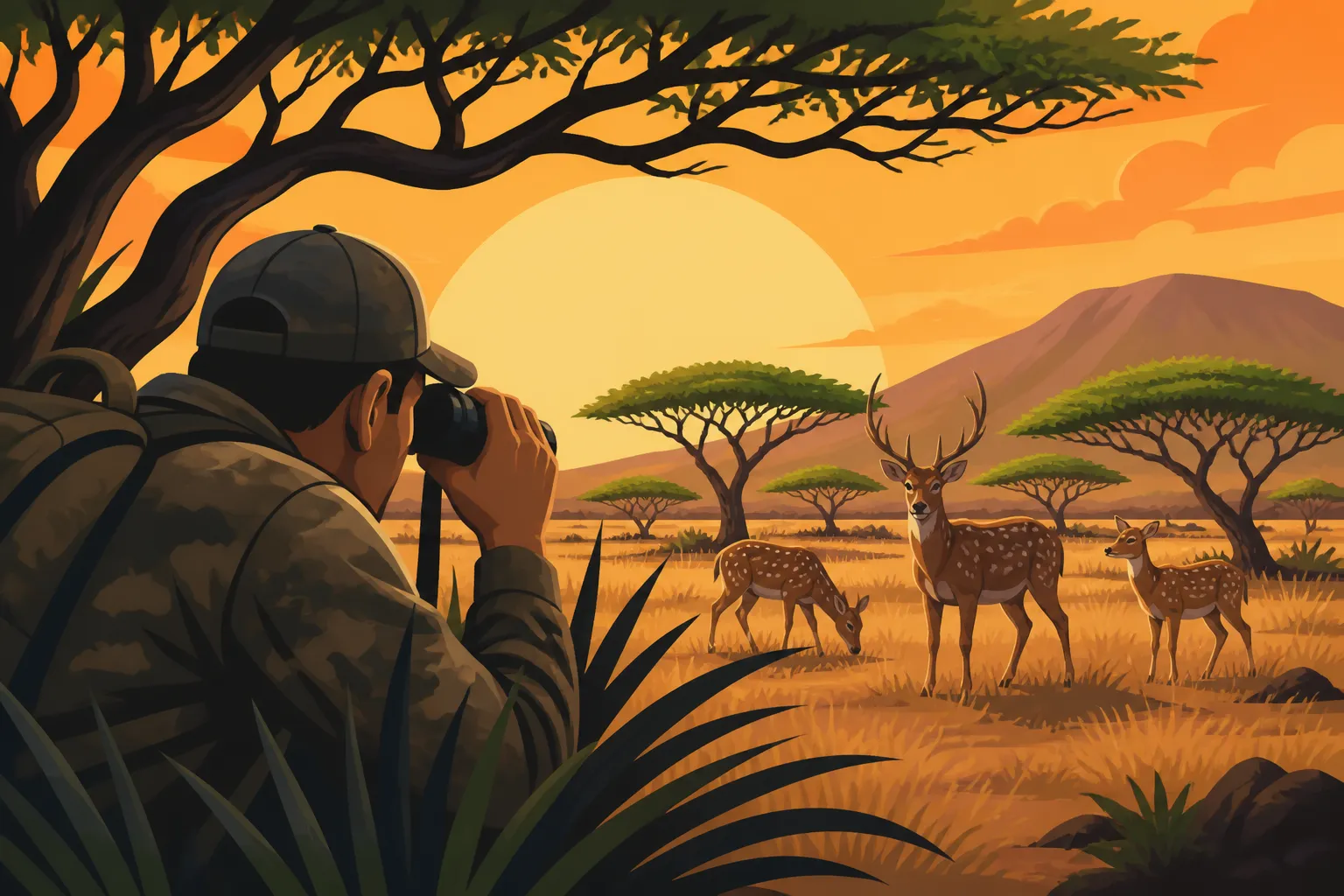
Spot-and-stalk hunting in kiawe is less about long-range glassing and more about methodical, slow movement and intense observation of your immediate surroundings. You're typically operating in close quarters, where a deer might appear out of nowhere. The key is to move incredibly slowly, pausing frequently to listen and look. Use binoculars, even at close range, to pick apart the shadows and dense cover for the tell-tale horizontal line of a deer's back, a flick of an ear, or the glint of an antler. Often, you'll spot part of a deer before you see the whole animal. This is a very different game than Spot-and-Stalk Tactics on Open Country.
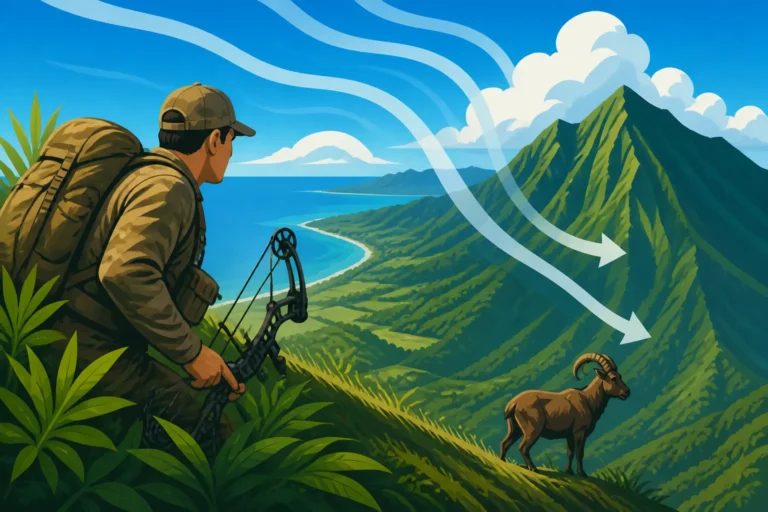
The wind is your absolute top priority. Axis deer have an incredible sense of smell, and the swirling thermals in kiawe flats can quickly betray your presence. Hunt into the wind or with a consistent crosswind. If the wind shifts, you must be prepared to adjust your route or hold tight until it stabilizes. Sound discipline is also critical; every snapped twig or rustle of clothing is amplified in the quiet, still air of a kiawe thicket. Wear soft, quiet clothing, and choose footwear that allows for silent movement over uneven, potentially thorny ground. Sometimes, the best tactic is to find a good vantage point, even if it's just a slightly elevated patch of ground, and let your eyes and ears do the work.
Ambush Hunting Near Water or Food Sources
Given the challenges of navigating kiawe, ambush hunting can be a highly effective strategy, especially during dry periods when water is scarce. Identify well-used trails leading to and from known water sources, or areas where kiawe pods are plentiful and fresh droppings indicate feeding activity. Set up a ground blind or find natural cover downwind of these key locations before first light or in the late afternoon. Patience is the name of the game here. Axis deer are creatures of habit, particularly when it comes to essential resources.
Your setup needs to be well-concealed, offering both cover and a clear shooting lane. Consider the sun's position – you don't want to be silhouetted or have the sun directly in your eyes during peak movement times. The objective is to intercept deer as they move to drink, feed, or transition between bedding and feeding areas. Remain absolutely still and quiet. A single cough or an unexpected movement can send wary Axis deer scattering back into the thickest cover. Remember to consider the sun's angle when choosing your position, especially in the mornings and evenings.
Calling Axis Deer in Kiawe
Calling can be a surprisingly effective tactic for Axis deer, even in dense kiawe. Unlike other deer species that might be more wary of calls, Axis deer are very vocal and curious. The most commonly used and effective calls are the fawn distress bleat and the doe bleat. A fawn bleat can often pique the curiosity of does and even bucks, bringing them in to investigate what might be a distressed young animal or a receptive doe. When Calling Axis Deer With a Fawn Bleat, use short, sharp bleats, followed by silence, and listen intently for a response.
Doe bleats can also be used to attract other does or bucks looking for mates. Remember, Axis deer rut year-round in Hawaii, so there’s always a chance a buck will be interested. The key is to be judicious with your calling. Don't overcall. A few well-placed calls, followed by long periods of silence and observation, are often more effective. In dense kiawe, a deer responding to a call might appear suddenly and close, so be ready. Use calling as a tool to draw deer out of cover or to pinpoint their location, especially if you suspect they are bedded nearby.
Essential Gear for Hunting Kiawe Country
The Hawaiian kiawe flat environment poses specific challenges that demand particular gear choices. From dealing with thorns to managing heat and staying oriented, your equipment can make or break your hunt.
Footwear, Clothing, and Personal Protection
Your feet will thank you for investing in quality footwear. Sturdy, thorn-resistant boots with good ankle support are non-negotiable. Kiawe thorns are legendary for their ability to puncture thin soles and gaiters. Consider boots with stiff midsoles and thick rubber outsoles. I've seen too many hunts cut short by a thorn through a lesser boot. Durable pants and long-sleeved shirts made from tough, rip-resistant materials are also essential to protect your skin from scratches and punctures. Lightweight, breathable fabrics are preferred to combat the heat and humidity.
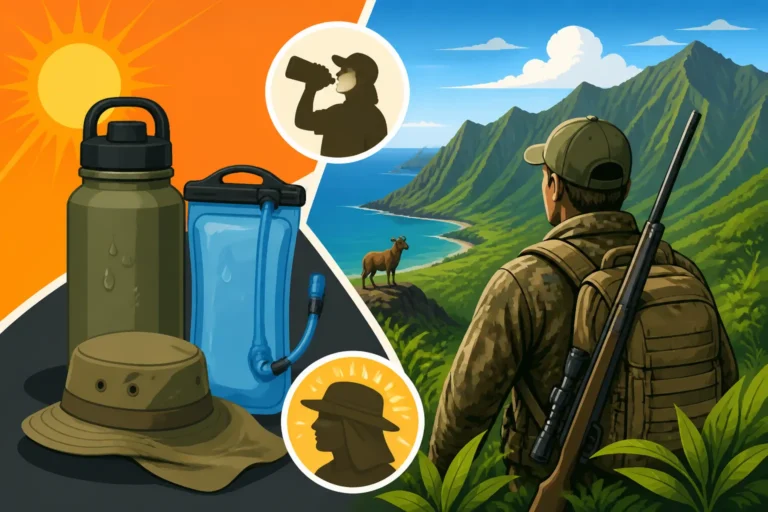
Hydration is critical. Always carry more water than you think you'll need. A hydration pack is ideal for hands-free access. Sunscreen, a wide-brimmed hat, and insect repellent are also must-haves. While not as prevalent as some mainland pests, mosquitoes can still be an annoyance, especially in calmer, shaded areas. A compact first-aid kit is also vital for treating minor cuts, scrapes, and yes, thorn punctures. Don't forget a sharp knife for Field Dressing Axis Deer in Hawaii Heat, and a cooler with ice to ensure Cooling Meat Fast on a Hawaii Hunt.
Optics and Navigation Tools
In kiawe country, quality optics are essential, even if you're not glassing vast open spaces. Compact, powerful binoculars (8×42 or 10×42) are excellent for picking apart dense cover at close to medium ranges, helping you discern deer parts from tangled branches. A rangefinder is also crucial for confirming shot distances, as the density of the cover can play tricks on your depth perception.
For navigation, a reliable GPS device or a smartphone with a robust hunting app like "GoHunt" is non-negotiable. Kiawe thickets can be disorienting, and it’s surprisingly easy to lose your bearings. Download offline maps of your hunting unit before you go, as cell service is often spotty or non-existent in these areas. Mark your vehicle, significant landmarks, and any game trails you find. This digital breadcrumb trail will be invaluable for staying found and for safely exiting the unit, especially if you're Packing Meat Out of a Hawaii Gulch.
| Gear Category | Recommended Item | Why It's Essential in Kiawe Flats |
|---|---|---|
| Footwear | Thorn-resistant hiking boots (e.g., leather/heavy nylon) | Protection from sharp kiawe thorns; ankle support on uneven terrain. |
| Clothing | Durable, long-sleeved pants & shirts | Prevents scratches and punctures; offers sun protection. |
| Hydration | Hydration pack or multiple water bottles | Crucial for combating heat and humidity; prevents dehydration. |
| Navigation | GPS device or smartphone with "GoHunt" app & offline maps | Prevents getting lost in dense, disorienting thickets; marks waypoints. |
| Optics | 8×42 or 10×42 Binoculars, Rangefinder | Aids in identifying deer in thick cover; accurate shot distance. |
| Safety | Compact first-aid kit, whistle, headlamp | Addresses minor injuries (thorns); emergency signaling; low-light travel. |
| Game Handling | Sharp knife, game bags, cooler with ice | Essential for efficient field dressing and rapid meat cooling. |
Disclaimer
Hunting in Hawaii comes with inherent risks, including but not limited to uneven terrain, extreme weather conditions, and encounters with wildlife. Always prioritize safety, adhere to all local, state, and federal hunting regulations, and ensure you have the necessary licenses and permits. This guide is for informational purposes only and does not substitute for proper training, experience, or professional guidance. Always hunt responsibly and ethically.