Hunting Downwind in Hawaii’s Shifting Thermals
You’ve spent countless hours scouting, found promising sign, and made a careful, patient stalk, only to have that wary pig vanish into the undergrowth or an axis deer buck suddenly bolt, leaving you wondering what went wrong. More often than not in Hawaii, the culprit isn't a twig snapped underfoot, but the invisible enemy: the wind. Those tricky, swirling thermals and microclimates can betray your presence in an instant, carrying your scent directly to your quarry. This guide dives deep into understanding and mitigating the relentless challenge of shifting winds and thermals when hunting across Hawaii's diverse landscapes, helping you stay undetected and get closer to the game you're after.
Understanding Hawaii's Unique Thermal Challenges
Hunting anywhere requires careful attention to wind direction, but Hawaii presents a whole different ballgame. Our islands are a mosaic of extreme elevation changes, dense rainforests, arid lava flows, and coastal cliffs, all packed into relatively small areas. This geographical complexity creates a constantly shifting aerial battleground of air currents that can make a seasoned hunter feel like a novice. The simple "wind at your face" rule often goes out the window here.
The Double Whammy: Trade Winds Meet Terrain
Hawaii is famous for its consistent trade winds, typically blowing from the northeast. On paper, this sounds easy enough to manage. You simply keep the wind in your face or quartering. But here's where the island's dramatic topography throws a wrench in the works. As these steady trade winds hit towering volcanoes like Mauna Kea, Mauna Loa, and Haleakala, or even the smaller, but still significant, mountain ranges on Oahu, Kauai, and Molokai, they get violently disrupted. They're forced upwards, creating updrafts, or squeezed through saddles and gulches, accelerating into swirling gusts.
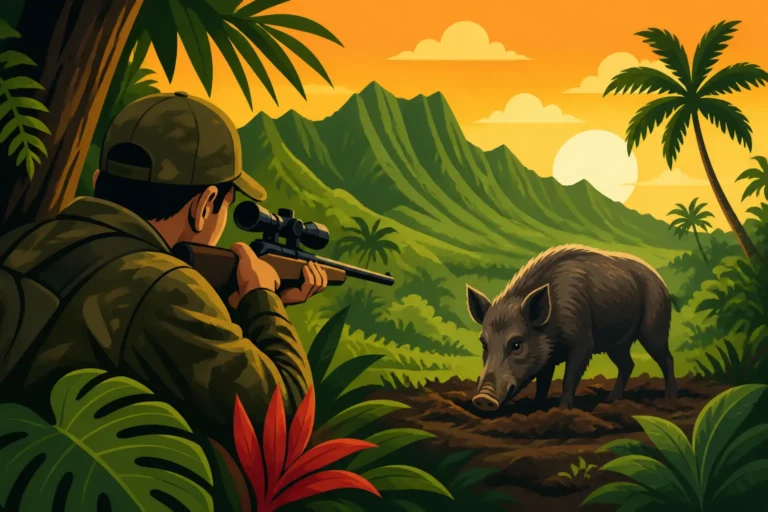
Imagine hunting a deeply carved gulch on the windward side of the Big Island, perhaps for a wily feral pig. The prevailing trade wind might be blowing from the east, but as you drop into that gulch, the steep walls channel the air, creating a completely different flow. Suddenly, that easterly wind is swirling directly up the gulch in one section, then eddying back down in another, or even reversing entirely due to localized thermal effects. You might think you have the wind in your favor, only to realize the pig 50 yards below you just got a full whiff of your breakfast. This constant interaction between a dominant weather pattern and incredibly varied terrain is what makes hunting downwind in Hawaii so uniquely frustrating and challenging. It’s not just a breeze; it’s a living, breathing, unpredictable force.
Coastal Versus Inland Thermal Differences
The proximity to the ocean dramatically influences wind patterns, creating distinct thermal behaviors between coastal hunting grounds and those further inland or at higher elevations. Near the coast, especially in areas like Maui's Kanaio country or the coastal cliffs where you might be Hunting Goats on Hawaii's Coastal Cliffs, you'll encounter sea breezes and land breezes. In the morning, as the land warms faster than the ocean, air rises from the land, drawing in cooler, denser air from the sea – a sea breeze. This often means an upslope, onshore wind that can be quite reliable for a few hours.
However, as the sun sets and the land cools faster than the ocean, the reverse happens: air cools and sinks over land, pushing out towards the warmer sea, creating a land breeze. This shift can turn a predictable morning wind into a completely contrary evening wind, catching many hunters off guard. Farther inland, particularly as you gain elevation, the dynamics shift. Instead of sea/land breezes, you’re dealing more with pure solar radiation heating and cooling the ground. This leads to distinct upslope thermals during the day as air warms and rises from the valleys and lower slopes, and downslope thermals at night as the air cools and descends. These patterns are crucial when planning your approach for game like mouflon sheep high up on Mauna Kea or stalking deer in Kauai’s Kokee. The transition zones between these two distinct environments can be particularly volatile, where coastal and inland thermal effects can clash, making precise wind prediction nearly impossible without constant vigilance.
Reading the Wind: Trade Winds, Local Thermals, and Microclimates
To consistently get close to Hawaii’s wary game, you need to become a student of the wind. It’s not about guessing; it's about observing, understanding, and anticipating. This involves recognizing the overarching trade wind patterns, the daily thermal cycles, and the unpredictable nature of microclimates.
Decoding the Dominant Trade Winds
As mentioned, Hawaii’s dominant wind pattern is typically the northeast trade wind. These usually bring moisture to the windward sides of the islands, creating lush, wet forests, and leaving the leeward sides drier and more arid. Knowing this general direction is your starting point, but it's rarely the full story. For instance, when you're hunting Hawaii's rainforest gulches, the trade winds might be blasting across the ridge tops, but down in the valley, the air could be completely still or even moving in the opposite direction due to the dense canopy and cool, shaded stream beds.
On days when the trade winds are strong and steady (say, 15-20 mph or more), they often override localized thermal effects to a greater extent. This can make hunting a bit more predictable, as long as you're in open country. However, even then, large topographical features will cause eddies and swirling. When the trade winds are light, or when a Kona storm system disrupts them, that's when the local thermals take over with a vengeance, becoming the primary driver of air movement. It’s vital to check the general forecast before you head out, but never assume the forecast for the nearest town applies precisely to your hunting unit. The wind at sea level can be vastly different from the wind at 4,000 feet elevation on a mountain slope.
The Daily Thermal Dance: Upslope and Downslope Currents
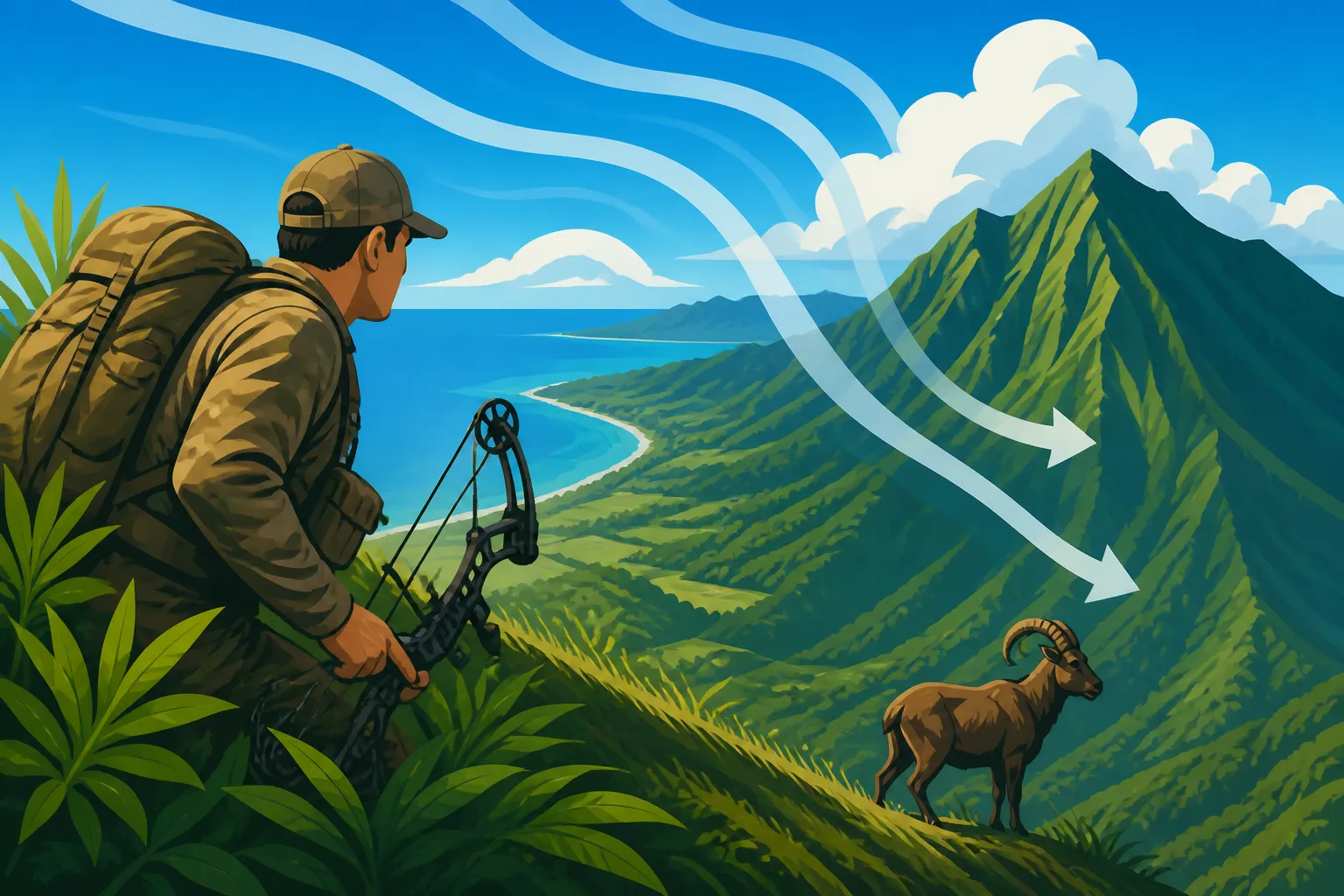
The sun plays a starring role in Hawaii's thermal drama. As the sun rises and begins to heat the earth, the ground warms up and transfers that heat to the air directly above it. Warm air is less dense and begins to rise, creating an upslope thermal. This means that from roughly sunrise until late afternoon, the air in valleys and on slopes will generally be moving upwards. If you're hunting an animal above you during this time, your scent will likely be carried up to them. This is often the case when Hunting Hawaii's High Elevation Alpine Ground for mouflon or during a rigorous Spot-and-Stalk Axis Deer in Hawaii hunt.
Conversely, as the sun sets and the ground begins to cool, the air above it also cools and becomes denser. This heavy, cool air then flows downhill, creating a downslope thermal. This pattern typically holds from late afternoon into the night. If you’re hunting in the evening, perhaps trying to catch animals moving out to feed, you’ll want to position yourself so that this downslope air current carries your scent away from where the game is likely to be. Understanding this daily rhythm is fundamental. It informs your approach, your glassing locations, and even your exit strategy. Knowing that air generally moves up in the morning and down in the evening is a powerful tool in your arsenal, but it still doesn't account for every twist and turn.
Microclimates: When the Wind Does Its Own Thing
Beyond the broad trade winds and daily thermal patterns, Hawaii is infamous for its microclimates – tiny, localized areas where the wind behaves completely differently from its surroundings. These are the truly maddening elements that can ruin a carefully planned stalk. A microclimate can be caused by anything from a cluster of giant ohia trees creating a wind tunnel, to a steep, shaded cliff face keeping the air cool while the sun bakes the surrounding area, causing air to sink or rise unexpectedly.
Think about Hunting a Windward Stream Valley where the water itself creates a cooler, denser air pocket, or navigating a complex lava field. Hunting Hawaii's Volcanic Terrain often involves navigating areas with stark temperature differences between sun-baked black rock and shaded fissures, each creating its own mini-thermal. You could be walking along a ridge with a steady crosswind, then dip into a small depression, and suddenly the wind is swirling from every direction. The only way to deal with microclimates is constant, active wind checking. Never assume the wind you just felt is the wind you'll have 20 feet away or two minutes later. Trust your wind checker, not just your gut, especially in these highly localized areas.
| Wind Type | Primary Cause | Typical Direction | Best Hunting Strategy (General) | Challenges |
|---|---|---|---|---|
| Trade Winds | High-pressure system north of Hawaii | Northeast (E to NE) | Hunt directly into the wind; use strong winds to mask noise | Disrupted by terrain; can swirl in valleys |
| Upslope Thermals | Sun heating ground, air rises | Up valleys/slopes | Hunt from above or across; approach early morning/late evening | Carries scent uphill; less stable in midday heat |
| Downslope Thermals | Ground cooling, air sinks | Down valleys/slopes | Hunt from below or across; approach during cooler parts of day | Carries scent downhill; can be strong at dusk |
| Sea Breeze | Land heats faster than ocean (day) | Onshore (towards land) | Approach from inland in morning; anticipate midday shift | Reverses to land breeze; affects coastal units only |
| Land Breeze | Ocean cools slower than land (night) | Offshore (towards sea) | Approach from ocean side in evening; anticipate dawn shift | Weaker than sea breeze; affects coastal units only |
| Microclimates | Localized terrain, vegetation, temperature | Highly unpredictable, swirling | Constant wind checking; use terrain to block scent | Nearly impossible to predict; can instantly betray |
Strategic Hunting: Adapting Your Approach to Shifting Thermals
Understanding the science behind Hawaii’s winds is one thing, but translating that into successful hunting strategies is another. It requires a dynamic approach, constantly adjusting to the conditions on the ground.
Planning Your Stalk: Approaching From the Right Angle
Every stalk begins long before you put boots on the ground. When you're scouting, whether physically or using tools like GoHunt satellite imagery, pay close attention to topography. Look for drainages, ridge lines, saddles, and dense pockets of vegetation. These features will dictate how air moves. Once you have an animal spotted, or a promising area identified, think about the time of day and the expected thermal pattern. If it's morning and you're planning to stalk uphill, that upslope thermal will carry your scent right to your quarry. In this scenario, you'll want to either circle widely to approach from directly above (if possible and ethical), or wait until the thermals stabilize later in the day, or ideally, plan to hunt that area in the evening when downslope thermals might be in your favor.
Conversely, if it's evening and you're trying to get to a feeding area downhill, the downslope thermal could push your scent directly to them. Here, you'd want to approach from the side, with a quartering wind, or use a natural barrier to block your scent. Always think three-dimensionally. Your scent doesn't just travel horizontally; it goes up, down, and swirls. When Reading Axis Deer Sign in Dry Country, for example, don't just note tracks and droppings, but consider how the prevailing wind and daily thermals would move through that area and how the animals might be using it to their advantage. This pre-planning minimizes the chances of an unexpected wind shift ruining your approach.
Using Terrain to Your Advantage
The very terrain that makes Hawaii's winds so challenging can also be your greatest ally. Deep gulches, dense forest patches, large rock outcroppings, and even thick scrub can act as natural windbreaks and scent baffles. When stalking, try to stay on the leeward side of ridges or large hills if the wind is coming over the top. The wind will often create a "dead air" zone or a back eddy on the sheltered side, giving you a temporary advantage. Similarly, thick vegetation, especially dense patches of guava or kiawe, can break up and diffuse your scent cone, making it harder for an animal to pinpoint your exact location.
However, be wary of these features too. A seemingly calm side of a ridge can suddenly become a swirling vortex as the wind wraps around. When Staying Found in Dense Hawaii Rainforest, not only is navigation a challenge, but the dense canopy and undulating ground create endless microclimates. Learning to "hug" terrain features that offer reliable shelter from the primary wind source, while still staying vigilant for unpredictable shifts, is a learned skill. It’s a constant chess match between you and the invisible forces of nature. Sometimes, the best move is to simply stop and observe for five or ten minutes, letting the wind reveal its patterns before you commit to your next move.
The Midday Standoff: Hunting During Transition Periods
The most challenging times to manage scent are often during thermal transition periods – typically mid-morning and late afternoon. This is when the reliable upslope thermals of the morning are weakening and preparing to shift, or the evening downslope thermals are just starting to kick in. During these times, the air can become still, unpredictable, or even switch directions multiple times in quick succession. Many hunters find themselves caught flat-footed, especially if they’ve made a long push into an area.
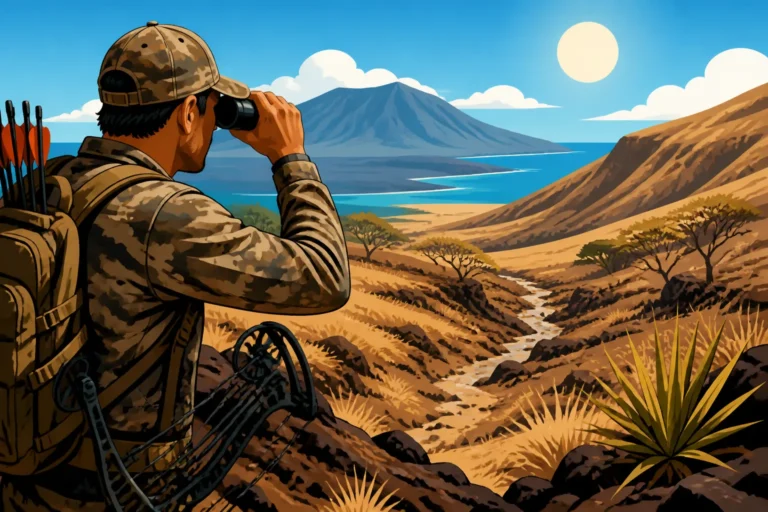
My advice for these transition periods is often controversial: slow down or even pause. Rather than pushing through when the wind is erratic, consider finding a good vantage point, pulling out your binoculars, and simply glassing. Animals are often bedded down during the hottest part of the day, making movement less productive anyway. Use this time to observe, let the thermals settle, and then plan your next move when the wind becomes more predictable. Or, if you must move, stick to areas with thicker cover that can help diffuse your scent. This is where patience truly pays off in Hawaii. Trying to force a stalk against chaotic thermals is almost always a recipe for disaster.
Tools and Tactics for Scent Management
Even with a deep understanding of Hawaii's unique wind patterns, you still need practical tools and tactics to manage your scent signature. This isn't just about cover scents; it's a comprehensive approach to minimize your odor.
Essential Scent Control Gear and Routines
Scent control starts long before you step foot in the woods. Your entire hunting routine should be geared towards eliminating human odor. This means showering with scent-free soap and shampoo, washing your hunting clothes in scent-free detergent, and storing them in airtight bags or containers until you reach your hunting area. Companies like ScentLok and Sitka Gear offer hunting apparel designed with scent-absorbing technology, which can provide an extra layer of protection, especially when you know you’ll be in a high-thermal area. However, it's important to be realistic; no gear completely eliminates scent, but it can significantly reduce it.
Think about all sources of odor: your boots, your backpack, your hat, even your breath. Consider packing in a small plastic bag for your trash (food wrappers, etc.) to prevent odors from lingering. Many hunters also use scent-eliminating sprays on their clothing and gear once they are in the field. While these sprays have their detractors, they can help neutralize some surface odors. The key is consistency: make scent control a habit for every single hunt. Don’t cut corners, especially in Hawaii where a single gust can carry your scent for hundreds of yards. It’s an investment of time and effort that directly translates into more close encounters.
Real-Time Wind Checking: Puffs and Powders
You can study maps and forecasts all you want, but nothing beats real-time wind checking in the field. Carry a small squeeze bottle of unscented powder (like talcum powder or baking soda) or a commercial wind-checker bottle. Every few minutes, especially when you're moving into new terrain or approaching a likely game area, squeeze that bottle and watch the powder drift. It will show you the exact direction and even the subtle swirls of the air currents. This is crucial for navigating those unpredictable microclimates or confirming that a thermal has indeed shifted.
Pay attention to how the powder travels. Does it go straight? Does it swirl then lift? Does it drop quickly? These observations give you immediate, actionable intelligence about the air flow. You can also use natural indicators: watch how leaves on trees are moving, observe tall grass, or even look for spiderwebs swaying. If you see smoke from a distant fire, that’s another great indicator. The more frequently you check the wind, the less likely you are to be surprised. This constant vigilance is arguably the most important tactic for beating Hawaii's shifting thermals. It’s a habit that every successful hunter in the islands eventually masters.
When All Else Fails: The "Accept and Adapt" Mentality
Let’s be honest: sometimes, despite all your preparation and vigilance, the wind will simply not cooperate. You might be in a perfect ambush spot, the animal is moving into range, and suddenly a freak thermal swirl sends your scent right to them. It happens to everyone, even the most seasoned hunters. In these moments, it’s easy to get frustrated, but the best approach is to "accept and adapt."
If the wind turns foul, don't force it. Trying to push a stalk with bad wind is usually futile and only serves to educate the animals, making them warier for future hunts. Instead, pull back, regroup, and reassess. Can you change your approach? Can you wait an hour for the thermals to switch? Is there another ridge or gulch where the wind might be more favorable? Sometimes, the most tactical move is simply to back out quietly, circle around, and try another angle entirely, perhaps even coming back to the same spot during a different part of the day. This adaptability is critical for success in Hawaii. It’s about being flexible, patient, and knowing when to fold ‘em and when to hold ‘em. Remember, there's always another day to hunt, and learning from a bad wind experience makes you a better hunter next time. Just like checking in and out of Hawaii hunting units, understanding the wind is a non-negotiable part of the process.
Disclaimer
Hunting in Hawaii involves inherent risks. Always prioritize safety, follow all local regulations set by the Hawaii Department of Land and Natural Resources (DLNR) Division of Forestry and Wildlife (DOFAW), and be prepared for rapidly changing weather and terrain conditions. This guide is for informational purposes only and does not replace professional instruction or local knowledge.