Reading Axis Deer Sign in Dry Country
Hunting Axis deer in Hawaii's dry country can feel like searching for a needle in a haystack. The sparse vegetation, hard-packed earth, and vast, open landscapes make finding reliable sign a real challenge, leaving many hunters frustrated and wondering where the deer even are. This comprehensive guide will equip you with the knowledge to read the subtle yet critical clues Axis deer leave behind, helping you unravel their patterns and increase your chances of success in these arid Hawaiian environments.
Understanding Axis Deer Behavior in Dry Conditions
Axis deer, while adaptable, adjust their routines significantly when facing the heat and scarcity of water that defines Hawaii's dry leeward slopes and expansive rangelands. Knowing these behavioral shifts is paramount to successfully finding their sign.
Water Sources and Travel Corridors Become Critical
In dry country, water is life, and for Axis deer, it dictates almost every movement. Unlike wetter environments where water might be abundant, here, precious springs, stock ponds, or even lingering dew in shaded gulches become absolute magnets. You'll find that Axis deer will travel surprising distances, often along the same well-worn paths, just to reach these vital hydration points. These aren't just casual strolls; these are committed travel corridors. Imagine a dusty trail weaving through a kiawe flat on Maui, leading directly to a half-full cattle trough – that's a highway for Axis.
Pay close attention to any changes in the landscape that might hold moisture, even temporarily. A recent rain can create temporary puddles in lava depressions or small seeps in rocky outcrops, dispersing deer from their usual spots for a short while. However, as soon as those temporary sources dry up, they'll fall back into their established patterns around permanent water. Identifying these water points, both permanent and ephemeral, whether through ground scouting or using a mapping tool like GoHunt, is your first and most important step. They act as funnels, concentrating deer movement and, consequently, their sign. You can learn more about Hunting a Water Source in Dry Hawaii Country to really dial in this tactic.
Foraging Habits and Preferred Foods Shift
When the succulent grasses and lush browse of wetter areas aren't available, Axis deer in dry country adapt their diet, and this leaves distinct signs. They’ll become more reliant on tougher, drought-resistant plants, including the pods from kiawe trees (which are surprisingly nutritious) or the persistent leaves of certain shrubs. You might find them stripping bark from specific trees or browsing on plants that, in more verdant times, they might ignore. Look for signs of heavy browsing lines on shrubs, especially those protected in gulches or depressions where a bit more moisture might persist.
These feeding behaviors mean the browse sign will look different. Instead of neatly nipped shoots, you might see more torn branches or chewed-up pods scattered on the ground. They’ll also spend more time foraging in the early morning and late evening to avoid the intense midday sun, concentrating their feeding activity during those cooler periods. Understanding What Axis Deer Eat on Maui or other dry islands can give you a significant advantage in identifying these specific food sources and the subtle clues they leave behind.
Rest and Bedding Areas Prioritize Shade and Cover
With intense sun beating down on dry landscapes, Axis deer become expert at finding the best places to bed down and escape the heat during the day. This often means seeking out the densest kiawe thickets, the shady side of a deep gulch or canyon, or the cooler north-facing slopes of cinder cones. These areas provide not only shade but also crucial thermal cover, allowing them to conserve energy and stay cool.
The sign you find in bedding areas will reflect this need for concealment and respite. Look for flattened grass or disturbed soil, often with a scattering of droppings nearby. These beds might be more tightly packed in smaller, shadier spots compared to the more expansive bedding areas found in cooler, wetter climes. They're often located within easy reach of a travel corridor leading to water or a preferred feeding ground. Knowing how to interpret these subtle cues can help you pinpoint exactly where these animals are spending their daylight hours, setting you up for a strategic Spot-and-Stalk Tactics on Open Country approach.
Key Signs to Look For on the Ground
Even in Hawaii's dry, often rocky terrain, Axis deer leave behind a treasure trove of information for the observant hunter. It just requires a keen eye and a deep understanding of what you're seeing.
Tracks and Trails: Your Deer Highway Map
Tracks are, without a doubt, one of the most direct pieces of evidence that deer have been in an area. In dry country, however, reading them can be a bit tricky. On hard, sun-baked ground, tracks might be faint or non-existent. Your best bet is to focus on areas where the ground is softer: dusty patches in washes, sandy areas near water sources, or fine volcanic soil in shaded spots.
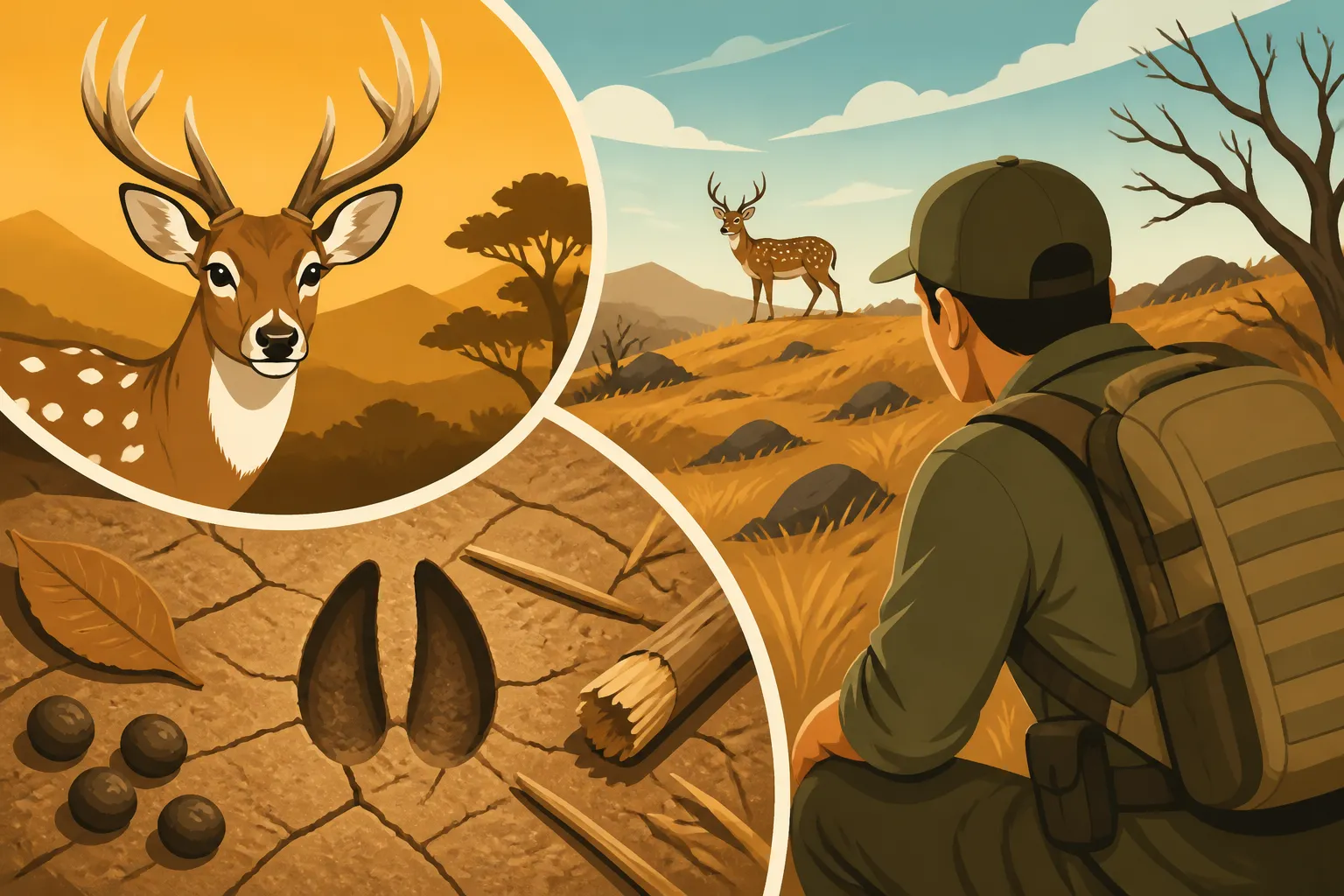
Look for the distinct heart-shaped hoof prints of Axis deer. The key is freshness. A truly fresh track will have crisp edges, with no crumbled dirt around the print. You might even see a faint sheen if the ground was slightly damp when the deer passed. Older tracks will be rounded by wind, dust, and sun, and may show signs of rain erosion if there was a recent shower. Pay attention to the size and depth – a larger, deeper track suggests a heavier animal, potentially a mature buck. Follow established game trails, especially those leading to and from water. These are often worn smooth by repeated use, sometimes even creating shallow depressions in the earth. The direction of travel can tell you if deer are heading to water or moving back to bedding areas. Remember, a single track is a clue, but a consistent line of fresh tracks along a well-used trail is a declaration.
Rubs and Scrapes: Buck Bragging Rights
While scrapes (ground pawed clean by a buck, often with an overhead licking branch) are more commonly associated with the whitetail rut, Axis bucks do leave their own versions of territorial markers. Rubs, where a buck rubs his antlers against trees or shrubs, are much more common. In dry country, these rubs will typically be found on the tougher, smaller trees like kiawe or haole koa, often near bedding areas or along travel routes between feeding and watering sites.
Look for fresh sap or shredded bark. The height of the rub can give you an indication of the buck's size. A really fresh rub will have bright wood exposed and perhaps even a lingering scent. Older rubs will be dry, weathered, and darker. The timing of rubs can be year-round for Axis deer, as their rut isn't confined to a single season. This means you can find rubs in various states of decay any time of year. A cluster of fresh rubs in a specific area signals active buck presence and potential travel routes. Be careful not to confuse Axis rubs with those from feral pigs, which tend to be lower and more destructive to the base of the tree, often with mud or hair residue.
Droppings and Urination Sites: The Inside Scoop on Their Diet and Health
Deer droppings, or scat, provide a wealth of information about an animal's diet, health, and how recently they were in an area. Axis deer droppings are typically pelleted, resembling small, dark oblong pellets. In dry conditions, these pellets will often be drier, harder, and more uniform than those found in wetter climates where their diet might include more succulent greens.
Fresh droppings will be moist and shiny, often clumping together. As they age, they become dry, dull, and separate. The color can also tell you about their diet – darker pellets might indicate a browse-heavy diet, while lighter ones could suggest more dry grass. Finding a concentration of fresh droppings in a small area can indicate a recent feeding spot or a bedding area. Urination sites are harder to spot in dry, porous soil, but sometimes a small, damp patch or a darker stain on the ground can indicate a recent stop. If you find a lot of fresh sign, it's a good indicator that deer are using that spot regularly.
Hair, Shed Antlers, and Other Clues: The Little Details That Matter
Sometimes, the most subtle signs are the most revealing. As Axis deer move through thorny kiawe thickets or dense haole koa, they can leave behind strands of hair caught on branches or thorns. A fresh strand of hair, especially if it's still attached to the root, indicates a very recent passage. The color of the hair (Axis deer have a distinctive spotted coat) confirms the species.
While not as common as in temperate zones, Axis bucks do shed their antlers. Finding a shed antler is like hitting the jackpot – it confirms a buck's presence and gives you an idea of the quality of deer in the area. Remember, Axis deer can shed at any time of year, making finding sheds a constant possibility. Other subtle clues include disturbed vegetation from a deer getting up from a bed, faint scents in the air (especially around rutting bucks), or even the remnants of a scrape on a tree that's too old to be fresh, but still shows a pattern of past use. All these little details, when pieced together, start to paint a vivid picture of deer activity.
A Quick Look at Key Axis Deer Sign
Here's a handy table to summarize the signs you'll be looking for and what they might tell you:
| Type of Sign | What to Look For | What it Tells You | Dry Country Nuances |
|---|---|---|---|
| Tracks | Crisp edges, depth, direction, fresh dirt/dust | Recent presence, travel routes, size of animal | Harder to see on packed earth; look in dusty depressions, near water sources, or soft volcanic soil. |
| Droppings (Scat) | Moist/shiny (fresh), dry/dull (old), color, consistency | Recent feeding, diet, general health | Pellets are often drier, harder, and more uniform due to less succulent forage; fresh means very recent activity. |
| Browsing | Torn leaves, stripped bark, frayed plant ends | Feeding areas, preferred food sources, browse height | Concentrated on tough shrubs, kiawe pods; look for higher browse lines. |
| Rubs | Fresh bark damage, sap, shredded wood, height | Buck activity, territorial marking, antler development | Often on tougher, smaller trees like kiawe; can occur year-round. |
| Beds | Flattened vegetation, disturbed soil, hair, droppings nearby | Resting areas, daytime cover, deer count | Prioritize shade (gulches, thickets, north-facing slopes); often closer to water sources. |
| Trails | Worn paths, cleared vegetation, tracks within | Frequent travel routes between key areas | Essential corridors linking water, food, and cover; look for consistent wear. |
| Other Clues | Hair on thorns, shed antlers, disturbed ground | Recent passage, herd presence, buck quality | Hair on dry thorns is common; sheds can be found any time. |
Interpreting Sign to Plan Your Hunt
Finding sign is one thing, but truly interpreting it to build a successful hunting strategy is where the art and science come together. You're essentially becoming a detective, piecing together clues to predict future movements.
Patterning Movement Around Scarcity Points
In Hawaii's dry lands, scarcity points – primarily water sources – are your golden ticket. Once you've identified consistent Axis deer sign around these areas, your next step is to pattern their movement. Are they hitting water just before sunrise, or waiting until the shadows lengthen in the evening? Are there different trails used for ingress versus egress? You might find two-way traffic on the primary trail leading to water, but then several smaller, less obvious trails dispersing from the water source into various bedding areas.
For example, on a dry unit on Lanai, you might find heavy tracks leading into a single stock tank in the late afternoon. This suggests the deer are coming from their day beds, getting a drink, and perhaps feeding nearby as evening approaches. By setting up an ambush point downwind, along one of these key travel corridors, you can position yourself for a shot. Conversely, if you find fresh tracks leading away from water at first light, they're likely heading to bedding. This knowledge can inform a Hunting Axis Deer at First Light in Hawaii strategy. Understanding these patterns requires repeat visits and careful observation, often confirming visual observations with the sign on the ground.
Locating Feeding and Bedding Hotspots
The sign of feeding and bedding will help you pinpoint specific hotspots where deer spend their time outside of watering. If you find heavy browsing on kiawe pods in a particular flat, this indicates a reliable food source. Look for trails leading directly into these feeding areas from nearby bedding cover. For bedding, seek out those dense, shady thickets or gulches where you found flattened beds and fresh droppings. These are the places deer feel safe and can escape the midday sun.
Let's say you're hunting in Hawaii's Dry Leeward Hunting Units and you find a dense patch of haole koa along a steep, shaded gulch. Within it, you discover several fresh beds, still warm, with fresh scat. Directly downhill, you find heavy tracks leading to a dry creek bed where some kiawe pods have fallen. This tells you the deer are bedding in that dense cover, then likely moving downhill to feed on the kiawe. Your strategy then becomes to approach the bedding area from downwind in the early morning or late afternoon, catching them either as they leave for food or return to bed. The key is to connect these different types of sign – water, food, and cover – to understand the full daily cycle of the deer.
Using Technology to Augment Sign Reading
While traditional sign reading is invaluable, modern technology can greatly enhance your efforts, especially in unfamiliar or expansive dry country. Tools like the GoHunt app are fantastic for overlaying public land boundaries, topo maps, and satellite imagery. You can use it to identify potential water sources (tanks, springs, even shaded depressions that might hold temporary rain) and mark them as waypoints. This saves immense amounts of time and energy scouting on foot.
You can also use satellite imagery to identify dense vegetation pockets that could serve as bedding areas, or open kiawe flats that might be feeding grounds. Once you're on the ground, use the app to mark fresh sign, rub lines, or heavily used trails. Over time, this creates a digital "sign map" that helps you visualize deer movements and concentrations, allowing you to develop a more precise and effective hunting plan. For instance, if you're Glassing Lanai's Open Ridgelines, you can use the app to mark where you spot deer, then later check for associated ground sign, or plan your stalk route using the topographic features.
Common Mistakes and How to Avoid Them
Even experienced hunters can fall prey to misinterpretations or oversight when it comes to reading Axis deer sign in dry Hawaiian country. Being aware of these common pitfalls can significantly improve your accuracy.
Misinterpreting Old Sign
This is perhaps the biggest mistake a hunter can make, especially in environments where sign can persist for a long time without heavy rain or frost. Old tracks, rubs, and droppings tell you that deer were there, but not necessarily that they are there now. Hunting an area based solely on old sign is a recipe for a frustrating, deer-less day.
How to avoid it: Always look for multiple indicators of freshness. Don't just rely on one old track. Seek out fresh, moist droppings, tracks with sharp edges, or rubs with bright, newly exposed wood. In dry country, sun and wind can quickly age sign. If the droppings are dry, crumbling, and sun-bleached, or the tracks are rounded and filled with dust, consider them old. If you're unsure, keep moving and searching until you find undeniable, fresh evidence. The deer are rarely far from their freshest sign.
Ignoring Subtle Clues
In vast, open, or hard-packed dry areas, blatant sign like a highway of tracks might be rare. Sometimes, the only clues you get are subtle, requiring a sharp eye and meticulous attention to detail. This could be a single, faint hoof print in a dusty depression, a few chewed kiawe pods on the ground, or a fresh twig snapped off a browse plant.
How to avoid it: Slow down. Seriously, slow your pace to a crawl. Scan the ground ahead and to the sides constantly. Use binoculars not just for glassing distant ridges but also for examining nearby vegetation for browse lines or hair caught on thorns. Walk with your head down, paying attention to every change in the terrain and vegetation. Sometimes, the most subtle disturbance in dry leaves or a slight scuff mark on a rock can be the difference between finding deer and walking right past them. A true veteran hunter knows that every tiny detail can contribute to the larger puzzle.
Overlooking the Impact of Weather Changes
Hawaii's weather, even in dry areas, can be surprisingly dynamic. A sudden shower, even a light one, can create temporary water sources, scattering deer from their usual draws. Conversely, prolonged drought conditions can concentrate deer even more tightly around the few remaining permanent water sources. The temperature itself plays a huge role; scorching midday heat means deer will be largely inactive and deep in cover.
How to avoid it: Always check the recent weather patterns before and during your hunt. Was there rain last week? Are high temperatures predicted? This helps you anticipate where deer might be or how recent sign might have been affected. For example, if there was a heavy rain a few days ago, deer might be spread out, utilizing temporary water sources. If it's been bone dry for weeks, they'll be hammered on those main water holes. Adjust your strategy accordingly; during a drought year, Axis Deer in a Drought Year become extremely predictable around water. If it's extremely hot, focus on Hunting Axis Deer Under a Full Moon at night (where legal) or target very early mornings and late evenings around known water and shade. Understanding these environmental factors helps you interpret the sign you find with greater accuracy.
Disclaimer
Hunting is an inherently dangerous activity. Always prioritize safety, adhere to all Hawaii Department of Land and Natural Resources (DLNR) hunting regulations, and be aware of your surroundings. This guide provides information for educational purposes only and does not endorse unsafe practices or guarantee hunting success. Always hunt ethically and responsibly.