Hunting the Waimea Canyon Rim for Deer
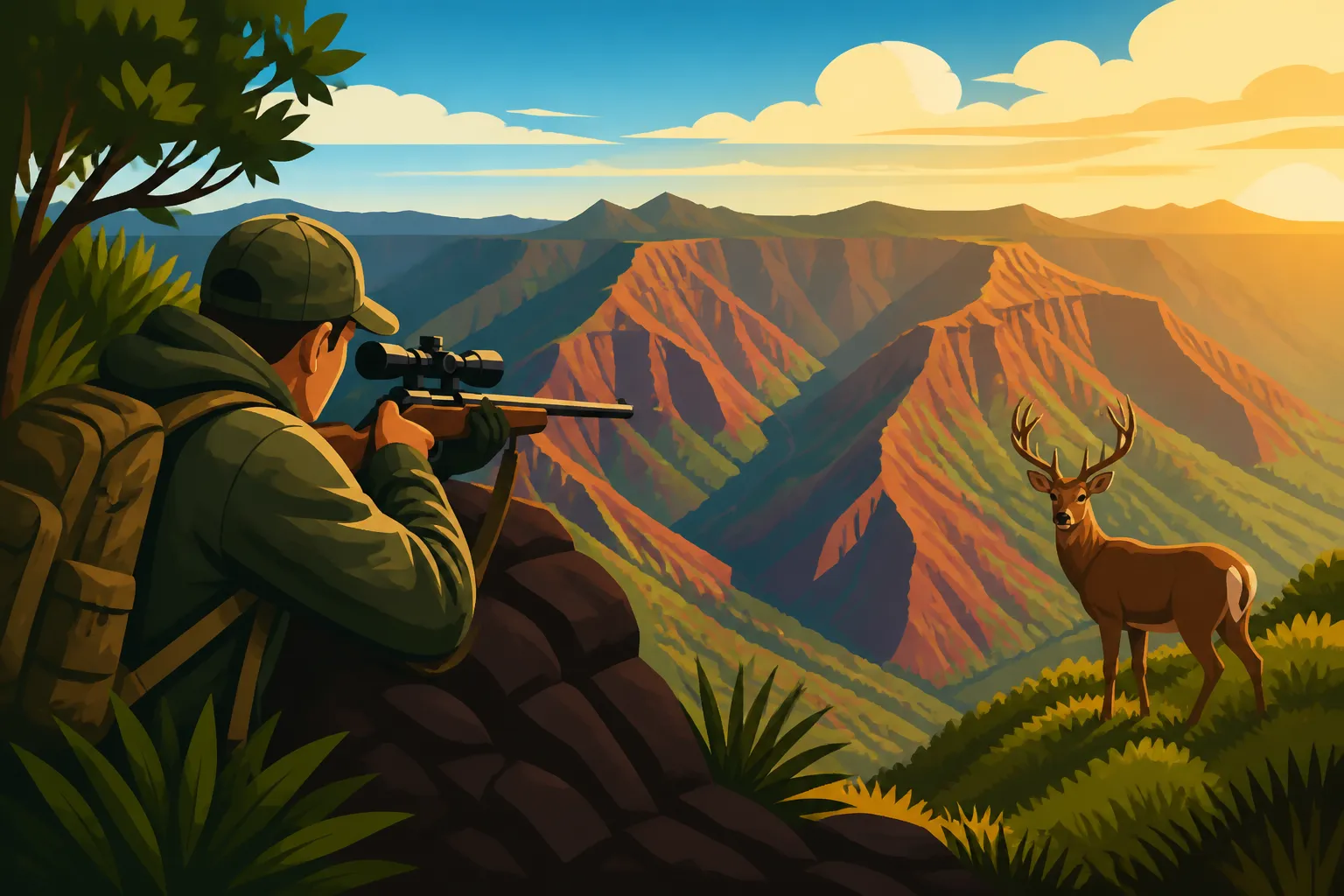
Hunting the Waimea Canyon Rim on Kauai for black-tailed deer isn't just another walk in the woods; it's an immersive test of skill and endurance in what many call the "Grand Canyon of the Pacific." The sheer scale, the steep drops, and the dense pockets of vegetation can make finding and recovering a deer feel like an impossible task. This guide will help you understand the unique challenges and equip you with the knowledge needed to successfully navigate and hunt this iconic, yet incredibly demanding, Hawaiian landscape.
Understanding the Waimea Canyon Rim's Unique Deer Habitat
The Waimea Canyon on Kauai is an absolutely breathtaking geological feature, but for hunters, its beauty masks an incredibly challenging environment. Unlike the open plains where many deer species roam, the black-tailed deer here have adapted to a terrain characterized by dramatic elevation changes, deep gulches, and a surprisingly varied mosaic of vegetation that shifts dramatically with microclimates. Understanding this environment is the first step toward a successful hunt.
Topography and Vegetation Challenges
Imagine standing on the rim, looking down thousands of feet into a labyrinth of eroded red dirt cliffs, verdant valleys, and sheer, impassable faces. This is the reality of hunting the Waimea Canyon Rim. The topography is dominated by steep pali (cliffs) and deep gulches that can stretch for miles, creating natural barriers and travel corridors for deer. These aren't gentle slopes; we're talking about pitches so steep you'll be using hands and feet, often on loose scree or slick clay.
The vegetation is equally diverse and challenging. Along the rim, especially where it's drier, you'll find kiawe and haole koa, forming thorny, impenetrable thickets. As you descend into the gulches or move into areas with more consistent rainfall, the landscape transforms into dense rainforest, thick with guava, ʻōhiʻa, and ferns. These areas provide excellent cover for deer but make visibility and movement incredibly difficult for hunters. Navigating a Hawaii Gulch System requires not just physical strength but also a keen sense of direction and an understanding of how the terrain funnels both water and wildlife. You might be slogging through muddy, slippery trails one moment, then scrambling over sharp, crumbling rock the next. This extreme variety means your gear and tactics need to be versatile enough to handle everything from dry, dusty ridgetops to wet, dense jungle.
Deer Movement Patterns in Canyon Country
Black-tailed deer are incredibly adept at living in this rugged environment. They've learned to use the canyon's features to their advantage, often moving along benches and terraces within the gulches, or using the dense vegetation for bedding and escape cover. Their movement patterns are highly influenced by the availability of water, food sources that vary by elevation and season, and human pressure. During the hotter parts of the day, deer will often retreat into the shaded, cooler depths of the gulches or the thickest patches of forest, making them incredibly hard to spot.
As evening approaches and early mornings, they might venture out onto more open slopes to feed, or follow established game trails along the rim or across shallower crossings. The wind and thermals within the canyon are notoriously tricky, often swirling and changing direction as the sun heats and cools the different faces. A thermal might carry your scent uphill in the morning, then reverse to carry it downhill in the afternoon. Understanding these shifts is critical for a successful stalk. Deer here are highly alert, and any advantage you can gain by playing the wind or moving quietly will be invaluable. Learning about the Kauai Black-Tailed Deer Season Dates is important, but knowing how the deer behave within those dates based on weather and pressure is what truly sets successful hunters apart.
Essential Gear and Preparations for Canyon Hunting
Hunting the Waimea Canyon Rim is not for the faint of heart, nor for the ill-prepared. The challenging terrain demands a specific set of gear and a level of physical fitness that goes beyond what you might need for many other hunting destinations. Cutting corners on your preparations here could lead to a miserable, or even dangerous, experience.
Footwear and Clothing for Steep Terrain
Your feet are your most important tool in the Waimea Canyon, and your footwear must be up to the task. You need boots that provide exceptional ankle support, a stiff sole to protect against sharp rocks and provide stability on uneven ground, and excellent traction for both wet and dry conditions. Look for boots designed for mountaineering or serious backcountry hiking, preferably with waterproof features but also good breathability to handle Hawaii's humidity. Brands like Salomon, La Sportiva, or Scarpa are often favored for their durability and grip in rugged conditions. Breaking in your boots thoroughly before your hunt is non-negotiable; a single blister in this terrain can end your trip.
Clothing should be lightweight, quick-drying, and durable. You'll be sweating a lot, even on cooler days, so moisture-wicking layers are essential. Long pants and sleeves are highly recommended to protect against abrasive vegetation, sun exposure, and insect bites. While blaze orange is required in some Hawaii hunting units, always check the specific regulations for the Waimea Canyon Rim area. Even if not mandated, a vest or hat in blaze orange is a good safety measure, especially if other hunters are in the area. Be sure to pack a light rain jacket, as afternoon showers can pop up unexpectedly, even on the dry side of the island.
Optics and Navigation in the Canyon
High-quality optics are not a luxury but a necessity when hunting the Waimea Canyon. The vastness of the canyon means you'll be doing a tremendous amount of glassing to locate deer, often at extreme distances or in shaded pockets. A good pair of 10×42 or 12×50 binoculars are crucial, and a spotting scope (15-45x or 20-60x) mounted on a sturdy tripod will be invaluable for picking apart distant slopes and judging animals. You'll want to invest in optics from reputable brands like Swarovski, Zeiss, or Kowa, which offer superior light gathering and clarity, allowing you to see game in low light conditions or through heat shimmer. For more general advice on what optics to consider for various hunting scenarios, you might look into Glassing a Hawaii Coastline for Goats as many of the principles apply here too.
Navigation in such a complex, broken landscape is paramount. GPS devices (like those from Garmin or Bushnell) or mapping apps on your smartphone (like onX Hunt, which offers detailed topo maps and property boundaries) are absolutely critical. Download offline maps of the entire hunting unit before you lose cell signal, which is common in the canyon. Carry a physical map and compass as a backup, and know how to use them. The deep gulches and thick cover can quickly disorient you, and getting lost here is a serious situation. Remember, No Cell Signal on a Hawaii Hunt is a real possibility, so relying solely on your phone for communication or navigation is a dangerous gamble. A personal locator beacon (PLB) or satellite messenger (like a Garmin inReach or Zoleo) is also a wise investment for emergencies, allowing you to call for help even without cell service.
| Gear Category | Essential Items | Specific Considerations for Waimea Canyon |
|---|---|---|
| Footwear & Apparel | Sturdy hiking boots, moisture-wicking layers, rain gear, sun protection, durable pants/long sleeves | High ankle support, aggressive traction, waterproof but breathable. Layers for temperature changes, protection from thorns/sun. |
| Optics | 10-12x binoculars, spotting scope + tripod | High-quality glass for long-range glassing in challenging light. Essential for identifying deer across vast distances and picking apart dense cover. |
| Navigation | GPS device/app with offline maps, compass, physical map, PLB/satellite messenger | Redundant navigation systems are critical due to lack of cell service and complex terrain. Practice with all devices before the hunt. |
| Hydration | Hydration pack, extra water bottles, water filter | Carry significantly more water than you think you'll need. The heat, humidity, and exertion can lead to rapid dehydration. A filter is a good backup for natural water sources (if available). |
| Safety & First Aid | Comprehensive first-aid kit, whistle, headlamp, emergency shelter, fire starter | Include blister care, trauma dressings. Headlamp is vital for early mornings/late evenings. Emergency blanket and fire starter for unexpected overnight stays. |
| Hunting Specific | Rifle/bow, ammunition, knife, game bags, trekking poles | Legal weapons (check Hawaii's Legal Weapons by Season). Sharp knife for field dressing, strong game bags for meat. Trekking poles provide stability on steep, uneven ground and reduce strain. |
Effective Hunting Tactics Along the Rim
Hunting the Waimea Canyon Rim is as much a mental game as it is physical. You'll need patience, persistence, and a willingness to adapt your strategies to the ever-changing terrain and conditions. Successful hunters here often spend more time observing than moving, carefully dissecting the landscape for any sign of deer.
Glassing Techniques from Above and Across
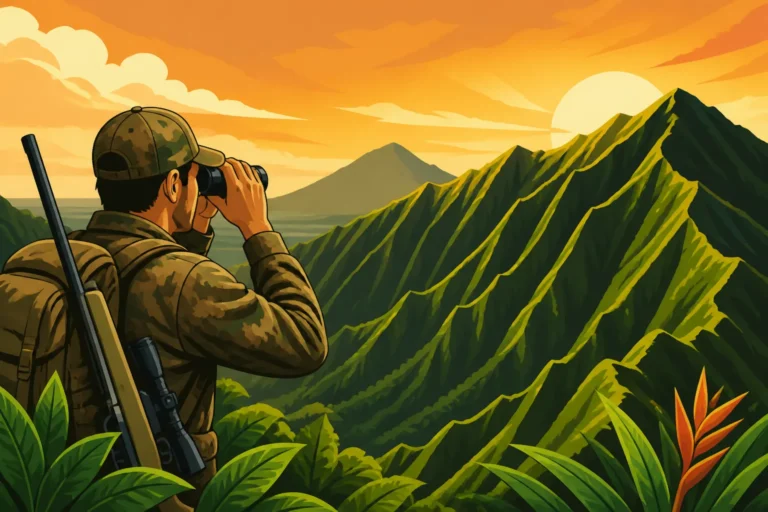
Given the vastness and broken nature of the Waimea Canyon, glassing is your absolute most important hunting technique. You simply cannot walk up on deer in this country with any consistency. Start your day by finding a high vantage point, preferably one that allows you to look into multiple gulches and across to opposing canyon walls. Set up your spotting scope and systematically grid search every visible patch of cover. Pay close attention to shaded slopes, the edges of thick vegetation, and any benches or terraces that might offer bedding areas. Deer often blend incredibly well with the red dirt and shadowed foliage, so look for abnormal shapes, horizontal lines, or the flicker of an ear or tail.
Sunrise and sunset are prime glassing times, as deer are often most active and light angles can reveal animals that were previously hidden. As the sun climbs, focus your efforts on shaded areas where deer might retreat. Don't just scan; study the landscape. Spend 10-15 minutes on a single small area before moving your optics slightly. It's amazing what you can pick out when you slow down and really focus. Remember to factor in the thermal shifts; early morning thermals will generally rise, carrying your scent uphill, while afternoon thermals will reverse and pull your scent down into the canyon. Position yourself accordingly to keep the wind in your favor.
Approaching Deer in Thick Cover and Steep Slopes
Once you've spotted a deer, the real challenge begins: the approach. This is where your physical fitness and meticulous planning come into play. A direct approach is rarely feasible or advisable due to the steepness and thick cover. Instead, you'll need to plan a route that uses terrain features for concealment, keeps the wind in your face (or at least consistently quartering), and avoids exposing you on skylines. This often means long detours, crawling through thorny brush, or scrambling up and down incredibly steep sections.
Move slowly and deliberately. Every step should be intentional, checking for loose rocks or noisy vegetation. If you're bowhunting, getting within effective range requires even greater stealth and patience. When hunting in thick vegetation, focus on moving during windy gusts or other natural sounds that can mask your footsteps. Be prepared to lose sight of the deer multiple times during your approach – this is normal. Trust your compass and GPS to guide you to the last known location. For more insights into how animals move through specific terrain, it's worth considering tactics detailed in Hunting Goats in Hawaii's Canyon Country, as goats and deer often utilize similar difficult passages. The key is to never rush; a slow, cautious approach will yield far more opportunities than a fast, noisy one.
Recovery Challenges and Safety Considerations
Successfully shooting a deer in the Waimea Canyon is only half the battle; recovering it can be an even greater feat. If a deer drops into a gulch or rolls down a steep incline, be prepared for a grueling, multi-hour, or even multi-day, recovery. Always take a moment to mark the spot where the deer was shot and the direction it ran. If it goes down, mark that spot too. The dense vegetation and steep angles can make finding a downed animal incredibly difficult, even if you saw it fall.
Before you even pull the trigger, consider the recovery. Can you safely reach the animal? Is the terrain traversable? Do you have the necessary gear to pack it out? Packing meat out of a Hawaii gulch is an immense task, requiring strong game bags, a good backpack, and often multiple trips or a team of hunters. The heat and humidity mean you need to cool the meat as quickly as possible to prevent spoilage. Field dressing the animal immediately is paramount.
Safety should always be your top priority. Hunt with a partner if possible, and always let someone know your detailed hunting plan and expected return time. Carry ample water, food, a comprehensive first-aid kit, and emergency signaling devices. The terrain is unforgiving; one misstep could lead to a serious injury far from help. Understanding Water and Heat Planning for a Hawaii Hunt is crucial for both comfort and survival. This is not the place to take unnecessary risks.
Disclaimer
Hunting in Hawaii involves inherent risks and is subject to strict regulations. Always consult the most current Hawaii Department of Land and Natural Resources (DLNR) Division of Forestry and Wildlife (DOFAW) rules and regulations before planning any hunt. This guide provides general information and does not replace official guidelines or common sense safety practices. Hunt safely and responsibly.