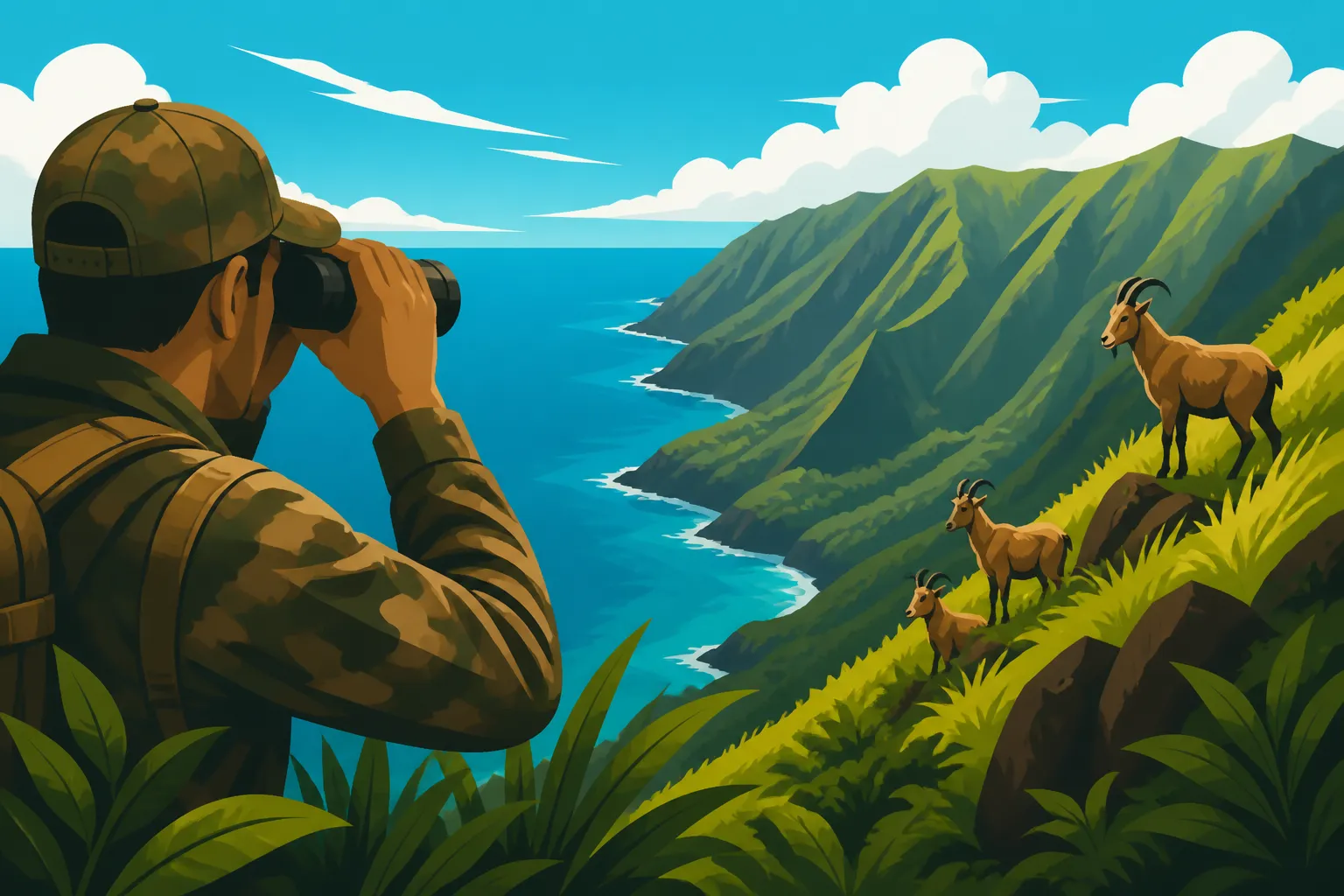
Glassing a Hawaii Coastline for Goats
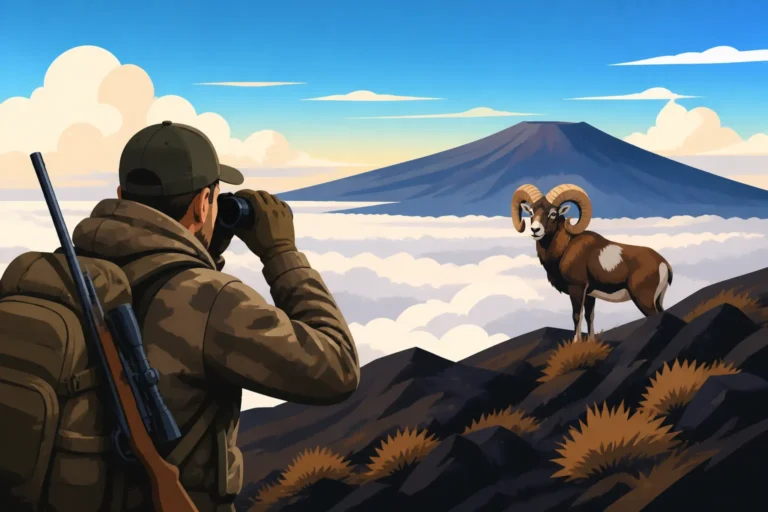
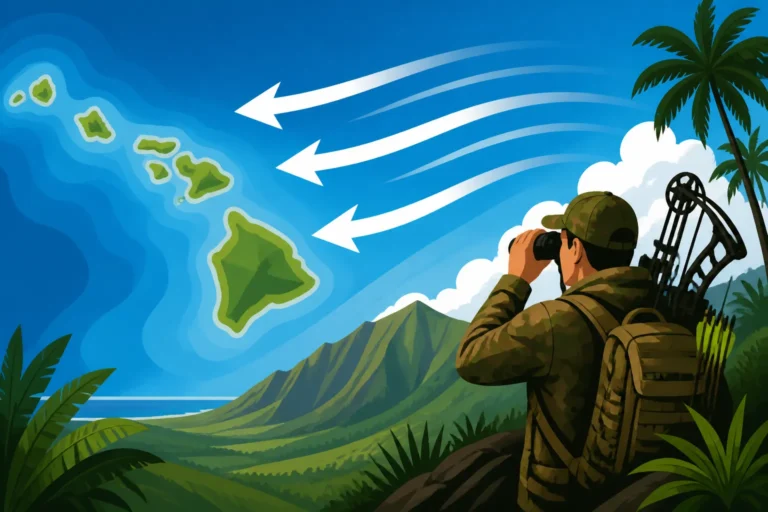
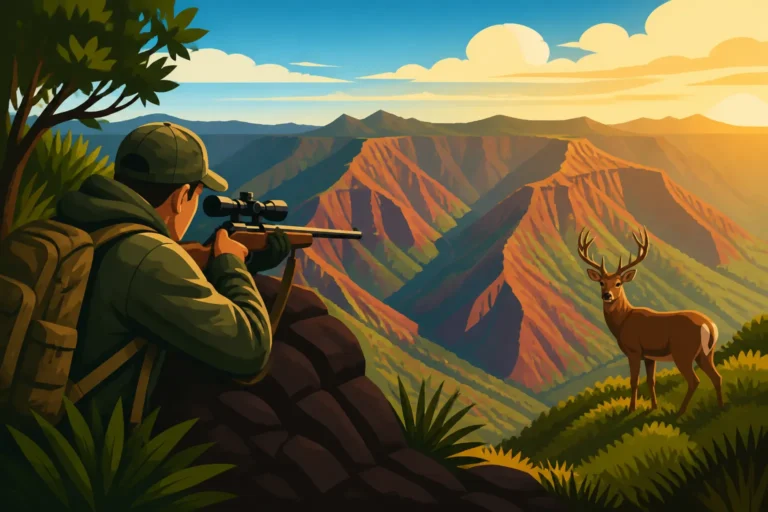
Staring out at Hawaii's rugged coastline, the sheer cliffs dropping into the deep blue Pacific, it's easy to feel overwhelmed. You know feral goats are there, clinging to those impossibly steep faces, but spotting them in such vast, broken terrain feels like finding a needle in a haystack. This guide will walk you through the precise techniques and gear you need to effectively glass Hawaii's coastlines, turning those frustrating hours of staring into successful observations and, hopefully, a rewarding hunt.
Understanding Hawaii's Coastal Goats and Their Habits
Hunting goats in Hawaii is a unique challenge, unlike anything you’ll find on the mainland. These animals thrive in some of the most unforgiving landscapes imaginable, and understanding their behavior is the first step to glassing them successfully. They’re masters of camouflage and leverage the terrain to their advantage, making a systematic approach absolutely essential. If you’re serious about Hunting Hawaii's Feral Goats, you need to think like one first.
Where Goats Hide Along the Cliffs
Hawaii's feral goats are not your average pasture animals. They've evolved to survive in environments that would make a mountain goat blush. This means they prefer the steepest, most inaccessible stretches of coastline, often where sheer lava rock meets dense, dry brush. Think about the dramatic pali (cliffs) of Maui's southern coast, the rugged gulches leading to the ocean on the Big Island, or even the dramatic Na Pali Coast on Kauai where they have historically roamed. Their preferred hiding spots are usually in areas with broken terrain: lava tubes, small caves, shaded ledges, or dense thickets of kiawe and haole koa that provide both cover and browse.
Their coloration, ranging from light tan to dark brown or even black, often blends seamlessly with the sun-baked rocks and shadows. You won't often find them silhouetted against the sky on a prominent ridge during the heat of the day. Instead, they’ll be tucked away, using the contours of the land to remain hidden. This makes identifying them a game of spotting subtle anomalies – a patch of hair that looks out of place, a horizontal line where there should only be vertical rock, or the glint of an eye reflecting the sun. Knowing How Goats Survive on Hawaii Sea Cliffs is key to understanding where they'll be.
The Best Times to Spot Movement
Just like most game animals, Hawaii’s coastal goats are most active during the cooler parts of the day. This typically means early morning, right as the sun begins to kiss the cliffs, and late afternoon, as the temperatures start to drop. During these times, they’ll move from their bedding areas on sheltered ledges to more exposed spots to feed on whatever sparse vegetation they can find, such as various grasses, shrubs, and even the tender shoots of kiawe. Understanding Why Hawaii Goats Move at First Light is crucial here.
Thermals play a huge role along the coastline. In the morning, cooler air from the land flows down towards the ocean. As the sun heats the land, the thermals reverse, pulling scents (and sometimes sounds) upwards. This means you might want to position yourself slightly above your intended glassing area in the morning and potentially lower in the afternoon, always trying to keep the wind in your favor. Extreme heat in the middle of the day will drive goats into the deepest shade they can find, often within caves, under large overhangs, or nestled in thick pockets of vegetation where they're almost impossible to spot without disturbing them. Conversely, heavy rain might push them into similar sheltered areas, but they're often more tolerant of a light drizzle if there's good forage. When planning your hunt, consider What Goats Eat in Dry Country will tell you about where they'll be feeding during these peak movement times.
Essential Gear for Coastal Glassing
You wouldn't attempt to climb these cliffs barehanded, and similarly, you shouldn't attempt to glass them without the right tools. Your optics are your most important hunting tool here, essentially extending your vision into areas your feet can't (or shouldn't) reach. Beyond that, solid navigation and safety gear are non-negotiable for the challenging Hawaiian coastal environment.
Optics for Long-Range Observation
When you're trying to pick out a goat from miles of jagged rock, good optics aren't a luxury; they're a necessity. You need clear, bright glass that can handle the intense tropical sun and the inevitable humidity.
- Binoculars: For general scanning and quick checks, a good pair of 10×42 or 12×50 binoculars are indispensable. They offer a wide field of view and enough magnification to cover vast stretches of coastline. Look for models that are fully waterproof and fog-proof, as the coastal environment can be relentless. Brands like Vortex, Leupold, and Maven offer excellent quality and durability that hold up to Hawaii's conditions.
- Spotting Scopes: For truly picking apart distant cliffs, identifying the sex of a goat, and judging its size, a spotting scope is paramount. A 20-60x or 25-75x magnification range is ideal. This lets you zoom in and resolve details that binoculars simply can't. You'll want a quality objective lens, preferably 65mm or larger, for optimal light gathering, especially in lower light conditions. Angled eyepieces are often more comfortable for long glassing sessions.
- Tripods: A spotting scope is next to useless without a stable tripod. Even with binoculars, using a tripod adapter will dramatically reduce fatigue and shake, allowing you to discern subtle details that hand-holding would obscure. Lightweight but sturdy carbon fiber tripods are excellent for packing into remote coastal areas.
| Optic Type | Ideal Magnification | Primary Use | Key Features for Coastal Hawaii |
|---|---|---|---|
| Binoculars | 10×42 or 12×50 | Wide-area scanning, quick identification | Waterproof, fog-proof, durable housing |
| Spotting Scope | 20-60x or 25-75x | Detailed observation, judging size/sex at range | Large objective lens (65mm+), angled eyepiece, robust |
| Tripod | N/A | Stabilizes optics, reduces fatigue | Lightweight (carbon fiber), sturdy, quick-release head |
Navigation and Safety Tools
Beyond seeing the goats, you need to ensure you can safely navigate the treacherous coastal terrain and get help if things go south. Cell service along many of Hawaii's remote coastlines is non-existent, making preparedness key.
- GPS Devices/Apps: A reliable GPS unit or a smartphone app like onX Hunt or OuterSpatial (which is often used for checking into Hawaii hunting units) is crucial. These apps allow you to download offline maps, mark waypoints for promising glassing spots or potential access routes, and track your movement. Remember to bring a portable power bank to keep your devices charged. The Department of Land and Natural Resources (DLNR) even uses the Using the OuterSpatial App to Check In and out of units, so familiarity with it is a bonus.
- Topo Maps: Physical topographic maps are an excellent backup to electronic devices. They provide a vital overview of the terrain, showing elevation changes, contour lines, and potential ravines or access points that might not be immediately obvious on a digital screen. Study them beforehand to understand the lay of the land.
- Communication Devices: Given the spotty cell service, a satellite messenger (like a Garmin InReach or Zoleo) is a lifesaver. These devices allow you to send and receive text messages, share your location, and, critically, send an SOS signal in an emergency, even when miles from the nearest cell tower. A whistle is also a simple, low-tech way to signal for help.
- Appropriate Footwear: This cannot be stressed enough. Coastal goat hunting involves navigating sharp lava rock, loose scree, and potentially slick, overgrown trails. High-quality hiking boots with excellent ankle support and stiff soles are essential. Think about brands like Scarpa, La Sportiva, or Salomon, which are known for rugged mountain footwear. Break them in well before your trip. A sprained ankle here can turn a memorable hunt into a serious rescue operation.
Effective Glassing Techniques for Coastal Terrain
Glassing isn't just about pointing your binoculars at a cliff. It's a deliberate, patient, and systematic process that significantly increases your chances of spotting game in challenging environments. On Hawaii's coasts, where goats blend so perfectly, precision is everything.
Setting Up Your Glassing Position
Choosing the right vantage point is arguably as important as the optics you bring. You need to find a spot that gives you a commanding view of the terrain you want to hunt, while also offering stability and safety for yourself.
First and foremost, safety. Hawaii's coastal areas can be dangerous, with crumbling edges, loose rock, and sudden drop-offs. Always be aware of your surroundings and prioritize stable footing. Don't push too close to a cliff edge for a "better" view if it means putting yourself at risk. Find a flat, solid area, perhaps a small knoll or a rocky outcrop that provides elevation without excessive exposure.
Once you’re safely situated, consider the sun and wind. Try to position yourself so the sun is not directly in your eyes, especially during peak glassing times. Early morning sun reflecting off the ocean or directly into your scope can cause debilitating glare. Similarly, consider the wind direction. While you're glassing, you might notice goats moving in response to thermals or feeding into the wind. If you plan to make a stalk after glassing, knowing the prevailing wind will be vital for your approach.
Lastly, think about natural cover. Even if you're not actively stalking, minimizing your profile can help keep goats unaware of your presence, allowing you to observe their natural behavior for longer. Use a rock, a small tree, or a depression in the ground to break up your outline. Remember, the goal is to be an invisible observer.
The Grid Search Method
This is the cornerstone of effective glassing. You can't just randomly scan; you need a system.
- Divide and Conquer: Mentally (or actually, if your scope has one) divide the area you're scanning into smaller, manageable grids or sections. Start with the closest section, then move to the next, systematically working your way across the landscape.
- Slow and Steady Wins the Race: Begin at one edge of your grid, say the bottom left, and slowly scan horizontally to the right. Once you reach the right edge, move your optics up slightly and scan back to the left. Repeat this process, moving slowly up the grid. This methodical approach ensures you don't miss anything. The key word here is slow. Take your time, letting your eyes adjust and focusing on different depths within the landscape.
- Look for Anomalies, Not Whole Animals: Goats are experts at blending in. You might not see a whole goat at first. Instead, look for:
- Horizontal lines: Goats stand horizontally on a mostly vertical landscape.
- Contrasting colors: A patch of white, black, or tan that seems out of place on the grey or reddish rock.
- Movement: A twitch of an ear, a flick of a tail, or a slight shift in position. Even tiny movements can give them away.
- Shadows: Sometimes, the shadow cast by a goat is more obvious than the animal itself.
- Patterns: Look for repeating patterns like legs, ears, or horn shapes.
- Repeat and Re-scan: Don't assume an area is clear after one pass. Light conditions change, goats move, and your eyes might pick up something new on a second or third scan. Revisit promising areas frequently. This patience is often the difference between success and failure when Hunting Goats on a Sea Cliff Safely.
Interpreting Goat Sign from Afar
Even without spotting a goat directly, their presence leaves clues. Learning to read these signs from a distance can guide your glassing efforts to more productive areas.
Goats, like any animal, leave behind evidence of their activity. From your vantage point, with the aid of your powerful optics, you can start to piece together their routines. Look for faint trails that crisscross steep slopes or disappear into dense cover. These aren't always obvious deer trails; sometimes they're barely visible ledges worn smooth over generations of goat traffic. If you spot a network of these trails leading to a specific area, that’s a good indication of a bedding or feeding zone.
Another significant sign is disturbed vegetation. Goats are browsers, so patches of munched-on leaves, broken branches, or even flattened grass in small, sheltered pockets can signal their recent presence. While you won't necessarily see fresh droppings from a mile away, you might spot areas where vegetation looks heavily impacted, especially in otherwise untouched landscapes. Pay attention to how the vegetation is impacted in a way that suggests browsing rather than simple erosion or other animal activity.
Understanding their bedding areas is also crucial. Goats often bed down in areas that offer both cover from predators (which are few in Hawaii, but sun and elements count) and a commanding view of their surroundings. These might be small, flat spots on a steep slope, under an overhang, or within a dense patch of thorny kiawe. Look for any flattened areas or bare spots on ledges that suggest consistent use. Once you identify potential bedding areas, you know where to focus your glassing efforts during mid-day or to anticipate movement from at first and last light.
Planning Your Coastal Goat Hunt
Once you've honed your glassing skills and identified a promising area, the real work of planning your hunt begins. Hawaii's hunting regulations are specific, and coastal terrain presents unique logistical challenges for accessing units and especially for packing out your hard-earned meat.
Permitting and Access Considerations
Before you even step foot in the field, you need to ensure all your paperwork is in order. Hunting in Hawaii requires a valid hunting license, and for goats on many islands, a specific permit-tag is also necessary.
- Licenses and Permits: Start by understanding Hawaii Hunting Licenses and What They Cost. Non-residents typically pay more, but the process is straightforward. Then, familiarize yourself with How Hawaii's Permit-Tag System Works. For goats, depending on the island and unit, you might need to apply for a drawn hunt or purchase an over-the-counter tag. Always check the current year's regulations on the DLNR website or through official channels like GoHunt, which often aggregates this critical information.
- Unit Research: Hawaii has numerous hunting units, and not all of them offer coastal goat hunting. Research which specific units on islands like Maui, the Big Island, or Kauai are open for goat hunting and have accessible coastal areas. Some units may require specific vehicle access (4WD), while others are walk-in only.
- Check-in Procedures: Many public hunting units in Hawaii require hunters to check in and out, often through a hunter check station or via the OuterSpatial app. Always confirm the specific requirements for your chosen unit. Forgetting to check out can lead to penalties or even temporary suspension of hunting privileges.
- Private Land: While many coastal goat hunts happen on public lands, some of the most productive (and least pressured) areas are on private ranches. Gaining access to these lands requires prior arrangement, and often a fee or a guided hunt. If you're considering this route, research how to navigate Getting Onto Hawaii Private Land to avoid trespassing issues.
Field Care and Extraction on Coastal Terrain
This is where coastal goat hunting becomes truly challenging. Hauling an animal off a steep, hot, and humid Hawaiian coastline is not for the faint of heart.
- The Heat and Humidity: Hawaii’s climate is notorious for spoiling meat quickly. Once you’ve harvested a goat, time is of the essence. You need to get that animal field dressed and cooled down as rapidly as possible. This means having a plan for rapid cooling – perhaps game bags, ice, or even a cooler packed with frozen water bottles if you can reach your vehicle relatively quickly. Our guide on Field Care in Hawaii's Heat and Humidity offers vital tips, as does Cooling Meat Fast on a Hawaii Hunt.
- Steep and Rugged Terrain: Imagine trying to descend a 1,000-foot cliff with 50-70 pounds of goat meat on your back. It’s incredibly dangerous. Before you even pull the trigger, you need to have a realistic extraction plan. Can you quarter the animal and make multiple trips? Do you have enough help? Is there a safer, albeit longer, route to the vehicle? Sometimes, what looks like an easy stalk from a glassing knob turns into an impossible retrieve. Consider packing a good quality game saw, sharp knives, and durable game bags to minimize weight and facilitate quartering on the spot.
- Safety First: Carrying a heavy load on uneven, steep terrain significantly increases the risk of falls and injuries. Wear your sturdy boots, use trekking poles for stability, and never take unnecessary risks. If the terrain is too dangerous, sometimes the safest decision is to leave an animal rather than risk your life. Always let someone know your hunting plan, including your intended route and expected return time.
| Task | Description | Importance Level | Tools/Resources |
|---|---|---|---|
| License/Permit | Obtain valid Hawaii hunting license & goat permit-tag. | Critical | DLNR website, GoHunt, Hawaii Hunting Licenses and What They Cost |
| Unit Research | Identify open coastal units, understand access requirements. | High | DLNR Hunting Regulations, topo maps, OuterSpatial |
| Vantage Point | Scout safe, elevated spots with clear views for glassing. | High | Binoculars, spotting scope, tripod, physical scouting |
| Glassing Routine | Systematically grid search, look for anomalies, repeat scans. | Critical | Patience, high-quality optics, tripod |
| Extraction Plan | Pre-plan how to safely and quickly retrieve harvested game. | Critical | Game bags, sharp knife, game saw, a trusted hunting partner |
| Field Care | Rapidly cool meat to prevent spoilage in Hawaii's climate. | High | Ice, coolers, game bags, Field Care in Hawaii's Heat and Humidity |
| Safety Protocol | Inform someone of your plans, carry communication device. | Critical | Satellite messenger, fully charged phone, whistle |
Disclaimer
Please be aware that hunting regulations, season dates, and unit access can change. Always consult the most current Hawaii Department of Land and Natural Resources (DLNR) hunting regulations before planning any hunt. This guide is for informational purposes only and does not supersede official state regulations. Hunt safely and ethically.