Why Hawaii Goats Move at First Light
Hunting goats in Hawaii can be an exhilarating challenge, but it often leaves hunters scratching their heads, wondering why these agile creatures seem to disappear as soon as the sun gets high. You’ve put in the time scouting, maybe even hiked miles in the dark, only to find the landscape seemingly barren once daylight truly breaks. If you've ever felt like you're missing the golden window, you're not wrong. This guide is all about peeling back the layers to understand exactly why Hawaii goats move so much at first light, and how you can use this predictable behavior to significantly improve your hunting success.
The Dawn Advantage: Why First Light is Prime for Hawaii Goats
When that first hint of orange touches the horizon, something shifts in the goat world here in Hawaii. It’s not just a pretty sunrise; it's a critical window of opportunity that these animals instinctively leverage for their survival. Understanding these core motivations is key to anticipating their movements.
Temperature Drop and Foraging Opportunities
Let's be real, Hawaii gets hot. Even in the cooler months, the midday sun can be relentless, especially in the exposed, dry country where many of our feral goats thrive. Goats, like most animals, are incredibly sensitive to temperature fluctuations. After a long night, when the air has cooled considerably, they find this early morning period to be the most comfortable for active foraging. The intense heat of the day drives them to seek shade, shelter, and often, complete inactivity.
This comfort allows them to venture out into more open areas to browse and graze. The plants they feed on — whether it's the tender new shoots in a gulch or the dew-laden grasses clinging to a lava field edge — are often at their most palatable and nutritious at dawn. Think about it: that morning dew provides a vital source of hydration in arid environments, and it also softens vegetation, making it easier to digest. You'll often see them nibbling on a variety of plants, from kiawe pods that have fallen overnight to new growth on thorny shrubs that would be too dry and brittle later in the day.
Security and Reduced Human Activity
Beyond comfort and food, security is a massive driver for early morning goat movement. In Hawaii, while we don't have large natural predators like mountain lions or wolves, human activity is a significant factor. Most hikers, sightseers, and even other hunters, are not out in the units before dawn. This low light period offers a precious window of reduced disturbance. Goats, being highly alert and cautious animals, utilize this time to move more freely, often crossing open areas or feeding in places they'd avoid once human presence increases.
The dim light also works as a natural camouflage. It’s harder for them to be spotted, and equally, it’s harder for their keen eyesight to detect potential threats from a distance. As the sun climbs higher and visibility improves for both animal and hunter, goats instinctively become more wary. They’ll pull back into thick cover, climb to inaccessible ledges on Hunting Goats on Hawaii's Coastal Cliffs, or retreat into the shadows of deep canyons like those found when Hunting Goats in Hawaii's Canyon Country. It's a strategic move to minimize risk, making that first hour of light their safest bet for expansive movement.
Environmental Cues and Behavioral Patterns at Dawn
Goat movement isn't just about the clock; it's deeply intertwined with the immediate environment. The subtle shifts in air, light, and landscape all play a role in their early morning routine, offering crucial clues to observant hunters.
Understanding Thermal Air Currents and Wind Shifts
This is perhaps one of the most critical, yet often overlooked, elements of hunting any animal in Hawaii’s varied terrain, especially goats. Thermals are air currents that rise and fall with temperature changes, and they carry scent. At night, cool air descends into valleys and gulches, meaning the scent travels downhill. As the sun begins to warm the earth at first light, these thermals reverse. The air starts to rise, carrying scent uphill.
This reversal directly impacts how and where goats move. Often, they will bed higher up on a ridge or a steep slope during the night to take advantage of the downhill thermals, which would carry any scent of a predator away from them. As dawn breaks and the thermals begin to lift, they'll often start moving down from these bedding areas towards lower elevation feeding grounds, knowing that the scent will soon be rising. Being mindful of these shifts is paramount. If you're coming in from below them as the thermals start to rise, your scent could blow right up to them. Conversely, positioning yourself above them, even at first light, gives you a significant advantage. This intimate understanding of how air moves is fundamental, and something we delve into more deeply when discussing Hunting Downwind in Hawaii's Shifting Thermals. It’s a game-changer when you consider the complex wind patterns found across the islands, particularly with the ever-present trade winds.
Prime Feeding Areas and Water Sources
Goats are incredibly efficient foragers, and their first-light movements are almost always dictated by where the best food and water sources are. In dry areas, this might mean descending into a gulch or low basin where dew collects or where there might be a trickle of water. After a cool night, any available moisture is a magnet. We often see them working their way along the edges of dry creek beds or near stock ponds, even if those are completely dry later in the day. Knowing where the goats' preferred forage is, like the sparse, hardy vegetation they typically eat in these dry regions, or where they might find tender sprouts after recent rain, is key to anticipating their paths. Consider the strategic importance of Hunting a Water Source in Dry Hawaii Country during prolonged dry spells, as early morning visits are common.
In coastal areas, goats might descend from their high, inaccessible sleeping ledges to browse on vegetation clinging to the cliff faces or on the flatter, greener areas just above the beach. They are masters of navigating treacherous terrain, and these movements at first light are often made to access patches of greenery that are otherwise out of reach or too exposed during the day. When you're trying to spot them, focusing on these transitional zones – where steep terrain meets flatter ground, or where different types of vegetation meet – can be incredibly productive, as detailed in how to effectively be Glassing a Hawaii Coastline for Goats.
Escape Routes and Sun Exposure
Another critical aspect of goat movement at first light is their strategic positioning relative to escape routes and sun exposure. Goats are inherently wary, and even when feeding, they always seem to have an exit strategy in mind. Their early morning movements will often take them to areas that offer quick access to steep, broken country or thick cover, should a threat appear. They aren’t just looking for breakfast; they’re also looking for a quick exit.
Furthermore, after a cool night, especially at higher elevations or in shaded gulches, goats actively seek out the first rays of morning sun. You'll often see them emerge onto east-facing slopes or ridge lines to soak up the warmth. This isn't just about comfort; it helps regulate their body temperature and can dry off their coats, which is particularly important in Hawaii’s often damp, windward environments. This behavior provides a predictable window for hunters. If you know which slopes catch the early sun, you have a better idea of where goats might appear, lingering for a short while before moving into shadier, more secure areas as the day heats up.
Maximizing Your Chances: First-Light Goat Hunting Tactics
Understanding why goats move at first light is just the beginning. The real work comes in applying that knowledge to your hunting strategy. This means meticulous planning and smart execution.
Scouting and Pre-Dawn Positioning
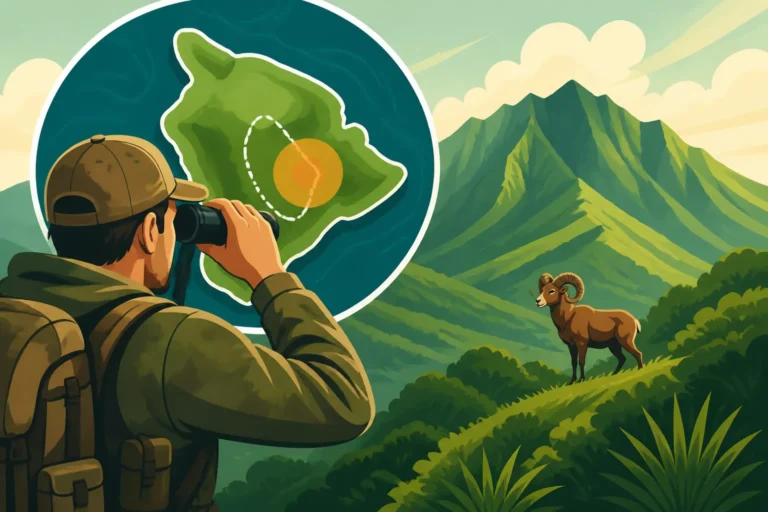
You absolutely cannot overstate the importance of scouting for Hawaii goat hunting. You need to know the terrain, understand the primary feeding and bedding areas, and identify potential travel corridors. This isn't just a casual walk-through; it's about observing sign – tracks, droppings, rubs – and noting where you see goats or recent activity in the evenings leading up to your hunt. Use high-quality optics from a distance to observe their evening patterns, as these often mirror their morning movements. Where do they disappear to for the night? They'll likely emerge from nearby at dawn.
Once you have a good idea of their patterns, the next step is getting into position before sunrise. This often means a dark, early hike, which can be challenging in Hawaii's rugged landscape. You might be navigating lava fields, steep gulches, or dense forest trails. Make sure you know your route, use a reliable headlamp, and always tell someone your plan. The goal is to be settled into a good vantage point, with your binoculars ready, at least 30-45 minutes before first light. This ensures you’re not making noise or casting shadows that could spook animals already on the move. Tools like the GoHunt app can be invaluable here, helping you pinpoint unit boundaries and access roads even in the dark, ensuring you're legally positioned and ready for the dawn.
Glassing and Patient Observation
When that first sliver of light hits the sky, don't rush. The temptation might be to start walking and covering ground, but that's often a mistake. Instead, find a comfortable, concealed position with a wide view, and let your binoculars or spotting scope do the walking for you. Goats, especially in low light, can appear out of nowhere, seemingly materializing from the shadows. Your job is to systematically glass the terrain, focusing on likely areas: ridge lines, the edges of gulches, brushy pockets, and those sun-kissed slopes we talked about.
Start by sweeping wide areas, then narrow your focus. Look for movement, yes, but also for shapes, colors, or textures that seem out of place. A patch of white or brown against a green hillside, the flick of an ear, or a horn catching the first light can be your giveaway. They often emerge from darker, thicker cover onto more open ground to feed. Be patient. Spot-and-Stalk Tactics on Open Country are often about the "spot" first, and that means putting in serious time behind glass. This initial period of observation can reveal entire herds you might have otherwise walked past, or show you the exact direction a lone billy is heading.
| Factor | Effect on Goat Movement at First Light | Hunter Tactic Implications |
|---|---|---|
| Temperature | Cooler temps after night encourage feeding before day's heat. | Position for early morning feeding zones; be out before sunrise. |
| Light Level | Low light provides security; increasing light triggers movement from bedding. | Spot goats emerging from shadowed areas; use optics to scan as light increases. |
| Thermals/Wind | Downhill thermals at dawn, then rising. Goats move with or against wind. | Hunt above them, watch wind direction meticulously, plan approach with thermals in mind. |
| Forage/Water | Seeking dew-laden plants and water sources after a cool night. | Focus on green pockets, gulch bottoms, known water points, or areas with recent rain. |
| Security | Feeling safe from predators (including humans) in low light. | Minimize noise, use cover, stay concealed; they'll be less wary early. |
Approaching and Shot Placement
Once you've spotted your target, the real chess match begins. Planning your stalk is critical, and the wind is your absolute master. Always, always play the wind. Even a slight shift can carry your scent to a goat miles away. This can be particularly tricky in Hawaii, where localized thermals can make predicting wind direction an art form. Referencing Reading Hawaii's Trade Wind Patterns can give you insights, but on the ground, always use a wind checker.
Use the terrain to your advantage, moving slowly and deliberately. Goats have exceptional eyesight, especially for detecting movement. Stay in the shadows, behind ridges, and use vegetation for cover. Make sure every step is quiet. As you get closer, assess the animal's demeanor. Is it alert? Feeding calmly? Pay attention to the surrounding herd if there is one, as one alert animal can spoil the whole stalk. When you're ready to take a shot, make it count. Goats are tough animals, and they often inhabit steep, unforgiving terrain. A precise shot is crucial to ensure a quick, ethical kill and to prevent a difficult, dangerous recovery. Knowing the anatomy and aiming for vital organs is paramount. Recovery can be incredibly challenging, especially if a wounded animal goes over a cliff or into a deep gulch, which is why Hunting Goats on a Sea Cliff Safely emphasizes extreme caution.
Essential Gear and Broader Considerations for Hawaii Goat Hunting
Beyond understanding goat behavior and specific tactics, having the right gear and respecting the local regulations are fundamental to a successful and responsible Hawaii hunting experience.
Optics, Footwear, and Hydration
Hunting Hawaii's goats means being prepared for demanding conditions. High-quality optics are not just a luxury; they're an absolute necessity. A good pair of 10x binoculars is your best friend for long-range glassing at first light, allowing you to pick apart distant slopes without revealing your presence. Many hunters also bring a spotting scope, especially for evaluating trophy potential or confirming a goat's location before a long stalk.
Your footwear is equally critical. Hawaii’s terrain can be brutal on feet and ankles, from jagged lava fields to slick, muddy trails and loose rock on steep inclines. A sturdy, supportive pair of hiking boots with excellent ankle support and a stiff sole is paramount. Trust me, trying to navigate these landscapes in inadequate footwear will quickly lead to misery, if not injury. If you're going to be traversing rough volcanic rock, reading up on Walking Rough Lava Without Wrecking Your Boots is a wise move. Beyond your feet, hydration is non-negotiable. Even on cool mornings, the Hawaiian sun quickly asserts itself, and strenuous hiking can lead to rapid dehydration. Always carry more water than you think you'll need, along with electrolyte supplements. Light, moisture-wicking clothing that can be layered is also important to adapt to the morning chill and the midday heat.
Regulations and Responsible Hunting
Participating in any hunting activity in Hawaii means adhering strictly to the local regulations. This starts with ensuring you have the proper licenses and permits. You'll need a valid Hawaii hunting license, and depending on the unit and island, you might also need specific permit-tags. Always check the current regulations with the Hawaii Department of Land and Natural Resources (DLNR) or through resources like GoHunt, which often provides up-to-date information on seasons, units, and requirements. Understanding Hawaii Hunting Licenses and What They Cost is your first step.
Beyond licenses, it's crucial to understand the check-in/check-out procedures for each hunting unit. Many public hunting areas require you to sign in before you begin your hunt and sign out when you leave, either at a physical check station or through a digital system like the OuterSpatial app. Neglecting this step can lead to penalties. Familiarize yourself with Checking In and Out of Hawaii Hunting Units to avoid any issues. Always know your unit boundaries to avoid trespassing on private land, which is a serious offense. Practicing ethical hunting, including making clean shots and diligently recovering any animal you shoot, is not just a rule; it’s a responsibility we all share as stewards of the land and its wildlife.
Disclaimer
Please remember that hunting regulations and conditions in Hawaii can change. Always consult the most current regulations from the Hawaii Department of Land and Natural Resources (DLNR) before planning any hunt. Safety should always be your top priority in the field.