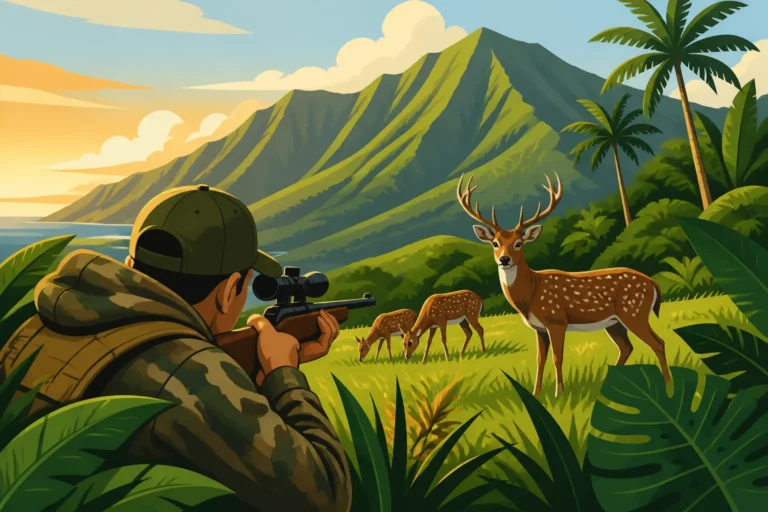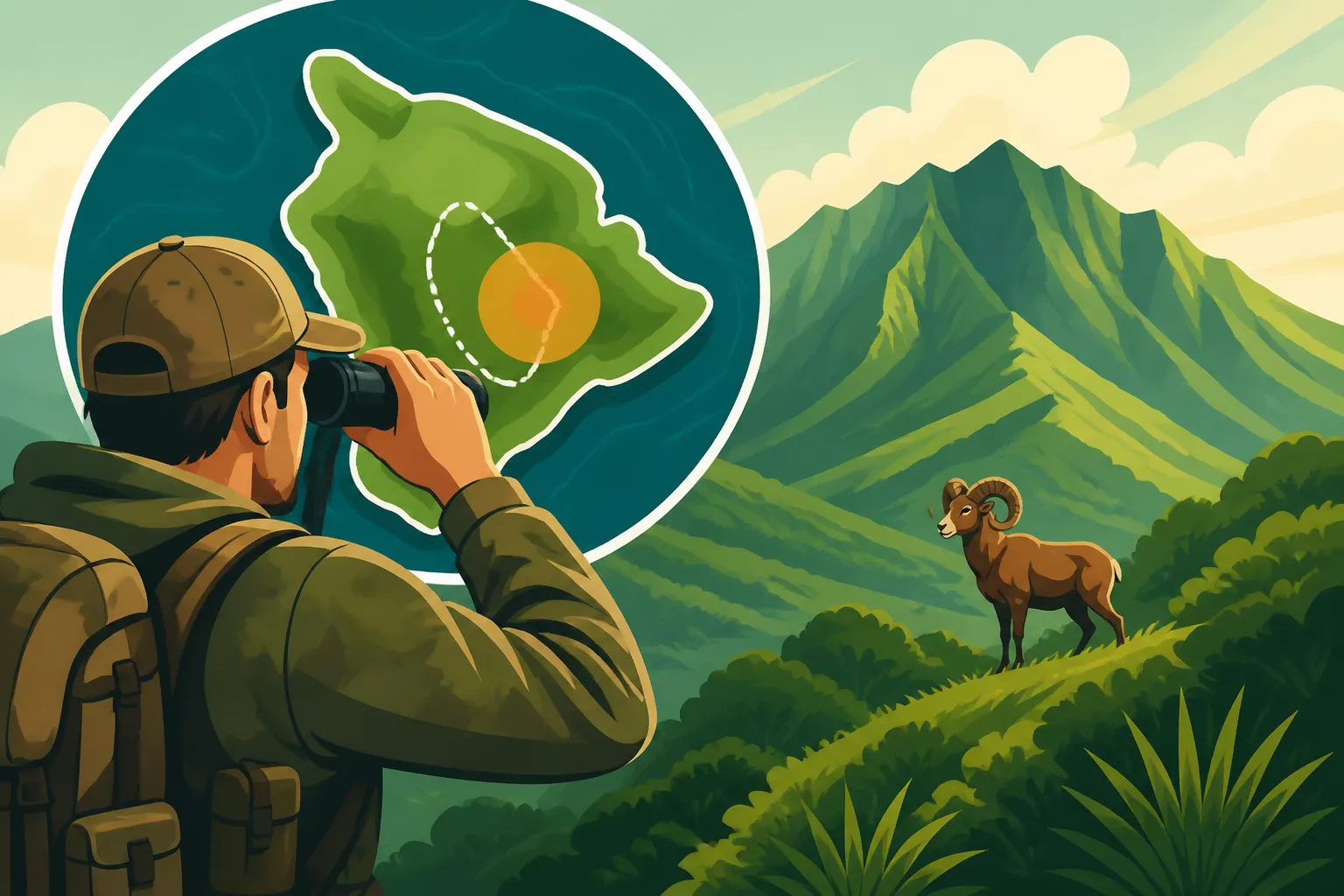
Scouting a Hawaii Hunting Unit Before Opening
There's nothing quite as frustrating as finally getting a tag for a prime Hawaii hunting unit, only to step foot in it on opening day feeling utterly lost. The clock is ticking, the sun is rising fast, and you're surrounded by dense jungle or vast, open lava fields, with no real clue where the animals might be. This guide is all about changing that narrative, helping you meticulously scout a Hawaii hunting unit before the season opens, so you step into the field with confidence and a solid plan.
Why Pre-Season Scouting is Absolutely Critical in Hawaii
Hunting in Hawaii isn't like hunting in many other places. Our islands present unique challenges, from incredibly diverse and often unforgiving terrain to limited access and specific animal behaviors. Skipping the scouting phase here isn't just a missed opportunity; it's often a recipe for a grueling, unsuccessful hunt. You wouldn't climb a mountain without looking at a map, and you shouldn't hunt our islands without putting in the legwork beforehand.
Overcoming Hawaii's Unique Terrain and Vegetation
Our islands boast an incredible range of ecosystems, sometimes within a single hunting unit. You might start in a dry, scrubby kiawe forest on the leeward side, traverse an old lava flow, and then drop into a steamy, thick rainforest gulch all in one day. Without pre-season scouting, it's incredibly difficult to anticipate these transitions, understand the best routes, or even know what kind of footwear and gear you'll need.
Imagine trying to navigate a dense strawberry guava thicket, known for hiding pigs, if you've never seen it before. Or attempting to cross sharp, uneven a'a lava without knowing the most stable paths. Scouting allows you to physically or digitally map out these challenges, identify natural funnels, potential ambush points, and even safe extraction routes for an animal. This intimate knowledge of the ground beneath your feet can be the difference between a successful hunt and a day spent fighting the terrain.
Maximizing Limited Hunting Opportunities
For many of us, hunting time in Hawaii is a precious commodity. Public hunting units often have specific, limited seasons, sometimes only opening on weekends or for short, drawn periods. When you only have a few days, or even just one weekend, every hour counts. Showing up unprepared means you'll spend valuable hunting time trying to figure out the basics – where to park, where the boundaries are, and where to even start looking for game.
Scouting ahead means that when opening day arrives, you're not fumbling. You know where you're going, what areas to focus on, and even potential backup plans if your primary spot is occupied. This preparation transforms your limited hunting window from a reconnaissance mission into an actual hunting endeavor, significantly increasing your chances of success. It's about respecting the scarcity of those precious hunting days.
Understanding Animal Behavior in Specific Units
Hawaii's game animals, whether they're axis deer, feral pigs, mouflon sheep, or goats, adapt their behavior to the specific conditions of their unit. A pig in a wet, windward rainforest will behave differently than one in a dry, leeward kiawe flat. Axis deer on the open ridges of Lanai will have different travel patterns than those in the dense cover of Maui's upcountry forests.
Scouting allows you to observe these local nuances. You can look for fresh sign – tracks, scat, rubs, wallows, and feeding areas – to determine what animals are currently using the area, their preferred routes, and how they're utilizing the available food and water. This understanding of localized animal behavior is invaluable, helping you choose the right hunting method, predict movement patterns, and place yourself in the best possible position for an encounter.
Digital Scouting: Your First Line of Attack
Before you even think about lacing up your boots, the most efficient way to start scouting a Hawaii hunting unit is right from your computer or phone. Digital tools have revolutionized how we approach hunting, allowing us to gain immense knowledge about a unit without spending a drop of gas or sweat. It’s about being smart and strategic with your initial research.
Leveraging Online Maps and Satellite Imagery
Modern mapping applications are an absolute game-changer. Services like Google Earth, Gaia GPS, and especially specialized hunting apps like OnX Hunt provide invaluable satellite imagery, topographical maps, and public/private land boundaries. For Hawaii, these tools are essential for understanding the lay of the land, identifying potential travel corridors, pinch points, water sources, and bedding areas.
Start by zooming in on your chosen unit. Look for changes in vegetation—dense patches of forest versus open grasslands, or areas where different types of trees meet. These transitions are often hotbeds for game activity. Pay close attention to contour lines on topo maps; they reveal steep gulches, accessible ridges, and potential escape routes. You can mark waypoints for promising areas, planned routes, and even potential check-in/check-out locations. Remember, when you're on the ground, having these digital maps downloaded for offline use is crucial, especially in areas with No Cell Signal on a Hawaii Hunt.
Consulting DOFAW Resources and Announcements
The Hawaii Department of Land and Natural Resources (DLNR), specifically the Division of Forestry and Wildlife (DOFAW), is your primary source for official hunting information. Their website often hosts maps of individual hunting units, outlines specific rules for each unit, and provides critical announcements regarding season dates, closures, or changes in regulations. Neglecting these resources can lead to serious misunderstandings or even violations.
Always check the most recent announcements for your specific island and unit. Sometimes a unit might have unexpected closures due to fire, feral animal control efforts, or other unforeseen circumstances. The DOFAW website also details specific regulations like weapon restrictions, bag limits, and hunter education requirements. It’s also where you'll find information on Hawaii's Hunting Units and How They Work and general details about Hawaii Hunting Licenses and What They Cost.
Utilizing Community Forums and Social Media
While official channels are crucial, don't underestimate the power of the local hunting community. Online forums, Facebook groups dedicated to Hawaii hunting, and even Instagram can offer anecdotal insights, recent trail camera photos (where legal and ethical), or advice from experienced local hunters. Be respectful, introduce yourself, and ask intelligent questions. You might learn about current animal movements, recent weather impacts, or even specific access points that aren't widely advertised.
Platforms like GoHunt, while primarily focused on Western states, often have a comprehensive overview of general hunting regulations and license information for various states, including Hawaii. While it might not drill down to specific unit details like a local forum, it’s a great starting point for understanding the broader regulatory framework. Just remember to take all online advice with a grain of salt and cross-reference it with official DOFAW information. Every hunter has their own biases and experiences, so what works for one person might not be ideal for another.
Boots-on-the-Ground Scouting: When and How to Do It
After you’ve soaked up all the digital information, it’s time to get your feet dirty. Nothing beats physically walking the terrain, feeling the wind, and seeing the sign with your own eyes. This is where the theoretical knowledge from your maps meets the gritty reality of Hawaii's unique landscape.
Timing Your Scouting Trips for Maximum Insight
The best time to scout depends heavily on the animal you're pursuing and the specific unit. Generally, scouting a few weeks to a month before opening day is ideal. This allows you to see fresh sign and current animal patterns without putting too much pressure on the area right before the season. However, for species like axis deer, whose rut can be year-round but often peaks at specific times depending on the island and conditions, scouting during the expected rut period can reveal key breeding and travel patterns.
If hunting pigs in a wet forest, scouting after a heavy rain might show fresh wallows and trails more clearly. For goats in dry, coastal areas, scouting during a dry spell can highlight critical water sources. Always check the Hawaii Game Mammal Seasons and Hawaii Game Bird Seasons and Bag Limits to ensure you're not scouting during an active season if you don't intend to hunt, and to be aware of any concurrent activities in the unit. Sometimes, a unit might have overlapping seasons for different species, which could affect animal behavior or hunter presence.
Navigating Public Land Access and Regulations
Before you head out, confirm the access points for your chosen unit. Many Hawaii public hunting units require hunters to check in and out, even for scouting purposes, or have specific rules for vehicle access. This is especially true for Cooperative Game Management Areas (CGMAs) or certain Forest Reserves. The OuterSpatial app, often integrated with GoHunt for permit acquisition, is becoming the standard for checking into many units across the islands. Make sure your account is active and you understand the specific check-in requirements for your unit.
Some units allow vehicle access only on specific days or for 4WD vehicles only. Others might require a long walk-in. Always respect private land boundaries, which are often poorly marked, especially in the islands. Using a robust GPS app that clearly shows property lines is essential. Familiarize yourself with Checking In and Out of Hawaii Hunting Units beforehand to avoid any issues with DOFAW enforcement. Remember, even during scouting, you are subject to many of the same rules as during an actual hunt.
Essential Gear for Hawaii Field Scouting
Scouting in Hawaii isn't a casual stroll. The terrain can be brutal, the weather unpredictable, and the vegetation unforgiving. Proper gear is non-negotiable.
Here’s a basic list:
- Sturdy Hiking Boots: Preferably waterproof and broken in. Hawaii's lava rock, muddy trails, and steep gulches will test your footwear. Consider something with good ankle support.
- Navigation Tools: A reliable GPS device or a smartphone with a hunting app (like OnX Hunt with offline maps downloaded), a compass, and a physical map as backup.
- Water and Snacks: Always carry more water than you think you’ll need. Hydration is key, especially in our humid climate.
- First-Aid Kit: Blisters, cuts from sharp grass or kiawe thorns, and insect bites are common.
- Rain Gear: Even on a sunny day, pop-up showers are common, especially on the windward sides. Lightweight, packable rain gear is a must.
- Binoculars: For glassing distant hillsides, ridges, or open areas for game or sign.
- Camera: To document sign, routes, and interesting features you find.
- Headlamp: Even if you plan to be out during the day, unexpected delays can push you into the dark.
- Cut-Resistant Gloves: For pushing through thick brush or handling sharp lava rock.
- Communication Device: A fully charged cell phone (but assume no service in many remote areas), perhaps a satellite messenger for emergencies in truly remote spots where No Cell Signal on a Hawaii Hunt is the norm.
Reading the Land: What to Look For in Hawaii
Once you're physically in the unit, your goal is to become a detective, piecing together clues about animal presence and movement. Every track, every disturbed patch of ground, every eaten plant tells a story. Learning to interpret these signs is crucial for success.
Identifying Key Habitat Features and Food Sources
Different game animals in Hawaii prefer different habitats and food sources. Axis deer, for example, are often found in drier, open areas with kiawe, buffelgrass, and guinea grass. They love the edges of pastures or old plantation fields where they can feed and retreat into cover. Feral pigs, on the other hand, thrive in dense, wet rainforests with abundant guava, kukui nut trees, and areas where they can root for tubers.
When scouting, look for these specific habitat types. If you're after Axis deer, focus on Hunting a Kiawe Flat for Axis Deer or the transition zones between open pastures and thick brush. For pigs, investigate the dense undergrowth of Hunting Pigs in Hawaii's Rainforest Gulches, particularly areas with muddy wallows and disturbed earth from rooting. Identifying active feeding areas is critical, as animals will consistently return to these spots.
Pinpointing Water Sources in Dry Country
In Hawaii's drier units, especially on the leeward sides of the islands, water is often the most critical factor influencing animal movement. Axis deer, goats, and even pigs in arid areas will congregate around reliable water sources. These can be natural springs, seeps, stock ponds, or even man-made reservoirs.
Scouting involves actively searching for these water points. Look for well-worn trails leading to them, fresh tracks in the mud, and sign of animals bedding nearby. If you find a primary water source, understand its accessibility and how animals approach and depart from it. This knowledge can allow you to set up for a morning or evening ambush. Remember the importance of Hunting a Water Source in Dry Hawaii Country during specific times of the day. Even a small puddle after a rain can be a temporary draw in parched landscapes.
Locating Travel Corridors and Bedding Areas
Animals, like humans, are creatures of habit. They will use the path of least resistance to travel between feeding areas, water sources, and their bedding grounds. These well-used routes are called travel corridors. In Hawaii, these often run along ridges, through saddles between hills, or parallel to gulches and washes.
Look for heavily used trails, fresh tracks, and rubbed trees along these routes. For bedding areas, seek out dense, secure cover that offers protection from the elements and a good vantage point for the animals to detect danger. This might be a thick patch of thorny kiawe, a dense stand of eucalyptus, or a secluded kipuka within a lava flow. By identifying these crucial points and the paths connecting them, you can develop a solid plan for intercepting game on your actual hunt. Understanding Hunting Hawaii's Volcanic Terrain will help you spot these natural funnels created by ancient flows.
Adapting to Hawaii's Unique Challenges
Hawaii presents a distinct set of challenges that can surprise even experienced mainland hunters. Successfully scouting here means more than just finding tracks; it means understanding and planning for the environmental and logistical hurdles specific to our islands.
Understanding Microclimates and Weather Patterns
One of the most remarkable things about Hawaii is its dramatic microclimates. You can literally drive from a dry, sunny coast into a foggy, rainy forest within minutes. The windward sides of islands are typically wet and lush, while the leeward sides are often arid and sunny. These patterns directly impact animal behavior. Pigs will be more active during cooler, wetter periods, while axis deer might seek shade and water in hot, dry conditions.
When scouting, pay attention to the prevailing wind direction and how it funnels through gulches or over ridges. Reading Hawaii's Trade Wind Patterns is vital; our trade winds are generally consistent, blowing from the northeast, but local topography can create swirling thermals, especially at dawn and dusk. Understanding these dynamics is crucial for planning your approach and avoiding having your scent carry straight to your quarry. Be prepared for sudden changes in weather; a beautiful morning can quickly turn into a torrential downpour, especially in the mountains or windward valleys.
Dealing with Fences, Boundaries, and Private Land
Hawaii has a complex patchwork of public and private lands, often demarcated by fences, some well-maintained, others barely discernible. Trespassing is a serious issue here, and inadvertently crossing onto private property can ruin your hunt and lead to legal trouble. It’s not always obvious where the lines are, even with maps.
During scouting, actively identify fence lines and boundaries. Mark them on your GPS. Look for "No Trespassing" signs, even if they seem old or partially obscured. Some units abut significant ranches or even residential areas. Remember that some units, like those on Lanai or Molokai, are largely managed in cooperation with private landowners, and access rules can be very specific. Always consult your maps and err on the side of caution. Knowing What Hawaii Trespass Law Requires is paramount.
Planning for Meat Care and Extraction in Remote Areas
Finding an animal is only half the battle in Hawaii; getting it out and properly cared for is the other, often more challenging, half. The heat and humidity can spoil meat incredibly fast, sometimes within hours if not handled correctly. Many of our hunting units are remote, with steep terrain and long distances from vehicle access.
During your scouting trips, assess the difficulty of animal extraction. If you're successful, how will you get the animal out? Do you need to quarter it immediately? Is there a relatively easy route to pack it out, or will it be a grueling uphill climb through thick brush? Consider bringing game bags, rope, and even a small tarp for field dressing. Think about Field Care in Hawaii's Heat and Humidity and how you'll quickly cool the meat. If you anticipate a kill in a deep gulch or far from the truck, planning your Packing Meat Out of a Hawaii Gulch strategy during scouting can save you a world of pain and potential lost meat on hunt day.
Scouting Best Practices and Safety
Scouting is an extension of your hunting philosophy, and it demands the same respect for the land, the animals, and your own safety. Approaching it with care and mindfulness ensures a positive experience and sets you up for success.
Minimizing Your Impact and Staying Discreet
The goal of scouting is to observe, not to disturb. Avoid making excessive noise, leaving trash, or creating new trails. The less impact you make, the less likely you are to alter animal behavior or alert other hunters to your intentions. Think of yourself as a ghost in the forest, moving quietly and leaving no trace.
Avoid wearing strong perfumes, colognes, or heavily scented detergents on your scouting clothes, as animals have incredibly keen senses of smell. If you encounter game, observe from a distance without spooking them. You want them to continue their natural routines leading up to opening day. This discretion is part of the hunting ethic and helps preserve the quality of the hunting experience for everyone, including yourself.
Safety First: Alone or With a Buddy
Hawaii's terrain is beautiful but can be unforgiving. Whether you're scouting alone or with a partner, safety should always be your top priority. Always let someone know where you are going, your planned route, and when you expect to return. Carry a fully charged cell phone, but don't rely on it for communication in remote areas where service is spotty or nonexistent. Consider a satellite communication device for true wilderness areas.
Be aware of your surroundings: sharp lava, loose rock, steep drop-offs, and dense vegetation can all pose hazards. Watch out for wild pigs, which can be aggressive if cornered, especially sows with piglets or boars protecting their territory. Always carry a first-aid kit and know how to use it. If you're scouting in areas with active cattle grazing, be mindful of livestock and respect rancher's rights. Remember to hydrate constantly and plan for Water and Heat Planning for a Hawaii Hunt.
Documenting Your Findings for Hunt Day Success
A good scouting trip isn't just about what you see; it's about how you record it. Take detailed notes. Mark waypoints on your GPS for fresh sign, water sources, bedding areas, challenging terrain, and potential ambush points. Take photos of specific landmarks or unique features that will help you recognize them on hunt day.
Consider keeping a scouting journal. Note the date, time, weather conditions, wind direction, and any animal activity you observed. For instance: "Nov 5, 8 AM. Unit G, Gulch 3. Found fresh pig tracks in mud near kukui grove, wind SW. Saw axis deer herd of 7 (1 small buck) on the ridge above the koa stand at 700 yards, moving east towards old cattle fence." This meticulous documentation will help you build a comprehensive picture of the unit, allowing you to refine your strategy and execute a confident, well-informed hunt when the season finally arrives.
Key Signs to Scout For in Hawaii's Diverse Terrain
| Sign Type | What It Looks Like | What It Tells You | Common Habitat in Hawaii |
|---|---|---|---|
| Tracks | Impressions in mud, soft earth, dust; size & shape vary. | Presence of specific animals, direction of travel, recency of passage. | Wet gulches, muddy trails, sandy washes, dirt roads. |
| Scat (Droppings) | Vary in size, shape, and content (berries, grass, hair). | Animal species, diet, health, and recent presence. | Feeding areas, bedding sites, trails. |
| Rubs/Wallows | Trees rubbed smooth by antlers/tusks; muddy depressions. | Rutting activity (deer), pig wallowing (cooling, parasite removal). | Axis deer: trees/shrubs in dry country. Pigs: wet forest, muddy areas. |
| Feeding Sign | Rooted ground (pigs), browsed plants (deer/goats), scattered fruit/nuts. | Primary food sources, recent feeding activity, animal preferences. | Guava thickets, kiawe flats, taro patches, pastures, forest floors. |
| Beds | Flattened vegetation in secluded spots. | Resting areas, potential bedding locations during daylight hours. | Dense brush, under trees, secluded ridges, tall grass. |
| Game Trails | Worn paths through vegetation, often well-defined. | Regular travel routes between food, water, and cover. | Ridges, gulches, transition zones between habitat types. |
Disclaimer
Hunting in Hawaii requires adherence to all local, state, and federal regulations. This guide provides general information and best practices but is not a substitute for checking the most current rules and regulations issued by the Hawaii Department of Land and Natural Resources (DLNR) Division of Forestry and Wildlife (DOFAW). Always prioritize safety, responsible hunting ethics, and environmental stewardship.