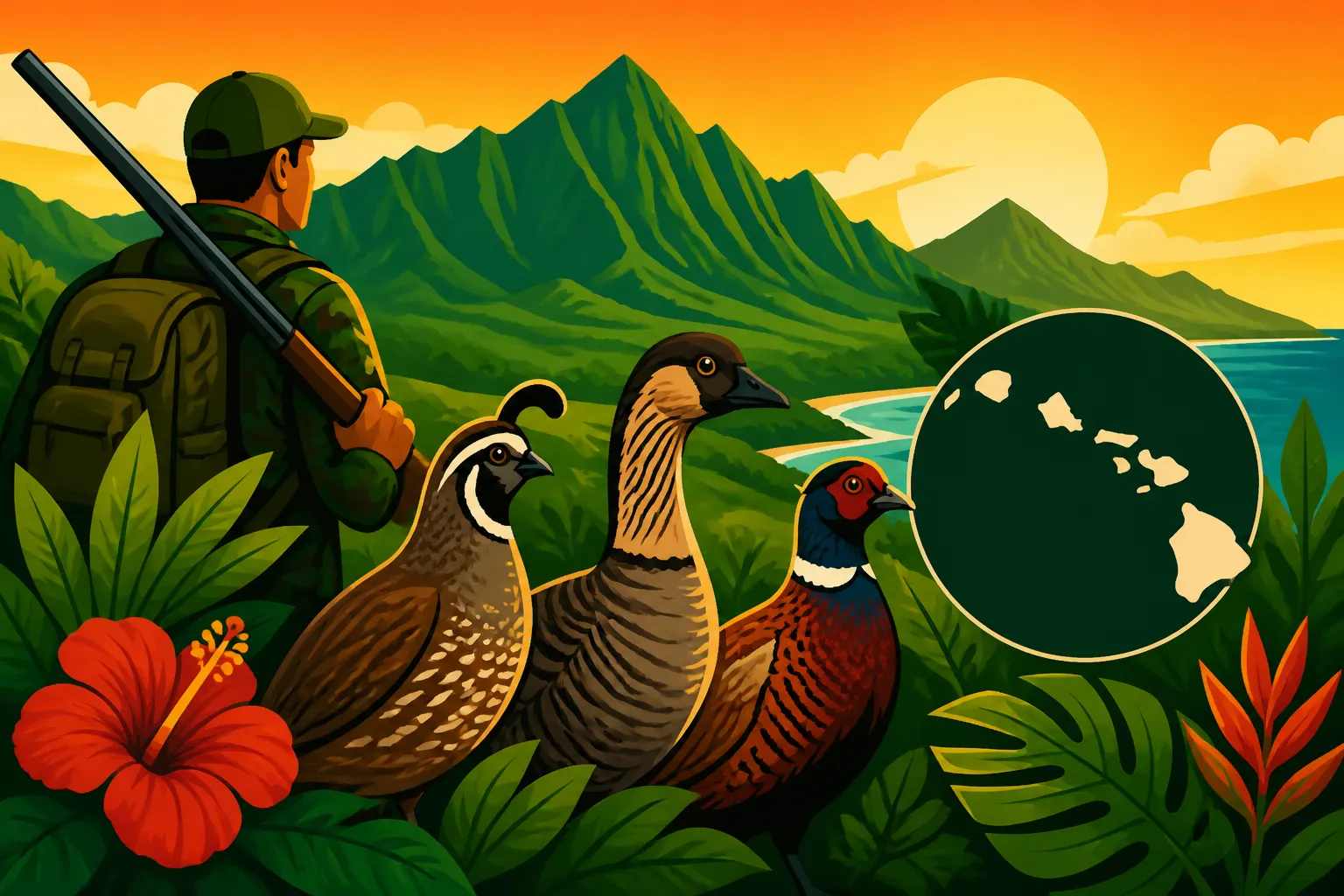
Hawaii Game Bird Seasons and Bag Limits
Trying to figure out the maze of Hawaii's game bird seasons and bag limits can feel like you're lost in a thick haole koa patch without a machete. One minute you think you've got it, the next you're questioning if you even have the right island's regulations! It's a common frustration, especially when the rules can feel like they shift with the trade winds. This comprehensive guide is here to clear the air, walking you through everything you need to know about hunting Hawaii's diverse upland and lowland game birds, from understanding the seasons and daily limits to navigating licenses and unique island-specific nuances.
Understanding Hawaii's Unique Game Bird Hunting Landscape
Hawaii's game bird hunting offers an experience unlike almost anywhere else, primarily because nearly every game species you'll pursue here was introduced. This isn't just a quirky fact; it fundamentally shapes the hunting seasons, the bag limits, and even the habitats where you'll find these birds. Forget what you know about mainland bird seasons tied to native migratory patterns; in Hawaii, it's a whole different game, often dictated by population control and ecological impact rather than traditional conservation of native species.
The Diverse Array of Introduced Species
When you talk about Hawaii Game Bird Hunting, you're really talking about an incredible mix of species brought in over the last century or more. We've got pheasants – specifically the Ring-necked and Green varieties – adding vibrant color to the scrub and forest edges. Then there are the francolins: Erckel's, Gray, and Black, each preferring slightly different elevations and cover types, but all offering a challenging pursuit. Chukar partridge hold tight in the high, dry lava flows and cinder cones, requiring serious lung power to chase. And for those looking for a more relaxed hunt, the Barred and Spotted Doves flit through agricultural fields and kiawe flats, while California and Japanese Quail burst from cover in the uplands. This rich variety means that depending on where you are and what you're looking for, there's usually a game bird season open somewhere.
However, it's critical to remember that this diversity comes with a caveat: none of these birds are native. They were introduced for various reasons, from sport hunting to pest control, and while they now thrive, their presence means constant management to prevent adverse impacts on Hawaii's incredibly fragile native ecosystems. This dynamic is a constant undercurrent to all hunting regulations here, including season lengths and bag limits, which might sometimes feel restrictive but are designed with this delicate balance in mind.
How Geography and Habitat Influence Bird Seasons
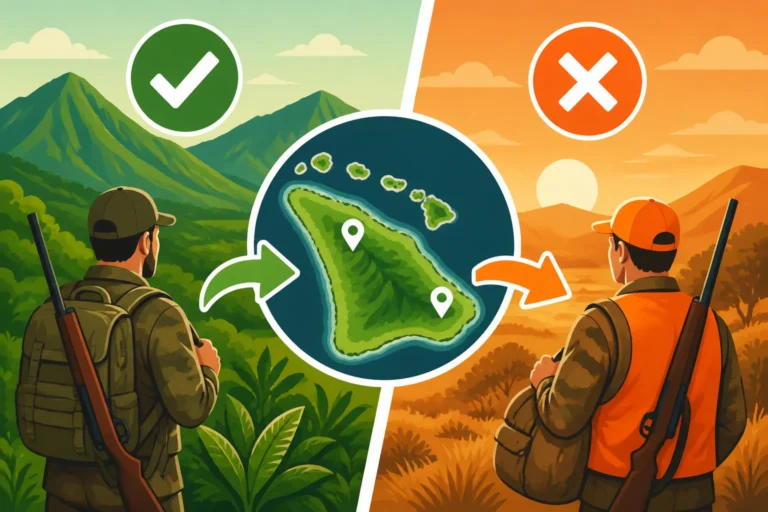
The sheer diversity of Hawaii's microclimates and terrain means that a one-size-fits-all approach to game bird seasons simply wouldn't work. What's happening in the dry, high-elevation mamane-koa forests of Mauna Kea, where you might find chukar, is wildly different from the wet, lowland guava thickets of Windward Oahu, home to certain francolin species. This geographical reality directly influences when and where specific seasons open and close. For instance, areas prone to drought might see shorter seasons or reduced bag limits to protect bird populations, while lush, high-rainfall zones might have more liberal opportunities.
Elevation, vegetation, and even rainfall patterns across a single island can create distinct habitats that favor one bird species over another, and the state's Division of Forestry and Wildlife (DOFAW) manages seasons accordingly. This is why you'll often find specific units or management areas listed in the regulations, each with its own set of rules. It’s not just about what island you’re on; it’s about what side of the island, what elevation, and what type of vegetation the unit comprises. Understanding this geographical patchwork is key to anticipating when Hawaii's Game Birds and Where to Find Them will be legally accessible, and to strategizing your hunts effectively.
Navigating the General Game Bird Season Structure
The general game bird season structure in Hawaii can feel a bit fragmented compared to many mainland states. Instead of a continuous statewide season for a species, you'll often encounter specific opening and closing dates, coupled with the prevalent "weekend and holiday only" rule for many units. This design aims to manage hunter pressure, provide opportunities across diverse habitats, and allow for species-specific management, all while minimizing conflicts with other land uses and conservation efforts.
Key Opening and Closing Dates Across the Islands
While there are nuances, most game bird seasons generally kick off in the fall, often around the first weekend of November, and run through early to mid-January. However, this is a broad stroke. Each island, and sometimes even specific units within an island, will have its own slightly tweaked schedule. For example, some units might open a week earlier, or close a week later, depending on local bird populations and habitat conditions. It's not uncommon for a "general season" to be announced, only to find that half the units are closed or have different dates. This is why checking the annual hunting regulations, often published by the Department of Land and Natural Resources (DLNR) on their website or through platforms like GoHunt, is absolutely non-negotiable before planning any trip.
The frustration of trying to pin down Hawaii Game Bird Season Opening Day for your specific target species and preferred unit is real. You might find that the perfect spot for quail is only open for a handful of weekends in December, while a good francolin area runs into January. This fragmented schedule means you really need to plan your trips meticulously, often dedicating specific weekends to particular birds or locations. Don't assume that if one unit is open for game birds, all units are; it's rarely the case in Hawaii.
Why Weekend-Only Seasons are the Norm
Perhaps one of the biggest adjustments for new hunters to Hawaii is the prevalence of Hawaii's Weekend-Only Hunting Units for game birds. Most public hunting areas, especially those designated for game birds, are only open on Saturdays, Sundays, and specific state holidays. This isn't just a suggestion; it's a strict rule. The rationale behind this approach is multifaceted. Firstly, it helps manage hunter density in often smaller, more accessible units. With fewer days available, the pressure is concentrated, but it also allows the birds a break during the week.
Secondly, these restricted access days help mitigate potential conflicts with other public land users, such as hikers, mountain bikers, or even forestry workers, who might be utilizing these areas during weekdays. It's a way for DOFAW to juggle multiple demands on limited public land resources. While it can be a bummer if you have a mid-week window free, it's the reality of hunting in Hawaii. Planning your hunts around Hunting Hawaii's Game Bird Weekends becomes a core part of the strategy, often leading to more crowded parking areas and units, so arriving early and having a backup plan is always a good idea. Sometimes, you'll find that private land opportunities might offer more flexibility in terms of days, but that comes with its own set of access requirements and often, higher costs.
Diving Deep into Species-Specific Bag Limits and Regulations
Once you've wrapped your head around the general season structure, the next layer of complexity (and fun!) is understanding the species-specific bag limits and regulations. This is where the variety of Hawaii's game birds really shines, but also where hunters need to pay close attention, as the rules can change significantly from one bird to the next.
Pheasants and Francolins: Upland Challenges
Pheasants and francolins are often grouped together in regulations due to their similar upland habitat preferences and hunting methods. Hawaii boasts Ring-necked and Green Pheasants, with their striking plumage, as well as Erckel's, Gray, and Black Francolins. These birds prefer brushy areas, tall grasses, forest edges, and agricultural fringes. You'll often find them flushing explosively, providing a challenging shot, especially the fast-flying francolins that seem to appear out of nowhere.
Bag limits for pheasants are typically quite conservative, often one or two birds per day, and sometimes specifically for cocks only, especially early in the season, to allow hens to continue breeding. Francolin limits can vary more widely by species and location, but generally sit in the range of 2-5 birds daily. For example, you might be allowed two Ring-necked Pheasants or three Erckel's Francolin, but always double-check the current regulations for the specific unit you plan to hunt. The season length for these birds usually mirrors the general game bird season, extending from November through early January. Hunting these birds often requires a good bird dog, or at least a strong pair of legs and a willingness to push through dense cover. You can learn more about Hunting Francolin and Pheasant in Hawaii in our dedicated article.
Chukar Partridge: High Elevation Pursuits
Chukar Partridge are a truly unique Hawaiian hunting experience, primarily found in the rugged, high-elevation, dry lava country of Hawaii Island (the Big Island). These birds are built for climbing, and chasing them will put your fitness to the test. They prefer rocky, arid slopes with sparse vegetation, often at elevations where the air is thin and the terrain unforgiving. Finding chukar means spotting them running up a hill faster than you can walk, or hearing their distinctive "chuk-chuk-chukar" call echoing across the vast landscape.
The bag limit for Chukar is often slightly more generous than pheasants, usually around 5-7 birds per day, but catching that many is a feat in itself. The season for chukar typically aligns with the general game bird season but is often restricted to specific high-elevation units on Hawaii Island. Hunters pursuing chukar must be prepared for extreme conditions, including intense sun, sharp lava rock that can shred boots, and rapid weather changes from sunny skies to sudden, chilling fog. It's an incredibly rewarding hunt, but not for the faint of heart. Our guide on Chukar Hunting Hawaii Island's High Country dives deeper into this rugged pursuit.
Doves and Quail: Accessible Opportunities
For those looking for potentially more accessible game bird hunting, doves and quail offer fantastic opportunities. Hawaii is home to the Barred Dove and Spotted Dove, both common in agricultural areas, pastures, and kiawe flats. They provide fast-flying wing-shooting action, especially around water sources or feeding grounds at dawn and dusk. Quail, specifically California Quail and Japanese Quail, are also found in more open, brushy uplands and dry grasslands, often flushing in coveys, creating exciting, fast-paced shooting.
Doves generally have the most liberal bag limits, often around 10-15 birds per day, making for excellent volume shooting if you find a good roost or feeding area. Quail limits are usually around 5-7 birds daily. The seasons for doves and quail tend to run concurrent with the general game bird season, though specific units may open earlier or later, or have different daily limits, especially for quail. Dove Hunting on Hawaii Farm Ground can be a fantastic social hunt, often involving spotting birds flighting in from a distance, while Hunting Quail in Hawaii's Dry Uplands is more about walking up birds in cover. Many hunters find these species to be a great way to introduce new hunters, especially youth, to game bird hunting due to the potential for more action.
Special Cases: Wild Turkeys and Protected Birds
While we're talking about game birds, it's important to touch on a few special situations. Wild Turkeys, for instance, have established populations on Hawaii Island, particularly around the Mauna Kea and Mauna Loa slopes. However, it's crucial to know that at present, Why Wild Turkey Is Closed in Hawaii for hunting. Despite robust numbers in some areas, the state has not opened a hunting season for them. So, while you might see them strutting around, they are off-limits to hunters. This is an excellent example of how regulations are managed, and sometimes species remain protected even when they seem plentiful.
Additionally, hunters must always be vigilant for protected species. Hawaii has many endangered native birds, like the Nene (Hawaiian Goose) or various forest birds, that might occasionally be seen near hunting units, especially at lower elevations. It is absolutely imperative that hunters can identify their target species correctly. Mistaking a protected bird for a game bird is a severe offense with heavy penalties. Always study the identification guides in the annual regulations and consult with local experts if you have any doubts. Safety and ethical hunting demand precise identification.
Essential Permits, Stamps, and Check-In Procedures
Navigating the administrative side of hunting in Hawaii, particularly for game birds, can be just as challenging as finding the birds themselves. There's a specific sequence of licenses, stamps, and check-in procedures that must be followed without exception. Skipping any step can lead to a ruined hunt, fines, or worse. It’s all part of ensuring responsible hunting and proper management of Hawaii’s unique, introduced game populations.
Securing Your Hawaii Hunting License and Game Bird Stamp
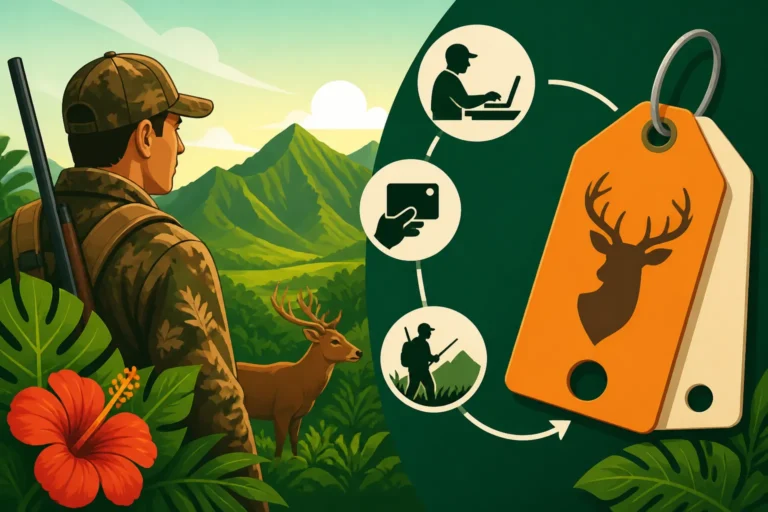
Before you even think about stepping into the field, you absolutely need a valid Hawaii hunting license. This isn't specific to game birds; it's required for all game mammal and bird hunting in the state. For residents, these are typically annual licenses, while non-residents often have annual or multi-day options. You can usually purchase these online through the state's GoHunt system, which has become the primary portal for all hunting permits and licenses. Make sure you get the right one for your residency status and duration of stay.
Beyond the general hunting license, if you plan to hunt game birds, you must also purchase a Hawaii Game Bird Stamp. This stamp is an additional requirement specifically for game bird hunting and funds bird conservation efforts. It's a small fee, but it's mandatory. Both your hunting license and game bird stamp must be physically with you, or readily accessible on a digital device (like through the OuterSpatial app if you're using that for check-in), whenever you are hunting. Don't leave home without them; state enforcement officers frequently check for proper documentation in the field. Failing to possess both can result in your hunt being cut short and a citation.
The Importance of Checking In and Out of Units
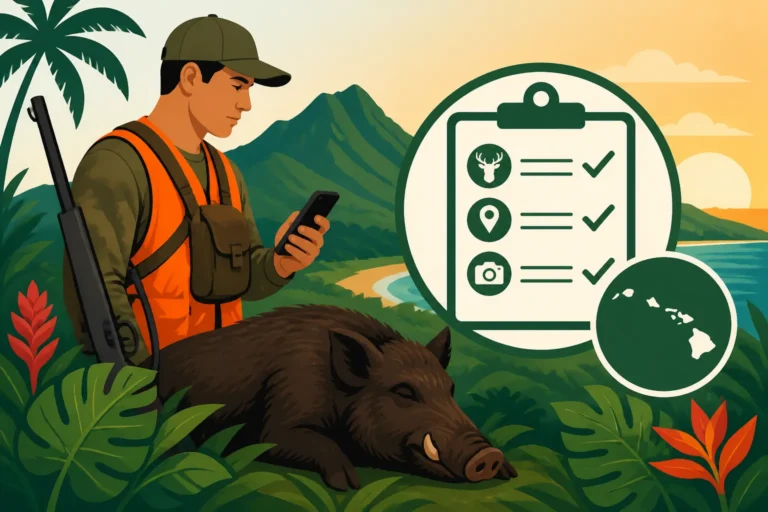
This is perhaps one of the most unique and often overlooked aspects of hunting in Hawaii: the mandatory check-in and check-out system for public hunting units. For virtually all public game bird units, you are required to check in before you start hunting and check out after you finish, regardless of whether you harvest anything. This process helps DOFAW track hunter effort, gather harvest data, and ensure accountability.
Historically, this involved filling out paper cards at designated hunter check stations located at the entrance to public units. While paper cards are still an option in some areas, many units are now transitioning, or have fully transitioned, to digital check-in through the OuterSpatial app. This app allows you to check in and out from your smartphone, even in areas with limited cell service, as it can log your activity offline and sync later. For more details on the process, check out our article on Checking In and Out of Hawaii Hunting Units. Regardless of the method, do not skip this step. Failure to check in or out is a violation and can lead to penalties. It's not just a formality; it's a vital part of game management and maintaining public hunting access.
Here's a quick reference for general season timing and typical bag limits:
| Species | Typical Season Dates (General) | Common Bag Limits (Daily) | Primary Habitat | Notes |
|---|---|---|---|---|
| Ring-necked Pheasant | Nov – Jan | 1-2 (often males only) | Grasslands, forest edges, agricultural areas | Distinctive crow, prefers heavier cover |
| Green Pheasant | Nov – Jan | 1-2 (often males only) | Wet forest fringes, brushy slopes | More elusive, often in denser cover |
| Erckel's Francolin | Nov – Jan | 2-5 | Mid-elevation grasslands, scrub, open forest | Strong flier, often found in coveys |
| Gray Francolin | Nov – Jan | 2-5 | Dry, open grasslands, kiawe flats | Runs before flying, challenging to pinpoint |
| Black Francolin | Nov – Jan | 2-5 | Wet, dense brush, low-elevation fields | Less common, often found in very thick cover |
| Chukar Partridge | Nov – Jan | 5-7 | High-elevation arid lava flows, sparse scrub | Extremely physical hunt, very vocal |
| Barred Dove | Nov – Jan | 10-15 | Agricultural fields, pastures, kiawe flats | Fast flight, common near water |
| Spotted Dove | Nov – Jan | 10-15 | Urban fringes, parks, open woodlands | Often hunted opportunistically, less wild |
| California Quail | Nov – Jan | 5-7 | Dry uplands, brushy slopes, open woodlands | Covey birds, explosive flush |
| Japanese Quail | Nov – Jan | 5-7 | Open grasslands, agricultural fields, higher areas | Smaller, often harder to spot on flush |
| Wild Turkey | Closed | N/A | Forested slopes, ranch lands (Hawaii Island) | Currently no open season in Hawaii |
Note: Always verify current season dates and bag limits with the Hawaii DLNR/DOFAW regulations for your specific hunting unit and island before hunting, as these can change annually. Our detailed article on Hawaii Game Bird Bag Limits offers further insights.
Practical Tips for a Successful Hawaii Game Bird Hunt
Hawaii's game bird hunting, while rewarding, presents a unique set of challenges compared to many mainland experiences. The terrain, climate, and vegetation all demand specific preparation and tactics. Being prepared can make the difference between a frustrating slog and a successful, enjoyable day in the field.
Gear Essentials for Diverse Terrain and Weather
The gear you choose for a Hawaii game bird hunt needs to be versatile and tough. First and foremost, footwear is critical. You'll be traversing everything from sharp lava rock to slick, muddy trails, steep hillsides, and dense tangles of haole koa or guava. Invest in high-quality, waterproof, ankle-supporting boots with excellent traction. Many hunters find that the sharp lava can chew through lesser soles quickly, so durable outsoles are a must. Our guide on Boots for Hawaii Lava and Wet Forest shares more on this essential topic.
Layering your clothing is also key. Even on what seems like a hot day, a sudden rain shower in a gulch or at higher elevations can drop temperatures quickly. Lightweight, breathable, moisture-wicking clothing is ideal, especially in the humidity. A good quality, packable Rain Gear for a Windward Hawaii Hunt is indispensable, as rain can come and go unpredictably. Blaze orange requirements are in effect in some units, so always check the specific regulations for your chosen area. A sturdy backpack to carry water, snacks, extra shells, a first-aid kit, and enough room for birds is also crucial. And don't forget snake gaiters or similar leg protection if you're pushing through thick, thorny brush; while Hawaii has no snakes, the thorns are plentiful!
Best Practices for Field Care and Transporting Your Birds
The tropical heat and humidity in Hawaii demand immediate and proper field care for your harvested birds. Unlike colder climates where birds can hang for a bit, Hawaiian conditions mean spoilage can happen rapidly. The moment a bird is down, it should be gutted to help cool the carcass. Carry a small knife and a few game bags. Get the birds out of direct sunlight as soon as possible. Many hunters carry a small cooler with ice in their vehicle to place birds in immediately upon returning from the field.
Transporting birds also has rules. All harvested game, including birds, must remain in a condition that allows for species identification and counting until you've checked out of the unit and are back at your vehicle, or even further if specific processing is required. This often means leaving a wing or head attached. When flying inter-island or back to the mainland, be aware of agricultural inspection rules and airline policies regarding game meat. It's always best to pack game meat in a separate cooler, declared, and properly chilled or frozen. Our article on Field Care in Hawaii's Heat and Humidity offers more in-depth advice on keeping your meat fresh.
Common Challenges and Troubleshooting for Hunters
Hunting in Hawaii is an adventure, but like any adventure, it comes with its share of unique challenges. Being aware of these common hurdles and having some strategies to overcome them can save you a lot of frustration and ensure a safer, more enjoyable experience.
Understanding Regulation Changes and Closures
Perhaps the biggest head-scratcher for new and even experienced hunters in Hawaii is the fluidity of regulations. Season dates, bag limits, and even unit closures can change with little notice. Drought conditions, wildfire risk, local community events, conservation projects, or even specific biological surveys can lead to Why Hawaii Cancels or Shifts Seasons or restricts access to certain hunting units. It's not uncommon for a unit you planned to hunt to be suddenly closed or have modified rules due to unforeseen circumstances.
The best way to troubleshoot this is proactive information gathering. Regularly check the DLNR/DOFAW website for "Public Announcements" or "Hunting News." Follow their social media pages if they have them. Sign up for any email newsletters the department offers. And, crucially, verify the regulations for your specific unit right before you head out. Don't rely solely on what you read months ago. The OuterSpatial app can also provide real-time updates for units you've "favorited." Getting caught unaware of a closure or rule change is a quick way to ruin a hunt and potentially incur a citation.
Managing Expectations on Public vs. Private Lands
One of the biggest realities of game bird hunting in Hawaii is the contrast between public and private land opportunities. Public land, while offering accessible hunting, often comes with higher hunter pressure, particularly on Hawaii's Weekend and Holiday Hunting Rules. Game birds on public units can be warier, having been pressured by previous hunts, and the terrain can be more challenging. Finding unpressured birds often means walking further, getting into steeper gulches, or exploring less accessible corners of a unit. This is where patience and persistence truly pay off.
Private land, on the other hand, can offer a completely different experience. Many ranches and agricultural operations, particularly on islands like Maui or Hawaii Island, offer guided or trespass fee hunts for game birds. These areas might see less pressure, have better habitat management, and potentially higher bird densities. However, access comes at a cost, often a significant one. If you're considering Hawaii Private Ranch Hunting Access, be prepared for fees and specific ranch rules. The trade-off is often a more consistent hunting experience, sometimes with the added benefit of a knowledgeable guide who understands bird movements on that specific property. Understanding this dichotomy and managing your expectations based on your chosen access route is crucial for a satisfying hunt.
A Look Ahead: Conservation and the Future of Hawaii's Game Birds
Hawaii's hunting landscape is inextricably linked to conservation. Given that almost all game species are introduced, the hunting seasons and bag limits are not just about providing recreation; they are vital tools in managing these populations and mitigating their impact on Hawaii's unique and often fragile native ecosystems. The future of Hawaii Game Bird Hunting hinges on this delicate balance, and hunters play an incredibly important role.
The Role of Hunters in Conservation Efforts
Hunters in Hawaii are, in many ways, frontline conservationists. By participating in regulated seasons, hunters help control populations of introduced game birds that, if left unchecked, could impact native plant communities or compete with native species for resources. The fees from hunting licenses and game bird stamps, often facilitated through systems like GoHunt, directly fund wildlife management programs, habitat restoration, and enforcement efforts by DOFAW. Every hunter who purchases a license and abides by the rules contributes financially and practically to the health of Hawaii's ecosystems.
Furthermore, hunters provide invaluable data through the mandatory check-in and check-out system. Harvest reports, even "no harvest" reports, give wildlife biologists crucial information about bird populations, hunter success rates, and overall effort. This data is essential for setting future seasons and making informed management decisions. It’s a reciprocal relationship: hunters get to enjoy a unique outdoor pursuit, and in doing so, they become active participants in managing the very resources they value.
How Climate and Invasive Species Impact Bird Populations
Looking ahead, Hawaii's game bird populations, like all wildlife here, face significant challenges from climate change and the ongoing threat of invasive species. Changing rainfall patterns, prolonged droughts, and increasing intensity of storms can directly impact habitat quality, food availability, and breeding success for game birds. Drought, for instance, can reduce insect populations (a key food source for chicks) and dry up crucial water sources, forcing birds to concentrate in fewer areas or impacting their overall health.
Beyond climate, new invasive plants and animals continuously alter Hawaii's ecosystems. Invasive plants can outcompete native forage, creating dense monocultures that are less suitable for a variety of game birds. Invasive predators like mongoose (absent only on Kauai) can also significantly impact ground-nesting bird populations. DOFAW continually monitors these threats, and sometimes regulations might be adjusted in response. Hunters, by being observant in the field and reporting unusual observations, can also contribute to this ongoing monitoring. The future of game bird hunting in Hawaii depends on continued adaptation, sound science, and the active participation of a conservation-minded hunting community.
Disclaimer
The information provided in this guide is for general informational purposes only and is subject to change. Hunting regulations in Hawaii are set by the Department of Land and Natural Resources (DLNR) Division of Forestry and Wildlife (DOFAW) and can be modified at any time. It is the hunter's sole responsibility to consult the most current official Hawaii Hunting Regulations before planning or engaging in any hunting activity. Failure to comply with all state and federal hunting laws can result in significant penalties.