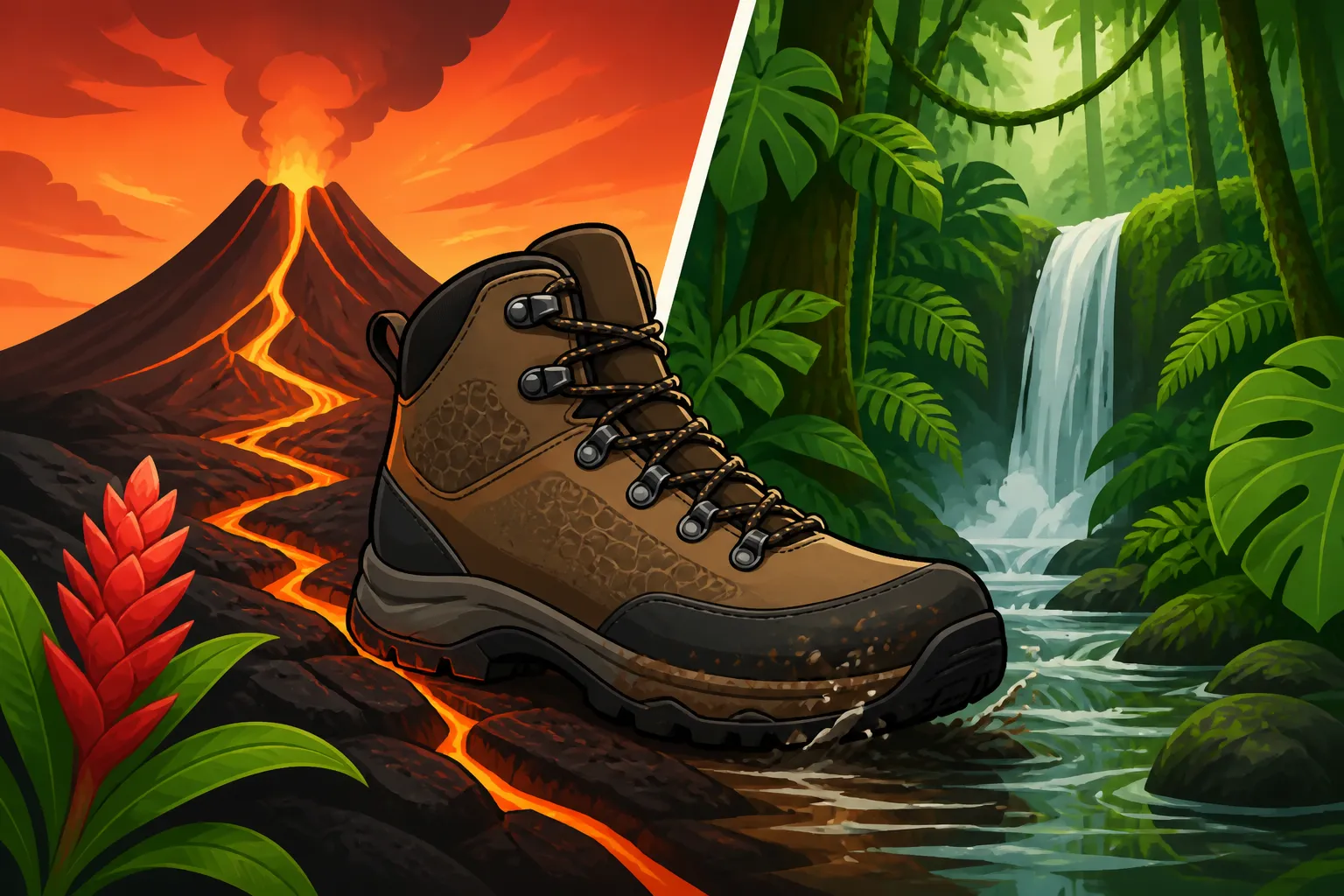
Boots for Hawaii Lava and Wet Forest
If you're gearing up for a hunting adventure in Hawaii, you're probably already thinking about your rifle, your optics, and what kind of game you're chasing. But let me tell you, one of the most common pitfalls I see hunters, especially those new to the islands, fall into is underestimating their footwear. Hawaii's terrain isn't just varied; it's actively trying to chew up your boots and shred your feet, whether it's the razor-sharp lava fields or the perpetually soaking rainforests. This guide is all about helping you pick the right boots for Hawaii lava and wet forest, so your feet can carry you through the hunt, not hold you back.
The Unique Challenges of Hawaii's Terrain on Footwear
Hunting in Hawaii is unlike almost anywhere else. You're dealing with extreme contrasts that demand a lot from your gear, especially your boots. One minute you could be crossing ancient lava flows, the next you're slogging through a muddy gulch, all while the tropical sun beats down or a sudden downpour drenches everything.
Volcanic Lava Fields: Abrasive and Unforgiving
Imagine walking across miles of broken glass – that's often what trekking through Hawaii's lava fields feels like to your boots. The volcanic rock, especially the jagged a'a flows, is incredibly abrasive. It doesn't just scuff; it actively grinds away at stitching, rubber rands, and especially boot soles. I've seen brand-new, high-quality hunting boots look like they've gone through a meat grinder after just a few days on the rough stuff.
The primary enemy here is abrasion. Soft rubber soles will wear down at an alarming rate, losing their grip and integrity. Thin leather or synthetic uppers can get sliced and torn by sharp edges. This isn't just about discomfort; a compromised boot can lead to sprained ankles if the support gives out, or even serious cuts if the rock breaks through. When you're Walking Rough Lava Without Wrecking Your Boots, you need robust protection from the ground up. The sheer unforgiving nature of the terrain means that every step is a test for your footwear, trying to find a weak point.
Lush, Wet Rainforests: Mud, Water, and Slippery Conditions
Shift gears from the dry, sharp lava, and you could find yourself immersed in a completely different world: the dense, wet Hawaiian rainforest. Here, the challenge isn't abrasion but constant moisture, deep mud, and treacherous footing. Stream crossings are frequent, sometimes unavoidable. The ground is often a slick mix of decaying leaves, slippery roots, and hidden rocks. A wrong step can send you sprawling or, worse, twisting an ankle in a concealed hole.
The key issues in these environments are waterproofing, grip, and the ability of your boots to shed water and mud. A boot that soaks up water becomes heavy and uncomfortable, and your feet will quickly become pruned and prone to blisters. Lack of aggressive tread means you'll be slipping and sliding, wasting energy and risking injury. The humid air combined with perpetual moisture also creates an environment ripe for fungal issues if your feet aren't properly managed. Think about the thick undergrowth and constantly wet conditions you'd encounter when Still-Hunting a Guava Thicket for Pigs or navigating Hunting Pigs in Hawaii's Rainforest Gulches. Your boots need to be an extension of your foot, giving you confidence with every step.
Heat and Humidity: Beyond Just Wetness
It's not just about the rain or the mud; it's the relentless tropical heat and humidity that compound everything. Even on dry days, your feet will sweat. A lot. This internal moisture, combined with any external water ingress, creates a perfect storm for discomfort and foot problems. Blisters are common adversaries, and in extreme cases, prolonged wetness can lead to more serious issues like trench foot if not addressed.
A boot that's waterproof but doesn't breathe effectively will trap sweat, making your feet just as wet from the inside as they would be from an external leak. This is where the balance becomes tricky: you need waterproofing for external moisture, but also breathability to allow internal moisture to escape. Heavy, insulated boots designed for cold climates are absolutely the wrong choice here, leading to overheating and misery. Good ventilation in your footwear is crucial for comfort and foot health in Hawaii's persistent warmth, impacting everything from your energy levels to how you're able to focus on the hunt.
Understanding Boot Features for Hawaii Hunting
Choosing the right boots for Hawaii isn't about finding a single "best" pair; it's about understanding the features that mitigate the specific challenges of the islands. You're looking for a balance of durability, waterproofing, grip, and breathability.
Key Materials: Leather, Synthetics, and Hybrids
The materials your boots are made from play a huge role in their performance and longevity in Hawaii.
- Full-Grain Leather: This is the gold standard for durability and protection against abrasion. High-quality, thick full-grain leather, often found in mountaineering-style boots, can withstand the abuse of lava fields far better than thinner materials. It's naturally water-resistant (though still benefits from a waterproof membrane) and can be conditioned to maintain its integrity. The downside? Leather boots can be heavier, take longer to break in, and don't breathe as well as some synthetics, which can be an issue in the humidity. However, for serious volcanic terrain like Hunting Hawaii's Volcanic Terrain, a robust leather boot is often the top pick for its sheer toughness.
- Synthetics (Nylon, Polyester): Modern synthetic materials offer excellent breathability and are significantly lighter than leather. They often dry faster when wet, which is a huge plus in rainforest environments. Many synthetic boots incorporate ripstop fabrics and reinforced panels for durability. However, they generally don't stand up to the extreme abrasion of lava as well as thick leather. Sharp volcanic rock can shred lighter synthetic fabrics more easily.
- Hybrids: Many popular hunting boots are now hybrids, combining the best of both worlds. They might feature a durable leather lower with synthetic panels in the upper for breathability, often wrapped with a protective rubber rand around the base. This approach tries to offer a good compromise between protection, weight, and ventilation, making them versatile for varied Hawaiian hunts where you might transition between different terrains.
Waterproofing Technologies: GORE-TEX and Beyond
When it comes to keeping your feet dry in Hawaii's wet environments, waterproofing is non-negotiable.
- Waterproof Membranes (e.g., GORE-TEX): These are thin, breathable layers laminated between the boot's outer material and the inner lining. They have microscopic pores that are small enough to block water molecules from entering but large enough to allow water vapor (sweat) to escape. This is the most common and effective form of waterproofing in quality hunting boots. The benefit is obvious: dry feet in rain, mud, and stream crossings. The challenge in Hawaii is that even with breathable membranes, high ambient humidity can sometimes reduce their effectiveness at wicking internal moisture, leading to a clammy feeling. Always ensure the membrane extends well above the ankle to prevent water from simply pouring over the top in deep mud or water.
- Water-Resistant Coatings: Some boots rely on a Durable Water Repellent (DWR) coating on the outer fabric. While this helps water bead up and roll off initially, it's not a true waterproof barrier and will eventually wet out. DWR coatings need regular reapplication to remain effective. For Hawaii, these are generally insufficient on their own for prolonged wet conditions.
Sole Construction and Tread Patterns
Your boots' soles are your primary connection to the ground, and in Hawaii, they need to perform.
- Stiffness and Support: For rocky, uneven lava fields or steep, broken ground, a stiffer sole with a solid shank (an internal support structure) is crucial. This provides stability, reduces foot fatigue, and protects your feet from sharp impacts and bruising. You want a sole that doesn't flex excessively over uneven terrain, giving you a stable platform when Hunting Mouflon in Mauna Kea's Thin Air.
- Tread Pattern: This is where things get specific.
- Aggressive Lugs: For deep mud, soft earth, and slippery roots in the rainforest, you need deep, widely spaced lugs that can bite into the ground and shed mud easily. Think of tractor tires for your feet. Without this, you'll be slipping and sliding constantly, especially when packing out game like in Packing Meat Out of a Hawaii Gulch.
- "Sticky" Rubber: On wet, smooth rocks or steep, slick slopes, a softer, "sticky" rubber compound can provide better traction than hard, durable compounds designed primarily for wear resistance. Some boots try to combine both.
- Edge Grip: For side-hilling on steep slopes, the ability of the sole's edges to grip is important.
- Rubber Rand: A full or partial rubber rand around the base of the boot, where the upper meets the sole, is a fantastic feature for Hawaii. It provides an extra layer of protection against abrasion from lava and helps seal out water and mud.
Recommended Boot Types for Specific Hawaii Hunting Scenarios
Given Hawaii's diverse terrain, a single pair of boots might not be perfect for every hunt. It often comes down to prioritizing what you'll encounter most.
Heavy-Duty Boots for Abrasive Lava and Rugged Upland Hunts
If your hunt takes you primarily across vast expanses of unforgiving volcanic rock, steep rocky ridges, or the high-elevation, open country where animals like mouflon sheep roam, you need a boot built for battle.
These boots are typically characterized by:
- Robust Full-Grain Leather Uppers: Often 2.5mm or thicker, offering maximum abrasion resistance and long-term durability. Look for minimal stitching on the critical wear areas.
- Stiff Soles with Excellent Support: Think mountaineering or heavy-duty backpacking boot construction. A stiff shank prevents foot fatigue over sharp, uneven lava.
- Full Rubber Rand: This is almost a necessity. It wraps around the entire lower portion of the boot, acting as a bumper against sharp rocks and significantly extending the boot's life.
- Aggressive, Durable Outsoles: While no sole is immune to lava, those made from harder rubber compounds will last longer. Look for deep, multi-directional lugs that still offer grip on loose scree.
- Waterproof Membrane: Even in dry lava fields, you can hit hidden puddles or encounter unexpected rain. A quality membrane keeps your feet dry.
Scenario: Imagine you're hunting the slopes of Mauna Kea for mouflon or pushing into remote, rocky gulches for goats. You're walking on jagged, unforgiving ground for miles. Your feet need maximum protection and support to prevent bruising and sprains. Brands renowned for their durable mountaineering or heavy-duty hunting boots often excel here. These are the boots you'll want when scouting or Hunting Hawaii's High Elevation Alpine Ground. They might be heavier, but the protection and stability are worth their weight in gold.
Lighter, Faster Boots for Wet Forests and Valley Floor Hunts
When your hunt is focused on the perpetually damp, muddy, and often dense rainforests, or the wet, slippery valley floors where feral pigs thrive, your priorities shift. Speed, agility, and uncompromising wet-weather performance become paramount.
These boots usually feature:
- Waterproof Synthetic or Hybrid Uppers: Lighter synthetic materials with a waterproof membrane (like GORE-TEX) keep water out while allowing for some breathability. Hybrids with durable synthetic fabrics and reinforced leather or rubber in key areas can also work well.
- Flexible, Grippy Soles: While still offering good ankle support, the sole will be more flexible than a lava boot, allowing for better feel and articulation on uneven, slippery ground. The tread pattern will feature very aggressive, widely spaced lugs made of a softer, "stickier" rubber compound to maximize traction in mud, on wet roots, and slick rocks.
- Fast-Drying Capabilities: Even with a waterproof membrane, water can get in over the top. Synthetic boots tend to dry faster than heavy leather, which is a huge advantage for multi-day hunts in humid environments.
- Good Ankle Support: You still need protection against twisting ankles on hidden roots and uneven ground, but not necessarily the rigid support needed for scaling rock faces.
Scenario: Picture yourself tracking pigs through a dense, wet gulch, crossing streams, and slogging through mud. You need to move quietly and quickly, and your boots need to provide confident traction on every slippery surface. Boots designed for serious trekking or "fast hunting" in wet, muddy conditions are ideal. They'll be lighter, more comfortable in the heat, and prioritize grip over ultimate abrasion resistance. If you're Hunting Pigs in Hawaii's Rainforest Gulches, these are your companions.
Hybrid Options: Balancing Wet and Dry
For many hunters, a Hawaii trip might involve a mix of terrain. Maybe you're hunting axis deer, which can range from dry, kiawe-studded flats to more humid forested areas depending on the island and unit, such as Hunting Molokai's Axis Deer Country. Or perhaps you're on a multi-species hunt spanning different ecosystems. In these cases, a hybrid boot tries to find the sweet spot.
Hybrid boots typically combine features like:
- Durable, Water-Resistant Uppers: Often a mix of sturdy full-grain leather and tough synthetic panels for reduced weight and improved breathability.
- Protective Rubber Rand: Essential for resisting abrasion, especially if you anticipate some rocky sections.
- Moderately Stiff Sole: Not as rigid as a mountaineering boot, but stiffer than a lightweight trail boot, offering a good balance of support and flexibility.
- Versatile Tread Pattern: A lug pattern that offers both aggressive grip in mud and decent traction on dry, rocky surfaces.
These boots are an excellent compromise for the hunter who doesn't want to bring two specialized pairs of boots or whose hunt will genuinely cover both extremes. They might not be the absolute best in either lava or deep mud, but they'll be good enough in both, allowing you to adapt to the varied challenges of Hawaii without feeling completely outmatched. When planning your hunt, whether you're working with a guide or researching public land units on GoHunt, consider the specific terrain you'll encounter to determine if a hybrid is the right call for your needs.
Here's a quick comparison to help visualize the differences:
| Feature | Heavy-Duty (Lava/Upland) | Lightweight (Wet Forest/Valley) | Hybrid (Versatile) |
|---|---|---|---|
| Primary Terrain | Jagged lava, steep rocky slopes, high elevation | Muddy rainforest, slick roots, stream crossings | Mix of rocky and wet, varied forest, dry-to-wet transitions |
| Upper Material | Thick Full-Grain Leather (often 2.5mm+) | Synthetic, often ripstop nylon or polyester | Leather/Synthetic blend, reinforced |
| Waterproofing | Waterproof membrane (e.g., GORE-TEX), inherent water-resistance of leather | Waterproof membrane (e.g., GORE-TEX) | Waterproof membrane (e.g., GORE-TEX) |
| Sole Stiffness | Very stiff (mountaineering-grade shank) | Moderately flexible, good ground feel | Moderately stiff, good balance of support & flexibility |
| Tread Pattern | Aggressive, durable, good for loose rock/scree | Very aggressive, widely spaced, "sticky" rubber for mud | Balanced: good grip in mud, decent on rock |
| Abrasion Resist. | Excellent, often with full rubber rand | Good, but susceptible to sharp cuts from lava | Very good, often with robust rand |
| Breathability | Moderate (can be hot) | Good (lighter, faster drying) | Good |
| Weight | Heavy | Lighter | Medium |
| Best Use Case | Hunting Mouflon on Hawaii's Highest Slopes, Glassing a Lava Flow for Mouflon Rams | Hunting Pigs on Hawaii's Wet Windward Side, Reading Pig Sign Along a Muddy Trail | Axis Deer Hunting in Hawaii where terrain varies, Hunting a Hawaii Kipuka |
Practical Advice for Boot Care and Foot Health
Even the best boots won't save you if you don't take care of your feet and your footwear. In Hawaii's challenging conditions, foot care becomes an even more critical part of your hunting preparation.
Breaking In and Fit: Your Feet Are Your Foundation
This cannot be stressed enough: break in your boots before your hunt! Don't pull them out of the box the day before you fly to Hawaii. Wear them around the house, on short walks, then progressively longer hikes. Your goal is to get your feet accustomed to the boots and for the boots to mold to your feet.
- Proper Fit is Key: When trying on boots, wear the same type of socks you'll hunt in. Your toes shouldn't touch the front when kicking forward, and your heel shouldn't slip excessively when walking uphill. Heel slip is a major cause of blisters. A good fit means snug through the midfoot and heel, with enough room for your toes to wiggle. If you're a nonresident planning a guided hunt, perhaps through a platform like BookYourHunt, make sure you have your boots dialed in long before you arrive.
- Address Hot Spots Early: If you feel any rubbing or pressure points during the break-in period, address them immediately. Sometimes different lacing techniques can help, or a thicker/thinner sock. Ignoring a hot spot is a guaranteed way to get a debilitating blister on your actual hunt.
Socks and Foot Maintenance: The Unsung Heroes
Your socks are just as important as your boots. They are your skin's first line of defense.
- Material Matters: Avoid cotton at all costs in Hawaii! Cotton absorbs moisture and stays wet, leading to blisters and chilling. Opt for merino wool or synthetic blends. Merino wool is excellent at wicking moisture, regulating temperature, and resisting odor. Synthetics are also great for wicking and drying quickly.
- Layering: Some hunters find a thin liner sock (synthetic or silk) worn under a thicker hiking sock (merino wool or synthetic) helps prevent blisters by reducing friction directly on the skin. The liner sock absorbs most of the rubbing.
- Daily Foot Care: At the end of each day, remove your boots and socks. Dry your feet thoroughly. Consider dusting them with foot powder to absorb moisture and prevent fungal growth. If you have any hot spots, apply moleskin or athletic tape before a blister forms.
- Change Socks: If your socks get wet from sweat or external water, change them as soon as practical. Having extra dry socks in your pack is a simple luxury that can save your hunt. You'll be thankful for dry feet, especially when trying to maintain comfort after Field Dressing Axis Deer in Hawaii Heat.
Post-Hunt Care: Extending the Life of Your Investment
Your boots work hard for you, so give them some love when the hunt is over. Proper care significantly extends their lifespan.
- Clean Them Immediately: Don't let mud, dirt, or volcanic dust dry and cake onto your boots. Brush off loose debris, then wipe them down with a damp cloth or rinse them gently with water. For leather boots, you might need a dedicated leather cleaner to remove stubborn grime. Pay attention to the stitching and crevices.
- Proper Drying: This is critical. Never dry your boots with direct heat (e.g., by a campfire, radiator, or direct sunlight). This can damage leather, synthetic materials, and waterproof membranes, causing them to crack, shrink, or delaminate. Remove the insoles and open the boots wide. Stuff them loosely with crumpled newspaper or use a boot dryer on a low, ambient setting. Allow them to air dry in a well-ventilated area, out of direct sun. It might take a day or two in Hawaii's humidity!
- Condition Leather: For full-grain leather boots, once they are clean and dry, apply a leather conditioner to keep the leather supple and prevent cracking. This also helps maintain their water resistance.
- Store Properly: Store your boots in a cool, dry, well-ventilated place. Avoid storing them in plastic bags, which can trap moisture and promote mildew.
By choosing the right boots for Hawaii's unique blend of lava and wet forest, and by giving your feet and footwear the care they deserve, you'll be much better prepared to tackle the challenging but rewarding hunting opportunities these islands offer. Don't let sore feet cut your adventure short!
Disclaimer
This article is for general informational purposes only and does not constitute professional advice. Laws, prices and regulations vary by location and change over time. Consult a qualified professional for guidance on your specific situation.