Hunting Mouflon on Hawaii’s Highest Slopes
The air thins, the ground gives way to rough lava and sparse alpine vegetation, and the only sounds are the wind and your own ragged breathing. Hunting mouflon on Hawaii's highest slopes isn't just a hunt; it's a true high-altitude expedition that challenges your physical limits and demands meticulous planning. This guide will walk you through everything you need to know to successfully pursue these wary sheep in Hawaii's most extreme terrain, primarily focusing on the iconic Mauna Kea.
Understanding Mauna Kea's Mouflon Realm
Hunting mouflon on Mauna Kea is an experience unlike any other in Hawaii, or even most places worldwide. It’s a hunt that takes place above the tree line, across vast expanses of volcanic rock, where the air is thin, and the weather can turn on a dime. These aren't your typical island critters; they are creatures of the high desert, perfectly adapted to a brutal, beautiful landscape.
Mouflon Biology and Behavior in High Altitudes
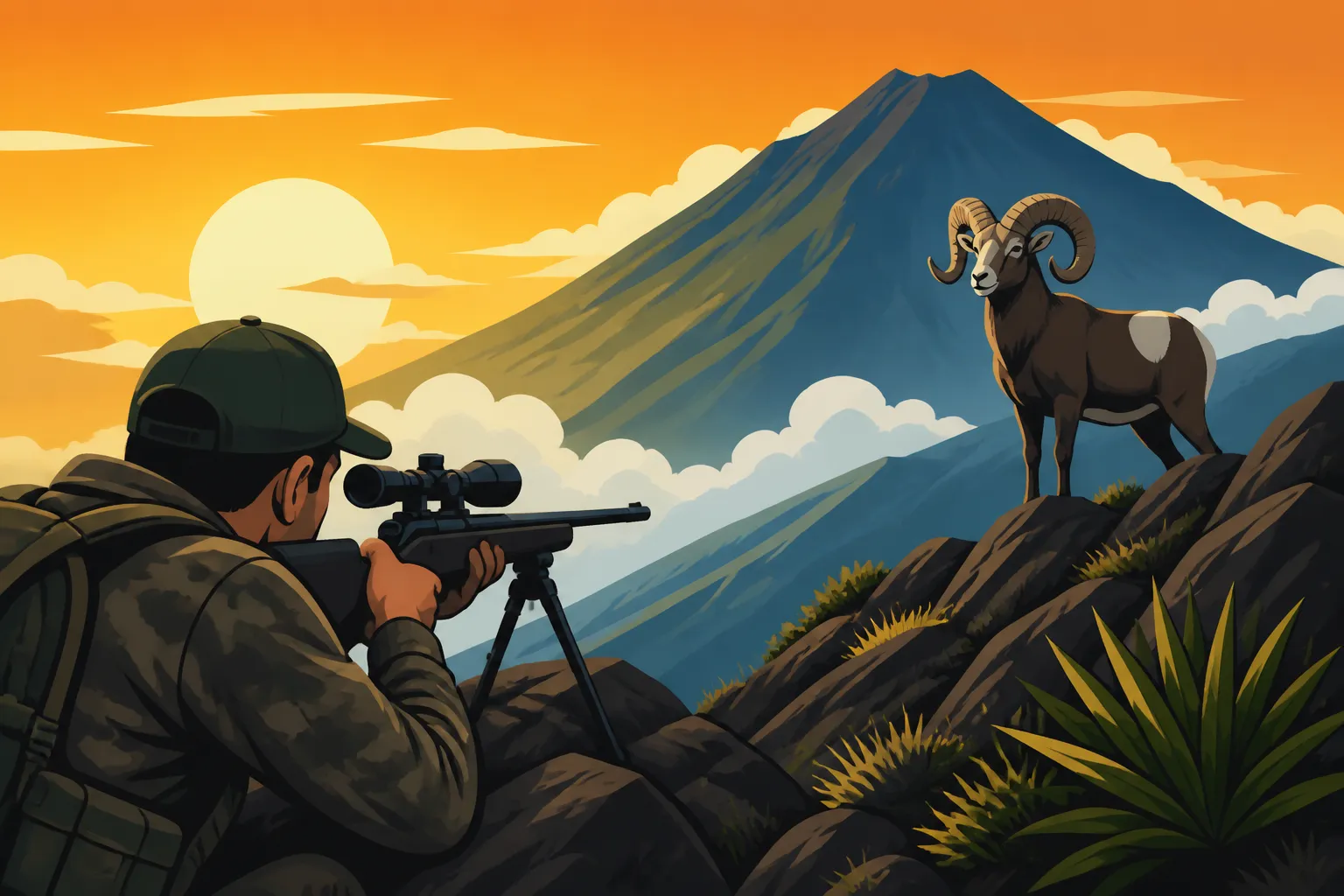
Hawaii’s mouflon sheep (Ovis musimon) are not native to the islands, but they’ve carved out a tenacious existence on the Big Island's towering volcanoes, primarily Mauna Kea and Mauna Loa. These sheep are descendants of European mouflon, introduced to Hawaii in the 1960s, and they thrive in the challenging alpine and subalpine zones. Unlike the more common feral sheep found lower down, true mouflon have distinct, often impressive, curled horns, especially the rams. Their coats are typically reddish-brown with a lighter saddle patch, providing excellent camouflage against the earthy tones of the volcanic landscape.
In this high-altitude environment, mouflon behavior is heavily influenced by food availability, water sources (which are few and far between), and protection from the elements. They are incredibly wary, with keen eyesight and a highly developed sense of smell, making them notoriously difficult to approach. Rams often form bachelor groups, especially outside the rut, and will typically occupy the highest, most exposed ridges and cinder cones, using their vantage points to spot predators – which, in Hawaii, means hunters – from miles away. During the breeding season, usually late fall into winter, the rams become more aggressive and vocal, engaging in spectacular head-butting contests, but even then, they maintain a remarkable level of alertness. Understanding that these animals are constantly on high alert is key to developing successful hunting strategies.
Habitat and Preferred Feeding Grounds
The primary habitat for mouflon on Mauna Kea lies within the high-elevation zones, typically above 6,000 to 7,000 feet, often extending up to 10,000 feet or more. This is the realm of sparse grasses, native shrubs like mamane and naio, and vast fields of jagged a'a and smoother pahoehoe lava. Specifically, areas like Hunting Unit A on Mauna Kea are prime mouflon country. The mamane forests, especially the stunted, gnarled trees found at the upper tree line, provide critical browse and some limited cover. These trees, as explored in What Mamane Trees Mean to Mauna Kea, are an essential food source.
Mouflon are grazers and browsers, constantly seeking out whatever vegetation can survive the harsh conditions. You'll often find them feeding on the edges of these mamane forests, in saddles between cinder cones where volcanic ash has allowed some grass to grow, or picking through the crevices of lava flows where small plants cling to life. Water is a major limiting factor, so any natural seep or catchment, no matter how small or ephemeral, can become a magnet for sheep. Pay close attention to areas where snowmelt persists later into the season or where there might be hidden pockets of moisture. Scouting these potential feeding and watering areas, even before your hunt, can significantly increase your chances of finding a ram.
Recognizing Trophy Rams
For many hunters, pursuing mouflon is about the challenge and the unique experience, but the impressive horns of a mature ram are certainly a significant draw. Judging a Mouflon Ram's Horn Curl is an art form in itself, especially from a distance. Mature rams typically have horns that curl back and then forward, often completing a full curl or more. The base of the horn will be thick and heavily annulated, showing years of growth. Younger rams might have horns that are still relatively straight or only partially curled, lacking the mass and sweep of an older animal.
It’s not just about length; mass and symmetry play a huge role in what makes a ram a trophy. Look for horns that are well-matched, without significant breaks or chips, though a little character from battle scars can add to the story. Pay attention to the deepness of the curl and how far the tips extend. Often, the best rams will be segregated from the ewes and younger animals, holding court on high, windswept ridges, making them identifiable even from afar through good optics. Take your time glassing herds to identify the best prospects, as horn development can vary, and what looks good from a mile away might be less impressive up close. What a Hawaii Mouflon Ram Weighs will give you an idea of the physical size you're looking for, but the horns are the true measure of a trophy mouflon.
Gear and Preparation for High-Elevation Hunting
Hunting Mauna Kea's high slopes demands specialized gear and rigorous preparation. This isn't a casual stroll; it’s an arduous climb over uneven, unforgiving terrain, often in extreme conditions. Your choices in clothing, optics, and footwear will directly impact your comfort, safety, and ultimately, your success. Cutting corners here is a recipe for a miserable, potentially dangerous, hunt.
Essential Clothing and Layering
The weather on Mauna Kea's upper slopes is notoriously unpredictable and can change in minutes. You might start your day in cool, calm conditions, only to face strong winds, freezing rain, or even snow by midday, followed by intense, high-altitude sun. Layering is not just recommended; it's absolutely critical. Start with a moisture-wicking base layer (synthetics or merino wool) to pull sweat away from your skin. Next, add an insulating mid-layer, such as a fleece or lightweight down jacket, that you can easily shed or add. Your outer shell should be waterproof and windproof, offering complete protection from the elements. Brands like Sitka or Kuiu are popular for their high-performance, lightweight layering systems, designed for mountain hunting.
Don't forget robust hunting pants that can withstand abrasion from lava rock and offer some weather resistance. A warm hat, gloves (even in Hawaii!), and a neck gaiter are non-negotiable, as heat loss from the head and extremities is significant at altitude. Even if the forecast looks mild, pack for the worst-case scenario. It’s far better to carry an extra layer you don't use than to be caught unprepared in a sudden blizzard at 10,000 feet. Remember, even though it's Hawaii, Field Care in Hawaii's Heat and Humidity might be a consideration for lower elevations or during warmer periods, but up high, cold is your primary concern.
Optics and Ranging Tools for Open Country
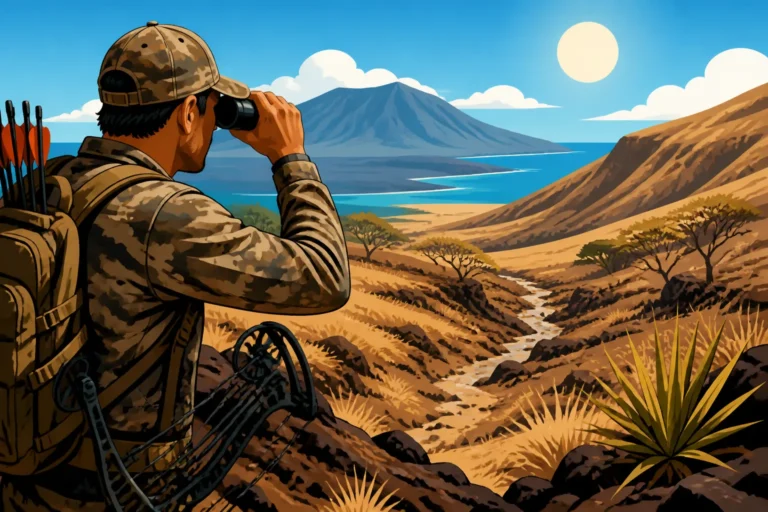
When you're hunting expansive, treeless terrain, your eyes, amplified by quality optics, become your most important hunting tool. A good pair of binoculars (10×42 or 12×50 are popular choices) is essential for extended glassing sessions. You'll spend hours behind the glass, meticulously picking apart distant ridges, lava flows, and sparse vegetation, looking for the tell-tale glint of a horn or the movement of a sheep. Investing in top-tier binoculars from brands like Zeiss, Swarovski, or Vortex will pay dividends in eye comfort and image clarity, especially in the harsh high-altitude sunlight.
Complement your binoculars with a high-power spotting scope (20-60x or 25-75x) on a sturdy tripod. This allows you to confirm details of distant animals, assess horn size, and make confident decisions about whether a ram is worth a grueling stalk. A laser rangefinder is also absolutely critical. In open, high-altitude environments, distances are incredibly deceptive, and misjudging a shot by even 100 yards can mean a missed animal or, worse, a wounded one. A rangefinder with angle compensation is highly beneficial when shooting up or down steep slopes. Effective Glassing a Lava Flow for Mouflon Rams requires patience and the best possible equipment.
Footwear and Traction for Volcanic Terrain
The ground you'll be covering on Mauna Kea is relentlessly rough. You'll navigate sharp, broken a'a lava fields, unstable cinder cones, and slick, dusty slopes. Your footwear is arguably the most important piece of gear you’ll bring. Forget sneakers or light hiking shoes; you need sturdy, high-ankle hunting boots with stiff soles and aggressive tread patterns. Look for boots that offer excellent ankle support to prevent twists and sprains on uneven ground, and a stiff midsole to protect your feet from the constant pounding of jagged lava.
Waterproofing is also a must, even in seemingly dry conditions, as you might encounter wet grass, unexpected puddles from recent rain, or even patches of melting snow. Brands like Kenetrek, Crispi, or Schnee's make boots specifically designed for this type of mountain hunting. Break in your boots thoroughly before the hunt to avoid blisters. Pairing them with high-quality, moisture-wicking socks (merino wool is excellent) will keep your feet comfortable and blister-free. As a hunter, you’ll be doing a lot of Walking Rough Lava Without Wrecking Your Boots, so choose wisely!
Tactics for Spot-and-Stalk Mouflon Hunting
Mouflon hunting on Mauna Kea is almost exclusively a spot-and-stalk affair. The vast, open landscape, combined with the sheep's acute senses, means you'll spend far more time glassing and stalking than blindly walking. Success hinges on patience, strategic movement, and an intimate understanding of how the environment influences animal behavior.
Effective Glassing Techniques
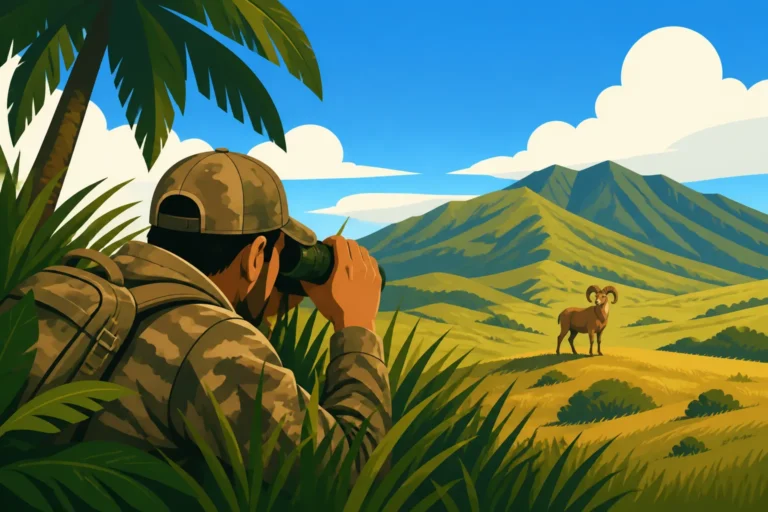
Given the expansive nature of the terrain, effective glassing is paramount. You can’t just walk until you see something; you need to systematically search the landscape. Find a high vantage point that offers a panoramic view of potential sheep habitat: ridges, saddles, crater rims, and the edges of mamane forests. Set up your spotting scope and binoculars on a tripod. Start by scanning the entire area with your naked eye to identify any obvious movement or large features, then move to your binoculars, segmenting the landscape into smaller grids.
Methodically scan each grid, paying close attention to areas where sheep might bed down (sheltered ledges, shaded areas on cinder cones) or feed (sparse grass patches, mamane thickets). Look for anything that seems "out of place" – a patch of color, a horizontal line in a vertical landscape, a glint of horn. Remember that mouflon blend in incredibly well. Once you spot something, use your spotting scope to confirm if it’s an animal, and if it’s a ram, assess its quality. Patience is key here; you might glass for hours without seeing anything, then suddenly pick out a ram miles away. Often, the early morning and late evening are the best times for sheep movement and thus, the best times for glassing.
Stalking in Open, Rocky Landscapes
Once you've spotted a ram and decided to pursue it, the real challenge begins: the stalk. This is where the open, rocky terrain becomes both a curse and a blessing. While it offers little cover in terms of vegetation, the numerous volcanic features – cinder cones, lava flows, washes, and changes in elevation – can be used to your advantage. Plan your approach meticulously. Use topographical maps or a GPS app like onX Hunt or even the state's OuterSpatial to identify folds in the terrain, deep gulches, or the backside of cinder cones that can conceal your movement.
The biggest challenge is often closing the distance without being seen. Move slowly and deliberately, taking advantage of every rock, every rise, and every change in contour. Check the wind constantly. When you have to cross an exposed area, do so quickly and quietly, staying low to the ground. Wear soft-soled boots or even change into stalking shoes if the terrain allows for the final approach. Avoid making direct eye contact with the animal if you're exposed, as sheep are highly attuned to being watched. This will be the most physically demanding part of your hunt, often involving miles of difficult walking and crawling, so physical fitness is paramount.
Understanding Wind and Thermals in Mountainous Areas
Wind and thermals are critical factors that can make or break a mouflon hunt on Mauna Kea. At high altitudes, wind can be relentless and highly unpredictable. It can swirl, gust, and change direction rapidly, especially around prominent topographical features. Always carry a wind-checker (a small bottle of powder or thread) and use it frequently. Your goal is to approach the animal from downwind, ensuring your scent doesn't carry to their keen noses.
Thermals also play a significant role, particularly in the morning and evening. As the sun rises and heats the earth, air currents (thermals) typically rise up the mountain slopes. In the evening, as the air cools, thermals will typically drop down the slopes. This means that if you're stalking uphill in the morning, your scent will likely rise ahead of you. If you're stalking downhill in the evening, your scent will drop. Ideally, you want to combine wind direction with thermal currents to give you the best chance of remaining undetected. Always try to get above the animals if possible, as their primary defense is often to escape uphill. Being aware of Hunting Hawaii's High Elevation Alpine Ground means understanding these subtle, yet crucial, environmental cues.
Navigating the Unique Challenges of Mauna Kea
Hunting Hawaii’s highest slopes is inherently challenging due to its extreme environment. Beyond the difficulties of finding and stalking mouflon, hunters must contend with altitude, unpredictable weather, and specific access requirements. Overlooking any of these can lead to a difficult, or even dangerous, situation.
Coping with Altitude Sickness
Mauna Kea reaches elevations of nearly 14,000 feet, and much of the huntable terrain is well above 8,000 feet. For those unaccustomed to such altitudes, acute mountain sickness (AMS) is a very real threat. Symptoms can include headaches, nausea, dizziness, fatigue, and shortness of breath. Ignoring these symptoms can lead to more severe and life-threatening conditions. The best defense is acclimatization. If possible, spend a day or two at a moderate elevation (around 6,000-8,000 feet) before ascending higher.
On the day of the hunt, ascend slowly. Stay well-hydrated by drinking plenty of water, and avoid alcohol and excessive caffeine. Eat light, frequent meals. If you start to experience symptoms, descend immediately to a lower elevation. Don't push through it. Many hunters underestimate the effects of altitude in Hawaii, mistakenly thinking that because it's an island, the mountains are somehow different. They are not. Hunting Mouflon in Mauna Kea's Thin Air requires respecting the physiological demands of the environment.
Weather Extremes and Rapid Changes
We've touched on weather, but it bears repeating: Mauna Kea’s weather can be extreme and change without warning. A clear, sunny morning can quickly give way to dense fog, torrential rain, high winds, or even snow, even in summer months. Temperatures can swing from comfortable to freezing in minutes, especially if you get wet. Pack for all four seasons, and be prepared to hunker down or retreat if conditions become unsafe.
Hypothermia is a serious risk if you are caught unprepared in cold, wet, windy conditions. On the flip side, the high-altitude sun is incredibly intense, and sunburn can occur rapidly, even on cloudy days. Bring strong sunscreen, lip balm, and good sunglasses. The wind can also be brutal, chilling you to the bone and making accurate shooting challenging. Constantly monitor the skies and listen to forecasts, but be ready for the unexpected.
Vehicle and Access Considerations
Accessing Mauna Kea's hunting units, like Unit A, often requires a high-clearance 4×4 vehicle. The roads are typically unpaved, rough, rocky, and can become impassable after heavy rain. Always check the current road conditions and unit access rules with the Division of Forestry and Wildlife (DOFAW) before heading out. Sometimes gates are locked, or specific areas are closed due to weather or conservation efforts.
Familiarize yourself with the unit boundaries. It's easy to stray onto private land or restricted areas, so carry detailed maps and use a GPS device or mapping app like onX Hunt. Most public hunting areas in Hawaii, including Mauna Kea, require hunters to check in and out at designated stations or via the OuterSpatial mobile app. Using the OuterSpatial App to Check In is often the most convenient method. Failure to check in or out can result in fines and loss of hunting privileges. Ensure your vehicle is in good working order, with a full tank of gas, spare tire, and emergency supplies, as cell service can be spotty or nonexistent in many areas. For planning your trip, consider resources like GoHunt, which can often provide updated information on regulations and unit access.
Field Care and Logistics in the Alpine Zone
The moment of truth arrives, and you’ve successfully harvested a mouflon ram on Mauna Kea. Your work, however, is far from over. Proper field care is essential to preserve the meat and cape, especially when dealing with high-altitude conditions and the long pack out that often follows.
Rapid Cooling in Cold, Dry Air
While lower-elevation hunts in Hawaii often require heroic efforts to cool meat quickly due to heat and humidity, the alpine environment of Mauna Kea offers a distinct advantage: cold, dry air. As soon as your animal is down, begin the field dressing process immediately. Get the guts out, open the chest cavity, and if possible, split the pelvis to allow for maximum air circulation. Skinning the animal as quickly as possible is also highly recommended. The cold, dry air will help chill the carcass rapidly, inhibiting bacterial growth.
If conditions allow, quarter the animal and place the meat in breathable game bags. Hang the bags in a shaded, well-ventilated spot if you need to let them cool further before packing out. Avoid piling meat directly on hot rocks or in direct sunlight. While the air might be cold, direct solar radiation can still warm the meat. Unlike the challenges of Field Care in Hawaii's Heat and Humidity, the alpine environment is more forgiving, but proper technique is still vital. Ensure all hair and debris are removed from the meat to prevent contamination.
Packing Out Meat from Remote Areas
Mouflon country on Mauna Kea is often steep, rugged, and remote, meaning you’ll likely face a long, strenuous pack out. Plan for this well in advance. Consider carrying a quality frame pack designed for hauling heavy loads. If hunting with a partner, you can split the load. Packing out a whole ram can be a multi-trip affair or an incredibly challenging single trip, especially if you're solo.
Meat should be placed in good quality, breathable game bags to protect it from dirt, flies, and debris, while allowing it to vent heat and cool. Never use plastic bags, as they trap heat and promote spoilage. If you plan to take the cape and horns, ensure they are properly handled. Cape for a shoulder mount if you intend to have one done, or at least skin down to the head for a European mount. Hunting Mouflon on Hawaii's Highest Slopes often means a grueling hike back to the vehicle, so be prepared for the physical exertion and bring adequate water and snacks for the return journey. For those interested in big game hunting in Hawaii, resources like GoHunt can help clarify regulations on meat transport and processing.
Checking In and Out of the Unit
As with all public hunting lands in Hawaii, strict check-in and check-out procedures are in place for mouflon units on Mauna Kea. This isn't just a formality; it's a safety measure that allows DOFAW to track hunter numbers, manage harvest data, and know who is in the field in case of emergencies. Before you head into the unit, you must check in, either physically at a designated hunter check station or electronically via the OuterSpatial app.
When your hunt is completed, successful or not, you must check out. This includes reporting any harvest, even if you did not take an animal. This data is crucial for wildlife management decisions, including setting Mouflon Bag Limits by Island and future season dates. Failing to check in or out can lead to penalties, so always make it a priority. Carry a fully charged phone with the OuterSpatial app, or paper maps and pens if you prefer the manual method. Double-check all local unit rules for any specific requirements before your hunt.
| Aspect | Low-Elevation (e.g., Pig Hunt) | High-Elevation (Mouflon Hunt) |
|---|---|---|
| Primary Concern | Heat, Humidity, Dense Cover | Altitude, Wind, Cold, Open Terrain |
| Footwear | Waterproof, flexible, aggressive tread | Stiff sole, high ankle support, durable |
| Clothing Strategy | Lightweight, breathable, quick-dry | Layering, wind/waterproof shell |
| Key Optics | Spotting scope less critical; binos suffice | High-power binos, spotting scope, rangefinder |
| Stalking Cover | Thick vegetation, gulches | Volcanic formations, elevation changes |
| Field Care (Meat) | Immediate cooling, ice, rapid transport | Rapid field dressing, air cooling, game bags |
| Physical Demands | Bushwhacking, navigating dense jungle | Steep climbs, long distances, thin air |
| Weapon Handling | Close quarters, quick shots | Long range, precision, wind compensation |
| Check-in/Out | Required, often via app/station | Required, often via app/station |
Disclaimer
Please remember that hunting regulations and conditions in Hawaii can change. Always consult the official Hawaii Department of Land and Natural Resources (DLNR), Division of Forestry and Wildlife (DOFAW) website for the most current rules, season dates, and unit information before planning any hunt. This guide is for informational purposes only and does not replace official regulations or professional advice. Be safe, hunt ethically, and respect the 'aina.