Mouflon Bag Limits by Island
Trying to figure out the exact mouflon bag limits in Hawaii can feel like navigating a lava field in the dark – confusing, tricky, and with plenty of spots where you could get lost. Hunters often get frustrated with the varying rules, especially when different islands or even different units on the same island have unique regulations. This comprehensive guide will illuminate those paths, breaking down the specific mouflon bag limits by island, helping you understand what to expect and how to plan your hunt.
Understanding Hawaii's Unique Approach to Mouflon Hunting
Before we dive into the nitty-gritty of bag limits, it's really important to grasp that hunting mouflon in Hawaii isn't like hunting deer on the mainland. These aren't native animals; they're an introduced species that, while offering an incredible hunting challenge, also impact Hawaii's delicate native ecosystems. Because of this, the state's Department of Land and Natural Resources (DLNR), through its Division of Forestry and Wildlife (DOFAW), manages populations very carefully. This management often dictates not just where you can hunt, but how many animals you can take, and these limits can vary dramatically.
The Role of Conservation and Management in Bag Limits
The population dynamics of mouflon, particularly on Hawaii Island, are heavily influenced by conservation efforts aimed at protecting endangered native birds like the palila, whose critical mamane-naio forest habitat is impacted by ungulate browsing. This is why you often see highly specific unit boundaries and season structures. On the other hand, on Lanai, the mouflon population is managed more for sport hunting and to mitigate agricultural damage, though it’s still part of a larger ecosystem plan.
For example, understanding the history of mouflon and feral sheep hybrids on Hawaii Island sheds light on why regulations can be so precise. These animals thrive in the higher elevations, often near the Mauna Kea summits, and their presence directly affects the recovery goals for native flora. This isn't just about hunter opportunity; it's about ecological balance, and your bag limit is a direct reflection of that ongoing management.
How Drawn Hunts Influence Opportunity
Many of the prime mouflon hunting opportunities, especially for rams, come through drawn hunts. This means you’re not just showing up with a license; you're applying for a limited number of permits. These permits inherently act as a control on the overall harvest, and as such, they also dictate your personal bag limit for that specific hunt. The drawing process is competitive, and successfully drawing a tag is often the first, and biggest, hurdle. Keep an eye on the DOFAW website or use resources like GoHunt to stay on top of application deadlines for these coveted opportunities.
Mouflon Bag Limits on Hawaii Island
The Big Island, also known as Hawaii Island, is home to the largest population of mouflon sheep in the state. However, the hunting opportunities and corresponding bag limits are quite specific, often broken down by distinct hunting units and season types. This is where most hunters will pursue a truly challenging and rewarding mouflon hunt.
Mauna Kea and the High Elevation Units
Historically, Unit A, covering the high-elevation slopes of Mauna Kea, has been the primary zone for mouflon hunting on Hawaii Island. These hunts are almost exclusively conducted through drawn archery and muzzleloader seasons. The bag limit for these drawn hunts is typically one (1) adult mouflon ram per permit. What's crucial here is that you only get one shot – if you draw a permit, that permit allows you to harvest one animal, and that's your limit for that specific drawn hunt. These are not "over-the-counter" tags. The physical and mental challenge of hunting Mouflon in Mauna Kea's Thin Air also adds to the trophy status of these animals.
When considering a hunt here, it's not just about the bag limit, but the rarity of the opportunity. Successfully drawing one of these permits is a testament to perseverance. Hunters will often spend days glassing a Lava Flow for Mouflon Rams, covering vast, rugged terrain at high altitudes, which means fitness and preparation are just as important as knowing the bag limit.
Puu Waawaa and Other Forest Reserves
Another key area for mouflon hunting on Hawaii Island is the Puu Waawaa Forest Reserve. This area is unique because it often supports a mixed population of pure mouflon and feral sheep hybrids. Hunting here also typically involves drawn hunts, often for archery or muzzleloader, and sometimes limited rifle seasons. The bag limit in Puu Waawaa is usually one (1) mouflon or feral sheep (either-sex) per permit, with specific dates and weapon restrictions. Hunters eager to test their skills might consider Hunting Mouflon at Puu Waawaa, as it offers a distinct challenge from the high-elevation open country of Mauna Kea.
It's vital to check the latest DOFAW hunting regulations for the specific year you plan to hunt, as these details can change. These regulations will clearly state the specific bag limits for the current season, whether it's an archery, muzzleloader, or rare rifle season. You can usually find this information on the official state GoHunt Hawaii portal, which is an invaluable resource.
Here's a quick overview of typical Hawaii Island mouflon bag limits:
| Unit/Season Type | Typical Bag Limit | Weapon Type | Notes |
|---|---|---|---|
| Mauna Kea (Unit A) | 1 Adult Mouflon Ram (per permit) | Archery, Muzzleloader | Drawn hunt, highly competitive, high elevation. |
| Puu Waawaa (Unit G) | 1 Mouflon/Feral Sheep (either-sex per permit) | Archery, Muzzleloader, Rifle | Drawn hunt, mixed populations, lower elevation. |
| Other Forest Reserves | Varies, usually 1 animal (per permit) | Varies | Less common, always check specific unit rules. |
Remember, "per permit" is the key phrase. You can only take one animal for each valid permit you possess for that specific season and unit.
Mouflon Bag Limits on Lanai
Lanai, the "Pineapple Isle," also offers mouflon hunting, though it's a completely different experience than on Hawaii Island. The mouflon population here is substantial and provides excellent opportunities, but the bag limits are straightforward and tied directly to the permit system for its unique drawn hunts.
Lanai's Drawn Hunt System
On Lanai, mouflon hunting is conducted exclusively through drawn hunts, primarily during specific archery and muzzleloader seasons. Unlike Hawaii Island where there's a distinction between pure mouflon and feral sheep, on Lanai, the emphasis is simply on the mouflon itself. The bag limit for these drawn hunts is uniformly one (1) either-sex mouflon per permit.
So, if you are lucky enough to draw a permit for, say, Lanai's Mouflon Archery Season or one of the Muzzleloader Hunting in Hawaii windows that align with Lanai's special hunt days, that single permit entitles you to take one mouflon, whether it's a ram or a ewe. This one-animal limit ensures sustainable harvest levels given the island's smaller size and the popularity of the hunt.
It’s worth noting that guides are not allowed on public Lanai hunts, so hunters need to be self-sufficient. This adds another layer of challenge and satisfaction to securing that one animal. The application process for these hunts is well-documented on the GoHunt Hawaii platform, making it easier for both residents and non-residents to apply and keep track of deadlines and results.
The Absence of Mouflon on Other Islands
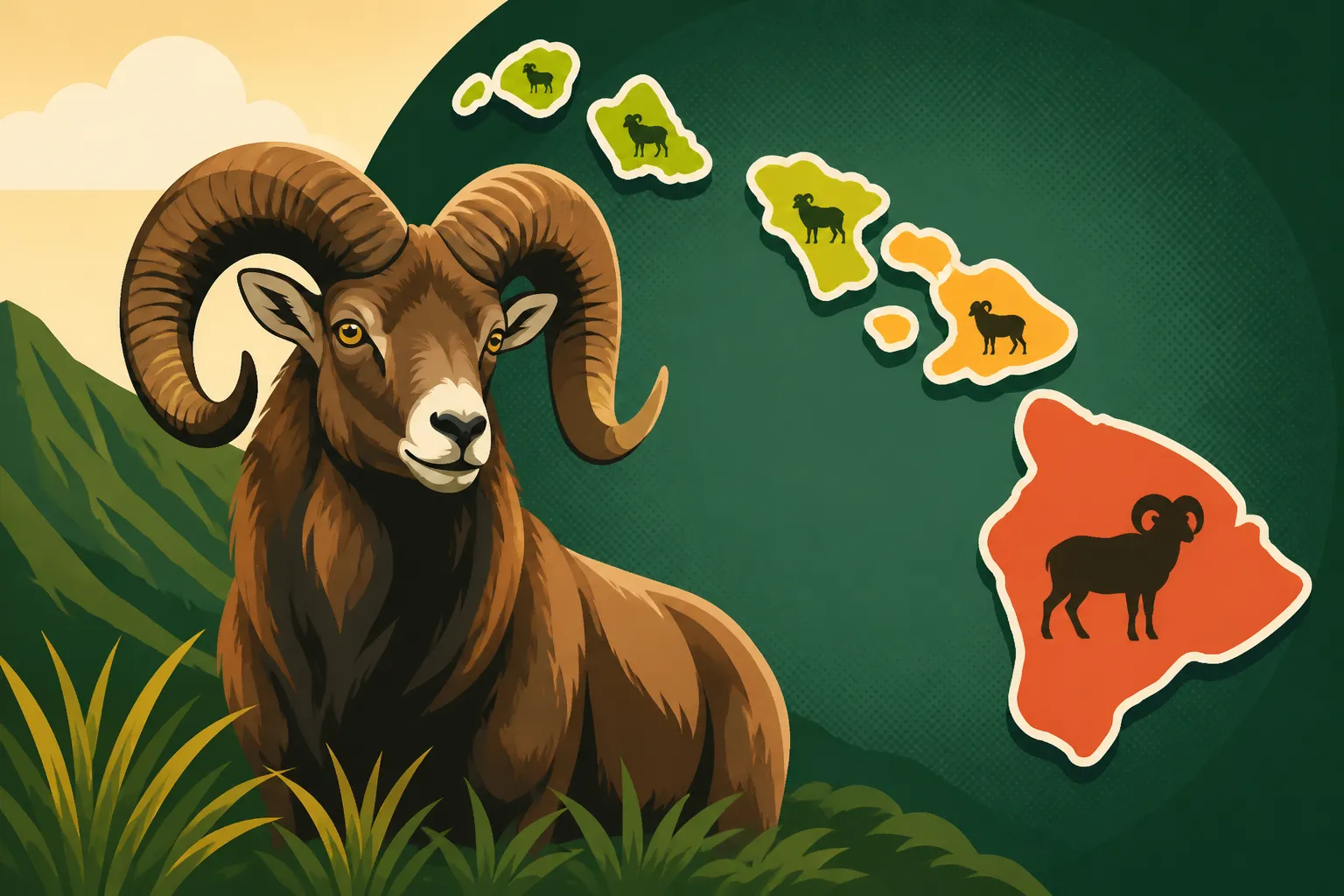
It's a common question, but currently, huntable populations of mouflon sheep are not found on Maui, Molokai, Oahu, or Kauai. Therefore, there are no established bag limits for mouflon on these islands because there are no legal hunting seasons for them. If you're planning a trip to Hawaii specifically for mouflon, your focus should exclusively be on Hawaii Island and Lanai. This might seem obvious to seasoned Hawaii hunters, but for newcomers, it's a crucial piece of information to avoid disappointment and misplanning your trip.
Navigating Regulations and Permitting for Mouflon
Understanding the bag limits is just one piece of the puzzle. The administrative side of Hawaii hunting, especially for species like mouflon, requires careful attention to detail. From licenses to permits, every step needs to be followed precisely.
Obtaining Your Hunting License and Permit-Tags
First things first: before you can even dream of drawing a mouflon permit, you need a valid Hawaii hunting license. This applies to both residents and non-residents. You can purchase these through the state's online portal, which often uses the GoHunt system, or in person at various DOFAW offices. Make sure to check Hawaii Hunting Licenses and What They Cost well in advance, as certain requirements like Hunter Education might need to be met.
Once you have your license, the next step for mouflon is almost always a permit-tag. These are specific to certain species and units and are typically issued through a lottery or draw system. For mouflon on Hawaii Island and Lanai, these permit-tags are what allow you to legally harvest an animal, and as discussed, they dictate your bag limit. The application period for these permits is often several months before the hunt, so staying informed about Hawaii's Drawn Hunts and Lotteries is absolutely critical.
Checking In and Out of Hunting Units
Hawaii has a mandatory check-in and check-out system for most public hunting units. This isn't just a formality; it's how DOFAW monitors hunter activity, collects harvest data, and ensures everyone is accounted for. For mouflon hunts, especially in remote units on Mauna Kea or Lanai, it's imperative to follow these procedures.
You'll either use a physical check-in card at a designated station or, increasingly, utilize the OuterSpatial app to Check In and Out of Hawaii Hunting Units electronically. Failing to check out, even if you don't harvest an animal, can result in penalties or even affect your ability to participate in future draws. It's an important part of the ethical hunting process in Hawaii.
Staying Updated on Regulation Changes
Hawaii's hunting regulations, especially for species like mouflon, can occasionally change. Seasons might be shortened, extended, or even canceled due to drought conditions, habitat recovery efforts, or population surveys. Always consult the most current regulations available on the official DOFAW website before planning your hunt. Don't rely solely on information from previous years or word-of-mouth. Subscribing to DOFAW email alerts or checking the GoHunt website frequently can help you stay current. This vigilance ensures you're hunting legally and ethically, adhering to the most recent bag limits and season dates.
Understanding the specific Mouflon Bag Limits by Island is fundamental to a successful and compliant hunting experience in Hawaii. While the one-animal-per-permit rule is a good general guideline, the nuances of each island’s units and drawn hunt processes require careful attention. With proper planning, adherence to regulations, and a bit of luck in the draw, a Hawaii mouflon hunt can be an unforgettable adventure.
Disclaimer
The information provided in this guide is for general informational purposes only and is not a substitute for the official Hawaii Department of Land and Natural Resources (DLNR) Division of Forestry and Wildlife (DOFAW) hunting regulations. Hunters are responsible for consulting the most current and official regulations, proclamations, and maps before participating in any hunting activity. Seasons, bag limits, and rules are subject to change without notice.