Hunting Mouflon at Puu Waawaa
Hunting mouflon at Puu Waawaa on the Big Island isn't just a casual stroll; it's a test of patience, planning, and perseverance in one of Hawaii's most distinctive landscapes. Many hunters, especially those new to island hunting, often underestimate the unique challenges presented by this high-elevation, volcanic terrain and the intricacies of the state's permit system. This guide is designed to thoroughly walk you through everything you need to know, from understanding the specific geography and mouflon habits in Puu Waawaa to navigating the drawn hunt process and implementing effective strategies for a successful hunt.
Understanding the Puu Waawaa Unit for Mouflon
Puu Waawaa is not just another hunting unit; it's a unique ecosystem on the western slopes of Hualālai volcano, offering a distinct challenge for mouflon hunters. The terrain, climate, and the animals themselves present a different kind of hunt compared to the lower elevation areas or even other parts of the Big Island. Success here hinges on a deep understanding of these specific factors.
Geographic Features and Terrain Challenges
The Puu Waawaa area, often referred to as Unit A on the Big Island, is a vast and ecologically diverse landscape that spans a significant elevation range. You'll find yourself traversing everything from dry, scrubby kiawe and open grasslands at lower elevations, often near the highway, to more dense mamane-naio forests as you ascend. This transition zone is critical because mouflon will utilize different habitats depending on the time of day, weather, and hunting pressure. The ground itself is perhaps the most challenging aspect: extensive lava flows, from relatively smooth pahoehoe to incredibly jagged a'a, dominate much of the landscape. Walking through this volcanic rock without proper footwear and a keen eye can be a slow, boot-destroying, and even ankle-twisting endeavor.
Furthermore, you’ll encounter numerous cinder cones and kipukas – islands of older vegetation surrounded by more recent lava flows. These features provide vital cover, bedding areas, and feeding grounds for mouflon, but they also create complex topographic challenges. Visibility can range from wide-open vistas that demand excellent glassing skills to dense pockets of brush where an animal can disappear in seconds. The elevation gain, too, is a silent adversary; while not as high as Mauna Kea, you’ll still be climbing and descending steep, uneven ground, often under the relentless Hawaiian sun. Hydration and physical stamina are paramount in this environment.
The weather patterns add another layer of complexity. Puu Waawaa sits in a rain shadow, making it significantly drier than the windward side of the island, but afternoon showers can still roll in, turning dusty trails into slick mud and making lava rock treacherous. Daytime temperatures can be quite warm, even at higher elevations, but mornings can be surprisingly cool, especially if a strong trade wind is blowing. Understanding these microclimates and how they affect both you and the mouflon is crucial for effective hunting.
Mouflon Behavior and Habitat within Puu Waawaa
Mouflon in Puu Waawaa are incredibly adapted to this rugged, arid environment. Unlike the larger Axis deer found on other islands, mouflon are smaller, more compact, and incredibly agile, allowing them to navigate the steep, rocky slopes with ease. Their primary diet consists of grasses, forbs, and browse from shrubs like kiawe and mamane. They are particularly fond of the tender shoots found after a rain or in areas where new growth emerges, which often means paying attention to subtle changes in vegetation across the landscape.
During the hotter parts of the day, mouflon will seek shade, often bedding down under kiawe trees, in the shadows of cinder cones, or within the denser mamane forests at higher elevations. Early mornings and late afternoons are prime feeding times, when they are more likely to be out in the open, grazing. Water sources are scarce in much of Puu Waawaa, so if you can identify any natural springs, stock ponds, or even depressions that hold rainwater, these become high-value areas for spotting animals, especially during dry spells. Their keen eyesight and hearing, honed by living in open country, mean that a careful, slow approach is always necessary.
Observing how these animals move in their habitat provides invaluable insight. They tend to travel along established trails through the brush or pick their way expertly across lava flows, often using ridges and contours to stay out of sight. A successful hunter will learn to "read" the land through the eyes of a mouflon, anticipating their movements and using the terrain to their advantage. Recognizing the subtle differences between a mouflon ram and a ewe is also vital, especially when hunting specific tag types. For more detailed insights into their range, consider checking out our guide on Where Hawaii's Mouflon Live.
Special Regulations and Access for Puu Waawaa
Hunting at Puu Waawaa, like many designated public hunting areas in Hawaii, is governed by specific regulations that you absolutely must understand before you even think about stepping into the unit. This isn't a walk-up-and-hunt kind of place; it operates primarily through a drawn hunt system. This means you can't just show up with a license and a weapon; you need to apply for a permit and be selected through a lottery. These draws are typically announced by the Department of Land and Natural Resources (DLNR), Division of Forestry and Wildlife (DOFAW), and are highly anticipated by local hunters.
Access to Puu Waawaa is generally restricted to designated hunter check stations, where you must sign in and out using either a physical card or, increasingly, the OuterSpatial app. Failing to do so can result in significant penalties. The specific season dates, legal hunting days (often weekend-only), and permissible weapons (archery, muzzleloader, or rifle, depending on the specific draw) are all clearly outlined in the hunt announcement. For example, some seasons might be archery-only, while others could be muzzleloader. It's crucial to confirm which weapon type is allowed for the specific season you're drawn for.
Beyond the drawn hunt, there are also general access rules regarding vehicles, camping, and even the number of hunters allowed in certain zones. You'll typically need a 4WD vehicle to navigate the rough roads and trails within the unit, and many areas require extensive walking from designated parking spots. Always check the most current Hawaii hunting regulations for Unit A, as rules can change from year to year. Knowing the specific rules for Hawaii Island Hunting Unit Seasons and Hawaii's Drawn Hunts and Lotteries will save you a lot of grief and ensure you're hunting legally and responsibly.
Navigating the Puu Waawaa Drawn Hunt System
The drawn hunt system is the gatekeeper to hunting mouflon at Puu Waawaa. It can feel a bit daunting, especially for those unfamiliar with Hawaii's unique lottery process, but with a clear understanding of how it works, you can significantly increase your chances of securing a coveted tag.
The Application Process and Deadlines
Applying for a Puu Waawaa mouflon tag is a multi-step process that demands attention to detail and strict adherence to deadlines. First and foremost, you'll need a valid Hawaii hunting license. For both residents and non-residents, these can be purchased online through the GoHunt Hawaii portal. Once you have your license, you'll monitor the DOFAW announcements for the specific mouflon season at Puu Waawaa. These announcements will typically detail the application period, the type of tags available (e.g., ram-only, either-sex), and the specific dates of the hunt weekends.
The application itself is usually submitted online via the GoHunt portal. You'll need to create an account if you don't already have one and then navigate to the drawn hunt application section. It's critical to double-check all information before submitting, including your hunter education certification number (if applicable) and contact details. Missed deadlines are unfortunately common, so marking your calendar as soon as the application period is announced is highly recommended. Often, there's a small non-refundable application fee. Pay close attention to whether you are applying for a ram-only tag, which is generally more sought after, or an either-sex tag, which might have higher draw odds.
It's not uncommon for the drawn hunt announcements to come out just a few months before the actual hunt dates, so staying informed is key. Subscribing to DOFAW email alerts or regularly checking their website is a smart move. Remember, a successful application is the first hurdle in what can be a very rewarding hunt. For those looking to improve their chances, exploring strategies for Applying for More Than One Drawn Hunt can be beneficial, though specific rules apply to each unit and species.
Maximizing Your Odds for a Puu Waawaa Tag
Getting a tag for Puu Waawaa mouflon can be competitive, so it pays to have a strategy. While luck plays a significant role in any lottery, there are a few things you can do to potentially improve your chances or at least make informed decisions. One key factor is understanding the different tag types. Ram-only tags are usually the most desirable and, consequently, the hardest to draw. If your primary goal is simply to hunt mouflon in Puu Waawaa, applying for an either-sex tag often presents significantly better odds. This might mean you end up harvesting a ewe, but it gets you into the unit.
Another consideration is the specific hunt dates. Some weekends might be more popular than others due to holidays or favorable moon phases. If you have flexibility in your schedule, applying for less popular weekends might slightly increase your chances. This information isn't always explicitly stated, but looking at past draw results or talking to experienced local hunters can sometimes provide insights. For non-residents, be mindful of travel logistics and how specific hunt dates align with your availability.
Finally, ensure you and any hunting partners are all applying correctly. If you're planning a group hunt, sometimes there are options to apply as a party, but always verify the specific rules for that year's Puu Waawaa draw. Being thorough in your application and meeting all requirements is the simplest way to avoid disqualification. Remember that the draw is a numbers game, but being strategic about your application choices can certainly tip the scales, even if just slightly, in your favor.
What to Expect Post-Draw
Once the application period closes, it's a waiting game. Typically, DOFAW will announce the draw results within a few weeks or months. You'll usually be notified by email if you've been selected, and the results are also often posted publicly on the GoHunt Hawaii portal. This is where the real planning begins. If you're lucky enough to draw a tag, you'll receive instructions on how to secure your permit-tag, which often involves a payment if there's a tag fee, and details about mandatory hunter check-in.
Many drawn hunts, especially for specific units like Puu Waawaa, include a mandatory pre-hunt briefing or orientation. This is not something to skip! These briefings often cover critical information about unit boundaries, current animal concentrations, any recent changes in regulations, specific safety concerns for the terrain, and what to do in case of an emergency. It’s an invaluable opportunity to get up-to-the-minute information directly from DOFAW personnel. You'll also learn about the specific check-in and check-out procedures for the unit, which are strictly enforced.
Your permit-tag is your golden ticket, and it must be carried with you at all times during the hunt. It will include details like the hunt dates, unit number, and the species/sex you are authorized to take. Familiarize yourself with the tagging requirements immediately after a kill, as improper tagging can lead to penalties. Understanding the nuances of How Hawaii's Permit-Tag System Works is essential, as is knowing the rules for Checking In and Out of Hawaii Hunting Units. These steps are not just bureaucratic hurdles; they are fundamental to ensuring a safe, legal, and well-managed hunt in a unique and sensitive environment.
Scouting and Pre-Hunt Preparation for Puu Waawaa
A successful mouflon hunt at Puu Waawaa isn't just about drawing a tag; it's about meticulous preparation long before you ever step foot in the unit with your weapon. Scouting, gear preparation, and physical conditioning are all critical components to increasing your chances of success and ensuring a safe, enjoyable experience.
Interpreting Mouflon Sign in Diverse Terrain
Puu Waawaa's varied terrain means you need to be adept at reading different types of mouflon sign, whether you're in the open lava fields or the denser mamane forests. Tracks are often visible in dusty areas, along old jeep trails, or where dirt accumulates between lava rocks. Mouflon have cloven hooves, similar to goats, but often slightly more rounded. Look for fresh, crisp tracks that haven't been distorted by wind or rain, and pay attention to their direction of travel and gait; a trotting or running animal will leave different impressions than one leisurely grazing.
Droppings are another key indicator. Mouflon scat typically consists of small, dark pellets, often in clusters. Fresh droppings are moist and dark, while older ones are dry and faded. The location of scat can tell you a lot: concentrated piles might indicate a bedding area, while scattered pellets suggest active feeding. Rubs, where rams have scraped their horns on small trees or shrubs, are strong indicators of ram activity and often coincide with rutting behavior. Look for fresh bark scrapes and torn vegetation. Beds, depressions in the dirt or grass where animals have rested, will often contain hair and indicate recent use if the ground is still warm or the vegetation recently disturbed.
Understanding what these signs mean in context is crucial. A single set of tracks might just be a lone animal passing through, but multiple tracks, fresh scat, and rubs in a concentrated area suggest a core use area. Focus your scouting efforts on areas with high concentrations of fresh sign, particularly near water sources or preferred forage. Remember, the sharper edges of lava can make tracks hard to distinguish, so always be on the lookout for other indicators. For more specific techniques, our guide on Reading Axis Deer Sign in Dry Country offers transferable skills for understanding ungulate movement in arid Hawaiian environments.
Essential Gear for Puu Waawaa's Unique Conditions
Puu Waawaa demands a specific gear list to contend with its unique blend of sharp lava, varied vegetation, and unpredictable weather. First and foremost are your boots: invest in high-quality, sturdy, and well-broken-in hiking boots with stiff soles and good ankle support. The sharp a'a lava can quickly shred lesser footwear, and weak ankle support is a recipe for injury. Many experienced hunters will even recommend bringing two pairs if you plan on multiple days of hunting. Your clothing should be durable, breathable, and able to layer. Camouflage patterns that blend with the dry, muted tones of the kiawe and lava are ideal. Think muted greens, browns, and grays. A lightweight rain shell is a must, even if the forecast is clear, as mountain weather can change rapidly.
Optics are your best friend here. A good pair of binoculars (10×42 or 12×50 are popular choices) is indispensable for glassing the vast, open slopes and spotting mouflon from a distance. A spotting scope on a sturdy tripod is highly recommended if you plan on hunting rams in the higher, more open country. Rangefinders are also crucial for accurately judging shots in the wide-open, undulating terrain, where distances can be deceiving. Navigation is critical: even with the OuterSpatial app for checking in and out, a reliable GPS device, a detailed topographical map (like the ones available from the DLNR), and a compass are non-negotiable backups, especially in areas with no cell signal.
Don't forget the essentials: plenty of water (more than you think you'll need!), high-energy snacks, a first-aid kit (including blister treatment and wraps for sprains), a headlamp, fire-starting materials, and a multi-tool. A sturdy daypack capable of carrying these items and potentially boned-out meat is also necessary. Given the remote nature of parts of Puu Waawaa, consider carrying a satellite communication device like a Garmin inReach or a Zoleo for emergencies. Being prepared for Walking Rough Lava Without Wrecking Your Boots is not just about comfort; it's about safety and hunt effectiveness.
Physical Conditioning for Steep Slopes and Rough Ground
Underestimating the physical demands of a Puu Waawaa mouflon hunt is a common mistake that can quickly turn an exciting adventure into a miserable ordeal. The terrain is relentlessly challenging: steep ascents and descents over loose cinder, sharp lava rock, and through dense brush will test your stamina and balance. You're not just walking; you're often climbing, scrambling, and carefully picking your way through ankle-breaking country. Combine this with the heat, humidity, and sun exposure that can quickly dehydrate you, and you have a recipe for severe fatigue if you're not adequately prepared.
Weeks, if not months, before your hunt, you should be engaging in a fitness regimen that mimics the demands of the terrain. This means hiking with a weighted pack, ideally on uneven or hilly ground. Incorporate exercises that strengthen your core and legs, focusing on stability and endurance. Stair climbing, lunges, squats, and trail running are all excellent choices. Don't neglect flexibility and balance exercises, as they will help prevent falls and injuries on the treacherous lava.
The ability to carry a heavy load is also crucial. If you're successful, you'll need to pack out an entire animal, often boned out, over the same difficult terrain. Practicing with a pack full of weights will prepare your shoulders and back for this demanding task. Remember, your physical condition directly impacts your ability to cover ground, remain alert, and safely extract your animal. The better shape you're in, the more enjoyable and successful your hunt is likely to be.
Effective Hunting Strategies at Puu Waawaa
Hunting mouflon at Puu Waawaa requires a blend of keen observation, patient movement, and an understanding of how these elusive animals utilize their unique environment. Simply wandering around hoping to stumble upon a ram is rarely effective; instead, a strategic approach tailored to the unit's conditions is paramount.
Spot-and-Stalk Techniques on Open and Sparse Ground
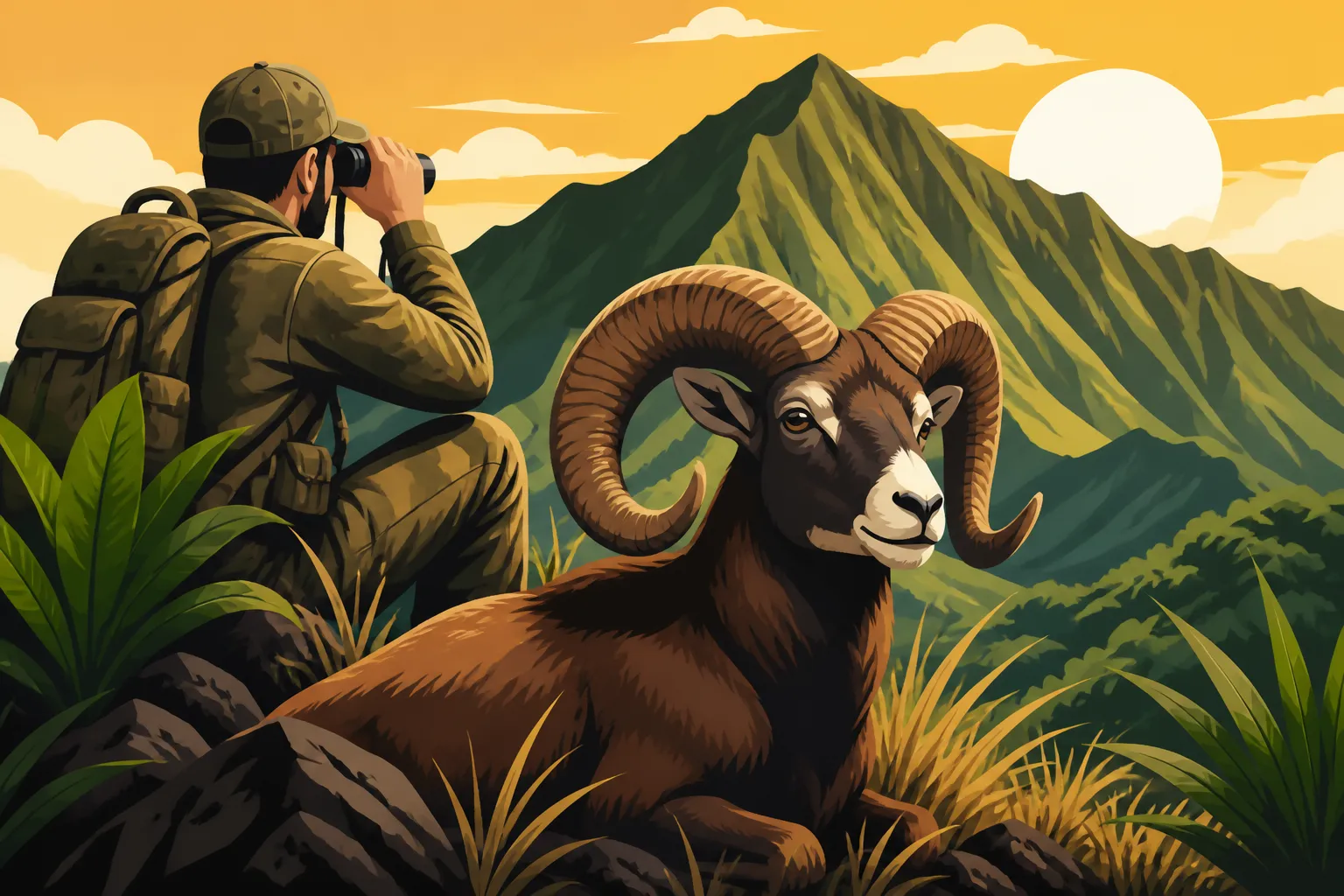
Puu Waawaa offers significant stretches of open, sparse country, particularly at lower to mid-elevations. This makes spot-and-stalk the most effective hunting strategy. The key here is patience and optics. Find a high vantage point, often the rim of a cinder cone or a prominent ridge, that offers expansive views of kiawe flats, lava flows, and grassy slopes. Then, settle in with your binoculars and spotting scope. Take your time, systematically glassing every fold in the terrain, every patch of shade, and every distant silhouette. Mouflon blend incredibly well with the muted tones of the volcanic rock and dry vegetation, so look for subtle movements, a horizontal backline, or the glint of a horn.
Once you spot an animal or a group, the real challenge begins: planning your approach. The open nature of the terrain means cover is often minimal. You’ll need to utilize every small rise, every lava flow, and every clump of kiawe to remain out of sight. Wind direction is critical; mouflon have an excellent sense of smell. Always approach into the wind or with a crosswind. This might mean taking a circuitous route that adds significant distance and time to your stalk, but it's often the only way to get within shooting range. Walk slowly, deliberately, and quietly, paying close attention to your footing on the noisy lava rock.
Stalking in this environment is often a stop-and-go process. Move when you are out of sight, and freeze when the animals might be looking your way. Use the contours of the land to your advantage, keeping low and trying to silhouette yourself as little as possible. The goal is to close the distance without being detected, allowing for a calm, ethical shot. For more general advice on this method, our Spot-and-Stalk Axis Deer in Hawaii guide offers adaptable techniques for open country ungulates.
Hunting the Mamane and Kiawe Forests
While much of Puu Waawaa is open, hunters will also encounter denser pockets of mamane and kiawe forests, especially at higher elevations or in protected gulches. These areas provide critical cover, shade, and forage for mouflon, particularly during the middle of the day or when hunting pressure is high in more exposed areas. Hunting these zones requires a different approach than open-country glassing. Here, still-hunting or slow, methodical walks become more effective.
When still-hunting, move incredibly slowly, taking a few steps and then pausing for several minutes to observe your surroundings. Use your binoculars to pick apart the shadows and dense foliage, looking for parts of an animal rather than the whole. Listen for the rustle of leaves, the snap of a twig, or the soft blowing sound of a mouflon. Pay particular attention to the edges of these forests, where they transition into more open ground, as mouflon will often move between cover and feeding areas at dawn and dusk. The mamane trees, in particular, provide nutritious browse, making them attractive feeding spots.
In denser kiawe stands, visibility can be very limited, sometimes only a few yards. This is where patience, a keen ear, and an understanding of mouflon movement within thickets come into play. Look for game trails through the thorny brush, as these are often used by animals. Being prepared for a quick, close-range shot is paramount in these environments. Always be aware of your backdrop and what lies beyond your target. These forested areas can also be excellent places to find bedding sites, so if you're not seeing animals, look for fresh sign indicating they are holding up in the cover.
Using Thermals and Wind in Puu Waawaa's Volcanic Environment
Understanding thermals and wind patterns is absolutely critical when hunting mouflon in Puu Waawaa, especially given the varied topography of cinder cones, gulches, and open slopes. The wind in Hawaii can be notoriously shifty, but generally, thermals will rise as the land warms in the morning and fall as it cools in the evening. This means that in the early hours, scents will typically carry uphill, and in the late afternoon, they will carry downhill. Planning your approach to utilize these natural air currents is vital to avoid spooking animals.
Beyond the general thermal patterns, the specific contours of Puu Waawaa can create localized wind currents. Valleys and gulches can act like funnels, channeling wind in unpredictable directions, while the lee side of cinder cones or ridges can create swirling eddies. Before initiating any stalk, always check the wind repeatedly using a wind indicator (like powder or milkweed down) to confirm its direction. What might seem like a steady breeze at your elevation could be completely different down in a gulch or over the next ridge.
Hunting into the wind or with a steady crosswind should always be your goal. If the wind is swirling or unpredictable, it might be best to wait for more stable conditions or choose an alternate route. A mouflon's nose is its primary defense, and if your scent carries to them, your hunt is almost certainly over. This requires constant vigilance and sometimes long detours, but it's a non-negotiable aspect of successful hunting in this unique volcanic landscape. Consider how the changing wind patterns affect animals as described in Hunting Hawaii's Volcanic Terrain.
Field Care and Extraction in Puu Waawaa's Challenging Landscape
Harvesting a mouflon at Puu Waawaa is a significant accomplishment, but the job isn't done until the meat is properly cared for and safely out of the field. Hawaii's warm climate and the unit's rugged terrain present unique challenges that demand efficient and thoughtful post-harvest procedures.
Rapid Field Dressing and Cooling in Warm Climates
Hawaii's ambient temperatures, even at higher elevations in Puu Waawaa, can be warm enough to spoil meat quickly if not handled correctly. The moment your mouflon is down, time becomes critical. The first priority is to field dress the animal immediately. This involves gutting it quickly and cleanly to remove heat from the body cavity. Carry sharp knives, a game bag, and disposable gloves in your pack. Once field dressed, if possible, prop the carcass open to allow for maximum airflow, especially if there's any breeze.
The next step is rapid cooling. While a cold stream might not be readily available in Puu Waawaa's dry country, you can still take measures. If you've planned ahead, having a few small, flexible freezer packs or even bags of ice in a soft-sided cooler at your vehicle can be a game changer. The goal is to get the body temperature down as fast as possible. If you anticipate a long pack out, boning out the animal on site is highly recommended. This reduces weight significantly and allows the meat to cool even faster. Separate the meat into quarters, remove all fat, and place it in breathable game bags.
Some hunters will even carry lightweight emergency blankets to reflect sunlight away from the meat during transport. Never let the meat sit directly on the ground. Place it on branches or your pack if waiting. As soon as you reach your vehicle, transfer the meat to coolers packed with ice. The mantra here is "cool, clean, and quick." For more general guidance on this vital process, refer to our comprehensive guide on Field Care in Hawaii's Heat and Humidity.
Overcoming Terrain for Meat Packing and Extraction
Extracting a mouflon from Puu Waawaa can be the most physically demanding part of the hunt. If you're lucky enough to harvest an animal near a road or relatively flat ground, you're in for an easier time. More often, however, you'll find yourself miles from your vehicle, potentially in a steep gulch, across a jagged lava field, or deep within a thorny kiawe thicket. This is where your physical conditioning and gear planning truly pay off.
For long distances or difficult terrain, boning out the animal is almost always the best option. Carry a sturdy frame pack designed for heavy loads. Even a small mouflon can be surprisingly heavy when packed out in quarters over lava rock. Distribute the weight evenly in your pack. If hunting with a partner, you can split the load, making the task more manageable. Take frequent breaks, especially if the sun is out, and stay hydrated. Don't be afraid to take the easiest route, even if it's longer; preserving yourself and the meat is the priority.
If you find yourself in an extremely challenging location, such as a deep gulch or very remote area, consider your options. Some hunters arrange for a packer or even a helicopter lift, though these services are expensive and must be planned well in advance. For most, it will involve a grueling, step-by-step process of carefully moving the meat through the landscape. Think about the path of least resistance and plan your route back to the vehicle as meticulously as you planned your stalk. Our article on Packing Meat Out of a Hawaii Gulch can provide additional strategies for difficult extraction scenarios.
Tagging and Reporting Requirements Specific to Puu Waawaa
After a successful harvest, proper tagging and reporting are legally mandated and crucial steps that cannot be overlooked. Immediately after your mouflon is down and field dressed, you must physically attach your permit-tag to the carcass. The specific location for the tag (e.g., ear, hind leg) will be detailed in your hunt instructions, but it must be securely affixed and visible. This tag must remain on the carcass until it is processed into individual portions. Losing a tag or failing to attach it correctly can lead to fines and legal complications.
Before leaving the Puu Waawaa hunting unit, you are required to check out. This process is just as important as checking in. If you used the OuterSpatial app for check-in, you’ll use it again to record your harvest information and check out. If you used a physical check card, you’ll complete the harvest information on the card and deposit it in the designated box at the check station. The information requested typically includes the date of harvest, species, sex, and often the hunting zone within Puu Waawaa where the animal was taken.
This data is vital for DOFAW in managing mouflon populations and planning future hunt seasons. Accurate reporting ensures that conservation efforts are based on reliable information. Always review the specific instructions provided with your tag and at the mandatory briefing, as requirements can sometimes change. Understanding the requirements for Tagging an Animal Correctly in Hawaii is fundamental to being a responsible hunter.
Respecting the Land and Other Users
Hunting in Hawaii, especially in ecologically sensitive areas like Puu Waawaa, comes with a profound responsibility to the land and to the wider community. It's not just about adhering to regulations; it's about embodying a spirit of respect for the unique environment and for fellow outdoor enthusiasts.
Minimizing Impact on Sensitive Ecosystems
Puu Waawaa, with its volcanic terrain, native mamane forests, and fragile kipukas, represents a delicate ecosystem. Hunters have a crucial role to play in minimizing their impact and helping preserve these natural resources. Practice Leave No Trace principles rigorously. This means packing out everything you pack in, including all trash, spent casings, and any discarded materials. Do not leave behind any non-biodegradable waste.
Stay on designated roads and trails whenever possible to prevent erosion and damage to sensitive vegetation. If you must venture off-trail, be mindful of where you step, especially in areas with native plants or delicate lava formations. Avoid disturbing historical or cultural sites, which are present throughout the Hawaiian landscape. While mouflon are an introduced species and hunting helps manage their populations, our methods must still be respectful of the broader environment. Being a conscientious hunter means leaving the land better than you found it, ensuring these hunting grounds remain viable for future generations and protecting the native biodiversity.
Coexisting with Other Hunters and Land Users
Puu Waawaa is a public resource, meaning it's shared by various users, not just hunters. You might encounter hikers, birdwatchers, or researchers, especially on weekends. It's essential to practice common courtesy and respect. Maintain safe shooting lanes and always be aware of your surroundings and potential non-hunting users. If you encounter others, a friendly greeting and acknowledgement can go a long way in fostering good relationships.
For fellow hunters, courtesy is equally important. Give other hunters ample space, especially if you see them stalking an animal or set up in a particular area. Avoid "sky-lining" yourself on ridges, which can compromise another hunter's position. If you hear shots, note the direction and adjust your movements accordingly. Sharing information about areas with heavy sign or where you've seen animals can be a good practice, but always respect another hunter's privacy and preferred hunting style. We are all part of a larger hunting community, and demonstrating respect for one another ensures a positive experience for everyone and helps maintain a good public image for hunting in Hawaii.
Disclaimer
The information provided in this guide is for general informational purposes only and is subject to change. Hunting regulations, season dates, and unit boundaries in Hawaii can be updated by the Department of Land and Natural Resources (DLNR) at any time. It is the sole responsibility of each hunter to verify and comply with all current state and local laws, regulations, and permit requirements before engaging in any hunting activity. Always prioritize safety and ethical hunting practices.