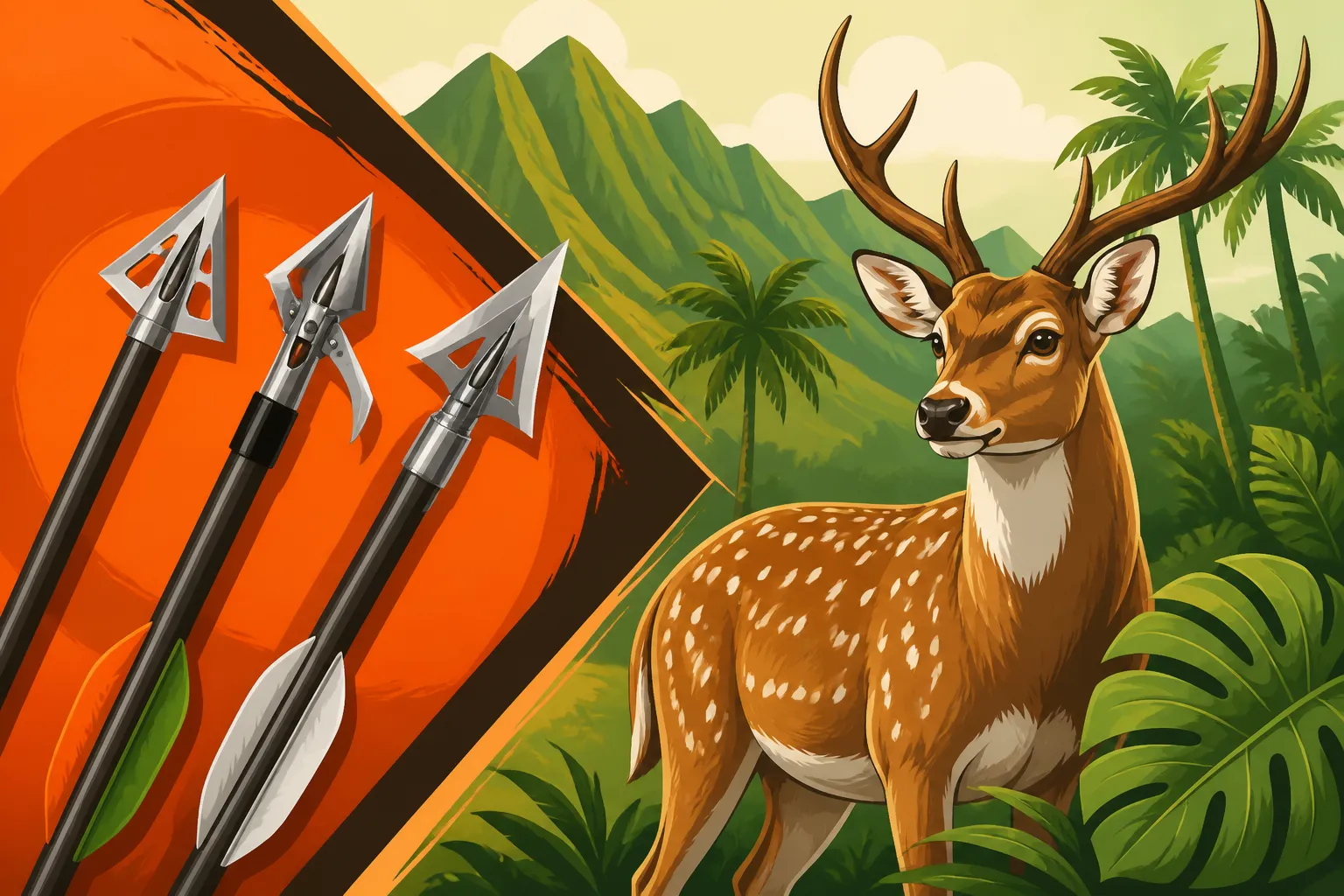
Choosing an Arrow Setup for Axis Deer
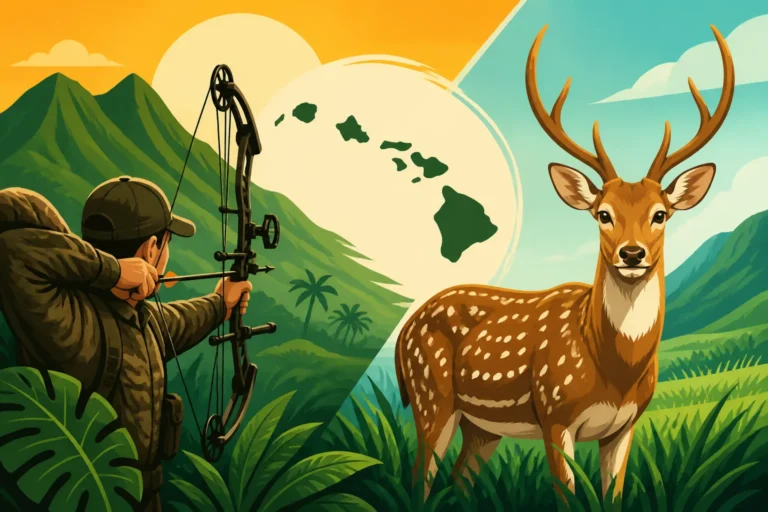
Alright, let's talk about bowhunting Axis deer in Hawaii. It’s a hunt unlike any other, full of unique challenges and incredible rewards. But here’s the thing many hunters underestimate: getting your arrow setup dialed in for these beautiful, tough animals in this often unforgiving environment is absolutely critical. You might be an experienced archer on the mainland, but the dense kiawe, the steep gulches, and the sheer resilience of an Axis deer demand a serious look at your gear. This guide is all about helping you understand the nuances of arrow selection, from shaft to broadhead, so you can hunt with confidence and ensure an ethical harvest when that perfect shot opportunity finally presents itself.
The Foundation: Arrow Shaft Selection and Spine
Before we even think about broadheads, we need to talk about the core of your projectile: the arrow shaft itself. This isn't just a stick; it's a precision instrument, and getting it right is the first step to consistent accuracy and devastating penetration.
Understanding Arrow Spine and Its Importance
Think of arrow spine as the stiffness of the arrow. When you release a string, the arrow flexes, or "paradoxes," around the bow riser. This flex is normal and necessary, but it needs to be the right amount of flex. This is where spine comes in. We talk about two types: static spine (how stiff an arrow is when measured statically) and dynamic spine (how it actually flexes during the shot). What truly matters is the dynamic spine being correctly matched to your bow.
If your arrow is too stiff (over-spined) for your bow's draw weight, draw length, and cam system, it won't flex enough, leading to inconsistent flight and potentially hitting the target off-angle. Conversely, if it's too weak (under-spined), it will flex too much, potentially contacting the riser or your rest, causing erratic flight, and in extreme cases, even catastrophic failure of the arrow upon release. For hunting Axis Deer, Hawaii's Signature Big Game, precision is paramount. An arrow that flies erratically due to incorrect spine is a recipe for a missed shot or, worse, a wounded animal that's incredibly difficult to recover in Hawaii's dense cover. Getting this right is about safety and ethical hunting.
Material Matters: Carbon, Aluminum, and Hybrids
Today, carbon arrows dominate the bowhunting scene, and for good reason. They're incredibly durable, lightweight, and offer excellent stiffness-to-weight ratios. This durability is a huge plus when you're hunting in Hawaii, where you might be crashing through thorny kiawe or navigating lava flows. An arrow that can withstand a bit of abuse and still fly true is invaluable.
While aluminum arrows are more forgiving and heavier, they're also prone to bending, which can quickly render an arrow useless. You don't want to hike deep into a unit like Lanai's Unit One only to find your perfectly tuned aluminum arrow bent after bumping a tree. Hybrid arrows, often combining carbon and aluminum, aim to offer the best of both worlds – the durability of carbon with the added weight of aluminum for improved penetration. Many serious bowhunters lean towards all-carbon shafts with slightly smaller diameters (micro or standard) as they tend to drift less in Hawaii's often gusty trade winds and can provide better penetration by reducing friction. Always prioritize straightness tolerance; a perfectly straight arrow, even if slightly more expensive, will pay dividends in accuracy. Many reputable brands like Easton and Gold Tip offer excellent carbon shafts designed for serious hunting.
Crafting the Projectile: Fletching, Nocks, and Inserts
An arrow is more than just a shaft; it's a carefully assembled system. Each component plays a vital role in ensuring your arrow flies true and delivers maximum impact.
Fletching for Stability and Accuracy
Your fletching – whether vanes or feathers – is essentially the rudder of your arrow. Its job is to guide the arrow and correct any imperfections in flight, especially those caused by a broadhead.
For bowhunting in Hawaii, vanes are almost universally preferred over feathers. Why? Because Hawaii is often wet, brushy, and sometimes muddy. Feathers absorb moisture, can get matted, and are easily shredded by dense vegetation like guava or kiawe. Vanes, typically made of plastic, are waterproof and far more durable, making them ideal for the rugged conditions you'll encounter whether you're stalking in a dry gulch or in a damp, shaded valley.
When it comes to size and configuration, a larger vane (like a 2-inch Blazer vane or a 3-inch fletch) or an aggressive helical (where the fletch is spiraled around the shaft) will provide more stability. This is especially important when you’re shooting fixed-blade broadheads, which can sometimes "plane" or steer the arrow slightly. A 4-fletch configuration can also enhance stability. Remember, you'll often be taking shots in varying wind conditions, such as when Hunting Hawaii's High Elevation Alpine Ground or across open lava fields, and superior fletching stability can make a real difference in keeping your arrow on course.
Nocks, Inserts, and Weight Distribution
These seemingly small components have a huge impact on your arrow's performance.
Nocks: A properly fitted nock ensures a consistent, clean release from the string. An ill-fitting nock can cause inconsistencies in your shot or even damage to the string. Many hunters also opt for lighted nocks, which can be incredibly useful. After an arrow passes through an Axis deer, especially in dense brush or fading light, seeing exactly where the arrow hit and where it landed can be a game-changer for tracking. This can save you hours of searching and improve your chances of recovering an animal, which is crucial in Hawaii's often thick and challenging terrain.
Inserts and Outserts: The insert is where your broadhead screws in. This is a high-stress point, so a robust, perfectly aligned insert is essential. Brass inserts are popular because they add weight to the front of the arrow, increasing your Front of Center (FOC) percentage, which we'll discuss more later. Some setups use outserts, which sleeve over the outside of the arrow shaft, providing even more strength and allowing for a heavier FOC. Durability at the business end of your arrow is non-negotiable for the demanding conditions of Bowhunting Hawaii's Public Units.
Broadheads: The Business End for Axis Deer
This is where the magic (or the heartbreak) happens. Your broadhead is what actually puts the animal down, and choosing the right one for Axis deer is a decision that deserves serious thought.
Fixed-Blade Broadheads: Reliability and Penetration
Fixed-blade broadheads are the old reliables of the bowhunting world. They have no moving parts, making them incredibly robust and reliable. They are typically praised for their superior penetration, especially through bone, which is a major advantage when hunting a tough animal like an Axis deer. Their simple, sturdy design means there's virtually nothing to fail on impact.
However, fixed-blades can be more challenging to tune for perfect flight compared to field points. If your bow isn't perfectly tuned, or if the broadhead isn't perfectly concentric on the arrow shaft, it can cause the arrow to "plane" or steer, especially at longer distances or in windy conditions. Many hunters find that a smaller cutting diameter (like 1" to 1.25") on a fixed-blade helps with tuning and penetration. Brands like Exodus, Iron Will, and Magnus Stinger are favorites among those who prioritize maximum penetration and reliability. When hunting in areas where an animal might duck a string or you might encounter unexpected brush, the deep penetration of a well-placed fixed-blade can be the difference between a quick, ethical kill and a long, difficult track.
Mechanical Broadheads: Accuracy and Cutting Diameter
Mechanical broadheads, also known as expandable broadheads, have gained immense popularity due to their field-point accuracy and larger cutting diameters. They fly like a field point, then deploy their blades on impact, creating a wider wound channel than most fixed-blades. This can lead to massive blood trails and quicker recoveries.
However, there's a trade-off. Because they have moving parts, there's always a chance of mechanical failure – blades not deploying fully, blades breaking, or less penetration due to the energy required to deploy them. For Axis deer, with their dense bone structure and surprisingly tough hide, this loss of kinetic energy on impact can be a significant concern, especially if your bow setup has lower kinetic energy. They are generally not recommended for bows under 55-60 lbs draw weight. If you opt for mechanicals, choose designs known for their robust construction and reliable deployment, such as the NAP Killzone or the G5 Deadmeat. Always practice with the exact broadheads you plan to hunt with (or a dedicated practice version) to ensure they fly true from your setup. While Hunting Hawaii's Archery Axis Deer Seasons often offers year-round opportunities, a misplaced or under-penetrating shot is still a hunter’s worst nightmare.
Hybrid Broadheads: Best of Both Worlds?
Hybrid broadheads attempt to bridge the gap between fixed and mechanical designs. They often feature smaller fixed blades that provide some cutting and stability before larger mechanical blades deploy on impact. The idea is to get the best of both worlds: the reliability and penetration initiation of a fixed blade, combined with the wider cutting diameter of an expandable.
While innovative, these designs can sometimes add complexity. More moving parts can mean more points of potential failure, and they still require sufficient kinetic energy for reliable deployment and penetration. For hunters looking for a compromise, they might be worth exploring, but many experienced Hawaii hunters stick to well-proven fixed blades for their sheer reliability against the tough Axis deer.
The Science of Impact: Weight, FOC, Kinetic Energy, and Momentum
Understanding these concepts is crucial for building an arrow setup that consistently delivers ethical kills. It's not just about how fast your arrow goes; it's about how effectively it transfers energy to the target.
Arrow Weight and Front of Center (FOC)
Total Arrow Weight: This is the overall weight of your complete arrow, from nock to broadhead. Lighter arrows fly faster and have a flatter trajectory, which can be appealing for open country shots. However, they also lose energy more quickly and generally penetrate less. For Axis deer, which are larger and tougher than many mainland deer species, you generally want to prioritize penetration over blazing speed. A heavier arrow (450-550+ grains total weight for most setups) will carry more momentum, retain energy better, and drive deeper into the animal, increasing your chances of a pass-through and a quick, ethical harvest. Considering What a Hawaii Axis Buck Weighs, which can be upwards of 200 pounds, a heavier arrow simply makes sense.
Front of Center (FOC): This is the percentage of your arrow's total weight that is located in the front half of the arrow. A higher FOC (generally 10-15% minimum, with many advocating for 15-20% or even higher for big game) means the arrow is more "nose heavy." This has several key benefits:
- Improved Stability: A nose-heavy arrow acts like a dart, flying more consistently and resisting wind drift better. This is a huge advantage when you're glassing Lanai's Open Ridgelines and taking a shot.
- Enhanced Penetration: A higher FOC causes the arrow to maintain its forward momentum more effectively on impact. Instead of "bouncing" or skidding, it drives deeper, especially when encountering bone.
You can increase your FOC by using heavier inserts (like brass or stainless steel) or by selecting heavier broadheads. It's a key factor in building a truly effective arrow for tough game.
Kinetic Energy (KE) and Momentum (M)
These are the scientific measures of your arrow's energy and penetrative power.
Kinetic Energy (KE): This is the energy an arrow possesses due to its motion (KE = 1/2mv^2, where m is mass and v is velocity). While higher KE sounds good, velocity (v) is squared in the equation, meaning lighter, faster arrows can have high KE. However, for penetration, KE can be a bit misleading.
Momentum (M): This is the measure of mass in motion (M = mv). Momentum is often considered a better indicator of an arrow's ability to penetrate tough hide and bone. A heavier arrow, even if slower, carries more momentum than a lighter, faster arrow with the same kinetic energy. Think of a bowling ball vs. a baseball; the bowling ball, despite being slower, has far more momentum.
For Axis deer, you want a healthy balance of both, but if forced to choose, lean towards momentum for better penetration. As a general guideline, for Axis deer, you should aim for at least 40-50 ft-lbs of KE and a momentum reading of 0.40-0.50 slug-ft/s or higher. There are many online calculators that can help you determine your arrow's KE and momentum based on its weight and speed. Getting these numbers up significantly increases your odds of a clean pass-through, which is vital for quick recoveries and easier Field Dressing Axis Deer in Hawaii Heat, not to mention having enough momentum to Cooling Meat Fast on a Hawaii Hunt.
Tuning Your Setup for Success in Hawaii
Having the right components is only half the battle. The other half is ensuring your bow and arrow are working together in perfect harmony. This is where tuning comes in.
Paper Tuning and Walk-Back Tuning
These are fundamental steps for any serious bowhunter.
Paper Tuning: This involves shooting an arrow through a piece of paper placed a few feet in front of your bow. The tear pattern in the paper tells you how your arrow is leaving the bowstring and rest. A perfect tear is a small, clean hole made by the broadhead and fletching. If you see horizontal or vertical tears, it indicates issues with your rest height, nocking point, or even cam timing (for compound bows). Addressing these issues is critical for consistent accuracy. Don't skip this step!
Walk-Back Tuning: This is a fantastic way to confirm your paper tune and, more importantly, ensure your broadheads are flying true with your field points at various distances. You'll shoot at a vertical line on a target, starting close (e.g., 10 yards) and then walking back to 20, 30, and 40 yards, shooting at the same vertical line without adjusting your sight. If your arrows group in a straight vertical line, your tuning is spot on. If they start stringing out horizontally, you likely have a form or tuning issue that needs addressing. For fixed-blade broadheads, walk-back tuning is non-negotiable to confirm they are not "steering" your arrow.
These tuning processes are essential for ensuring that when you draw back on an Axis buck, your arrow will go exactly where you aim it. You can find excellent resources on GoHunt for detailed tuning guides and how-to videos, which can make the process much smoother.
Practicing Under Realistic Conditions
Tuning is done on a perfectly flat range in ideal conditions. Hunting in Hawaii is anything but ideal. You'll be Hunting Molokai's Axis Deer Country with varying terrain, shifting thermals, and unpredictable wind. Your practice needs to reflect this reality.
- Vary Your Positions: Practice shooting from kneeling, sitting, and standing. You might be shooting uphill or downhill. Simulate these scenarios on the range.
- Practice in Wind: Hawaii often has consistent trade winds. Learn how your arrows react in a crosswind. A higher FOC arrow often performs better.
- Shoot at Varying Distances: Know your ethical range and stick to it. Don't take a 50-yard shot in the field if you can't consistently hit a pie plate at that distance in practice.
- Broadhead Practice: Dedicate a few broadheads specifically for practice, or buy practice versions if available. It's crucial to confirm your hunting broadheads fly identically to your field points. This confidence will serve you well when you're hunting during Hawaii Archery Season Windows.
- Physical Fitness: Remember, Hunting Hawaii's Volcanic Terrain or steep gulches can be physically demanding. Practice shooting when a bit winded, simulating what it might feel like after a long stalk.
This commitment to practice, especially with your exact hunting setup, is what builds confidence. It ensures that when you get that hard-earned opportunity on a beautiful Axis deer, you're not just hoping your arrow will fly true, you know it will. Your setup needs to comply with Archery Equipment Rules for Big Game as well as Hawaii's Legal Weapons by Season, so always double-check the latest regulations on resources like GoHunt.
| Broadhead Type | Pros | Cons | Ideal For |
|---|---|---|---|
| Fixed-Blade | Maximum penetration, extremely durable, reliable, no moving parts. Excellent for bone. | Can be harder to tune, may plane in wind. | High kinetic energy/momentum setups, dense bone, windy conditions, tough game like Axis. |
| Mechanical | Field point accuracy, large cutting diameter, huge wound channels. | Potential for mechanical failure, loses energy on impact, less penetration on bone. | Open country, accurate bow, sufficient kinetic energy, good shot placement. |
| Hybrid | Combines fixed-blade initial cut with expandable's wider cut. | More complex, potential for more points of failure than fixed. | Hunters wanting a balance; ensure robust design and sufficient KE. |
Disclaimer
Please remember that hunting regulations, seasons, and unit rules in Hawaii can change. Always consult the official Hawaii Department of Land and Natural Resources (DLNR) Division of Forestry and Wildlife (DOFAW) website, or reliable resources like GoHunt, for the most current information before planning any hunt. This guide is for informational purposes only and does not supersede official regulations. Stay safe, hunt ethically, and respect the land.