Hunting a Hawaii Koa Forest Edge
Hunting the edge of a koa forest in Hawaii can be an incredibly rewarding, albeit challenging, experience. Many hunters get frustrated trying to navigate dense, unfamiliar terrain, feeling like they're walking through a green wall with no idea where the animals might be. This comprehensive guide aims to demystify hunting Hawaii's majestic koa forest edges, offering practical strategies and insights to help you successfully target feral pigs and goats that call these unique habitats home.
Understanding the Koa Forest Environment
When we talk about a koa forest edge in Hawaii, we're really talking about a dynamic interface where dense native forest meets another habitat type. This could be a sprawling cattle pasture, a younger ʻōhiʻa forest, an old macadamia orchard, or even kiawe flats at lower elevations. Understanding this specific ecosystem is paramount to successful hunting, as it dictates animal movement, feeding patterns, and where you'll most likely encounter game.
The Unique Ecology of Koa
Koa (Acacia koa) trees are iconic, endemic Hawaiian hardwoods, known for their sweeping branches, sickle-shaped leaves, and valuable timber. These forests thrive primarily on the windward (wet) slopes and in the uplands of the larger islands like Hawaii Island and Maui, typically between 2,000 and 6,000 feet in elevation. However, you can find them in various pockets, sometimes even lower if conditions are right. They form dense, often high-canopy forests that create a shaded, humid understory.
The richness of the koa forest comes from its biodiversity. While the canopy is dominated by koa, the understory is a tangle of native ferns, ʻōlapa (Hawaiian tremoloid tree), hāpuʻu (tree ferns), and sometimes invasive species like strawberry guava or clidemia. It's this dense undergrowth, combined with fallen koa seed pods and other plant matter, that attracts the primary game species we're after: feral pigs and goats. The edge itself becomes a natural highway for these animals, as they seek both cover within the dense koa and foraging opportunities in the adjacent, more open areas.
Identifying Productive Koa Edges
Not all koa forest edges are created equal. The most productive edges are those that offer a distinct transition between food sources and secure bedding cover. Think about a koa forest bordering an active pasture or a fallow field where animals can emerge at dawn or dusk to feed. Look for natural funnels where the forest line narrows, or where trails lead into thickets. These are prime ambush points.
Topographic features also play a huge role. Steep gulches or ravines that run into the koa can be natural corridors, as animals use them for travel and escape. Similarly, kipuka — islands of forest surrounded by lava flows — often feature koa trees at their edges, providing vital shelter and food in an otherwise stark landscape. Always keep an eye out for old ranch roads or logging trails that skirt the koa boundary; these can be excellent access points and natural game trails, making it easier for you to navigate and predict animal movement while you are Hunting a Hawaii Koa Forest Edge.
Target Species and Their Behavior
When you're hunting a koa forest edge, your primary targets will almost certainly be feral pigs and feral goats. While Axis deer are certainly present on some islands, they typically prefer drier, more open habitats, though you might find them occasionally browsing the lower, drier edges of koa on islands like Maui or Lanai. However, pigs and goats thrive in the rich, varied environment that koa edges provide.
Feral Pigs: The Forest's Rooters
Feral pigs are perhaps the most common and destructive game animal found in Hawaii's koa forests. They are incredibly adaptable, and the moist, shaded conditions of the koa understory, combined with the food sources found at the edge, make it an ideal home. Pigs are omnivores, constantly rooting for tubers, fallen fruits, insects, and even small animals.
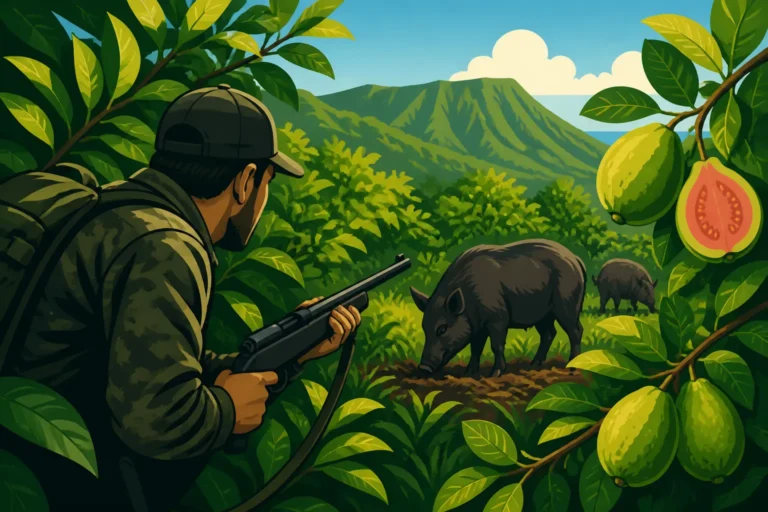
- Behavior at the Edge: Pigs will use the dense koa as bedding cover during the day, retreating deep into the forest to escape the heat and hunters. At dawn and dusk, they will often emerge from the koa edge into more open areas like pastures, old agricultural fields, or even disturbed forest patches to feed. You might see them pushing through a fern gulch at dawn or still-hunting through a guava thicket for pigs where the koa transitions. Their rooting activity will be a dead giveaway – look for freshly turned earth, especially after a rain.
- Signs to Look For: Beyond rooting, keep an eye out for fresh tracks in soft earth, muddy wallows (especially during or after rain), and rubs on tree trunks where boars will sharpen their tusks or mark their territory. Their droppings, often tubular and full of plant matter, can also indicate recent presence. Pay attention to their pungent odor, which can carry on the humid air. When you are Reading Pig Sign Along a Muddy Trail, remember that fresh sign is key.
- Ideal Times: Pigs are most active during the cooler parts of the day – early morning and late evening. Overcast or rainy days can also see them active throughout the day, as the cooler temperatures make them less inclined to bed down.
Feral Goats: The Edge Browsers
Feral goats, while often associated with Hawaii's steep, rocky coastal cliffs or barren lava fields, are also common inhabitants of koa forest edges, especially where the forest meets open, grassy slopes or areas with diverse browse. They are agile and prefer to move along contours, often using subtle trails.
- Behavior at the Edge: Goats are primarily browsers, feeding on leaves, twigs, and bark. They utilize the koa edge for both food and cover. During the heat of the day, they might be seen bedded down just inside the treeline, soaking up the shade. In the morning and evening, they'll move out to browse on grasses and shrubs in the more open areas adjacent to the forest. They are particularly fond of young koa sprouts and other native plants.
- Signs to Look For: Look for tracks (smaller and more pointed than pig tracks) in dusty areas or along rocky trails. Droppings are typically small, pelleted, and dark. Goats will also leave browse lines on vegetation, where they've nipped off leaves and twigs. Rubs on small trees or shrubs from billies marking their territory can also be present. Keep an eye out for their distinctive white patches, which can sometimes blend surprisingly well against the dappled light of the forest.
- Ideal Times: Similar to pigs, goats are most active at dawn and dusk. They often seek higher ground for bedding and observation, so glassing the upper slopes where koa edges meet open ridges can be very effective.
Coexistence and Interplay
It’s important to remember that these species often share the same habitat. A koa edge can provide excellent forage and cover for both. You might find pig sign heavily concentrated in the damper, richer parts of the understory, while goat sign is more prevalent where the koa thins out to grassy slopes. Understanding these subtle differences in preference will help you refine your hunting approach, whether you’re after Hunting Hawaii's Feral Pigs or Hunting Hawaii's Feral Goats.
Effective Hunting Strategies for Koa Forest Edges
Hunting koa forest edges demands a combination of patience, stealth, and a keen understanding of animal behavior. The dense cover and often steep, broken terrain mean you need to adapt your techniques. Here are some strategies that tend to work well in these challenging environments.
Still-Hunting and Tracking
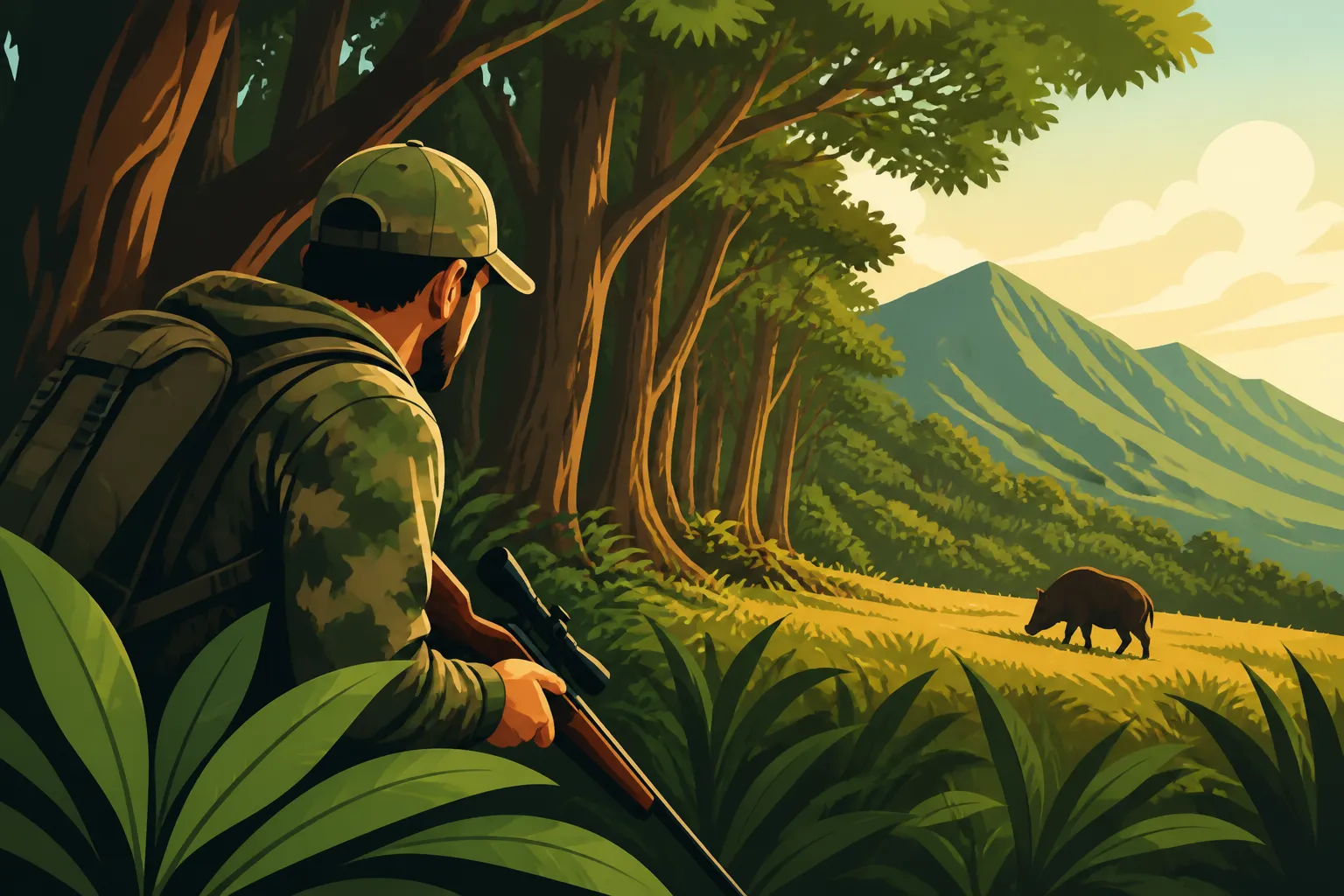
This is arguably the most effective method for hunting the interior of the koa forest edge. Still-hunting involves moving very slowly, taking a few steps, then pausing for several minutes to observe, listen, and scan your surroundings. The goal is to move silently, allowing your eyes and ears to pick up subtle clues.
- Slow and Deliberate Movement: In the dense undergrowth, visibility can be limited to mere yards. This means you need to slow down dramatically. Take one step, plant your foot, then shift your weight. Look for game animals, but also look for small movements, shapes that don't belong, or even flicking ears. Remember, the animals are trying to do the same thing to you.
- Reading the Sign: As you move, constantly scan for fresh tracks, droppings, and feeding areas. If you find fresh pig rooting along a koa edge, it's a strong indicator they're in the vicinity. Follow these trails cautiously, always hunting ahead with your eyes. Pay particular attention to game trails leading into or out of the denser koa cover. These are highways animals use to commute between feeding and bedding areas.
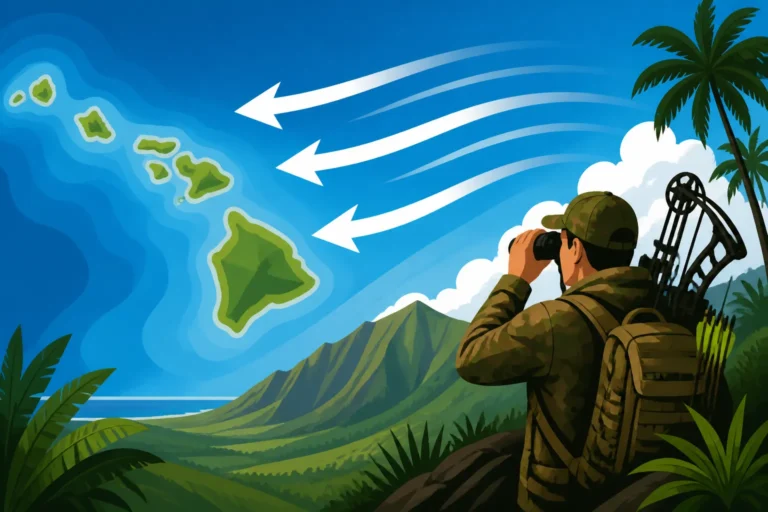
- Using the Wind: Hawaii's trade winds can be your best friend or worst enemy. Always try to hunt into the wind or with a crosswind. The humid air can carry scent far, and animals, especially pigs, have an incredible sense of smell. Be mindful of shifting thermals in the morning and evening as the air warms or cools on the slopes. This can be tricky when Hunting Downwind in Hawaii's Shifting Thermals.
Ambush and Stand Hunting
For hunters who prefer a more static approach, setting up an ambush point along a well-used game trail or feeding area can be highly effective. This works best when you've done your scouting and identified a consistent pattern of animal movement.
- Identifying Pinch Points: Look for natural funnels where animals are forced into a narrow corridor. This could be where a koa edge meets a lava flow, or a saddle between two ridges that animals traverse. Water sources, if present, are also excellent ambush points, particularly in drier times.
- Concealment is Key: Whether you're in a ground blind or simply tucked into thick vegetation, good concealment is essential. Break up your outline, stay still, and be patient. Dress in camouflage that matches the lush, green tones of the koa forest.
- Timing: The hours just after dawn and just before dusk are prime times for ambush hunting. Get to your spot well before first light, and be prepared to stay until dark. Animals often move at these times to feed or return to bedding areas. For pigs, particularly, waiting near a taro patch or any agricultural field adjacent to the koa can yield results.
Glassing from a Distance
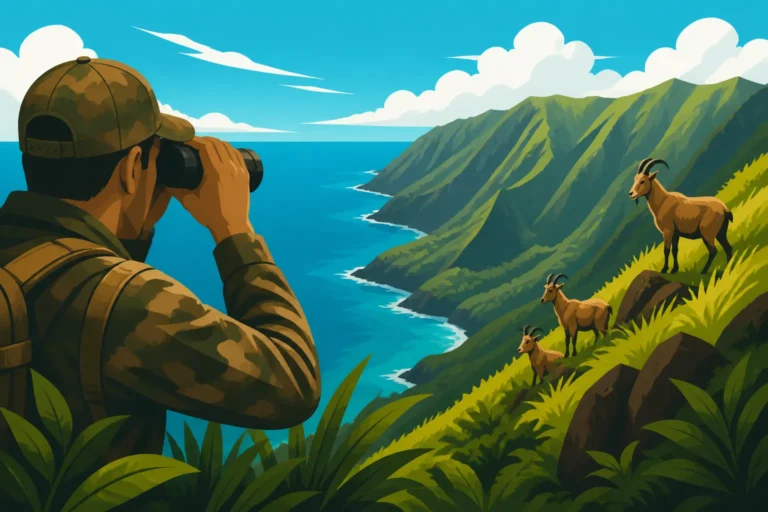
While much of koa forest hunting is up close and personal, there are situations where glassing from a distance can pay off, especially if the koa edge borders more open country or a large gulch system. This is a common tactic when Spot-and-Stalk Tactics on Open Country but can be adapted.
- Elevated Vantage Points: If you can find an elevated ridge or knoll overlooking a large section of koa edge, take advantage of it. Use good quality binoculars (10×42 or 12×50) to systematically scan the edge, looking for any movement, a patch of hide, or an antler tip.
- Patience and Persistence: Glass for extended periods, especially at first light and last light. Animals often appear and disappear quickly. Look for subtle cues – a swaying branch, a flicker of white (goat), or a dark shape moving through the trees.
- Follow-Up: If you spot an animal, plan your stalk carefully. Use topography and vegetation to your advantage to close the distance undetected. Remember, the wind is crucial here.
Gear and Safety Considerations for Koa Terrain
Hunting koa forest edges in Hawaii means being prepared for specific conditions. The terrain can be challenging, the weather unpredictable, and the environment requires careful attention to safety.
Essential Gear
Having the right gear can make or break your hunt, ensuring both comfort and safety.
- Footwear: This is critical. You need sturdy, waterproof boots with excellent ankle support and aggressive tread. The ground in koa forests can be uneven, slick with mud, covered in hidden roots, and strewn with sharp volcanic rock. Consider a boot with a stiff sole to protect your feet.
- Rain Gear: Even on a sunny morning, a pop-up shower can drench you in minutes, especially on windward slopes. Pack lightweight, breathable, and truly waterproof rain gear (jacket and pants) to stay dry.
- Navigation Tools: GPS is non-negotiable. Whether it's a dedicated handheld unit or a reliable app on your phone (like GoHunt or OuterSpatial), ensure you have maps downloaded for offline use. No Cell Signal on a Hawaii Hunt is a real possibility, so don't rely solely on cellular data. A compass and paper map are excellent backups. Knowing how to use the OuterSpatial App to Check In and out of your unit is also crucial.
- Water and Snacks: Dehydration is a serious risk in Hawaii's humidity and active terrain. Carry more water than you think you'll need, along with high-energy snacks.
- First-Aid Kit: A compact but comprehensive first-aid kit is essential for cuts, scrapes, blisters, and other minor injuries that are common in thick terrain.
- Weapon: For pigs and goats in these dense environments, a powerful, accurate rifle in a common caliber (.270, .30-06, .308, 6.5 Creedmoor) is ideal. Shot placement is key. Alternatively, if you're feeling adventurous or hunting with dogs, a bow or even a spear can be used where legal. For those interested in alternative methods, consider Muzzleloader Hunting in Hawaii during its designated windows, but be mindful of keeping powder dry in the humidity.
Safety in the Koa
Hawaii's hunting environment presents unique challenges that demand vigilance.
- Stay Found: The dense vegetation can disorient you quickly. Always be aware of your surroundings, frequently checking your GPS and landmarks. Consider using a "track back" feature on your GPS. Staying Found in Dense Hawaii Rainforest is a skill that takes practice.
- Terrain Awareness: Koa forests are often on steep, rugged slopes, intersected by deep gulches. Watch your footing constantly, especially on wet leaves or loose soil. Never take unnecessary risks on steep inclines or near cliff faces.
- Weather Changes: Beyond rain, temperatures can drop significantly at higher elevations. Be prepared for cooler conditions than you might expect for Hawaii. Conversely, lower elevation koa can be hot and humid, requiring careful Water and Heat Planning for a Hawaii Hunt.
- Hunt with a Buddy: While solo hunting is possible, having a partner adds a layer of safety, especially in remote areas. You can help each other with navigation, tracking, and packing out game.
- Inform Someone: Always let a non-hunting contact know exactly where you are going, your planned route, and when you expect to return.
- Animal Handling: Feral pigs, especially large boars, can be dangerous when cornered. Approach downed animals with caution. For field dressing, use gloves to protect against potential diseases like leptospirosis, and ensure you understand Field Care in Hawaii's Heat and Humidity to preserve your meat. Cooling meat fast on a Hawaii hunt is paramount in the warm climate.
Hunting a koa forest edge offers an authentic and challenging Hawaii hunting experience. It's about more than just harvesting an animal; it's about immersing yourself in a unique ecosystem and developing a deeper understanding of its wild inhabitants. By coming prepared, respecting the land, and employing smart hunting strategies, you can have a truly memorable and successful adventure. Remember to check the local hunting regulations and secure your Hawaii Hunting Licenses and What They Cost before heading out.
Disclaimer
Please remember that hunting regulations in Hawaii can change. Always consult the most current Hawaii Department of Land and Natural Resources (DLNR) Division of Forestry and Wildlife (DOFAW) regulations before planning any hunt. This guide is for informational purposes only and does not supersede official government regulations. Always prioritize safety and ethical hunting practices.