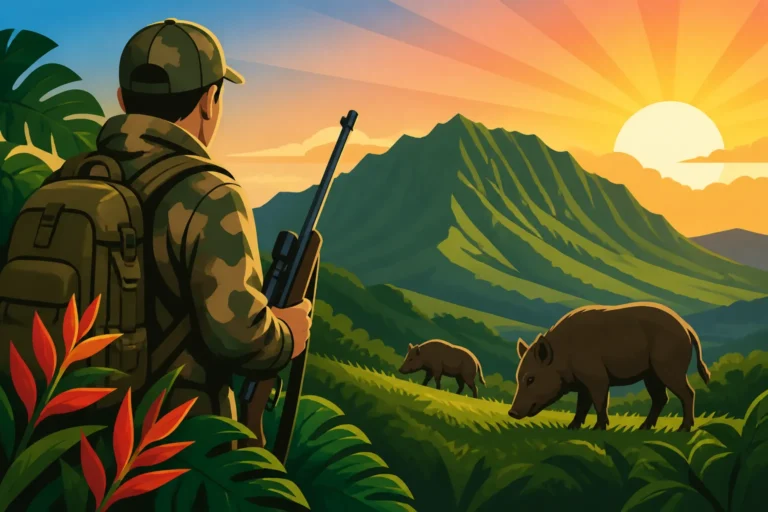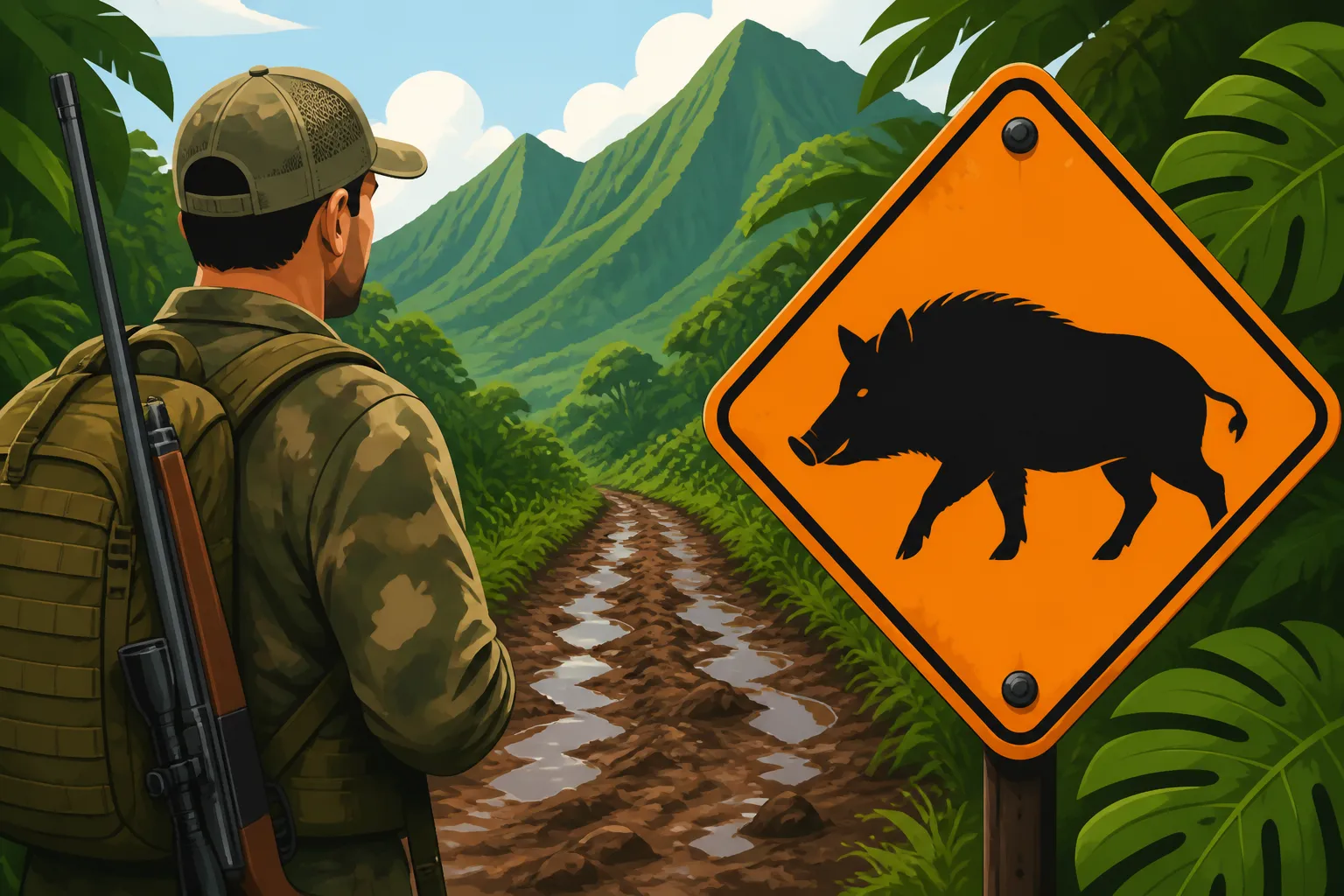
Reading Pig Sign Along a Muddy Trail
It can be incredibly frustrating to spend hours hiking through dense Hawaiian forests, only to wonder if you're even in the right area for pigs. The jungle here can feel impenetrable, and without clear paths, it’s easy to get lost or, worse, completely miss the prime feeding and travel corridors these elusive animals use. This guide is all about cutting through that uncertainty, showing you how to read the subtle yet undeniable clues that feral pigs leave behind on muddy trails, transforming your hunt from a hopeful wander into a strategic stalk.
Why Muddy Trails Are Prime Pig Real Estate in Hawaii
When you think about hunting pigs in Hawaii, especially in the lusher, wetter parts of the islands like the windward slopes of the Big Island or the deep gulches of Maui, muddy trails are practically neon signs. Pigs aren't just passing through these areas; they're actively using them for survival. Understanding why these muddy stretches are so appealing to them is the first step in successful scouting and hunting.
The Allure of Moisture and Foraging
Feral pigs in Hawaii are opportunists, and their lives revolve around food and water. Muddy trails, especially those found along stream beds, in the bottom of deep gulches, or crossing through perpetually damp forest floors, offer a consistent source of both. These areas often have softer soil, which is a pig's dream for rooting. They’re constantly digging for tubers, roots, fallen fruits, and invertebrates – and soft, damp earth makes that job much easier. Imagine trying to dig up a taro root from hard, dry ground versus pulling it from a churned-up muddy patch; the pigs definitely prefer the latter. This makes these spots not just travel routes, but active feeding grounds where pigs spend a lot of their time. If you're looking for where pigs are actively feeding, you should prioritize areas with soft, muddy ground. You'll often find them working over a patch of hau or ti root in these damp areas.
Beyond just making digging easier, the moisture itself is a draw. Pigs don't sweat like humans do, so they rely on external cooling methods. A cool, muddy trail provides relief from the tropical heat, and access to water for drinking is obviously essential. During the hotter, drier months, these muddy areas become even more critical, acting as magnets in an otherwise parched landscape. Even in the wet season, the constant moisture means a steady supply of their preferred forage, leading to consistent activity. These trails are not just pathways; they are vital resources that concentrate pig activity, making them primary targets for hunters who understand their habits. This is a key insight when you're trying to figure out what feral pigs eat in the islands.
Understanding Pig Habits in Wet Environments
Pigs are creatures of habit, and their routines are heavily influenced by the environment. In Hawaii’s wet environments, such as the dense rainforests or the deeply incised valleys where moisture is constant, pigs tend to move differently and use the terrain in predictable ways. They often follow the path of least resistance, which is why existing trails – even those made by other animals or hikers – become their thoroughfares. These trails, when wet, become superhighways of information for the observant hunter. Pigs will use the same trails day after day, sometimes for generations, creating well-worn routes that are clearly visible even in thick vegetation, especially when the mud captures every impression.
Furthermore, pigs use wet areas for more than just feeding and travel; they also wallow in mud to cool down, protect themselves from insects, and possibly even to help shed parasites. You'll often find these wallows, which are essentially muddy depressions, right off the main muddy trails. A pig wallow tells you not just that pigs are in the area, but that they are comfortable and likely spending a good amount of time there. When you're still-hunting pigs in Hawaii's wet forest, these distinct muddy trails and associated wallows are your best bet for pinpointing activity. Knowing these habits helps you anticipate where they’ll be, how they’ll move, and what signs they’ll leave behind.
Deciphering the Muddy Clues: What to Look For
Okay, so you've found a muddy trail. Great! But how do you actually read it? It's not just about seeing mud; it's about interpreting the specific marks and disturbances left behind. Think of it like reading a newspaper – there's a headline, but then there are all the smaller articles that give you the full story.
Tracks and Hoof Prints
The most obvious sign of pig presence on a muddy trail is, of course, their tracks. Feral pig tracks are distinct: two prominent dewclaws that often register in soft mud, especially if the pig is heavy or moving quickly. Unlike deer or goats, which tend to have smaller, more pointed hooves and rarely show dewclaws unless the ground is extremely soft or they're in a deep bog, pig tracks are wider, rounder, and almost always accompanied by those tell-tale dewclaws in mud.
Look for the size of the track. A track that's 2-3 inches wide might indicate a younger pig or a sow, while a track over 3 inches wide, especially with deep dewclaw impressions, suggests a larger boar or mature sow. The depth of the print tells you about the pig's weight and how recently it passed. A deep, clear print in fresh mud means a heavier animal was there very recently. Pay attention to the stride – long, even strides might mean a pig traveling purposefully, while shorter, more erratic prints could indicate feeding or browsing. Overlapping prints suggest multiple pigs or a pig lingering in the area. When you see big, deep tracks, it tells you that there might be a significant boar in the area, perhaps even one of those big-bodied Molokai Axis bucks that hunters dream of. This kind of detail can help you gauge the size of the animal you're pursuing.
Rooting and Tusk Marks
Beyond tracks, rooting is perhaps the most undeniable evidence of pig activity. Pigs are constantly "plowing" the ground with their powerful snouts in search of food. On a muddy trail, this rooting will look like churned-up earth, disturbed vegetation, and small holes where they've dug for roots or grubs. The freshness of the disturbed soil is key here: dark, moist, freshly turned earth means very recent activity, possibly within the last few hours. If the disturbed earth has started to dry out or has a light crust, it's older.
Tusk marks are another crucial detail, especially if you’re hoping for a boar. Boars use their tusks for defense, for sparring with other boars, and sometimes, they’ll even use them to root up stubborn roots or mark their territory. These marks might appear as gouges in the mud or even on the bark of small trees and shrubs along the trail. Look for paired, curved scrapes in the mud, sometimes with distinct drag marks from the lower tusks. The size and depth of these marks can give you an idea of the boar's size and tusk development, which is particularly exciting if you're after a trophy. Seeing fresh tusk marks tells you that a dominant male is likely using that specific stretch of trail. This adds a whole new dimension to reading pig sign along a muddy trail.
Wallows, Rubs, and Beds
Pigs aren't just moving through; they're living in these areas. So, look for signs of their daily routines.
Wallows: We touched on this already, but it bears repeating. A wallow is a muddy depression where a pig has rolled around. It’s usually an oval or kidney-bean shape, often with matted hair on the edges. The water in a fresh wallow might still be cloudy, or the mud around it will be soft and moist. Older wallows will have clearer water, or the mud will be caked and dry. Discovering active pig wallows and what they tell you is like finding a pig’s living room.
Rubs: Pigs will often rub against trees or rocks to scratch themselves, remove parasites, or mark territory. In muddy areas, you might find mud smears or matted hair on the lower trunks of trees (usually up to 3 feet high) along the trail. The higher the rub, the larger the pig. If the rub has fresh mud or loose hair, you know it's recent. This is a less common sign than tracks or rooting but indicates regular use of the area.
Beds: While harder to spot on a muddy trail itself, pigs will often bed down in dense cover just off a well-used trail. A bed is simply a flattened area of vegetation where a pig has rested. In damp conditions, these might even be slightly muddy depressions. Look for disturbed leaves, bent grass, or even a faint pig smell. Finding a bed tells you that pigs are not just passing through, but are actually living in that immediate vicinity, which can be a game-changer for your hunting strategy.
Interpreting Fresh vs. Old Sign and What It Means
Knowing what to look for is one thing; knowing how recent it is, and what that implies for pig movement, is the next crucial step. The difference between fresh and old sign can mean the difference between seeing a pig today and knowing it was there last week.
Ageing Tracks and Rooting
Judging the age of tracks and rooting takes practice, but there are some reliable indicators.
Tracks:
- Very Fresh (within a few hours): Prints will be sharply defined with crisp edges. The mud inside the print will still be wet and might even have water seeping into it if the ground is saturated. If you press your finger into the mud, it will feel very soft and wet. Any disturbed vegetation around the print will still be upright or only slightly wilted.
- Fresh (up to 24 hours): The edges of the prints might be slightly less crisp due to drying or slumping mud, especially in soft, wet soil. A thin, fragile crust might form on the surface of the mud if it's drying out. If you carefully scrape the surface, the mud underneath will still be damp.
- Old (over 24 hours): Prints will have rounded, indistinct edges. The mud will be dry and caked, or if it's been raining, the prints might be partially filled with water, leaves, or detritus. You might see insect activity (small tracks) within the prints. Heavy rain can also wash out prints, making them appear older than they are, but you'll usually see evidence of water flow.
Rooting:
- Very Fresh: The exposed soil will be dark, moist, and loose. Any overturned leaves or debris will still look green and fresh, or only slightly wilted.
- Fresh: The exposed soil will have begun to dry, perhaps with a slight crust on top. Overturned leaves might show more wilting, and the color of the soil might be slightly lighter as it oxidizes.
- Old: The soil will be dry and compacted. Any turned-over vegetation will be thoroughly wilted, brown, or decomposed. The area might be overgrown with new growth.
By carefully assessing these factors, you can determine if you're on a hot trail or just visiting a former dining spot. This is especially important when you’re scouting a Hawaii hunting unit before opening day; knowing exactly where and when pigs are active can give you a huge advantage.
Reading Pig Movement and Direction
Once you've identified fresh sign, your next task is to figure out where the pigs were headed. This is where the detective work really comes in.
Direction of Travel: Look at the overlap of the hind track over the front track. A pig's hind foot often steps into or slightly ahead of the front foot print, indicating direction. If the dewclaws are consistently facing one way, that’s usually the direction the animal was moving. Also, observe the "push-off" where the mud is disturbed more in the direction the foot left the ground.
Overall Pattern: Are the tracks moving in a consistent line, suggesting travel from one feeding area to another, or are they wandering and erratic, indicating a feeding pattern within a specific patch of habitat? If you see tracks entering a dense guava thicket and not coming out on the other side, it's a good bet the pigs are bedded down or feeding deep within that cover. This is invaluable when you're considering still-hunting a guava thicket for pigs.
Multiple Animals: Look for varying track sizes or multiple distinct sets of tracks. This tells you if it’s a lone boar, a sow with piglets, or a larger sounder. A group of pigs will churn up a trail much more extensively than a single animal, making their presence even more obvious.
Understanding these movement patterns helps you anticipate where the pigs are likely to go next, allowing you to position yourself strategically for a stalk or an ambush.
The Importance of Scent and Sound
Beyond visual cues, your nose and ears are powerful tools in Hawaii’s dense hunting environments.
Scent: Feral pigs have a distinct, musky odor. While it’s hard to describe, once you’ve smelled it, you won’t forget it. On a muddy trail, especially in damp, still air, a strong pig scent can indicate very recent presence, perhaps even an animal currently in the area. The smell is often strongest around wallows or fresh rooting. Trust your nose; if you smell pig, one is likely nearby. This is why hunting downwind in Hawaii's shifting thermals is so critical, especially when targeting animals with a strong sense of smell.
Sound: The dense vegetation of Hawaii can make seeing difficult, but sound travels. Pigs are not always quiet. Listen for rooting sounds – the distinct "snuffling" and "grunting" as they dig. In thick cover, you might hear the rustling of leaves or the snapping of twigs as they move. Pay attention to birds suddenly alarming or going silent, as this can indicate a large animal, like a pig, has moved through. Being aware of the sounds around you, and distinguishing natural forest noises from those made by pigs, is an essential skill, especially when hunting pigs without dogs in Hawaii where you rely solely on your senses.
Putting It All Together: A Hunter's Strategy on Muddy Trails
So you’ve learned to read the signs. Now, how do you translate that knowledge into a successful hunt? It’s all about integrating your observations with smart hunting tactics.
When and Where to Focus Your Efforts
Timing and location are everything.
Best Times: Pigs are most active during the cooler parts of the day: early morning and late afternoon/evening. This is when you'll find the freshest sign. However, in Hawaii's dense, shaded rainforests, pigs can be active throughout the day, especially if it's overcast or rainy. After a heavy rain, trails will often show fresh activity as pigs come out to feed in the softened earth. Conversely, during periods of drought, muddy trails and water sources become even more critical magnets, concentrating pig activity. Pay attention to the weather patterns, because hunting a Hawaii unit after heavy rain can completely change pig behavior and location.
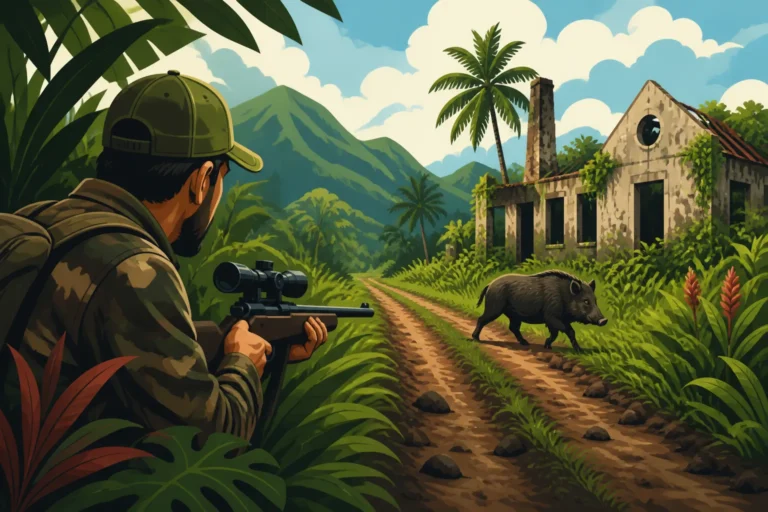
Key Locations: Focus on muddy trails that connect different types of habitat – a dense bedding area to a known feeding ground, or a ridgeline trail leading down into a gulch. Trails that run along stream beds, through low-lying marshy areas, or those that have persistent seeps are prime candidates. Look for junctions where multiple trails converge, as these are natural travel hubs. These types of areas are prime for hunting pigs in Hawaii's rainforest gulches. Also, don't overlook old farm roads or abandoned plantation tracks that have become muddy and overgrown; pigs love these easy travel routes.
Combining Sign Reading with Still-Hunting Tactics
This is where the art of pig hunting truly comes alive. Once you’ve found a hot, muddy trail, you need to slow down and use classic still-hunting techniques.
Slow and Steady: Move slowly, taking one or two steps, then pausing to look and listen for several minutes. Use binoculars to scan ahead, looking for any subtle movement or a patch of brown that seems out of place. Pigs blend in remarkably well, even against muddy backgrounds.
Wind is Your Friend (and Foe): Always hunt into the wind, or with a crosswind. Pigs have an incredible sense of smell, and if they catch your scent, your hunt is over. Understanding Hawaii’s trade wind patterns and how they shift throughout the day is crucial. When hunting downwind in Hawaii's shifting thermals, you'll need to be extra cautious and aware.
Visualizing Movement: Based on the sign, try to anticipate where the pig might be. If you see fresh rooting leading into a dense thicket, expect the pig to be just inside, feeding quietly. Circle downwind if possible to get a better vantage point. Use natural cover to break up your outline as you approach. If you find yourself in a steep gulch, remember that getting a pig out of a Hawaii gulch can be a challenge, so plan your approach and exit routes carefully.
Safety and Ethical Considerations
Hunting in Hawaii’s rugged terrain, especially on muddy trails, comes with its own set of challenges and responsibilities.
Footing: Muddy trails can be incredibly slippery. Wear appropriate footwear with excellent traction. A slip can lead to injury or, worse, an accidental discharge of your firearm.
Navigation: Dense vegetation combined with winding, muddy trails can quickly disorient you. Always carry a reliable GPS device, a compass, and a map. The OuterSpatial app is also a useful tool for navigating public hunting units and checking in and out. Be mindful that there's often no cell signal on a Hawaii hunt.
Other Hunters: Hawaii’s public lands can get busy. Wear blaze orange where required (or even when not required for increased visibility) and always be aware of your surroundings and any potential movement that might be another hunter.
Ethical Harvest: Once you've successfully harvested a pig, make sure you know how to tag an animal correctly in Hawaii. Field care in Hawaii's heat and humidity is also vital to preserve the meat. Quickly cooling meat fast on a Hawaii hunt is paramount to avoid spoilage. Don’t waste any part of the animal; treat it with respect.
By meticulously reading pig sign along muddy trails and combining that knowledge with thoughtful hunting tactics, you'll not only increase your chances of success but also gain a deeper appreciation for the cunning and resilience of Hawaii’s feral pigs.
Identifying Pig Sign on Muddy Trails
| Type of Sign | Description | Freshness Indicators | What It Tells You |
|---|---|---|---|
| Tracks | Wide, rounded hoof prints with often visible dewclaws in soft mud. | Crisp edges, wet mud (fresh); rounded edges, dry crust (older). | Presence, size of pig, direction of travel. |
| Rooting | Churned-up earth, disturbed vegetation, small holes. | Dark, moist, loose soil (fresh); dry, compacted soil (older). | Active feeding, recent presence, food sources. |
| Tusk Marks | Gouges or scrapes in mud or on small trees/shrubs. | Sharp, clear gouges (fresh); faded, mud-filled (older). | Presence of a boar, possible size, territorial marking. |
| Wallows | Muddy depressions where pigs have rolled. | Cloudy water, soft mud, fresh hair (fresh); dry mud, clear water (older). | Regular use of area, cooling/insect relief. |
| Rubs | Mud smears or matted hair on lower tree trunks/rocks. | Fresh mud, loose hair (fresh); dry, caked mud, no loose hair (older). | Frequent use of the trail, pig height/size. |
| Beds | Flattened areas of vegetation just off the trail. | Disturbed, slightly wilted leaves, faint pig scent (fresh). | Pigs are resting/living nearby, not just passing through. |
| Scat (Droppings) | Varies with diet, usually dark, cylindrical, often with undigested plant matter. | Moist, shiny (fresh); dry, crumbles easily (older). | Recent presence, dietary habits, health of the animal. |
| Scent | Distinct musky odor. | Strong, pungent smell (very recent); faint smell (recent). | Immediate presence, especially in still, damp air. |
Disclaimer
Hunting in Hawaii carries inherent risks, including but not limited to challenging terrain, unpredictable weather, and encounters with wildlife. Always prioritize safety, adhere to all local and state hunting regulations, and ensure you are properly equipped and prepared for the conditions. The information provided in this guide is for informational purposes only and should not replace professional guidance or official regulations from the Hawaii Department of Land and Natural Resources (DLNR) Division of Forestry and Wildlife (DOFAW). When planning your hunt, remember to consult official sources like GoHunt Hawaii for the most up-to-date regulations, season dates, and unit information.