Hunting a Hawaii High Pasture at Last Light
There’s nothing quite like the fading light in a Hawaii high pasture, when the heat of the day finally begins to relent, and the landscape shifts from stark visibility to a world of deep shadows and subtle movement. Many hunters get frustrated, spending the brutal midday sun scouring vast, open landscapes only to find animals bedded tight in cover. But as the sun dips below the horizon, a completely different hunting opportunity arises, one that often yields the best results for those who understand how to capitalize on that precious last hour. This guide will walk you through the nuances of hunting Hawaii's high pastures as daylight fades, helping you turn those challenging golden hours into prime hunting moments.
Understanding Hawaii's High Pastures and the Last Light Advantage
Hawaii's high pastures aren't like the lush green fields you might picture. We're talking about expansive, often dry, and sometimes rocky uplands that can range from rolling hills speckled with kiawe trees or mamane forests, to wide-open, windswept slopes. These areas might seem empty during the bright midday, but they hold significant game, particularly axis deer, feral goats, and even mouflon sheep. The key is understanding when and why these animals choose to reveal themselves in these open spaces.
Why Game Animals Move at Dusk in High Pastures
For most game animals in Hawaii's high pastures, daylight hours, especially the hottest parts, are spent seeking refuge. They'll bed down in the thickest kiawe flats, the deepest gulches, or within the sparse shade of a mamane stand. The intense sun and lack of consistent water sources in many of these areas mean conserving energy is paramount. But as the sun begins its descent, several critical factors shift, triggering increased animal activity:
First, the temperature drops. That brutal Hawaiian sun, which can push temperatures well into the 80s or 90s, slowly gives way to cooler, more comfortable evening air. This simple change is a massive motivator for animals to leave their beds. Secondly, thermals begin to reverse. During the day, air often rises in the heat, carrying your scent upwards. As evening cools, air starts to flow downhill, pulling scent downwards. This is crucial for hunters to consider when positioning. Finally, the cover of dimming light provides a sense of security. Animals that were wary of exposing themselves in the open now feel safer moving out to feed, water, or simply stretch their legs before settling in for the night. This is especially true for mature axis bucks or large rams that are often much more cautious.
Characteristics of Hawaii's High Pasture Terrain
These high pastures are incredibly diverse, even within a single island. On Maui, for instance, you might find vast, dry, and rocky slopes of Kahikinui, while on Hawaii Island, portions of the Mauna Kea slopes or Puu Waawaa offer a mix of open grass, scattered mamane trees, and ancient lava flows. The common threads are often the expansive views, which can be a blessing and a curse. You can glass for miles, but animals can also see you coming from a long way off.
Understanding the specific vegetation is also key. Kiawe trees, with their thorny branches, form impenetrable thickets that are perfect bedding areas during the day. Mamane forests at higher elevations offer similar cover. Gulches and draws provide natural travel corridors and often hold more moisture, leading to better forage, making them prime spots for animals to emerge from. The wind patterns in these open, elevated areas can be notoriously shifty, especially as the thermals begin to change. Always be mindful of shifting breezes, as a quartering wind that felt good just an hour ago can suddenly betray you.
Strategic Approaches for Last Light Success
Capitalizing on those final moments of daylight requires a different mindset and specific tactics than hunting during the brighter parts of the day. It’s a game of patience, stealth, and precise timing.
Glassing and Stalking Tactics
When hunting high pastures at last light, your binoculars are your best friend. You should be in position with ample time before the sun truly sets, preferably 1.5 to 2 hours before, to patiently glass key areas. Focus your attention on the edges of bedding cover – where those thick kiawe stands meet open grass, or where a deep gulch opens onto a feeding flat. Also, pay close attention to water sources if you know of any nearby, as animals will often make a final stop there before dark. For more on how to approach these types of areas, you might find our guide on Spot-and-Stalk Tactics on Open Country particularly useful.
Once you spot an animal, the stalk becomes a race against time and fading light. You need to move deliberately but quickly, using all available cover. This might mean crawling through low brush, using terrain features like small rises or rock formations, or even the shadows themselves, to conceal your approach. Always keep the wind in your favor, even if it means taking a longer, more circuitous route. A classic mistake is getting impatient and rushing, only to spook the animal with a bad wind read or by silhouetting yourself against the skyline.
Remember, animals often come out in groups in these open areas. If you spot one, there are likely others. Be patient and watch their behavior. Are they feeding calmly? Are they looking nervous? Their actions will tell you a lot about how safe they feel and how you should proceed. If you’re targeting axis deer, understanding how to read their specific signs, especially in dry conditions, can be incredibly helpful; check out Reading Axis Deer Sign in Dry Country for more insights.
Positioning for the Shot
Getting into shooting position as light fades presents unique challenges. Your ethical shooting distance will naturally shrink with reduced visibility. A shot you might comfortably make at 300 yards in midday sun could be a 150-yard shot at last light. It's crucial to know your own limitations and the capabilities of your rifle or bow in low light.
When planning your approach, consider the angle of the shot, the background, and any potential shooting lanes. You want a clear shot at the vitals with a safe backstop. Avoid shots towards the horizon, as animals can disappear into the dark quickly, and identifying your bullet's impact becomes nearly impossible. Try to get a position where the animal is between you and a slightly lighter area, even if it’s just the last glow in the western sky.
Range estimation is also harder in dim light. Always use a rangefinder if possible. What looks like 200 yards might be 300, and that difference is critical. Be mentally prepared to make a quick, clean shot, as you might only get a small window of opportunity. For example, if you're hunting an axis deer that has just emerged from a Hunting a Kiawe Flat for Axis Deer, it might only be out in the open for a few minutes before moving further into the pasture or bedding down again.
Timing Your Move and Post-Shot Protocol
The "magic hour" is often the last 30-45 minutes of legal shooting light. Your goal should be to be in your final, quiet observation or ambush spot before this window. If you're still scrambling into position as the sun kisses the horizon, you're likely behind the curve. Animals will be moving, and you risk bumping them or running out of light before you can execute a good shot.
Let's say you've made a good shot. The immediate aftermath is crucial. Do not rush to the animal, especially if it runs. Give it time. Even a well-hit animal can cover significant ground. Mark the spot where the animal was standing when you shot, and where you last saw it. Pay attention to any sounds it makes as it flees. Then, take a moment to gather yourself. Turn on your headlamp only when necessary and begin your recovery, carefully looking for blood, tracks, or broken branches.
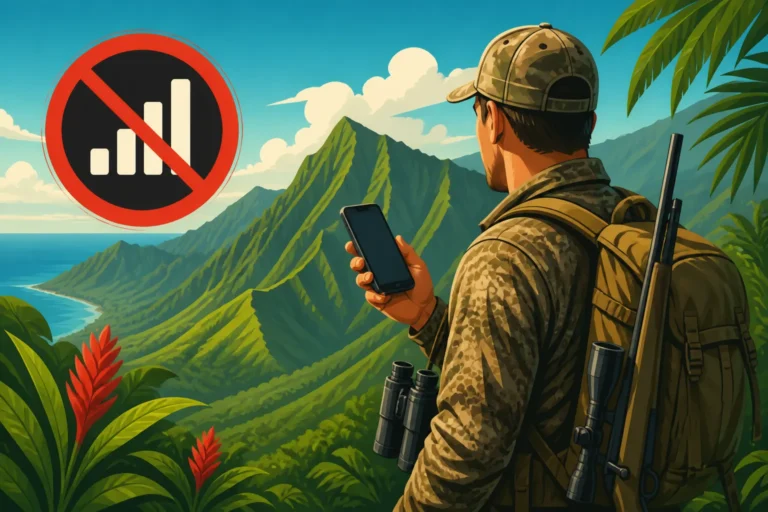
The challenge intensifies greatly once the sun is fully down. Tracking an animal in the dark, especially in Hawaii's often thick or rocky terrain, can be incredibly difficult and sometimes dangerous. If you don't find the animal quickly, it's often better to back out and return at first light with a fresh perspective, more light, and perhaps a tracking partner. Remember to take careful notes or drop GPS pins (using an app like OuterSpatial for navigation, though do be aware that you might encounter No Cell Signal on a Hawaii Hunt) to guide your return in the morning.
Essential Gear and Safety Considerations for Last Light Hunts
Hunting at last light in Hawaii's high pastures means you'll almost certainly be navigating in low light or complete darkness. Having the right gear and a strong focus on safety isn't just a good idea; it's absolutely non-negotiable.
Optics, Illumination, and Navigation
Good quality optics are paramount for last light hunting. A pair of 10×42 binoculars with excellent low-light gathering capabilities will be invaluable for spotting game as shadows lengthen. A reliable rangefinder is also critical, as judging distance accurately becomes much harder in dim light. Invest in one that works well in low light conditions.
For illumination, a powerful headlamp is your best friend. Choose one with multiple settings, including a red-light option (which preserves your night vision better) for tasks like reading maps or tracking minimal blood. Make sure it has fresh batteries, and always carry spares. It's also wise to have a smaller backup flashlight in your pack.
Navigation is another key area. Even if you think you know the area well, the landscape looks completely different in the dark. A GPS device or a reliable GPS app on your phone (download maps offline beforehand, given potential signal issues) is essential. Mark your vehicle, your starting point, and any significant landmarks on your way in. This will be invaluable when you’re tired, excited, and trying to find your way back in the dark. If you're planning a trip, remember that understanding how to Checking In and Out of a Hawaii Unit often involves using digital tools like OuterSpatial, which can also aid navigation.
Packing Out and Field Care in the Dark
Successfully taking an animal at last light means you'll be field dressing and potentially packing out in the dark. This adds layers of complexity, especially given Hawaii's warm climate. Rapid field care is crucial to prevent meat spoilage. You’ll want a sharp knife, gutting gloves, and game bags that allow air circulation. If you're fortunate enough to harvest an axis deer, our guides on Field Dressing Axis Deer in Hawaii Heat and Cooling Meat Fast on a Hawaii Hunt offer detailed steps that become even more critical when working in the dark.
Consider your pack-out strategy beforehand. Is it a long walk back? Do you have a hunting partner to help? Can you get a vehicle closer? Knowing this can influence where you choose to hunt that last hour. If you’re a long way from the truck, you might need to bone out the animal completely to reduce weight. Always carry enough water, even for a short hunt, as field dressing and packing out are strenuous activities that will dehydrate you quickly.
Here's a quick comparison of key gear for last light hunts:
| Gear Item | Purpose | Key Feature for Last Light |
|---|---|---|
| Binoculars | Spotting game, identifying targets | Excellent low-light gathering (e.g., 10×42) |
| Rangefinder | Accurate distance measurement | Fast, reliable readings in dim light |
| Headlamp | Hands-free illumination for tracking/field dressing | Multiple settings, red-light option, spare batteries |
| GPS Device/App | Navigation, marking shot locations | Offline maps, long battery life |
| Sharp Knife | Field dressing, processing | Ergonomic grip, easy to clean |
| Game Bags | Protecting meat, allowing cooling | Breathable, lightweight |
| Backpack | Carrying essentials, meat if necessary | Comfortable, sufficient capacity |
| Blaze Orange | Safety, visibility to other hunters | Required in many units, easily visible |
Personal Safety and Contingency Planning
Hunting in Hawaii's high pastures can expose you to steep, uneven terrain, especially if you're tracking an animal into a gulch after dark. Always let someone know where you are going and when you expect to be back. Carry a fully charged cell phone (understanding the aforementioned signal limitations), and consider a satellite communication device like a Garmin inReach for true emergencies, especially in remote units that require Hunting Hawaii's High Elevation Alpine Ground.
Be mindful of other hunters. Many Hawaii hunting units, especially the Hawaii's Weekend-Only Hunting Units, can see significant pressure. Wearing blaze orange, even if not strictly required in all situations, is a smart safety precaution, particularly during twilight hours when visibility is reduced.
Finally, have a realistic assessment of your physical fitness. Tracking and packing out an animal in the dark, possibly over challenging terrain, requires stamina. Don't push yourself beyond your limits, and if you're feeling fatigued or disoriented, stop, take a break, and re-evaluate your situation. It's always better to be safe and live to hunt another day.
Species-Specific Last Light Behavior in High Pastures
While general principles apply to all game in these areas, understanding the specific habits of Hawaii's major game animals can give you a significant edge when hunting at last light.
Axis Deer Movement Patterns
Axis deer, Hawaii's signature big game, are particularly active during the crepuscular hours – dawn and dusk. In high pastures, they often bed down in dense cover during the day, like those kiawe thickets or the deeper folds of the terrain, emerging as the sun dips. They'll typically move from these bedding areas towards open feeding grounds or water sources.
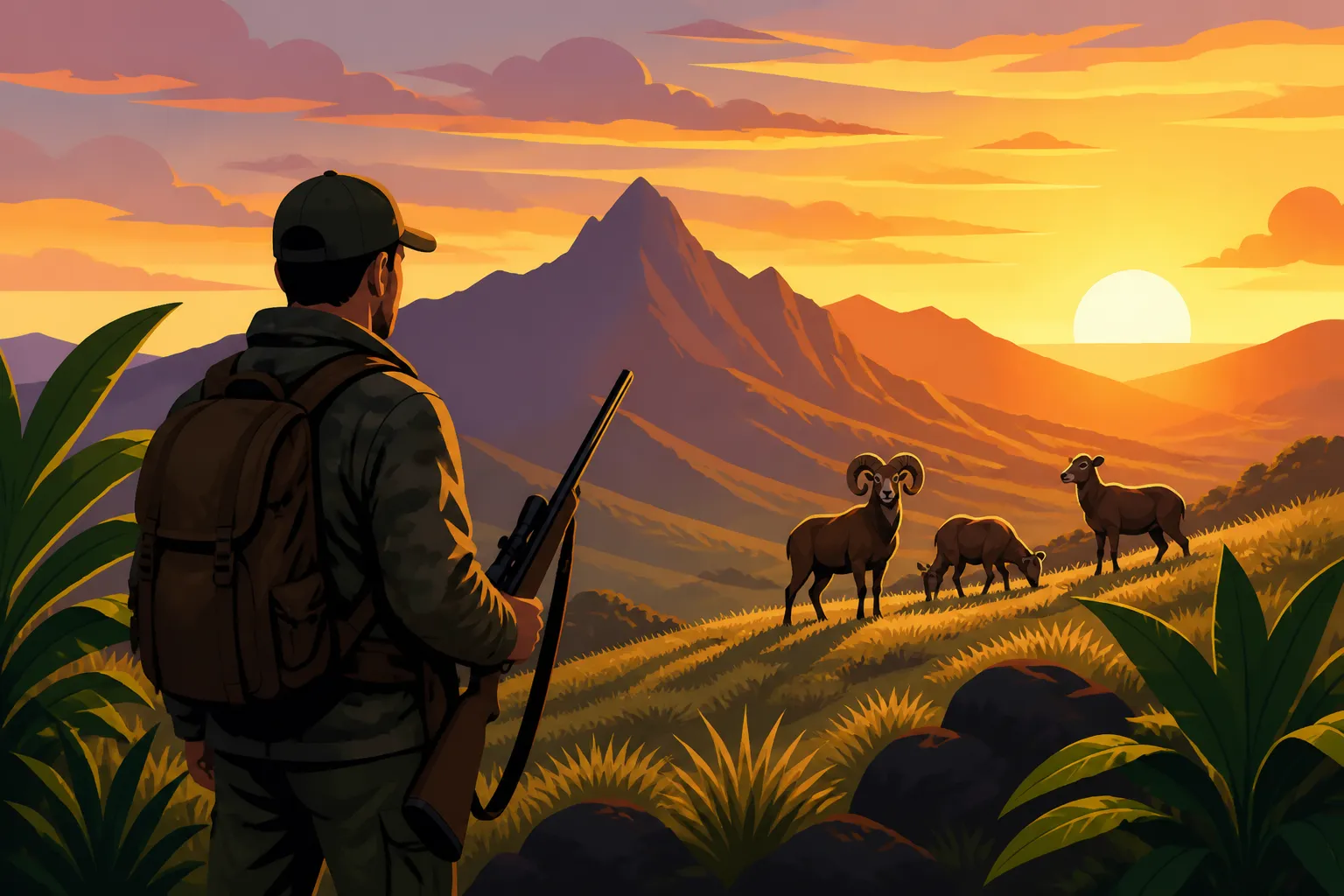
At last light, you'll often see them moving out onto grassy flats or across open slopes. They might be single animals, small bachelor groups of bucks, or larger herds of does and fawns. Look for their distinct spotted coats, which can sometimes blend surprisingly well with the dappled light and shadows. They tend to be a bit more cautious than pigs but less so than a mature mouflon ram. Being in a strategic glassing position that overlooks a wide expanse of pasture, especially one adjacent to thick cover, is your best bet. If you can identify a common travel path from a bedding area to a feeding area, that's your sweet spot. The timing of their rut can also influence their movements, as bucks might be more visible and vocal. For those interested in the details of their behavior, our post on Hunting Axis Deer at First Light in Hawaii offers a good comparison, and you might also be curious about What a Hawaii Axis Buck Weighs.
Goat and Mouflon Patterns on Open Slopes
Feral goats and mouflon sheep also utilize Hawaii's high pastures, though their preferred terrain can vary. Goats are incredibly agile and often found on steep, rocky slopes, canyon rims, or even sea cliffs. At last light, they might move from these secure, inaccessible areas down into more accessible pastures to feed. Look for them silhouetted against the ridge lines or moving cautiously along the edge of rocky outcrops. Hunting goats on a sea cliff requires specific safety considerations, as detailed in our Hunting Goats on a Sea Cliff Safely article, but the principle of last light movement applies to other goat-holding areas too.
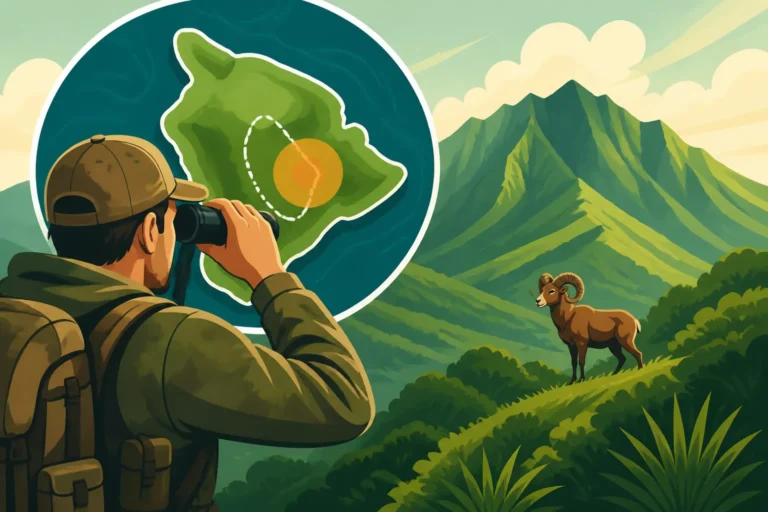
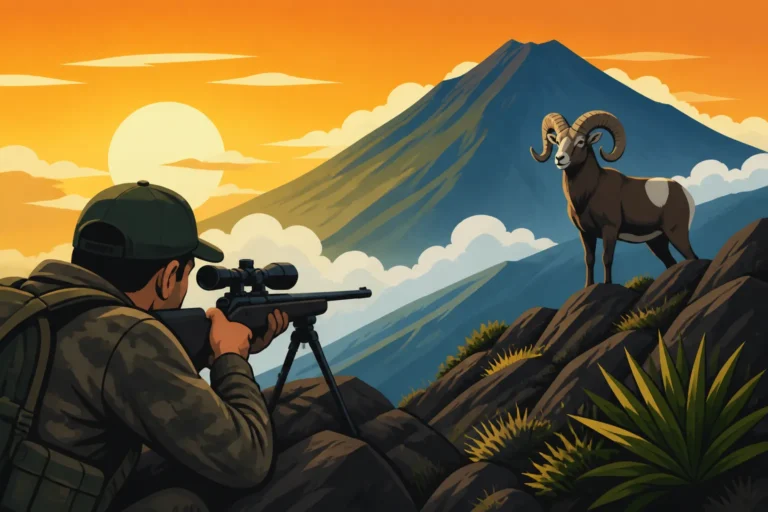
Mouflon sheep, particularly on Hawaii Island, are often found at higher elevations, frequently above the tree line on the slopes of Mauna Kea or in the Puu Waawaa unit. They are also crepuscular, with significant activity at dawn and dusk. At last light, mouflon rams might move out onto open lava flows or grassy slopes to feed before bedding down for the night. They are notoriously wary, and their golden-brown coats can blend incredibly well with the dry grasses and volcanic rock. Patience and high-quality optics are absolutely essential. They’ll often hold tight in scattered Hunting Mouflon in Hawaii's Mamane Forest during the day and only emerge when they feel truly secure. Watch for their distinctive horn curls to identify mature rams.
Both goats and mouflon, due to their habitat, require excellent physical conditioning from the hunter. Navigating steep, rocky, or loose terrain in fading light and then recovering an animal adds a significant challenge. Always prioritize safety over attempting a risky shot or recovery in the dark on such treacherous ground.
Hunting Hawaii's high pastures at last light is a truly rewarding experience, offering unique opportunities for success to those who are prepared and patient. It requires an understanding of animal behavior, a mastery of stealth, and a commitment to safety. With these strategies in your toolkit, those precious final moments of daylight can transform into some of the most memorable and productive times afield.
Disclaimer
Hunting is a challenging and potentially dangerous activity. This guide provides general information and recommendations. Always consult the most current Hawaii Department of Land and Natural Resources (DLNR) hunting regulations for specific rules, season dates, unit restrictions, and licensing requirements before engaging in any hunting activities. Safety should always be your top priority. Neither the author nor the publisher assumes any liability for accidents, injuries, or legal infractions incurred while hunting. Be responsible, hunt ethically, and respect the land and its wildlife.