Hunting a Wet Forest Boundary Trail
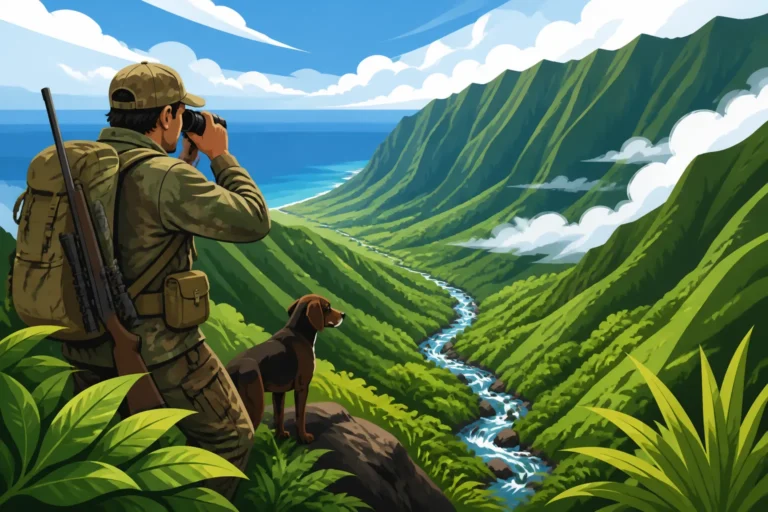
The thick, unforgiving Hawaiian wet forest can often feel impenetrable, a daunting labyrinth of dense vegetation and slippery terrain that makes locating game consistently feel like a monumental task. Many hunters shy away from these units, frustrated by the lack of visibility and the sheer effort required to move through them. But what if these challenging edges held a secret, a natural funnel where game animals frequently travel? This guide will walk you through how to effectively hunt the often-overlooked wet forest boundary trails, turning these challenging lines into your most productive hunting grounds and revealing strategies to unlock success in Hawaii’s most humid environments.
Understanding the Wet Forest Boundary Trail Environment
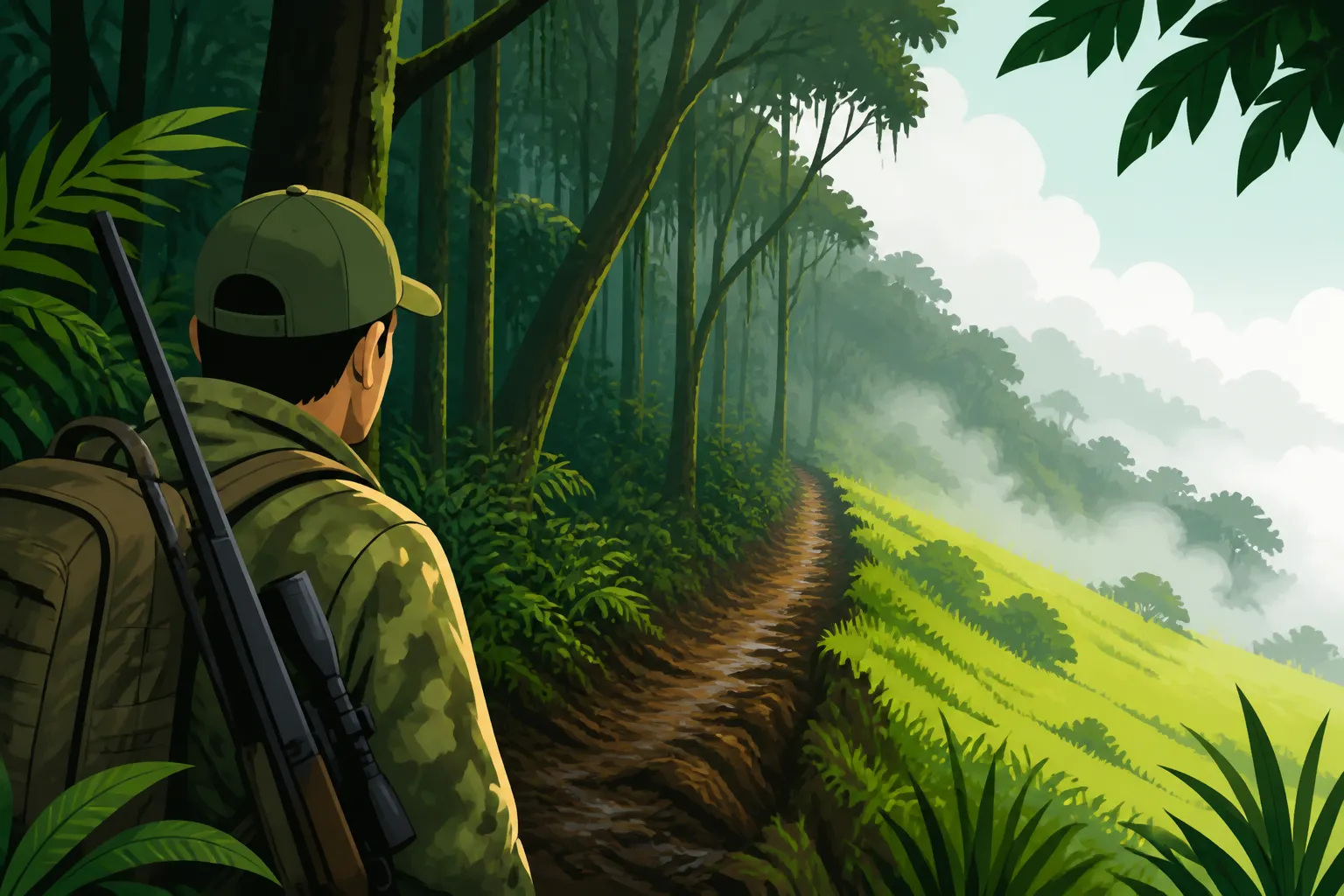
Hunting a wet forest boundary trail in Hawaii is an entirely different beast than still-hunting kiawe flats or glassing open cinder cones. These areas are characterized by a unique combination of dense vegetation, often steep and muddy terrain, and consistently high humidity. Imagine a trail that separates a deep, verdant rainforest from a slightly more open, perhaps drier, or managed area like an old pasture, a eucalyptus plantation, or even a newer lava flow. This transition zone creates an "edge effect" that's a magnet for game.
Why Boundary Trails Attract Game
Boundary trails, whether they're old logging roads, disused ranch tracks, or simply heavily used animal paths, serve as vital corridors in the dense Hawaiian wet forest. For one, they offer a path of least resistance. Trying to bushwhack through thick uluhe fern and tangled guava is exhausting and noisy for both hunters and animals. A trail, even a faint one, provides a relatively easier route for pigs, goats, and sometimes even deer to move between feeding areas, bedding grounds, and water sources. Think about it: why would an animal expend extra energy pushing through a wall of growth when a clear, albeit muddy, path exists?
These trails also often create a distinct edge habitat, where two different ecosystems meet. This "ecotone" is biologically rich, offering a wider variety of forage plants. For example, the forest side might provide denser cover and different native plants, while the open side might have grasses, fruits, or introduced species that appeal to ungulates. Animals can browse along the edge, dipping into the forest for cover when they feel threatened, or stepping out into the more open areas to feed. This makes the boundary trail a prime location for intercepting game as they transition. Additionally, any natural water sources, like a flowing stream or a muddy seep, found along these trails become invaluable attractants, especially during drier periods, even in a generally wet forest.
Common Game Animals Found Here
When you're looking at a wet forest boundary trail, your primary targets are most often going to be Hawaii’s ubiquitous feral pigs and, depending on the island and specific unit, feral goats.
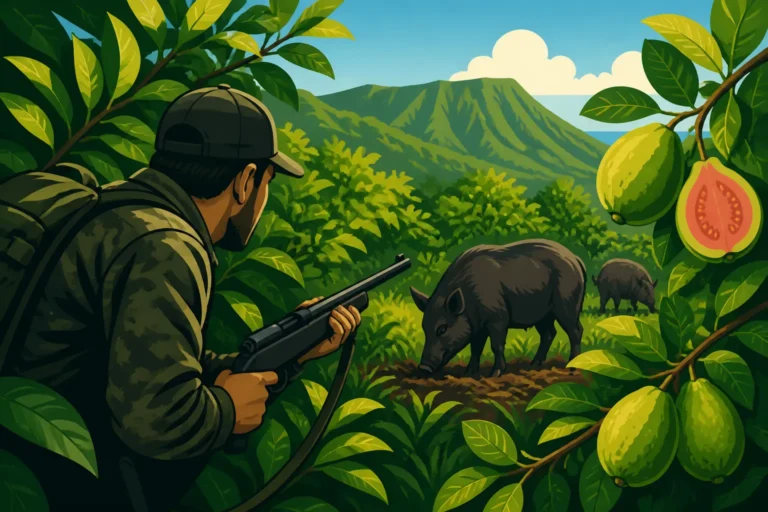
Feral pigs are masters of the wet forest. They thrive in the dense undergrowth, using their powerful snouts to root up the moist soil for worms, tubers, and fallen fruit. They will absolutely use boundary trails to move, particularly at dawn and dusk. You'll often see clear evidence of their passage: fresh tracks in the mud, extensive rooting on either side of the trail, and even rub marks on trees. On islands like the Big Island or Maui, areas within Hunting Hawaii's Rainforest Units or Hunting Maui's Upcountry Forest Reserves are classic spots for pig activity along these boundary lines. Pig trails can be surprisingly well-defined, resembling small tunnels through the densest vegetation, often leading to muddy wallows.
Feral goats, while often associated with rocky cliffs and dry country, are also frequent users of wet forest edges, especially where the forest meets more open or drier pastureland, or a steep gulch system. They appreciate the easier travel a trail provides and will use it to move to and from bedding areas on higher, rockier ground or to access browse along the forest edge. You might find evidence of goats on these trails, though their tracks are more pointed and delicate than a pig's, and they're less likely to leave rooting evidence. Their droppings, resembling small pellets, are often visible. Black-tailed deer on Kauai might also utilize these edges, especially if the boundary trail leads through or near their preferred habitat in the Kokee region. While axis deer are typically found in drier environments, certain areas on Maui or Molokai where wet forests transition to more arid land might see them traversing these edges for cover or access.
Essential Gear and Preparations for Wet Forest Hunts
Hunting in Hawaii’s wet forests demands a specific gear strategy. The challenges are real: constant moisture, slippery footing, and dense vegetation that can grab, tear, and soak. Being unprepared means a miserable, and potentially unsafe, hunt. Your gear needs to be robust, waterproof, and designed for extreme humidity and rough terrain.
Footwear and Rain Gear That Won't Fail You
Let's talk about boots first, because your feet will take an absolute beating. Forget your lightweight hiking shoes; you need serious, waterproof boots with aggressive traction. Mud is a constant companion on wet forest boundary trails. Look for boots with deep, multi-directional lugs that can bite into slippery clay and wet roots. A higher ankle cut offers crucial support and helps keep mud and debris out. Brands like Kenetrek, Crispi, or even sturdy rubber boots from LaCrosse are popular among Hawaii hunters. You’ll want to ensure they're well broken in to avoid blisters, which can quickly ruin a hunt in such humid conditions. Consider waterproof gaiters to seal the gap between your pants and boots, preventing mud, water, and debris from entering.
Next, rain gear is non-negotiable. It’s not a matter of if it will rain, but when and how much. You need a reliable rain jacket and pants that are truly waterproof, not just water-resistant. Look for materials like Gore-Tex or similar breathable waterproof membranes. Layering is key: a good base layer to wick moisture, an insulating layer if you’re at higher elevations, and then your waterproof outer shell. The goal is to stay dry without overheating, which is a constant battle in Hawaii’s humidity. A lightweight, packable rain jacket that you can easily pull out and put away is invaluable. Pay attention to features like pit zips for ventilation and waterproof zippers.
Navigation and Communication in Dense Cover
The thick canopy and winding nature of wet forest boundary trails can disorient you surprisingly quickly, even on what seems like a straightforward path. GPS is your best friend here. A dedicated handheld GPS unit or a reliable hunting app on your smartphone, like GoHunt, is essential. Before you even step foot in the unit, download offline maps of the area. Cell service is notoriously spotty or nonexistent in many of Hawaii’s remote wet forest areas, so relying on live cellular data for your maps is a recipe for disaster. Mark your entry point, your truck, any major junctions, and potential areas of interest. Being able to see your progress on a map, even a simple breadcrumb trail, can be the difference between a successful hunt and a long, cold night. For deeper dives on this, check out Staying Found in Dense Hawaii Rainforest.
Beyond navigation, communication is vital, especially if you’re hunting with a partner or in a group. Two-way radios are excellent for short-range communication, allowing you to coordinate movements or signal if you've found game. Whistles are also simple, effective tools for emergency signaling. Finally, always carry a fully charged power bank for your phone or GPS, and consider a satellite messenger device for true emergencies where cell service is absent. These devices, like a Garmin inReach or Zoleo, can send text messages and SOS signals via satellite, providing a critical lifeline in remote areas. Even if you hunt solo, letting someone know your exact hunt plan and expected return time is paramount.
Hunting Strategies for Success on the Trail
Successfully hunting wet forest boundary trails requires a patient and adaptive approach. Unlike open country, where long-range glassing is king, here you'll be operating in close quarters, relying heavily on your senses and an understanding of animal behavior in tight spaces.
Still-Hunting and Reading Sign
Still-hunting is hands down the most effective tactic for these environments. This involves moving incredibly slowly, taking a few steps, then stopping for several minutes to observe, listen, and scan your surroundings. In the thick vegetation, animals are often close before you see them. Your eyes should be constantly scanning for any break in the pattern – an ear flick, a patch of different color, or the subtle sway of ferns. Walk with purpose but without haste.
The boundary trail itself is a highway of information. Look for fresh tracks in the mud, especially where the trail narrows or crosses a small stream. Pig tracks are distinctive, often accompanied by rooting where they've dug up the earth. Goat tracks are smaller, pointed. Pay close attention to droppings – freshness indicates recent activity. Look for rub marks on trees or bushes where animals have scratched themselves, and feeding signs, such as chewed leaves or torn bark. In wet forest, pigs are notorious for their wallows – muddy depressions where they cool off and deter parasites. Finding a fresh wallow means pigs are nearby. Also, observe the vegetation on either side of the trail. Are ferns pushed aside? Are leaves freshly broken? These subtle cues are critical. For more on this, consider reading Still-Hunting Pigs in Hawaii's Wet Forest.
Adapting to Shifting Thermals and Wind
Hawaii's volcanic terrain and dense forests create highly localized and often unpredictable wind patterns. This is especially true in wet, mountainous areas. Trade winds, which typically blow from the northeast, can be easily disrupted by ridges, valleys, and dense tree cover, leading to swirling thermals that shift throughout the day. Your scent is your enemy in close-quarters hunting.
In the morning, as the sun begins to warm the land, thermals tend to rise, carrying your scent uphill. As the day progresses and the sun heats different slopes, the wind can shift, and in the late afternoon, cooling air causes thermals to fall, carrying scent downhill. Along a boundary trail, especially one that follows a contour, these shifts can be constant and frustrating. You need to be acutely aware of every subtle breeze. Use a small squeeze bottle of powder or a wind checker to constantly monitor wind direction. Try to plan your approach so that you are generally hunting into the wind or with a crosswind that pushes your scent away from where you expect game to be. Sometimes, it’s best to wait out a tricky wind situation or adjust your route entirely. Knowing Hawaii's trade wind patterns can give you a real edge.
Post-Harvest Considerations and Safety
A successful hunt on a wet forest boundary trail culminates in harvesting an animal, but the work isn't over. In Hawaii's humid, challenging environment, careful post-harvest management and a solid exit plan are just as critical as the hunt itself. Neglecting these steps can lead to spoiled meat or dangerous situations.
Field Care in Humidity
Hawaii’s warm, humid climate is unforgiving when it comes to game meat. Bacterial growth accelerates rapidly, so immediate and thorough field dressing is paramount. As soon as your animal is down, get to work. Gut the animal quickly and efficiently, removing all entrails. This allows the carcass to begin cooling from the inside out. Even if you're planning to pack the animal out whole or in large sections, opening the body cavity helps with initial cooling.
If you've harvested a pig or goat, consider skinning the animal in the field if feasible, especially if you have a long pack out or are hunting in particularly hot conditions. Skinning further accelerates cooling. If you’re quartering the animal for packing, make sure to separate the meat from the bone as much as possible to maximize surface area for cooling. Wipe down any blood or debris from the meat, but avoid washing it with water unless absolutely necessary, as water can promote bacterial growth. Pack the meat in breathable game bags, not plastic, which traps heat. The goal is to get that meat cooled down as fast as possible. For more detailed advice, read Field Care in Hawaii's Heat and Humidity.
Planning Your Exit
The excitement of a successful harvest can sometimes overshadow the challenge of packing out meat from a remote, wet forest location. This is where your detailed navigation plan and physical preparation truly pay off. Before the hunt, always consider your extraction route. Is the boundary trail wide enough for a game cart if you’re lucky? More often, you’ll be on foot, carrying heavy loads through mud and over obstacles.
If you’re hunting in a particularly steep area, or deep within Hunting Pigs in Hawaii's Rainforest Gulches, plan for the extra time and effort required. Break down the animal into manageable loads. Backpack frames or sturdy hunting packs are essential. Having a hunting partner is invaluable for sharing the load and navigating challenging terrain. Remember, your physical exertion will be significantly higher packing out an animal than it was walking in. Hydrate frequently. Double-check your GPS to ensure you’re headed in the right direction, especially if darkness is approaching. It's always a good idea to overestimate the time it will take to pack out an animal in these conditions. If your trip was planned using a platform like GoHunt, ensure your check-out process is completed accurately once you're safely out of the unit.
Wet Forest Boundary Trail vs. Dry Forest Boundary Trail Comparison
Understanding the differences between wet and dry forest boundary trails is crucial for adapting your hunting strategy. While both types of trails act as game highways, the environment and animal behavior around them can vary dramatically.
| Feature | Wet Forest Boundary Trail | Dry Forest Boundary Trail |
|---|---|---|
| Vegetation | Dense, lush, often invasive species (guava, ginger, uluhe), native koa/ohia. Limited visibility. | Sparser, thorny (kiawe, haole koa), dry grass. Better visibility in places. |
| Ground Condition | Muddy, slippery, wet roots, exposed rock. Consistently damp. | Dusty, rocky, loose dirt. Can be very hard-packed. |
| Humidity/Weather | High humidity, frequent rain, misty. Can feel cool at elevation. | Lower humidity, hot sun, less frequent rain. Very warm. |
| Game Activity | Pigs (rooting, wallows), Goats (travel corridors), occasional Black-tailed Deer (Kauai), some Axis Deer (Maui/Molokai transitions). | Axis Deer (browsing, scrapes), Goats (browse, escape routes), Pigs (near water sources). |
| Water Sources | Abundant streams, seeps, muddy wallows. | Scarce, limited to tanks, stock ponds, seasonal seeps. |
| Scent Control | Challenging due to swirling thermals, constant moisture. | Difficult with rising/falling thermals, dry dusty air. |
| Sign Reading | Fresh tracks in mud, extensive rooting, rub marks, wallows. | Scrapes, rubs, droppings, tracks in dust, feeding areas. |
| Pack Out | Difficult: slippery, muddy, dense cover. High exertion. | Difficult: uneven terrain, heat, often long distances. |
Disclaimer
Hunting in Hawaii involves inherent risks. This guide provides general information and strategies, but conditions can vary greatly by location, weather, and season. Always consult the latest Hawaii Department of Land and Natural Resources (DLNR) hunting regulations and maps, obtain proper licenses and permits through official channels like GoHunt, and prioritize safety above all else. Hunt responsibly and ethically.