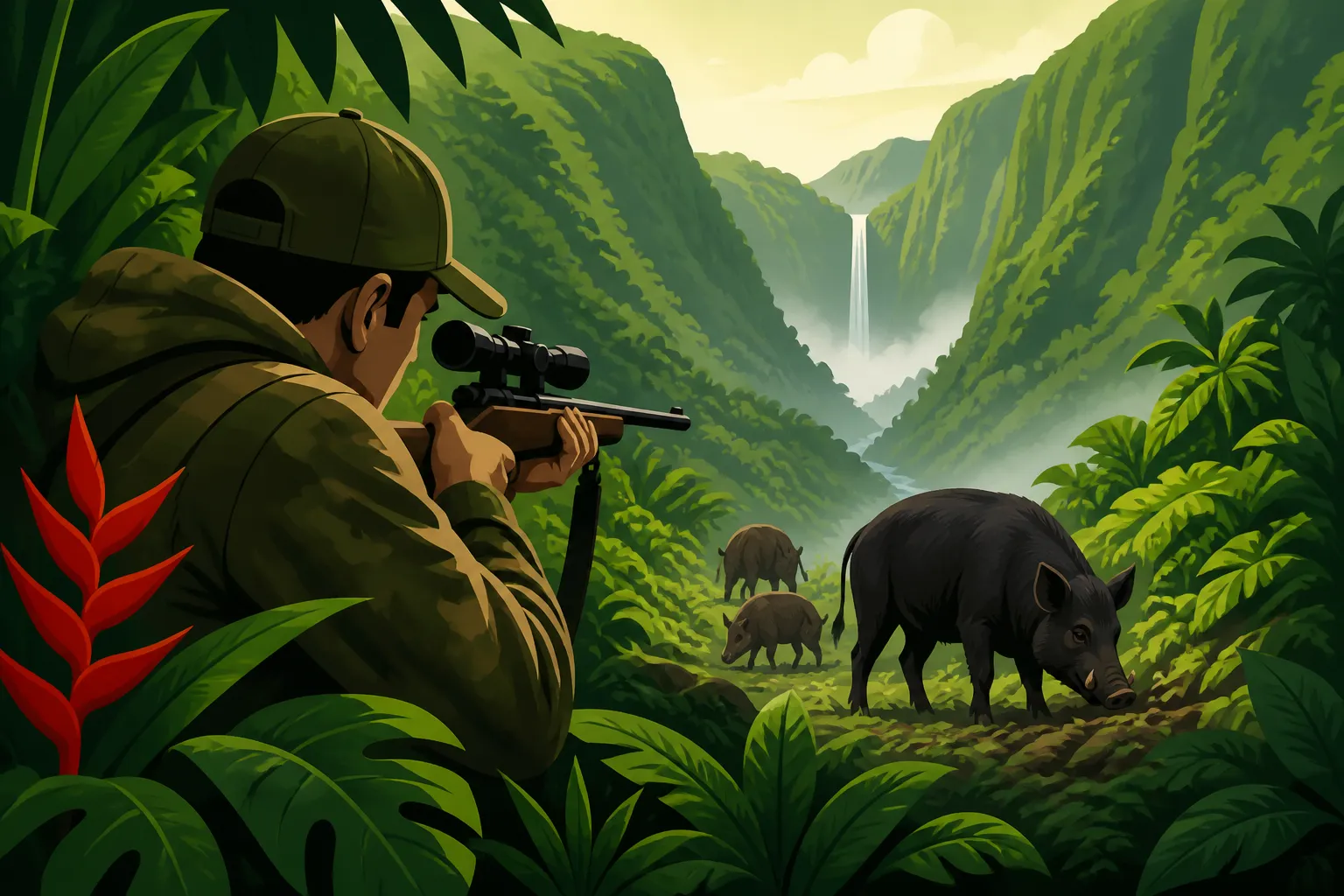
Hunting Pigs in Hawaii’s Rainforest Gulches
The dense, tangled rainforest gulches of Hawaii are legendary among pig hunters, not just for the challenge but for the potential to find truly impressive boars. Yet, these vibrant, often treacherous landscapes also present unique frustrations: impenetrable vegetation, slick terrain, and pigs that seem to vanish into thin air. This guide aims to peel back the curtain on what it really takes to successfully hunt feral pigs in these incredibly challenging, yet rewarding, Hawaiian environments.
Understanding the Rainforest Gulch Environment
Hunting in Hawaii's rainforest gulches isn't like hunting anywhere else. It’s a full immersion experience, often a battle against the terrain and vegetation as much as it is against the wily pigs themselves. If you're envisioning wide-open forests with clear lines of sight, you're in for a rude awakening. These are some of the most unique and demanding hunting grounds you'll ever encounter, and truly understanding them is your first step toward success.
The Unique Challenges of Hawaii's Wet Forests
Hawaii’s wet forests, particularly within deep gulches, are ecosystems unlike any other. They are characterized by incredibly high humidity, frequent rainfall, and a thick canopy that barely lets sunlight through. The ground is often a treacherous mix of slick mud, decaying leaf litter over unseen rocks, and a dense understory of invasive species like strawberry guava, hāpuʻu fern, and ginger that create nearly impenetrable walls of green. This isn't just "thick brush"; it's a claustrophobic, three-dimensional maze that can swallow sounds and sightlines.
The constant moisture not only makes footing precarious but also affects how scent travels and how animals behave. Pigs thrive in these conditions, using the cover for security and the abundant forage year-round. For hunters, it means every step is deliberate, every sound is magnified, and visibility is often limited to mere yards. It's an environment that demands patience, a keen sense of observation, and a willingness to get muddy and wet from head to toe.
Water Sources and Pig Movement Patterns
In these perpetually wet environments, you might think water isn't a factor in pig movement, but it absolutely is. Gulches often contain perennial streams or intermittent runoff channels that pigs rely on, not just for drinking, but for wallowing, cooling off, and as travel corridors. These water features carve natural paths through the dense vegetation, and while they might seem like easy routes for hunters, they're often boulder-strewn, slick, and subject to flash floods.
Pigs will frequently move along these watercourses, especially during drier periods in areas that might only have seasonal rainfall. They also use the banks and terraces adjacent to these streams as bedding areas or feeding grounds, particularly where the sunlight occasionally penetrates to encourage growth of their preferred tubers and fruits. Understanding how pigs utilize these micro-ecosystems within the broader gulch structure can help you predict their movements and ambush points. Pay close attention to areas where smaller side drainages feed into the main gulch, as these often create bottlenecks or natural funnels for animal traffic.
Dense Vegetation and Limited Visibility
The sheer density of vegetation is perhaps the most defining feature of Hawaii's rainforest gulches. Imagine moving through a jungle where every step requires pushing aside ferns, ducking under branches, and navigating around thickets so dense you can barely see your hand in front of your face. This limits visibility to such an extreme that spotting a pig beyond 10 or 15 yards can be a rare luxury. It’s a close-quarters game, plain and simple.
This limited visibility fundamentally changes how you hunt. Long-range glassing is generally useless. Instead, you'll be relying heavily on your ears, your nose, and a hyper-awareness of what’s directly in front of and around you. The pig, being an expert at navigating this cover, has the advantage. They can often hear or smell you long before you ever see them, melting away into the green labyrinth with hardly a sound. This necessitates extremely slow, deliberate movement, often called still-hunting, and a readiness to make quick, ethical shots when the opportunity finally arises.
Reading Pig Sign in Wet, Thick Cover
Hunting pigs in these verdant, often swampy gulches requires a completely different approach to tracking than you might be used to in drier environments. The rain and humidity can quickly obscure or wash away traditional signs, so learning to identify and interpret fresh sign in these conditions is absolutely crucial. Pigs are masters of camouflage and stealth in this dense cover, so your ability to read their "calling cards" is your most potent tool.
Identifying Fresh Tracks and Rooting
In the soft, muddy bottoms and banks of a rainforest gulch, pig tracks can be abundant. However, the constant moisture means older tracks quickly lose their definition, becoming blurred by rain or foot traffic from other animals. Your focus should always be on identifying fresh tracks. Look for sharply defined edges, clear dew claw marks, and displaced mud that still has a damp, fresh sheen. A track that's been rained on even once can look vastly different from one made an hour ago.
Beyond tracks, rooting is arguably the most prevalent and telling sign of pig activity in Hawaii’s wet forests. Pigs are voracious rooters, tearing up the forest floor in search of tubers, grubs, and fallen fruits. Fresh rooting will expose dark, moist soil, sometimes with bits of vegetation still clinging to the upturned earth. If you see active rooting, especially covering a wide area, you know pigs have been feeding here recently. The damp environment means exposed soil stays fresh-looking longer, but recent rain will often create shiny, wet clods of dirt. Pay attention to the depth and breadth of the rooting; deep, extensive rooting often signals a larger, more established group of pigs. For more detail on this specific skill, check out our guide on how to read pig sign along a muddy trail.
Understanding Wallows and Rubs
Wallows are another unmistakable sign of pigs, and in the wet environment of a gulch, they are often used frequently. A wallow is a muddy depression where pigs roll to coat themselves in mud, which helps regulate body temperature and deter parasites. Fresh wallows will be wet and churned up, with clear pig hair often matted into the mud around the edges. You might even see distinct pig impressions in the mud. Look for wallows near perennial water sources or in low-lying, boggy areas within the gulch.
Rubs, while perhaps less obvious than rooting or wallows, are still significant. Pigs, particularly larger boars, will rub themselves against trees, rocks, or even thick fern stumps to scratch, remove parasites, and deposit scent. In a rainforest, look for rubs on the trunks of 'ōhi'a or guava trees, especially those with rough bark. The rub will often leave mud stains and bristles of pig hair stuck to the bark. A high, well-used rub on a sturdy tree can indicate the presence of a mature boar. These signs, when fresh, tell you not only that pigs are present but also their general size and the frequency of their visits.
Interpreting Droppings and Feeding Areas
While tracks, rooting, and wallows often steal the show, pig droppings (scat) can provide valuable intelligence, especially in dense cover where visual confirmation of other signs might be difficult. Fresh pig scat will be soft, moist, and typically dark, often containing undigested plant matter, seeds, or even insect fragments depending on their diet. In Hawaii's rainforests, pigs eat a huge variety of things. Look for piles of droppings on trails, near wallows, or in feeding areas. The freshness of the droppings, much like tracks, is key. If it's still glistening or easily smeared, the pigs aren't far away.
Feeding areas are where all these signs converge. A prime feeding area in a gulch might show extensive rooting, several fresh wallows nearby, and an abundance of fresh tracks leading in and out. These areas are often rich in favored pig foods like wild ginger rhizomes, fallen wild guava or coffee fruits, or areas where kukui nuts have dropped. The more concentrated the fresh sign, the more likely you are to encounter pigs. Understanding what feral pigs eat in the islands helps you identify these zones. Utilizing a platform like GoHunt can help you zero in on potential feeding grounds by cross-referencing public land maps with known vegetation types preferred by pigs.
| Type of Pig Sign | What to Look For (Fresh) | What it Tells You |
|---|---|---|
| Tracks | Sharp edges, clear dew claws, damp sheen, displaced mud. | Recent presence, direction of travel, size of pig. |
| Rooting | Exposed dark, moist soil, upturned vegetation, fresh soil clumps. | Active feeding, recent presence, preferred food source. |
| Wallows | Wet, churned mud, matted pig hair, distinct body impressions. | Frequent use, cooling/parasite removal, active pig area. |
| Rubs | Mud streaks, bristles of hair on trees/rocks, especially on rough bark. | Pig size (height of rub), scent marking, travel routes. |
| Droppings | Soft, moist, dark; contains food remnants (seeds, fibers). | Very recent presence, diet, animal health. |
Essential Gear and Preparation for Gulch Hunts
Preparing for a pig hunt in Hawaii’s rainforest gulches means gearing up for extremes. It’s going to be wet, it’s going to be steep, and it's going to be tough on your equipment. Don’t skimp on quality or overlook the small details, because a gear failure deep in a gulch can quickly turn a challenging hunt into a miserable or even dangerous situation.
Appropriate Clothing and Footwear
Your clothing strategy needs to focus on moisture management and durability. Forget cotton – it holds moisture and will leave you cold and miserable. Opt for quick-drying synthetics or wool base layers. A good quality, waterproof and breathable outer shell is non-negotiable for a Rain Gear for a Windward Hawaii Hunt. You’ll be sweating from the exertion, but also dealing with constant mist and rain. Layers are key so you can adjust to temperature changes as you move through different elevations and sun exposure. Blaze orange is often required in public hunting units, so make sure your outer layer or a vest meets the regulations.
Footwear is arguably the most critical piece of gear. You need boots that offer exceptional grip on slick, muddy, and rocky terrain, excellent ankle support to prevent twists and sprains, and superior waterproofing. Many local hunters prefer heavy-duty rubber boots or specialized hunting boots with aggressive lug patterns. Consider the pros and cons of different materials carefully, as navigating the lava and wet forest terrain demands specific boot features. Some choose lightweight but durable trail runners for agility, but these often lack the ankle support and waterproofing crucial for crossing streams and traversing uneven ground. Always break in your boots well before the hunt to avoid painful blisters.
Navigation Tools and Communication
Getting lost in the dense, featureless canopy of a Hawaiian rainforest gulch is surprisingly easy, even for experienced hunters. The terrain is disorienting, and landmarks can disappear behind thick vegetation. A reliable GPS device or a smartphone app like Gaia GPS or onX Hunt is absolutely essential. Don’t rely solely on cell signal; many remote gulches have none. Download offline maps of your hunting unit before you head out. A compass and paper map, while seemingly old-school, serve as an indispensable backup in case your electronics fail. Knowing how to use them is a skill every hunter should possess.
Communication is another critical safety component. While cell service might be spotty, carrying a satellite messenger device (like a Garmin InReach or a Zoleo) can be a lifesaver. These devices allow you to send emergency messages, track your progress, and communicate with family even without cell signal. A whistle for signaling is also a simple but effective tool, especially if you're hunting with a partner. Before you even step foot in the woods, make sure someone knows your hunting plan, including your expected return time and the specific area you'll be hunting. The Department of Land and Natural Resources (DOFAW) often requires hunters to check in and out of Hawaii hunting units, so familiarize yourself with those procedures.
Weapon Choice for Close-Quarters Hunting
Given the extremely dense vegetation and limited sightlines in rainforest gulches, your weapon choice needs to be optimized for close-quarters engagements. Long-range precision rifles are generally impractical here. Instead, think about fast-handling firearms that deliver significant stopping power. Shotguns loaded with slugs, lever-action rifles in calibers like .30-30 or .45-70, or even larger bore handguns (where legal and appropriate) are popular choices. The goal is to deliver a quick, ethical shot at close range, often under 20 yards.
For bowhunters, a compact setup with heavy, durable arrows and broadheads designed for deep penetration is ideal. Crossbows are also legal in Hawaii and can offer a good blend of power and maneuverability in tight quarters. Muzzleloader hunters should ensure their setup is robust and sealed against the constant humidity. Regardless of your chosen weapon, practice quick target acquisition and follow-up shots at close range. Ethical hunting demands you can place your shot precisely, even when a pig explodes from cover just feet away.
Effective Hunting Strategies for Rainforest Pigs
Hunting pigs in Hawaii’s rainforest gulches is less about long-range precision and more about gritty, methodical work. It's a game of patience, stealth, and using the terrain to your advantage. You're not just looking for a pig; you're trying to outwit an animal perfectly adapted to vanish in a jungle environment.
Still-Hunting the Edges and Trails
The most effective strategy for solo hunters or small groups in these dense environments is still-hunting. This means moving incredibly slowly, stopping frequently to listen, look, and assess your surroundings. You're not covering miles; you're meticulously dissecting every few yards of terrain. Focus your efforts on the edges of dense thickets, natural clearings (like those created by fallen trees), and the faint trails pigs use to move through the undergrowth. These trails, often barely perceptible, are usually the path of least resistance for pigs and can offer momentary breaks in the vegetation for a shot.
When still-hunting, emphasize silence above all else. Every rustle, every snapped twig, sends a warning. Wear soft clothing, test every step, and take advantage of the natural sounds of the forest – wind, running water, bird calls – to mask your own movements. Focus on areas where you’ve identified fresh pig sign, and approach them with extreme caution. Remember, you might only get a split-second window for a shot, so be ready to mount your weapon and acquire your target instantly. For a deeper dive into this tactic, explore our guide on still-hunting pigs in Hawaii's wet forest.
Using the Wind and Thermals to Your Advantage
Even in the chaotic environment of a rainforest gulch, understanding and utilizing the wind and thermals is paramount. Pigs have an incredible sense of smell, and a slight shift in wind can betray your presence long before you see them. On the windward side of Hawaii, the prevailing trade winds often push scent from the ocean inland. However, within deep gulches, local thermals can override these general patterns. As the sun warms the land, air currents typically rise in the morning, pulling scent uphill. In the evening, as the air cools, thermals reverse and pull scent downhill.
Your strategy should always involve hunting into the wind or crosswind, especially when approaching areas with fresh sign. Pay close attention to subtle cues like leaves rustling or even dust (if present) to gauge wind direction. Carry a small wind checker to confirm. If you're planning an afternoon hunt, consider starting higher and working your way down, anticipating falling thermals. If you're heading out at first light, an ascent might be more productive as rising thermals carry your scent away from animals below. Never forget that a swirling wind in a gulch can be your worst enemy, so always be mindful of where your scent is traveling.
The Role of Dogs in Gulch Hunting
While many hunters enjoy the challenge of still-hunting, it's impossible to talk about hunting pigs in Hawaii's rainforest gulches without mentioning the vital role of hunting dogs. For many local hunters, dogs are not just tools; they're cherished partners. They excel at rooting out pigs from the densest cover, baying them (holding them at bay by barking) or catching them, allowing the hunter to approach for a close-range shot or dispatch with a knife. This method is exceptionally effective in the impenetrable gulches where visual hunting is so difficult.
If you plan to hunt with dogs, or join a guided hunt that uses them, be prepared for a fast-paced, high-intensity experience. Dogs will often lead you through terrain you wouldn't otherwise attempt. Safety for both hunter and dog is paramount. Dogs need protective gear like cut vests, and hunters need to be agile and able to move quickly through rough terrain. There are specific Hawaii hunting rules for dog hunting, so make sure you're familiar with them. Companies like GoHunt can provide resources and regulations for hunting with dogs. The use of GPS collars for pig dogs in thick cover is also common to keep track of your pack in the dense vegetation.
Safety and Logistics in Hawaii's Wet Gulches
Hawaii’s rainforest gulches offer incredible hunting opportunities, but they are unforgiving environments. Safety should always be your top priority, and meticulous planning is key to mitigating the inherent risks of hunting in such rugged, wet, and remote areas.
Navigating Steep and Slippery Terrain
The terrain within Hawaii’s gulches is notoriously steep, often with sheer drops and slippery, muddy slopes. Rocks are frequently covered in moss or wet clay, making every step a potential slide. Descending into and climbing out of these gulches is physically demanding and requires extreme caution. Always maintain three points of contact when scrambling, and use trekking poles for added stability. Be wary of loose rocks or unstable earth, especially after heavy rains.
Many gulches are crisscrossed by small streams that can become raging torrents during flash floods. Crossing these can be hazardous. Always scout your crossing points carefully, and if the water is too swift or deep, do not attempt it. It’s better to turn back or find an alternative route than risk being swept away. The constant humidity means you'll sweat profusely, increasing the risk of dehydration even when surrounded by water. Carry enough potable water and electrolytes. Knowing how to navigate a Hawaii gulch system is a skill honed over many trips.
Dealing with Rapidly Changing Weather
Hawaii's weather, particularly on the windward sides of the islands, is famously unpredictable. A clear, sunny morning can quickly give way to torrential downpours in the afternoon. Within the confines of a gulch, these weather shifts can be even more dramatic and dangerous. Rain can turn dry stream beds into flash flood zones in minutes, cutting off your escape route. The combination of rain and cooler temperatures can also lead to hypothermia, even in Hawaii.
Always pack for all weather conditions, even if the forecast looks clear. Your rain gear is not optional. Be prepared to hunker down if a storm hits, and always have a plan for egress if water levels start to rise. Keep an eye on the sky and listen for changes in the sound of distant rain. If you hear a sudden roar that sounds like an approaching train, it might be a flash flood heading down the gulch – seek higher ground immediately. The ability to read Hawaii's trade wind patterns can also help you anticipate weather shifts.
Emergency Preparedness and Self-Rescue
Given the remoteness and lack of cell service in many gulches, being prepared for emergencies is non-negotiable. Carry a well-stocked first-aid kit that includes items for cuts, sprains, blisters, and insect bites. Know how to use everything in it. A survival kit with fire-starting tools, an emergency blanket, a headlamp, and extra food is also crucial. Remember, help might be hours or even a full day away.
Learning basic self-rescue techniques, like how to create a simple rope system for ascents or descents, or how to build a rudimentary shelter, can be invaluable. If you're hunting with a partner, ensure both of you are aware of each other's medical conditions and know how to administer basic first aid. Practicing your emergency communication plan before you leave home, whether it’s a check-in call with family or using your satellite messenger, is part of being a responsible hunter. Knowing what to do when there's no cell signal on a Hawaii hunt can be the difference between a bad day and a tragic one.
Post-Harvest Considerations for Rainforest Pigs
Bringing down a pig in a Hawaiian rainforest gulch is a significant achievement, but the hunt isn't over until the meat is safely out of the woods and properly cared for. The tropical environment presents unique challenges for meat preservation, and the rugged terrain makes extraction a true test of endurance.
Field Dressing in Challenging Conditions
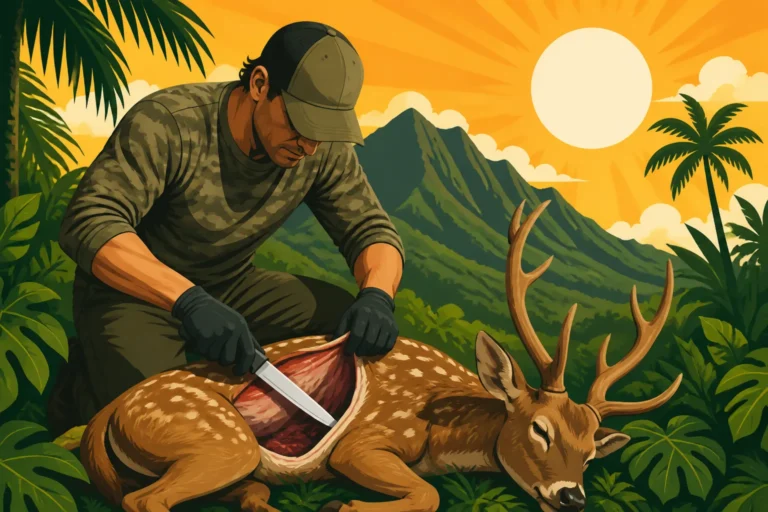
Field dressing a pig in a steep, wet, and often muddy gulch is rarely pleasant, but it’s a critical step in preserving the meat. Your primary goal is to cool the carcass as quickly as possible to prevent spoilage. Remove the entrails immediately. If you can, find a relatively clean, flat spot away from running water to work, but often you'll have to make do with what's available. Wearing gloves is always a good idea for hygiene and to protect against potential diseases like leptospirosis.
Once the entrails are out, prop the cavity open to allow air to circulate. If there's clean, running water nearby, a quick rinse of the cavity can help remove excess blood and debris, but be careful not to contaminate any pristine waterways. The high humidity means flies can be a problem, so consider carrying game bags or cheesecloth to protect the meat while you prepare for extraction. Every minute counts in Hawaii's heat and humidity, so work efficiently.
Packing Meat Out of a Hawaii Gulch
Getting a full-sized pig out of a steep, dense gulch is perhaps the most physically demanding part of the hunt. This is where fitness and a solid plan truly pay off. For smaller pigs, a hunter might be able to shoulder the entire animal. For larger boars, quartering the animal into manageable sections is almost always necessary. Debone the meat if possible to reduce weight, and pack it into sturdy game bags. Carry a good quality frame pack designed for heavy loads.
If you’re hunting with a partner, taking turns carrying heavy loads is essential. Even then, the ascent out of a gulch can be brutal. Consider the path of least resistance – sometimes it's better to follow a winding pig trail than to attempt a direct, steeper climb. For truly massive animals or very remote locations, some hunters even organize for a helicopter pickup, though this is an expensive option. Understanding the challenge of packing meat out of a Hawaii gulch is vital before you ever pull the trigger.
Cooling Meat Fast on a Hawaii Hunt
The warm, humid climate of Hawaii is the enemy of fresh game meat. Unlike colder climates where you might hang a deer overnight, swift and aggressive cooling is paramount here. As soon as the pig is field dressed, you need to get the meat into a cooler with ice as quickly as possible. This means having coolers and plenty of ice readily available at your vehicle or base camp.
If you have a long hike out, consider bringing a small, soft-sided cooler with some ice in your pack to get a head start on cooling your prize cuts. Once at your vehicle, transfer the game bags into larger coolers filled with ice, ensuring the meat is completely surrounded. Don’t let the meat sit in meltwater; drain coolers frequently or use elevated racks. The faster you drop the core temperature of the meat, the better the quality and safety of your harvest will be. For more advice on this critical step, refer to our comprehensive guide on cooling meat fast on a Hawaii hunt.
Disclaimer
Hunting is an inherently dangerous activity. The information provided in this guide is for informational purposes only and should not be considered a substitute for professional instruction, proper research, or adherence to all local, state, and federal hunting regulations. Always prioritize safety, respect wildlife, and obtain all necessary licenses and permits before hunting. Conditions in Hawaii's wilderness can change rapidly, and hunters are responsible for their own safety and preparedness.