Hunting Hawaii’s High Elevation Alpine Ground
Hunting Hawaii's high elevation alpine ground is a whole different beast than stalking pigs in a wet gulch or chasing axis deer through kiawe flats. Many hunters, even those experienced in other challenging terrains, find themselves completely unprepared for the unique combination of thin air, brutal sun, unpredictable weather, and volcanic rock that defines these upper reaches. This guide will walk you through everything you need to know to not only survive but thrive in pursuit of game on Hawaii's highest peaks, particularly the famed slopes of Mauna Kea.
Understanding Hawaii's Alpine Environments
When you hear "Hawaii," most people picture swaying palms and warm beaches. But head up the slopes of Mauna Kea or Mauna Loa on Hawaii Island, and you're in a world that feels a million miles away from the coastline. These are truly alpine environments, and they demand a completely different approach to hunting.
The Unique Ecosystems of Mauna Kea and Mauna Loa
The landscape above 6,000 feet on Mauna Kea and Mauna Loa is stark, beautiful, and incredibly challenging. You'll find sparse vegetation, primarily hardy mamane and naio trees and shrubs, clinging to ancient lava flows and cinder cones. Below the tree line, these unique forest pockets are vital for game, providing both food and cover in an otherwise exposed world. Above that, it's mostly barren rock, scree, and scattered tufts of tough grass. These environments are vastly different from the dense, humid lowland jungles you might encounter when Hunting Hawaii's Feral Pigs or even the dry, brushy areas where axis deer roam. The air is crisp, often dry, and the sun can be relentless, yet hidden pockets might hold moisture from passing clouds.
Extreme Weather and Elevation Challenges
One of the biggest eye-openers for hunters new to Hawaii's high country is just how quickly the weather can turn. A sunny morning can give way to a whiteout blizzard or freezing rain in a matter of hours, even in what seems like summer. Strong, gusty winds are almost a constant companion, especially as you climb. The intense solar radiation at altitude, combined with sudden temperature drops, can be a recipe for sunburn and hypothermia if you're not properly dressed. And then there's the thin air. The reduced oxygen at 8,000, 10,000, or even 12,000 feet above sea level will quickly wear down even the fittest hunter. It's not just physical exertion; it affects judgment and can bring on serious altitude sickness if you're not careful. You might start your day bundled up, then shed layers in the sun, only to be scrambling for your insulated jacket when a cold cloud rolls in.
Primary Game Species Found in the Alpine Zone
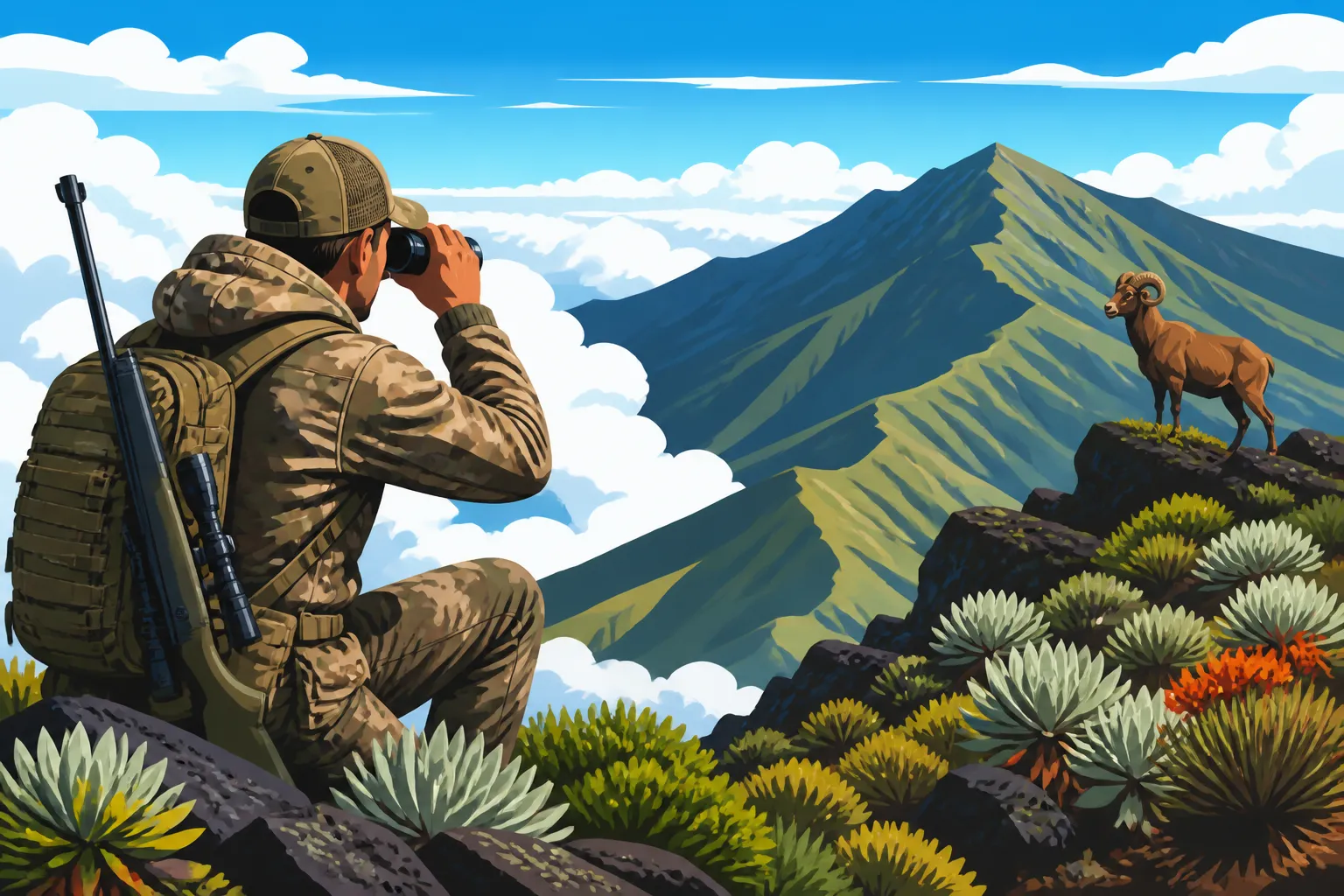
The undisputed king of Hawaii's high-elevation alpine ground is the Mouflon sheep. These majestic animals, originally introduced to the islands, thrive in the rugged, rocky terrain and sparse vegetation. They are incredibly wary and perfectly adapted to navigating the steep, broken lava fields and cinder cones. While pure Mouflon are sought after, you'll also find various feral sheep and Mouflon-feral sheep hybrids, especially in the Mauna Kea Game Management Area. These sheep will use the mamane and naio forests for cover and browse, but they aren't shy about feeding out in the open, even on lava flows, making them a true challenge for a spot-and-stalk hunter. Understanding Mouflon Sheep on Hawaii's Volcanoes is key to a successful hunt up high.
Essential Gear and Physical Preparation
Success in Hawaii's high-elevation hunting comes down to preparation. You can't just throw your usual hunting kit in a bag and expect to be comfortable, let alone effective. The gear needs to be robust, adaptable, and chosen with the specific conditions in mind.
Clothing and Layering for Rapid Weather Shifts
The key to dressing for Hawaii's alpine environment is layering. You need to be able to quickly add or remove clothing as conditions change from freezing winds to intense sun and back again. Start with a good moisture-wicking base layer – think merino wool or synthetic. Avoid cotton at all costs; once wet, it loses all insulating properties. Over that, a mid-weight fleece or puffy jacket provides crucial insulation. For your outer layer, invest in a quality waterproof and windproof shell. This is non-negotiable. Look for something durable that can stand up to abrasion from volcanic rock. You'll also want a warm hat and gloves, even if the forecast seems mild. The biting wind at elevation will find any exposed skin. Remember, even if you're working hard and sweating, stopping for a break or waiting for a shot can lead to a rapid chill.
Footwear and Navigation for Rugged Terrain
Your feet will take an absolute beating in Hawaii's high country. The jagged, uneven lava rock is relentless on boots and ankles. You'll need heavy-duty, high-ankle hunting boots with stiff soles and excellent ankle support. Forget your lightweight hiking shoes; they won't cut it. Brands like Kenetrek or Crispi are popular for a reason – they're built for this kind of abuse. Break them in well before your hunt! Beyond boots, reliable navigation is paramount. A handheld GPS device, like a Garmin inReach or a capable smartphone app such as onX Hunt or the OuterSpatial app, is essential. These areas have virtually No Cell Signal on a Hawaii Hunt, so don't rely on your phone for maps alone. Carry a physical map and compass as a backup, and know how to use them. Marking your truck and key landmarks is crucial when Walking Rough Lava Without Wrecking Your Boots.
Hydration, Nutrition, and Emergency Supplies
Physical exertion at high altitude, combined with dry air and sun, means you'll dehydrate much faster than you realize. Carry significantly more water than you think you'll need, or a reliable water filter if sources are available (though often they are not in these dry uplands). High-energy snacks like nuts, jerky, and energy bars are vital to keep your fuel levels up. Don't underestimate the calorie burn. A well-stocked first-aid kit is also a must, including blister treatment, pain relievers, and any personal medications. Consider a small emergency shelter, like a lightweight tarp or bivy sack, a headlamp with extra batteries, and a fire starter. A satellite communication device is a smart investment for emergencies, allowing you to call for help even without cell service.
Strategic Approaches to High-Elevation Hunting
Hunting Mouflon in Hawaii's high alpine terrain is largely a game of patience, optics, and stealth. These animals have an uncanny ability to blend in and cover ground, making a well-thought-out strategy absolutely critical.
Glassing Vast Open Basins and Slopes
Given the expansive, open nature of high-elevation units like Mauna Kea's upper slopes, quality optics are your best friend. You'll spend far more time glassing than walking. Invest in a pair of powerful binoculars (10x or 12x are ideal) and a high-quality spotting scope mounted on a sturdy tripod. Set up on a high point that offers a commanding view of basins, ridges, and lava fields. Take your time, systematically picking apart every shadow and rock formation. Mouflon sheep can be incredibly difficult to spot, often appearing as just another dark lava boulder. Look for movement, a subtle difference in shape, or the glint of sunlight off a horn. Spend at least 15-20 minutes in each glassing location before moving on, letting your eyes relax and then re-scanning. This is the essence of Glassing a Lava Flow for Mouflon Rams – patience pays off.
Spot-and-Stalk Tactics in Thin Air
Once you've spotted a ram, the real work begins. Closing the distance in this open, unforgiving terrain is incredibly challenging, especially with the thin air demanding maximum exertion. Unlike hunting in dense forest, there's often little cover, so you'll need to be creative. Use every undulation of the landscape, every sparse patch of mamane or rock outcrop, to break up your silhouette. Move slowly and deliberately, pausing frequently to re-evaluate the wind and the sheep's position. The wind in these high areas can be notoriously shifty, swirling around peaks and through gulches, so pay constant attention to your wind checker. Managing your breath and heart rate is paramount; pushing too hard will leave you winded and shaking when it's time for a shot. A long shot is often the norm here, so practice shooting at extended ranges from various field positions before your hunt.
Understanding Mouflon Behavior at Altitude
Mouflon sheep are masters of their high-elevation domain. They'll often feed during the cooler parts of the day, particularly early morning and late afternoon, utilizing the mamane and naio forests for browse and the open lava fields for mineral licks and sunning. During the midday sun, they may bed down in shaded areas or tight pockets among the rocks, making them even harder to spot. They have incredible eyesight and hearing, so remaining undetected is a monumental task. Pay attention to their escape routes – they'll almost always head uphill or to broken ground where they have an advantage. Understanding the thermals and wind currents is also vital; typically, thermals will rise in the morning and fall in the evening, but in complex terrain, they can be unpredictable. When Hunting Mouflon in Mauna Kea's Thin Air, knowing how these animals move and react to their environment is as important as your shooting skills.
Planning Your High-Altitude Hunt
A successful high-elevation hunt in Hawaii doesn't happen by accident. It's the result of meticulous planning, from understanding the permit system to preparing for unique field care challenges.
Permits, Seasons, and Access Points
Hunting Hawaii's high country, especially for Mouflon, almost always involves a draw hunt and specific permits. The primary area is the Mauna Kea Game Management Area on Hawaii Island, which has restricted seasons and limited tags, often allocated through a lottery system. You absolutely need to understand Hawaii's Hunting Units and How They Work and How Hawaii's Permit-Tag System Works. Start by checking the Hawaii Department of Land and Natural Resources (DLNR) Division of Forestry and Wildlife (DOFAW) website for current regulations, season dates, and application periods. Sites like GoHunt are excellent resources for tracking these complex seasons and applying for the Hawaii's Drawn Hunts and Lotteries. Access points for these units often require a 4×4 vehicle due to rough, unpaved roads and high elevations. Always check road conditions before heading out, especially after heavy rains, which can make tracks impassable.
Acclimatization and Safety Considerations
If you're coming from sea level, especially from outside the islands, acclimatization is not just recommended, it's critical. Try to arrive a few days early and spend time at progressively higher elevations before your hunt. This allows your body to adjust to the reduced oxygen, significantly lowering your risk of altitude sickness. Symptoms like headache, nausea, dizziness, and extreme fatigue are red flags; descending is the only cure. Always hunt with a buddy, or at the very least, make sure someone knows your exact hunting plans, including your route and expected return time. Carry fully charged communication devices (satellite phone, inReach), and know where the nearest emergency services are located. The remoteness of these areas means help can be a long time coming.
Field Care and Meat Preservation in Cool Air
While the high elevations offer cooler temperatures than the sweltering lowlands, proper field care is still essential. You might not be dealing with the same intense humidity as when Field Care in Hawaii's Heat and Humidity for axis deer, but meat can still spoil if not handled correctly. As soon as your animal is down, get to work. Field dress immediately to allow the carcass to cool internally. If you have a long pack out, quartering the animal and getting the meat into game bags that allow airflow is crucial. Plan for how you'll get the meat off the mountain – often, this involves strong backs, multiple trips, or even hiring a packer or helicopter for remote kills. Having a cooler with ice at the trailhead is always a good idea, even if it feels cool on the mountain.
Common Challenges and Troubleshooting
Hunting Hawaii's alpine ground will test your physical and mental limits. Being prepared for common challenges can turn a potential disaster into a minor setback.
Dealing with Unpredictable Weather Swings
The sudden shifts in weather are perhaps the most frustrating aspect of high-elevation hunting in Hawaii. You can be glassing in bright sunshine one moment, and then a cloud bank rolls in, bringing fog, rain, and a significant temperature drop. The best way to troubleshoot this is to be over-prepared with your clothing system. Always carry extra layers, including that waterproof/windproof shell, even if the sky looks clear. If a severe storm rolls in, don't try to push through it. Find a sheltered spot, hunker down, and wait it out. Having a small emergency tarp or bivy in your pack can be a lifesaver. This is where patience and conservative decision-making truly come into play. Your safety is always more important than a trophy.
Navigating Lava Fields and Uneven Terrain
The volcanic terrain itself presents a significant challenge. Jagged a'a lava can shred boots and skin, while pahoehoe lava, though smoother, can be incredibly slick when wet and hides dangerous crevasses. Movement is slow, arduous, and requires constant attention to foot placement. To minimize issues, ensure your boots are in excellent condition and consider gaiters to protect your lower legs from scrapes. Plan your routes carefully, using contour lines on your map or GPS to find the path of least resistance. Avoid moving too quickly, especially when tired, as a twisted ankle or fall could have serious consequences in such remote areas. Remember the advice for Walking Rough Lava Without Wrecking Your Boots – it's all about durable footwear and careful steps.
Managing Physical Exertion and Altitude Sickness
Even if you've acclimatized, the physical exertion of climbing and hiking at high altitude will take its toll. The thin air means every step feels harder, and you'll tire more quickly. Pacing yourself is key. Take frequent, short breaks to catch your breath and hydrate. Listen to your body. If you start experiencing persistent headaches, extreme fatigue, nausea, or impaired judgment, these are signs of altitude sickness. Do not ignore them. The only effective treatment is to descend to a lower elevation immediately. If symptoms are severe, this may require an emergency evacuation. Always carry enough water, high-calorie snacks, and electrolytes to maintain your energy levels and stay hydrated throughout the day.
High-Elevation Hunting Challenges & Solutions
Here's a quick look at some common issues you'll face in Hawaii's alpine hunting grounds and how to tackle them:
| Challenge | Description | Recommended Solution |
|---|---|---|
| Thin Air/Altitude Sickness | Reduced oxygen at high elevations causes fatigue, headaches, nausea, and impaired judgment. | Acclimatize for 2-3 days prior, ascend slowly, stay hydrated, descend immediately if symptoms worsen. |
| Extreme Weather Shifts | Rapid changes from intense sun to freezing wind, rain, or even snow. | Layered clothing system (base, insulation, waterproof/windproof shell), carry warm hat and gloves. |
| Jagged Lava Terrain | A'a lava can cut boots and skin; pahoehoe is slippery when wet and hides hazards. | Heavy-duty, high-ankle hunting boots with stiff soles; gaiters; slow and deliberate foot placement. |
| Limited Visibility | Fog, clouds, or vast open spaces make spotting game difficult. | High-quality binoculars and spotting scope on a tripod; systematic glassing techniques; patience. |
| Shifty Winds/Thermals | Wind currents are unpredictable around peaks and gulches, making scent control tough. | Constant use of a wind checker; plan approach based on dominant wind direction, but be ready to adapt. |
| Remote Access/No Cell Signal | Far from roads and towns, phone service is nonexistent in most areas. | GPS device with downloaded maps (e.g., GoHunt, onX); satellite messenger (inReach); physical map and compass backup. |
| Physical Exertion | Climbing steep, rugged terrain at altitude is incredibly demanding. | Intense physical training before the hunt; slow, steady pace; frequent breaks; high-energy nutrition. |
Disclaimer
Hunting in Hawaii, especially in high-elevation areas, carries inherent risks. This guide is for informational purposes only and does not replace the need for proper training, adherence to all local and state regulations, and responsible decision-making in the field. Always prioritize safety, respect the land, and understand all current rules and requirements set forth by the Hawaii Department of Land and Natural Resources (DLNR) Division of Forestry and Wildlife (DOFAW). Be prepared for emergencies and always inform someone of your hunting plans.