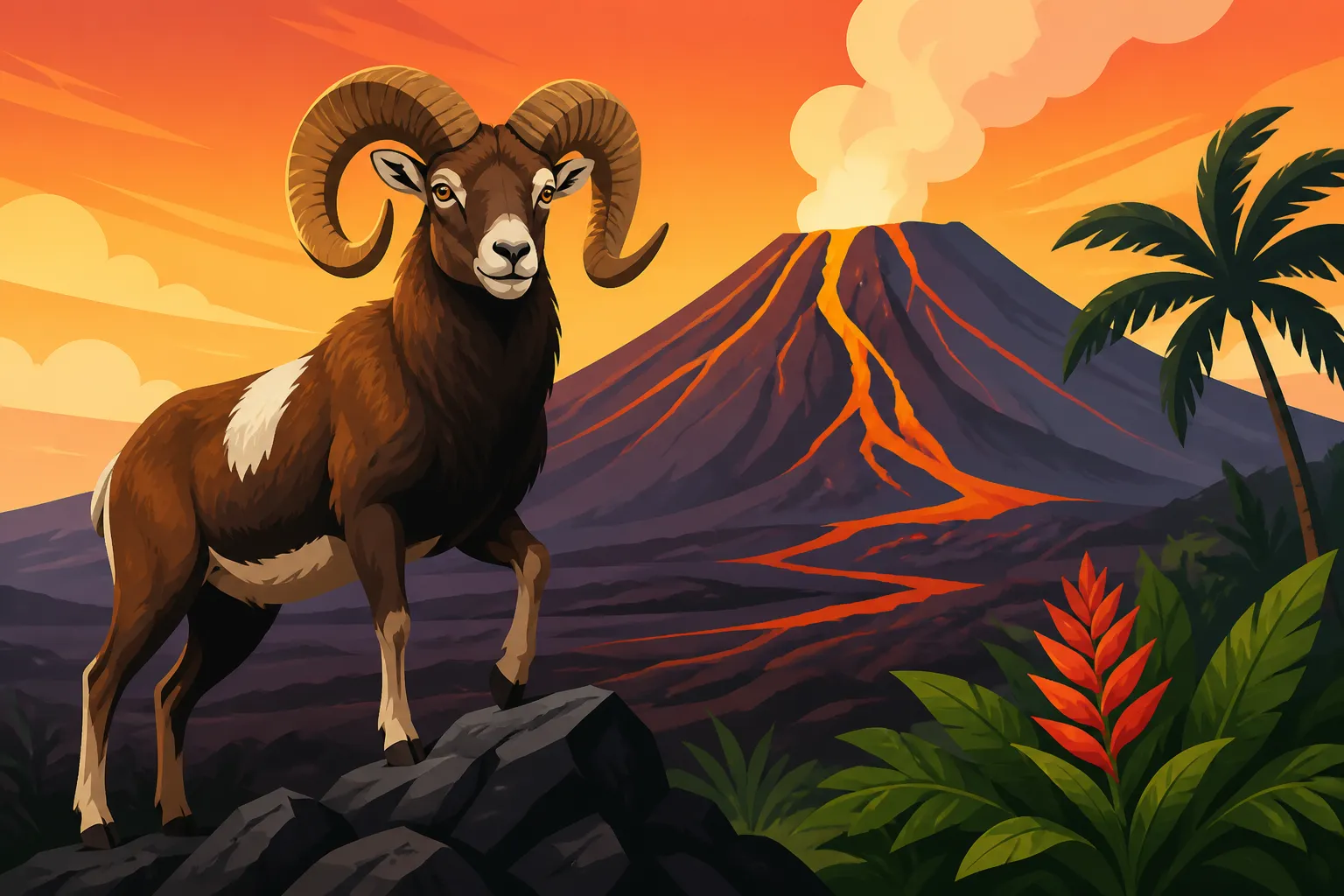
Mouflon Sheep on Hawaii’s Volcanoes
Imagine standing on the slopes of a dormant volcano, the air thin and crisp, scanning vast lava fields and sparse forests for a glimpse of a majestic ram. Hunting mouflon sheep in Hawaii isn't just a pursuit of game; it's a test of endurance against rugged, high-elevation terrain unlike almost anywhere else. This guide dives deep into what makes Hawaii's mouflon sheep unique, where to find them, and how to successfully navigate the challenges of hunting these incredible animals across the islands' volcanic landscapes.
The Intriguing History of Mouflon in Hawaii
The story of Hawaii's mouflon sheep is a fascinating tale of deliberate introduction and remarkable adaptation. Unlike many other game species on the islands, the mouflon’s presence here wasn't accidental; it was a concerted effort that dramatically shaped the ecosystems they now inhabit. Understanding their past helps us appreciate their current role and the challenges of managing them responsibly.
Tracing Their Origins: From Corsica to the Pacific
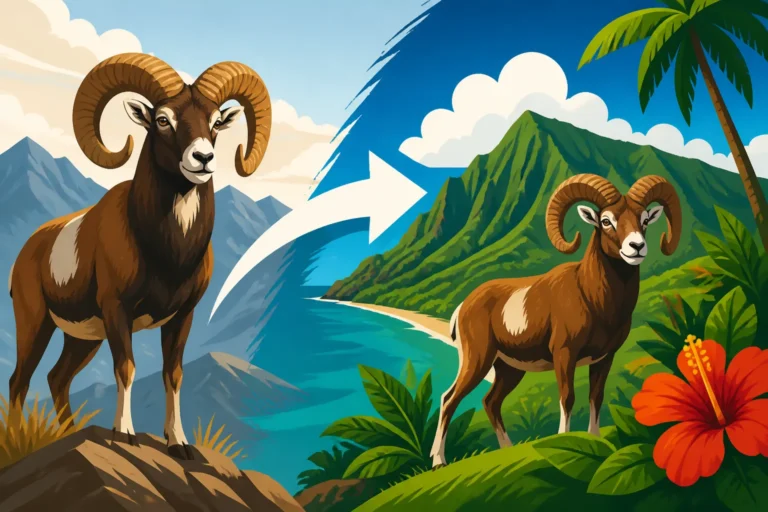
Mouflon sheep, known scientifically as Ovis aries musimon, are generally considered to be one of the wild ancestors of domestic sheep, hailing originally from the Mediterranean islands of Corsica and Sardinia. These rugged sheep are characterized by their reddish-brown coats, often with a lighter saddle patch, and the impressive, curling horns of the rams. Their natural habitat consists of steep, rocky terrain and dense scrub, which, in hindsight, made them surprisingly well-suited for the challenging volcanic landscapes of Hawaii.
The first mouflon arrived in Hawaii in 1957, brought over from mainland ranches. The Territory of Hawaii, recognizing the potential for a new game animal, introduced 12 mouflon onto the slopes of Mauna Kea on Hawaii Island. The idea was to establish a desirable trophy animal for sport hunting, adding to the state's burgeoning game species population. These initial transplants were followed by subsequent introductions, primarily focusing on areas that mirrored their native mountainous and arid environments. It was an ambitious project, transplanting a species halfway across the world, but the mouflon proved to be incredibly resilient.
Early Introductions and Adaptations to Island Life
Following their initial release on Mauna Kea, the mouflon sheep quickly began to establish themselves. Hawaii Island's diverse topography, with its high-elevation alpine zones, dry mamane-naio forests, and vast lava flows, offered a unique blend of habitats that, surprisingly, resonated with the mouflon's inherent hardiness. They found food sources in the often sparse vegetation and utilized the rocky terrain for escape and cover. The lack of natural predators, a common theme for introduced species in Hawaii, also played a significant role in their rapid population growth.
Over time, further introductions were made to other islands, notably Lanai, in 1959. Lanai's terrain, though not volcanic in the same way as Mauna Kea, also presented challenging, arid conditions with a mix of open plains and dense kiawe thickets. Here, the mouflon adapted to a different set of forage and cover, showcasing their incredible versatility. These early populations faced initial challenges, of course. The intense tropical sun, periods of drought, and unfamiliar plant life were all hurdles. However, their ability to thrive on sparse forage and navigate steep, broken ground allowed them to overcome these obstacles and become a permanent fixture in Hawaii's hunting landscape. The successful establishment of these populations laid the groundwork for the unique hunting opportunities we have today for mouflon sheep.
Where Hawaii's Mouflon Roam: High-Elevation Habitats
When you think of sheep, you might picture rolling green hills or rocky crags in the desert southwest. But in Hawaii, mouflon thrive in some of the most dramatic and unexpected landscapes imaginable: the high-elevation slopes of our volcanoes. These aren't your typical hunting grounds, and understanding the unique habitats they call home is key to finding success.
Mauna Kea's Rugged Slopes and Alpine Zones
The undisputed stronghold for mouflon sheep in Hawaii is the iconic Mauna Kea on Hawaii Island. This majestic dormant volcano, topping out at nearly 14,000 feet, offers a patchwork of challenging environments that mouflon have come to dominate. You'll primarily find them ranging from about 6,000 feet all the way up to around 10,000 feet, sometimes even higher.
Within this vast elevation band, the habitat shifts dramatically. The lower slopes are characterized by the delicate and ecologically vital mamane-naio forests. These native dryland forests are crucial for several endemic bird species, notably the Palila, but they also provide browse and cover for mouflon. Higher up, the landscape transforms into rugged lava flows and sparse alpine grasslands. Imagine vast expanses of black, jagged a'a and smoother pahoehoe lava, punctuated by tough grasses and low-lying shrubs that can withstand the harsh winds, intense sun, and freezing night temperatures. This is where the sheep truly excel, using the broken terrain for cover and escape. For hunters, these areas are incredibly demanding, often requiring long, strenuous hikes over sharp, unstable ground. The thin air, especially when you're Hunting Mouflon in Mauna Kea's Thin Air, adds another layer of difficulty, making every step a conscious effort. They often favor the kipuka areas – islands of forest surrounded by lava flows – as well as the numerous cinder cones that dot the landscape, using them for bedding and observation.
Puu Waawaa and Lanai: Contrasting Island Habitats
While Mauna Kea is the prime location, mouflon can also be found in other distinct Hawaiian habitats. On the western slopes of Hawaii Island, the Puu Waawaa Wildlife Sanctuary and Forest Reserve offers a vastly different, yet equally challenging, environment. This area is characterized by dryland forest, kiawe thickets, and rolling volcanic hills. Unlike Mauna Kea's high alpine, Puu Waawaa is at a lower elevation, meaning hotter temperatures and less oxygen-deprived air, but often denser cover. Mouflon here are adept at navigating the thorny kiawe and using the contours of the land to their advantage. Hunting Mouflon at Puu Waawaa requires a different set of tactics, often involving still-hunting or methodical spot-and-stalk through the brush rather than long-range glassing across open lava.
Then there's Lanai, a significantly smaller island in Maui County, where mouflon were also successfully introduced. Lanai's terrain is generally drier and more open than much of the Big Island's mouflon country, with vast expanses of grass and kiawe forest. The sheep on Lanai have adapted to these drier conditions, often congregating around limited water sources during dry periods. Hunters pursuing mouflon on Lanai often find themselves covering extensive ground in open, exposed country, relying heavily on good optics and patience to Glassing Lanai's Open Ridgelines for a ram. The populations on these different islands, though genetically linked, have developed subtle behavioral differences reflecting their specific environments.
The Interplay of Mouflon and Feral Sheep Populations
Adding another layer of complexity to Hawaii's mouflon story is the presence of feral sheep, and the subsequent interbreeding that has occurred. Long before mouflon, Spanish explorers and later Captain Cook introduced domestic sheep to the islands, some of which escaped and established feral populations. These feral sheep, often a mix of breeds, also found a niche in the high-elevation zones, particularly on Mauna Kea.
When mouflon were introduced, they inevitably began to interbreed with these existing feral sheep populations. This led to the creation of "mouflon-feral sheep hybrids," which can display a wide range of physical characteristics, sometimes making it difficult to distinguish a pure mouflon from a hybrid in the field. Some hybrids might retain the mouflon's reddish coat and impressive horns, while others might look more like a shaggy, wild domestic sheep. This genetic mixing has had implications for conservation efforts, particularly concerning the endangered Palila bird. The presence of these hybrids complicates population management, as all sheep (mouflon, feral, and hybrid) exert grazing pressure on the fragile mamane forests. Hunters often encounter both pure mouflon and various hybrids, and regulations sometimes differentiate between them, though typically all sheep in designated units are fair game. Understanding this dynamic is crucial for those interested in Hunting Hawaii's Feral Sheep on the Big Island and how they interact with the introduced mouflon.
Understanding Mouflon Biology and Behavior
To successfully pursue mouflon sheep in Hawaii, it pays to know a thing or two about their natural history and typical behaviors. These aren't just any sheep; they're incredibly tough animals perfectly adapted to some of the most rugged places on Earth.
Physical Characteristics and What a Ram Weighs
Mouflon sheep are striking animals, especially the mature rams. They possess a compact, muscular build, designed for navigating steep and rocky terrain. Their coats are typically a reddish-brown, often fading to a lighter, almost whitish color on their belly and legs. A distinctive feature on many rams is a lighter "saddle patch" on their sides, which can vary in prominence. Ewes are smaller, usually lacking horns or having very small, inconspicuous ones.
The most impressive feature of a mouflon ram is, without a doubt, its horns. These large, curving horns spiral backward and then downward, often forming a tight curl that can approach a full circle or even more in older, mature animals. The horn growth is continuous, adding rings each year, allowing experienced hunters to estimate age. A mature mouflon ram in Hawaii can weigh anywhere from 80 to 120 pounds, though some exceptionally large individuals might push 150 pounds or more, particularly on islands like Molokai where they might be crossing with larger feral sheep stock. Ewes typically weigh much less, ranging from 50 to 80 pounds. Knowing What a Hawaii Mouflon Ram Weighs is helpful for planning meat packing and understanding the challenge of the hunt. Their keen eyesight, sharp hearing, and excellent sense of smell are all honed by living in open, exposed environments where spotting danger is paramount.
Feeding Habits and Adapting to Hawaii's Forage
Mouflon sheep are primarily grazers and browsers, meaning their diet consists of a mix of grasses, forbs (herbaceous flowering plants), and the leaves and twigs of various shrubs and small trees. In Hawaii's high-elevation habitats, this means they subsist on surprisingly sparse vegetation. On Mauna Kea, a significant portion of their diet comes from the mamane tree (Sophora chrysophylla) and naio (Myoporum sandwicense) — especially the mamane seeds, pods, and leaves. They also consume various native and introduced grasses that manage to grow in the lava fields and forest understories.
Their ability to thrive in such environments is a testament to their efficient digestive system and their foraging strategy. They move through the landscape, picking at nutritious plants, often ranging widely to find enough sustenance. Water sources can be scarce, especially in the dry season, and mouflon are adapted to obtaining much of their moisture from the vegetation they consume, though they will readily seek out springs, seeps, or even temporary puddles after rain. Their feeding habits are a double-edged sword: while they've adapted, their grazing and browsing can impact native plant communities, which is a core reason for their active management. The seasonal changes in Hawaii, especially the dry and wet seasons, directly influence where and what the mouflon are eating, making it essential for hunters to consider these patterns when scouting.
Mouflon Rut and Reproductive Cycles
Understanding the mouflon's reproductive cycle can be a huge advantage for hunters, as their behavior shifts dramatically during the rut. In Hawaii, the mouflon rut typically occurs in the late summer and early fall, roughly from August through October, though it can vary slightly depending on weather and specific island conditions. During this period, rams become highly competitive, engaging in spectacular head-butting contests to establish dominance and secure breeding rights with ewes. You might hear the resounding crack of horns echoing through the canyons or across the open slopes as rams clash.
Rams will actively seek out ewe groups, often covering significant distances. This increased activity makes them more visible and less cautious than at other times of the year, although they remain incredibly alert. Ewes, after a gestation period of about five months, typically give birth to one or occasionally two lambs in the spring, generally around February to April. Lambs are precocial, meaning they are able to stand and move shortly after birth, quickly learning to navigate the rugged terrain with their mothers. Herd dynamics usually consist of ewes and their young forming small groups, while rams often form bachelor groups for much of the year, only joining ewe bands during the rut. This knowledge helps hunters target specific areas during different times of the season.
The Palila Lawsuit and Its Impact on Mouflon Management
No discussion of mouflon sheep in Hawaii would be complete without acknowledging the profound impact of the Palila v. Hawaii Department of Land and Natural Resources lawsuit. This landmark environmental case fundamentally reshaped how mouflon and other introduced ungulates are managed on Mauna Kea.
The Endangered Palila Bird and its Habitat Needs
The Palila (Loxioides bailleui) is a critically endangered Hawaiian honeycreeper, a small, finch-like bird found only on the upper slopes of Mauna Kea. What makes the Palila so unique, and so vulnerable, is its almost exclusive reliance on the mamane tree (Sophora chrysophylla) for its survival. The Palila feeds almost entirely on the green seeds of the mamane pods, and also consumes mamane flowers and insects found on the tree. The mamane-naio forest, which historically covered vast areas of Mauna Kea, is the Palila's sole habitat.
For decades, the introduced populations of feral sheep and mouflon grazed heavily on these mamane trees. Sheep, being browsers, would consume mamane seedlings, strip bark from mature trees, and prevent new growth from establishing. This continuous grazing pressure, combined with other factors like past logging and invasive weeds, led to a severe degradation of the mamane forest and a drastic decline in the Palila population. The conflict came to a head in the late 1970s, culminating in a lawsuit filed by the Sierra Club Legal Defense Fund on behalf of the Palila. The resulting court decisions, particularly a crucial 1979 ruling, found that the state had a responsibility to protect the Palila under the Endangered Species Act, and that the sheep were directly harming its critical habitat. This case, often referred to as The Palila and Mauna Kea's Sheep, was a watershed moment for conservation in Hawaii, highlighting the delicate balance between introduced species and native ecosystems.
Managing Mouflon Populations in Critical Habitat
The legal decisions stemming from the Palila lawsuit mandated a significant shift in how Hawaii's Department of Land and Natural Resources (DLNR), specifically its Division of Forestry and Wildlife (DOFAW), manages ungulate populations on Mauna Kea. The primary directive was to remove sheep from critical Palila habitat, particularly the mamane-naio forest, to allow for forest regeneration.
This has led to a multi-faceted management strategy. Large-scale fencing projects have been implemented to physically exclude sheep from designated Palila recovery areas. Inside these fenced enclosures, extensive efforts are underway to restore the mamane forest. Outside the fences, and in other designated hunting units, DOFAW manages mouflon populations through regulated public hunting seasons. These hunts serve as a primary tool for population control, helping to reduce grazing pressure. Hunters are often encouraged to take any legal sheep, not just trophy rams, to contribute to the overall management goals. In some instances, aerial control programs or professional culling efforts may also be employed in areas inaccessible to hunters or where populations are particularly dense. This active management is a continuous effort, balancing conservation needs with providing hunting opportunities. The regulations around mouflon hunting, especially on Hawaii Island, are often directly tied to these ongoing habitat restoration goals, and you can learn more about specific rules on the DOFAW website or through platforms like GoHunt.
Hunter's Role in Conservation and Ecosystem Balance
While the Palila lawsuit initially created tension between hunters and conservationists, it has also highlighted the vital role that responsible hunting plays in Hawaii's unique ecosystem. For many years, hunters have been, and continue to be, an essential part of managing introduced ungulate populations. By participating in regulated hunts, hunters directly contribute to reducing animal numbers, thereby lessening their impact on vulnerable native plants and animals.
Ethical hunting practices, such as adhering to bag limits, season dates, and unit boundaries, are paramount. Hunters must be aware of and respect areas designated as Palila critical habitat and avoid disturbing sensitive restoration efforts. Many hunters in Hawaii are passionate about their islands and understand the importance of balancing traditional hunting opportunities with ecological preservation. The purchase of hunting licenses and stamps, like the Hawaii's Wildlife Conservation Stamp, provides funding directly to DOFAW, supporting wildlife management, habitat restoration, and enforcement efforts across the state. In essence, hunters are not just participants in a recreational activity; they are active stakeholders in the complex effort to maintain ecological balance in Hawaii's incredibly fragile and unique natural world.
Hunting Hawaii's Mouflon: Challenges and Rewards
Hunting mouflon sheep in Hawaii is not for the faint of heart. It demands physical stamina, mental toughness, and a solid understanding of mountain hunting techniques. But for those willing to put in the work, the rewards are immense, offering a truly unique and memorable experience.
Navigating High-Elevation Terrain and Thin Air
One of the most significant challenges when hunting mouflon, especially on Mauna Kea, is the elevation. You'll often be hunting between 6,000 and 10,000 feet, and sometimes even higher. At these altitudes, the air is noticeably thinner, meaning less oxygen with every breath. This can lead to altitude sickness for those unaccustomed to it, causing headaches, nausea, and extreme fatigue. Physical conditioning is absolutely crucial; you'll be asking your body to perform strenuous uphill climbs over rough ground with a reduced oxygen supply.
Beyond the altitude, the terrain itself is incredibly unforgiving. Mauna Kea's slopes are a mosaic of sharp, jagged a'a lava fields and smoother, yet still uneven, pahoehoe flows. Walking Rough Lava Without Wrecking Your Boots is a skill you'll quickly develop, but expect heavy wear and tear on your footwear. Steep, rocky gulches, cinder cones, and scattered mamane-naio forests create a constantly changing landscape that requires careful footing and route-finding. Heat can be a factor at lower elevations, but at higher altitudes, temperatures can plummet, especially at night or when clouds roll in, bringing rain, mist, or even sleet. Proper layering of clothing and carrying enough water are non-negotiable.
Spot-and-Stalk Tactics in Open and Sparse Cover
Mouflon sheep are animals of the open country, meaning successful hunting often hinges on effective spot-and-stalk tactics. Their excellent eyesight makes spotting them before they spot you paramount. High-quality optics are your best friend here: a good pair of binoculars (10×42 or 12×50) and a spotting scope are essential for systematically picking apart distant slopes, lava flows, and forest edges. Hunters will often spend hours perched on a high vantage point, patiently glassing.
Once a ram is located, the real work begins. Planning an approach requires careful consideration of the wind, terrain, and the sheep's likely escape routes. Mouflon have an uncanny ability to disappear into seemingly sparse cover, using the smallest rise or clump of mamane for concealment. Stalks can be long, tedious, and often frustrating, involving crawling, slow movements, and utilizing every bit of available topography. Long-range shooting skills are often necessary, as shots can sometimes be extended across wide-open expanses. Mastering the art of using the land to your advantage and moving silently is key to getting within an ethical shooting range. This is where patience truly pays off.
Season Dates, Bag Limits, and Permit Requirements
Hunting mouflon sheep in Hawaii requires careful attention to regulations, as seasons and rules can vary by island and even by specific unit. Generally, mouflon hunting is available on Hawaii Island and Lanai, but often under a lottery or drawn hunt system, especially for the prime seasons.
On Hawaii Island, mouflon are typically hunted in specific Game Management Areas (GMAs) and Forest Reserves on Mauna Kea and in areas like Puu Waawaa. Seasons can include archery, muzzleloader, and rifle opportunities. Archery seasons often have longer windows, while rifle and muzzleloader seasons might be shorter and allocated via a draw. For example, Hawaii Island Archery Unit Dates will differ from rifle dates. Lanai also offers mouflon hunting, often with separate seasons for archery and muzzleloader. Hunting Lanai's Mouflon Archery Season and Hunting Lanai's Mouflon Muzzleloader Days are highly sought-after permits.
Bag limits typically allow for one mouflon ram per season, though specific permits might occasionally allow for an either-sex sheep to help meet population control objectives. All hunters, including non-residents, must possess a valid Hawaii hunting license and any required permit-tags for mouflon. These permit-tags are often acquired through a lottery system for specific units and dates. The GoHunt Hawaii platform is the official online portal where hunters can apply for drawn hunts, purchase licenses, and stay up-to-date on all the latest regulations and season announcements. It’s absolutely essential to check the current year’s regulations well in advance of planning your hunt, as rules can change.
| Feature | Mouflon Sheep (Hawaii) | Feral Sheep (Hawaii) |
|---|---|---|
| Origin | Introduced from Corsica/Sardinia stock | Descended from domestic sheep introduced centuries ago |
| Appearance | Typically reddish-brown coat, prominent light saddle patch, dark leg stripes; males have large, curling horns. | Highly variable: can be white, black, brown, spotted; often shaggier wool; horns vary from small to large (if present). |
| Size (Ram) | 80-120 lbs (can be larger, especially hybrids) | 60-100 lbs (highly variable depending on breed and diet) |
| Habitat | High elevation (Mauna Kea, Puu Waawaa, Lanai), mamane-naio forests, lava fields, dry scrub. | Similar to mouflon, often intermingling; can extend to lower elevations in some areas. |
| Behavior | Wary, excellent senses, often in small groups or bachelor bands. | Can be wary, but sometimes less so than mouflon; behavior can vary with past domestic influence. |
| Conservation | Managed for hunting and population control due to habitat impact; subject to Palila lawsuit mandates. | Managed as an invasive species for population control and habitat protection. |
| Hunting Status | Regulated big game species, often permit-tag required, drawn hunts. | Regulated big game species, sometimes permit-tag required, can be year-round in some areas. |
Field Care and Trophy Considerations
The hunt doesn't end when the shot rings out. Proper field care is paramount, especially in Hawaii's climate and rugged terrain. Furthermore, for those pursuing a trophy, understanding what makes a mouflon ram exceptional is part of the experience.
Field Dressing and Cooling Meat in the Mountains
Once you've harvested a mouflon, immediate and thorough field dressing is critical, even more so than in cooler climates. While high-elevation hunting can sometimes offer a slight reprieve from intense heat, Hawaiian temperatures are generally warm, and meat can spoil rapidly. Get to the animal quickly. The first step is to gut the animal promptly to allow the carcass to cool internally. Remove all viscera, and if possible, wipe out the chest cavity with a clean cloth or grass.
If you're in a remote area, quartering the animal is usually the most practical way to Packing Meat Out of a a Hawaii Gulch or off a steep slope. Separate the quarters, backstraps, tenderloins, and neck meat. Place the meat into breathable game bags immediately. Do not use plastic bags, as they trap heat and accelerate spoilage. Your priority is to get the meat cooled down as fast as possible. In the mountains, this might mean finding a shaded, breezy spot, or even placing the meat on cool rocks. If you have ice, which is rare in remote Mauna Kea, that's ideal. Without it, airflow is your best friend. Many hunters will continue to hike with the meat in game bags, allowing the mountain breeze to cool it as they move. Knowing how to efficiently field dress and cool meat is vital for ensuring your hard-earned venison makes it back to camp in good condition.
Judging a Mouflon Ram's Horn Curl and Age
For many hunters, a mouflon ram's magnificent horns are the ultimate trophy. Judging a ram in the field requires a keen eye and an understanding of horn growth. The quality of a ram's horns is typically assessed by its length, circumference (base measurement), and the completeness of its curl. A truly exceptional ram will have horns that curl well past a full circle, with thick bases and minimal brooming or damage.
Rams grow a new horn segment each year, often marked by annual rings or growth lines. By counting these rings, you can get a rough estimate of the ram's age. Mature rams, usually 5-7 years old or more, will exhibit impressive horn development. When you are Judging a Mouflon Ram's Horn Curl, look for depth of curl, mass, and symmetry. Avoid small, young rams if you're looking for a trophy, as their horns have much more growing to do. Sometimes, mouflon-feral sheep hybrids can grow very impressive, albeit sometimes atypical, horns, making for a unique trophy. While length is important, mass at the base and the tight, uniform curl are often what truly define a great mouflon ram.
Transporting Meat and Trophy Care
Once you've packed your mouflon meat out of the hunting unit, the next challenge is getting it home, especially if you're traveling inter-island or back to the mainland. For hunters staying on the island of the hunt, find a local game processor as quickly as possible. Many local butchers in communities near hunting areas, such as Hilo or Kona on Hawaii Island, are familiar with handling mouflon. They can cut, wrap, and often freeze your meat.
If you plan to fly with your meat, it must be properly packaged and frozen solid in an approved cooler. Airlines have specific regulations for transporting game meat, so always check with your carrier well in advance. For trophies, if you plan to keep the horns and cape, these also require careful preparation. The cape needs to be skinned, fleshed, and salted or frozen solid if you're taking it to a taxidermist. The skull, if you're opting for a European mount, should be cleaned. For shipping horns and capes, many hunters utilize an island-based taxidermist to handle the initial preparation and paperwork for agricultural inspection before shipping to a mainland taxidermist. This ensures all regulations are met and your trophy arrives safely. Remember, there are strict agricultural rules about what can and cannot leave the islands, especially for raw animal products, so always be informed.
Planning Your Hawaii Mouflon Adventure
A successful mouflon hunt in Hawaii isn't something you can just decide to do on a whim. It requires meticulous planning, physical preparation, and a realistic understanding of what to expect.
Essential Gear for a High-Altitude Hunt
The unique environment of Hawaii's mouflon country demands a very specific gear list. Forget the tropical beachwear; you're heading into high-altitude wilderness.
- Layered Clothing: Essential for rapidly changing weather. Think moisture-wicking base layers, insulating mid-layers (fleece or puffy jacket), and a waterproof/windproof outer shell. Even in Hawaii, temperatures can drop significantly at high elevations, and rain or mist is common.
- Sturdy Boots: Invest in high-quality, ankle-supporting hiking boots with stiff soles. The lava rock will destroy lesser footwear, and good support is crucial for stability on uneven terrain. Consider bringing gaiters to keep small rocks out of your boots.
- Optics: As discussed, a good pair of binoculars (10x or 12x) and a spotting scope with a tripod are non-negotiable for glassing vast areas.
- Navigation Tools: A reliable GPS unit, physical topographical maps, and a compass are critical. Cell service is non-existent in many hunting units, so don't rely solely on your phone. The OuterSpatial app, used by DOFAW for check-in/out, can also be useful for unit boundaries, but downloads maps beforehand.
- First Aid Kit: A comprehensive kit capable of handling cuts, sprains, blisters, and basic emergency situations.
- Water and Filtration: Carry ample water. Consider a water filter or purification tablets for refilling from springs if available. Hydration is key to combating altitude sickness.
- Backpack: A comfortable, durable pack large enough to carry your day's essentials and, ideally, to pack out meat if successful.
- Weapon: A reliable rifle (check legal calibers for Hawaii big game), or a bow and appropriate arrows. Ensure you are proficient with your chosen weapon, as shots can be challenging.
- Game Bags: Breathable game bags are essential for meat care.
Physical Preparation and Acclimatization
Hawaii mouflon hunting is a physically demanding endeavor. You'll be climbing steep slopes, navigating uneven lava, and covering significant distances, often at elevations that will challenge your cardiovascular system. Starting a rigorous physical training regimen months before your hunt is highly recommended. Focus on exercises that build cardiovascular endurance (running, hiking, stair climbing) and strengthen your legs and core. Hiking with a loaded pack will simulate real-world conditions.
If you are coming from sea level, arriving a few days early to allow your body to acclimatize to the elevation can make a world of difference. Spend some time at mid-elevations (4,000-6,000 feet) before attempting to hunt higher up. Pay attention to your body and recognize the signs of altitude sickness, which can include persistent headache, nausea, dizziness, and extreme fatigue. Hydration and a slow, steady pace are your best allies in mitigating these effects. Being in peak physical condition not only increases your chances of success but also significantly enhances your safety and enjoyment of the hunt.
Hiring a Guide or Self-Guided Exploration
The decision to hire a guide or embark on a self-guided mouflon hunt in Hawaii depends on your experience, budget, and desired level of challenge.
Self-Guided: For experienced hunters who are comfortable with rugged backcountry navigation, remote camping, and extensive scouting, a self-guided hunt can be incredibly rewarding and more cost-effective. However, it requires a significant amount of pre-trip research, including understanding specific unit regulations (which can be complex), drawing success rates, and local geography. You'll be responsible for all logistics, from transportation to field care. Using resources like GoHunt Hawaii for license and permit information, and carefully studying topographic maps and public land boundaries, is crucial. However, be aware that some prime mouflon areas, particularly on Lanai's public units, specifically prohibit the use of guides.
Guided Hunts: For hunters new to Hawaii, those seeking a higher probability of success, or those who prefer to focus solely on the hunt, a reputable Hawaii hunting guide or outfitter is an excellent option. Guides provide invaluable local knowledge, including animal movements, terrain intricacies, and access points. They often have private land access, which can offer different opportunities, or are intimately familiar with public units. A guided hunt also typically includes transportation to and from the hunting area, assistance with field dressing and packing, and sometimes even weapon rental. While more expensive, a good guide can significantly enhance your experience and chances of harvesting a ram, especially on a shorter trip. They can also help navigate the complex permit system. For information on Hunting Guides and Outfitters in Hawaii and what they offer, research local operators on Hawaii Island or Lanai. Be sure to vet your guide thoroughly, check references, and understand what is included in their package before booking.
Disclaimer
Please note that hunting regulations, season dates, and unit boundaries in Hawaii are subject to change. It is the hunter's responsibility to consult the most current regulations published by the Hawaii Department of Land and Natural Resources (DLNR) Division of Forestry and Wildlife (DOFAW) before planning and undertaking any hunting activity. Always prioritize safety, ethical hunting practices, and respect for the land and its wildlife.