Hawaii’s Record Feral Boar
For many hunters in Hawaii, the pursuit of a genuinely massive feral boar is more than just a hunt; it's a quest for a legend, a test against an incredibly tough and wily adversary that thrives in some of the most unforgiving terrain on Earth. The tales of these giants echo through the valleys and over the ridges, inspiring countless early mornings and long treks. This guide delves into what makes a "record" feral boar in the islands, the challenges of finding one, and how these impressive animals continue to captivate hunters across the archipelago.
The Allure of Hawaii's Feral Boar and the Quest for a Record
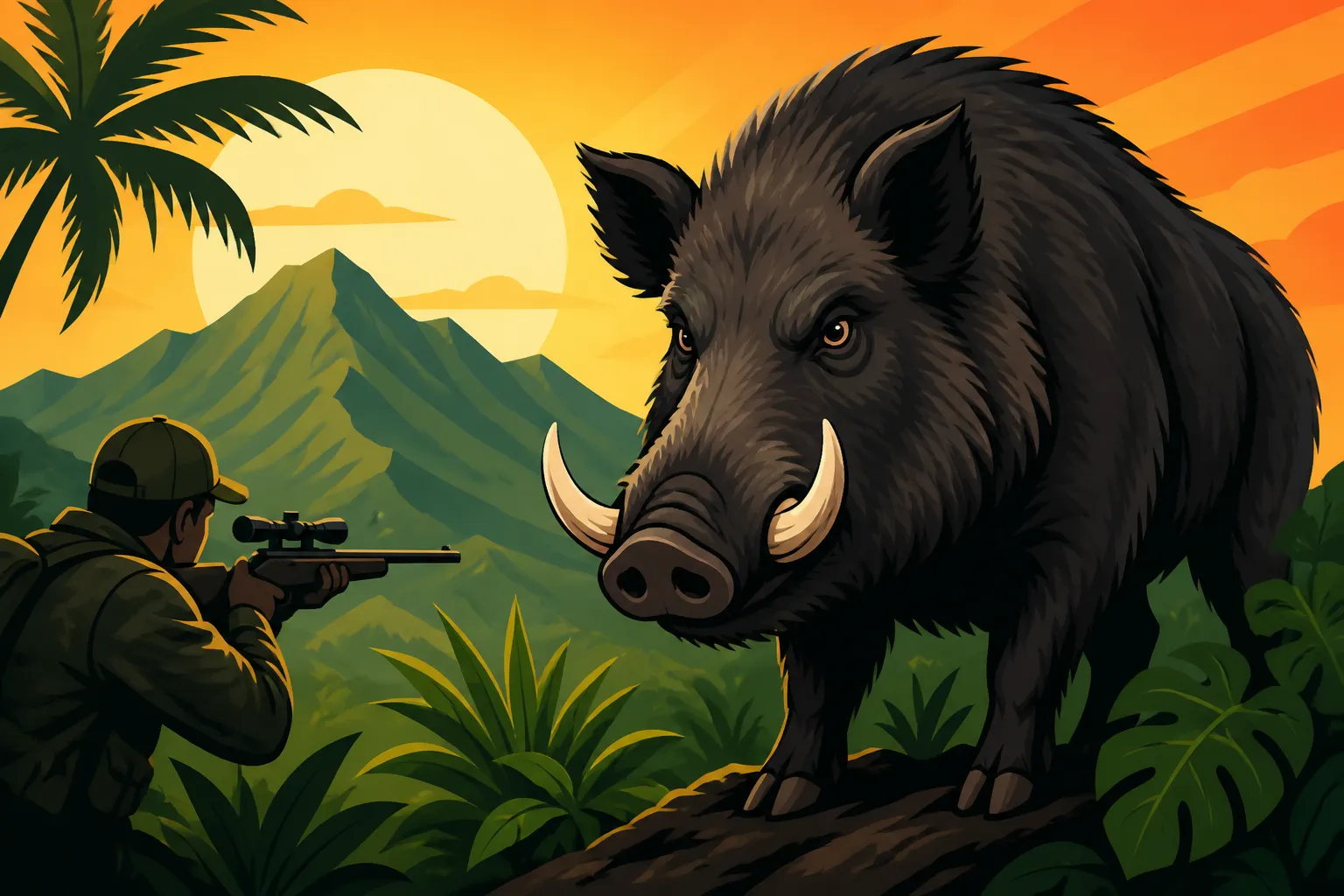
There's something almost mythical about the biggest feral boars in Hawaii. They're not just large; they're formidable, built like tanks, and often possess tusks that tell a story of dominance and survival. This isn't your average pig hunt; it’s a deep dive into an ecosystem where these animals have few natural predators, allowing them to reach truly impressive sizes. Hunters often talk about "the one that got away" with a mix of frustration and awe, because these creatures are incredibly intelligent and resilient.
Why Hawaii's Pigs Grow So Large and Mean
Hawaii's feral pigs aren't just your run-of-the-mill barnyard escapees. They are a mix of genetics, primarily descendants of the Polynesian pig (a smaller, leaner type) and later introductions of European wild boars, which are known for their larger size and more aggressive disposition. Over centuries, these populations have interbred, creating a highly adapted, robust animal perfectly suited to the islands' diverse habitats.
One of the main reasons these pigs can grow so large is the sheer abundance and variety of food. From nutrient-rich rainforests with constant rainfall and lush vegetation to drier leeward slopes offering kiawe pods and other seasonal bounty, pigs find sustenance everywhere. They root through the soil for invertebrates, eat fallen fruits like guava and thimbleberry, forage for roots and tubers, and even consume carrion. This consistent, varied diet, coupled with a lack of major predators beyond human hunters and dogs, allows them to reach their genetic potential. They face little pressure beyond hunters, which means the biggest, wiliest individuals often survive longer, passing on their genes for size and intelligence. This makes hunting them a genuine challenge, validating the frustration many hunters feel when trying to outsmart a seasoned old boar.
What Constitutes a "Record" Feral Boar in the Islands
Unlike regulated antlered game in other parts of the world with Boone & Crockett or Pope & Young scoring, there isn't one universally accepted, official record-keeping body for Hawaii's feral boars. Instead, the concept of a "record" is often based on two primary metrics: live weight and tusk length. These are usually informal, celebrated within local hunting communities, shared through word-of-mouth, social media, and local publications. The sheer difficulty of accurately weighing a large, freshly killed pig in remote terrain means that weight often comes with a bit of estimation or anecdotal "this pig broke the scales!" stories. However, tusk length, particularly the upper tusks, can be measured more precisely and is a highly respected indicator of a truly old, dominant boar. The pursuit of a record becomes less about a certificate and more about the story, the effort, and the impressive physical specimen itself.
Tales from the Trenches: Tracking Down Legendary Hogs
Finding a record-sized boar isn't a walk in the park. It often involves enduring Hawaii's challenging terrain, from slippery, dense rainforests to steep, rocky gulches. These animals are masters of evasion, utilizing the thick vegetation to their advantage, making them incredibly difficult to spot and even harder to approach unnoticed. Hunters often learn from generations of local knowledge, understanding the subtle nuances of pig behavior and habitat.
Where the Biggest Boars Are Typically Found
While feral pigs are found on many islands, certain areas are renowned for producing larger animals. The Big Island (Hawaii Island) is often cited for its vast, undeveloped tracts of land, particularly within its expansive forest reserves and remote wilderness areas. Here, pigs have more room to roam and less consistent hunting pressure in certain pockets, allowing them to age and grow. Maui also has a reputation for some truly massive boars, especially in its more remote valleys and upcountry forests. Where Hawaii's Feral Pigs Live can give you a deeper understanding of their distribution. Kauai, too, has a healthy population of large pigs, particularly in its deep canyons and thick, wet forests.
These formidable pigs prefer areas with dense cover, where they can find sanctuary from hunters and the scorching Hawaiian sun. Think tangled thickets of guava, deep fern-choked gulches, and the edges of vast ohia and koa forests. They often stick to the wet, windward sides of the islands where water and food are consistently plentiful. Accessing these areas often means long, arduous treks on foot, navigating through nearly impenetrable vegetation and steep, broken ground. It's a true test of endurance and determination, and many hunters will tell you that the journey is as much a part of the "trophy" as the pig itself.
The Challenges of Hunting a Record-Sized Pig
The pursuit of a record boar is fraught with challenges. Firstly, simply locating a truly large pig requires extensive scouting and knowledge of pig sign. You need to be able to Reading Pig Sign Along a Muddy Trail, deciphering fresh tracks, rooting patterns, and rub marks on trees. Even once you've found fresh sign, the pig might be miles away, or it might be bedded down in a thicket so dense you could walk right past it.
Hunting these animals often involves specialized tactics. Dog and Knife Pig Hunting in Hawaii is a popular method, especially for those pursuing the biggest boars. Dogs, particularly bay dogs that hold the pig at bay and catch dogs that wrestle it, are invaluable for rooting out pigs from dense cover and bringing them to a stand. This method is intense and requires precise teamwork between hunter and dogs, often leading to close-quarter encounters that are both thrilling and dangerous. For hunters going without dogs, it means mastering the art of Still-Hunting Pigs in Hawaii's Wet Forest or patiently staking out a food source or wallow. The sheer power and aggression of a large boar, especially when cornered, demand respect and a cool head. Many hunters share stories of being charged or having to make quick, decisive shots in incredibly tight quarters.
Measuring Up: Understanding Tusk and Weight Categories
When a hunter finally takes down a boar they believe to be a contender for "record" status, the real work (and a bit of friendly debate) begins. While there's no official measuring tape, the community generally agrees on what makes a truly exceptional specimen.
Tusk Length and Curvature: What Matters for a Trophy
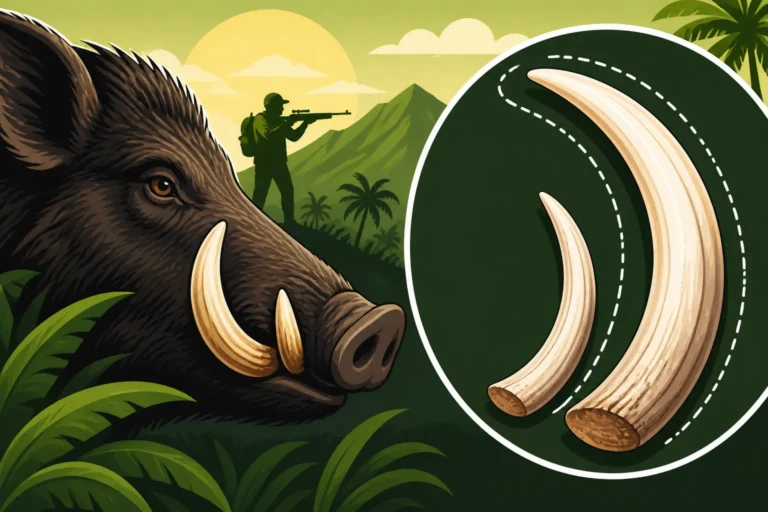
For many hunters, the tusks are the ultimate symbol of a record boar. The length, curvature, and girth of both the upper (or "cutters") and lower (or "grinders") tusks are admired. While all pigs have tusks, a true trophy boar will have impressive lower tusks that grow upward and outward in a sweeping curve, often extending well beyond the snout, sometimes forming a full circle. The upper tusks, meanwhile, rub against the lower ones, keeping them honed to razor sharpness. How Big Hawaii Pig Tusks Get can truly be astounding, with some reaching lengths that would make any hunter proud.
When assessing tusk size, hunters often consider:
- Length: Measured along the outside curve from the point where it emerges from the jaw to the tip.
- Girth/Circumference: Measured at the base of the tusk where it exits the jaw.
- Symmetry: How evenly matched the left and right tusks are.
- Condition: Whether the tusks are unbroken, free from chips, and have a good natural patina.
It's not just about raw length, but the overall mass and impressiveness of the ivory. A boar with strong, intact tusks indicates an animal that has lived a long, dominant life, likely engaging in many battles with other boars.
The Sheer Weight: A Battle to Get It Out
While tusks are beautiful, the sheer weight of a truly massive boar is often what earns it a place in local lore. Many hunters have stories of pigs pushing well over two hundred pounds, some even approaching the three-hundred-pound mark or more. What a Hawaii Feral Boar Weighs can vary wildly, but the biggest specimens are truly impressive in their bulk and muscle.
The challenge isn't just taking down such an animal, but Getting a Pig Out of a Hawaii Gulch or through dense jungle. This is where the practicalities of a "record" animal hit home. A 200+ pound boar, often taken deep in remote, rugged terrain, presents an immense logistical challenge. Hunters often have to quarter the animal in the field, making multiple trips, or relying on strong pack animals or even specialized equipment to haul the meat out. This difficult extraction process, often performed in Hawaii's high heat and humidity, adds another layer of accomplishment to bagging a truly big pig. It solidifies the story behind the animal, proving the immense effort required from field to table.
| Trophy Characteristic | Description for "Record" Consideration |
|---|---|
| Weight | Often 200+ pounds (live weight), some exceeding 300 lbs. |
| Lower Tusks (Grinders) | Long, sweeping curve, often 5-8+ inches exposed, solid base. |
| Upper Tusks (Cutters) | Sharp, well-honed points, matching the curve of the lower tusks. |
| Tusk Symmetry | Matching length and curvature on both sides. |
| Tusk Condition | Unbroken, free from major chips, dark patina from age/wear. |
| Body Size/Mass | Broad shoulders, deep chest, thick hide, indicating age and dominance. |
Strategies for Pursuing Your Own Record Boar
The dream of bagging a record-sized boar is attainable, but it requires dedication, preparation, and a healthy dose of respect for the animal and the environment. It's about combining skill with local knowledge and perseverance.
Gear and Preparation for the Big Hunt
Success starts long before you ever set foot in the jungle. Physically, you need to be in shape. Hawaii's terrain is no joke – steep, slippery, and relentless. Good boots are essential for navigating lava, mud, and dense vegetation. As for gear, a reliable rifle in an adequate caliber is crucial, or a sturdy spear or knife if you're going the traditional dog-and-knife route. Ensure you're familiar with Legal Weapons When Hunting Pigs With Dogs for your chosen method.
Beyond the weapon, think about navigation: a GPS device or a reliable app like OuterSpatial is vital in dense, disorienting terrain where cell service is often nonexistent. Carry plenty of water, first-aid supplies, and an emergency shelter. Always let someone know your hunting plan, including your route and expected return time. The tropical environment can quickly turn a minor mishap into a serious situation. Preparing for the heat and humidity, knowing how to cool meat quickly, and having a plan for extraction are all part of chasing a record boar.
Finding Guidance and Resources
For those serious about pursuing a trophy boar, leveraging local expertise can make all the difference. Hawaii has a strong hunting community, and talking to experienced local hunters can provide invaluable insights into specific areas, pig behavior, and effective strategies. Consider hiring a reputable guide, especially if you're new to Hawaii hunting or targeting a specific, large animal. Guides often have access to private lands that hold larger pigs and possess years of accumulated knowledge about their movements. Booking a Hawaii Pig Hunt with a knowledgeable outfitter can significantly increase your chances.
Utilizing official resources is also key. The Department of Land and Natural Resources (DLNR) Division of Forestry and Wildlife (DOFAW) manages public hunting lands. Their websites and offices provide maps and regulations for Hawaii's Hunting Units and How They Work. Using the GoHunt platform for permits and information, or checking the DOFAW site for unit-specific rules, can help you plan your hunt. This is where you'll find details on season dates, bag limits (which are often generous for pigs due to their invasive status), and any special conditions for public access. Always check for any changes or closures before heading out.
Remember, the biggest boars are often the oldest and wisest, having learned to evade hunters. They are rarely found by chance. It's a deliberate pursuit that blends traditional hunting wisdom with modern equipment and an unyielding spirit.
Disclaimer
This article is for general informational purposes only and does not constitute professional advice. Laws, prices and regulations vary by location and change over time. Consult a qualified professional for guidance on your specific situation.