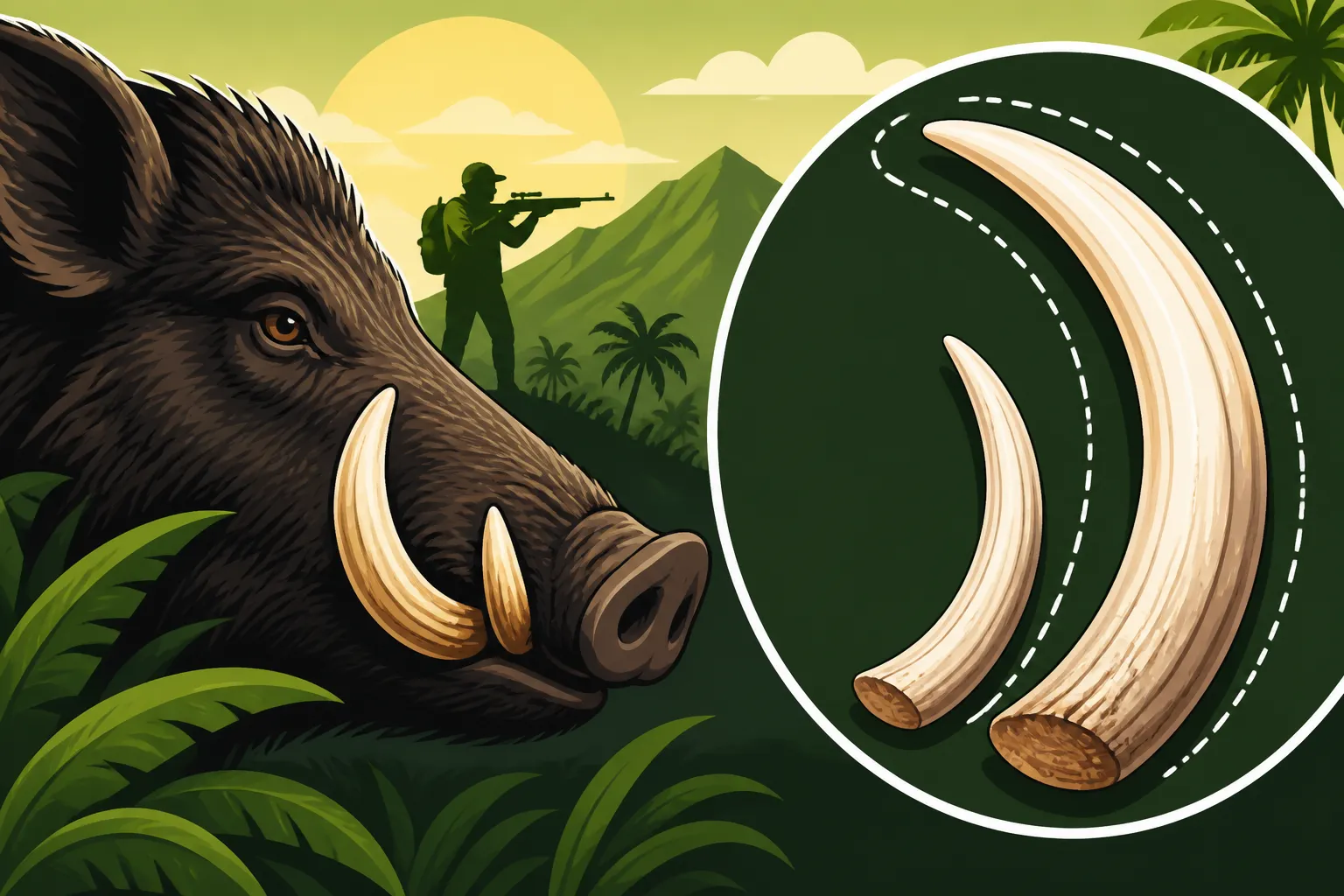
How Big Hawaii Pig Tusks Get
For anyone who's spent time in Hawaii's wild country, you know the sound of a pig crashing through the undergrowth, or the tell-tale churned earth where they've been rooting. And if you've ever had the chance to examine a wild boar up close, the tusks are often what truly command attention. It’s natural to wonder just how big these formidable weapons can get in the islands, and what truly makes for an impressive set. This guide will dive deep into the fascinating world of Hawaiian pig tusks, explaining their growth, how various factors influence their size, and what hunters consider a real trophy.
Understanding the Anatomy of a Wild Pig's Tusk
Wild pigs, or feral pigs as we often call them here in Hawaii, possess a unique dental structure that’s perfectly adapted for their lifestyle. Unlike deer antlers that are shed and regrown annually, a pig's tusks are canine teeth that grow continuously throughout their life. This constant growth is what allows them to reach truly impressive lengths over the years.
There are actually four tusks to consider: two upper and two lower. The upper tusks, often called "whetters" by seasoned hunters, grow outwards and slightly upwards. Their primary function isn't just for defense, but also to sharpen the much larger lower tusks. The lower tusks are the more prominent, curved teeth that erupt from the jaw. These are the main "grinders" and defensive weapons, capable of inflicting serious damage. As the pig chews and moves its jaw, the upper tusks rub against the lower tusks, maintaining their razor-sharp edges. It’s a natural sharpening system, constantly honed with every bite and grunt. This ongoing friction explains why a pig’s tusks, even when long, remain incredibly sharp at the tips.
What you see protruding from a pig's mouth is only part of the story. The root of the tusk extends deep into the jawbone, often adding significant hidden length. When you’re trying to judge a pig in the field, it’s hard to tell how much tusk is truly buried. This continuous growth means older pigs, provided they've had a relatively uneventful life, will almost always have longer tusks than younger ones. However, the pig’s environment and behavior also play a huge role. Constant rooting in hard soil can wear down the tips, and fighting with other boars can lead to breaks or chips, altering the tusk’s shape and overall appearance.
Factors Influencing Tusk Size in Hawaiian Pigs
The size of a wild pig's tusks in Hawaii isn't just a matter of chance; it's a complex interplay of several key factors. Understanding these can help you better appreciate the animals and even anticipate what kind of tusks you might encounter when Hunting Hawaii's Feral Pigs.
Age and Genetics: The Primary Drivers
Without a doubt, age is the most significant factor. Tusks grow continuously, so an older boar simply has had more time for those impressive ivories to develop. A pig that survives many seasons, evading hunters and natural hazards, will inevitably carry more substantial tusks. This is why the really massive tusks often come from mature, dominant boars.
Genetics also play a crucial role. Just like humans, some pigs are naturally predisposed to growing larger, thicker, or more dramatically curved tusks. You might find two pigs of the same age from the same area, but one will have significantly more impressive tusks due to its genetic lineage. This genetic blueprint often ties back to the specific ancestral populations that inhabit a given island or region. For example, some islands might have a higher prevalence of genes linked to larger tusks simply because those bloodlines have thrived there over generations.
Diet, Habitat, and Island Differences
A pig's diet and the richness of its habitat directly impact its overall health and, by extension, its tusk growth. Areas with abundant food sources—think lush rainforests with plenty of fallen fruit, wild taro patches, or even agricultural lands—provide the necessary nutrients for robust development. Pigs that are well-fed and healthy tend to grow larger bodies and, consequently, larger, stronger tusks.
Conversely, pigs living in marginal habitats, like arid, dry regions or areas with heavy hunting pressure and limited food, might have slower growth rates and less impressive tusks. You might notice differences when comparing pigs from the wet, windward side of an island to those from the dry, leeward slopes. The former might have access to more consistent moisture and softer ground for rooting, which could mean less wear and tear on their tusks, allowing for better growth.
Differences in tusk size can also be observed between islands. While it's a generalization, hunters often speak of particular islands or regions producing "big-bodied" pigs, and these often correlate with larger tusks. Molokai, for instance, is renowned for its sizable pigs, which naturally often means more developed tusks. The unique ecosystems and historical introductions of different pig lineages on each island contribute to these variations.
Behavior and Environmental Wear
A pig's lifestyle directly impacts the condition of its tusks. Boars are territorial and engage in fierce battles for dominance and breeding rights. These fights, especially among mature boars, involve significant tusk-to-tusk combat. While these encounters are thrilling to witness (from a distance, of course!), they can lead to broken or severely worn tusks. A boar might have the genetic potential for massive tusks, but a lifetime of fighting could leave them chipped, scarred, or broken, which, in its own way, tells a story of survival.
Additionally, the constant rooting that pigs do in the soil, searching for tubers, insects, and roots, causes natural wear. Hard, rocky ground can grind down the tusk tips more aggressively than soft, loamy earth. This is a trade-off: a pig with a fantastic diet from rooting might also have more worn tusks. When you're Reading Pig Sign Along a Muddy Trail, sometimes you can even spot tusk marks in the mud, giving you a clue about the size of the animal that passed through.
Differentiating Tusk Size: Polynesian vs. European Boar Genetics
Hawaii's wild pig population is a fascinating mix, a testament to centuries of introduction and adaptation. Understanding the genetic heritage of these animals is key to appreciating the variations in tusk size and shape you might encounter. Essentially, we're talking about two main lineages that have interbred over time: the Polynesian pig and the European wild boar. The blend of these genetics heavily influences What a Hawaii Feral Boar Weighs, as well as their tusk development.
The Polynesian Pig (Pua'a) Lineage
The original pigs brought to Hawaii by early Polynesian voyagers were smaller, more domesticated animals. Their tusks, while still present and functional, were generally not as massive or robust as those found in their European counterparts. These "Polynesian pigs," or pua'a, often have shorter, more slender tusks that might not project as dramatically from the jaw. The upper tusks tend to be less developed, leading to less pronounced sharpening of the lower tusks.
When you encounter a pig with strong Polynesian traits, you'll often see a more upright, lean body, and while their tusks are sharp and effective, they typically don't reach the extreme lengths or thickness associated with European boar genetics. For many local hunters, pigs with these traits are highly valued for their meat and traditional significance.
The Influence of European Wild Boar Genetics
Later introductions, particularly in the 18th and 19th centuries, brought the larger, more aggressive European wild boar to the islands. These animals are renowned for their impressive tusks, which are typically much thicker, longer, and more dramatically curved than those of the Polynesian pig. The upper tusks are also more developed, ensuring that the lower tusks are kept exceptionally sharp.
European boars tend to have larger, more barrel-chested bodies, thicker hides, and often a more pronounced "shield" on their shoulders—a thick layer of cartilage and scar tissue that protects them during fights. Their tusks are designed for serious combat and defense, often showing significant curvature, especially in the lower tusks, which can sweep back alongside the face.
The Reality of Hybridization
Today, most wild pigs in Hawaii are hybrids, a blend of these two lineages, along with other domestic breeds that have escaped into the wild over generations. This hybridization means you'll find a wide spectrum of tusk characteristics. Some pigs might exhibit strong European boar traits with long, sweeping tusks, while others might lean more towards the Polynesian side with shorter, straighter tusks. Many will fall somewhere in the middle, displaying a mix of features. This genetic diversity is part of what makes Hawaii's Feral Pigs, Island by Island, so varied and challenging to hunt.
Recognizing these genetic influences can help you understand why a particular pig has the tusks it does. It's not just age; it's also its heritage. A relatively young hybrid boar with strong European genetics might already have more impressive tusks than an older, pure Polynesian-descended pig. This also means that assessing a pig in the field, even with their tusks visible, involves more than just a quick glance; it's about trying to discern their lineage and age. The Polynesian Pigs Versus European Boar dynamic is a fascinating aspect of our island hunting culture.
What Constitutes a "Trophy" Tusk in Hawaii?
For many hunters, the tusks of a wild pig are the ultimate keepsake, a testament to a challenging hunt and the animal's formidable nature. But what exactly qualifies as a "trophy" tusk in Hawaii? It’s not always just about sheer length; character, thickness, and even the story behind the pig play a significant role.
Defining "Trophy": More Than Just Length
While impressive length is certainly a major factor, a "trophy" tusk in Hawaii is often defined by a combination of attributes. Thickness at the base, the curvature of the lower tusks, the sharpness of their tips, and even the symmetry (or compelling asymmetry) between the left and right tusks all contribute to its appeal. A set of tusks that are thick, dark, and well-worn, perhaps with a chip from an old fight, can be more appealing to some hunters than a slightly longer, but thinner or less characterful set.
For local hunters, a trophy might also be intrinsically linked to the difficulty of the hunt itself—a particularly elusive boar taken from a steep gulch, or a pig that gave a truly challenging chase while Pig Hunting With Dogs in Hawaii. It’s the whole package, not just a measurement on a ruler. For those visiting or just getting into hunting, learning what to look for and appreciating the nuances can be a journey in itself. Resources like GoHunt often showcase incredible photos of successful hunts, allowing you to visually compare different tusk sizes and shapes.
Measurement Methods and Common Sizes
There isn't one universal "scoring system" for wild pig tusks like there is for deer antlers, but common methods for measuring include:
- Outside Curve Length: Measuring along the outside curve of the lower tusk from the gum line to the tip. This often gives the most impressive numbers.
- Inside Curve Length: Measuring along the inside curve, which can be a more consistent and conservative measurement.
- Circumference: Measuring the diameter or circumference at the base of the tusk, indicating thickness and robustness.
While specific figures vary wildly, a truly exceptional lower tusk might measure 6 inches or more along the outside curve, with some truly ancient boars pushing beyond 8 or even 10 inches. However, a 4-5 inch tusk from a big, mean boar is still considered a very respectable trophy by many. The upper tusks are generally much shorter, often in the 1-3 inch range, but their presence and sharpening action are vital to the lower tusks' condition.
The Challenge of Field Judging
Judging a pig's tusks in the wild is incredibly difficult. Pigs are often moving, partially obscured by vegetation, and rarely offer a perfect side profile. Add to that the adrenaline of the moment, and it’s easy to misjudge. Experienced hunters learn to look for a few key indicators:
- Projection: How far do the lower tusks extend beyond the snout?
- Curvature: Do they sweep back dramatically, indicating age and growth?
- Thickness: Do they appear thick and substantial at the base?
Sometimes, you only get a quick glimpse, and the decision to take the shot must be made. The true size of the tusks often isn't fully appreciated until after the animal is harvested and cleaned.
Beyond the Measurement: Cleaning and Preservation
Once you've harvested a pig with tusks you want to keep, proper field care and cleaning are essential. This is much like the care you'd give to any trophy animal, whether you're working on Field Dressing Axis Deer in Hawaii Heat or prepping a pig. The tusks are rooted in the jawbone, so careful removal of the jaw section is necessary. Then, the bone needs to be thoroughly cleaned of all flesh and allowed to dry. Many hunters will boil or macerate the jaw to extract the tusks cleanly.
After removal, the tusks themselves need to be cleaned and often treated. They are essentially teeth, and if not properly cared for, they can crack, shrink, or yellow over time. Many hunters will soak them in a peroxide solution to whiten them, then seal them with a clear coat of epoxy or varnish to prevent cracking. Some prefer a more natural, aged look, simply cleaning and drying them without further treatment. Whether you choose to display them simply, incorporate them into a traditional lei, or use them in another craft, those tusks will always be a powerful reminder of your Hawaiian hunting experience.
Disclaimer
This article is for general informational purposes only and does not constitute professional advice. Laws, prices and regulations vary by location and change over time. Consult a qualified professional for guidance on your specific situation.