Hawaii’s Feral Pigs, Island by Island
The challenge of feral pigs in Hawaii is one that hunters know all too well – these intelligent, elusive animals are incredibly destructive to Hawaii's delicate native ecosystems and agricultural lands. For anyone looking to understand where these creatures roam and how to pursue them, navigating the unique landscapes and regulations of each island can feel like a maze. This comprehensive guide will break down the presence of feral pigs across the Hawaiian islands, exploring their history, habitats, and the specific hunting opportunities they present, island by island.
The Ubiquitous Feral Pig: An Island Challenge
Feral pigs are a deeply ingrained part of the Hawaiian landscape, for better or worse, and their presence impacts nearly every facet of the islands' natural and human-inhabited areas. Many hunters feel a deep connection to the tradition of pursuing these animals, but there's no denying the significant challenges they pose to Hawaii's unique environment. It’s a complex relationship, balancing cultural practices, recreation, and critical conservation needs.
A History of Introduction and Adaptation
The story of the pig in Hawaii isn't simple; it's a tale of two distinct introductions. The earliest pigs, known as Polynesian pigs or pua'a, arrived with the first Polynesian voyagers over a thousand years ago. These smaller, often black-haired animals were a vital resource, providing food and cultural significance. They were typically kept in pens or allowed to free-range but remained largely connected to human settlements. Fast forward to the late 1700s and early 1800s, and European explorers and settlers introduced larger, more aggressive European wild boar breeds. These new pigs quickly interbred with the existing Polynesian stock, escaped into the wild, and rapidly adapted to the diverse Hawaiian terrain. This second wave of introduction created the robust, widespread feral pig populations we see today. They’re a testament to nature's adaptability, but also a stark reminder of how introduced species can thrive in new environments.
These new, hardier pigs quickly spread from coastal lowlands to dense rainforests, high elevation forests, and even the edges of volcanic lava flows. Their ability to consume a wide variety of plant material, coupled with a high reproductive rate, meant their numbers exploded. They found a paradise without natural predators, allowing them to establish deeply entrenched populations across most major islands. Understanding this history helps us grasp why they are so prevalent and why their management is such a critical, ongoing discussion in Hawaii.
Ecological Impact on Hawaii's Fragile Ecosystems
The destructive capabilities of feral pigs are truly heartbreaking when you consider the uniqueness of Hawaii's native flora and fauna. These islands evolved in isolation for millions of years, leading to highly specialized and often defenseless species. Feral pigs, with their rooting, wallowing, and feeding behaviors, act like natural rototillers, tearing up the forest floor. This widespread disturbance destroys native plant seedlings, exposes bare soil to erosion, and creates perfect conditions for invasive weeds to take root and outcompete native plants. When you walk through a section of native 'ohi'a forest that has been heavily rooted by pigs, the transformation is immediate and jarring, with churned earth and damaged understory everywhere you look. It's a vivid demonstration of just how much damage these animals can inflict on the landscape.
Beyond direct habitat destruction, pigs are also vectors for invasive plant seeds, carrying them deep into otherwise pristine areas. They also prey on native ground-nesting birds, snails, and insects, further disrupting the delicate ecological balance. A particularly insidious impact is their creation of water-filled wallows, which become breeding grounds for mosquitoes. These mosquitoes then transmit avian malaria, a devastating disease to Hawaii's already endangered forest birds. So, while a hunter might see a large boar, a conservationist sees a cascade of destructive impacts. The article, What Feral Pigs Do to Hawaii's Forests, provides an even deeper dive into these environmental concerns. This is why hunting feral pigs isn't just a recreational activity; it's a vital component of conservation efforts to protect Hawaii's irreplaceable natural heritage.
Understanding Hawaii's Feral Pig Subspecies
When you talk about "feral pigs" in Hawaii, it's not a monolithic group. There's a fascinating blend of genetics out there, a testament to their history on the islands. Knowing the differences can sometimes inform your hunting strategy or simply give you a deeper appreciation for the animals you're pursuing. It’s not uncommon to hear local hunters describe pigs by their appearance, which often hints at their ancestral lineage.
Polynesian Pigs (Pua'a)
The original Polynesian pig, or pua'a, was a smaller, leaner animal, typically black or dark-colored, often with less hair than their European counterparts. These were the pigs brought by the first voyagers, prized for their meat and cultural significance. While pure Polynesian pigs are quite rare in the wild today, their genetic legacy is still evident. You might encounter smaller, sleeker pigs with a more domestic-looking build, sometimes without the pronounced tusks or thick hair coat of a true wild boar. They often retain the solid black or spotted coloring that was common in the original stock.
These pigs tend to be a bit less aggressive than the larger boar hybrids, but don't let their size fool you. A cornered sow can still be dangerous, especially if she has piglets. In some of the more remote, undisturbed valleys, there might be populations that retain more of these ancestral traits, though interbreeding has been extensive across the islands. For many, harvesting a pig that still shows strong pua'a characteristics is a nod to the ancient traditions of the islands.
European Wild Boar and Hybrids
The European wild boar, introduced much later, brought with it a host of traits that allowed it to thrive in the Hawaiian wilderness. These pigs are generally much larger, stockier, and possess thicker, often bristly coats ranging in color from black to brown, red, or even striped (especially in piglets). They typically have longer snouts, powerful shoulders, and most notably, pronounced tusks in the males. These tusks are not just for fighting; they're formidable tools for rooting through tough volcanic soil and dense vegetation, helping them survive and thrive.
Today, the vast majority of feral pigs in Hawaii are hybrids—a mix of Polynesian and European stock, with likely some domestic escapees thrown in over the centuries. This hybridization results in an incredible diversity in appearance, size, and temperament. You could see anything from a predominantly black pig with long legs to a bulky, brown boar with a massive shield and curving tusks. These hybrid vigor animals are exceptionally tough and adaptable, making them formidable game. Their resilience is precisely why they've become such a challenge for conservation efforts and why hunting them provides a much-needed service to the land.
Feral Pigs Across the Hawaiian Islands
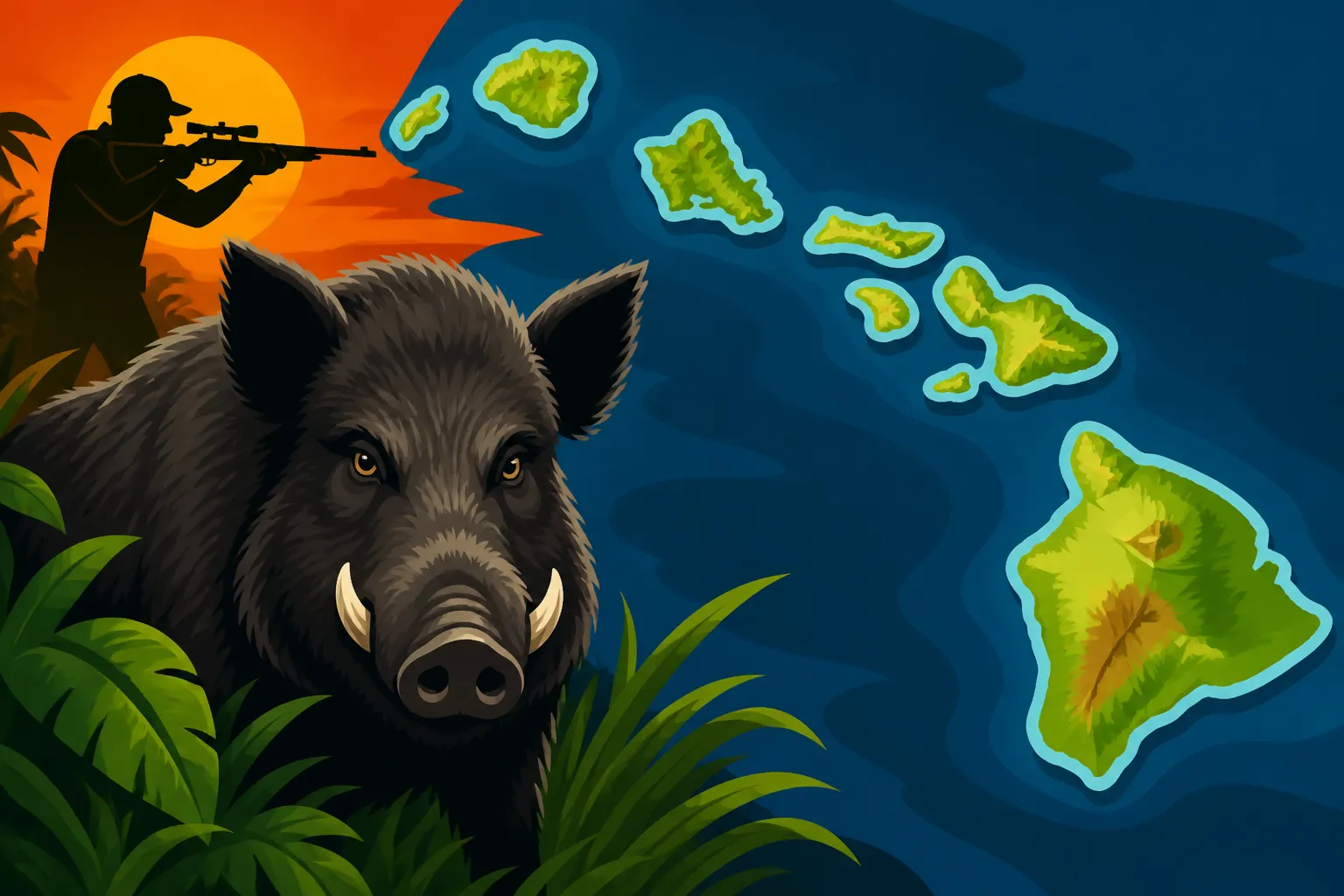
The distribution and characteristics of feral pigs vary significantly from island to island, a reflection of their unique histories, habitats, and human interventions. What you encounter on the wet, windward side of Hawaii Island might be very different from a pig in the dry, thorny kiawe flats of Maui. Understanding these regional differences is key to successful hunting.
Hawaii Island (The Big Island)
Hawaii Island, being the largest and geologically youngest, offers an incredibly diverse range of pig habitats. From the dense, wet 'ohi'a rainforests of the windward Hilo side to the drier, mamane-naio forests of the upper slopes of Mauna Kea and Mauna Loa, pigs are found almost everywhere. The sheer size of the island means some areas see less hunting pressure and can hold truly massive boars. Hunters often target the deep, wet gulches and valleys of the Hamakua and Ka'u districts, where pigs can grow large and fat on abundant vegetation and fruit. The higher elevation forests, particularly in areas like Pu'u 'O'o or the vast Kona Forest Reserve, also hold significant populations, though these animals may be leaner and cover more ground in search of food.
The challenge on the Big Island is often the terrain itself – steep, muddy, and incredibly thick. You'll find a mix of Polynesian-European hybrids, with many individuals displaying the impressive tusks and large body size attributed to European boar influence. The article Where Hawaii's Feral Pigs Live goes into more detail about specific locations across the Big Island. Access can be tough, often requiring 4WD vehicles or extensive hiking, but the reward of a big island boar is a coveted prize for many local hunters.
Maui, Molokai, and Lanai (Maui Nui)
The islands of Maui Nui (Maui, Molokai, and Lanai) share a similar pig hunting heritage, though each offers its own unique flavor. Maui holds substantial pig populations, particularly in the wet, mountainous regions of East Maui's Haleakala slopes and the dense West Maui Mountains. Areas like the Makawao Forest Reserve and the steep gulches of Kahikinui are known for their pig activity. Hunters here often navigate incredibly steep terrain and dense, tangled vegetation. Pigs on Maui can grow quite large, thriving on the abundant fruit and plants.
Molokai is often lauded for its big-bodied axis deer, but it also holds a healthy population of pigs, especially in its remote, rugged eastern valleys. These pigs are known for being particularly wary due to hunting pressure, requiring stealth and patience. Lanai, while primarily known for its axis deer, also has pigs, particularly in the denser, wetter sections of the uplands like the Lanai Cooperative Game Management Area. While not as numerous as on other islands, these pigs can still offer a thrilling chase, especially for hunters already on the island for a deer hunt. On all three islands, pig hunting often goes hand-in-hand with the local culture, with many families maintaining traditions of dog hunting.
Oahu's Diverse Pig Habitats
Oahu, despite being the most populated island, still offers significant public and private land for pig hunting. The two main mountain ranges, the Waianae and Ko'olau, provide extensive habitat. The Waianae Range, with its drier, steeper leeward slopes and wetter windward valleys, holds solid pig numbers. Areas like the Ewa Forest Reserve and Waianae Kai are popular. The Ko'olau Range, known for its iconic green cliffs and extremely wet, dense forests, is prime pig country. Here, pigs thrive in the thick guava and 'ulu (breadfruit) patches.
Hunting on Oahu can be challenging due to accessibility and proximity to urban areas, requiring hunters to be extra mindful of boundaries and safety. However, for those willing to put in the effort, rewarding hunts can be had. Many Oahu hunters rely on dogs to navigate the incredibly dense jungle, using their keen sense of smell to locate pigs in seemingly impenetrable cover. Pigs on Oahu tend to be strong, resilient animals, accustomed to navigating fragmented habitats.
Kauai's Steep Gulches and Wet Forests
Kauai, the "Garden Isle," lives up to its name with lush, often impassable terrain that provides ideal pig habitat. The rugged interior, particularly the vast Alakai Wilderness Area and the deep, verdant canyons of Waimea Canyon, are strongholds for feral pigs. The island's consistent rainfall ensures a year-round supply of food and water, allowing pigs to proliferate. Hunters on Kauai often find themselves navigating incredibly steep, slick trails and dense, muddy forest floors.
The pigs here are hardy and accustomed to extreme conditions. Many of Kauai's pigs exhibit the characteristics of European wild boar, often growing large and formidable. Hunting methods typically involve dogs, given the thickness of the vegetation. The remote nature of some of Kauai's hunting units means that pigs may not see as much pressure in certain areas, potentially leading to larger, older animals. The sheer beauty of the landscape combined with the raw challenge of the hunt makes Kauai a unique destination for pig hunters. If you're looking for a serious adventure, Hunting Pigs in Hawaii's Rainforest Gulches offers more insight into these challenging terrains.
Hunting Feral Pigs: Methods and Opportunities
Hunting feral pigs in Hawaii is far more than just walking into the woods; it's a blend of deep tradition, environmental stewardship, and a whole lot of sweat equity. The methods employed are often dictated by the rugged terrain and dense vegetation. There’s a palpable sense of respect for the land and the animals among local hunters, and a deep understanding of the work involved.
Dog and Knife Hunting Traditions
Perhaps the most iconic and culturally significant method for hunting pigs in Hawaii is with dogs and a knife or spear. This isn't just a hunting technique; it's a deeply ingrained tradition passed down through generations. The process typically involves a "bay dog" that locates and barks at the pig, holding it in place (baying) while the hunter and "catch dog" move in. The catch dog then grabs the pig, allowing the hunter to dispatch it quickly and humanely with a knife or spear. This method requires specialized, well-trained dogs that can navigate the dense Hawaiian jungle, withstand the heat, and avoid injuries from a charging pig's tusks. For a deeper dive into this unique hunting style, consider reading Pig Hunting With Dogs in Hawaii.
Hunters using this method often wear protective gear, including "cut vests" on their catch dogs and sturdy boots and thick pants for themselves to protect against thorns, lava rock, and potential pig encounters. The thrill of hearing the dogs bay, followed by the intense, close-quarters action, is an experience unlike any other. It’s physically demanding, often requiring long hours of hiking through challenging terrain, but it’s also incredibly rewarding, forging a powerful bond between hunter, dogs, and the 'aina (land).
Still-Hunting in Dense Cover
For those who prefer a more solitary and stealthy approach, still-hunting or stalking pigs without dogs is another viable method, though it presents its own set of formidable challenges in Hawaii. This technique involves moving slowly and deliberately through the forest, using keen senses to spot fresh pig sign – rooting, tracks, scat, and wallows – and ultimately, the pig itself. Success relies heavily on understanding pig behavior, especially their nocturnal tendencies and their preference for dense cover during the day. Wind direction is critical, as a pig's sense of smell is incredibly acute. The article Still-Hunting Pigs in Hawaii's Wet Forest details specific strategies for this method.
Still-hunting is most effective in areas where pigs might be moving between feeding and bedding areas, or along trails to water sources. It requires immense patience, stealth, and a deep knowledge of the specific unit you’re hunting. Often, hunters will find success around areas where fruit is dropping, like guava, 'ulu, or even macadamia nuts, which draw pigs in. While physically less intense than chasing dogs through the jungle, it demands a different kind of endurance – mental fortitude and meticulous attention to detail.
Legal Weapons and Seasons for Pig Hunting
Hawaii's hunting regulations can feel a bit like a patchwork quilt, varying by island and even by specific unit. Generally, for feral pigs, legal weapons often include rifles, shotguns (with slugs or buckshot), archery equipment, and, as mentioned, knives or spears when hunting with dogs. It's crucial to check the specific rules for the island and unit you intend to hunt, as weapon restrictions can apply. For instance, some units might restrict rifle calibers or prohibit certain weapons altogether.
Seasons for feral pigs are generally more liberal than for other game mammals, reflecting their status as an invasive species. On many public hunting units, pig seasons are open year-round or for extended periods, especially on islands like Hawaii Island, Maui, Oahu, and Kauai. Molokai and Lanai, while having pig populations, may have more specific regulations tied to their overall game management plans. Always consult the Hawaii Department of Land and Natural Resources (DLNR) Division of Forestry and Wildlife (DOFAW) website or offices for the most current regulations. You can also find much of this information, including how to purchase the necessary licenses and permits, on the GoHunt Hawaii platform, which simplifies access to permits and check-ins. It's not uncommon for hunters to get their Hawaii Hunting Licenses and check specific Hawaii Game Mammal Seasons through the GoHunt system. Always remember that safety rules, such as blaze orange requirements in certain units, are paramount and must be followed.
Reading the Landscape: Where to Find Feral Pigs
Pigs are creatures of habit, and while they can be incredibly elusive, they leave behind plenty of clues for the observant hunter. Learning to "read" the Hawaiian landscape for these signs is a skill that takes time, but it’s essential for consistent success. It’s about understanding their daily patterns and preferences in the unique tropical environment.
Wallows, Rooting, and Trails
The most obvious signs of pig activity are their distinct rooting patterns and wallows. Pigs use their powerful snouts to churn up the soil, searching for roots, tubers, grubs, and fallen fruits. This rooting leaves behind clear, disturbed patches of earth, sometimes quite extensive. Fresh rooting, where the soil is still moist and fragrant, indicates recent activity. Wallows – muddy depressions where pigs roll to cool down and deter parasites – are another strong indicator. These often contain fresh tracks and hair. The presence of a damp, muddy wallow, particularly in a dry area, is a huge sign.
Pigs also create and use distinct trails, especially in dense vegetation. These trails are often narrower and lower to the ground than human trails, sometimes forming tunnels through thick guava or ginger. Look for tracks along these trails, as well as rubs on trees where pigs have scratched themselves. Pay attention to the edges of cultivated fields, old cane roads, or ranch pastures, as pigs will often use these corridors to move between bedding areas and food sources. A close look at the article Reading Pig Sign Along a Muddy Trail can further sharpen your scouting skills.
Water Sources and Food Availability
Like all animals, pigs need water, especially in Hawaii's drier regions. In the leeward sides of the islands, water sources such as streams, seepages, stock ponds, and even old agricultural reservoirs become magnets for pigs, particularly during dry spells. Scouting these areas at dawn or dusk can often reveal pigs moving to or from water. The consistent humidity and rainfall in the windward rainforests mean water is rarely a limiting factor, so pigs will be more spread out, focusing instead on food.
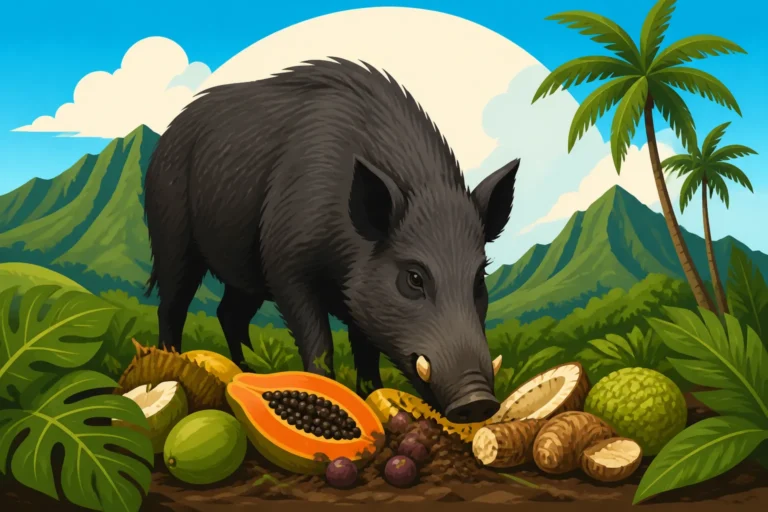
Food availability is a huge driver of pig movement. Hawaii’s feral pigs have an incredibly varied diet, from the roots of ferns and 'ohi'a tree bark to fallen fruits like guava, passionfruit (lilikoi), and 'ulu. When these fruits are ripe and dropping, pigs will congregate in areas rich with them. Hunters often key into these seasonal food sources, knowing that a productive guava thicket or a patch of 'ulu trees can be a goldmine for pigs. Pigs will also browse on grasses and agricultural crops, making the edges of farms and ranches common hunting grounds.
Nocturnal Habits and Movement Patterns
While pigs are often most active during the cooler hours of dawn and dusk, or even throughout the night, especially in areas with hunting pressure, they will move during the day, particularly if disturbed or if food is abundant. In cooler, wetter conditions, you might find them active more openly during daylight hours. However, in hot, dry conditions, they often bed down in dense, shaded cover during the day, emerging only when the sun begins to set.
Understanding these patterns is crucial for planning your hunt. If still-hunting, focusing on early morning and late afternoon in areas with fresh sign is often most productive. For dog hunters, the dogs’ ability to track and flush pigs from their bedding areas makes the time of day less critical, though cooler temperatures are always better for the dogs' endurance. Pigs are intelligent and will quickly adapt to hunting pressure, becoming even more nocturnal and wary in heavily hunted areas. This is why a good knowledge of local pig behavior, often gained from talking to other hunters, is invaluable.
The Challenges of Pig Hunting in Hawaii
Hunting feral pigs in Hawaii is not for the faint of heart. It’s an adventure that combines stunning natural beauty with some truly grueling physical and mental tests. These challenges are part of what makes a successful Hawaiian pig hunt so rewarding, but it’s essential to go in prepared and with realistic expectations.
Navigating Hawaii's Rugged Terrain
Hawaii's terrain is notoriously challenging. One moment you could be walking on relatively flat ground, and the next you're faced with a near-vertical gulch carved by centuries of rainfall. Lava flows, with their sharp, uneven surfaces, can tear up boots and ankles in a heartbeat. Dense, tangled vegetation – think impenetrable thickets of guava, ginger, and ulu – can reduce visibility to mere feet and make forward progress painstakingly slow. Walking these areas often feels like swimming through a green ocean. This is not open country hunting. Hunters must be prepared for long, strenuous hikes, often off-trail, through environments that are constantly trying to scratch, trip, or exhaust you.
The ground can be wet and slippery even during dry periods in the rainforests, while the dry leeward areas present loose rocks and dust. Getting lost is a real concern in the dense, monotonous jungle, making GPS and navigation skills absolutely vital. Even with a well-planned route, a deep ravine or an unexpected rockfall can completely alter your path, demanding adaptability and physical resilience. The article Getting a Pig Out of a Hawaii Gulch illustrates just one of the many physical challenges posed by the terrain.
Dealing with Heat, Humidity, and Rain
The tropical climate of Hawaii adds another layer of difficulty. Even in winter, temperatures can be warm, and the humidity is almost always high. This combination quickly saps energy, especially when you’re exerting yourself. Dehydration is a constant threat, and carrying ample water is non-negotiable. Furthermore, many of Hawaii's hunting units are in areas that receive significant rainfall, often suddenly and heavily. A clear morning can quickly turn into a torrential downpour, turning trails into slick mudslides and soaking everything to the bone.
Being prepared for rapidly changing weather conditions is key. Waterproof gear is a must, but even the best rain jacket can feel stifling in high humidity. Hunters must manage their hydration, electrolyte intake, and body temperature carefully to avoid heat exhaustion. Dogs, too, are susceptible to overheating, so managing their exertion and ensuring they have access to water is critical. The mental aspect of pushing through these uncomfortable conditions is a test of will that often separates successful hunters from those who call it a day early. More specific advice on this topic can be found in Field Care in Hawaii's Heat and Humidity.
Carcass Care and Meat Handling in the Tropics
Once a pig is on the ground, the real race against the clock begins. Hawaii's warm temperatures and high humidity mean that meat can spoil incredibly quickly if not handled properly and promptly. Field dressing, skinning, and quartering the animal must be done immediately. The goal is to get the body heat out of the carcass as fast as possible. This often means breaking down the animal into manageable pieces right where it falls.
Many hunters carry game bags to protect the meat and ice chests for rapid cooling once they return to their vehicle. Even a short pack-out can take hours, and meat left in game bags in warm air will begin to spoil. For longer pack-outs, some hunters even bring in small, insulated bags with ice to put directly on the meat as soon as it's quartered. Having a plan for processing and storing the meat before the hunt is essential. This might involve pre-arranging access to a walk-in cooler or having plenty of ice and large coolers ready at your base camp. Neglecting proper field care in the tropics means losing valuable meat, a regrettable outcome for any hunter.
Conservation and Management of Feral Pigs
The presence of feral pigs in Hawaii is a double-edged sword: they are a culturally important game animal, but also an undisputed ecological threat. This creates a complex conservation challenge, one that hunters often play a direct and vital role in addressing. It's a testament to the unique circumstances of the islands that hunting is viewed not just as recreation, but as a critical management tool.
The Role of Hunters in Population Control
Hawaii's wildlife management agencies, primarily the Department of Land and Natural Resources (DLNR) Division of Forestry and Wildlife (DOFAW), recognize hunters as primary partners in controlling feral pig populations. Because pigs reproduce so rapidly and inhabit such vast, rugged terrain, active hunting helps to keep their numbers in check in many areas. Without hunter participation, these populations would explode, exacerbating their already devastating impact on native forests and watersheds. Many public hunting units have liberal bag limits and extended seasons for pigs precisely because their removal benefits the environment.
When hunters remove pigs, especially sows, they directly contribute to reducing the breeding population. This effort is particularly important in areas adjacent to pristine native forests or endangered species habitats. For many local hunters, this sense of contributing to the 'aina is a core part of their motivation. They see their hunting as a direct service to the islands, helping to protect the delicate balance of nature. This collaborative approach, where recreational hunting serves a vital conservation purpose, is a unique and important aspect of Hawaii's wildlife management. Hunters often interact directly with DOFAW by reporting their harvests, providing valuable data that helps guide future management decisions.
Fencing and Eradication Efforts
While hunting is an effective tool, it can't always provide the complete solution needed for particularly sensitive ecological areas. In critical native forest watersheds or rare plant habitats, more intensive measures are often necessary. One common strategy is the construction of specialized fences, often several miles long, designed to exclude pigs (and goats) from specific areas. These fences are incredibly expensive and labor-intensive to build and maintain, given Hawaii’s challenging terrain and climate. Once an area is fenced, aggressive eradication efforts, which might include trapping, snaring, or aerial hunting, are undertaken to remove any pigs remaining inside the enclosure.
These fencing and eradication projects, often led by partnerships like the Hawaii Watershed Partnerships, are highly effective at restoring native ecosystems within their boundaries. Within a few years, areas that were once barren and rooted by pigs can see a remarkable return of native plants and even forest birds. While some hunters may feel these fences reduce public hunting opportunities, the long-term ecological benefits for Hawaii's irreplaceable native species are undeniable. These efforts, combined with the sustained pressure from hunters in other areas, form a multi-pronged approach to managing Hawaii’s challenging feral pig problem.
Island-by-Island Pig Hunting Overview
To give you a clearer picture, here's a quick overview of what to expect when hunting pigs on each major Hawaiian island.
| Island | Primary Habitat Types | Common Hunting Methods | General Season Outlook | Key Challenges |
|---|---|---|---|---|
| Hawaii Island | Wet rainforests, high elevation forests, dry kiawe | Dog/knife, still-hunting | Mostly year-round in many units | Steep, muddy, thick vegetation, vast areas |
| Maui | Wet mountain slopes, dense gulches | Dog/knife, some still-hunting | Mostly year-round in many units | Very steep, dense cover, access can be limited |
| Molokai | Remote valleys, dense forests | Dog/knife | Specific seasons, check DOFAW | Extremely rugged, remote, wary pigs |
| Oahu | Dense mountain ranges (Ko'olau, Waianae) | Dog/knife, still-hunting (limited) | Mostly year-round in many units | Proximity to urban areas, incredibly dense cover |
| Kauai | Steep, wet canyons, vast wilderness areas | Dog/knife | Mostly year-round in many units | Extreme wet, slippery terrain, dense vegetation |
| Lanai | Upland forests, some dry kiawe (fewer pigs) | Still-hunting (no guides) | Specific seasons, check DOFAW | Fewer pigs, often combined with deer hunting |
Note: Always consult the current Hawaii DOFAW regulations for specific unit rules, season dates, and weapon restrictions before any hunt. Information can often be found on the GoHunt Hawaii website.
Disclaimer
Hunting in Hawaii involves inherent risks, including but not limited to challenging terrain, unpredictable wildlife, and variable weather conditions. The information provided in this guide is for informational purposes only and should not be considered a substitute for official regulations, professional guidance, or personal preparation. Always consult the Hawaii Department of Land and Natural Resources (DLNR) Division of Forestry and Wildlife (DOFAW) for the most current rules and regulations. Ensure you have the proper licenses, permits, and equipment, and prioritize safety at all times.