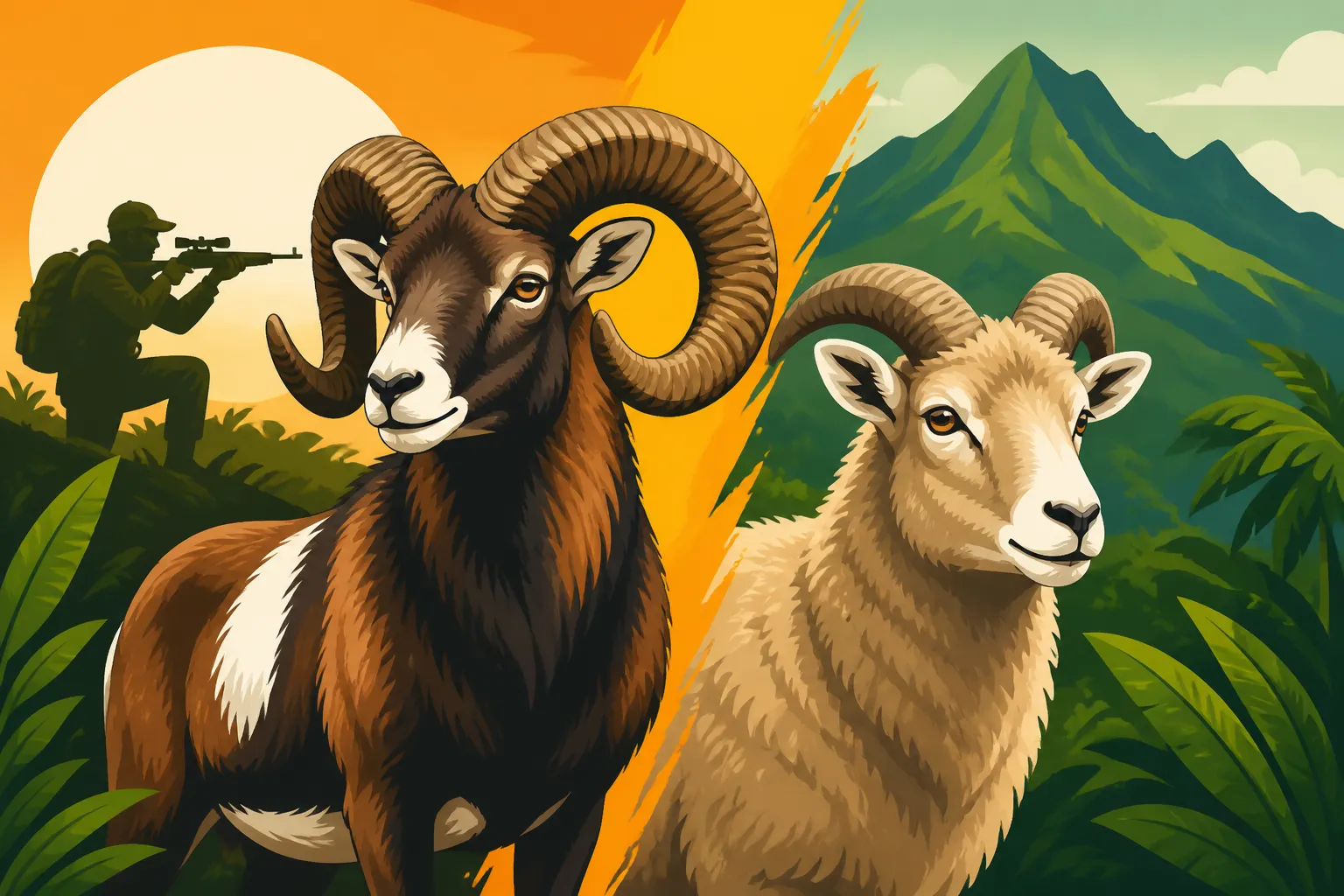
Mouflon and Feral Sheep Hybrids
The majestic slopes of Hawaii, particularly the vast volcanic expanses of the Big Island, are home to a truly unique and often confusing array of wild sheep. Many hunters arrive picturing a clear distinction between the classic Mouflon ram and the more common feral sheep, only to find animals that seem to blur the lines entirely. This can lead to real head-scratching moments in the field, making it tough to correctly identify your target or even understand the species you're encountering. This comprehensive guide will unravel the fascinating story of Mouflon and feral sheep hybrids in Hawaii, helping you understand their origins, how to identify them, and what it all means for hunting these remarkable animals.
The Curious Case of Hawaii's Wild Sheep
Hawaii's wild sheep populations are a blend of introductions that have, over time, created a unique ecological tapestry. Understanding the individual threads of this tapestry is key to appreciating the complex animals we see roaming the islands today.
Tracing the Origins of Mouflon in Hawaii
The Mouflon sheep, specifically the European Mouflon (Ovis aries musimon), is a distinct species known for its impressive, sweeping horns and reddish-brown coat with a light saddle patch. These magnificent animals were originally introduced to Hawaii Island in the 1950s by the territorial government for sport hunting. The idea was to establish a new game species in the higher elevations, particularly around the Mauna Kea and Mauna Loa regions. They adapted remarkably well to the rugged, high-altitude terrain, thriving on the mamane-naio forests and open cinder fields. Pure Mouflon, with their characteristic deep curl horns and distinctive markings, are a sight to behold and are highly sought after by hunters. Their adaptation to the Hunting Hawaii's High Elevation Alpine Ground is a testament to their resilience.
The Story of Feral Sheep and Their Arrival
In stark contrast to the intentional introduction of Mouflon, feral sheep have a much longer, less glamorous history in Hawaii. These are simply domestic sheep that escaped from ranches and farms, beginning as early as the late 1700s when Captain George Vancouver gifted sheep to King Kamehameha I. Over centuries, these escapees proliferated across various islands, reverting to a wild state. Unlike Mouflon, feral sheep exhibit a wide range of sizes, colors, and horn configurations, often resembling a motley collection of domestic breeds. You might see everything from woolly, white-faced animals to dark, lean individuals with straight horns or even no horns at all. They are incredibly adaptable and can be found in diverse habitats, from high mountain slopes to lower ranchlands. Historically, these feral populations formed the backbone of what many hunters simply called "wild sheep" on the Big Island before the Mouflon arrived. You can read more about their history in Hawaii's Feral Sheep on the Big Island.
Understanding the Distinctive Traits of Each Species
To truly grasp the concept of hybrids, it's essential to first differentiate between the pure Mouflon and the pure feral sheep, which often get lumped together under the generic term "wild sheep." This distinction becomes crucial when you're glassing a distant hillside, trying to make an ethical shot or simply understand what you're observing.
Key Characteristics of Pure Mouflon Sheep
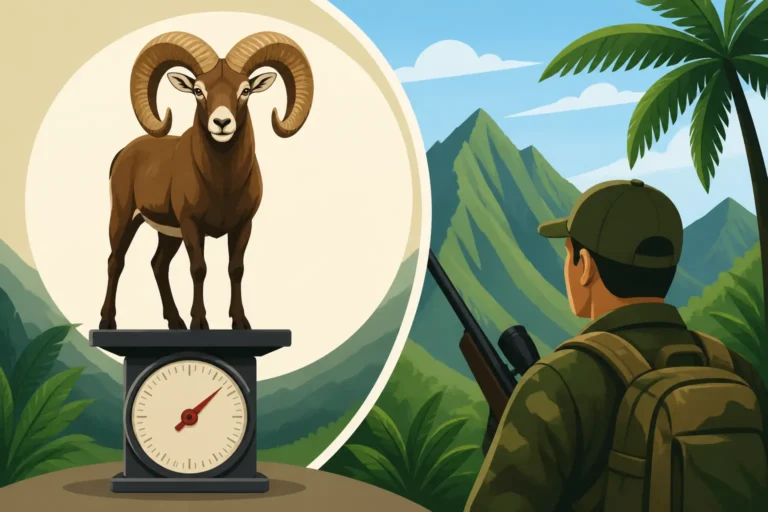
When you encounter a truly pure Mouflon ram, there are a few tell-tale signs that scream "Mouflon." First and foremost are the horns. Pure Mouflon rams sport impressive, spiraling horns that curl backward and then forwards, typically forming a tight curl that can measure over 30 inches on a mature ram. They are deeply ridged and robust. Body-wise, they are generally stockier and more muscled than feral sheep, with a distinct reddish-brown coat that deepens with age. A creamy-white saddle patch is a characteristic feature on their flanks, though its prominence can vary. Their belly, rump, and muzzle are also typically white. Ewes are smaller and have much smaller, often straight, horns or no horns at all. Knowing What a Hawaii Mouflon Ram Weighs can also help in identification, as they tend to be quite solid.
Identifying Hawaii's Feral Sheep Features
Feral sheep, on the other hand, are a different story entirely. Because they originated from various domestic breeds, their appearance is incredibly diverse. You might see individuals with shaggy, dirty white wool, or perhaps sleek, dark brown coats. Horns, if present, are highly variable; some rams will have scimitar-shaped horns that sweep back, while others might have smaller, stubby horns, or even a horn growing into their face, a common issue in domestic sheep. Ewes often have no horns, or very small, straight spikes. There's no consistent saddle patch or distinct color pattern like with Mouflon. Instead, think of them as a genetic melting pot, showing traits from various European and even some Polynesian sheep strains that were present in early Hawaii. Their size can also vary significantly, from small, goat-like animals to larger, more robust individuals, often depending on the specific lineage and local forage.
The Blending of Bloodlines: How Hybrids Emerge
Now that we've painted a picture of the two distinct parent populations, it's time to delve into how these bloodlines intertwine, creating the fascinating and often perplexing hybrid sheep found across Hawaii's hunting grounds. This interbreeding isn't just a biological curiosity; it has real implications for both the ecosystem and the hunter.
Natural Interbreeding in Overlapping Habitats
The primary driver for the existence of Mouflon and feral sheep hybrids is simple: opportunity. When the Mouflon were introduced to Hawaii Island, they were released into areas where feral sheep populations already existed, particularly in the vast Mauna Kea Game Management Area and surrounding regions. As both species expanded their ranges, their territories naturally overlapped. Sheep, regardless of their specific genetic background, are driven by basic biological imperatives – finding food, water, and mates. With limited natural predators in Hawaii, and without significant geographical barriers separating the two types of sheep, interbreeding was inevitable. Rams of both species will breed with ewes of either species, leading to offspring that carry genetic markers from both parents. This process has been ongoing for decades, leading to generations of mixed-heritage animals. This blurring of lines is precisely what makes hunting in areas like Mauna Kea so unique. How Mouflon and Feral Sheep Interbreed is a topic that continues to evolve as their ranges merge.
Recognizing Hybrid Phenotypes in the Field
Identifying a hybrid in the field can be challenging, as they display a spectrum of traits from both parent species. It's rarely a clean 50/50 split; some hybrids might lean more towards the Mouflon side, while others might strongly resemble feral sheep with just a hint of Mouflon heritage.
Here’s a breakdown of what to look for when trying to spot a hybrid:
- Horns: This is often the most telling feature. A hybrid ram might have horns that start with the characteristic Mouflon curl but then straighten out more like a feral sheep, or perhaps a less defined curl. They might lack the deep ridging or robustness of pure Mouflon horns, or their horns might simply be smaller or oddly shaped compared to a textbook Mouflon.
- Coat Color and Markings: Many hybrids will show a blend of coat colors. You might see a reddish-brown tint similar to Mouflon, but lacking the distinct white saddle patch, or having a very faded, incomplete saddle patch. Conversely, a sheep with a predominantly feral-type coat might exhibit a faint reddish hue or a slightly lighter patch on its flanks. Some can be a patchy mix of brown, black, and white.
- Body Conformation: Hybrids can also fall somewhere in between the stockier Mouflon and the often leaner feral sheep. They might have a build that isn't quite as robust as a pure Mouflon ram, but more substantial than a typical feral ewe.
- Behavior: While less about appearance, hybrid sheep generally exhibit the same wary, wild behavior as their parent species. They're often found in mixed herds, sometimes with what appear to be pure Mouflon or pure feral sheep, further complicating field identification. They are perfectly adapted to Hunting Hawaii's Volcanic Terrain and can be extremely elusive.
This genetic mixing means that hunters should be prepared to see a wide variety of sheep when Mouflon Sheep Hunting on Hawaii Island. There's no single "hybrid look," but rather a continuum of traits.
Here's a quick comparison table to help visualize the differences:
| Feature | Pure Mouflon Sheep | Pure Feral Sheep | Common Hybrid Traits |
|---|---|---|---|
| Horns (Rams) | Large, sweeping, tight backward/forward curl, ridged | Highly variable (straight, scimitar, short, none) | Variable curl, often less pronounced, might be irregular |
| Coat Color | Reddish-brown, darker with age | Wide range (white, black, brown, spotted) | Mix of reddish-brown, brown, black; less uniform color |
| Saddle Patch | Prominent creamy-white on flanks | Generally absent | Faded, incomplete, or absent |
| Belly/Rump | Distinct white | Variable | Often lighter, but not as distinct as pure Mouflon |
| Build | Stocky, muscular | Variable, often leaner | Intermediate build, can vary widely |
| Historical Origin | Intentional introduction (1950s) | Domestic escapes (1700s onwards) | Natural interbreeding since Mouflon introduction |
Where to Find These Hybrid Populations
The presence of Mouflon and feral sheep hybrids isn't uniform across all Hawaiian islands or even within specific islands. Their distribution is largely dictated by the historical presence and current ranges of the parent species.
Mauna Kea's Dynamic Sheep Populations
The undisputed epicenter for Mouflon and feral sheep hybrids is the Big Island, particularly the slopes of Mauna Kea. This is the primary region where Mouflon were first introduced and where they subsequently mingled with the already established feral sheep. The vast, rugged terrain of Mauna Kea, with its diverse habitats ranging from dense mamane-naio forests to exposed cinder cones, provides ample space for these populations to mix. Hunters pursuing sheep in the Mauna Kea region, especially in Unit A and parts of the adjacent forest reserves, are highly likely to encounter animals that exhibit hybrid characteristics. The historical context of the Why the Palila Lawsuit Changed Sheep Numbers also significantly influenced the composition and management of these sheep populations on Mauna Kea. The ongoing presence of both species, and their hybrids, highlights the complex ecological dynamics at play. When hunting What Mamane Trees Mean to Mauna Kea, you'll encounter diverse sheep types.
Other Islands and Their Hybrid Presence
While the Big Island is the main stage for this genetic intermingling, other islands have their own histories with wild sheep. For example, the island of Lanai also has a population of Mouflon, but their origin story and environmental context are different. Lanai's Mouflon population was established through introductions from California and New Mexico, not directly from the Big Island, and it was primarily managed as a private hunting resource before public hunts became available. As a result, the extent of Mouflon-feral sheep hybridization on Lanai is less pronounced compared to the Big Island, although some feral sheep populations did exist historically. Molokai and Maui also have feral sheep populations, but they do not have established Mouflon populations, meaning any "wild sheep" on these islands are generally considered feral sheep, not Mouflon hybrids. Always check the specific island and unit regulations when planning your hunt, as species designations and bag limits can vary significantly.
Ecological Impact and Management Challenges
The presence of Mouflon, feral sheep, and their hybrids is not without significant ecological consequences for Hawaii's delicate native ecosystems. These introduced ungulates, while providing valuable hunting opportunities, also pose considerable management challenges for state agencies.
The Role of Hybrids in Habitat Degradation
Both feral sheep and Mouflon, and by extension their hybrids, are non-native ungulates that can have a severe impact on Hawaii's unique flora. They are opportunistic grazers and browsers, consuming native plants, seedlings, and even the bark of trees like the mamane, which is critical habitat for endangered forest birds like the Palila. In areas of high sheep density, their feeding habits can prevent forest regeneration, accelerate erosion, and lead to the degradation of critical watershed areas. This impact is compounded by the fact that these animals thrive in various ecological zones, from the alpine shrublands to the forest fringes. The hybrids contribute to this problem just as much as their purebred counterparts, as they share similar dietary habits and population dynamics. Efforts to protect native ecosystems often involve population control of these sheep, highlighting the constant tension between conservation goals and recreational hunting interests.
Conservation and Hunting as Management Tools
Managing Hawaii's wild sheep populations, including the hybrids, is a delicate balancing act. The Division of Forestry and Wildlife (DOFAW) utilizes hunting as a primary tool to control ungulate numbers and mitigate their impact on native habitats. For instance, Hunting Mouflon on Hawaii's Highest Slopes is part of this broader management strategy. Hunting opportunities are provided on public lands, often with specific seasons and bag limits designed to help maintain populations at ecologically sustainable levels. For hunters, this means adhering strictly to regulations, which can sometimes classify "mouflon-feral sheep hybrids" under a general "feral sheep" category for tagging purposes, or sometimes specifically as "Mouflon" depending on the unit and observable characteristics. Hunters play a crucial role as citizen conservationists, helping to manage these populations and provide valuable protein for their families. Before embarking on any hunt, make sure to visit the GoHunt Hawaii portal or the official DOFAW website to get the most current information on seasons, bag limits, and any special instructions regarding hybrid animals. This ensures you're hunting ethically and legally.
Hunting Considerations for Hybrid Sheep
Hunting these mixed-heritage sheep in Hawaii offers a challenging and rewarding experience. However, understanding the specific rules and practical hunting strategies is key to a successful and compliant hunt.
Legalities and Tagging for Mixed Heritage Animals
One of the trickiest aspects of hunting hybrid sheep is navigating the legalities, especially when it comes to tagging. Because the lines between "pure Mouflon" and "feral sheep" can be so blurry in the field, DOFAW regulations sometimes have specific language regarding how these animals are classified for hunting purposes. On the Big Island, for example, in some units, a sheep exhibiting Mouflon characteristics might require a Mouflon tag, while another sheep in the same area might be considered a feral sheep. It's not always about genetic purity, but rather about observable traits. This is where researching your specific hunting unit and understanding the current rules is paramount. Always check the DOFAW website or contact the local branch for clarification before your hunt. When you purchase your Hawaii Hunting Licenses and What They Cost, be sure to also acquire any necessary special tags for the specific species you intend to pursue. The Checking In and Out of a Hawaii Unit process is also critical, and often involves declaring your harvest and the species taken.
It's common for hunters to use platforms like GoHunt to familiarize themselves with hunting unit maps, seasonal dates, and the specific tagging requirements for the animals they intend to hunt. This due diligence is crucial because misidentifying an animal and attaching the wrong tag, or not having the correct tag at all, can lead to serious penalties. If you're unsure about an animal's classification in the field, err on the side of caution or pass on the shot.
Practical Hunting Strategies for Hybrids
Hunting hybrid sheep, much like hunting pure Mouflon or feral sheep, demands patience, physical fitness, and good glassing skills. These animals, regardless of their genetic makeup, are wild and wary.
Here are some practical strategies to consider:
- Glassing is King: Whether you're hunting high up on Mauna Kea or in a mid-elevation forest reserve, quality binoculars and a spotting scope are indispensable. Sheep, especially in the open volcanic terrain, blend in incredibly well. Spend long periods glassing distant slopes, rock formations, and tree lines. Pay attention to subtle movements or patches of color that seem out of place.
- Physical Fitness is Crucial: Much of Hawaii's sheep hunting takes place in steep, rugged, and often uneven terrain. You'll be traversing lava fields, loose cinder, and sometimes dense vegetation. Being in good physical shape will significantly increase your chances of success and your enjoyment of the hunt. This includes being prepared for long walks into remote areas.
- Wind and Thermals: Hawaii's unique geography creates complex wind patterns and thermals. In the morning, thermals typically rise, carrying your scent uphill. In the afternoon, they often drop, carrying scent downhill. Always try to approach with the wind in your favor, especially when stalking closer to an animal. The trade winds also play a significant role, so understanding Reading Hawaii's Trade Wind Patterns is vital.
- Spot and Stalk: This is the quintessential method for sheep hunting in Hawaii. Once you've located an animal or a herd, the challenge begins. Plan your stalk carefully, using terrain features, vegetation, and shadows for concealment. Be prepared for multiple attempts, as sheep have excellent eyesight and can disappear surprisingly quickly.
- Hydration and Sun Protection: The high-altitude sun can be intense, and the terrain often offers little shade. Carry plenty of water, wear appropriate sun protection (hat, sunscreen, long sleeves), and understand the signs of dehydration.
Hunting these hybrid sheep is not just about the harvest; it's about immersing yourself in Hawaii's wild places, understanding its unique ecology, and appreciating the resilience of these animals that have made the islands their home.
Disclaimer
Please note: Hunting regulations in Hawaii are subject to change. Always consult the official Hawaii Department of Land and Natural Resources (DLNR) Division of Forestry and Wildlife (DOFAW) website or contact their local offices for the most current and accurate information regarding seasons, bag limits, and specific unit rules before planning any hunting activity. This article is intended for informational purposes only and does not constitute legal advice.