Where California Quail Hold in the Uplands
Finding California Quail in Hawaii’s sprawling, diverse uplands can feel like searching for a needle in a volcanic haystack if you’re not sure where to begin. Unlike the vast, rolling hills of the mainland, Hawaii’s unique microclimates and rugged terrain present their own set of challenges and opportunities for upland bird hunters. This guide will help you understand the specific habitats these agile game birds favor across the islands, offering actionable insights to increase your chances of flushing a covey in the dry, higher elevations.
Understanding California Quail Habitat in Hawaii's Uplands
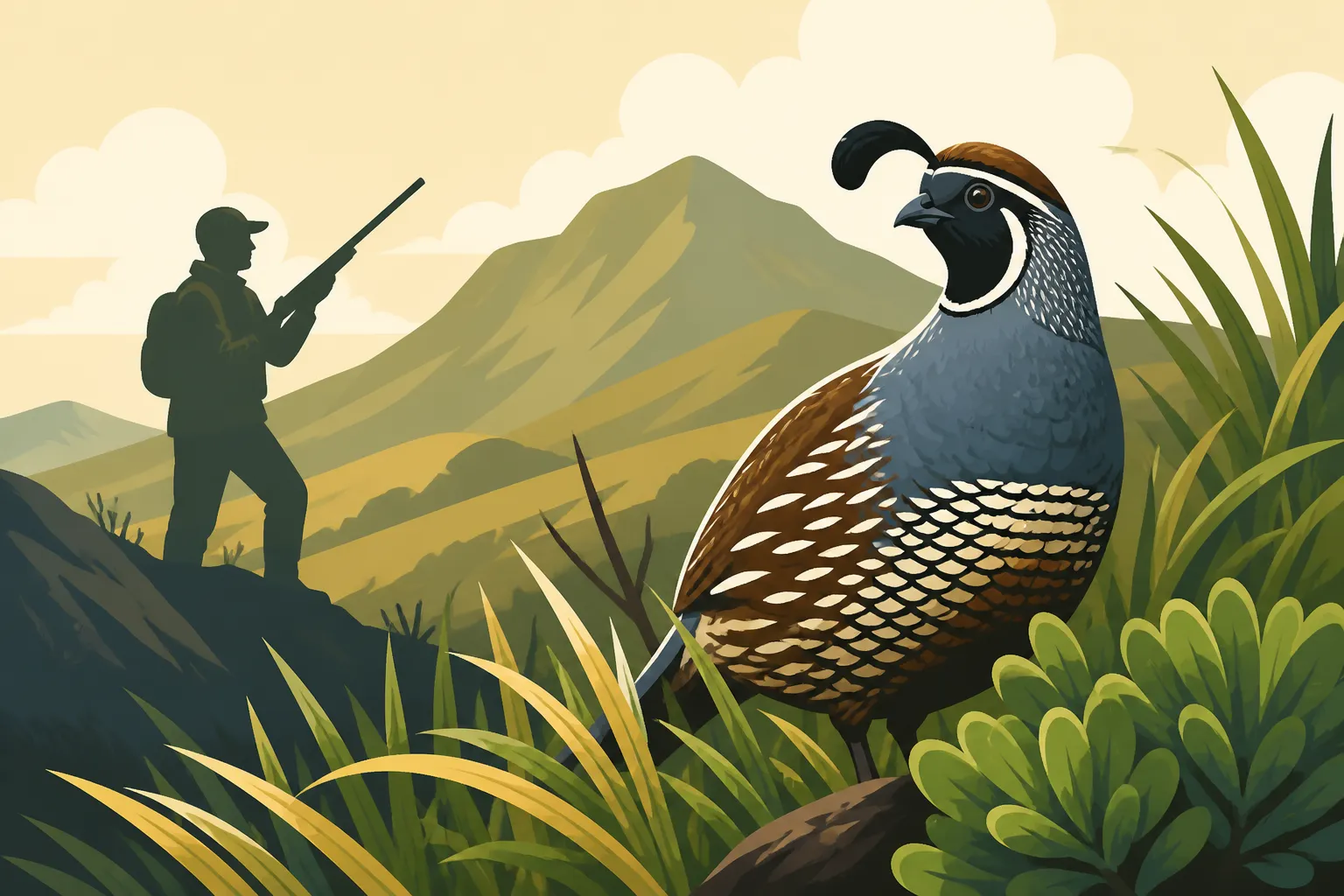
California Quail (or "topknot" quail, as many local hunters affectionately call them, thanks to their distinctive feather plume) aren't found just anywhere in Hawaii. They have very specific preferences that dictate where they’ll establish coveys. These preferences are largely driven by the need for food, water, cover from predators, and suitable nesting sites.
The Preference for Dry, Brushy Slopes
When you think about California Quail in Hawaii, picture dry, often sun-baked slopes covered in a mosaic of brush, grasses, and scattered trees. These are their prime holding areas. We're talking about regions that receive less rainfall, typically on the leeward sides of the islands or at mid-elevations where the clouds tend to break. Here, the vegetation isn't dense, wet rainforest, but rather more open, scrubby growth that allows for easy movement while still offering concealment.
Specifically, look for areas with kiawe thickets, lantana, buffelgrass, fountain grass, and scattered small trees like haole koa. These plants provide excellent cover where quail can dart for safety from aerial predators like the pueo (Hawaiian owl) or ground predators like mongoose. The dense undergrowth offers protection, but it’s often broken enough for the birds to run and flush, rather than being completely locked down. These slopes are often found on older ranch lands or at the edges of native forests where the terrain begins to dry out. Hunters familiar with hunting Hawaii's dry uplands will recognize these characteristics immediately.
Water Sources and Roosting Areas
In Hawaii’s drier uplands, water is king, and quail are no exception to needing it regularly. While they can get some moisture from dew and the vegetation they eat, readily accessible water sources are magnets, especially during the hotter, drier months. This could be anything from natural seeps and springs to old livestock troughs, standing puddles after a rain, or even collected rainwater in depressions. Understanding where these crucial water points are located is key to finding consistent quail activity.
Beyond water, California Quail need secure spots to roost at night. They typically prefer to roost in low, dense shrubs or even in the lower branches of small trees, staying close to the ground but elevated enough to have a vantage point against ground predators. Often, these roosting sites will be close to their feeding and watering areas, minimizing exposure during vulnerable periods. Identifying these key features—where they eat, drink, and sleep—is paramount for effective quail hunting. A well-placed game camera near a known water source might even give you clues about daily patterns.
Elevation and Climate Influence
California Quail generally thrive in the mid-elevation uplands, typically ranging from a few hundred feet above sea level up to several thousand feet. You're not likely to find them right on the coastal flats, which are often too disturbed or lack the right cover, nor will you typically find them high in the misty, often cold and barren alpine zones. Their preferred elevation band offers a balance of manageable temperatures, suitable vegetation, and sufficient dryness.
Hawaii's pronounced rain shadow effect plays a huge role here. The trade winds drop most of their moisture on the windward (east/northeast) sides of the islands, leaving the leeward (west/southwest) sides significantly drier. This dry leeward climate, with its characteristic vegetation, is precisely where California Quail tend to concentrate. For instance, on Hawaii Island, you'd be looking at the drier slopes of Mauna Kea or Mauna Loa, far from the lush, wet forests of Hilo. The interplay between elevation and this rain shadow creates the ideal, brushy, semi-arid environment that these quail call home.
Key Indicators and Scouting Strategies for Quail
Hunting quail in Hawaii isn't always about walking until you kick one up. A thoughtful approach, focusing on scouting and understanding quail behavior, will yield far more success. These birds are creatures of habit and leave plenty of clues if you know what to look for.
Reading Quail Sign and Movement Patterns
Before you even step into a unit with your shotgun, spend some time scouting. Look for actual quail sign:
- Tracks: Small, three-toed tracks in dusty patches along trails or near water sources. Quail often leave clear trails where they've moved through disturbed soil.
- Dust Baths: Quail love to take dust baths to maintain their feathers. Look for small, shallow depressions in soft, dry earth, often under brush or in sheltered spots, sometimes with tell-tale feather imprints.
- Droppings: Small, dark, pellet-like droppings, often found concentrated where coveys feed or roost.
- Feathers: Finding a few topknot feathers or body feathers can indicate a covey is in the area, especially if you find them in a roosting spot.
Beyond visual sign, listen. Quail are vocal birds, especially at dawn and dusk. Their distinctive "chi-ca-go" or "cah-cah-cah" calls are unmistakable and can lead you directly to a covey. Pay attention to how the calls move throughout the day – where they call from in the morning (feeding), where they go silent (resting/loafing during midday heat), and where they call from again in the evening (moving to roost). Understanding Why Hawaii Goats Move at First Light or even why axis deer move at first light in Hawaii can give you a similar insight into how different game animals use the early and late hours.
Leveraging Topography and Vegetation for Success
The way you approach these upland areas makes a huge difference. Quail often stick to edges: the edges of dense brush, the boundary of a pasture and a thorny thicket, or where drier grassland meets sparser trees. These transition zones offer both food and immediate cover. When walking, move slowly and deliberately, pausing frequently to listen and scan. Quail are masters of holding tight, only flushing when you're almost on top of them.
Consider the topography. Quail will often be found on sun-exposed slopes in the morning to warm up, and then move into shadier draws or thicker cover as the day heats up. Walking ridge lines can offer good visibility for glassing distant coveys or hearing calls, but then you'll need to drop into the draws and pockets where they hold. Using a bird dog, if you have one, is incredibly effective for flushing these tight-holding birds from heavy cover, as discussed in Using a Bird Dog in Hawaii Terrain. Without a dog, you’ll need to be extra thorough and systematic in your approach, grid-searching promising pockets of cover.
Technology and Tools for Upland Scouting
In today's hunting world, technology can give you a significant advantage. Before you even leave home, use mapping apps or online tools like GoHunt to analyze the terrain. Look for areas with the right elevation profile, a mix of open and brushy cover, and proximity to potential water sources. This pre-scouting helps narrow down vast areas into manageable hunting zones.
Once in the field, a good pair of binoculars is essential. They allow you to glass distant slopes for movement or to identify key habitat features without spooking birds. Even listening for distant calls is easier when you know the lay of the land from a map. Remember to check into your unit properly, whether through the physical check station or via the OuterSpatial app, as described in Checking In and Out of Hawaii Hunting Units.
Here's a quick look at typical quail habitat indicators:
| Habitat Feature | Quail Behavior Link | Hunter's Action Point |
|---|---|---|
| Dry, Brushy Slopes | Food, escape cover, nesting | Focus on leeward sides, transition zones |
| Kiawe/Lantana Thickets | Dense protection, loafing cover | Walk the edges, work dense pockets slowly |
| Scattered Grasses | Foraging, insect hunting | Scan open patches adjacent to cover |
| Natural Seeps/Water Troughs | Daily water source, congregation | Check near any water, especially in drought |
| Low, Dense Shrubs | Roosting at night, midday shade | Approach quietly at dawn/dusk near these |
| Dust Bowls | Feather maintenance | Look for small depressions in dry soil |
Where to Focus Your Efforts on Specific Islands
While California Quail are established on several islands, the specific terrain will dictate where you'll have the best luck. It's always crucial to verify current regulations and open units for Hawaii Game Bird Seasons and Bag Limits on the specific island you plan to hunt.
Hawaii Island's Dry Slopes and Pastures
On Hawaii Island, your primary focus for California Quail should be the drier, mid-elevation slopes, particularly on the leeward sides. Think of the lower to mid-elevations of Mauna Kea and Mauna Loa, especially those vast areas that historically or currently support ranching. These areas often feature a mix of open pastureland, interspersed with thorny kiawe and other dryland brush, rocky outcroppings, and sometimes old fence lines.
Units that encompass this type of terrain, like those found in the Puu Waawaa area or certain parts of the Mauna Kea Game Management Areas, are prime candidates. Look for areas where cattle might have kept the grass cropped, creating open patches next to thicker cover. The edges of old lava flows where vegetation has begun to establish itself can also hold birds, particularly if there are scattered bushes and small trees providing cover. Remember, it’s not about impenetrable forest; it's about that specific mix of open ground for feeding and dense, low cover for protection. You might even find birds along the edges of macadamia nut orchards or coffee farms, as described in Hunting a Macadamia Orchard Edge.
Maui and Other Islands with Suitable Uplands
Maui also holds good populations of California Quail, again favoring the drier, leeward slopes. The Kula area, for instance, or parts of Upcountry Maui, especially those zones that transition from agricultural fields to more scrubby, arid terrain, can be productive. Similar to the Big Island, look for areas with old ranching operations, scattered fruit trees, kiawe, and other dryland brush.
While I can't give a definitive list of specific units due to potential changes in regulations, the principle remains the same: seek out the "dry country" or "upcountry" zones that offer a mosaic of low, dense cover and open feeding areas. Remember that many game bird seasons are Hunting Hawaii's Weekend-Only Game Bird Days, so plan your trips accordingly. Always consult the most current DOFAW (Division of Forestry and Wildlife) regulations for the island you intend to hunt, as units and seasons can change. Your best bet is to combine geographical understanding with current regulations to pinpoint the most promising areas for a successful quail hunt.
Disclaimer
This article is for general informational purposes only and does not constitute professional advice. Laws, prices and regulations vary by location and change over time. Consult a qualified professional for guidance on your specific situation.