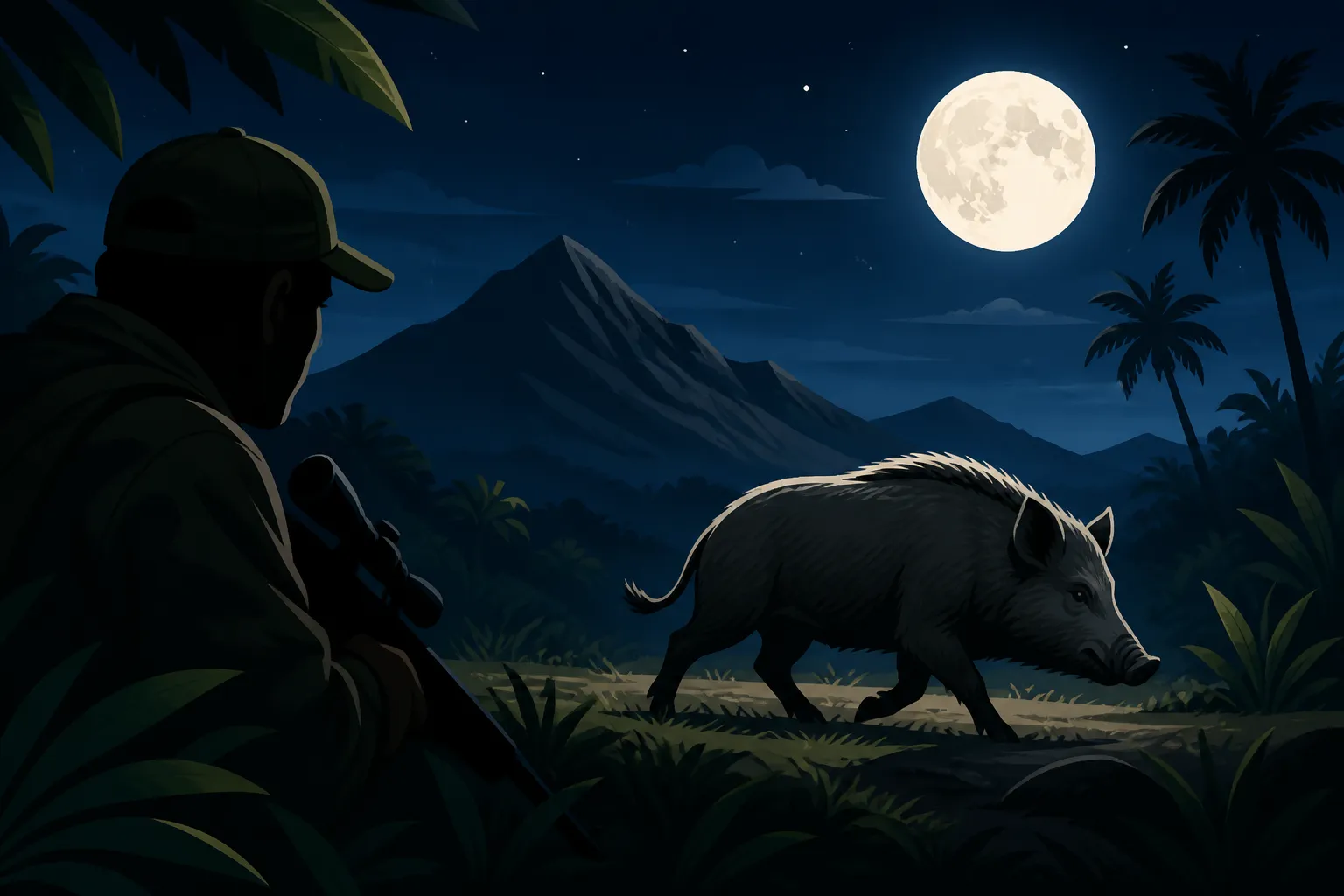
Why Feral Pigs Move Mostly at Night
It's a common frustration for many hunters, whether you're a seasoned local or someone visiting our islands to chase a trophy boar: you scout, you see fresh sign everywhere – rooted earth, fresh tracks, even wallows – but when daylight breaks and you're out in the unit, the pigs seem to vanish. It often feels like they're ghosts, moving only when you're not around. This guide dives deep into why Hawaii's feral pigs have largely adopted a nocturnal lifestyle, and how understanding their patterns can actually improve your chances during legal hunting hours.
The Primary Drivers of Nocturnal Pig Behavior in Hawaii
Feral pigs in Hawaii, much like their counterparts in other warm climates, are highly adaptable animals. Their behavior isn't static; it's a dynamic response to the environment around them. When we talk about why they move predominantly at night, we're really looking at a combination of evolutionary instinct, physiological needs, and direct influence from human activity. It's not just one factor, but a complex interplay that shapes their daily, or rather, nightly routines.
Innate Adaptability and Survival Instincts
Pigs, by nature, are intelligent and opportunistic creatures. This adaptability is precisely what has allowed them to thrive in such diverse and often challenging Hawaiian landscapes, from dense rainforest gulches to dry kiawe flats. Their drive for survival dictates how and when they feed, rest, and travel. Over generations, the pigs that learned to avoid threats and maximize comfort were the ones that passed on their genes. This has led to a strong inclination towards behaviors that minimize exposure to perceived dangers and harsh conditions.
Think about it from a pig's perspective: a large, dark-bodied animal in the tropical sun can overheat quickly. Instinct tells them to seek relief. Furthermore, any animal that becomes predictable during daylight hours in areas with hunting pressure quickly becomes an easy target. Those that learned to move under the cloak of darkness gained a significant advantage, and this behavior became ingrained. It's a natural selection process playing out right before our eyes, or more accurately, after our eyes close for the night.
Physiological Need for Thermoregulation
One of the most significant factors driving pigs to nocturnal activity is their physiology. Unlike many other mammals, pigs don't sweat efficiently. They lack functional sweat glands over much of their body, making them very susceptible to overheating, especially in Hawaii's consistently warm and humid climate. Daytime temperatures, even in the "cooler" months, can be brutally hot for an animal with a thick hide and relatively little ability to dissipate heat through sweating.
To manage their body temperature, pigs engage in a behavior called wallowing, where they coat themselves in mud or water. This helps cool them down through evaporation, and the mud layer can also offer some protection from insects and sun. However, wallowing is a temporary solution. The most effective way for them to avoid overheating and conserve energy is to simply be less active during the hottest parts of the day. This means that from late morning through mid-afternoon, pigs are most likely bedded down in the thickest, coolest cover they can find – deep in a fern gulch, under dense guava, or near a cool, wet stream. This behavior is crucial, and it heavily influences when they feel comfortable enough to emerge and forage.
Environmental Influences on Pig Activity Patterns
While their internal biology plays a huge role, the external environment in Hawaii presents its own set of challenges and opportunities that further push pigs towards a nighttime existence. From the relentless tropical sun to the abundance of natural cover, these factors combine to create the perfect conditions for a nocturnal lifestyle.
Hawaii's Warm and Humid Climate
The consistent warmth and high humidity across many of Hawaii's hunting units are major environmental stressors for pigs during the day. Imagine trying to hike through a thick, humid forest in the midday sun wearing a heavy coat – that's essentially what a pig experiences. The heat saps energy, and the humidity makes it difficult for any evaporative cooling (like from a wallow) to be truly effective.
This leads to pigs conserving energy by moving less during the day and becoming much more active as the sun sets and temperatures drop. As soon as the air cools down, usually after sunset and before the sun rises, their metabolism can work more efficiently without the risk of heatstroke. This is when they feel most comfortable to travel long distances, root for food, and engage in social behaviors. If you're out scouting, pay close attention to the freshness of tracks and rooting in the early morning; often, the very freshest sign was made just hours before dawn.
Abundant and Dense Cover
Hawaii's unique ecosystems provide an incredible amount of dense, impenetrable cover. From sprawling fields of tall guinea grass and dense tangles of strawberry guava to the formidable thickets of kiawe and the deep, shaded canyons filled with uluhe ferns, there are countless places for pigs to disappear. This isn't like hunting open plains where animals can be easily spotted from a distance.
This dense cover offers pigs safety from predators (which are mostly human in Hawaii) and sanctuary from the sun. During the day, they can melt into these vegetative fortresses, remaining virtually invisible even when you're just yards away. This allows them to rest and digest in peace. When they emerge at night, this same cover provides an immediate escape route should they feel threatened, making them incredibly difficult to intercept. Understanding where these thick, dark bedding areas are is key, as it's often the immediate vicinity around these areas where you might catch a pig transitioning during legal hunting hours.
The Role of Human Pressure in Shifting Pig Habits
Beyond biology and natural environment, perhaps the most significant accelerant for pigs becoming nocturnal is the consistent pressure from hunters. Animals quickly learn to adapt to the presence of humans, especially when those humans represent a threat. Hawaii's hunting landscape is no different.
Constant Hunting Pressure
Hawaii's public hunting units, though vast, often see consistent hunter activity, particularly on weekends. Whether it's bowhunting Hawaii's public units, Muzzleloader Hunting in Hawaii, or the popular Dog and Knife Pig Hunting in Hawaii, pigs are regularly pursued. This relentless pressure, over decades, has essentially "trained" the pigs to avoid daytime encounters with humans. An animal that moves openly during daylight hours is far more likely to be harvested.
The pigs that survived were the ones that became wary, learned to recognize human scents and sounds, and understood that daylight often brings danger. This selective pressure means that the pigs you encounter today are the descendants of the most cautious and nocturnal individuals. They've learned that safety lies in the shadows, and this lesson is passed down through generations. This makes successful daytime hunting even more challenging, requiring greater stealth, patience, and an understanding of their deep-seated avoidance tactics.
Limited Legal Hunting Hours
The fact that hunting on public lands is restricted to daylight hours further reinforces the pigs' nocturnal tendencies. Pigs know they are relatively safe from direct human threat once the sun goes down and legal hunting hours expire. While some private lands might have different rules, for most public land hunters, the window for engagement is during the day.
This creates a clear pattern: pigs feel the most pressure during daylight, so they move the least. They feel the least pressure at night, so that's when they feel safest to be most active. This doesn't mean they never move during the day – a hungry pig or one being pressured can certainly be encountered. However, it means their primary period of activity, especially for extensive foraging and travel, is shifted to the dark hours. When planning your hunt, always verify the legal shooting hours for game mammals for your specific unit to ensure compliance.
Practical Implications for Hawaii Pig Hunters
Understanding why pigs are mostly nocturnal isn't just academic; it has direct implications for how you plan and execute your hunts during legal daytime hours. You can't change their behavior, but you can change yours to better match the opportunities they present.
Timing Your Hunt for Transitional Periods
Since pigs are mostly nocturnal, the golden hours for a daytime hunter are those transitional periods when light is low and temperatures are mild. This means very early morning, just as dawn breaks, and late afternoon, as the sun begins to set. This is when pigs are most likely to be moving between their nocturnal feeding grounds and their daytime bedding areas, or vice versa.
- First Light: Get into your hunting area well before sunrise. Be set up and ready to glass or still-hunt as the first hint of light appears. This is when pigs are finishing up their night's foraging and heading back to thick cover to bed down. You might catch them out in more open areas or along trails leading into dense gulches. Consider "Hunting Pigs in Hawaii's Rainforest Gulches" during these periods, as the cooler, wetter conditions might extend their morning activity slightly.
- Last Light: Similarly, the last hour or two before legal shooting light ends can be very productive. Pigs will be emerging from their bedding areas, stretching, and beginning to move towards their evening feeding spots. They might be less wary as they anticipate a long night of foraging. Position yourself overlooking known travel corridors, food sources, or water points that they might visit before dark.
Focusing on Bedding Areas and Escape Routes
Given their preference for dense cover during the day, your hunting strategy should heavily involve identifying and approaching these bedding areas. Pigs won't be far from sanctuary. Instead of blindly wandering, focus on areas with the thickest, coolest vegetation, especially those near water sources or preferred food.
- Scouting for Sign: When you're Reading Pig Sign Along a Muddy Trail, pay attention to how fresh the sign is and where it leads. Fresh tracks entering a dense thicket in the morning indicate a bedding area. Tracks exiting in the evening suggest where they come out to feed. You'll likely find wallows and rub trees in or near these bedding locations.
- Still-Hunting with Precision: When still-hunting pigs in Hawaii's wet forest or any dense area, move slowly, use your senses, and listen for the subtle sounds of rooting, chewing, or movement in the underbrush. Pigs bedded down are not always completely silent; they might shift, root a bit, or make soft grunts. Getting close to these areas requires extreme stealth.
- Understanding "Still-Hunting": For those unfamiliar, still-hunting doesn't mean standing still. It means moving very slowly and deliberately, stopping frequently to look and listen, letting the woods settle around you. This is crucial when trying to intercept an animal that’s trying to stay hidden. You're effectively hunting the cover itself.
The Value of Early Morning Scouting and Observation
Even if you're not actively hunting, spending time in your unit just before and during dawn can provide invaluable insights into pig movement patterns. The freshest sign will tell a story of their recent activity.
Imagine a scenario: You arrive at your chosen unit, perhaps a dry leeward slope, well before sunrise. Instead of immediately crashing through the brush, you might find a vantage point overlooking a kiawe flat or a series of gulches. Through binoculars, you might observe pigs making their final movements of the night, perhaps crossing an open area to disappear into a shaded creek bed. This observation reveals not just that they are nocturnal, but where they go during those crucial transition times.
Using tools like the state's online mapping systems or even platforms like GoHunt can help you identify areas with dense cover, water sources, and reported game activity. Cross-referencing this with the freshest pig sign you find on the ground will create a clearer picture of their nocturnal habits and how you can capitalize on them during legal hunting hours.
Leveraging Different Hunting Methods
While pigs are nocturnal, some hunting methods are better suited to dealing with their elusive nature.
- Hunting Pigs With Dogs in Hawaii: This method directly addresses the challenge of pigs hiding in dense cover. Dogs, with their superior sense of smell, can root out bedded pigs and bring them to bay, allowing hunters to close the distance. This is one of the most effective ways to hunt pigs in Hawaii because it circumvents the challenge of their stealth and nocturnal habits.
- Stand Hunting or Ambush: While less common for pigs in Hawaii's varied terrain compared to deer on a feeder, setting up an ambush point along a well-used trail leading to or from a water source, food plot (if legal in your unit), or bedding area can be effective during those transitional low-light periods. This requires careful scouting to identify those specific travel routes.
- Spot-and-Stalk: This method can be challenging but rewarding, especially in more open terrain or on the edges of dense cover during low light. As pigs transition, they may briefly expose themselves in more open areas, giving you a chance to spot them from a distance and plan an approach. Spot-and-Stalk Tactics on Open Country can be adapted, but remember you're usually looking for brief appearances, not long feeding sessions in the open.
Recognizing and Interpreting Nocturnal Pig Sign
Since you're unlikely to observe pigs for extended periods during the day, becoming a master at interpreting their sign is crucial. The signs they leave behind are like breadcrumbs leading you to understand their nighttime activities and, by extension, where they spend their days.
Types of Pig Sign and What They Tell You
Here’s a quick overview of the common pig signs and how they relate to nocturnal behavior:
| Sign Type | Description | Nocturnal Insight | Daytime Implication |
|---|---|---|---|
| Rooting | Disturbed earth, overturned soil, exposed roots, often extensive. | Heavy, fresh rooting over a wide area indicates active nocturnal feeding. Freshest rooting is often from the prior night. | Leads to daytime bedding area; pigs are likely resting nearby after a night of heavy feeding. |
| Tracks | Distinct cloven hoof prints, often accompanied by dew claws. | Clear, crisp tracks in moist soil, particularly at trailheads or crossings, mean recent nighttime movement. | Follow tracks into dense cover to find likely bedding. |
| Wallows | Muddy depressions, often circular, where pigs cool off. | Wet, fresh wallows suggest recent use, often after feeding or before bedding down for the day. | Indicates a water source and a preferred cooling spot, likely close to bedding. |
| Rub Trees | Trees or posts with bark rubbed off, often with mud or hair. | Pigs rub after wallowing or just for comfort. Fresh rubs with wet mud indicate activity. | Rubs near bedding hint at their general area of comfort and movement. |
| Scat (Droppings) | Varying in size and consistency depending on diet. | Fresh, moist scat indicates very recent passing, often coinciding with feeding activity. | Fresh scat along a trail confirms a travel route, used frequently, likely at night. |
| Trails | Well-worn paths through dense vegetation. | Heavily used trails with fresh tracks indicate primary nocturnal travel routes between food, water, and bedding. | Ambush points for early morning or late afternoon movements into/out of cover. |
When you find fresh rooting that seems to go on for acres, you know the pigs had a busy night. If you spot tracks heading into a thick, virtually impenetrable jungle of guava, you can bet that pig is now holed up in there, trying to escape the sun. This knowledge helps you prioritize where to focus your limited daylight hunting efforts, increasing your efficiency. For more on what they eat, check out "What Feral Pigs Eat in the Islands", as food sources heavily dictate their nocturnal foraging paths.
Using the OuterSpatial App and Unit Information
Many hunters use the OuterSpatial App to check in and out of Hawaii hunting units. This app can also sometimes provide maps and boundaries, helping you identify public hunting grounds. While the app itself won't tell you exactly where the nocturnal pigs are, combining its unit information with your on-the-ground scouting can be powerful. For example, if you see a section of the unit that has a known water source and dense forest cover bordering a ranch pasture (a common pig food source), you can deduce that pigs will likely be traveling this route at night.
Understanding the specific characteristics of your chosen unit, such as whether it's on the dry leeward side or the wet windward side, also influences pig behavior. Pigs on the dry leeward side might be even more tied to nocturnal movement to conserve water and avoid the intense sun, whereas those in perpetually wet areas might have slightly more flexible daytime movements if conditions allow. However, the general rule of thumb remains: in Hawaii, pigs are most active when the sun is down.
Disclaimer
This article is for general informational purposes only and does not constitute professional advice. Laws, prices and regulations vary by location and change over time. Consult a qualified professional for guidance on your specific situation.