Why Hawaii Fences Out Pigs and Goats
When you dream of hunting in Hawaii, you probably picture lush forests or sweeping dry plains. What you might not immediately consider are the complex challenges involved in preserving these unique island ecosystems from the very animals we pursue. Many hunters here, myself included, have felt the sting of seeing prime hunting grounds fenced off. It can be frustrating, even confusing, to understand why these seemingly drastic measures are taken. But these fences, often stretching for miles through rugged terrain, are a critical tool in a much larger fight to protect Hawaii's irreplaceable native environment from the relentless impact of feral pigs and goats. This guide will dive deep into the reasoning behind these fences, examining the ecological devastation caused by these introduced animals and why fencing has become an unfortunate necessity in Hawaii's conservation strategy.
The Devastating Impact of Feral Ungulates on Hawaii's Fragile Ecosystems
Hawaii's islands are a biological marvel, a place where life evolved in isolation for millions of years. This means the native plants and animals here developed without the presence of large grazing or rooting mammals. When pigs and goats were introduced, they encountered an environment with no natural defenses against their destructive behaviors, leading to widespread and often irreversible damage. Understanding this vulnerability is key to grasping why fencing has become such a prominent, albeit sometimes contentious, conservation measure.
Feral Pigs: The Forest Shredders
Feral pigs, descendants of animals brought by both Polynesian voyagers and later European settlers, are perhaps the most widespread and destructive invasive mammal in Hawaii. Their impact is truly profound, especially in the islands' wet, native forests. These animals are relentless rooters, constantly digging up the forest floor in search of invertebrates, roots, and fallen fruit. This rooting behavior doesn't just disturb the soil; it utterly destroys the delicate root systems of native plants, including rare ferns and young 'ohia trees, which are the foundational species of many Hawaiian forests.
Beyond physical destruction, pigs are master spreaders of invasive species. As they forage, they consume the seeds of introduced plants like strawberry guava or ginger, then disperse them far and wide through their droppings. These invasive plants often outcompete native flora, choking out the unique understory that supports Hawaii's endemic birds and insects. Perhaps most insidious, pig wallows – muddy depressions where pigs cool themselves – create perfect breeding grounds for mosquitoes. These mosquitoes, in turn, are vectors for avian malaria, a devastating disease that has decimated populations of Hawaii's endemic forest birds, pushing many to the brink of extinction. It's a cascade of destruction, all stemming from one animal. You can read more about What Feral Pigs Do to Hawaii's Forests to really understand the scope of their impact, and learning to read Pig Wallows and What They Tell You can show you firsthand the signs of their presence.
Feral Goats: The Erosion Engineers
While pigs wreak havoc in the wetter, denser forests, feral goats are the primary agents of destruction in Hawaii's drier, more arid regions and on steep, rocky slopes. Their impact is no less severe. Goats are incredibly efficient browsers and grazers, capable of consuming almost any vegetation. They strip native plants bare, from shrubs to the bark of trees, leaving behind barren landscapes. When goats move through an area, especially in large numbers, they denude the slopes of protective plant cover. This leads directly to massive soil erosion.
Imagine a heavy rainstorm hitting a steep hillside that has been grazed bare by goats. There's nothing to hold the soil in place. The soil washes away, carrying precious nutrients into streams and, eventually, out to the ocean, smothering coral reefs and impacting marine ecosystems. This cycle of overgrazing and erosion prevents native plant regeneration, turning once verdant hillsides into crumbling, dusty expanses. For an in-depth look, consider Why Goats Cause Erosion in Hawaii and understanding What Goats Eat in Dry Country really helps put their widespread impact into perspective.
Hawaii's Unique Vulnerability
It's crucial to remember that Hawaii's native species evolved in the absence of significant predators or large grazing mammals. They developed unique adaptations, like soft bark or spineless leaves, because they didn't need defenses against such threats. This makes them incredibly vulnerable to the impacts of introduced animals. When you hear about Hawaii's conservation efforts, it's often framed around protecting these incredibly delicate native species that simply can't compete or defend themselves against the onslaught of pigs, goats, and other invasives. This is why interventions like fencing become not just desirable, but absolutely essential for the survival of many endemic plants and animals. Why Hawaii Calls Its Game Animals Invasive is a topic that truly explains this fundamental conflict.
Fencing as a Critical Conservation Tool
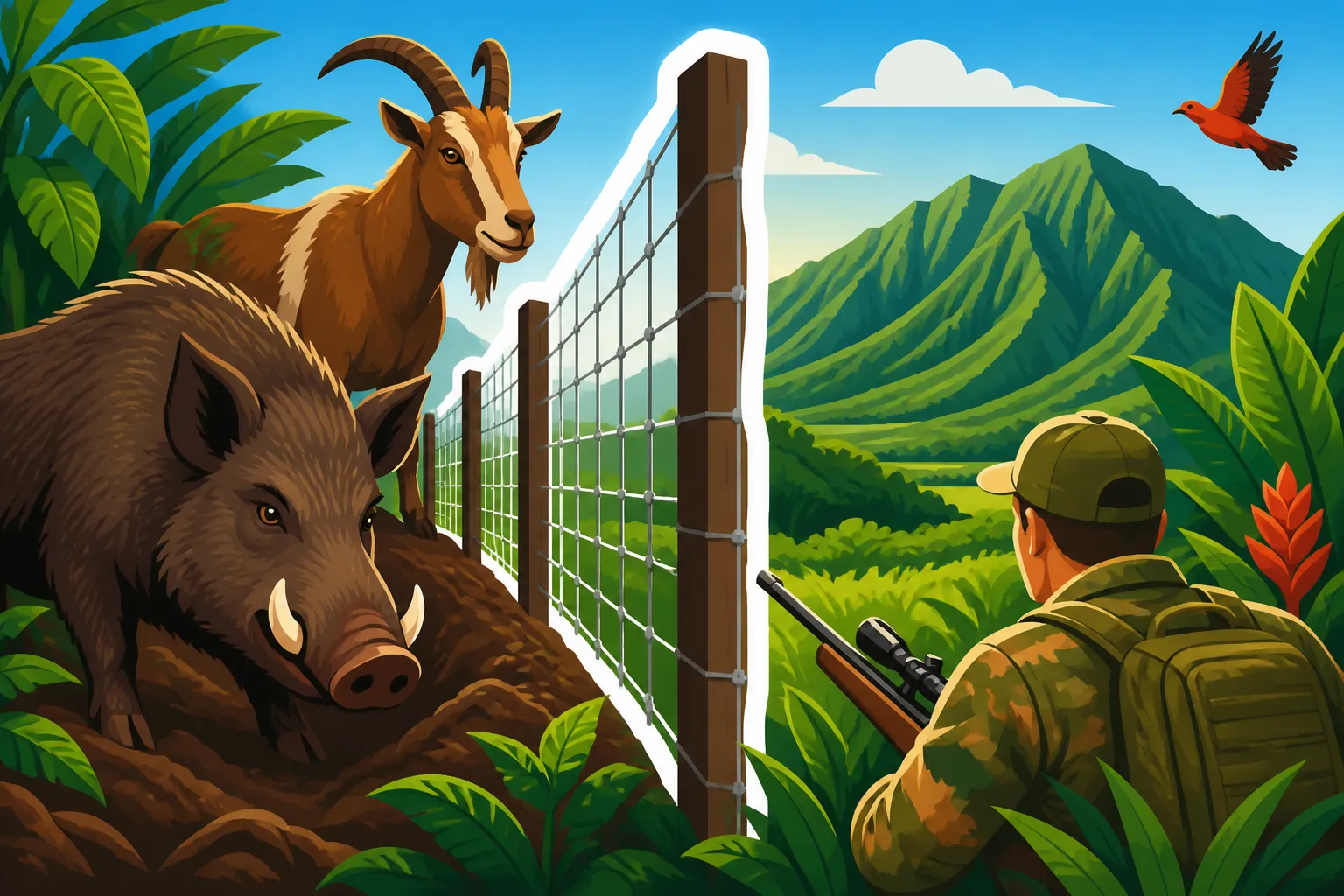
Given the relentless and widespread damage caused by feral pigs and goats, conservationists in Hawaii have increasingly turned to fencing as a primary defense. These aren't your typical backyard fences; they are robust, often miles long, and designed to create sanctuaries for native ecosystems. The goal is simple: to create areas where native plants and animals can thrive without the constant pressure of rooting, grazing, and disease spread.
Protecting Precious Watersheds and Native Forests
One of the most vital functions of these fences is protecting Hawaii's watersheds. The native forests, particularly the cloud forests found at higher elevations, act like giant sponges, capturing moisture from the persistent trade winds and slowly releasing it into underground aquifers. This natural process is the primary source of fresh water for the entire state. When pigs root and goats graze through these forests, they destroy the plants that form the forest canopy and understory, compact the soil, and lead to increased runoff rather than absorption. This directly impacts the quality and quantity of drinking water for Hawaii's residents.
Fences are built around these critical watershed areas, creating protected zones where pigs and goats can be removed, allowing the native vegetation to regenerate. Over time, these fenced enclosures transform into vibrant Hunting Hawaii's Kipuka Islands of Forest, where endemic species can recover. This protection isn't just about saving rare plants; it's about securing the most fundamental resource for human life on the islands: fresh water.
The Mechanics of Fencing Projects
These conservation fences are no small undertaking. They are typically constructed with heavy-gauge wire mesh, often six to eight feet high, with a significant portion buried underground to prevent rooting animals from digging beneath them. Building these fences often means hauling materials by hand or helicopter into extremely remote, rugged, and steep terrain. The labor involved is immense, and the cost can be staggering. Teams of conservation workers, often alongside volunteers, spend countless hours clearing lines, digging post holes, and stringing wire.
Once a fence is built and an area is cleared of invasive ungulates, ongoing maintenance is crucial. Fences can be damaged by falling trees, landslides, or even severe weather events. Regular patrols are necessary to repair breaches and ensure the integrity of the protected zone. Organizations like the Department of Land and Natural Resources (DLNR) Division of Forestry and Wildlife (DOFAW) are heavily involved in these projects, working with various partners to implement and maintain these vital barriers. If you're looking for information on public land hunting, resources like GoHunt often highlight areas with Hawaii's Fenced Conservation Boundaries so hunters know what to expect.
Balancing Fencing with Hunting Access
For hunters, these fences can be a source of frustration. They often cut through areas that were once accessible for hunting, effectively closing off portions of public land or making access significantly more difficult. It's a delicate balance, as hunters are often the very people who care deeply about the land and want to manage game populations. However, from a conservation perspective, the long-term survival of native ecosystems often necessitates these protected areas where no large ungulates, regardless of their status as game, can thrive.
The conversation between conservationists and hunters is an ongoing one. While some areas are fenced and cleared, hunting opportunities often still exist in adjacent areas, or in units where active management relies heavily on hunter participation. It's about finding that common ground where hunting can contribute to management goals, and hunters can understand the critical need for certain areas to be completely free of invasive species. Checking information sources like GoHunt can help hunters identify where fences exist and how they might impact access.
The Complexities and Controversies of Fencing
While the ecological necessity of fencing is clear to most conservation scientists, the implementation of these projects is far from simple and often sparks heated debates. It's a powerful tool, but one that comes with its own set of challenges, from financial hurdles to differing public opinions.
Cost and Labor Intensive
Let's be real: building a high-quality, animal-proof fence across miles of remote, uneven, and often treacherous Hawaiian landscape is monumentally expensive. The cost includes not just materials – high-tensile wire, sturdy posts, specialized gates – but also the incredible labor required to transport these materials, often by hand or helicopter, and then construct the fence in challenging conditions. Think about the rough terrain on Mauna Kea or the steep gulches of Maui; these aren't easy places to work. Then there's the ongoing cost of maintenance. A single fallen tree can breach a fence, requiring immediate attention to prevent re-colonization by pigs or goats. These projects require significant government funding, grants, and often, volunteer efforts to be sustainable, putting a constant strain on limited resources.
Hunter Perspectives and Access Concerns
Many dedicated local hunters feel a deep connection to the 'aina (land) and have traditionally managed animal populations through their efforts. The sudden appearance of a new fence, closing off a favorite hunting area, can feel like a direct affront to their tradition and their right to access public lands. Hunters often argue that they are part of the solution, helping to control feral populations. While this is true for animals outside fenced areas, the goal within these conservation fences is eradication, not just control, to allow extremely vulnerable native ecosystems to recover completely.
The challenge is in bridging this gap. Hunters want to be part of the solution, and indeed, they are invaluable for managing game in open units. However, for certain fragile areas, complete exclusion is the only viable path to protect endemic species. Information from sources like GoHunt or official DOFAW announcements about Hawaii's Fenced Conservation Area Closures are vital for hunters to stay informed and understand where these areas are located and why they're off-limits for hunting. It's tough when a beloved spot gets closed, and those frustrations are absolutely valid, but it's often a necessity for long-term ecological health.
Ecological Trade-offs and Long-Term Goals
Even with the best intentions, fencing isn't a silver bullet. There are always ecological trade-offs to consider. While a fence protects one area, it might inadvertently concentrate animal pressure on adjacent, unfenced lands. This means that fencing must always be part of a broader, integrated management strategy that includes ongoing hunting efforts, trapping, and sometimes even aerial removal outside the fenced sanctuaries.
The long-term goal isn't just to build fences; it's to restore ecological balance. These fences provide a crucial breathing space for native plants and animals to recover, allowing native seeds to sprout and forests to regenerate. Without them, many of Hawaii's unique ecosystems would simply vanish. It's an investment in the future of Hawaii's natural heritage, ensuring that there are still vibrant wild places for future generations, both for native species and, importantly, for continued hunting opportunities where appropriate.
The Role of Hunters in Ungulate Management
It’s easy to feel like fencing projects are aimed against hunters, but that's not the full picture. While certain areas are closed off for specific conservation reasons, hunters remain absolutely vital partners in the broader effort to manage Hawaii's feral ungulate populations. Our collective efforts are essential, both within and outside these fenced areas.
Hunting as a Management Strategy Outside Fences
For all the talk of fences, let's be clear: hunting is, and will continue to be, a primary management tool for pigs and goats across vast expanses of Hawaii. Outside the critical fenced conservation areas, public and private land hunting pressure helps keep populations in check, reducing their overall impact on less sensitive ecosystems and agricultural lands. Many units across the islands rely on hunters to manage numbers, whether it's Hunting Hawaii's Feral Pigs in the dense rainforests or Hunting Hawaii's Feral Goats along the rugged coastlines and canyon country.
Without dedicated hunters pursuing these animals, their numbers would explode, and the ecological damage would spread even further. This is where the partnership is critical. When hunters follow regulations, hunt ethically, and target multiple animals per season where bag limits allow, they are directly contributing to the health of the islands. Keeping abreast of the Hawaii's Feral Animal Control Programs and unit rules is important, and resources like GoHunt can help hunters find opportunities where their efforts directly support management goals.
Collaborating for Conservation
Hunters have a unique connection to the land and a deep understanding of animal behavior. This knowledge is invaluable. Collaborative efforts between hunters and conservation agencies can take many forms:
- Reporting Observations: Noticing unusual animal movements, signs of new invasive plant spread, or fence damage can provide critical intelligence to DOFAW.
- Following Regulations Diligently: Adhering to season dates, bag limits, and legal weapons helps ensure that hunting remains a sustainable and effective management tool. Knowing details about Hawaii's Weekend and Holiday Hunting Rules or Hawaii's Legal Weapons by Season is crucial.
- Participating in Community Dialogues: Engaging constructively in discussions about land management plans, whether through public meetings or online forums, ensures that the hunter's voice is heard.
- Volunteering: Some conservation groups actively seek hunter volunteers for trail maintenance, fence repairs, or even targeted animal removals in specific areas.
Ultimately, both conservationists and hunters share a common goal: a healthy Hawaii. While the methods may sometimes differ, recognizing the interconnectedness of these efforts is crucial. Fencing out pigs and goats from fragile native forests allows those areas to recover, while diligent hunting keeps populations managed in other regions. This dual approach, though sometimes leading to difficult decisions, offers the best chance for Hawaii's unique and irreplaceable ecosystems to thrive alongside its vibrant hunting traditions.
| Feature | Feral Pig Impact | Feral Goat Impact |
|---|---|---|
| Primary Habitat | Wet native forests, dense vegetation, gulches | Dry arid lands, steep slopes, coastal cliffs |
| Key Behaviors | Rooting, wallowing, consuming seeds | Browsing, grazing, stripping vegetation |
| Ecological Damage | Soil disturbance, native plant destruction, invasive seed dispersal, mosquito breeding grounds (avian malaria) | Overgrazing, severe erosion, native plant denudation, watershed degradation |
| Target for Fencing | Areas with fragile forest understory, watershed protection | Steep hillsides prone to erosion, rare dryland forests |
| Hunter Management | Dog hunting, still-hunting, trapping | Spot-and-stalk, still-hunting |
Disclaimer
This article is for general informational purposes only and does not constitute professional advice. Laws, prices and regulations vary by location and change over time. Consult a qualified professional for guidance on your specific situation.