Where Hawaii’s Wild Turkeys Live
It's quite a unique thing, isn't it? When most folks think of hunting in Hawaii, they picture Axis deer darting through kiawe flats, or perhaps a wild pig crashing through thick guava. But the thought of wild turkeys? That often comes as a delightful surprise. This guide is dedicated to pulling back the curtain on where these magnificent birds have managed to make a home across our islands, providing insights for those curious about their presence and habitat.
The Uncommon Presence of Wild Turkeys in the Hawaiian Islands
For many, the image of a strutting tom turkey belongs firmly in the American mainland, nestled among hardwoods and cornfields. So, discovering that wild turkeys call parts of Hawaii home can be a bit of a head-scratcher. These aren't native birds, of course, but rather another fascinating example of introduced species that have found a niche in our diverse ecosystems. Understanding their journey here and their current status is key to knowing where you might actually encounter them.
A Legacy of Introduction, Not Native Existence
Like so many of Hawaii's game animals, wild turkeys were brought to the islands by humans. The most common species you'll find here is the Rio Grande wild turkey, a robust and adaptable bird known for thriving in a variety of landscapes. These introductions weren't just a one-off event; various efforts over the years, some intentional for sport and some simply for naturalization, led to scattered populations taking hold. They found pockets of habitat that, surprisingly, mirrored some of their mainland preferences, allowing them to establish a foothold. It's a testament to their hardiness that they've persisted, given the unique challenges of island life, from variable rainfall to thick, often impenetrable vegetation.
Understanding Their Current Status and Lack of Open Seasons
Here's the crucial bit for hunters: while wild turkeys live in Hawaii, they are generally not considered a regularly hunted game species with open seasons like Axis deer or feral pigs. This means that while you might spot them while pursuing other game, or even just hiking, there isn't a dedicated turkey season with tags and bag limits that you'd typically find in other states. Their populations are managed by the Department of Land and Natural Resources (DLNR) Division of Forestry and Wildlife (DOFAW), often with an eye toward population stability and ecological impact rather than recreational harvest. For the latest on why they aren't widely hunted, you might find insight in articles like Why Wild Turkey Hunting Stands in Hawaii and Why Wild Turkey Is Closed in Hawaii. This unique status is why their presence is often more of a quiet, background detail for many island residents, rather than a focus of the hunting calendar.
Primary Strongholds: Where Turkeys Roam on the Big Island
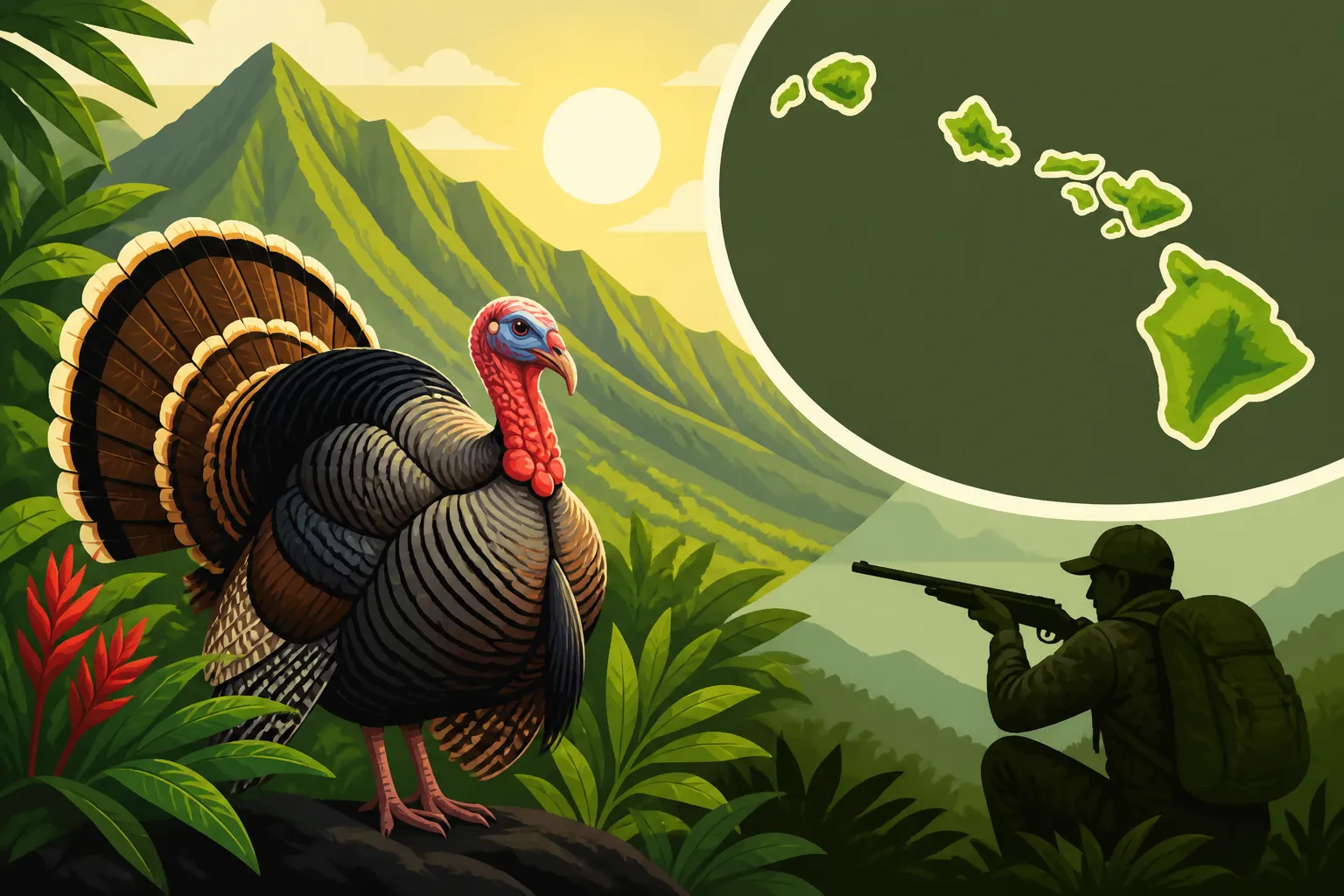
When it comes to wild turkeys in Hawaii, the Big Island, also known as Hawaii Island, is undoubtedly their main stomping ground. Its vast size, varied terrain, and significant tracts of public and private land offer the most suitable habitat for these birds to thrive. If you're hoping to catch a glimpse, this is where you'll want to concentrate your efforts.
Mauna Kea's Lower Slopes and Mamane-Naio Forests
One of the most well-known areas for wild turkeys on the Big Island is on the lower to mid-elevation slopes of Mauna Kea. Specifically, they favor the dry, open forests dominated by native mamane and naio trees, often interspersed with pockets of kiawe and introduced grasses. This environment provides excellent cover for roosting in the larger trees and abundant forage on the forest floor. Imagine walking through an open understory where the trees aren't too dense, allowing sunlight to dapple the ground, and you're in prime turkey country. These areas often blend into open pasturelands, creating ideal transition zones where turkeys can feed on seeds and insects then quickly retreat to the safety of the trees. Hunting Mouflon in Hawaii's Mamane Forest covers similar terrain that other game animals frequent, giving you a sense of the landscape.
Ranch Lands and Agricultural Edges
Beyond the purely natural forests, Hawaii's turkeys are also quite adept at utilizing private ranch lands and the edges of agricultural operations. Many of the large cattle ranches on the Big Island offer vast expanses of pasture, often dotted with kiawe trees, eucalyptus groves, and gulches filled with thicker vegetation. Turkeys will often feed openly in these pastures, especially in the early morning and late afternoon, foraging for seeds, insects, and new green growth. The presence of water tanks, stock ponds, or natural springs on these ranches is a major draw, providing essential hydration in drier periods. They will use the dense vegetation along gulches or the edges of planted timber blocks for roosting and escape cover. Access to these private lands is generally restricted and would require explicit permission, but understanding this habitat use helps paint a fuller picture of their range.
The Importance of Water and Roosting Cover
Like all wildlife, turkeys need reliable access to both water and secure roosting sites. In Hawaii's often dry leeward zones, or during periods of drought, water sources become magnets. Turkeys will travel significant distances to drink from springs, stock ponds, or even dew-laden vegetation. Understanding this can help you predict their movements. Meanwhile, for safety from ground predators (like feral cats and mongooses) and for thermal regulation, turkeys seek out tall, sturdy trees for roosting at night. Large kiawe, eucalyptus, or native koa trees with strong, horizontal limbs are often preferred. These roost sites are typically chosen with an eye toward escape routes and usually have clear flight paths in and out of the trees. Thinking about Hunting a Water Source in Dry Hawaii Country can give you a parallel understanding of how critical these features are for wildlife.
Scattered Sightings and Limited Populations on Other Islands
While the Big Island holds the lion's share of Hawaii's wild turkey population, there have been historical introductions and occasional sightings on other islands. However, these populations tend to be much more localized, less robust, and often don't persist long-term without additional introductions or unique habitat conditions.
Maui's Occasional Flocks
Maui has seen its share of turkey introductions over the years, and there have been reports of small, scattered flocks, particularly in drier, leeward areas or in certain forest reserves on the slopes of Haleakala. These sightings are far less frequent and widespread than on the Big Island. When they do appear, they typically inhabit similar environments: a mix of open, grassy areas for feeding, interspersed with kiawe or other dense cover for roosting and protection. Unlike the abundant Axis deer population on Maui, turkey numbers have never truly exploded there, remaining a rare treat for observant outdoors enthusiasts.
Why Other Islands Rarely Support Turkeys
Several factors contribute to the limited presence of wild turkeys on islands other than Hawaii Island. Foremost among these is suitable habitat. Smaller islands often lack the vast, contiguous tracts of diverse habitat—combining open foraging grounds with dense, tall roosting trees and consistent water—that turkeys need to truly flourish. Predator pressure also plays a role; mongoose, for example, are abundant on several islands and are highly effective nest predators, capable of decimating turkey poults. The historical pattern of introductions also matters; not all attempts were successful, and without ongoing releases or robust natural reproduction, some populations simply faded away. Islands like Oahu, with greater human density and less expansive wildlands, offer even fewer opportunities for turkeys to establish themselves.
What to Look For: Identifying Turkey Habitat and Sign
Even without an open hunting season, knowing how to identify potential turkey habitat and recognize their signs can be rewarding for any outdoors enthusiast. If you're out exploring for other game or simply enjoying nature, recognizing these indicators can give you a thrill, letting you know you're in the presence of these magnificent birds.
Reading the Hawaiian Landscape for Turkey Potential
When you're afield, keep an eye out for terrain that screams "turkey." This typically means a mosaic of open and covered areas. Look for relatively dry, open forests or savannahs with an understory that isn't too choked with dense, thorny invasives like common guava or whatever the "local" equivalent might be in a specific area. These birds need space to walk and forage. The ideal landscape often includes:
- Scattered large trees: For roosting, often on slight ridges or near gulches offering thermal protection.
- Open grassy patches: For feeding on seeds and insects, especially in the early morning.
- Access to water: Even if it's just a seep or a damp depression in the ground, particularly in arid regions.
- Transition zones: Where open pastures meet forest edges, or where different vegetation types merge.
These birds are masters of blending in, but their presence leaves clues. You might find similar landscape considerations when reading about Hunting Hawaii's High Elevation Alpine Ground for other species that thrive in varied terrain.
Recognizing Turkey Sign
Like any wild animal, turkeys leave behind evidence of their passage. Knowing what to look for can turn a simple walk into an exciting tracking expedition.
- Droppings: Turkey droppings are quite distinct. Toms (males) typically leave J-shaped droppings, while hens (females) leave coiled or spiral-shaped droppings. Look for them in feeding areas, under roost trees, or along travel corridors.
- Tracks: Turkeys have three prominent toes pointing forward and a smaller hind toe. Their tracks are much larger than those of pheasants or francolins, often resembling a tiny dinosaur footprint. Look for them in soft dirt, mud near water, or dusty trails.
- Dusting Bowls: Turkeys take "dust baths" to help with feather maintenance and to rid themselves of parasites. These shallow depressions in dry soil, often found in sunny, sheltered spots, will have a distinct "turkey smell" and sometimes a few feathers.
- Feathers: Finding a turkey feather is a clear sign. Body feathers, often iridescent bronze or green, are shed regularly. Wing and tail feathers can indicate a roosting site or perhaps a predator encounter.
Understanding how to read various animal signs in the field can be hugely beneficial, whether you're after pigs, deer, or just observing. The principles are similar to those described in Reading Pig Sign Along a Muddy Trail, just applied to a different set of physical characteristics.
| Sign Type | Description | Typical Location | What it Tells You |
|---|---|---|---|
| Droppings | J-shaped (toms) or coiled (hens), larger than chicken droppings | Feeding areas, under roost trees, travel paths | Presence, sex of bird (sometimes), recent activity |
| Tracks | Three prominent front toes, one small hind toe; large, distinct | Soft dirt, mud near water, dusty trails | Presence, direction of travel, size of bird |
| Dusting Bowls | Shallow depressions in dry soil, often with loose feathers | Sunny, sheltered spots; dirt roadsides | Regular presence, feather maintenance behavior |
| Feathers | Iridescent body feathers, larger wing/tail feathers | Under roost trees, dusting bowls, near predator sites | Recent presence, type of turkey, sometimes predator activity |
| Scratching | Distinct fan-shaped scratch marks in leaf litter or soft soil | Feeding areas in forests or brush | Active foraging, what they're eating (insects, seeds) |
The Future of Wild Turkeys in Hawaii for Hunters and Observers
The presence of wild turkeys in Hawaii represents a unique chapter in the islands' natural history. While they might not be the primary focus of most hunting trips, their existence adds another layer of intrigue to our diverse ecosystems. Their future, like that of many introduced species, is often a topic of discussion among wildlife managers and conservationists.
Conservation and Management Perspectives
DOFAW continually monitors the populations of all game animals, including wild turkeys, throughout the islands. This management considers ecological impacts, disease prevalence, and population health. Even without an open hunting season, turkeys are part of the broader wildlife picture, and their status can change over time depending on population trends and management objectives. Factors like habitat changes, drought, and predator control efforts can all influence their numbers and distribution.
The Role of Ethical Observation and Respect
For now, encountering a wild turkey in Hawaii is primarily an experience for observation and appreciation. If you do spot a flock, remember to keep your distance, minimize disturbance, and respect their wild nature. These birds are a testament to adaptability and offer a different kind of wildlife viewing experience. If you're exploring for other game, say, using the GoHunt Hawaii platform to understand specific unit regulations, you might incidentally stumble upon a flock. Remember that the information on GoHunt will primarily focus on legally huntable species and seasons, so context for turkeys often comes from broader wildlife knowledge.
How to Find Information on Hawaii's Diverse Game
If your interest in turkeys sparks a broader curiosity about Hawaii's game birds and mammals, there are excellent resources available. The DOFAW website is always the official source for regulations, and platforms like GoHunt provide valuable tools for planning hunts, checking into units, and understanding open seasons for species like francolins, pheasants, and doves. While turkeys may not be on the huntable list, learning about Hawaii Game Bird Hunting and Hawaii Game Bird Seasons and Bag Limits can give you a comprehensive picture of the other feathered game available. Even just picking up a Hawaii Hunting Licenses and What They Cost is the first step towards legally pursuing any game in our islands, turkey or otherwise, and understanding the nuances of our unique hunting opportunities.
Disclaimer
This article is for general informational purposes only and does not constitute professional advice. Laws, prices and regulations vary by location and change over time. Consult a qualified professional for guidance on your specific situation.