Mongoose in Hawaii and Which Island Lacks Them
If you've spent any time exploring Hawaii's stunning landscapes, you've likely spotted a quick, sleek creature darting across the road or through the underbrush: the mongoose. These animals are a common sight on most of our islands, but it's often surprising to learn that one major island stands as a unique exception. This guide will dive deep into the history of mongoose in Hawaii, their impact on our fragile ecosystems, and the fascinating story behind why one particular island remains a mongoose-free haven, and what that means for its precious native wildlife.
The Uninvited Guests: How Mongoose Arrived in Hawaii
The story of the mongoose in Hawaii is a classic tale of well-intentioned but disastrous ecological intervention. Back in the late 19th century, Hawaii's burgeoning sugar cane industry faced a significant problem: rats. These rodents were voraciously devouring the cane fields, causing substantial economic losses. It was believed that introducing a natural predator would solve this issue, and the small, agile Indian mongoose seemed like the perfect candidate.
A Misguided Solution for a Different Problem
The thinking at the time was quite simple: mongoose eat rats, Hawaii has rats, therefore mongoose will solve the rat problem. What wasn't fully understood, or perhaps wasn't given enough consideration, was the fundamental behavioral difference between the two species. Mongoose are primarily diurnal, meaning they are active during the day. Rats, on the other hand, are largely nocturnal. This meant that while there might be some overlap, the mongoose weren't going to be the silver bullet for the rat problem that planters had hoped for. Instead of tackling the rats, the mongoose found an abundance of easily accessible, ground-nesting native birds, their eggs, and chicks – a far simpler meal than chasing down fast-moving, mostly nocturnal rodents. This oversight proved to be catastrophic for Hawaii's unique avifauna.
The Spread Across the Islands
The first mongoose were brought to the Big Island of Hawaii around 1883 from Jamaica, where they had also been introduced to control rats in sugar cane fields. From there, they quickly spread to Maui, Molokai, and Oahu, intentionally released in various locations with the same ill-fated hope of agricultural pest control. Imagine the early days, with settlers carefully transporting these new animals, believing they were bringing progress, only to unknowingly unleash a new wave of ecological destruction. Their rapid reproduction rates and adaptability meant that once established, they quickly proliferated, colonizing nearly every habitat from coastal lowlands to higher elevations. The spread was swift and irreversible on these islands, fundamentally altering the predator-prey dynamics of ecosystems that had evolved without such ground predators.
Ecological Consequences and Current Management
The impact of the mongoose on Hawaii's native species has been profound. Our islands evolved in isolation, without ground predators like mongoose. Many of our native birds, insects, and even reptiles, laid their eggs on the ground or nested in easily accessible low-lying vegetation, having no inherent defenses against such a threat. The mongoose quickly decimated populations of ground-nesting birds, including several endemic species, and became a major threat to seabirds that nest on coastal cliffs and in burrows. They also prey on native insects, snails, and even young Hawaiian bats. While some argue they do consume rats and other invasive rodents, their net impact is overwhelmingly negative, especially on Hawaii's unique and often endangered wildlife. Efforts to manage mongoose populations are ongoing and challenging, involving trapping and public education campaigns, but eradication on islands where they are established is practically impossible due to their widespread distribution and rapid breeding.
Kauai's Curious Exception: The Island Without Mongoose
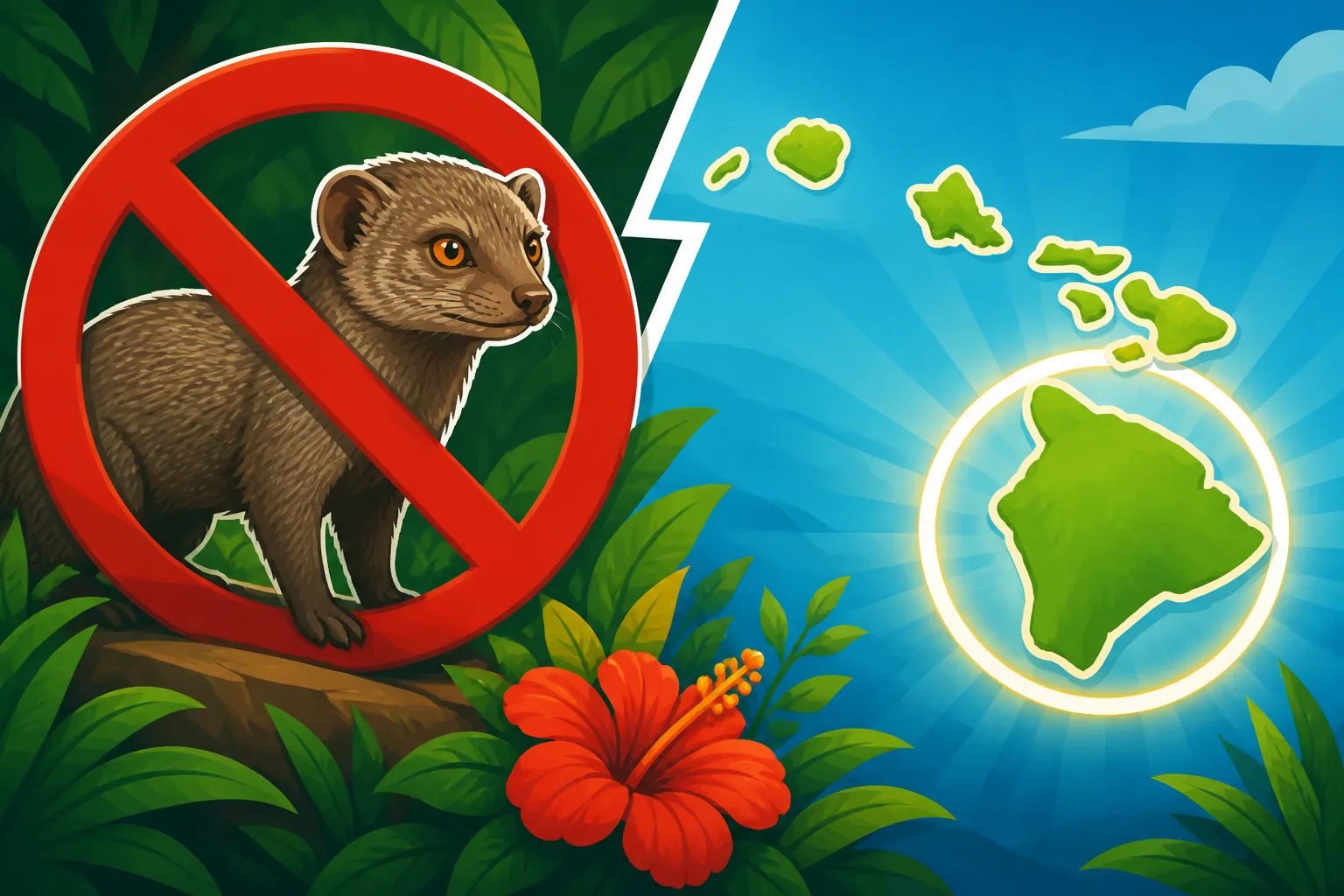
Among Hawaii's main islands, Kauai stands as a remarkable exception: it is the only one without an established mongoose population. This isn't due to any inherent biological resistance or different environmental conditions; rather, it's a testament to a stroke of luck and decades of dedicated vigilance by the community and conservation agencies.
The Fortunate Delay
The absence of mongoose on Kauai can be attributed to a twist of historical fate. When the mongoose were being distributed across the other major islands in the late 1800s, the shipment intended for Kauai reportedly never made it ashore. Some stories suggest the mongoose either died en route, or a dockworker, perhaps wary of the animals or simply forgetful, decided against offloading them. Regardless of the exact reason, Kauai was spared the intentional introduction that cursed its sister islands. This "fortunate delay" or outright prevention proved to be an invaluable gift to Kauai's biodiversity, allowing its unique ecosystems to largely avoid the devastating predation that unfolded elsewhere. This is a critical distinction that has shaped Kauai's ecological present.
Vigilance and Containment Efforts
Today, keeping Kauai mongoose-free is a top priority for state agencies and the island's residents. There is a constant, palpable fear of accidental introduction. Any suspected mongoose sighting on Kauai triggers an immediate and robust response from the Department of Land and Natural Resources (DLNR) and local conservation groups. These efforts involve rapid deployment of traps, extensive public outreach campaigns, and educational materials to help residents identify mongoose and report sightings. Think of it like a community-wide neighborhood watch, but for invasive predators! Every ferry, plane, and shipment arriving on Kauai is a potential vector, and biosecurity measures are in place, though accidental introductions remain a persistent threat. The vigilance is a testament to understanding the profound ecological value of a mongoose-free island. For those interested in general wildlife information or reporting unusual sightings, platforms like GoHunt can be valuable resources for finding contact information for local authorities.
The Stakes: Why Keeping Kauai Mongoose-Free Matters
The reason for this intense vigilance is simple: Kauai is home to several critically endangered native bird species that exist nowhere else, and whose populations would be devastated by the introduction of mongoose. Species like the Nene (Hawaiian goose), the Puaiohi, Akekee, and Akikiki, many of which are ground-nesting or have vulnerable fledglings, have survived on Kauai precisely because they haven't faced the predatory pressure of the mongoose. Their ecosystems have not evolved with such a persistent, efficient ground predator. The preservation of these unique species, which form an integral part of Hawaii's natural heritage, hinges on maintaining Kauai's mongoose-free status. It's not just about birds, either; the entire web of life, including insects and plant reproduction, benefits from the absence of this widespread predator. Understanding these stakes helps appreciate the immense effort going into Hawaii's Nene and Why It Is Protected and the broader efforts to conserve Hawaii's Endangered Forest Birds.
| Island | Mongoose Status | Ecological Significance |
|---|---|---|
| Hawaii Island | Established presence | Significant impact on ground-nesting birds and native fauna. |
| Maui | Established presence | Contributes to decline of native bird populations. |
| Molokai | Established presence | Predation pressure on remaining native species. |
| Oahu | Established presence | Widespread, affecting urban and natural areas. |
| Lanai | Established presence | Affects game birds and any surviving native species. |
| Kauai | No established population | Critical sanctuary for endangered ground-nesting native birds. |
| Niihau | No established population | Strict biosecurity on privately owned island protects native species. |
| Kahoolawe | No established population | Decades of restoration efforts aim to keep it mongoose-free. |
Mongoose Behavior and What Hunters Might Encounter
For hunters venturing into Hawaii's diverse terrain, understanding the behavior of common invasive species like the mongoose can be helpful, even if they aren't your primary target. While you won't be hunting mongoose, their presence or absence can tell you a lot about the health of other game populations.
Diurnal Habits and Habitat
Unlike many of Hawaii's other invasive predators, such as the feral pig which often moves at dawn and dusk or through the night, mongoose are primarily diurnal. This means you're most likely to spot them during daylight hours. They are incredibly opportunistic and adaptable, thriving in a wide range of habitats, from dense forest undergrowth to open pastures, lava fields, and even suburban areas. You'll often see them darting across roads, especially in more rural parts of the Big Island, Maui, or Oahu. They're quick, agile, and generally unafraid of humans, often pausing to observe before disappearing into the brush. Their keen sense of smell and sight make them efficient hunters of anything small and vulnerable. They are particularly fond of areas with abundant cover and food sources, which, unfortunately, often includes prime nesting grounds for various ground-nesting birds.
Impact on Game Birds and Small Mammals
For those pursuing Hawaii Game Bird Hunting, the presence of mongoose is a significant factor. Mongoose are notorious predators of game bird eggs and chicks. Species like francolin, pheasants, and quail, which build their nests on the ground, face constant pressure from mongoose. A good game bird hunter learns to recognize all the challenges these birds face, from habitat loss to predators. Where mongoose populations are high, game bird numbers can be noticeably lower, especially in areas with accessible nesting habitat. While their primary diet isn't large mammals, a hungry mongoose certainly won't pass up an opportunity to prey on very young or vulnerable piglets. However, their impact on established populations of feral pigs or goats is generally negligible compared to their devastating effect on avian life. When scouting for game, an abundance of mongoose sightings can be an indicator of overall ecological pressure on other small ground-dwelling species in the area.
Reporting Sightings (Especially on Kauai)
This point cannot be stressed enough: if you are on Kauai and believe you have seen a mongoose, it is critically important to report it immediately. Even a single mongoose could wreak havoc on Kauai's unique ecosystem. Unlike other invasive species where management might be localized, a mongoose sighting on Kauai triggers an island-wide alert. Agencies like the DLNR Division of Forestry and Wildlife (DOFAW) have specific protocols in place for rapid response. If you're on Kauai and you see one, try to remember the exact location and time, and report it as soon as possible. Don't assume someone else will. While GoHunt might not be the direct reporting mechanism for a mongoose, it's a good place to familiarize yourself with general hunting regulations and local wildlife information, which often includes advisories about invasive species. Being informed about Protected Species Hawaii Hunters Must Know is crucial on all islands, but especially on Kauai where the stakes are so high.
Living with Mongoose: Beyond the Hunt
Beyond the immediate impact on game animals and native species, the presence of mongoose forces a broader conversation about invasive species management and the everyday realities for Hawaii's residents and visitors.
Control Measures and Trapping
While hunters primarily focus on designated game species, the broader community and state agencies often engage in mongoose control efforts. These measures typically involve various trapping methods, aiming to reduce local populations, especially in sensitive ecological areas or near human habitation. For instance, in areas where rare ground-nesting birds are being actively restored, intensive trapping programs might be implemented to create temporary mongoose-free zones. However, due to their widespread distribution, high reproductive rate, and adaptability, complete eradication on islands where they are established is generally considered impossible. These efforts are more about localized management and damage mitigation rather than widespread removal. The challenge of controlling invasive species like the mongoose also mirrors the broader, ongoing efforts to manage populations of Why Hawaii Fences Out Pigs and Goats to protect native forests and watersheds.
Protecting Pets and Poultry
For residents in mongoose-affected areas, dealing with these agile predators is an ongoing reality. Pet owners, especially those with small outdoor pets, and anyone raising poultry, must take precautions. This often means secure enclosures for chickens and ducks, keeping pet food indoors, and generally being aware of potential mongoose activity around homes. While a mongoose isn't a threat to a fully grown dog, a curious one can easily snatch kittens, puppies, or baby birds. The frustration of losing backyard chickens or finding nests raided is a common one for many Hawaii residents, a direct consequence of this misguided introduction so long ago.
The Broader Invasive Species Context
The story of the mongoose is just one chapter in Hawaii's larger, complex narrative of invasive species. Many of Hawaii's most significant ecological challenges stem from introduced plants and animals, many of which were brought here intentionally, like the mongoose, or accidentally. Understanding the impact of the mongoose helps contextualize the importance of biosecurity and responsible land management across the islands. It also highlights why efforts like How Hunting Fits Hawaii's Conservation Plan are so vital – not just for sport, but as a critical tool in managing introduced populations that threaten native ecosystems. Every hunter in Hawaii, by participating in regulated harvests, is contributing to the management of these introduced species, playing a small but important role in trying to rebalance ecosystems that were so dramatically altered by past decisions. It's a constant struggle, but one that continues with dedication across the islands.
Disclaimer
This article is for general informational purposes only and does not constitute professional advice. Laws, prices and regulations vary by location and change over time. Consult a qualified professional for guidance on your specific situation.