Axis Deer Damage to Hawaii Farms
For many farmers across the Hawaiian Islands, the sight of a beautiful Axis deer isn't a postcard moment; it's a gut-wrenching signal of potential devastation to their livelihoods. These elegant, spotted animals, while stunning, are wreaking havoc on agricultural lands, consuming valuable crops, destroying irrigation systems, and leaving behind a trail of financial and emotional despair. This guide delves deep into the widespread damage Axis deer inflict on Hawaii's farms, exploring the challenges faced by local growers and the ongoing efforts to manage this complex issue.
Understanding the Axis Deer Problem in Hawaii Agriculture
The Axis deer, or Axis axis, is an introduced species that has thrived in Hawaii's unique environment, perhaps a little too well. While they are a prized game animal for many hunters, their burgeoning populations pose a significant threat to the state's agricultural sector. The problem isn't just about a few deer nibbling on a lettuce patch; it's a systemic issue impacting everything from small family farms to large commercial operations.
The Rapid Proliferation and Range Expansion of Axis Deer
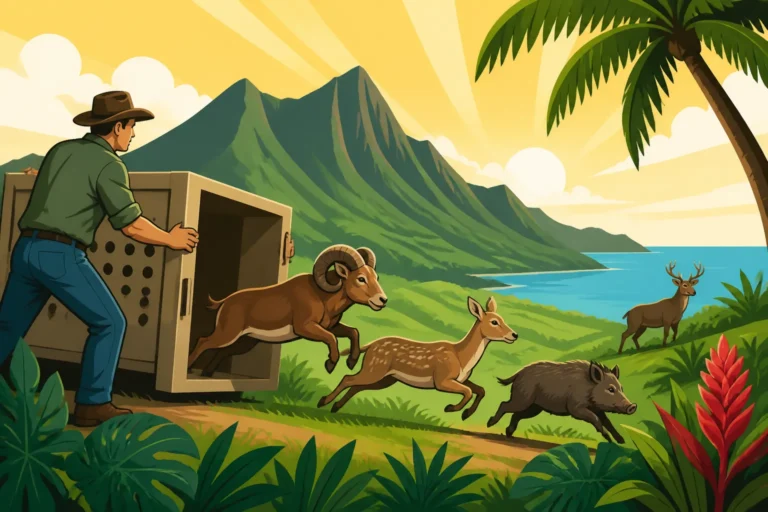
Axis deer were first introduced to Molokai in the late 1860s and later to Lanai and Maui. Without natural predators to keep their numbers in check, and with an ideal climate providing year-round forage, these deer have multiplied at an astonishing rate. If you want to know more about How Axis Deer Reached Hawaii, you'd find a fascinating historical account, but the current reality is far more pressing. Their reproductive cycle is incredibly efficient, with does often breeding year-round and sometimes having two fawns in a single year. This high birth rate, combined with excellent survival rates, means their populations can explode in a short period.
Initially, their range was somewhat confined, but over the decades, and with a few unfortunate translocations, they've spread. Maui, Lanai, and Molokai now contend with significant populations. The sheer density of deer in certain areas, particularly on Maui, means that every available patch of green, including cultivated farmlands, becomes a potential feeding ground. It’s no longer surprising to hear stories of deer sightings in suburban areas or even near bustling towns, a clear sign of their expanding reach as they seek new forage. The scale of this issue, particularly on Maui, has even led to major initiatives like the Hawaii's Maui Nui Deer Control Program to try and get a handle on the exploding numbers.
Why Hawaiian Farms are Particularly Vulnerable
Hawaiian agriculture is distinct from many mainland operations. Many farms here are smaller, often family-owned, and frequently focus on specialty crops that command high market prices, such as tropical fruits, organic vegetables, coffee, and macadamia nuts. These crops represent significant investments of time, labor, and capital. When a herd of Axis deer moves through a field of ripening papayas or tender lettuce greens, the damage isn't just aesthetic; it's a direct hit to a farmer's income. Furthermore, many farms are situated near wild or semi-wild areas that provide cover and easy access for deer, making them easy targets.
The diverse climate zones across the islands also play a role. During dry seasons, when natural forage in the dry forests and grasslands becomes scarce, deer are driven to seek out irrigated fields and lush farm plots, which act as irresistible magnets. A farmer who has carefully nurtured a crop through a drought, only to see it devoured overnight, faces not just financial loss but also a profound sense of helplessness. The lack of robust, affordable, and readily available protective measures makes these farms incredibly susceptible to repeated damage.
The Direct Financial Strain on Farmers
The impact of Axis deer on farm profitability is severe and multifaceted. It's not just the market value of the eaten crops. There's the cost of replanting, the labor involved in futile attempts at deterrence, and the lost potential income from a destroyed harvest. For a small farm operating on tight margins, a single major deer incursion can be the difference between a profitable year and one that puts them into the red. Farmers often spend thousands, if not tens of thousands, of dollars annually on deterrents like fencing, which often proves inadequate.
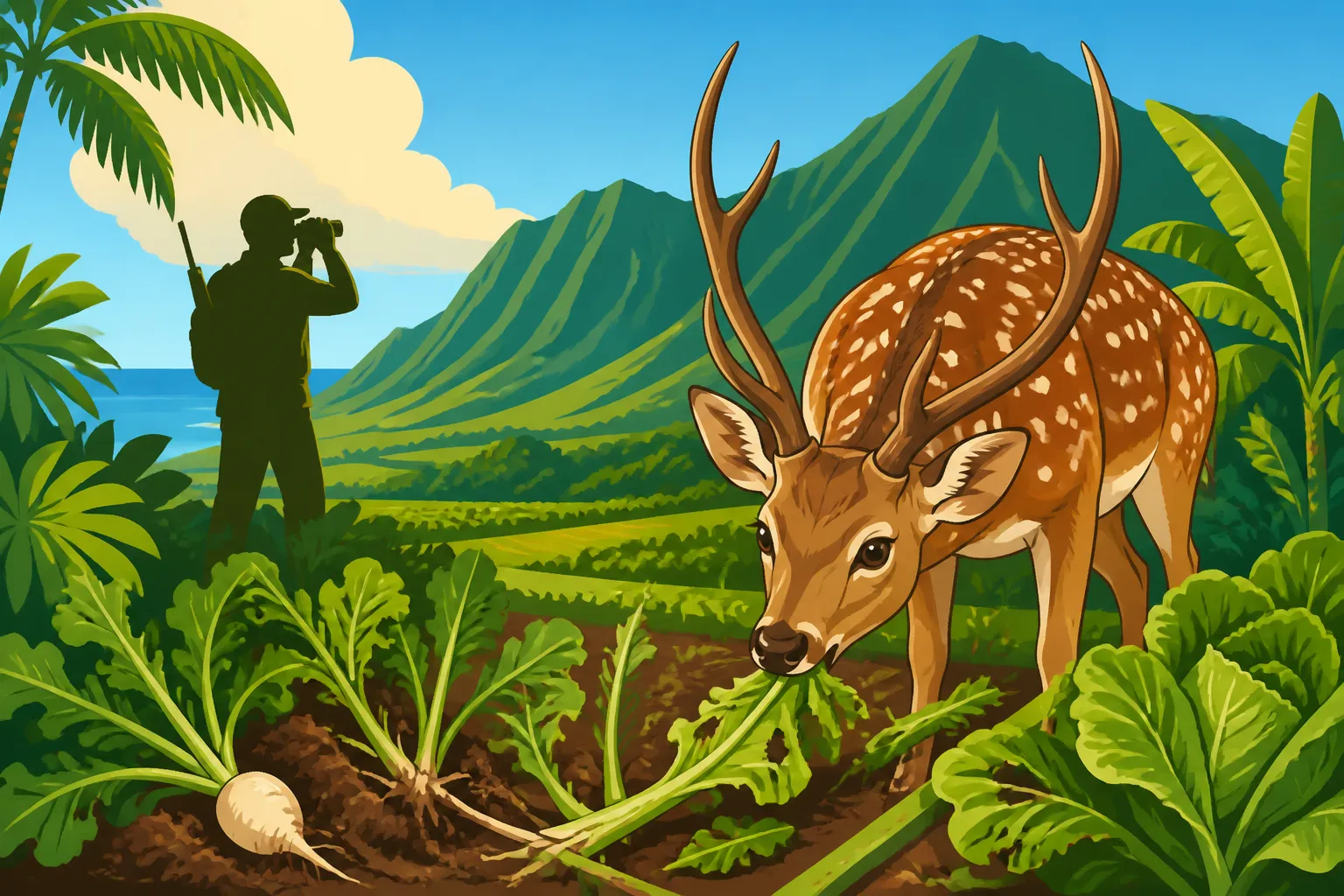
Consider a farmer growing organic lettuce. A deer herd can clear an entire bed in a single night. That's not just the loss of the lettuce; it's the cost of the organic seeds, the hours spent preparing the soil, planting, watering, and weeding, all gone. Then there's the opportunity cost – the inability to supply regular customers, potentially losing contracts, and the damage to their reputation for reliability. This constant battle adds immense stress, making farming in Hawaii an even more challenging endeavor than it already is.
Specific Types of Crop and Property Damage
Axis deer are opportunistic feeders, and their damage isn't limited to a single type of crop. They'll browse on a wide variety of plants, and their sheer numbers mean that even if they only take a little from each plant, the cumulative effect is devastating.
Grazing and Trampling of High-Value Crops
Axis deer have a particular fondness for tender, nutrient-rich plants, which, unfortunately for farmers, describes many cultivated crops. They'll strip leaves off vegetable plants, gnaw on fruit trees, and consume young sprouts with gusto. Imagine growing specialty kalo (taro) for poi, a culturally significant and economically important crop. A herd of deer can trample and consume young kalo plants, destroying months of growth and an essential food source. Farmers growing Maui Gold pineapples, an iconic Hawaiian product, have to contend with deer eating the sweet fruit right off the plant. These deer aren't picky; they'll target everything from sweet potatoes to leafy greens, even young macadamia nut trees.
It's not just the eating; it's the trampling. A large deer, especially a buck with a significant rack, can easily crush young plants or even break branches off fruit trees just by moving through a field. The sheer weight of a browsing herd can flatten entire sections of a crop, making it unsalvageable even if not directly eaten. This dual threat of consumption and physical destruction means that a farm field can look like a war zone after a night-time visit from a deer herd. Understanding What Axis Deer Eat on Maui can give you an idea of just how broad their palate is, making almost any farm vulnerable.
Infrastructure Destruction: Fences, Irrigation, and Equipment
Beyond the crops themselves, Axis deer cause significant damage to farm infrastructure. Farmers often invest heavily in fencing to keep deer out, but these efforts are often met with frustration. A determined buck can jump an eight-foot fence with ease, especially if it feels threatened or if there's desirable forage on the other side. When deer try to push through fences, they can damage posts, tear netting, and break wires, creating costly repair jobs and opening the way for more deer. Many farmers find themselves in a constant, losing battle of fence repair and reinforcement.
Irrigation systems are also prime targets. Deer stepping on or tripping over fragile drip lines and sprinkler heads can cause breaks, leading to water loss and inconsistent irrigation, which further impacts crop health. More robust systems, like PVC pipes, can still be cracked or disconnected by the force of a deer's hooves. Farm equipment left in fields, even seemingly sturdy items, can suffer cosmetic or minor functional damage from deer rubbing against them or startling and running through them. These repair costs and the time spent fixing them add up, diverting precious resources from other critical farm operations.
Indirect Damage and Disease Transmission Concerns
The direct impacts of browsing and physical damage are clear, but Axis deer can also inflict indirect harm. Their presence can contribute to soil erosion, especially on sloped farmland, as they strip away vegetation and compact the soil with their hooves. This increased erosion can lead to runoff issues and nutrient depletion, harming long-term soil health and productivity.
While not as widely studied for Axis deer as for other invasive ungulates, there's also the potential concern for disease transmission. Deer can carry parasites and diseases that, while not directly impacting crops, could potentially affect other livestock or even human health in rare circumstances. For instance, pigs in Hawaii are known to carry diseases like leptospirosis, and while deer generally pose a lower risk, their presence in proximity to domestic animals and human activity introduces another layer of ecological complexity and concern for farmers.
The Economic and Emotional Toll on Hawaii's Farmers
Farming is already a demanding profession, especially in Hawaii with its unique challenges of remote markets, land costs, and climate variability. The added burden of Axis deer damage pushes many farmers to the brink, impacting not just their balance sheets but also their mental well-being.
Lost Revenue and Increased Operating Costs
The most immediate impact is, of course, the financial hit. Lost crops mean lost sales. If a farmer had a contract to supply a certain amount of produce, and deer wipe out a significant portion, they might not be able to fulfill that order, leading to penalties or loss of future business. This directly translates to lower income for the family that depends on the farm. But it's not just about what's lost; it's also about what must be spent.
Farmers are forced to invest in increasingly elaborate and expensive deterrents. This could mean taller, stronger fences, which require significant capital outlay for materials and labor. It might mean purchasing noisemakers, motion-activated lights, or even guard animals – all additional costs that cut into already thin margins. The time spent on these defensive measures, and on repairing damage, is time that could have been spent planting, harvesting, or marketing. This double whammy of reduced income and increased expenditure creates an unsustainable situation for many.
The Frustration of Constant Battle
Imagine waking up day after day to see your hard work undone overnight. This is the reality for many Hawaiian farmers battling Axis deer. The psychological toll of this constant struggle is immense. It's a feeling of powerlessness, of being in an endless fight against an intelligent, persistent foe. The sheer unpredictability of deer movements means that even with precautions, a farmer can never truly relax. One day, a field might be untouched; the next, it's a barren landscape.
This frustration can lead to burnout, especially for smaller family operations where everyone's effort is crucial. Many farmers speak of the emotional wear and tear, the anger, and the despair that comes with seeing their crops decimated. It dampens their spirit and makes them question the viability of their chosen profession. This isn't just a business problem; it's a deeply personal one for those who pour their lives into feeding their communities.
Impact on Diversification and Sustainable Farming Practices
The threat of Axis deer can also stifle innovation and diversification in Hawaiian agriculture. Farmers might be hesitant to try new, potentially profitable specialty crops if those crops are known to be particularly palatable to deer. Why invest in a new variety of organic fruit if it's just going to become deer fodder? This limits the economic resilience of the agricultural sector, making it harder for farms to adapt to changing markets or climate conditions.
Furthermore, efforts towards sustainable farming can be undermined. Practices like cover cropping, which enrich soil and prevent erosion, might be less effective if deer are constantly grazing them down. Organic farming, which relies on natural processes and avoids synthetic pesticides, becomes even more challenging when the primary pest is a large, hungry mammal that can't be easily deterred by conventional means. This forces farmers to make difficult choices, sometimes compromising their long-term sustainability goals in an attempt to protect their immediate harvest.
Current Mitigation Strategies and Their Effectiveness
Farmers and land managers have tried a variety of methods to combat Axis deer damage, with varying degrees of success. There's no single silver bullet, and often, a combination of approaches is needed.
Fencing and Physical Deterrents: A Costly Battle
Fencing is often the first line of defense, but it's an expensive one. As mentioned, a standard agricultural fence is often no match for a determined Axis deer. Taller fences, sometimes eight feet high or more, are more effective but come with a hefty price tag for materials and installation. Electrified fences can add another layer of deterrence, but they require regular maintenance, power sources, and can be impractical in remote areas or over vast acreages.
Even with robust fencing, deer can find ways around or through them, especially if there are gaps, downed sections, or natural depressions in the terrain. The cost-benefit analysis often tips against the farmer, especially for lower-margin crops. For instance, the expense of a deer-proof fence might be justifiable for a small, high-value specialty crop field, but becomes prohibitive for hundreds of acres of diversified agriculture. The ongoing need for repairs, which can be frequent, adds to the financial and labor burden.
Regulated Hunting and Culling Programs
Hunting is widely recognized as the most effective population control measure for Axis deer. Regulated public hunting seasons allow licensed hunters to harvest animals, helping to reduce herd numbers. On some islands, private landowners also facilitate hunting access, either through commercial outfitters or by allowing local hunters. Understanding Hawaii's Hunting Units and How They Work can help hunters identify areas where they can contribute to population control. The state Department of Land and Natural Resources (DLNR), through its Division of Forestry and Wildlife (DOFAW), manages these programs, issuing licenses and setting bag limits. Many hunters use platforms like GoHunt Hawaii to navigate these regulations and acquire necessary permits.
In areas with severe overpopulation and extensive agricultural damage, direct culling programs, often involving professional sharpshooters or aerial operations, are sometimes implemented. These are typically carried out by government agencies like DOFAW or in partnership with landowners. While often controversial, these programs are seen as necessary to reduce deer numbers quickly in critical areas and prevent further ecological and agricultural damage. These efforts are crucial in conjunction with hunting, especially in dense remote areas where hunters might not easily reach.
Emerging Technologies and Community Initiatives
Beyond traditional methods, some farmers are experimenting with newer technologies. Motion-activated deterrents, such as sprinklers or lights, can sometimes scare deer away, though deer are known to habituate to such stimuli over time. Advanced mapping tools and thermal imaging are also being used in some larger-scale operations to monitor deer movements and identify vulnerable areas.
Community initiatives play a vital role. Farmer cooperatives and local conservation groups sometimes band together to pool resources for fencing projects, coordinate hunting efforts, or share knowledge on effective deterrents. Education campaigns aimed at both hunters and non-hunters help raise awareness about the problem and foster a more collaborative approach to wildlife management. Engaging with state agencies to advocate for more consistent and effective control measures is also a critical community effort.
The Role of Hunting in Axis Deer Management
Hunting is not just a recreational activity in Hawaii; it's a vital tool in wildlife management, especially concerning introduced species like Axis deer. Without hunting, the problem of agricultural damage would be far more severe and widespread.
Public Hunting Opportunities and Challenges
Hawaii offers a range of public hunting opportunities for Axis deer, primarily on Maui, Molokai, and Lanai. Hunters can obtain general hunting licenses and, in many cases, specific permit-tags to harvest deer. Platforms like GoHunt are indispensable for hunters to understand these requirements, apply for draws, and manage their licenses. For instance, on islands like Lanai, where specific draws are held, hunters must successfully navigate a lottery system. Understanding Hawaii Hunting Licenses and What They Cost and How Hawaii's Permit-Tag System Works is essential for any hunter.
However, public hunting faces challenges. Access to public land can be difficult, often requiring extensive hiking into rugged terrain. While units like Hunting Maui's Year-Round Axis Deer Units offer opportunities, pressure can be high. Hunter numbers might not always be sufficient to keep populations in check across vast, remote areas, especially when deer are often concentrated on private lands adjacent to public units. Furthermore, public hunting is typically confined to specific seasons and units, which may not always align with peak deer damage periods on farms.
Private Land Hunting and Cooperative Agreements
Many of Hawaii's most productive Axis deer populations, and consequently the most significant agricultural damage, occur on private lands. Ranchers and farmers often work directly with hunters or outfitters to manage deer numbers on their property. This can involve commercial guided hunts, where individuals pay a fee to hunt, or agreements with local hunters for free or reduced-cost access in exchange for deer removal. These private land efforts are often the most effective at targeting specific problem areas and can operate outside the stricter seasonal constraints of public land. If you're looking for Hawaii Private Ranch Hunting Access, it's often a direct conversation with landowners.
Cooperative agreements between landowners, hunters, and state agencies are becoming increasingly common. These partnerships aim to streamline communication, coordinate efforts, and ensure that deer populations are managed sustainably while prioritizing agricultural protection. Such agreements can also facilitate the rapid deployment of control measures when damage is particularly severe. This integrated approach, blending public and private efforts, is crucial for addressing the problem holistically.
The Future of Axis Deer Control and Agricultural Protection
The long-term solution to Axis deer damage in Hawaii will likely involve a multi-pronged strategy. Enhanced public hunting opportunities, potentially including expanded seasons or bag limits in problem areas, will be critical. Continued investment in targeted culling programs, particularly in sensitive agricultural and ecological zones, will also be necessary. Further collaboration between state agencies, landowners, and the hunting community is essential to develop adaptive management strategies that can respond to changing deer populations and agricultural needs.
Technological advancements, from more effective fencing designs to drone-based monitoring and even experimental fertility control methods, may offer future tools. Ultimately, the goal is to strike a balance: maintaining a healthy, huntable population of Axis deer while safeguarding Hawaii's vital agricultural sector and delicate native ecosystems. This means ongoing education, research, and a commitment from all stakeholders to work together for the well-being of the islands.
Damage Comparison Table: Axis Deer vs. Feral Pigs
While this guide focuses on Axis deer, it's useful to briefly compare their agricultural impact to another significant invasive species in Hawaii: feral pigs. Both cause extensive damage, but their methods and preferred targets can differ.
| Damage Category | Axis Deer | Feral Pigs |
|---|---|---|
| Primary Crop Damage | Grazing tender leaves, fruits, young plants | Rooting for tubers, consuming fallen fruit |
| Infrastructure | Trampling, pushing through fences | Digging under fences, wallowing in irrigation |
| Soil Impact | Compaction, some erosion from overgrazing | Extensive soil disturbance from rooting |
| Preferred Habitat | Open grasslands, dry forests, farm edges | Wet forests, dense cover, gulches |
| Damage Pattern | Browsing, clear-cutting fields | Patchy, destructive rooting |
| Detection | Visible herds, droppings, tracks | Mud wallows, deep rooting, distinct tracks |
This table highlights that while both are problematic, the specifics of their damage require different mitigation strategies. Understanding the nuances of each species' behavior is key to effective farm protection.
Disclaimer
Please note: Hunting regulations, seasons, and unit access in Hawaii can change. Always consult the most current Hawaii Department of Land and Natural Resources (DLNR) Division of Forestry and Wildlife (DOFAW) regulations or use platforms like GoHunt for the latest information before planning any hunting activities. This article is for informational purposes only and not a substitute for official guidance.