Why the Palila Lawsuit Changed Sheep Numbers
For many years, hunters seeking a trophy mouflon ram on Hawaii Island knew certain areas of Mauna Kea held thriving populations. However, a landmark legal battle forever changed how these sheep are managed, directly impacting hunting opportunities and the very landscape of the high country. This guide will take you through the story of the Palila lawsuit, explaining its origins, its profound impact on feral sheep and mouflon numbers, and what it means for conservation and hunting in Hawaii today.
The Palila: A Tiny Bird with a Massive Impact
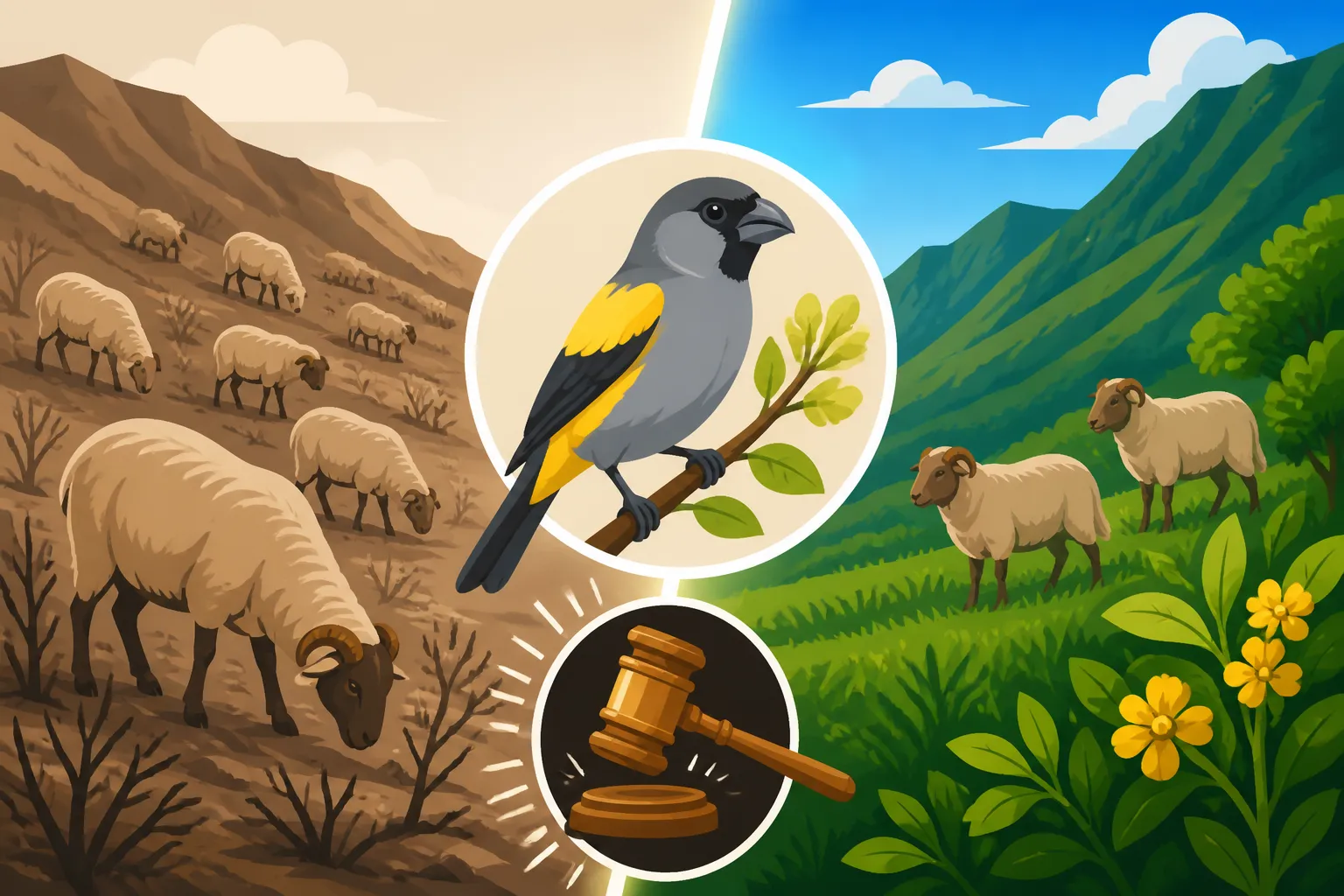
Before we dive into the legal complexities, it’s crucial to understand the main character in this ecological drama: the Palila. This small, critically endangered Hawaiian finch (Loxioides bailleui) is found only on the slopes of Mauna Kea on Hawaii Island. Its survival is inextricably linked to one specific tree, the mamane (Sophora chrysophylla). Without the mamane, there is no Palila, and this fundamental truth is what ultimately led to the dramatic shifts in sheep management.
The Palila's Unique Place in Hawaii's Ecosystem
The Palila isn't just any bird; it's a specialized feeder, a true island original. Its stout, finch-like beak is perfectly adapted to crack open the tough pods of the mamane tree, extracting the nutritious seeds within. These seeds form the vast majority of its diet, especially during dry periods when other food sources are scarce. The Palila also nests exclusively in mamane trees, finding shelter and raising its young among their branches. This incredibly specific dependency makes the Palila highly vulnerable. Any threat to the mamane forest is, by extension, an existential threat to the Palila itself. Imagine your entire food supply, your home, and your nursery all rolled into one plant species – that's the Palila's world. This delicate balance highlights why even seemingly small environmental changes can have catastrophic consequences for highly specialized native species.
Mauna Kea's Mamane Forests: The Palila's Last Stand
Historically, mamane-naio (Myoporum sandwicense) forests stretched across much of Mauna Kea's mid-elevation slopes. These forests were once vibrant ecosystems, teeming with unique Hawaiian flora and fauna. However, over centuries, human activity and the introduction of non-native species led to significant deforestation and degradation. By the time the Palila was listed as an endangered species in 1967, its habitat had shrunk to a fraction of its original range. The remaining core population of Palila birds clung to survival within fragmented mamane forests primarily on the western and southern slopes of Mauna Kea. These remnant forests became the last bastion for this unique bird, making their protection paramount for its very existence. The health of these specific stands of trees became a direct indicator of the Palila's future, a situation conservationists and legal minds would soon focus on. This is where the story of What Mamane Trees Mean to Mauna Kea becomes critically important.
The Role of Feral Sheep and Mouflon in Habitat Degradation
While the Palila was struggling, another population was thriving on Mauna Kea: sheep. Feral sheep (descendants of domestic sheep introduced in the late 18th century) and the later-introduced mouflon (Ovis gmelini musimon, first brought to Hawaii in the 1950s for sport hunting) had found a home in the same high-elevation areas as the mamane forests. What seemed like a boon for hunters eager to pursue big game quickly became an ecological nightmare for the Palila. The dynamic between Hawaii's Feral Sheep on the Big Island and the mamane forest was one of conflict.
Grazing Pressure and Habitat Destruction
The problem was simple: sheep eat plants. Lots of them. Mouflon and feral sheep are browsers and grazers, and young mamane seedlings are particularly palatable to them. As these sheep populations grew, they exerted immense grazing pressure on the forest floor. They would devour tender young mamane trees before they had a chance to grow, effectively preventing the forest from regenerating. Imagine a forest where no new trees can grow to replace the old ones that naturally die off. Over time, the forest thins, ages, and eventually disappears. This wasn't just about a few nibbled leaves; it was about the systematic destruction of the Palila's critical food source and nesting habitat. The sheep weren't intentionally targeting the Palila, of course, but their feeding habits were a direct, undeniable threat to the bird's survival. This impact made the management of these ungulates a central point of contention.
The Hybrid Challenge: Mouflon and Feral Sheep
Further complicating the issue was the interbreeding between the feral sheep and the introduced mouflon. These animals produced hybrids that shared the same destructive feeding habits. While pure mouflon were valued by some hunters for their impressive horns, the distinction became blurred in the wild. The state's Department of Land and Natural Resources (DLNR), specifically its Division of Forestry and Wildlife (DOFAW), had a mandate to manage game animals for hunting, but also a responsibility to protect endangered species. This dual mandate often put them in a difficult position. The presence of these Mouflon and Feral Sheep Hybrids meant a larger, more robust population of plant-eating animals on the mountain, accelerating the degradation of the mamane forests and pushing the Palila closer to extinction.
The Palila Lawsuit: A Landmark Case for Conservation
Recognizing the dire situation, environmental groups stepped in. In 1978, the Sierra Club Legal Defense Fund (now Earthjustice) filed a lawsuit on behalf of the Palila against the State of Hawaii, specifically targeting DOFAW's management practices. This wasn't just another environmental dispute; it became a landmark case under the Endangered Species Act (ESA) and set a precedent for how federal law could compel state agencies to protect endangered species from the impacts of non-native game animals.
Environmental Law and the Endangered Species Act
The Endangered Species Act is a powerful piece of federal legislation designed to protect imperiled species and their ecosystems. It prohibits "take" of endangered species, which includes not only direct harm but also habitat modification or degradation that might injure or kill protected wildlife. The core argument of the Palila lawsuit was that by allowing feral sheep and mouflon to persist and graze within the Palila's critical habitat on Mauna Kea, the State of Hawaii was effectively "taking" the Palila by destroying its essential mamane forest. This was a novel interpretation at the time, asserting that state-managed game animals could be considered a "take" under federal law if they led to the demise of an endangered species' habitat. It moved the focus from direct harm to indirect habitat destruction. The case highlighted the complex interplay between federal and state jurisdiction when it comes to wildlife management.
The Court's Ruling and Management Directives
The lawsuit spanned many years and went through several appeals. Ultimately, the federal courts sided with the Palila. The key rulings, most notably Palila v. Hawaii Department of Land and Natural Resources, established that the State had a legal obligation to remove all non-native, hoofed animals from the Palila's critical habitat on Mauna Kea. This wasn't a recommendation; it was a court order. The rulings mandated the eradication of feral sheep and mouflon from specific elevation zones where the Palila and mamane forests resided, effectively prioritizing the survival of the endangered native bird over the presence of introduced game animals. This decision sent shockwaves through the hunting community and state wildlife agencies, underscoring the legal weight of the ESA. It dictated a complete paradigm shift in the management of Mouflon Sheep on Hawaii's Volcanoes within these specific areas.
Impact on Hawaii's Hunting and Sheep Management
The Palila lawsuit fundamentally altered the landscape of sheep hunting on Hawaii Island. Hunters who had enjoyed pursuing feral sheep and mouflon in the Mauna Kea region suddenly faced significant restrictions and reductions in animal numbers. It was a stark reminder that hunting, while a valued tradition and management tool, operates within a larger ecological and legal framework, especially in an ecosystem as fragile as Hawaii's.
Changes in Huntable Populations and Areas
Following the court order, DOFAW embarked on a program to remove sheep from the designated critical habitat zones. This involved both public hunting efforts and, at times, aerial culling. The result was a dramatic decrease in the number of huntable sheep and mouflon in specific areas of Mauna Kea. For many hunters, especially those who enjoyed Hunting Mouflon in Mauna Kea's Thin Air or sought them out in the mamane forests, this was a significant loss of opportunity. While mouflon hunting still exists in other units and areas on Hawaii Island, and occasionally special public hunts are held to manage populations, the days of abundant sheep in the Palila's core habitat were over. The state's focus shifted from maintaining a huntable population in these areas to actively reducing it for conservation purposes. This necessitated changes in how permits and tags were issued, affecting aspects like How Hawaii's Permit-Tag System Works.
Ongoing Management Strategies and Conservation
In the decades since the Palila lawsuit, DOFAW has continued to implement management strategies aimed at protecting and restoring the mamane forest and, by extension, the Palila. This includes:
- Fencing: Extensive fencing projects have been undertaken to exclude ungulates from key restoration areas. These Hawaii's Fenced Conservation Boundaries are designed to give young mamane trees a chance to grow without being browsed.
- Controlled Culling: While public hunts contribute to population control, more intensive culling efforts, sometimes including aerial methods, have been employed to remove sheep from inaccessible or sensitive areas within the critical habitat.
- Reforestation Efforts: Alongside animal removal, active reforestation projects are underway to plant new mamane trees and accelerate habitat recovery.
- Monitoring: Regular monitoring of both Palila populations and mamane forest health helps guide ongoing management decisions.
These efforts represent a long-term commitment to ecological restoration, driven directly by the legal mandates of the Palila lawsuit. You can often find current information on these initiatives and hunting seasons through resources like the GoHunt Hawaii portal, which provides updates on regulations and application processes for various units and species across the islands.
Hunter Perspectives and Conservation Efforts
The Palila lawsuit sparked considerable debate within the hunting community. While some hunters understood the necessity of protecting an endangered native species, others felt disenfranchised by the loss of hunting grounds and opportunities. The challenge for DOFAW has been to balance its conservation obligations with its role in providing recreational hunting opportunities. Many hunters are deeply invested in conservation and understand that healthy ecosystems support healthy game populations. Some hunting organizations have even partnered with conservation groups on fencing and habitat restoration projects outside of the core Palila habitat. This collaboration acknowledges that hunters can be crucial allies in broader conservation efforts, even when specific game populations must be reduced in certain areas to protect native wildlife. Information about applying for specific hunts or understanding unit changes can often be found via the GoHunt platform, which helps hunters navigate the latest regulations and opportunities.
It’s a complex situation, one that continues to evolve. While the numbers of feral sheep and mouflon in the specific Palila critical habitat on Mauna Kea have been drastically reduced due to the lawsuit, these animals still exist in other areas of Hawaii Island, as well as on Maui and Lanai. Hunting for these species continues in designated units, managed under specific seasons and bag limits outlined by Hawaii Game Mammal Seasons and Hawaii's Hunting Units and Where They Are. The Palila lawsuit remains a powerful reminder of the delicate balance between introduced species, native ecosystems, and the responsibilities inherent in wildlife management within a unique island environment.
| Aspect of Management | Pre-Palila Lawsuit | Post-Palila Lawsuit (Mauna Kea Critical Habitat) |
|---|---|---|
| Primary Goal | Manage sheep/mouflon for sport hunting and provide recreational opportunities. | Protect and restore Palila habitat, which necessitates removing ungulates from critical areas. |
| Ungulate Numbers | High, often uncontrolled, leading to widespread grazing and habitat degradation. | Drastically reduced, with continuous efforts to keep numbers low or eradicate them in designated zones. |
| Hunting Access | Generally open in relevant units, with opportunities for pursuing larger populations. | Severely restricted or eliminated in critical habitat zones; opportunities shifted to other units or highly controlled special hunts. |
| Habitat Focus | Limited active management of mamane forests in relation to ungulate grazing. | Intensive fencing, active reforestation, and removal of ungulates to allow mamane regeneration. |
| Legal Mandate | State's discretion in game management. | Federal court order under the Endangered Species Act, compelling ungulate removal. |
Conclusion
The Palila lawsuit stands as a pivotal moment in Hawaii's conservation history, fundamentally reshaping how introduced game animals are managed, particularly in conflict with endangered native species. It brought the full force of the Endangered Species Act to bear, mandating the removal of feral sheep and mouflon from critical Palila habitat on Mauna Kea. While this decision significantly altered hunting opportunities in specific areas, it underscored the profound ecological responsibility we have to protect Hawaii's unique and fragile native ecosystems. For hunters, it highlights the importance of understanding the broader conservation landscape and adapting to evolving management priorities. Today, efforts continue to restore the mamane forests and ensure a future for the Palila, a future inextricably linked to the continued vigilance in managing non-native ungulates across the islands.
Disclaimer
This article is for general informational purposes only and does not constitute professional advice. Laws, prices and regulations vary by location and change over time. Consult a qualified professional for guidance on your specific situation.