Where Hawaii’s Windward Forests Hold Pigs
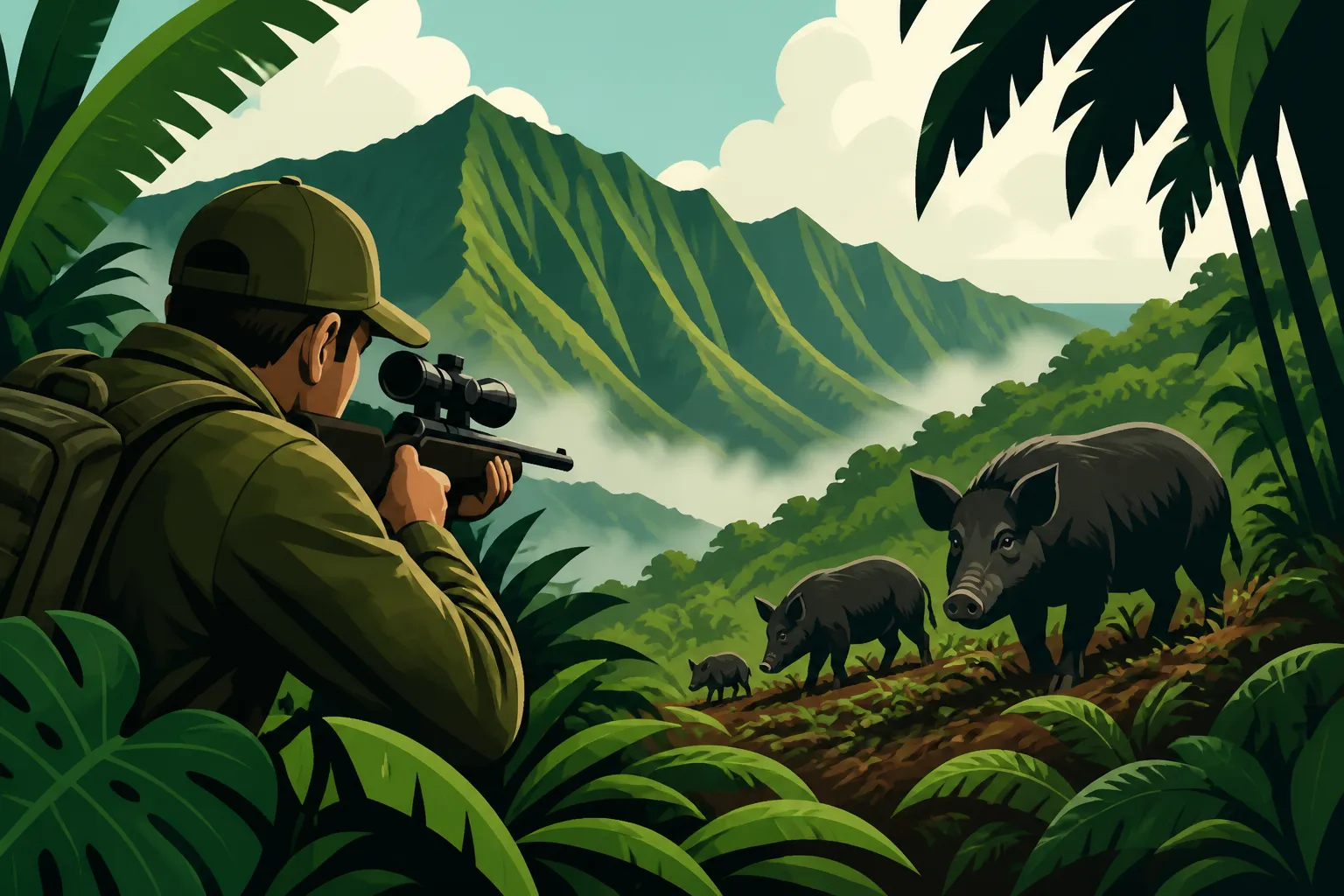
The dense, perpetually damp windward forests of Hawaii present a unique challenge for pig hunters. If you've ever spent a morning tracking through a guava thicket, soaked to the bone before the sun even fully rises, or tried to make sense of fresh rooting in a constantly wet gulch, you know the frustration. This guide will help you understand why feral pigs thrive in these lush, green environments and equip you with the knowledge to navigate and hunt Hawaii's windward pig country effectively.
The Unique Character of Hawaii's Windward Forests
Hawaii's windward sides are truly a world apart from their leeward counterparts. Shaped by the relentless trade winds and the moisture they carry, these forests are defined by consistent rainfall, towering humidity, and an incredibly dense canopy. It's a landscape of perpetual verdant growth, where everything seems to be clinging to life, often literally.
Imagine stepping into a jungle; that's often what it feels like. The ground is typically soft, muddy, and covered in a thick layer of decaying leaves and organic matter, making for quiet but often slippery footing. Water is abundant, flowing in countless rivulets, streams, and cascading down steep gulches. This constant moisture fosters a rich biodiversity, from towering native ōhia and koa trees to invasive but widespread species like strawberry guava, hāpuʻu ferns, and wild ginger, all forming an almost impenetrable understory. It’s an environment that feels alive, vibrant, and utterly wild, but also one that demands respect and preparedness from any hunter.
The Impact of Constant Moisture
The most defining feature of a windward forest is its moisture. Day in and day out, these areas receive significant rainfall, leading to high humidity levels that rarely drop. This isn't just about getting wet; it fundamentally alters the forest ecosystem. Plants grow at an astonishing rate, creating a dense, tangled web of vegetation that can limit visibility to just a few feet in any direction. Every branch, every leaf, every fern frond seems to hold a droplet of water, ensuring that you'll be damp no matter how sunny the sky above.
This constant moisture also means the ground is often saturated, creating soft, muddy tracks where pig sign is frequently visible, but also challenging to interpret. Streams and springs flow year-round, providing pigs with an inexhaustible water supply, unlike the dry country where water holes become critical hunting spots. The ground also retains scent longer, which can be both a blessing and a curse for hunters and their dogs. Understanding this ever-present dampness is key to recognizing pig behavior and adapting your hunting tactics.
Dense Vegetation and Challenging Terrain
Beyond the moisture, windward forests are characterized by their extreme density. Think of fields of uluhe fern that reach above your head, intertwining vines, and a constant tangle of invasive undergrowth like wild ginger and dense guava thickets. Moving through this can be a physical ordeal, requiring you to push, crawl, and sometimes even cut your way through. This isn't wide-open country where you can glass for miles. Here, every step is deliberate, and your senses are honed to the immediate surroundings.
The terrain itself often contributes to the challenge. Many windward areas are characterized by steep, eroded gulches and ravines, cut by centuries of rainfall. These can be treacherous to navigate, with slippery slopes, loose rocks, and hidden drops. While these features make human access difficult, they create perfect sanctuaries for pigs, offering shelter, escape routes, and bedding areas far from trails and roads. Hunters venturing into these areas must be in good physical condition and equipped with appropriate gear for the rough and often vertical landscape. Hunting Hawaii's rainforest gulches can be an intense experience, requiring serious preparation.
Why Feral Pigs Flourish in Windward Forests
Feral pigs aren't just surviving in Hawaii's windward forests; they are absolutely thriving. These environments offer everything a pig could ever want: abundant food, constant water, and impenetrable cover. It’s a combination that allows their populations to grow robustly, making these areas prime hunting grounds for those willing to brave the elements.
Pigs are incredibly adaptable animals, and the windward side plays directly into their strengths. The sheer density of the vegetation means they can disappear from sight almost instantly, using the jungle as their personal fortress. The constant moisture means they never have to travel far for water, conserving energy and reducing their exposure. This allows them to focus on feeding and reproducing, maintaining strong numbers even with hunting pressure.
Abundant Food Sources
One of the primary reasons pigs do so well in windward forests is the sheer buffet of food available year-round. Unlike drier leeward areas where food sources might ebb and flow with rainfall, the constant moisture on the windward side supports an incredible array of edible plants. Pigs are omnivores and opportunists, and this environment provides them with a diverse diet.
They root extensively for the starchy tubers and roots of various ferns, including the prevalent hāpuʻu. They gorge on fallen fruits from invasive plants like strawberry guava, passionfruit, and even wild avocado, especially when these trees are in season. They'll also consume invertebrates, fallen berries, and the tender shoots of many understory plants. This constant access to high-energy food sources means pigs in windward forests are often well-fed, healthy, and grow to impressive sizes. A keen hunter will learn to identify these food sources and focus their efforts where the pigs are actively foraging. You'll often find tell-tale signs of their rooting activity in soft, muddy ground. Reading Pig Sign Along a Muddy Trail is a critical skill here.
Constant Water and Bedding Cover
Water is life, and in windward forests, it's never in short supply. Countless small streams, seeps, and seasonal pools provide pigs with easy access to drinking water and, perhaps more importantly, ample opportunities for wallowing. Pig wallows are common sights in these areas – muddy depressions where pigs roll to cool off, get rid of parasites, and coat themselves in a protective layer of mud. These wallows are not just functional for pigs; they are fantastic indicators of recent pig activity and can guide hunters to active feeding and bedding areas.
Beyond water, the dense vegetation offers unparalleled cover. Pigs spend a significant portion of their day bedding down, and the thick tangles of fern, ginger, and guava provide perfect hiding spots. These areas are often so dense that a pig can lie just yards away from a hunter and remain completely unseen. Sows also farrow (give birth) in these hidden pockets, knowing their young will be safe from predators and disturbances. This makes still-hunting particularly challenging, as visual confirmation can be incredibly difficult, often reduced to hearing subtle rustles or the scent of a nearby animal.
Prime Windward Pig Strongholds
While feral pigs can be found across all islands, some of Hawaii's most productive and challenging pig hunting occurs in the expansive windward forests. These areas are typically located on the eastern or northeastern slopes of the larger islands, where they intercept the trade winds. When you check out the hunting unit maps on the GoHunt website or app, you'll notice many of the larger forest reserves and game management areas on Hawaii Island, Maui, Oahu, and Kauai have significant portions that fall into this wet, windward classification.
For instance, much of the Hilo Forest Reserve on Hawaii Island, parts of the Koʻolau Forest Reserve on Maui, and the wet interior sections of Kauai are classic examples. These are not always easily accessible areas; some require significant hiking, while others might be remote enough that special permits or even helicopter access (for game recovery, not hunting directly) might be considered in extreme cases.
Hawaii Island's Northeastern Slopes
On Hawaii Island, the vast stretches of forest reserve and unmanaged lands along the Hāmākua and Kaʻū coasts, particularly inland from Hilo, are prime windward pig habitat. These areas receive prodigious amounts of rain and are characterized by dense ōhia and koa forests, often with an incredibly thick understory of invasive species like kahili ginger and guava. The terrain here can be steep, broken by deep gulches and lava tube systems that offer pigs endless places to hide.
Hunting here means embracing the wet. Expect mud, slippery roots, and limited visibility. These forests also transition into higher-elevation ōhia-lehua stands, offering different types of cover and food sources but maintaining that consistent dampness. Areas like the Hilo Forest Reserve are well-known for their pig populations, and navigating them requires a good compass, GPS, and a keen sense of direction. Hunting Pigs on Hawaii's Wet Windward Side gives a deeper dive into these specific challenges.
Maui's Koʻolau and Hana Regions
Maui’s windward side, particularly the Koʻolau and Hana districts, are equally renowned for their pig populations. The northeastern slopes of Haleakalā are cloaked in dense rainforests, receiving some of the highest rainfall totals in the state. These areas are characterized by a mix of native and introduced vegetation, including extensive stands of bamboo, various ferns, and a thick undergrowth that can swallow a hunter whole.
The deep valleys and steep, winding gulches that define this part of Maui are perfect sanctuaries for pigs. Access can be extremely challenging, often requiring long hikes through trackless jungle. While certain public units exist, much of this terrain is private land or inaccessible conservation areas. Hunters pursuing pigs here often rely on strong dog teams capable of penetrating the thickest cover and baying pigs in the most rugged spots. Hunting Maui's Upcountry Forest Reserves also touches on some of the transition zones where pigs frequent.
Oahu and Kauai's Interior Jungles
Even on more populated islands like Oahu, the windward mountain ranges – the Koʻolau Range in particular – hold significant pig populations in their remote, wet valleys and high ridges. These areas, often within forest reserves or protected watersheds, are less accessible but offer fantastic hunting opportunities for those willing to put in the effort. The vegetation here is similarly dense, dominated by invasive species, forming a labyrinthine environment.
On Kauai, the interior of the island, especially the areas around Waialeale, one of the wettest spots on Earth, is a wild pig haven. The Alakaʻi Wilderness Preserve, while largely protected, influences pig movements in adjacent public hunting units. The deep canyons and rainforests of Kauai provide incredible habitat, though access is often extremely difficult, with few roads penetrating the heart of the island. Hunting these areas requires specialized gear, strong navigation skills, and a healthy respect for the island's raw power.
Strategies for Hunting Pigs in Windward Forests
Hunting in Hawaii's windward forests isn't for the faint of heart. It demands a different approach than hunting dry, open country. Success often hinges on a combination of patience, keen observation, and the right tools and techniques. Forget long-range shots; this is close-quarters work, often relying on your ears more than your eyes.
The primary strategy often revolves around either still-hunting – moving slowly and deliberately, trying to intercept pigs – or utilizing a good dog team, which is arguably the most effective method in such dense cover. Both require understanding the terrain and pig behavior, but the challenges are amplified by the environment.
| Feature | Windward Forest Hunt | Leeward Dryland Hunt |
|---|---|---|
| Visibility | Extremely limited (feet, not yards) | Often open, good for glassing long distances |
| Terrain | Steep, muddy, slippery gulches, dense undergrowth | Rocky, lava flows, kiawe flats, open pastures |
| Moisture | Constant rain, high humidity, always wet | Arid, dusty, hot, limited water sources |
| Vegetation | Thick ferns, guava, ginger, bamboo, native ōhia |
Sparse kiawe, buffel grass, open scrub, sparse trees |
| Pig Sign | Fresh rooting, wallows, muddy tracks, strong scent | Dusty tracks, rubbed trees, dried rooting, scat |
| Tactics | Still-hunting, dog hunting, tracking, scent focus | Spot-and-stalk, hunting water holes, long shots |
| Challenges | Navigation, getting soaked, noisy movement, low visibility, packing out | Heat, dehydration, long distances, elusive animals, judging size |
| Gear Focus | Rain gear, good boots, GPS, machete/pruners, water | Optics, hydration pack, light clothing, wide-brim hat |
Still-Hunting and Tracking in the Thick
Still-hunting in a windward forest requires an almost meditative state of mind. You must move incredibly slowly, pausing frequently to listen. The constant dripping water and rustling leaves can mask sounds, so distinguishing natural noises from a pig moving through the brush is crucial. Focus on areas with fresh rooting, active wallows, or trails leading to dense bedding cover. Look for disturbed vegetation, fresh tracks in the mud, or even the distinct musky odor of pigs.
Success often comes down to patience. Pigs will often be moving slowly themselves, feeding as they go. If you hear something, freeze and listen, letting your ears guide you. The dense cover means shots will be close, so practice quick, accurate target acquisition in tight spaces. Bowhunting can be particularly challenging due to limited shooting lanes, but the close range offers unique opportunities. Be prepared for a physically demanding day, as every mile covered in this environment feels like two. Still-Hunting Pigs in Hawaii's Wet Forest details these tactics.
The Power of a Good Dog Team
For many local hunters, especially in the thickest windward forests, hunting with dogs is the preferred, and often most effective, method. A well-trained dog team can penetrate cover that would be impossible for a human, locate pigs by scent and sound, and then bay them (hold them at bay by barking) or catch them. This allows the hunter to close the distance and make a humane harvest.
Dog hunting in windward forests is intense. The dogs are working through incredibly difficult terrain, often out of sight, relying on their nose and ears. GPS collars are absolutely essential here to keep track of your dogs and navigate to a bayed pig. Communication between hunters and dogs, usually through vocal commands and the dogs' barks, is vital. This type of hunting is a deep-rooted cultural tradition in Hawaii, requiring a close bond between hunter and dog. Pig Hunting With Dogs in Hawaii provides a comprehensive look at this method.
Navigating and Packing Out
Getting a pig out of a steep, wet windward gulch is often harder than finding and taking the pig itself. The terrain is treacherous, and the constant humidity and heat make quick meat care essential. Plan your extraction route carefully beforehand, if possible, or be prepared for a grueling pack-out. It often requires multiple trips, a sturdy pack frame, and sometimes even a team of friends.
Always carry a good GPS and a compass, even if you think you know the area. The dense vegetation can disorient you quickly, and familiar landmarks can vanish in the mist or fog that often blankets these windward slopes. Waterproof maps, or the GoHunt app with offline maps downloaded, are invaluable. Packing Meat Out of a Hawaii Gulch is a crucial read for anyone venturing into these challenging areas. And remember, quality rain gear isn't optional; it's a necessity for comfort and safety in these persistently wet environments.
Disclaimer
This article is for general informational purposes only and does not constitute professional advice. Laws, prices and regulations vary by location and change over time. Consult a qualified professional for guidance on your specific situation.