Hawaii’s Feral Sheep on the Big Island
You drive up Saddle Road expecting tropical Hawaii and instead find frost on the windshield, thin air in your lungs, and a vast slope of cinder and mamane where the sheep you came for can see you from a mile away. Hunting feral sheep on the Big Island is nothing like the brochures. This guide explains where they live, why they are managed the way they are, and how to hunt them well.
Understanding Feral Sheep on Hawaii Island
Feral sheep are one of the most misunderstood game animals in Hawaii. Most visitors do not even know they exist. Yet for well over a century, wild sheep have lived on the high slopes of Mauna Kea and, to a lesser extent, Mauna Loa and the saddle country between them. Their story is tied to ranching, to native forests, to an endangered bird, and to the hunters who have walked these mountains for generations.
Where the Sheep Came From
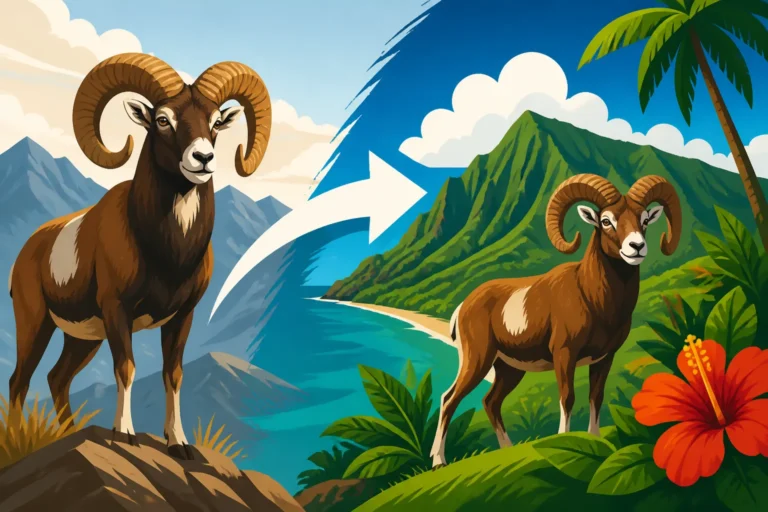
Domestic sheep arrived in the Hawaiian Islands in the late 1700s with European voyagers, around the same era that cattle were introduced. Under early protections and with no native predators, animals that escaped or were turned loose multiplied quickly. On Hawaii Island, ranching in the nineteenth and early twentieth centuries spread sheep across the upland pastures and open forests, and many of those animals went wild.
Over time, the high country of Mauna Kea became their stronghold. The cool, dry slopes above the rain forest belt, with their open mamane and naio woodland and grassy cinder plains, suited them well. By the twentieth century, feral sheep were a well-established part of the mountain, alongside feral goats and cattle.
Feral Sheep, Mouflon and Hybrids
It is important to separate three groups of animals that hunters on the Big Island may encounter. Feral sheep descend from domestic breeds. They vary widely in color and build, from white and cream to brown, black and mottled, and many carry traces of wool. Mouflon are a wild sheep species from the Mediterranean that the state introduced to the Big Island in the mid-twentieth century, partly to create a trophy hunting resource and partly with the idea that they would be easier on the land than feral sheep. On the mountain, the two have interbred, producing mouflon and feral sheep hybrids that show a mix of traits.
| Type | Typical Look | Origin | What It Means for Hunters |
|---|---|---|---|
| Feral sheep | Varied colors, often some wool, mixed horn shapes | Escaped and released domestic stock | Often managed for reduction, generous rules in some units |
| Mouflon | Reddish-brown coat, pale saddle patch, curling horns on rams | Introduced wild sheep | Often managed as a game species with seasons |
| Hybrids | Mix of mouflon coat and feral traits | Interbreeding on Mauna Kea and Mauna Loa | Rules depend on unit; learn how the state classifies them |
If you are interested in the wild sheep side of the story, our guides to Mouflon Sheep on Hawaii’s Volcanoes and Mouflon and Feral Sheep Hybrids go deeper. This guide focuses on the feral sheep and the hybrids that share their range.
Why Feral Sheep Are Managed So Differently
Unlike axis deer on Maui and Lanai or mouflon in certain units, feral sheep on Mauna Kea are not primarily managed to create a sustainable hunting resource. They are managed with native ecosystem protection in mind. That shapes everything from where you can hunt to how many animals you can take.
The key reason is the palila, a small, yellow-headed Hawaiian honeycreeper that depends almost entirely on mamane trees on the upper slopes of Mauna Kea. Feral sheep and goats browse mamane seedlings and strip young trees, which over the decades degraded the very forest the palila needs. That conflict led to a landmark federal court case in the late 1970s, which ordered the removal of feral sheep and goats from the bird’s critical habitat. Our article on The Palila and Mauna Kea’s Sheep explains the background, and Why the Palila Lawsuit Changed Sheep Numbers walks through the effects on hunting.
Where Feral Sheep Live on the Big Island
Feral sheep on Hawaii Island are high-country animals. If you are hunting them, you are hunting mountains, not beaches.
Mauna Kea’s Upper Slopes
The main stronghold has long been the mamane and naio forest belt and the open grass and cinder country above it on Mauna Kea. Elevations commonly range from around six thousand feet to the high, barren cinder zone above ten thousand feet. The terrain includes gentle slopes, steep gulches, cinder cones and lava flows, often with very little cover above the tree line.
Within this belt, sheep tend to use the forest edge for shelter and the open slopes for feeding. In the early morning and late afternoon they may feed in open grassy areas, then bed in shade or among rocks during the heat of the day. They can travel long distances, especially when hunting pressure is heavy, so a herd seen in one gulch at dawn may be far away by noon.
The Saddle and Mauna Loa
Between Mauna Kea and Mauna Loa lies the saddle, a broad high plateau crossed by the Daniel K. Inouye Highway, still widely called Saddle Road. This area includes a mix of state lands, military lands and private ranches. Some sheep and hybrids range across the saddle and onto the slopes of Mauna Loa, especially where vegetation allows.
Hunters often access saddle country via public units and game management areas. Our guides to Hunting the Saddle Road Country and Hunting Kaohe Game Management Area cover access details for that region. Military land around the Pohakuloa area is off limits without authorization, so know exactly where public ground ends.
Reading Sheep Habitat on the Ground
Even within known sheep country, animals are not evenly spread. Look for these features:
- Open grassy slopes near forest edges, where sheep feed in low light.
- Gulches and drainages that provide shade, shelter from wind and escape routes.
- Well-worn trails along contours and ridgelines, often with droppings and wool caught on shrubs.
- Mamane and naio stands with obvious browsing on lower branches and seedlings.
- Areas with recent rainfall where fresh grass is sprouting.
- Fence lines, where sheep may walk boundaries looking for gaps.
Elevation also shifts animal behavior through the day and the seasons. Expect sheep to move up and down slope with temperature, wind and available feed.
Rules, Licenses and Unit Management
Hunting feral sheep legally on the Big Island means navigating licenses, hunter education, unit rules, seasons and check-in requirements. These details change, so treat what follows as a framework and confirm current rules with the Division of Forestry and Wildlife before every hunt.
Licenses and Hunter Education
Anyone hunting game mammals in Hawaii needs a valid Hawaii hunting license, and first-time license buyers must generally complete an approved hunter education course. Nonresidents may be able to use hunter education certificates from other states, but you should confirm reciprocity before you travel. Our Hawaii Hunter Education Requirements guide explains the course, and Hawaii Hunting Licenses and What They Cost covers license types and cost categories.
Units, Seasons and Bag Limits
Hawaii Island is divided into hunting units with their own rules. Some units on Mauna Kea, particularly those tied to palila habitat protection, have historically had liberal seasons and bag limits for feral sheep and goats, reflecting the goal of reducing animal numbers. Other units, especially those managed for mouflon or hybrids, may have shorter seasons, specific weapon types, lottery hunts or tighter limits.
| Rule Area | What Usually Varies by Unit | Where to Check |
|---|---|---|
| Open days | Year-round, weekends only, or set seasons | Current hunting rules and unit maps |
| Weapon type | Rifle, archery, muzzleloader, shotgun | Unit rules and weapon regulations |
| Bag limit | Daily and seasonal limits for sheep, goats, mouflon | Unit rules |
| Check-in | Sign-in boxes or check stations | Unit maps and signs on site |
| Access | Gates, roads, foot access only | Unit maps and DOFAW notices |
Read Hawaii’s Hunting Units and How They Work and Hawaii Island Hunting Unit Seasons for a broader explanation of the unit system and look up the exact unit you plan to hunt.
Check-In, Tagging and Reporting
Many units require hunters to check in and check out at designated stations or sign-in boxes, recording information about hunting effort and any animals taken. This data helps managers understand hunting pressure and population trends. Failing to check in or out can result in penalties, and it undermines the system that keeps units open.
Follow tagging and reporting rules exactly. If a unit requires you to report harvested sheep, do it accurately. Read the instructions posted at the station each time, since procedures can change.
Hunting Strategies for Feral Sheep
Sheep are herd animals with good eyesight and a strong tendency to flee to steep or broken terrain when disturbed. On open mountain slopes, the hunter who sees the animals first and plans a careful approach usually wins.
Glassing First, Walking Second
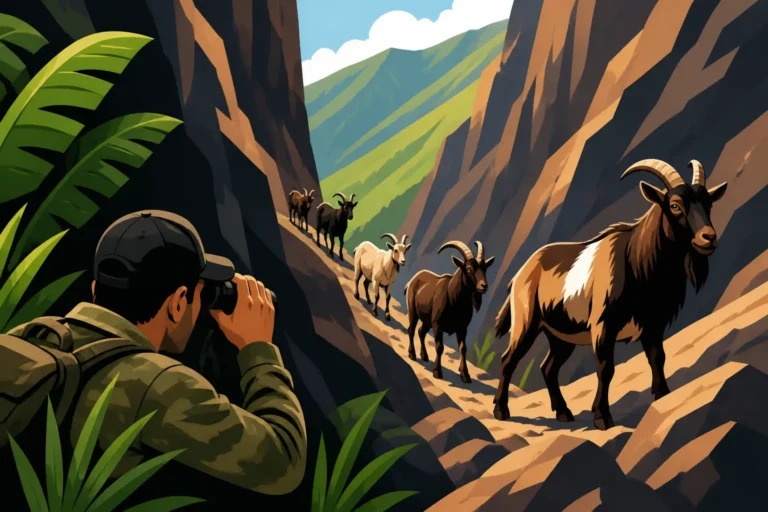
The single most effective technique for feral sheep is patient glassing. From a high point at first light, scan slopes, gulch edges and forest margins with good binoculars. Look for movement, color contrasts, and the shapes of animals bedded among rocks.
Once you spot a herd, take time to study it. Note the direction animals are moving, where they are likely to bed, and what terrain features you can use to close the distance unseen. Many hunters make the mistake of walking quickly through sheep country hoping to bump into animals; that usually just pushes herds into the next drainage.
Digital mapping tools help a lot here. Apps like GoHunt and similar platforms let you overlay terrain, unit boundaries and land ownership on your phone, which makes it much easier to plan an approach that stays on legal ground. Always cross-check those maps against the state’s official unit maps and on-the-ground signs.
Using Wind and Terrain
On Mauna Kea, wind is constant and often shifts with the time of day. Morning thermals tend to flow downslope; as the sun heats the mountain, they typically switch upslope. Trade winds add another layer. Sheep rely on their noses as well as their eyes, so always plan your stalk with the wind in your face or quartering.
Use gulches, ridges, cinder cones and forest edges to break up your outline as you move. Stay low on skylines, avoid crossing open ground in full view, and move only when animals are feeding or looking away.
Stalking, Shot Selection and Recovery
When you reach shooting range, take your time. Make sure of your target, your backstop and what lies beyond it. On open mountain slopes, that can mean other hunters, roads, structures or livestock far in the distance. Identify the animal clearly, especially if mouflon, hybrids and feral sheep share the area and different rules apply.
Aim for vital areas behind the shoulder for a quick, clean kill. After the shot, mark the spot where the animal was standing and watch for its reaction and direction of travel. Wounded sheep can run surprising distances on steep, broken ground, and recovery may require careful tracking.
Rifle, Archery and Muzzleloader Options
| Weapon Type | Strengths on Feral Sheep | Challenges |
|---|---|---|
| Rifle | Longer effective range for open slopes | Wind drift at high elevation, legal caliber rules |
| Archery | Quiet, often longer seasons in some units | Requires very close stalks on open terrain |
| Muzzleloader | Some units offer special windows | Limited range, slower follow-up shots |
Check Hawaii’s Legal Rifle Calibers for Big Game before deciding on a rifle, and practice extensively at realistic ranges and angles. Shooting uphill and downhill in thin, windy air is very different from shooting on a flat range at sea level.
Preparing for High-Elevation Conditions
Many hunters underestimate how different the upper slopes of Mauna Kea are from the rest of the island. Conditions there can be harsh, especially for visitors from sea level.
Altitude and Physical Readiness
At elevations above roughly eight thousand feet, many people notice shortness of breath, headaches, fatigue and slower recovery. Altitude sickness can affect fit people too. Spending a night at a moderate elevation before hunting, staying hydrated, and avoiding heavy exertion right after arrival all help. If you develop severe symptoms such as confusion, extreme fatigue or difficulty breathing, descend immediately.
Physical conditioning matters. Practice hiking with a loaded pack on steep terrain before your trip, and focus on legs and cardiovascular endurance.
Weather, Cold and Sun
Weather on the mountain can change fast. Mornings can be below freezing, with frost and sometimes snow on the higher slopes in winter. Afternoons can bring fog, rain or hail. At the same time, the sun is intense at high elevation, and sunburn can happen quickly even when it feels cold.
- Pack layers: a base layer, insulating mid-layer and windproof, waterproof shell.
- Bring a warm hat, gloves and a neck gaiter, even in summer.
- Wear sunglasses, sunscreen and lip protection.
- Carry more water than you think you need, as the air is very dry.
- Check the weather forecast for the summit area as well as the lower slopes.
- Plan to be off exposed ridges if thunderstorms threaten.
Navigation, Vehicles and Emergencies
Much of Mauna Kea’s hunting country is reached by rough four-wheel-drive roads. Some roads cross cinder and lava that can puncture tires or trap vehicles. Carry a full-size spare, tools, a shovel and recovery gear, and know how to use them.
Cell coverage is patchy. Carry a GPS device or a phone with offline maps, a paper map and compass, and consider a satellite messenger for emergencies. Mapping tools such as GoHunt can store offline layers, which helps when signals disappear. Tell someone your plan, your unit and your expected return time.
From Field to Freezer
A well-placed shot is only the beginning of a successful sheep hunt. Handling the animal properly in the field is essential, especially in Hawaii’s climate where meat can spoil quickly.
Field Dressing and Cooling
Field dress the animal promptly, removing the internal organs to start the cooling process. In cooler high country, this can buy you some time, but the sun can still heat a carcass quickly. Hang the carcass or quarters in shade where possible, and get meat into coolers with ice as soon as practical. Breathable game bags and an early start home make a big difference.
Wear gloves while handling the animal and wash your hands thoroughly afterward. Feral animals can carry parasites and diseases, so treat the carcass with care and cook meat thoroughly.
Packing Out on Steep Ground
Feral sheep are not huge, but carrying a whole animal across steep, rocky terrain at high elevation is hard work. Many hunters quarter or bone out the meat in the field, using a sturdy frame pack and game bags to carry it out. Plan your route, take frequent breaks, and avoid overloading yourself on dangerous slopes.
Cooking Feral Mutton
Feral sheep meat can vary widely in flavor and tenderness depending on age, sex and diet. Younger animals often produce milder, tender meat, while older rams can be stronger flavored. Slow cooking, braising, stewing and grinding are popular ways to make the most of tougher cuts. Many Hawaii families have their own recipes for feral mutton, from stews to curries to kalua-style preparations.
Trim away as much fat and connective tissue as you can before cooking, because the strongest flavors in older animals tend to concentrate there. Marinades with citrus, ginger, garlic and shoyu are a common local approach, and long, slow braises turn tough shoulders and shanks into something the whole family will eat. Ground meat from older rams works well in sausages, chili and meatballs, especially when mixed with a little pork fat. If you are sharing meat with friends or neighbors, label packages with the date, the cut and whether the animal was young or old, so everyone knows what they are cooking.
Gear and Common Mistakes on a Mauna Kea Sheep Hunt
Hunters who struggle on their first feral sheep trip usually do not fail because of bad shooting. They fail because they brought the wrong gear, moved too fast, or misjudged the mountain. A little planning avoids most of that.
A Practical Gear List
| Item | Why It Matters on Mauna Kea | Notes |
|---|---|---|
| Quality binoculars | Glassing is the core technique | Mid-size models balance weight and clarity |
| Rangefinder | Distances are hard to judge on open slopes | Learn to read angle-compensated ranges |
| Spotting scope and tripod | Sorting feral sheep from hybrids and mouflon | Useful where unit rules differ by type |
| Layered clothing | Frost at dawn, strong sun by midday | Windproof outer shell is essential |
| Sturdy boots | Cinder and lava destroy light shoes | Ankle support on loose slopes |
| Frame pack and game bags | Packing quarters out on steep ground | Breathable bags help meat cool |
| Water and electrolytes | Dry, thin air dehydrates fast | Carry extra in the vehicle |
| Navigation and communication | Patchy cell coverage | Offline maps, paper map, satellite messenger |
| Vehicle recovery kit | Rough four-wheel-drive roads | Full-size spare, shovel, tire plugs |
| Coolers and ice | Heat at lower elevations on the drive home | Keep in shade until you return |
Rangefinders deserve special mention. On wide, featureless cinder slopes, almost everyone underestimates distance. A sheep that looks like a 200-yard shot may be well beyond that. Range every animal, and if you cannot get a confident reading, close the distance or pass.
Mistakes That Cost Hunters Animals
- Walking ridgelines in full view instead of glassing from cover, which sends herds into the next drainage before you ever see them.
- Ignoring the wind because it feels steady, even though thermals on the mountain switch through the day.
- Arriving from sea level and hiking hard on the first morning, then running out of energy or getting altitude headaches by midmorning.
- Failing to identify the animal clearly when feral sheep, hybrids and mouflon share an area under different rules.
- Taking long shots across canyons in gusting wind without practice at those distances.
- Leaving a carcass in the sun while celebrating, photographing or scouting for a second animal.
- Forgetting to check out of the unit, which can create problems with enforcement and skews the data managers rely on.
Reading a Herd’s Behavior
Feral sheep herds often include ewes, lambs and a few rams, though older rams sometimes travel in their own groups or alone. A herd that is feeding with heads down, spread loosely across a slope, is relaxed and approachable with care. A herd that bunches up, lifts heads and stares in one direction has noticed something, possibly you. When that happens, freeze, wait, and let them settle before moving again.
Lead animals, often older ewes, tend to decide where the group goes when alarmed. If you can predict their escape route, usually uphill or toward broken ground and gulches, you can sometimes position yourself to intercept a herd that another hunter has bumped. That is not a guarantee, but it is how many experienced Big Island hunters fill their bag on busy weekends.
Practicing these skills also translates directly to mouflon hunting. Many hunters start on feral sheep, learn to glass and stalk on the mountain, and then move on to more selective mouflon hunts once they understand the terrain and the rules.
Ethics, Culture and Conservation
Hunting feral sheep on the Big Island sits at the intersection of conservation, culture and recreation. Understanding those layers will make you a better hunter and a better guest on the mountain.
Hunting’s Role in Protecting Native Forests
Because feral sheep damage mamane and other native plants, hunting is one of the tools used to reduce their impact. When you take an animal from palila habitat or nearby units, you are helping protect a rare forest and the birds that depend on it. That does not mean anything goes; it means following the rules carefully and supporting the broader management goals.
Respecting Mauna Kea and Its People
Mauna Kea is a sacred mountain in Hawaiian tradition. Many sites on its slopes have deep cultural significance, and some areas are protected for cultural and natural reasons. Be respectful: stay on established roads and trails where required, do not disturb cultural sites or stone structures, and leave no trace.
You will often share the mountain with local families who have hunted there for generations. Treat them with courtesy, avoid crowding their areas, and be willing to listen and learn. Our Cultural Etiquette on a Hawaii Hunt article offers more guidance.
Planning Your First Feral Sheep Hunt
If this will be your first feral sheep hunt on the Big Island, take it one step at a time.
- Read the current Hawaii hunting rules and the specific rules for your chosen unit.
- Complete hunter education if required and buy your license.
- Study unit maps and use mapping tools such as GoHunt to plan access points and glassing locations.
- Prepare physically for altitude and steep terrain.
- Pack gear for cold, sun, wind and rough roads.
- Arrive early, check in properly, and spend your first hours glassing rather than walking.
- Take only clean, ethical shots within your proven range.
- Handle meat carefully and check out of the unit when you leave.
Feral sheep hunting on Mauna Kea asks a lot of you: lungs, legs, patience and judgment. In return, it offers a rare chance to hunt above the clouds, help protect one of Hawaii’s most unusual forests, and come home with meat you earned the hard way.
Disclaimer
This article is for general informational purposes only and does not constitute professional advice. Laws, prices and regulations vary by location and change over time. Consult a qualified professional for guidance on your specific situation.