Hawaii Hunter Education Requirements
Navigating the requirements for hunting in Hawaii can feel like deciphering an ancient scroll, especially when it comes to hunter education. Many folks, whether long-time residents hoping to get into the sport or visitors dreaming of an island hunt, find themselves scratching their heads wondering if their existing certification counts or what steps they actually need to take. This comprehensive guide is here to untangle all the knots, walking you through everything you need to know about Hawaii's hunter education requirements so you can hit the field safely and legally.
Understanding Hawaii's Hunter Education Mandate
The idea of hunter education isn't just about passing a test; it's a foundational step towards becoming a responsible and ethical hunter. In Hawaii, this mandate takes on even greater significance due to our unique and fragile island ecosystems. It's not simply a formality; it's a commitment to safety, conservation, and respect for the land and its creatures.
Why Hunter Education is Required in Hawaii
Hawaii's approach to hunting regulations, including hunter education, is deeply rooted in safety, conservation, and the responsible management of game populations. Unlike many mainland states with long histories of native game animals, Hawaii's hunting landscape is almost entirely composed of introduced, or "feral," species. While these animals – like axis deer, feral pigs, and goats – are abundant and offer fantastic hunting opportunities, they are also considered invasive and pose significant threats to Hawaii's native flora and fauna. Hunter education plays a crucial role in ensuring that hunters understand their impact and operate within guidelines that protect the remaining native ecosystems.
Beyond the ecological aspect, the core purpose remains hunter safety. Accidents happen, but they are dramatically reduced when individuals are properly trained in firearm handling, safe hunting practices, and basic first aid. The diverse and often rugged terrain across the islands, from dense rainforests to steep lava fields, presents unique challenges that require specific knowledge to navigate safely. This education instills the discipline and awareness necessary to prevent mishaps, ensuring that everyone can enjoy the sport responsibly.
The program also aims to foster an understanding of hunting ethics. This isn't just about following the law; it's about respectful conduct, fair chase principles, and minimizing waste. Hunters in Hawaii are often seen as stewards of the land, helping to control populations of species that can decimate native plant communities. A well-educated hunter understands this crucial role and takes it seriously, contributing positively to the overall health of the environment rather than just taking an animal. This ethical foundation is woven into every aspect of the hunter education curriculum.
Who Needs Hunter Education: Age and Previous Experience
Generally speaking, anyone born after December 31, 1948, who wishes to purchase a Hawaii hunting license and hunt game mammals or game birds must successfully complete a hunter education course certified by the state or an approved equivalent from another state or country. This rule applies to both residents and nonresidents, with specific provisions for each. It's the state's way of ensuring that everyone participating in hunting activities has a baseline understanding of safety, regulations, and ethical practices.
There are some nuances to this rule. For instance, younger hunters often have specific requirements. While a hunter education course is mandatory, there are also minimum age restrictions for participation in some hunts, and often, an adult supervisor must accompany them. We’ll dive deeper into that for our youth hunters later, but for now, understand that if you're relatively new to hunting or haven't taken a certified course previously, Hawaii's program is your gateway to the hunting grounds. Even if you've hunted your entire life in other states, if you can't prove you've completed a state-approved hunter education course, you'll likely need to take the Hawaii course or apply for a Letter of Exemption.
If you are just planning to buy a Hawaii Resident Hunting License Options or a Hawaii Nonresident Hunting License Options, the hunter education certificate will be a key document you'll need to present. It's the foundation upon which your legal hunting privileges are built, so don't overlook this crucial step. Without it, you simply won't be able to purchase the necessary licenses and permits, effectively putting a halt to your hunting plans before they even begin.
The Hawaii Hunter Education Course for Residents
For residents new to hunting or those who cannot prove prior hunter education, the Hawaii Hunter Education Course is your path forward. It’s designed to equip you with the knowledge and practical skills needed for safe and ethical hunting in the islands. This isn't just about memorizing facts; it's about hands-on learning and demonstrating proficiency.
Online Course Components and Field Day Requirements
The Hawaii Hunter Education Course typically follows a blended learning model, meaning it combines an online component with a mandatory in-person field day. The online portion is where you'll dive deep into the theoretical aspects of hunting. This self-paced study covers a wide range of essential topics, including basic firearm safety rules, safe hunting practices in various environments, wildlife identification (specifically relevant to Hawaii's game animals and protected species), hunting ethics, and, crucially, Hawaii's specific hunting laws and regulations. You'll learn about different types of hunting equipment, responsible shot placement, game recovery, and even basic survival skills. It's a comprehensive curriculum designed to prepare you for the realities of hunting.
Once you’ve successfully completed the online component, typically by passing an online exam, the next vital step is the mandatory in-person field day. This isn't an option; it's a non-negotiable part of the certification process. The field day is where theory meets practice, providing hands-on instruction and practical application of the knowledge you gained online. Think of it as the proving ground where you demonstrate that you can apply safe principles in a real-world setting, rather than just knowing the answers to multiple-choice questions.
The field day experience is invaluable. It’s a chance to handle firearms safely under expert supervision, practice shooting proficiency, and learn critical skills like proper crossing of obstacles with a loaded weapon. These practical sessions ensure that you are not just book-smart but also capable and confident in the field, ready to make safe decisions when it counts. Without successfully completing both the online portion and the field day, you won't receive your Hawaii Hunter Education certification, so plan to dedicate time to both.
What to Expect During the Field Day
The in-person field day is where your understanding of hunter safety really gets put to the test. It's an immersive experience, typically lasting a full day, where certified instructors guide you through various practical scenarios and exercises. You can expect a heavy emphasis on live-fire exercises, where you'll demonstrate safe handling of a rifle, shotgun, and sometimes even archery equipment, depending on the course. This isn't about being a crack shot; it's about proving you can load, unload, carry, and fire a weapon safely and effectively. You’ll be shown correct shooting positions and range etiquette, ensuring you understand the protocols that keep everyone safe.
Beyond shooting, the field day often includes practical simulations of real-world hunting situations. Imagine practicing how to safely cross a fence with a firearm, navigating tricky terrain, or demonstrating proper field dressing techniques. Instructors will walk you through scenarios like knowing your target and what's beyond it, proper shot angles, and how to identify different game species legally available for hunting in Hawaii. You'll learn about blaze orange requirements – a critical safety measure in many units – and why they're so important for visibility. For more details on these safety protocols, you might find our guide on Hawaii Blaze Orange and Safety Rules helpful.
Another crucial aspect is learning about Hawaii-specific regulations that might differ from mainland rules. This includes understanding the unique challenges of our volcanic terrain, dense rainforests, or arid kiawe flats. You might also receive instruction on emergency preparedness, basic first aid in remote areas, and how to use a compass or GPS, which are all vital skills when hunting in Hawaii's diverse environments. The instructors are there to help you succeed, offering constructive feedback and ensuring you feel confident in your abilities before you leave.
Finding and Registering for a Course Near You
Locating and registering for a Hawaii Hunter Education course is a straightforward process, but it requires a bit of planning, as spots can fill up quickly. The primary source for finding official courses is the Hawaii Department of Land and Natural Resources (DLNR) Division of Forestry and Wildlife (DOFAW) website. This is your go-to resource for all official information, schedules, and registration links. They maintain an updated calendar of upcoming field days across the islands, from the Big Island to Oahu, Maui, and Kauai.
When you visit the DOFAW website, look for the "Hunter Education" section. There, you'll typically find a list of scheduled online courses and associated field days. You'll need to sign up for both components. The online portion can often be completed at your leisure, but the field day has specific dates and locations. It’s wise to register as soon as you identify a suitable date, especially if you have a specific hunting season in mind, such as those covered in our Hawaii Game Mammal Seasons or Hawaii Game Bird Seasons and Bag Limits guides. These courses are in high demand, and last-minute registrations are often disappointed.
While the official DOFAW site is the authoritative source, you might also find links or information on platforms like GoHunt, which often serves as a portal for various hunting-related services and information, including license purchases and season dates. However, always double-check any course details directly with the DOFAW site to ensure accuracy and to complete your official registration. There might be a small fee for the course, typically around $10-$20, which helps cover materials and range fees.
Hunter Education for Nonresidents: The Letter of Exemption
For hunters visiting Hawaii from other states or countries, the prospect of completing a full hunter education course can seem daunting. Thankfully, Hawaii offers a path to streamline this process for those who have already completed a certified hunter education course elsewhere: the Letter of Exemption.
Proving Prior Hunter Education from Another State
If you've already completed a hunter education course in another U.S. state, Canadian province, or another country, you likely won't need to retake the entire Hawaii course. Hawaii generally recognizes hunter education certifications that are approved by the International Hunter Education Association (IHEA-USA) or issued by a government agency responsible for wildlife management in your home state or country. This reciprocity is a huge relief for many visiting hunters, as it acknowledges the consistent standards of hunter education across North America and beyond.
To qualify for a Letter of Exemption, your prior certification needs to be official and verifiable. This means a physical hunter education card, certificate, or an equivalent document issued by a state wildlife agency, not just a fishing license that happened to include a hunting endorsement or a private club membership card. The key is that it must demonstrate you completed a comprehensive course on hunter safety, ethics, and regulations. It’s also crucial that the certificate clearly shows your name and some form of identification number, along with the issuing authority.
The purpose of this exemption process is to ensure that even though you're not taking Hawaii's specific course, you still possess the fundamental knowledge and commitment to safety that all hunters in the islands are expected to have. It's a pragmatic solution that respects prior learning while maintaining Hawaii's safety standards. So, before you start dreaming of Axis Deer Hunting in Hawaii or Hunting Hawaii's Feral Pigs, gather that old hunter education card!
Necessary Documentation and Application Process
Applying for a Letter of Exemption in Hawaii requires careful attention to detail. The process is managed by the DLNR/DOFAW, and you'll need to submit specific documentation to prove your eligibility. Typically, this includes a legible photocopy of your valid hunter education certificate or card from your home state or country. This is the cornerstone of your application, so make sure it's clear and verifiable. You'll also need a copy of a valid photo ID, such as your driver's license or passport, to confirm your identity.
Sometimes, depending on the specifics of your out-of-state certificate or the discretion of DOFAW, you might be asked for additional supporting documents or even a notarized statement confirming the validity of your past course completion. It's always a good idea to check the most current requirements on the official DOFAW website before you mail anything in, as these details can occasionally change. The application form itself will usually ask for your personal information, contact details, and specifics about your prior hunter education.
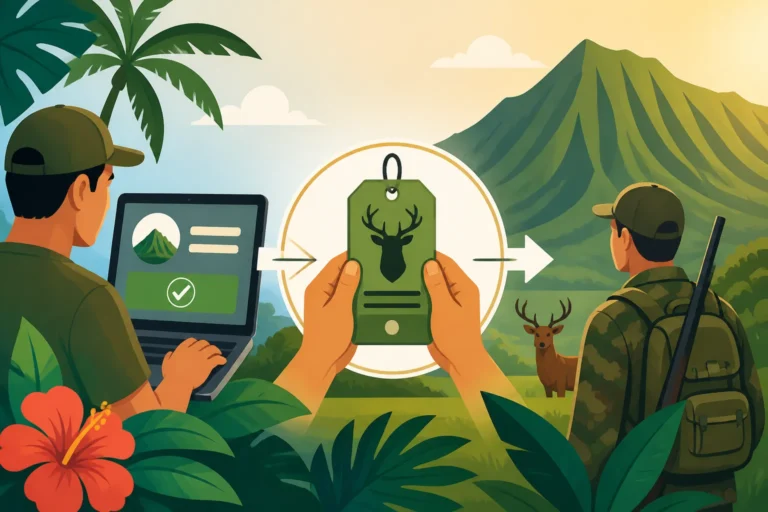
Once you have all your documents prepared, you’ll typically mail the complete application package to the main DOFAW office in Honolulu, or sometimes to a regional office if specified. It's highly advisable to do this well in advance of your planned hunt. Processing times can vary significantly, often taking several weeks, especially during peak hunting season preparations. Don't wait until the last minute, as you won't be able to purchase your Hawaii hunting license without this exemption in hand. Planning ahead is the name of the game when it comes to any permits and tags in Hawaii, including the Hawaii's Drawn Hunts and Lotteries system.
What Happens If You Don't Qualify for an Exemption
It's a common misconception that if you've hunted for years without a formal hunter education certificate, you can simply claim an exemption. Unfortunately, that's not how it works in Hawaii. If you cannot provide verifiable proof of prior hunter education from another state or country – meaning you don't have that official card or certificate – then you simply won't qualify for the Letter of Exemption. This applies even if you've been hunting since childhood in a state that didn't require hunter education for your age group at the time. The Hawaii rule is clear: if you were born after December 31, 1948, and don't have a recognized certificate, you need to get one.
In such cases, your only option to legally hunt in Hawaii is to complete the full Hawaii Hunter Education Course, exactly as a resident would. This means you'll need to take both the online component and, critically, attend the mandatory in-person field day. For nonresidents, this presents a significant logistical challenge. You'll need to plan your trip to Hawaii specifically to coincide with an available field day, which might require an extended stay or multiple trips, depending on course availability. Field days are not offered constantly and are scheduled at specific locations on various islands.
This requirement underscores the importance of checking all prerequisites long before booking flights and making hunt plans. Imagine flying all the way to Hawaii, only to realize you can't get your license because you haven't completed the necessary hunter education. It's a frustrating scenario that's entirely avoidable with proper research and timely action. Therefore, if you don't have that official hunter education card from back home, start looking up Hawaii's course schedules and planning your time accordingly.
Special Considerations for Youth Hunters
Introducing young people to hunting is a fantastic way to pass on traditions, foster an appreciation for nature, and teach responsibility. Hawaii recognizes this but also ensures that youth hunters are properly trained and supervised, balancing opportunity with paramount safety.
Minimum Age Requirements for Hunter Education
While there isn't a strict "minimum age to hunt" in Hawaii as there might be in some states, there is a minimum age requirement for taking the hunter education course itself. Generally, a prospective hunter must be at least 10 years old to enroll in and complete the Hawaii Hunter Education Course. This age is deemed appropriate for children to grasp the complex concepts of firearm safety, wildlife identification, and ethical decision-making required for responsible hunting.
It's important to understand that completing the course at age 10 means they are certified, but it doesn't automatically mean they can hunt independently or pursue all species. There are often additional regulations regarding the age at which a youth can carry a firearm unsupervised or hunt specific types of game. For instance, while a 10-year-old can take the course, they'll always need strict adult supervision in the field for a significant period. This staggered approach ensures that young hunters develop both the knowledge and the practical experience under watchful eyes before they venture out on their own.
Many parents and mentors choose to have their children complete the course as soon as they reach the minimum age, even if they won't be hunting for a few more years. This allows them to absorb the information and participate in the field day without the pressure of an immediate hunting trip. For more specific details on this, our article on The Minimum Age for Hunter Education delves deeper into these age-related nuances.
Supervision Rules for Young Hunters in the Field
Hawaii takes the safety of its youth hunters very seriously, and stringent adult supervision rules are in place to ensure a safe and educational experience. A certified youth hunter, particularly those under a certain age (often 15 or 16, though exact regulations can vary and should always be checked with current DOFAW rules), must be accompanied by a licensed adult hunter. This adult is not just a chaperone; they are responsible for the youth's safety and adherence to all hunting regulations.
The specifics of supervision often dictate that the adult must be at least 18 years old, possess a valid Hawaii hunting license, and be in immediate physical control and close proximity to the youth hunter at all times. This means the adult needs to be able to communicate effectively, intervene if necessary, and directly oversee the youth's actions, from weapon handling to shot selection. It’s a hands-on mentorship, designed to guide the young hunter through real-world scenarios with an experienced eye. For a full breakdown of these critical guidelines, you'll want to review our guide on Adult Supervision Rules for Young Hunters.
These rules aren't meant to restrict; they're designed to protect. Hunting can be unpredictable, and having an experienced adult to guide a young hunter through potentially challenging situations, whether it's navigating difficult terrain, dealing with a missed shot, or field dressing an animal, is invaluable. This mentorship ensures that the next generation learns not just how to hunt, but how to hunt responsibly, ethically, and safely, fostering a deep respect for wildlife and the hunting tradition.
Youth Hunting Opportunities and Mentorship
Hawaii actively promotes youth hunting through various programs and designated opportunities, recognizing the importance of nurturing the next generation of conservationists and ethical hunters. Beyond the basic hunter education requirements and supervision rules, there are often specific youth hunt weekends or designated areas designed to provide a safer, more focused environment for young people to gain experience. These opportunities are fantastic ways for parents, guardians, and mentors to introduce kids to the joys and responsibilities of hunting.
These special youth hunts might focus on certain game species, such as game birds or certain deer seasons, and can sometimes have more relaxed bag limits or extended shooting hours specifically for the youth participants. They provide a controlled setting where learning and safety are prioritized, allowing young hunters to build confidence under the guidance of experienced adults. The Department of Land and Natural Resources (DLNR) Division of Forestry and Wildlife (DOFAW) often announces these special opportunities on their website, so it's always worth checking their updates.
Mentorship is truly at the heart of youth hunting. It’s about more than just teaching a child how to shoot; it's about instilling the values of patience, observation, respect for wildlife, and understanding the role of hunting in conservation. An experienced hunter sharing their knowledge and passion with a young person is perhaps the most effective "hunter education" there is, building a foundation of responsible outdoor ethics that lasts a lifetime. These mentorship opportunities, combined with formal education, create well-rounded and ethical hunters for Hawaii's future.
Getting Your Hunter Education Card and Keeping it Current
Once you've put in the work, completed the courses, and demonstrated your skills, the reward is your official Hawaii Hunter Education Card. This small piece of plastic (or sometimes paper) is your passport to legally hunting in the islands, so understanding how to get it and keep it valid is crucial.
Receiving Your Official Certification
After successfully completing both the online portion and the mandatory in-person field day, the instructors or the Hawaii Department of Land and Natural Resources (DLNR) Division of Forestry and Wildlife (DOFAW) will process your completion. This typically means that within a few weeks, sometimes sooner, you will receive your official Hawaii Hunter Education Card. This card serves as verifiable proof that you have met the state's requirements for hunter safety and education.
It's essential to keep this card safe and accessible. While purchasing your Hawaii Hunting Licenses and What They Cost through a system like GoHunt, or at a local vendor, you'll likely need to present this certificate or its number. When you're out in the field, it's always recommended to carry proof of your hunter education, along with your valid hunting license and any required permit-tags. Although a physical card might not always be explicitly required to be on your person while hunting once your license is issued, having it readily available for verification is just good practice and can save you a lot of hassle if you ever need to prove your certification.
This certification is a significant milestone, signifying your commitment to safe and responsible hunting. It’s more than just a piece of paper; it represents the knowledge and skills you’ve acquired to ethically participate in Hawaii's unique hunting opportunities. Hold onto it, because it’s a lifelong credential in the Aloha State!
What to Do If You Lose Your Card
Life happens, and sometimes important documents go missing. If you've misplaced or damaged your Hawaii Hunter Education Card, don't panic. The Hawaii Department of Land and Natural Resources (DLNR) Division of Forestry and Wildlife (DOFAW) maintains records of all certified hunters, so getting a replacement is usually a straightforward process, albeit one that might require a small fee.
Your first step should be to contact the DOFAW office, either by phone or through their official website. You'll need to provide your full name, date of birth, and any other identifying information you have (like the approximate year you completed the course). They will then be able to look up your record in their database. There may be a nominal fee for issuing a replacement card, which helps cover administrative costs. Once processed, your new card will typically be mailed to your address.
It’s a good idea to make a digital copy or a clear photograph of your hunter education card once you receive it. Store this image on your phone or in a cloud service, so you always have proof of completion should you misplace the physical card. This digital backup can be incredibly useful when you need to quickly reference your certification number or confirm your status, especially if you're planning on Buying a License Through Go Hunt Hawaii or need to provide proof for any other hunting-related applications.
No Expiration: A Lifetime Certification
One of the great aspects of completing Hawaii's Hunter Education Course is that your certification does not expire. Once you earn your Hawaii Hunter Education Card, it is valid for life. This means you won't have to worry about retaking the course every few years or dealing with renewal fees for the certification itself. It’s a one-time investment in your hunting future in the islands.
However, while the certification doesn't expire, it's crucial to understand that hunting regulations, seasons, and best practices do change. The rules around specific Hawaii's Hunting Units and How They Work, Hawaii Game Mammal Seasons, or Hawaii Game Bird Seasons and Bag Limits are updated annually. Therefore, even with a lifetime certification, responsible hunters make it a point to stay informed about current laws and any new safety recommendations. Regularly checking the DLNR/DOFAW website and reading the annual hunting regulations booklet are essential parts of being an ethical and legal hunter.
Think of your hunter education as a solid foundation, not the entire house. The core principles of safety, ethics, and respect for wildlife remain constant, but the specifics of how and where you can hunt may evolve. Your lifetime card allows you to keep participating, but your commitment to ongoing learning ensures you do so safely and effectively, adapting to any new challenges or changes in the dynamic landscape of Hawaii hunting.
The Importance of Safety Beyond the Certificate
Earning your hunter education certificate is a monumental step, but it’s just the beginning of a lifelong journey in responsible hunting. In Hawaii, where the terrain can be unforgiving and the weather unpredictable, continuous learning and a steadfast commitment to safety are not just good ideas—they’re absolutely vital.
Continuous Learning and Best Practices
Receiving your hunter education certificate signifies that you’ve mastered the foundational knowledge and skills for safe hunting. However, it's crucial to understand that this is merely a starting point. The world of hunting, especially in a dynamic environment like Hawaii, is constantly evolving. Regulations change, new techniques emerge, and our understanding of wildlife management deepens. Therefore, continuous learning and adherence to evolving best practices are paramount for every responsible hunter.
This means actively seeking out updated information from official sources like the DLNR/DOFAW website, regularly reviewing the annual hunting regulations booklet, and staying abreast of any public announcements regarding season changes, new unit rules, or safety advisories. Engaging with local hunting communities, joining conservation groups, and participating in advanced skills workshops can also be invaluable. These activities help hone your craft, keep your knowledge sharp, and reinforce the ethical principles taught in hunter education.
Think about the unique challenges of Hunting Hawaii's Volcanic Terrain or navigating the dense canopy while Still-Hunting Pigs in Hawaii's Wet Forest. These environments demand a level of preparedness and nuanced understanding that goes beyond a basic certificate. By committing to continuous learning, you not only enhance your own safety and success in the field but also contribute to a stronger, more responsible hunting community that champions conservation and ethical practices for generations to come.
Understanding Hawaii-Specific Hunting Challenges
Hunting in Hawaii is an adventure, but it comes with a unique set of challenges that demand respect and preparedness. Unlike many mainland hunting grounds, Hawaii's diverse microclimates and rugged landscapes can quickly turn a simple outing into a serious situation if you're not ready. From the steep, often crumbly gulches of Molokai to the sprawling, sharp lava fields of the Big Island, or the thick, disorienting rainforests of Maui, the terrain itself is a formidable opponent.
Weather can shift dramatically in minutes, especially on the windward sides of the islands, where sunny skies can quickly give way to torrential downpours. Staying found in dense jungle or navigating slick, muddy trails requires excellent navigational skills and proper gear. Hydration is always a concern, even in cooler, higher elevations, and the intense sun can lead to heatstroke in exposed areas like the leeward kiawe flats. These factors aren't just inconveniences; they pose real safety risks.
Hunter education provides the basics, but experienced Hawaii hunters learn to read the local signs, understand thermals in steep valleys, and recognize the tell-tale indications of changing weather. This local knowledge, combined with physical fitness and a well-stocked pack including plenty of water, first-aid supplies, and reliable communication devices (as cell service is often nonexistent in remote areas), forms the true bedrock of safety in Hawaii's hunting units. You'll find yourself needing to adapt quickly, and the more you learn about Hawaii's specific environment, the safer and more successful your hunts will be. Our guide on Packing Meat Out of a Hawaii Gulch can give you an idea of the physical demands you might face.
Ethical Hunting and Conservation in the Islands
Beyond personal safety and adherence to regulations, ethical hunting and a commitment to conservation are core responsibilities for every hunter in Hawaii. Given that almost all of Hawaii's game animals are introduced species that can be detrimental to native ecosystems, hunters play an incredibly important, and often undervalued, role in managing these populations. Our hunting efforts directly contribute to the health of the islands' unique and fragile environment.
Ethical hunting means more than just staying within legal bag limits or season dates. It encompasses respect for the animals we pursue, striving for quick and clean kills, and utilizing as much of the animal as possible (often referred to as "waste not, want not"). It also means respecting private property, always checking in and out of Checking In and Out of Hawaii Hunting Units, and leaving no trace behind. These practices uphold the integrity of hunting and ensure that non-hunters view our sport in a positive light.
Furthermore, hunters are often the front-line conservationists. By responsibly harvesting feral pigs, goats, and deer, we help reduce their impact on endangered native plants and birds. Understanding this role and embracing it fully is what elevates a hunter beyond just someone who takes game. It transforms them into an active participant in preserving Hawaii's irreplaceable natural heritage. This deep connection between hunting and conservation is a critical takeaway from any hunter education in the islands.
Frequently Asked Questions About Hawaii Hunter Education
Even with all the information at your fingertips, certain questions about Hawaii's hunter education requirements pop up repeatedly. Let's address some of these common concerns to help clarify the path to your Hawaii hunting adventure.
Common Pitfalls and How to Avoid Them
When it comes to hunter education in Hawaii, several common pitfalls can trip up even the most experienced hunters. The most frequent issue for nonresidents is waiting too long to apply for the Letter of Exemption. Many assume their out-of-state card is instantly recognized, only to find out it requires an application process with processing times that can easily stretch to several weeks. To avoid disappointment, apply for your exemption as soon as your Hawaii hunt plans solidify, ideally months in advance.
Another common mistake is misunderstanding the scope of "hunter education reciprocity." While Hawaii accepts many out-of-state certifications, it must be an official, government-issued document. A past hunting license that simply states "hunter ed exempt" is not sufficient proof. You need the actual hunter education certificate or card from the state where you completed the course. Without this specific documentation, you’ll be stuck needing to take the full Hawaii course, which can be a huge headache for a visitor.
For residents and nonresidents alike, underestimating the commitment required for the field day can be a pitfall. It's not just a casual shooting session; it's a full day of instruction and practical exams. Showing up unprepared, or with a poor attitude, won't get you certified. Treat it as a serious part of your training, ensuring you're rested, attentive, and ready to learn. Avoiding these common errors ensures a much smoother entry into Hawaii's hunting community.
Planning Your Hunter Education Around a Trip
For nonresidents dreaming of a Hawaii hunting trip, seamlessly integrating hunter education into your travel plans is paramount. The best-case scenario, if you already have a recognized out-of-state hunter education card, is to apply for your Letter of Exemption well in advance of your trip. Aim to submit your application at least two to three months before your desired hunting dates to account for any processing delays or requests for additional information. This ensures you have your exemption in hand when you arrive, allowing you to easily obtain your Hawaii Hunting Licenses and What They Cost and any necessary permits.
However, if you don't qualify for an exemption and need to complete Hawaii's full resident hunter education course, your planning becomes more complex. You'll need to schedule your trip to coincide with an available field day, which means checking the DLNR/DOFAW website for course schedules before booking flights. These field days are not held daily, are often booked quickly, and may not be available on all islands when you plan to visit. This could necessitate a longer stay or even a dedicated trip solely for the purpose of completing the course.
It's also wise to consider the island where the course is offered relative to where you plan to hunt. While your certification is valid statewide, attending a field day on Oahu if you plan to Hunting Molokai's Axis Deer Country means extra inter-island travel. Always factor in these logistical challenges and build in buffer time. Rushing the process will only lead to stress and potential disappointment, so give yourself ample lead time to get everything sorted.
Where to Find Official Information and Support
When it comes to something as important as legal hunting requirements, always go straight to the source. The official and most up-to-date information regarding Hawaii hunter education, licensing, and hunting regulations can be found on the Hawaii Department of Land and Natural Resources (DLNR) Division of Forestry and Wildlife (DOFAW) website. This is your primary resource for course schedules, application forms for Letters of Exemption, and comprehensive annual hunting regulations.
Beyond the website, you can also contact DOFAW directly. Their offices, located on various islands, are staffed by knowledgeable individuals who can answer specific questions about your situation. Don't hesitate to call or email if you have unique circumstances or need clarification on a particular rule. Local staff can provide invaluable insights into current conditions or specific unit rules not always immediately apparent online.
Finally, while not an official regulatory body, platforms like GoHunt can be excellent supplementary resources. GoHunt often provides consolidated information, links to official pages, and simplifies the process of purchasing licenses and applying for permits once you have your hunter education sorted. It acts as a convenient portal for many of the administrative tasks involved in planning a Hawaii hunt, but always ensure any critical details or specific requirements are verified with the official DOFAW sources.
Hunter Education Requirements Summary
Here's a quick overview of Hawaii's hunter education requirements for easy reference:
| Requirement | Hawaii Resident | Nonresident with Prior HE | Nonresident Without Prior HE |
|---|---|---|---|
| Course Type | Online Course + Mandatory Field Day | Letter of Exemption Application | Online Course + Mandatory Field Day |
| Proof Needed | Hawaii Hunter Education Card | Out-of-state Hunter Ed Card + Photo ID | Hawaii Hunter Education Card |
| Application Method | Register via DLNR/DOFAW website for course | Submit documents to DOFAW | Register via DLNR/DOFAW website for course |
| Timeframe | Varies by course availability; field days can fill | Allow 4-8 weeks for processing | Varies, plan for extended travel/time in Hawaii |
| Cost | Minimal course fee (e.g., $10-$20) | Minimal application fee (if any) | Minimal course fee, plus travel/lodging |
| Validity | Lifetime, once issued | Valid for Hawaii license while current | Lifetime, once issued |
| Minimum Age | 10 years old to enroll | Must meet home state's HE age requirement | 10 years old to enroll |
Disclaimer
Please be aware that hunting regulations, including hunter education requirements, seasons, and bag limits, are subject to change by the State of Hawaii Department of Land and Natural Resources (DLNR) Division of Forestry and Wildlife (DOFAW). While this guide provides comprehensive information, it is crucial for all hunters to consult the most current official Hawaii Hunting Regulations available on the DOFAW website before planning or engaging in any hunting activity. This content is for informational purposes only and does not constitute legal advice.