Legal Shooting Hours for Game Birds
There’s a unique thrill that comes with chasing game birds across Hawaii’s diverse landscapes, from the high-elevation slopes of Mauna Kea to the scrubby lowlands of Molokai. But one of the most common questions, and often a point of confusion for both seasoned local hunters and those visiting our beautiful islands, revolves around the exact legal shooting hours. It's not always as simple as "daylight hours," and getting it wrong can lead to serious headaches. This guide aims to clear up all that uncertainty, giving you a solid understanding of when you can legally pull the trigger on game birds in Hawaii, so you can focus on the hunt itself.
The Standard Legal Window for Game Bird Hunting in Hawaii
When it comes to pursuing game birds in Hawaii, the rules for legal shooting hours are pretty consistent, but they often surprise new hunters or those accustomed to different regulations on the mainland. Unlike some big game seasons that might allow for a bit more flexibility, game bird hunting operates within a very specific time frame.
Understanding the "Half-Hour" Rule
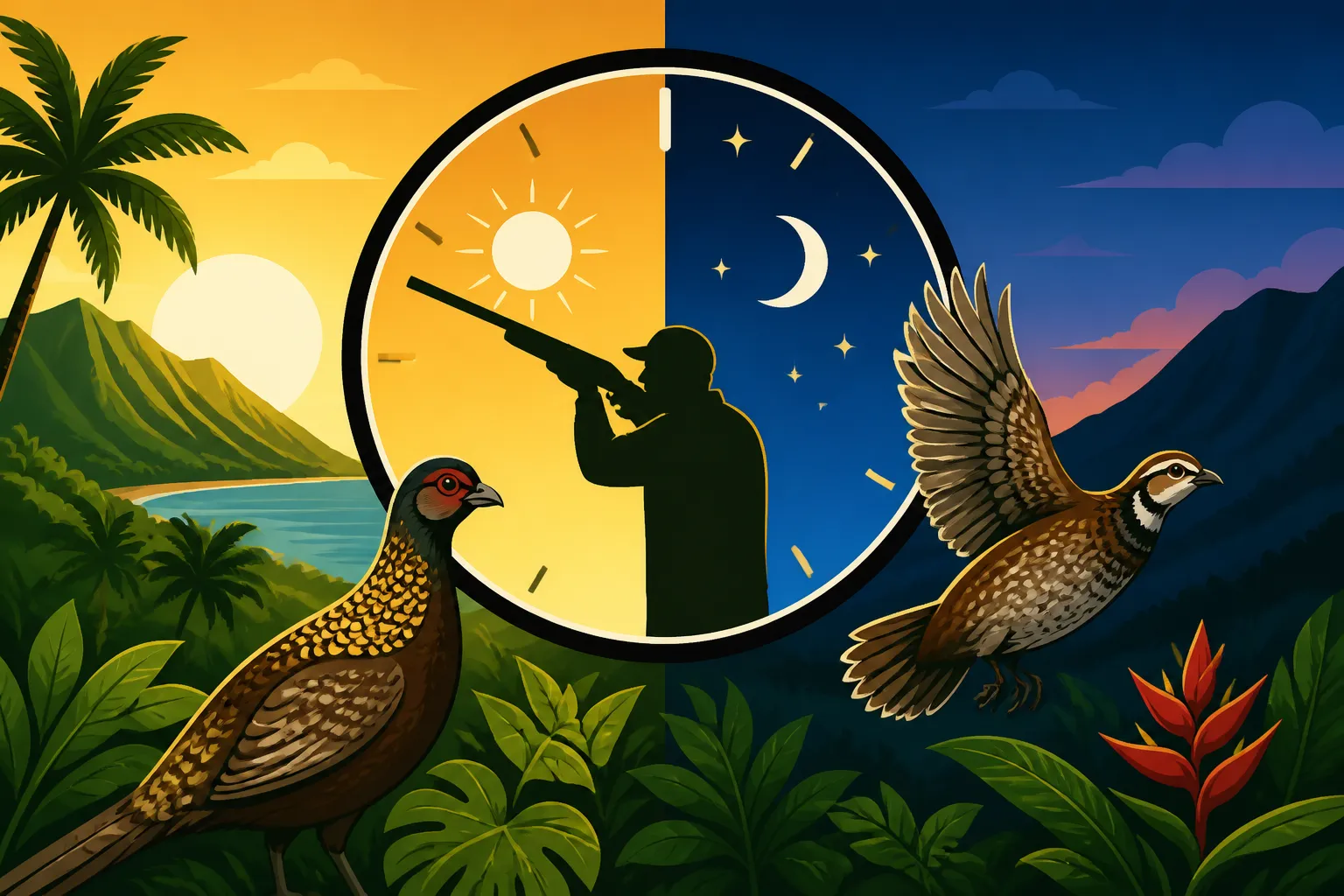
The foundational rule for legal game bird hunting in Hawaii dictates that you can begin hunting one-half hour before sunrise and must cease hunting one-half hour after sunset. This isn't just a suggestion; it's a hard and fast regulation that every hunter needs to internalize. It's designed to ensure fair chase, promote ethical hunting practices, and, most importantly, enhance safety by ensuring adequate light for target identification. This specific window applies across the board for all game birds, whether you’re after chukar in the uplands, francolin in the tall grass, or doves over a pasture.
Now, you might be thinking, "Okay, but what exactly constitutes 'sunrise' and 'sunset'?" Good question! In Hawaii, these times are generally based on the official times published by the U.S. Naval Observatory for Honolulu, Hawaii. These are also the times typically found in local newspapers or reliable weather apps. It's not just when you think the sun is about to peek over the horizon or dip below it; it's a precisely calculated moment. So, for example, if the official sunrise is at 6:30 AM, you can start shooting at 6:00 AM. If sunset is at 6:45 PM, you must stop by 7:15 PM. This half-hour buffer on either side is critical for making sure you're operating within the bounds of the law.
Why Precision Matters with Time Definitions
The temptation, especially when you're out in the field and the light is just starting to break or fade, is to rely on your own judgment. Maybe you think you have plenty of light, or you see another hunter still out. But that's a risky game to play. Hawaii's Department of Land and Natural Resources (DLNR) Division of Forestry and Wildlife (DOFAW) takes these regulations seriously.
The official sunrise and sunset times can vary significantly throughout the year. For instance, in the peak of summer, our daylight hours are much longer, pushing the start and end times further out. Conversely, in the shorter days of winter, that window shrinks. Furthermore, these times are localized. While the U.S. Naval Observatory for Honolulu provides a standard, depending on which island you're hunting or even which side of a mountain you're on, the actual light conditions can feel very different. A ridge on the windward side might still be shrouded in mist and shadow well after "official" sunrise, while a leeward flat is already bathed in golden light. Regardless of what your eyes tell you, the clock and the official times are what count. Always double-check these times for your specific hunting date and location. Tools like the GoHunt app or other reputable weather applications can be incredibly helpful for this, giving you exact times right on your phone.
Why Adhering to Shooting Hours is Crucial for Safety and Ethics
Hunting in Hawaii isn't just about bagging game; it's about responsible stewardship, safety, and upholding the ethics of the sport. The legal shooting hours for game birds are designed with these core principles in mind, and understanding why these rules exist can help every hunter appreciate their importance.
Enhancing Hunter Safety and Preventing Accidents
The primary reason for specific shooting hours, especially that "one-half hour before sunrise to one-half hour after sunset" window, is safety. In low light conditions – that twilight period before full dawn or after dusk – it becomes incredibly difficult to clearly identify your target. Is that a francolin flushing, or just a shadow moving through the brush? Is that a legal bird, or a protected species like the Nene, Hawaii's state bird, which is strictly off-limits? The difference can be life-altering.
Inadequate light significantly increases the risk of:
- Mistaken Identity: Shooting at non-game animals, or even worse, another person. This is why Hawaii Blaze Orange and Safety Rules are so important, but even blaze orange can be hard to see in deep twilight.
- Crippling Shots: Without clear visibility, you're more likely to make a poor shot, wounding an animal instead of dispatching it cleanly. An ethical hunter strives for a quick, humane kill, and low light severely compromises that ability.
- Environmental Hazards: Navigating uneven terrain, dense vegetation, or rough lava fields in dim light can lead to falls and injuries. Many of Hawaii's hunting units are rugged, with steep gulches and unpredictable footing. This is especially true if you are Hunting Hawaii's Volcanic Terrain or trying to avoid Walking Rough Lava Without Wrecking Your Boots.
These aren't hypothetical scenarios; they are real dangers that strict adherence to shooting hours helps to mitigate, ensuring everyone comes home safely.
Upholding Ethical Hunting Practices
Beyond safety, shooting hours are fundamental to ethical hunting. Fair chase is a cornerstone of responsible hunting, meaning the animal should have a reasonable chance to evade the hunter. Hunting game birds in complete darkness, relying on artificial light, or shooting birds roosting at night, is universally considered unethical and illegal. The legal window provides a period where the birds are active and visible, allowing for a fair and sporting pursuit.
It also speaks to the public perception of hunting. When hunters are seen operating responsibly and within the law, it builds trust and supports the conservation efforts that hunting license fees and stamps contribute to. Ignoring these rules can give all hunters a bad name and undermine the very foundation of the sport we cherish. It reinforces the importance of responsible behavior, not just during game bird season, but across all types of hunting, whether you're learning about Mouflon Sheep Hunting on Hawaii Island or preparing for Hunting Hawaii's Feral Pigs.
Understanding the Legal Consequences
Violating shooting hour regulations is a serious offense in Hawaii. It's not just a slap on the wrist. Depending on the severity and whether it's a first offense, penalties can range from significant fines to the confiscation of your equipment (including firearms) and even the suspension or revocation of your hunting license. For non-residents, this could also impact your ability to hunt in other states.
DOFAW enforcement officers patrol Hawaii's public hunting units, especially during busy seasons like Hawaii Game Bird Hunting weekends. They are well-versed in the official sunrise/sunset times and will not hesitate to issue citations for violations. Getting caught breaking these rules can ruin your hunt, create a lasting legal record, and be a costly lesson learned the hard way. Always check the current year's Hawaii Hunting Licenses and What They Cost and understand that a license is a privilege, not a right, contingent on adherence to all regulations.
Practical Strategies for Tracking Legal Shooting Times in the Field
Being a responsible hunter means more than just knowing the rules; it means actively preparing to follow them, especially when it comes to time-sensitive regulations like legal shooting hours. In Hawaii's dynamic environments, with varying terrain and weather, having a solid strategy for tracking sunrise and sunset is crucial.
Leveraging Technology: Apps and Online Resources
In today's world, our smartphones are powerful tools that can make adherence to regulations much simpler. Forget trying to remember approximate times or squinting at a fading newspaper printout.
- Dedicated Hunting Apps: Applications like GoHunt are invaluable resources for hunters in Hawaii. They often include local weather forecasts, unit boundaries, and, critically, precise sunrise and sunset times specific to your location. Some, like the official OuterSpatial App to Check In for certain units, might also provide this information. These apps often factor in civil twilight, giving you the exact "half-hour before/after" window automatically. This means less guesswork and more confidence in your compliance.
- General Weather Apps: Most standard weather applications on your phone (e.g., Apple Weather, Google Weather, AccuWeather, or dedicated sunrise/sunset apps) provide accurate sunrise and sunset times for your current location. Make sure the app is location-aware and that you've granted it permission to access your GPS data.
- Online Search Engines: A quick search for "sunrise sunset times [Hawaii island] [date]" will yield official times from the U.S. Naval Observatory or local weather stations. It's always a good idea to check this the night before your hunt, or even in the morning before you leave for your hunting unit.
Pro Tip: Don't just rely on cell service in the field. Many of Hawaii's remote hunting areas have No Cell Signal on a Hawaii Hunt. Check and screenshot the official times before you head out, or download an app that stores this information offline.
Planning Your Hunt Around the Clock
Knowing the times is one thing; integrating them into your hunt plan is another. This requires a bit of foresight and discipline, especially for those early morning flushes or late afternoon opportunities.
- Pre-Dawn Entry: If you plan to be in position for that crucial first shot at legal shooting time, you need to factor in your travel time to your desired spot. This might mean starting your hike in the dark, well before the legal shooting window opens. Carrying a reliable headlamp is non-negotiable for navigating safely to your perch. Remember, while you can be in the unit, your firearm should remain cased or unloaded until the legal shooting time.
- Post-Sunset Exit: Similarly, as the sun dips and that half-hour after sunset approaches, you need to be actively making your way out of the field. Don't wait until the last possible second, especially if you're in challenging terrain or have a long walk back to your vehicle. This is also when Packing Meat Out of a Hawaii Gulch can become particularly challenging if you're racing against the clock. Plan for enough daylight to safely retrieve any downed game and exit the unit.
- Setting Alarms: A simple but effective strategy is to set alarms on your phone or watch. Set one for 10-15 minutes before legal shooting time to remind you to get ready, and another for 10-15 minutes before the legal cease-fire time to ensure you stop shooting and begin your egress.
Unit-Specific and Seasonal Variations
While the "half-hour before/after" rule is general, it's always prudent to cross-reference with the specific regulations for the current hunting season and the unit you plan to hunt. DOFAW sometimes issues special rules or adjusts seasons based on environmental conditions, population surveys, or conservation needs. For example, while the overall Hawaii Game Bird Seasons and Bag Limits will apply, there might be specific areas within a unit that have different rules.
Always consult the official DOFAW hunting regulations handbook for the current year. These are usually available online via the DLNR website or can be picked up at local DOFAW offices. You can also find updates on Where DOFAW Posts Season Announcements. Never assume that because a rule was in place last year, it's the same this year. Changes do happen, and it's your responsibility as a hunter to stay informed.
Example of Official Sunrise/Sunset Times (Honolulu, Hawaii)
To give you a clearer idea, here’s a simplified table showing approximate official times for Honolulu, Hawaii, for a few sample dates. Remember, these will shift based on your exact location and the specific date.
| Date (Approximate) | Official Sunrise | Legal Shooting Start (1/2 hr before) | Official Sunset | Legal Shooting End (1/2 hr after) |
|---|---|---|---|---|
| January 15 | 7:10 AM | 6:40 AM | 5:50 PM | 6:20 PM |
| April 15 | 6:00 AM | 5:30 AM | 6:45 PM | 7:15 PM |
| July 15 | 5:55 AM | 5:25 AM | 7:10 PM | 7:40 PM |
| October 15 | 6:30 AM | 6:00 AM | 6:00 PM | 6:30 PM |
This table is for illustrative purposes only. Always consult current, official sources for the precise times relevant to your specific hunting date and island.
Disclaimer
Hunting is an inherently dangerous activity. This guide is for informational purposes only and does not constitute legal advice. Hunters are responsible for knowing and adhering to all current Hawaii hunting laws and regulations. Always consult the latest official Hawaii Department of Land and Natural Resources (DLNR) Division of Forestry and Wildlife (DOFAW) regulations before heading into the field. Safety should always be your top priority.