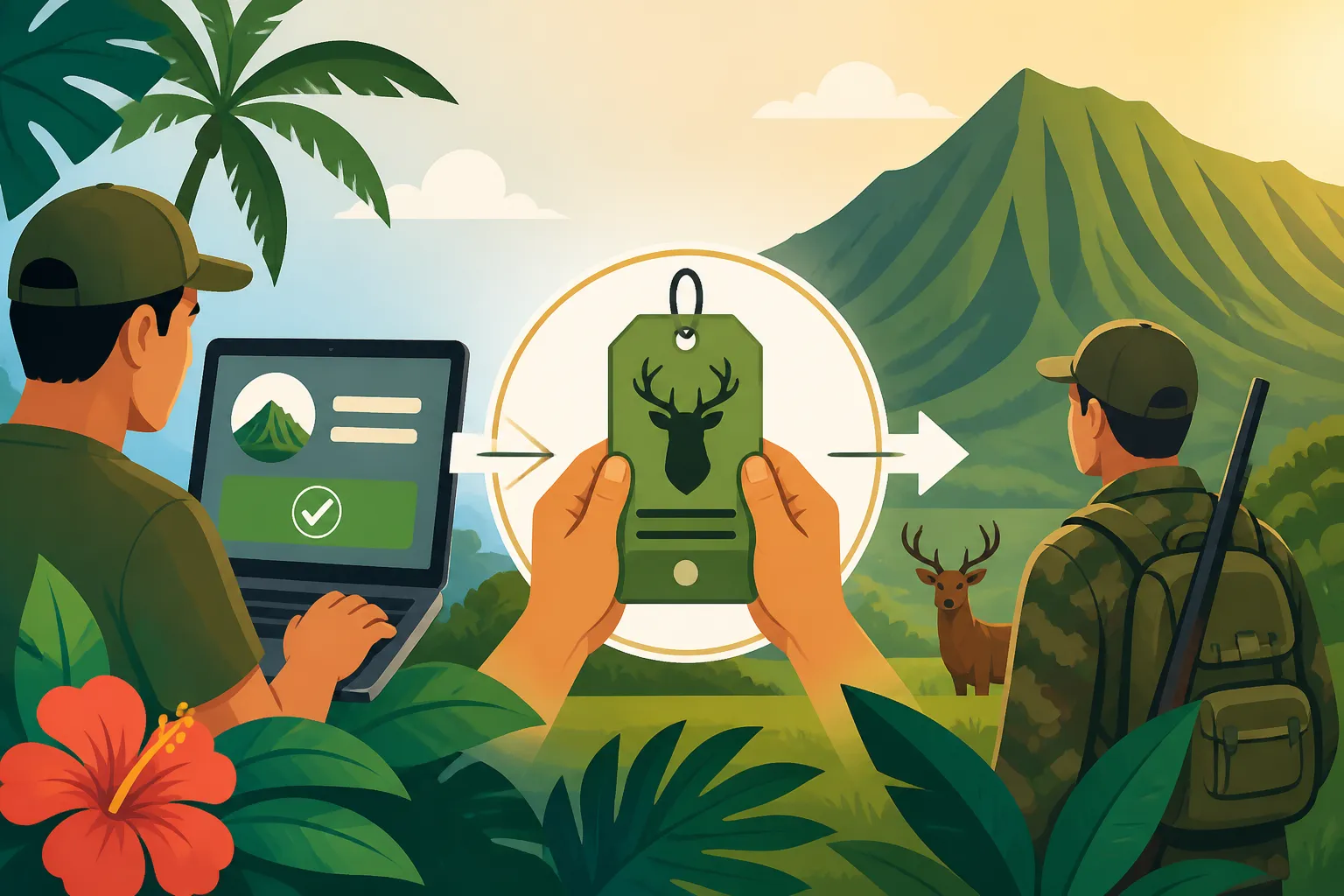
How Hawaii Permit-Tags Are Bought
Navigating the ins and outs of hunting permits in Hawaii can feel like trying to find your way through a dense ʻōhiʻa forest without a compass. It’s not just about buying a hunting license; there’s a whole separate layer of specific permit-tags required for certain game animals and units that can leave even seasoned hunters scratching their heads. This guide is here to demystify that process, walking you through exactly how Hawaii's permit-tags are bought, from online portals to important deadlines, so you can focus on the hunt itself, not the paperwork.
Understanding Hawaii's Permit-Tag System
Let's be honest, for many mainland hunters, or even those new to the islands, the concept of a "permit-tag" in addition to a regular hunting license can be a bit confusing. It's not always intuitive, and it definitely differs from how things are done in many other states. But once you understand the why behind it, the how becomes much clearer.
Why Permit-Tags Exist in Hawaii
Hawaii’s unique ecosystem is incredibly fragile and, at the same time, teeming with non-native game animals that thrive, sometimes too well, in the absence of natural predators. The permit-tag system is a crucial tool for the state’s Department of Land and Natural Resources (DLNR), specifically the Division of Forestry and Wildlife (DOFAW), to manage these populations. Think of it as a carefully calibrated dial: by controlling the number of permit-tags issued for specific species, in specific areas, and during specific seasons, they can better regulate harvest pressure.
This targeted management is vital for several reasons. For species like Axis deer on Maui, Molokai, and Lanai, or Mouflon sheep on Hawaii Island, populations can explode, leading to significant damage to native forests, agricultural lands, and critical watersheds. The permit-tag system helps ensure that hunting remains a sustainable management tool, distributing hunting pressure across units and preventing overharvesting in one area while allowing for increased take in others where populations might be higher or causing more ecological harm. It's a balance between providing hunting opportunities and protecting the unique Hawaiian environment.
Key Differences from Mainland Tagging
If you're coming from a state where you buy your deer tag and elk tag directly over the counter with your license, Hawaii's system can feel like a curveball. The biggest difference is the prevalence of drawn hunts and limited entry units. While some areas and species might offer "over-the-counter" (OTC) tags, many of the most sought-after opportunities, especially for big game like Axis deer on Lanai or prime Mouflon units on Hawaii Island, are allocated through a lottery system.
This isn't like some western states where you accumulate preference points over years. Hawaii's system is often a true lottery, resetting each year, meaning everyone has an equal chance, whether it's your first time applying or your tenth. Another key distinction is that Hawaii often issues either-sex tags, particularly for feral animals like pigs and goats, reflecting the management need to reduce overall population numbers rather than focusing solely on trophy animals. Furthermore, the limited access to specific hunting units, often on a weekend-only basis, means that even with a tag, your hunting days might be prescribed, which is a big change for those accustomed to month-long seasons. These factors, combined with the island-specific regulations, create a tapestry of rules that require careful attention.
Distinguishing Licenses from Permit-Tags
It’s absolutely critical to understand that your Hawaii hunting license and your permit-tags are two entirely separate, yet equally necessary, documents. Think of your hunting license as your basic permission slip to legally participate in hunting activities in the state. You need this fundamental license first, no matter what you plan to hunt. It establishes you as a recognized hunter within the Hawaiian regulatory framework. You can read more about Hawaii Hunting Licenses and What They Cost to understand this initial step.
Once you have your general hunting license, the permit-tag then grants you specific permission to harvest a particular animal, or a certain number of animals, of a specific species, within a designated hunting unit, and during a defined season. For example, you might have a general hunting license, but to hunt Axis deer on Maui's year-round units, you'll also need an Axis deer permit-tag. To hunt Mouflon in the Mauna Kea Game Management Area, you'll need a Mouflon permit-tag for that specific unit and season. Without both, you’re not legally set for the hunt. It's not enough to have just one; both must be valid and in your possession when you are in the field.
The Online Purchase Process with GoHunt Hawaii
In recent years, the process for buying Hawaii hunting licenses and permit-tags has become much more streamlined, thanks largely to the online platform. While you could historically, and sometimes still can, purchase certain items in person, the digital age has made GoHunt Hawaii the primary portal for most hunters. It’s a game-changer for convenience, especially for non-residents planning a trip, but it does require you to be a bit tech-savvy and organized.
Setting Up Your GoHunt Hawaii Account
Before you can even think about snagging a permit-tag, you'll need to set up an account on the GoHunt Hawaii portal. This is your digital identity as a hunter in the state. The process is pretty straightforward, but you’ll want to have all your personal information readily available. This typically includes your full legal name, date of birth, a valid mailing address, email, and phone number. If you're a resident, you'll need to provide proof of residency.
For all hunters, especially non-residents, you’ll be asked to provide your Hunter Education certification information. This is a non-negotiable requirement in Hawaii. If you’re a resident, you’ll take a Hawaii-specific course. If you’re a non-resident, you can apply for a The Nonresident Letter of Exemption by providing proof of a hunter education course taken in another state or jurisdiction, or by presenting a previous hunting license from another state. Make sure you have the certificate number or proof ready. The GoHunt system will guide you through creating a unique username and password. Keep this information safe; you'll be returning to this portal for every future license and permit-tag purchase, as well as for checking into and out of certain units, which we discuss in Checking In and Out of Hawaii Hunting Units.
Navigating the Permit-Tag Portal
Once your GoHunt Hawaii account is set up and active, you're ready to dive into the permit-tag section. The portal is generally user-friendly, designed to categorize options by island, species, and season. You'll typically find a menu or navigation links for "Licenses," "Permit-Tags," and "Drawn Hunts." For permit-tags, you'll want to click on the appropriate section.
From there, you’ll be presented with a list of available permit-tags. This is where attention to detail is crucial. You'll need to know exactly what you plan to hunt and where. For instance, if you're targeting Axis deer on Maui, you'll look for "Maui Axis Deer Permit-Tag." If your sights are set on Mouflon Sheep Hunting on Hawaii Island, you'll need to select the specific Mouflon tag for the appropriate unit. The system will clearly list the valid islands, units, and seasons for each tag, so read carefully. It's often helpful to have already reviewed the current hunting regulations for the year, which are available on the DLNR-DOFAW website, to ensure you're selecting the correct permit-tag for your intended hunt.
Payment and Confirmation
Once you've selected the permit-tag(s) you need, adding them to your cart works much like any other online shopping experience. Before proceeding to checkout, double-check your selections, especially the species, island, and unit. Mistakes can be a real headache to correct. The GoHunt Hawaii system accepts major credit cards for payment. Be prepared for a small processing fee, which is standard for online transactions.
After successful payment, you'll receive a confirmation email, and your permit-tags will typically be available for download and printing directly from your GoHunt Hawaii account. This is a critical step: print your permit-tags immediately. Do not rely solely on a digital copy on your phone in the field, as cell service can be non-existent in many remote Hawaiian hunting units. Having a physical copy is a hard requirement for many units and will save you a lot of grief if you encounter a conservation officer. This confirmation also usually includes instructions on how to properly attach your tag to a harvested animal, a detail that's important for compliance and avoiding penalties.
Specific Permit-Tag Scenarios and What to Expect
Hawaii's permit-tag system isn't a one-size-fits-all model. Depending on the species, the island, and the specific unit, how you acquire your permit-tag can vary significantly. Understanding these different scenarios is key to successfully planning your hunt.
Permit-Tags for Drawn Hunts
This is perhaps the most unique and often frustrating aspect of Hawaii hunting for many. For highly sought-after hunts, such as the limited-entry Axis deer hunts on Lanai or the specific Mouflon hunts in certain units on Hawaii Island, DOFAW uses a lottery system. This means you first have to apply during a specific application window, typically months in advance of the season, and hope your name is drawn. These application windows and deadlines are strictly enforced, and missing them means you miss the opportunity for that year. You can find detailed information on Hawaii's Drawn Hunt Application Process on the DOFAW website.
If you are lucky enough to be drawn, you'll receive a notification, often via email, that you've been successful. At that point, you'll usually have a limited timeframe to log back into your GoHunt Hawaii account and purchase the actual permit-tag. This isn't automatic; being drawn gives you the privilege to buy the tag, but you still have to complete the purchase. The fees for these drawn hunt permit-tags can sometimes be higher than over-the-counter tags, reflecting the exclusivity and demand. For example, a Lanai Axis deer tag for non-residents is a significant investment. Always confirm the specific season dates and unit details immediately upon being drawn, especially for hunts like Lanai's Drawn Axis Deer Weekends or the Puu Waawaa Season Dates and Units.
Over-the-Counter Permit-Tags
Not every hunt requires going through the nail-biting process of a lottery draw. For many feral game animals, like pigs and goats, or for Axis deer in certain year-round units on Maui, permit-tags might be available over-the-counter (OTC). This means you can simply purchase them online through GoHunt Hawaii, or sometimes in person at a DOFAW office, without having to enter a draw.
These OTC tags are often less restrictive, sometimes allowing for multiple animals or longer hunting periods. For instance, on some islands, pig hunting permit-tags can be readily acquired, enabling you to hunt throughout the designated season. However, even with OTC tags, there might still be daily or seasonal bag limits, and you’ll always need to adhere to the specific unit rules regarding legal weapons, hunting days, and check-in/check-out procedures. It's crucial to always check the current year's hunting regulations, as even OTC availability can change based on population assessments and management goals. For example, Hawaii Bag Limits for Feral Pigs can vary by island and unit.
Special Considerations for Non-Residents
For those coming from the mainland, Hawaii hunting offers a truly unique experience, but the permit-tag process does have a few extra layers. First and foremost, the cost of both the hunting license and the permit-tags will generally be higher for non-residents than for Hawaii residents. This is a common practice across states to help fund local wildlife management. You can compare these costs by looking into Hawaii Resident Hunting License Cost versus Hawaii Nonresident Hunting License Cost.
Beyond the cost, non-residents must pay particular attention to hunter education requirements. While a hunter education certificate from your home state is generally accepted, you’ll need to apply for that The Nonresident Letter of Exemption through DOFAW. This process should be started well in advance of your trip to avoid any last-minute stress. Additionally, securing permit-tags for popular drawn hunts can be competitive, as non-residents are often in the same drawing pool as residents. Planning your trip around confirmed tag acquisition, especially for a bucket-list hunt like Axis Deer Hunting in Hawaii, is vital. Many non-residents opt to book with a licensed outfitter who can help navigate these complexities, often ensuring access to private land hunts where permit-tags might be included in the package or are less competitive to acquire.
Common Pitfalls and Troubleshooting Permit-Tag Purchases
The Hawaii permit-tag system, while improved by online access, isn't foolproof. There are common hurdles hunters face, and being aware of them can save you a lot of frustration and potentially a missed hunting opportunity.
Missing Application Deadlines
This is perhaps the biggest and most heartbreaking pitfall for any hunter hoping to participate in Hawaii's drawn hunts: missing the application deadline. Unlike some casual purchases, drawn hunts have very specific, non-negotiable windows for application submission. These deadlines are typically posted well in advance on the DOFAW website and through the GoHunt Hawaii portal. For example, if you dream of hunting Axis deer on Lanai, you absolutely need to know When Lanai's Axis Deer Rifle Season Runs and the associated application deadline.
The consequences of missing a deadline are simple: you're out of the drawing for that year, plain and simple. There are rarely, if ever, exceptions made. To avoid this, it's highly recommended to mark these dates on multiple calendars, set phone reminders, and apply well before the eleventh hour. The online system can sometimes experience high traffic as a deadline approaches, leading to slow performance or even temporary glitches. Don't risk it; apply early.
Incorrect Information and Denials
When setting up your GoHunt Hawaii account or applying for a specific permit-tag, accuracy is paramount. Providing incorrect or incomplete information, even unintentionally, can lead to your application being denied or your permit-tag being invalidated. Common errors include typos in your name or address, incorrect hunter education certification numbers, or misrepresenting your residency status.
If your application is denied, DOFAW will usually provide a reason. It's then your responsibility to correct the error and resubmit, if time allows. For drawn hunts, a denial after the drawing typically means you've lost your chance for that season. For over-the-counter tags, you might just experience a delay. Always double-check every field before submitting. For non-residents, ensuring your Getting a Letter of Exemption as a Nonresident is correctly processed and linked to your account is a frequent point of contention, so verify all details carefully.
Technical Glitches with Online Systems
While GoHunt Hawaii has largely streamlined the permit-tag process, no online system is immune to technical glitches. Website slowdowns, payment processing errors, or difficulties in downloading your permit-tags can happen. This is particularly true during peak application periods or just before popular hunting season openers.
If you encounter a technical issue, don't panic. First, try clearing your browser's cache and cookies, or try using a different web browser. Sometimes, a simple refresh is all it takes. If the problem persists, document the issue with screenshots and immediately contact the DOFAW office on the island you plan to hunt, or the main DOFAW headquarters. They can often troubleshoot on their end or provide alternative solutions. It’s always a good idea to complete your purchases during regular business hours so you can call for support if needed, rather than waiting until Sunday night when offices are closed.
Here's a quick overview of permit-tag types:
| Permit-Tag Type | Acquisition Method | Typical Species/Hunts | Key Characteristics |
|---|---|---|---|
| Drawn Hunt Permit-Tag | Lottery Application -> Purchase | Lanai Axis Deer, Mauna Kea Mouflon | Limited availability, specific application windows, high demand. |
| Over-the-Counter (OTC) | Direct Purchase (online/in-person) | Feral Pigs, Feral Goats, Maui Axis Deer | More readily available, often year-round or extended seasons. |
| Special Use Permit-Tag | Specific Application/Program | Research Hunts, Depredation Hunts | Very limited, often tied to specific management objectives. |
What to Do After Acquiring Your Permit-Tags
Getting your permit-tags is a huge step, but the journey isn't over yet. There are crucial steps you need to take to ensure you're fully compliant and ready for your hunt, from having the physical tags in hand to understanding what to do after a successful harvest.
Printing and Carrying Your Permit-Tags
As mentioned earlier, once you've successfully purchased your permit-tags through GoHunt Hawaii, the very next step is to download and print them. These aren't just for your records; they are legally required documents to have in your possession while hunting. DOFAW regulations typically stipulate that your permit-tags, along with your hunting license and proof of hunter education, must be physically carried with you while in the field.
Imagine being deep in a remote gulch, having just put down a trophy Axis buck, only to realize you left your printed tag at home, or your phone battery died, rendering your digital copy inaccessible. That's a nightmare scenario no hunter wants. Print multiple copies if you're worried about damaging one. Keep them protected from the elements – a Ziploc bag or a waterproof document holder is highly recommended, especially when hunting Hawaii's wet forest or on days with unpredictable rain showers. Conservation officers conducting field checks will expect to see these physical documents. Ensure they are legible and match your identification. Remember, Carrying Your License in the Field is not just a suggestion, it's a legal obligation.
Understanding Tagging Requirements
This is where the rubber meets the road. After you've successfully harvested an animal, properly tagging it is absolutely critical for legal compliance. Hawaii has specific rules about how and when an animal must be tagged. Generally, immediately upon taking possession of a game mammal (meaning, once it's down and you've reached it), you must affix the appropriate permit-tag to the carcass.
The tag needs to be attached in a conspicuous and secure manner, typically to the leg or horn, and remain attached until the animal is processed or reaches its final destination. You’ll usually be required to notch or punch out the date of kill on the tag itself, permanently indicating when the animal was taken. Each permit-tag is unique to a specific animal. For example, if you have a tag for one Axis deer, you can only use it on one Axis deer. Attempting to use a single tag for multiple animals, or failing to tag an animal at all, can result in significant fines and legal penalties. Ensure you know How to Attach a Hawaii Tag to a Carcass before you head into the field.
Reporting Your Harvest
The final step in the permit-tag process, and one that many hunters overlook or forget, is harvest reporting. This is not just a bureaucratic formality; it’s an essential part of how DOFAW manages game populations. By collecting data on harvest numbers, locations, and dates, wildlife managers can assess population health, track trends, and make informed decisions about future hunting seasons, bag limits, and permit-tag allocations.
Many of Hawaii's hunting regulations require hunters to report their harvest within a specific timeframe, often within 24 to 72 hours of the kill. This is typically done through your GoHunt Hawaii account, where you'll log in, find the specific permit-tag you used, and enter the required harvest data (e.g., date of kill, unit, sex of animal, and sometimes weight or antler measurements). For drawn hunts, harvest reporting is almost always mandatory and might be a condition of participating in future draws. Even if you don't harvest an animal, some units or specific permit-tags might require a "no harvest" report. Always check the specific permit-tag rules for these reporting requirements. Neglecting to report your harvest can have consequences, including fines or affecting your eligibility for future hunts. So, after you’ve ensured your Field Care in Hawaii's Heat and Humidity and packed out your meat, make that final login to GoHunt Hawaii and complete your harvest report. It’s the responsible thing to do as a hunter.
Disclaimer
Please remember that hunting regulations in Hawaii can change. While this guide provides comprehensive information, it is essential always to consult the official Hawaii Department of Land and Natural Resources (DLNR) and Division of Forestry and Wildlife (DOFAW) websites, or contact their offices directly, for the most current and authoritative rules and regulations before planning any hunting activity.