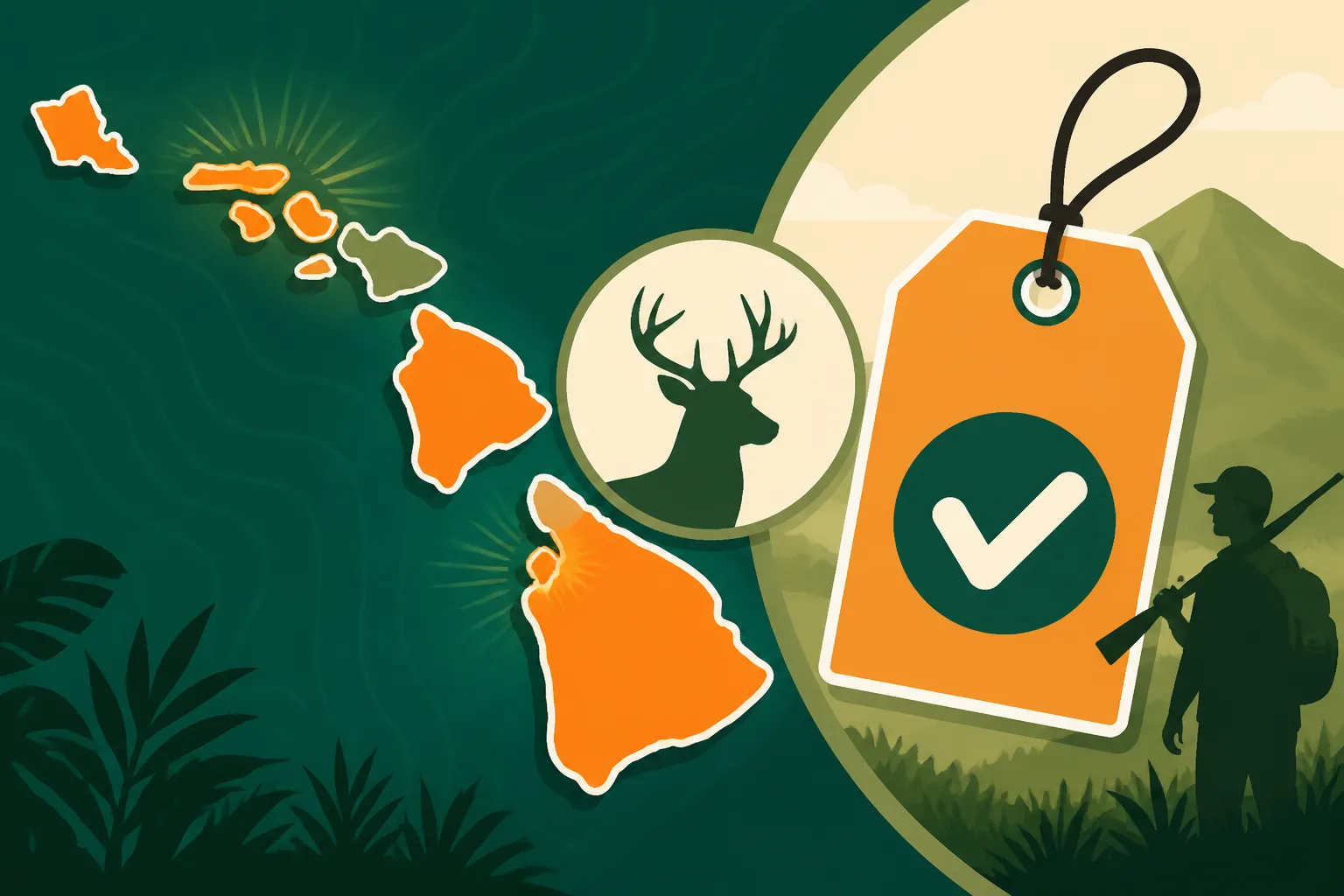
Which Islands Require Permit-Tags
Navigating the unique world of Hawaii hunting can feel like trying to untangle a fishing net in the dark, especially when it comes to understanding all the different rules for each island and species. Many hunters, both kama'aina (residents) and malihini (visitors), get understandably confused about when a simple hunting license is enough, and when you absolutely need a specific permit-tag just to step into a unit or harvest an animal. This guide is here to shed some light on that often-murky process, helping you understand precisely which islands require permit-tags for what game.
Understanding Hawaii's Permit-Tag System
Hawaii's approach to wildlife management is truly unique, reflecting the islands' fragile ecosystems and the reality that most of our game animals are introduced species. Because of this, the system can feel a bit more complex than what you might be used to on the mainland. It's not just about buying a hunting license; often, it’s about getting specific permission for specific hunts.
The 'Why' Behind Permit-Tags in Hawaii
The primary reason for Hawaii's permit-tag system is deeply rooted in conservation and sustainable management. Unlike many continental states where hunting helps manage native wildlife populations, in Hawaii, almost all huntable game animals were introduced over time. While they provide fantastic hunting opportunities, they can also have significant impacts on our unique native flora and fauna. Feral pigs, for instance, are notorious for rooting up native forests, spreading invasive species, and creating wallows that become breeding grounds for disease-carrying mosquitoes. Goats contribute to erosion, especially on steep slopes, and Axis deer can devastate agricultural lands and natural habitats, as seen on islands like Maui.
The Department of Land and Natural Resources (DLNR), specifically its Division of Forestry and Wildlife (DOFAW), uses these permit-tags as a crucial tool to regulate hunting pressure, gather data on harvest numbers, and direct efforts towards managing certain populations in specific areas. It’s about trying to strike a balance: providing hunting opportunities for residents and visitors while also protecting Hawaii's irreplaceable natural heritage. Without careful management, some of these populations could quickly get out of control, or conversely, be over-harvested in specific, popular spots.
General Principles of Permit-Tags
So, what exactly is a permit-tag in Hawaii? Think of it as a specific, additional layer of permission on top of your general Hawaii hunting license. While your license grants you the privilege to hunt, a permit-tag grants you the authority to harvest a particular animal in a designated unit, during a specific season. It’s essentially a voucher or authorization that is required before you even head into the field for certain species or on certain islands.
For example, you might have your Hawaii hunting license, but without a Lanai Axis Deer permit-tag, you cannot legally harvest an Axis deer on Lanai, even if you draw into the hunt unit. These tags are often issued for species or islands where hunting pressure is high, where populations are carefully monitored, or where access is limited, such as on some of the smaller islands. The process can involve applying for a lottery draw, where successful applicants then purchase their tag, or sometimes, they are available over-the-counter for specific seasons or units. Understanding How Hawaii's Permit-Tag System Works is crucial before planning your adventure. Always remember, the general hunting license is the first step, but for many desirable hunts, the permit-tag is the gatekeeper.
Islands Where Permit-Tags Are Absolutely Required
When planning your Hawaii hunt, it’s absolutely critical to know which islands and species demand a permit-tag. Missing this step can mean a wasted trip, or worse, legal trouble. These islands stand out because of the high demand for their game animals, requiring a more controlled system.
Lanai – The Axis Deer Hub
Lanai is arguably the most famous island for trophy Axis deer hunting in Hawaii, and for good reason—the deer populations can be robust, and the open terrain offers exciting spot-and-stalk opportunities. However, this popularity comes with strict requirements. If you plan to hunt any game mammal on Lanai, you will absolutely need a specific permit-tag. This includes both the highly sought-after Axis deer and the impressive Mouflon sheep found in some of the island's higher elevations.
The system for Lanai's Axis deer is predominantly a lottery draw. Hunters must first apply during a specific application period, hoping to be one of the lucky few drawn for a hunting slot. Once drawn, you then purchase the actual permit-tag, which allows you to harvest one (or sometimes more, depending on the hunt specifics) Axis deer within your assigned hunt weekend and unit. The Lanai Axis Deer Tag Cost for Residents is one consideration, and What Nonresidents Pay for a Lanai Deer Tag is another, often higher, fee that covers conservation efforts. Due to the limited nature of these hunts and the island's ecosystem, controlling the harvest through this permit-tag system is paramount.
Molokai – Another Axis Deer Stronghold
Much like its neighbor Lanai, Molokai boasts a healthy Axis deer population, with hunters often reporting larger-bodied animals. The hunting opportunities here are also highly regulated. If your sights are set on an Axis deer on Molokai, you will definitely need a permit-tag. These are generally obtained through a similar lottery draw system, ensuring that hunting pressure remains sustainable and that all participants have a fair chance at securing a coveted tag.
While Molokai also has feral pigs and goats, the primary permit-tag focus is on Axis deer. The specific requirements for these hunts, including application periods and drawing results, are published by DOFAW well in advance. Keep an eye on the official GoHunt Hawaii portal for announcements and application windows. Neglecting to secure the proper Molokai Permit-Tag Requirements can put a serious damper on your hunt plans, as unit entry and harvest are strictly tied to having that permit in hand. Hunters often combine their Molokai hunting trip with a stay in the rural towns, enjoying the quiet charm of the island.
Hawaii Island (Big Island) – Mouflon and Feral Sheep
The Big Island, with its vast and varied landscape, presents a different set of permit-tag requirements, primarily centered around its distinct sheep populations. If you’re dreaming of hunting Mouflon sheep, particularly in high-elevation units like those on Mauna Kea, a specific permit-tag is unequivocally required. These hunts are highly prized, not just for the challenge of hunting at altitude, but for the chance to harvest a magnificent ram with impressive horn curls.
These Mouflon tags are almost exclusively distributed through lottery draws, given the ecological sensitivity of their habitat and the desire to manage their populations effectively. You'll apply through the GoHunt Hawaii system, and if drawn, then purchase the tag. Beyond Mouflon, certain areas of the Big Island also hold feral sheep, which may also require specific tags depending on the unit and season. For other species on Hawaii Island, such as feral pigs and goats, permit-tags are generally not required in the same way. For these animals, your valid Hawaii hunting license typically suffices, though you must still adhere to specific unit rules, check-in/out procedures, and season dates. Always confirm the latest regulations for the specific unit and species you intend to pursue, as rules can sometimes shift based on population assessments or management needs.
Islands with Specific Permit-Tag Scenarios
While some islands have blanket permit-tag requirements for certain species, others operate under more nuanced systems. It’s crucial to understand these distinctions to avoid any surprises.
Maui – Axis Deer and the Unique Challenges
Maui is a complex case when it comes to Axis deer and permit-tags. The island is famous, or perhaps infamous, for its incredibly high population of Axis deer, which has led to significant ecological and agricultural impacts. Unlike Lanai and Molokai, Maui has historically had more varying rules regarding Axis deer tags. For some public hunting units, particularly those on private lands where public access is granted, or in certain designated state hunting units, you might find that a specific permit or tag is indeed required. These can sometimes be part of a drawn hunt, or in other cases, they might be available over-the-counter for specific seasons to encourage harvest.
However, many hunters on Maui often pursue Axis deer on private ranch lands where the landowner sets the rules, and while you still need a state hunting license, the ranch might issue its own "permits" as part of their access agreement. The key takeaway is that due to the sheer numbers and ongoing management efforts, such as the Maui Nui Deer Control Program, the specifics can change. It's not always a straightforward "tag required" or "no tag required" answer. For example, some Maui's Year-Round and Seasonal Units might have different rules. If you're looking into Hunting Maui's Year-Round Axis Deer Units, always double-check the current DOFAW announcements. The distinction between a state-issued permit-tag and a landowner's permission slip is important here; you always need the former for legal state hunting and the latter for private land access.
Kauai – Black-Tailed Deer and Other Species
Kauai, known as the Garden Isle, offers a distinctly different hunting experience, primarily featuring Black-tailed deer. These deer are found in the rugged, lush terrain of the Waimea Canyon and Kokee region. If you plan on hunting Black-tailed deer on Kauai, a specific permit-tag is absolutely required. These tags are generally issued through a lottery draw system, similar to the Axis deer hunts on Lanai, reflecting the managed nature of this population and the limited hunting opportunities.
The Kauai Black-Tailed Deer Season Dates are eagerly anticipated by hunters, and applications are processed via the GoHunt Hawaii platform. It’s crucial to apply within the specified windows and understand the bag limits and unit restrictions. For other game animals on Kauai, such as feral pigs and goats, the situation is different. While these are abundant across the island, particularly in the wet forest areas, a specific permit-tag for each individual animal is typically not required. Your general Hawaii hunting license is usually sufficient, along with compliance to unit-specific rules, mandatory check-in/out procedures, and season dates. So, while you'll need a tag for deer, you can typically pursue pigs and goats with just your license and unit access permit.
Islands Where Permit-Tags Are Generally Not Required
While the previous sections detailed where permit-tags are essential, it's equally important to know where they generally aren't. This can simplify planning for certain types of hunts, particularly for our most abundant game species.
Oahu – Feral Pigs and Goats Only
For hunters living on or visiting Oahu, the permit-tag situation is notably simpler for game mammals. On Oahu, you will typically not need a specific permit-tag for feral pigs or goats. These are the primary game mammals available for hunting on the island, primarily in designated Forest Reserve and Game Management Areas across the Waianae and Koolau mountain ranges.
Instead of a specific tag per animal, hunters on Oahu need a valid Hawaii hunting license and must adhere to the check-in and check-out procedures for the specific hunting unit they intend to enter. This process ensures that DOFAW can track hunter numbers and gather basic harvest data. The hunting license itself acts as the primary authorization, with unit access being managed through the check-in system. This makes hunting for feral pigs and goats on Oahu somewhat more accessible for first-time hunters or those looking for a more straightforward experience. So, if you've ever wondered Why Oahu Needs No Permit-Tag for game mammals, it largely comes down to the species present and their population dynamics compared to other islands. Remember, while a tag isn't required, a profound understanding of unit boundaries, access roads, and safety regulations remains paramount.
Game Birds Across All Islands
When it comes to game bird hunting in Hawaii, the rules are fairly consistent across all islands, and happily, do not involve individual permit-tags per bird. Whether you're chasing Chukar in the high country of Hawaii Island, Francolin on Maui, pheasants on Oahu, or doves on any agricultural land where access is permitted, the primary requirements are your valid Hawaii hunting license and a Hawaii Game Bird Stamp.
The Game Bird Stamp is an annual purchase that grants you the right to hunt game birds statewide during their open seasons. Once you have your license and stamp, you are generally good to go, provided you follow the specific unit rules, season dates, and bag limits. For instance, Hawaii Game Bird Seasons and Bag Limits dictate how many birds you can take daily and during what time of year. While no specific "tag" is needed for each bird, many public game bird units still require hunters to check in and out, either physically at a hunter check station or digitally via the OuterSpatial app. This allows DOFAW to monitor activity and collect harvest data without the administrative burden of issuing individual bird tags. It's a system designed for high-volume recreational hunting, where managing overall effort and adherence to bag limits is the main focus, rather than tracking individual harvests with tags.
Navigating the Permit-Tag Application Process
Understanding if you need a permit-tag is just the first step. The next is actually acquiring one. This process, especially for drawn hunts, requires attention to detail and a bit of planning.
The Role of GoHunt Hawaii and DOFAW
The backbone of Hawaii's hunting license and permit-tag system is the GoHunt Hawaii online portal. This platform, managed by the Department of Land and Natural Resources' Division of Forestry and Wildlife (DOFAW), is your one-stop shop for almost all official hunting-related transactions. This is where you'll go to purchase your annual Hawaii hunting license, acquire your Hawaii Game Bird Stamp, and most importantly for permit-tags, apply for all drawn hunts.
To get started, you'll need to create an account on the GoHunt website. It’s a pretty straightforward process, but ensure all your information is accurate. Once your account is set up, you can navigate to the sections for license purchases and hunt applications. For drawn hunts that require a permit-tag, such as those for Axis deer on Lanai or Molokai, or Mouflon sheep on Hawaii Island, you'll find the application forms and submission portals here. This is also where you'll pay any associated application fees. It’s a significant improvement over the old paper-based systems, making it much easier for both residents and non-residents to participate in Hawaii's hunting opportunities. Learning about Buying a License Through Go Hunt Hawaii will be your first practical step.
Key Deadlines, Notifications, and Rules
Successfully acquiring a permit-tag for a drawn hunt hinges entirely on your awareness of deadlines. DOFAW publishes a schedule for all drawn hunt applications, often months in advance of the hunting season. These deadlines are strict, and missing them means you’ll miss out on the opportunity to apply for that particular hunt. You can usually find these schedules on the GoHunt portal, as well as on the official DLNR/DOFAW website.
Once the application period closes, DOFAW conducts the lottery draws. Notification of successful applications is typically sent out via email to the address associated with your GoHunt account. It's essential to monitor your inbox (and spam folder!) during the notification period. If you are successful, you will then be prompted to log back into your GoHunt account to purchase the actual permit-tag, usually within a specified timeframe. Failure to purchase the tag by the deadline can result in forfeiture of your drawn spot. Beyond the application and purchase, it’s critical to thoroughly read and understand all the rules that accompany your permit-tag. This includes the specific hunting unit boundaries, allowable weapons, legal shooting hours, and any special conditions for your hunt. Each unit, and often each hunt season, will have its own unique set of regulations, as detailed in Hawaii's Hunting Units and How They Work. These rules are not mere suggestions; they are legally binding and designed to ensure hunter safety, ethical hunting practices, and effective wildlife management.
| Island | Species Requiring Permit-Tag | Species Not Requiring Permit-Tag (License + Check-in Only) | Primary Method for Obtaining Tags |
|---|---|---|---|
| Lanai | Axis Deer, Mouflon Sheep | Feral Pigs, Feral Goats | Lottery Draw (GoHunt) |
| Molokai | Axis Deer | Feral Pigs, Feral Goats | Lottery Draw (GoHunt) |
| Hawaii Island | Mouflon Sheep, Feral Sheep (certain units) | Feral Pigs, Feral Goats | Lottery Draw (GoHunt) |
| Maui | Axis Deer (specific units/seasons) | Feral Pigs, Feral Goats | Varies: Draw, OTC, or Private Land Permit |
| Kauai | Black-Tailed Deer | Feral Pigs, Feral Goats | Lottery Draw (GoHunt) |
| Oahu | None | Feral Pigs, Feral Goats | N/A |
| All Islands | None | Game Birds (requires Hawaii Game Bird Stamp) | N/A |
Remember, this table provides a general overview. Always check the latest DOFAW regulations and the GoHunt Hawaii portal for the most current and specific information for your intended hunt.
Disclaimer
The information provided in this guide is for general informational purposes only and is subject to change. Hunting regulations in Hawaii are complex and can be updated frequently by the Department of Land and Natural Resources (DLNR) Division of Forestry and Wildlife (DOFAW). It is the hunter's sole responsibility to consult the most current official Hawaii hunting regulations and unit-specific rules before planning and engaging in any hunting activity. Failure to comply with all applicable laws and regulations may result in penalties, fines, and forfeiture of hunting privileges.