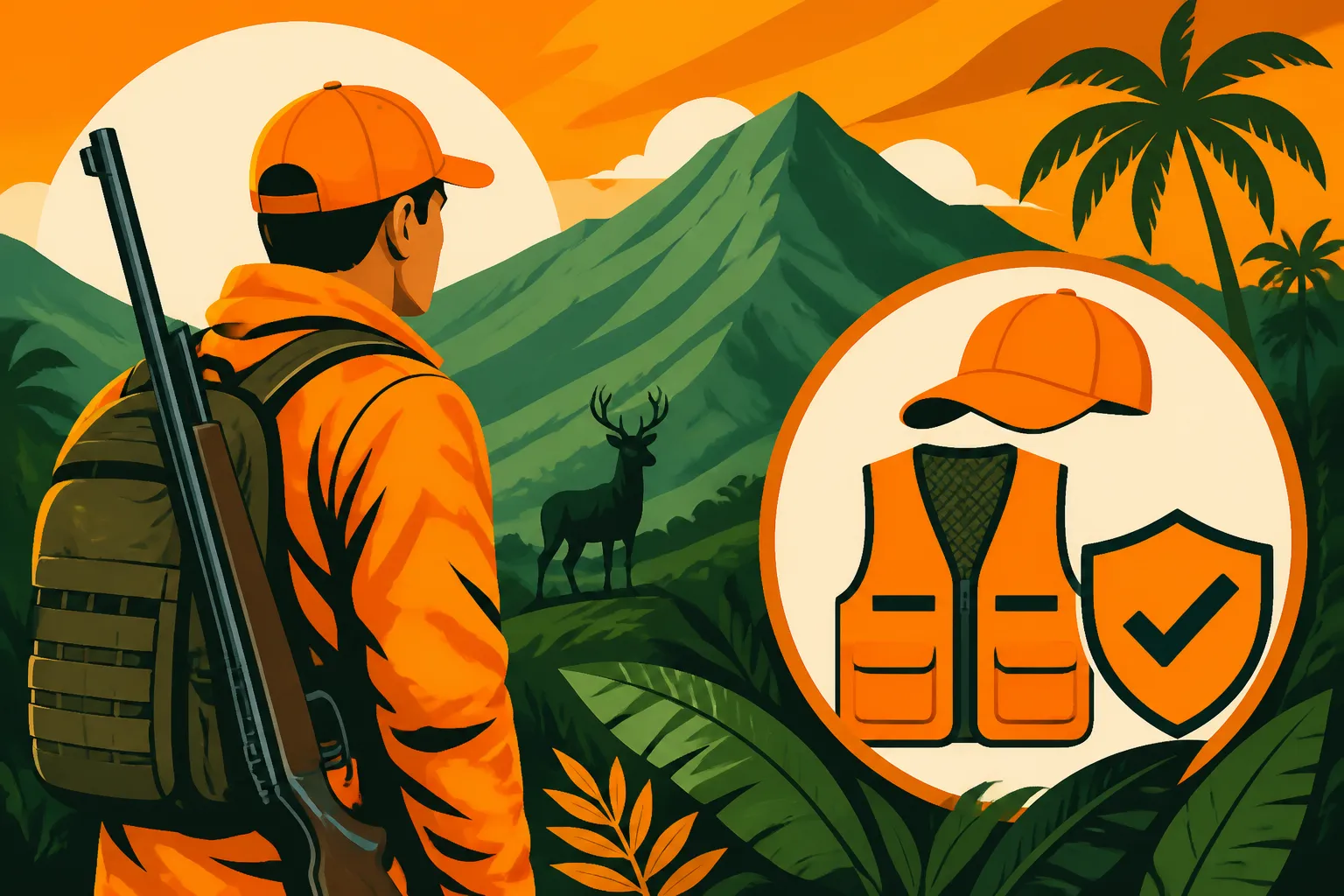
Hawaii Blaze Orange and Safety Rules
Stepping into the vast, wild beauty of Hawaii for a hunt is an experience unlike any other. But with that unparalleled adventure comes a serious responsibility: understanding and adhering to the safety rules and, critically, Hawaii's blaze orange requirements. It's easy to feel lost amidst the unique regulations and distinct challenges of hunting across our diverse islands, from dense jungle to open lava fields. This comprehensive guide aims to cut through that confusion, offering clear, actionable insights into keeping yourself and others safe in the Hawaiian hunting grounds.
The Critical Role of Blaze Orange in Hawaii Hunting
Hunting in Hawaii isn't just about bagging an animal; it's about navigating some of the most unique and, at times, challenging landscapes on Earth. That’s why understanding the role of blaze orange isn't just about following a rule; it’s about acknowledging a fundamental truth of hunter safety. We want everyone to go home safe, and high-visibility clothing plays a massive part in that.
Why Visibility is Non-Negotiable
Imagine stalking through a patch of thick, tangled guava or pushing through dense ʻōhiʻa forest on a windward slope. The light might be dappled, shadows long, and visibility often drops to just a few yards. Or picture yourself moving across an open kiawe flat at dawn or dusk, when the light is low and other hunters might be doing the same. In these scenarios, the human eye struggles to pick out natural camouflage. That’s where blaze orange comes in. Its vibrant, almost glowing hue stands out dramatically against every natural color you'll find in Hawaii's forests and plains. It’s an unmistakable signal to other hunters: "I am here."
This isn't just about preventing accidents from a quick, mistaken shot – though that is paramount. It's also about situational awareness. When you can easily spot another hunter from a distance, even if they're partially obscured, it allows everyone to make better decisions about their movements, shot angles, and overall hunting strategy. Whether you're actively hunting Axis Deer, trying your hand at Hunting Hawaii's Feral Pigs, or chasing Mouflon on Hawaii's highest slopes, ensuring you're seen is the first line of defense against misidentification in environments that can change from clear and open to thick and claustrophobic in a matter of minutes.
Beyond the Law: The Ethos of Hunter Safety
While Hawaii's Division of Forestry and Wildlife (DOFAW) mandates blaze orange for specific hunts and units, the true spirit behind the regulation extends far beyond legal compliance. It embodies a deeper commitment to the safety of every individual sharing our precious public and private hunting lands. Think of it as an unspoken agreement among hunters: "I will be visible, and I expect you to be too." This shared understanding fosters a safer environment for everyone.
Embracing blaze orange wholeheartedly means you’re not just checking a box; you’re actively contributing to a culture of responsibility. This is especially important in Hawaii, where hunting units often share boundaries with hiking trails, agricultural lands, or even residential areas. The high visibility provided by blaze orange reduces anxiety for other recreational users who might not be hunting and helps validate the perception of hunters as responsible, safety-conscious individuals. It's a visible demonstration that hunters respect not only the game and the land but also their fellow outdoor enthusiasts.
Hawaii's Specific Blaze Orange Requirements
Navigating Hawaii's hunting regulations can sometimes feel like a puzzle, with rules varying by island, unit, and even the type of game you're pursuing. Blaze orange requirements are no exception, and understanding the specifics is crucial for a lawful and safe hunt. It's not a one-size-fits-all situation here in the islands.
Understanding the Mandatory Rules by Species and Method
For most big game rifle and muzzleloader seasons across the islands, blaze orange is indeed mandatory. Typically, this means you need to wear an outer garment that is solidly blaze orange or at least 50% blaze orange, visible from 360 degrees. A blaze orange hat is almost always required as well, ensuring your head, a crucial part of your body that might be visible above cover, is easily identifiable. This applies whether you're stalking Mouflon Sheep Hunting on Hawaii Island or participating in a Hunting Lanai's Drawn Axis Deer Weekends rifle hunt. The exact minimum square inches of blaze orange might vary slightly by unit or proclamation, so always consult the most current DOFAW regulations.
There are, however, important exceptions. For instance, during most archery seasons, like Bowhunting Hawaii's Public Units or Hunting Hawaii's Archery Axis Deer Seasons, blaze orange is generally not required. The reasoning is that bowhunting often requires much closer distances and a slower, more deliberate approach where maximum stealth is preferred. Similarly, for game bird hunting, you'll often find that blaze orange is not legally mandated, though wearing it, especially in dense cover or areas with high hunter traffic, is always a smart choice. These distinctions underscore why checking the specific rules for your intended hunt is so important; what's permissible for one method or species might not be for another.
The Importance of Unit-Specific Regulations
If there’s one thing to engrain in your mind about Hawaii hunting, it’s this: unit-specific regulations are king. You cannot assume that the rules for one hunting area will apply to another, even if they're on the same island. Blaze orange requirements are a prime example of this variability. A specific Game Management Area (GMA) on Hawaii Island might have strict blaze orange rules, while a Forest Reserve unit on Maui might have different stipulations, or none at all, depending on the season and species. This is particularly true for high-profile hunts like the Puu Waawaa Season Dates and Units draw, where specific gear requirements are always clearly outlined.
These variations are often due to the unique characteristics of each unit – the terrain, vegetation density, proximity to other land uses, and the species being managed. To avoid any confusion or, worse, a violation, always refer to the most recent Hawaii Administrative Rules (HAR) and the annual hunt proclamations issued by DOFAW. Websites and apps like GoHunt can be incredibly useful tools for cutting through the complexity, allowing you to quickly look up regulations for specific units and seasons. Before you even pack your hunting gear, make it a habit to check the exact rules for the unit you'll be entering.
Here’s a quick overview of common blaze orange requirements in Hawaii:
| Hunting Scenario | Blaze Orange Required? | Minimum Coverage | Typical Notes |
|---|---|---|---|
| Rifle/Muzzleloader Big Game | Yes | Outer garment, hat | Visible from 360 degrees. Unit-specific rules always apply. |
| Archery Big Game | No (generally) | N/A | Still recommended to carry or wear if others are rifle hunting nearby. |
| Game Bird Hunting | No (generally) | N/A | Prudent to wear, especially in areas with dense cover or other hunters. |
| Dog Hunting for Pigs/Goats | Yes (often) | Outer garment, hat | Crucial for visibility, especially when moving fast through thick brush. |
Fundamental Hunting Safety Practices in Hawaii's Unique Terrain
Hawaii's landscape is breathtakingly beautiful, but it's also rugged, unpredictable, and can pose significant challenges for hunters. Beyond wearing blaze orange, a deep understanding of general safety practices tailored to our unique environment is paramount for a successful and safe hunting experience.
Navigating Challenging Landscapes
Our islands are a tapestry of extremes. One moment you might be traversing a relatively open, dry kiawe flat, and the next you could find yourself at the edge of a deep, sheer gulch choked with dense vegetation. The razor-sharp aʻā and pāhoehoe lava flows of the Big Island can shred boots and ankles alike, while the perpetually wet, slippery earth and moss-covered rocks of a windward rainforest pose constant tripping hazards. These aren't just minor inconveniences; they are genuine safety concerns that demand respect and preparation.
Physical fitness is your first line of defense. Hunting in Hawaii often means significant elevation changes, long walks through uneven terrain, and battling through thick brush. Investing in sturdy, ankle-supporting boots is non-negotiable, and a good pair of hiking poles can save you from a nasty fall on steep, loose slopes. Always plan your route meticulously, knowing your exact entry and exit points, and be realistic about how much ground you can cover safely in a day. Understanding the unique features of the land, from Hunting Hawaii's Volcanic Terrain to Hunting Pigs in Hawaii's Rainforest Gulches, is critical to preventing accidents.
Weather and Environmental Awareness
Hawaii's notorious microclimates are a constant factor in any outdoor activity, and hunting is no exception. You can start your day under a scorching sun in a leeward dryland unit, only to be caught in a torrential downpour as you cross into a windward forest. At higher elevations, like the slopes of Mauna Kea or Haleakalā, temperatures can drop surprisingly low, even reaching freezing, and fog can roll in rapidly, drastically reducing visibility. Conversely, the intense tropical sun at lower elevations can lead to rapid dehydration and heat exhaustion.
Always pack for all conditions, even if the forecast seems clear. A lightweight rain jacket, extra layers, and ample water are non-negotiables. A good rule of thumb is to carry at least two liters of water for every half-day of hunting, and even more in hot, dry areas. Check out our guide on Water and Heat Planning for a Hawaii Hunt for more detailed advice. Beyond the weather, be aware of natural hazards like unstable rock faces on coastal cliffs, potential flash floods in gulches during heavy rains, and loose, crumbling earth. Even seemingly benign features like a quiet stream can become a dangerous torrent after an inland downpour.
Firearm and Archery Safety on the Islands
Regardless of your preferred hunting method, adherence to fundamental firearm and archery safety rules is paramount. These principles are universal, but Hawaii's unique hunting environments add an extra layer of challenge, making disciplined application of these rules even more critical.
The Four Rules and Beyond
Every hunter knows the four cardinal rules of firearm safety: 1) Treat every firearm as if it were loaded, 2) Always point the muzzle in a safe direction, 3) Be sure of your target and what is beyond it, and 4) Keep your finger off the trigger until ready to shoot. In Hawaii, the third rule, "Be sure of your target and what is beyond it," takes on particular importance. Our terrain is often steep, broken, and densely vegetated. A seemingly clear shot could have an unseen ravine or a hidden trail directly behind your target. High-angle shots are common, and understanding where your bullet will impact beyond the animal is crucial to preventing unintended consequences.
For archers, while the risks are different, safety remains key. Broadhead arrows are incredibly sharp and demand extreme caution when handling. Always ensure your bow is unstrung or de-cocked when not actively hunting, and pay close attention to your surroundings when drawing an arrow. A misfire or a dropped arrow can lead to serious injury. Consider how much space you need for a full draw, especially in dense brush. For a deeper dive into the legalities and specific requirements for your equipment, be sure to check out Archery Equipment Rules for Big Game.
Responsible Handling and Transport
Bringing firearms to Hawaii, or transporting them between islands, involves strict protocols that must be followed to the letter. All firearms must be unloaded, encased in a hard-sided, locked container, and declared to the airline upon check-in. When traveling between islands, you'll need to re-check your firearm each time. While guides often provide rifles for clients, if you're bringing your own, confirm all regulations with your airline and local authorities well in advance. Our guide on Hawaii's Legal Weapons by Season offers more comprehensive details on legal firearms and equipment.
Once in the field, responsible handling extends to your actions both in and out of active hunting. Never lean a loaded rifle against a tree or vehicle where it could fall or be easily accessed by unauthorized individuals. When negotiating tricky terrain, unload your firearm or ensure the action is open to prevent accidental discharge from a stumble. If you're utilizing dogs for Pig Hunting With Dogs in Hawaii, especially a bay dog and catch dog team, maintaining absolute control over your weapon becomes even more paramount in the chaos of a bayed pig. Ensuring your firearm is in a safe condition and position at all times, particularly during fast-paced encounters, is crucial for the safety of both hunters and hounds.
Navigating Regulations and Staying Compliant
Hawaii's hunting regulations are designed to ensure hunter safety, promote ethical practices, and protect our unique ecosystems. Understanding and adhering to these rules is not merely a suggestion; it's a fundamental obligation for every hunter who steps into our islands' wild places.
The Criticality of Hunter Education
For anyone planning to hunt in Hawaii, hunter education is not just a prerequisite for purchasing a license; it's a foundational course in responsible outdoor stewardship. It goes far beyond simply teaching you how to handle a firearm or bow safely. A proper hunter education course, such as those that meet Hawaii Hunter Education Requirements, imparts crucial knowledge about wildlife conservation, ethical hunting practices, basic first aid, and survival skills — all of which are incredibly relevant in Hawaii's diverse and often remote environments.
Whether you're a Hawaii resident or a non-resident looking to hunt here, ensuring your hunter education certification is recognized and up-to-date is your first step. For non-residents, this often means providing proof of a hunter education course completed in your home state or jurisdiction. Finishing your Hunter Education Before Your Trip is essential, as you cannot purchase a Hawaii hunting license without it. This education equips you with the knowledge to make informed decisions in the field, from identifying legal game to understanding appropriate shot placement and respecting private property boundaries.
Staying Informed and Avoiding Penalties
In Hawaii, the onus is always on the hunter to know and abide by all current regulations. The phrase "ignorance of the law is no excuse" holds particular weight here, given how often rules can be specific to individual islands, units, or even temporary proclamations. It's imperative to regularly check the Hawaii Department of Land and Natural Resources (DLNR) Division of Forestry and Wildlife (DOFAW) website for the latest annual hunting announcements, hunt specific rules, and any emergency closures or changes that might affect your planned hunt. Don’t rely solely on what you heard from a friend or saw last year.
Resources like GoHunt can provide an excellent service by aggregating and simplifying access to these regulations, helping hunters stay current and compliant. Failing to check the most up-to-date information can lead to significant penalties, ranging from hefty fines to the revocation of hunting privileges, as detailed in Penalties for a Hunting Violation. Additionally, being aware of and adhering to guidelines like Hawaii Trespass and Closed Area Rules is critical, as property lines are often subtle and can change. Always carry your hunting license and any required permits, and make sure you understand the procedures for Checking In and Out of Hawaii Hunting Units, as this is a fundamental requirement for many public hunting areas and helps DOFAW manage hunter numbers and gather vital harvest data.
Disclaimer
The information provided in this guide is for general informational purposes only and does not constitute legal advice. Hunting regulations in Hawaii are subject to change, and it is the sole responsibility of the individual hunter to consult the most current Hawaii Administrative Rules (HAR) and specific hunt proclamations issued by the Hawaii Department of Land and Natural Resources (DLNR) Division of Forestry and Wildlife (DOFAW) before engaging in any hunting activities. Always prioritize safety, adhere to all laws, and hunt ethically and responsibly.