Hawaii Trespass and Closed Area Rules
Navigating Hawaii's unique blend of private lands, bustling residential areas, and critically important conservation zones can feel like a minefield for even the most experienced hunter. The risk of inadvertently wandering onto private property or into a restricted public area is a real and constant concern, not just for your hunt but for your legal standing. This guide is dedicated to helping you understand Hawaii's specific trespass and closed area rules, ensuring you stay within legal boundaries and protect both yourself and the future of hunting in the islands.
Understanding What Constitutes Trespassing in Hawaii
The concept of "trespassing" might seem straightforward, but in Hawaii, where land ownership often isn't immediately obvious and boundaries can be indistinct, it’s a nuanced issue. Unlike some mainland states where "posted" signs are universal, Hawaii's terrain and land use patterns mean you often need to do your homework long before you set foot in the field. Ignoring these distinctions isn't just a minor infraction; it can lead to significant legal trouble, fines, and even the permanent loss of hunting privileges.
The Legal Definition of Trespass
In Hawaii, trespass generally refers to entering or remaining on private property without permission. This isn't just about fenced-off ranch lands; it can include undeveloped parcels, agricultural fields, and even coastal properties where the public might perceive access. The law doesn't always require "No Trespassing" signs to be present for the land to be considered private. If you don't have explicit permission, either written or verbal, you risk trespassing. This is particularly critical in areas where public hunting units might border private holdings, creating an invisible line that can easily be crossed unknowingly. For instance, a game management area might butt up against an old sugar cane plantation that is now privately owned and completely off-limits, even if it looks like prime habitat. Understanding Hawaii's land divisions is paramount to staying legal.
Distinguishing Public from Private Land Boundaries
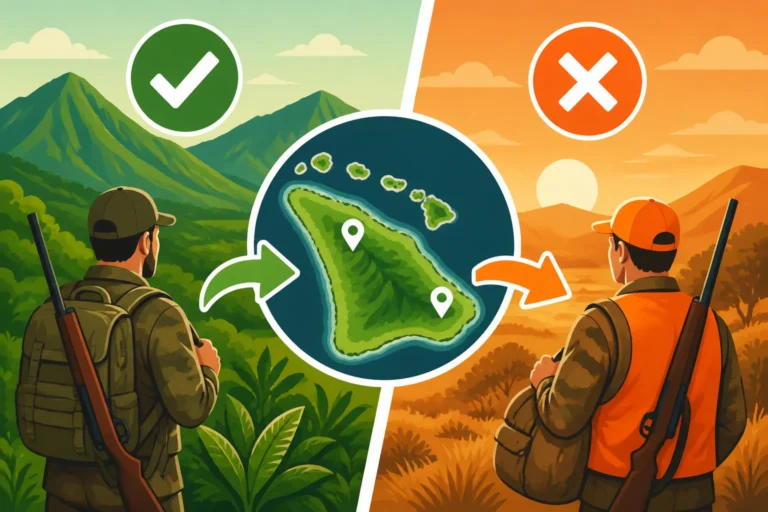
Identifying where public hunting land ends and private land begins is perhaps one of the biggest challenges for hunters in Hawaii. Many public hunting units, especially on islands like Maui or the Big Island, are nestled among vast private ranches, agricultural operations, or even residential subdivisions. Rivers, old fences, stone walls, or even subtle changes in vegetation can mark boundaries that aren't clearly signed. Relying solely on physical markers in the field is a gamble you don't want to take.
This is where diligent pre-hunt scouting, often involving digital mapping tools, becomes indispensable. While no single app is foolproof in every corner of Hawaii, services like onX Hunt (or other similar mapping applications) can overlay property lines onto topographic maps, giving you a much clearer picture of where you stand. Even then, cross-referencing with official Department of Land and Natural Resources (DLNR) maps, usually found on the Division of Forestry and Wildlife (DOFAW) website, is a smart move. Remember, maps aren't always 100% accurate down to the inch, so always err on the side of caution. If there's any doubt about a boundary, it's better to avoid the area entirely or confirm with the appropriate authorities before proceeding. Ignorance of the boundary is rarely an acceptable defense if you're cited for trespass.
Navigating Hawaii's Closed Areas and Regulations
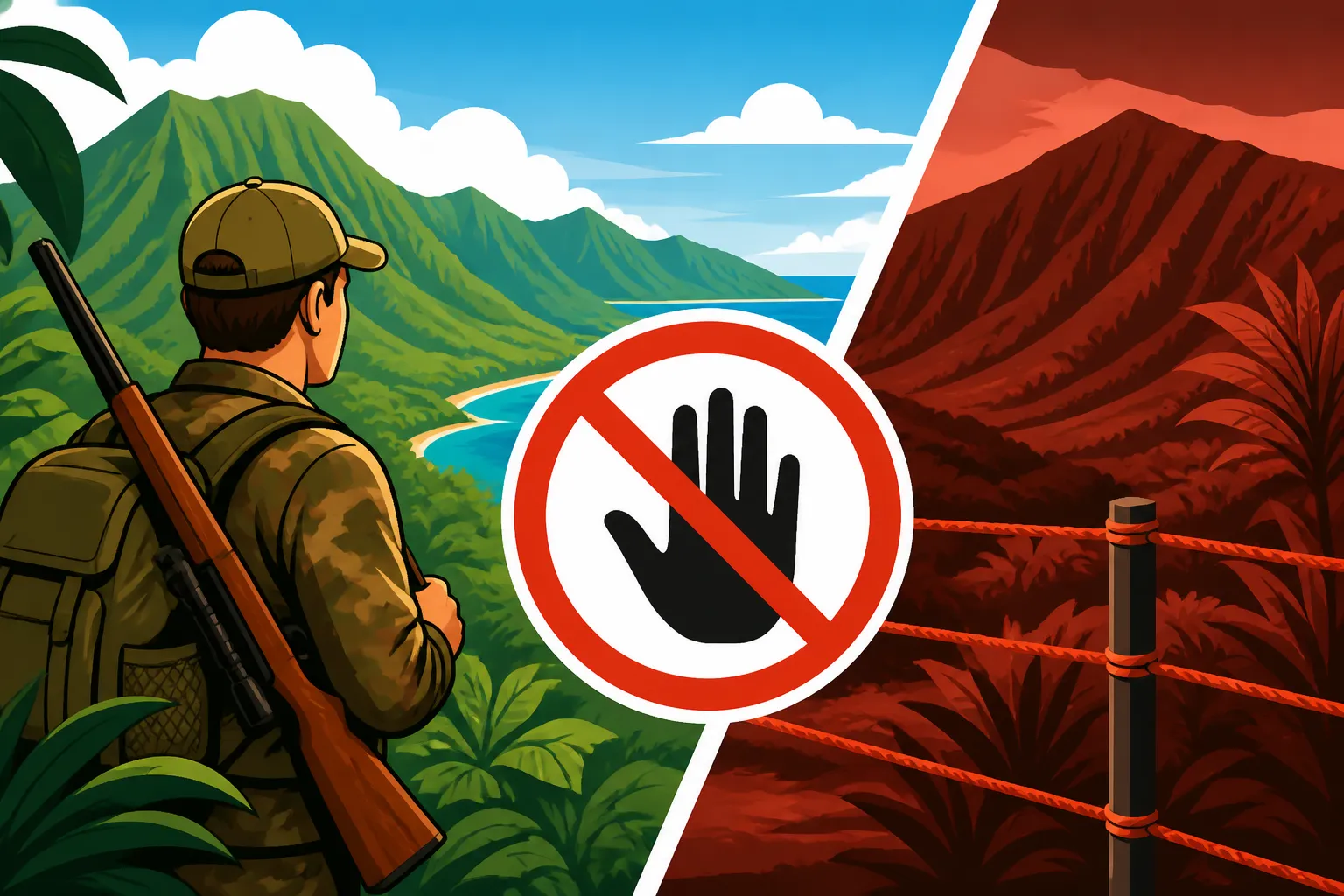
Beyond private land, Hawaii has a complex network of public lands with varying access rules, many of which are designated as "closed" to hunting either seasonally, permanently, or under specific conditions. These closures are put in place for a multitude of reasons, from protecting endangered species to ensuring public safety or managing ongoing conservation projects. Just because land is public doesn't mean it's open for hunting, and understanding these specific nuances is vital for a responsible hunter.
Types of Public Land Closures
Hawaii's public lands are diverse, and so are their access restrictions. You'll encounter several categories of closed areas, each with its own set of rules.
- Natural Area Reserves (NARs): These are highly protected ecological areas established to preserve Hawaii's unique natural resources, often containing rare native plants and animals. Hunting is generally prohibited in NARs, or severely restricted to specific management actions. Entering these areas without specific permits, even for passage, can carry heavy penalties. These are not places to accidentally wander into.
- Forest Reserves and Watersheds: While some portions of Forest Reserves are open to hunting, others are crucial for watershed protection, fire prevention, or native forest restoration. These sensitive areas may have temporary or permanent closures, particularly if active restoration work is underway, or if rare species are being protected. Hunting access might be restricted to certain trails or specified zones, making a current map and understanding the unit rules critical.
- Military Lands: Hawaii hosts significant military installations, particularly on Oahu and the Big Island. Areas like the Pōhakuloa Training Area (PTA) on the Big Island do offer hunting opportunities for certain species, but access is highly regulated, often requiring special permits, safety briefings, and adherence to strict schedules. Other military lands are simply off-limits due to active training, unexploded ordnance, or security concerns. Never assume you can just walk onto military land, even if it appears remote and unfenced.
- Fenced Conservation Areas: In an effort to protect native forests and control invasive ungulates, many areas are now being fenced off. These fences, often several miles long, are designed to exclude pigs, goats, and deer. While they are a vital tool for conservation, they also create new boundaries that hunters must respect. Hunting within these newly fenced areas might be prohibited or limited to specific management hunts designed to remove animals before the fences are completed. Always check current DOFAW announcements regarding these areas. You can learn more about Hunting Hawaii's Fenced Conservation Boundaries in a dedicated guide.
- Seasonal or Temporary Closures: Even designated hunting units can be subject to temporary closures due to heavy rains, fire danger, public events, or specific wildlife management needs. A sudden storm might make a particular gulch impassable or dangerous, leading to a temporary closure. Keeping an eye on local announcements, especially from DOFAW, is essential.
How to Identify and Respect Closed Area Boundaries
Identifying closed areas and respecting their boundaries requires a proactive approach. The state of Hawaii's Division of Forestry and Wildlife (DOFAW) is the primary source for all official hunting regulations, unit maps, and closure notices.
- Official Maps: Always consult the most current hunting unit maps provided by DOFAW. These maps often denote different land designations, boundaries, and specific rules for each unit. While they might not be as detailed as a commercial mapping app, they are the official representation of public land access. You can find out more about Reading a Hawaii Unit Boundary Map.
- Online Resources and Announcements: The DOFAW website is your best friend. They regularly post "Public Notice" announcements regarding season changes, new rules, and unit closures or openings. Subscribing to their email lists or regularly checking their news section is highly recommended. For information on where to find these notices, check out our guide on Where DOFAW Posts Season Announcements.
- Check Stations and Signs: Many public hunting units in Hawaii require hunters to check in and out. These check stations, whether physical kiosks or digital via the OuterSpatial app, often have updated maps, notices, and direct contact with game wardens. Pay attention to any signs posted at trailheads, access points, or within the unit itself. These signs, often weathered by the elements, provide critical, on-the-ground information. Learn more about Checking In and Out of Hawaii Hunting Units.
- Using Mapping Apps: While not official, commercial mapping apps can be incredibly useful. While brands like GoHunt are excellent for general research and license purchasing, for real-time boundary navigation, look for apps that offer property line overlays. Use these as a supplementary tool, always cross-referencing with official state maps and ground signs. These apps can help you visualize your location relative to known boundaries, but remember, the ultimate responsibility for knowing where you are lies with you.
| Land Type | General Access Rule | Common Closures/Restrictions | How to Verify Access |
|---|---|---|---|
| Private Land | No entry without explicit permission from landowner. | All private land unless specific permission is granted. | Direct contact with landowner; legal land parcel maps. |
| Public Hunting Units | Open for hunting during designated seasons and times. | Seasonal closures, specific species restrictions, weather-related. | DOFAW website, unit maps, check station notices, OuterSpatial app. |
| Forest Reserves | Varies; some open for hunting, others restricted. | Watershed protection, rare species habitat, active restoration. | Specific unit regulations, DOFAW maps, on-site signage. |
| Natural Area Reserves | Highly restricted; generally no hunting or public access. | Preservation of native ecosystems and rare species. | DOFAW website, specific NAR management plans, avoid at all costs without permit. |
| Military Lands | Restricted access; special permits required for designated areas. | Active training, unexploded ordnance, security. | Base hunting offices, specific military regulations, online portals. |
| Fenced Conservation Areas | Often closed or limited to specific management hunts. | Protection of native forests from ungulate damage. | DOFAW announcements, unit maps, on-site fencing. |
Common Pitfalls and How to Avoid Them
Even with the best intentions, it's easy to make a mistake when hunting in Hawaii. The islands' unique topography, dense vegetation, and patchwork of land ownership create scenarios where an unwary hunter can easily find themselves in a bind. Avoiding these pitfalls requires constant vigilance and preparation.
The Illusion of Unused Land
One of the most common mistakes visitors, and even some residents, make is assuming that remote, seemingly unused land is public and therefore accessible. Hawaii has a long history of private land ownership, and many large tracts of land, even those covered in thick forest or lava flows, are privately held. Just because a property isn't actively farmed, fenced with barbed wire, or has "No Trespassing" signs every fifty feet doesn't mean it's open. For instance, many old ranch roads might look like public access points but dead-end into private pastures or conservation easements.
The visual cues you might rely on elsewhere simply aren't enough here. The dense jungle growth or vast lava fields can mask property lines and make it incredibly difficult to determine ownership without a map and GPS. This is particularly true when you're deeply engrossed in a hunt, chasing a pig through a gulch, or stalking an Axis deer across a kiawe flat. Without a clear understanding of the boundaries, that exciting chase can quickly turn into a legal problem. If you’re considering Hawaii Private Ranch Hunting Access, it’s always best to secure permission beforehand.
Misinterpreting Boundaries and Signage
Boundaries in Hawaii are not always clear-cut. An old, dilapidated fence line might represent a legal boundary, or it might just be a forgotten piece of infrastructure. A stream might serve as a natural boundary in some areas, but in others, the property line might cut right across it. Moreover, signs can be stolen, defaced, or simply fall down in the harsh Hawaiian weather.
When you're out in the field, especially in challenging terrain, it's easy to lose your bearings. What looked like a public access road on your map might be a private driveway on the ground. A "Public Hunting Area" sign might be several hundred yards inside the actual boundary, leading you to believe you have more room than you actually do. Relying on outdated maps or ignoring the nuances of the terrain can lead to accidental trespass. This is also why understanding the overall Hawaii's Hunting Units and How They Work is so important, as rules can change even within adjacent units.
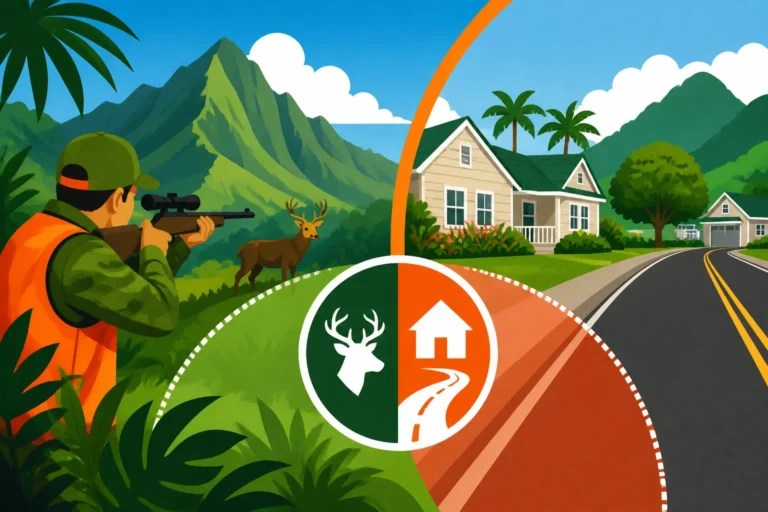
Another common issue arises near residential areas or roads. Even if a public hunting unit abuts a neighborhood, there are strict rules about discharging firearms or hunting too close to homes, schools, or public roads. What might seem like a safe distance from a quiet rural road could still be a violation. Always check the rules regarding Rules on Hunting Near Homes and Roads before venturing out.
The Consequences of Violating Trespass and Closure Rules
The stakes for violating Hawaii's trespass and closed area rules are high. These aren't minor infractions that are easily brushed aside. Hawaiian law enforcement and DOFAW wardens take these violations very seriously, as they directly impact land management, conservation efforts, and public safety.
Legal Penalties and Fines
Trespassing in Hawaii can result in significant legal penalties. The specifics can vary based on the nature of the trespass (e.g., simple entry versus causing damage, or hunting while trespassing), but generally, you're looking at misdemeanor charges, which can include hefty fines. Fines can range from hundreds to thousands of dollars per incident. Repeat offenses or aggravated trespass can lead to more severe charges, including felony convictions in some cases, which carry even larger fines and potential jail time.
Beyond general trespass, hunting in a closed area or on private land without permission can lead to additional charges related to hunting violations. This can include fines for hunting out of season, hunting without proper licenses or tags (for which you likely used a system like GoHunt to acquire your Hawaii Hunting Licenses and What They Cost and understand How Hawaii's Permit-Tag System Works), or taking an animal illegally. Each of these offenses can stack up, quickly turning a day of hunting into a financially crippling legal nightmare.
Loss of Hunting Privileges
Perhaps one of the most painful consequences for any dedicated hunter is the loss of hunting privileges. A trespass or hunting violation conviction in Hawaii can result in the suspension or revocation of your hunting license and permits, not just for a season, but potentially for several years, or even permanently. This isn't just a Hawaiian penalty; many states participate in interstate wildlife violator compacts, meaning a license revocation in Hawaii could lead to you losing your hunting privileges in your home state and other participating states as well.
Imagine planning a dream hunt for Axis deer, securing your tags, and doing all the prep, only to have your license revoked because you mistakenly crossed an invisible boundary. It's a devastating outcome that can be entirely avoided with due diligence and respect for the rules.
Impact on Future Hunting Opportunities
Beyond personal penalties, trespass and closed area violations have a broader, detrimental impact on the hunting community as a whole. Every publicized incident of illegal hunting or trespass fuels negative perceptions of hunters, making it harder to secure access to private lands and potentially leading to more restrictive public land regulations. Landowners who might otherwise be open to granting permission for hunting become wary, locking down their properties entirely.
Conservation agencies, already juggling complex management issues, face increased pressure when hunters don't adhere to regulations. Such incidents can undermine their efforts to create sustainable hunting opportunities and protect Hawaii's fragile ecosystems. Ultimately, responsible hunting hinges on every hunter understanding and respecting the rules. Your actions in the field reflect on all of us.
Disclaimer
The information provided in this guide is for general informational purposes only and does not constitute legal advice. Hunting regulations, land designations, and trespass laws in Hawaii are subject to change. Always consult the most current official regulations from the Hawaii Department of Land and Natural Resources (DLNR) and its Division of Forestry and Wildlife (DOFAW) before planning or engaging in any hunting activity. It is the individual hunter's responsibility to know and follow all applicable laws and regulations.