Polynesian Pigs Versus European Boar
Navigating the world of Hawaii's feral pigs can be confusing for hunters, especially when you hear talk of "Polynesian pigs" and "European boars." For many, a pig is just a pig, but understanding the distinct lineages and their characteristics can significantly enhance your hunting strategy and appreciation for these challenging animals. This guide will clarify the historical journey of pigs to Hawaii, differentiate between their ancestral types, and explain how these differences impact their behavior and the hunting experience today.
The Ancestral Roots: Tracing Hawaii's Feral Pigs
The story of Hawaii's feral pigs isn't a simple one; it's a tale woven through centuries of human migration, exploration, and settlement. The islands' unique ecosystem, once free of large terrestrial mammals, has been profoundly shaped by the introduction of these animals, leading to the diverse and often challenging pig populations we encounter today.
When the First Pigs Arrived in the Islands
Long before Captain Cook set foot on these shores, the first pigs arrived in Hawaii aboard voyaging canoes. These were the "pua'a" of the early Polynesian settlers, brought as a crucial food source and an integral part of their culture. Imagine these pioneers, navigating vast ocean expanses, bringing with them not only essential plants but also livestock to sustain their new communities. These original Polynesian pigs were significantly different from what most people envision when they think of a "wild boar."
These ancestral pigs were typically smaller, more slender, and often described as having a longer snout and a less stocky build than their European counterparts. They were a cornerstone of the Polynesian diet and ceremonial practices, often raised in a semi-domesticated state, allowed to forage in the forests but remaining relatively close to human settlements. As the Polynesian population grew and spread across the islands, so too did these pigs. Over generations, some escaped or were intentionally released into the wild, slowly establishing the islands' first truly feral pig populations. They adapted to the rich, diverse forest environments, becoming a part of the nascent Hawaiian ecosystem, albeit an introduced one. At this point, their ecological impact was likely localized and manageable, as their numbers and destructive tendencies were limited compared to what was to come.
Captain Cook and the European Influence
The arrival of Captain James Cook in 1778 marked a pivotal turning point for Hawaii, not just for its people and culture, but also for its wildlife. With Cook and subsequent European and American explorers, traders, and whalers came a new wave of introductions, including larger, more robust domestic pigs of European descent. These animals, often referred to as European boars or their domestic derivatives, were bred for size, meat production, and a more aggressive disposition, quite a contrast to the smaller Polynesian pua'a.
These European pigs were quickly released or escaped into the wild, either intentionally to establish food sources for visiting ships or accidentally during their stay. What followed was an inevitable and extensive interbreeding between the established Polynesian pig populations and these new European arrivals. The genetic mixing created a hybrid animal that often combined the hardiness and adaptability of the Polynesian pig with the larger size, greater reproductive rates, and more destructive foraging habits of the European boar. This hybridization process accelerated the pigs' spread and their ecological impact across the islands. Suddenly, the pigs were not just a food source; they were becoming an aggressive force, transforming native forests and impacting delicate ecosystems in ways the smaller, earlier pigs never could have. Understanding this dual ancestry is key to grasping why Hawaii's feral pigs are such formidable animals and a significant management challenge today. If you're looking to plan your hunt, checking resources like GoHunt can help you understand specific unit regulations, as the state views all feral pigs as a single management concern, regardless of their specific genetic makeup.
Distinctive Features: Polynesian Pig vs. European Boar
While pure strains of either Polynesian pig or European boar are incredibly rare in Hawaii's wild today, their ancestral characteristics still influence the appearance and behavior of the hybrid feral pigs that roam the islands. Knowing what to look for can offer insights into the lineage of the animal you're pursuing.
Physical Characteristics of the Polynesian Pig
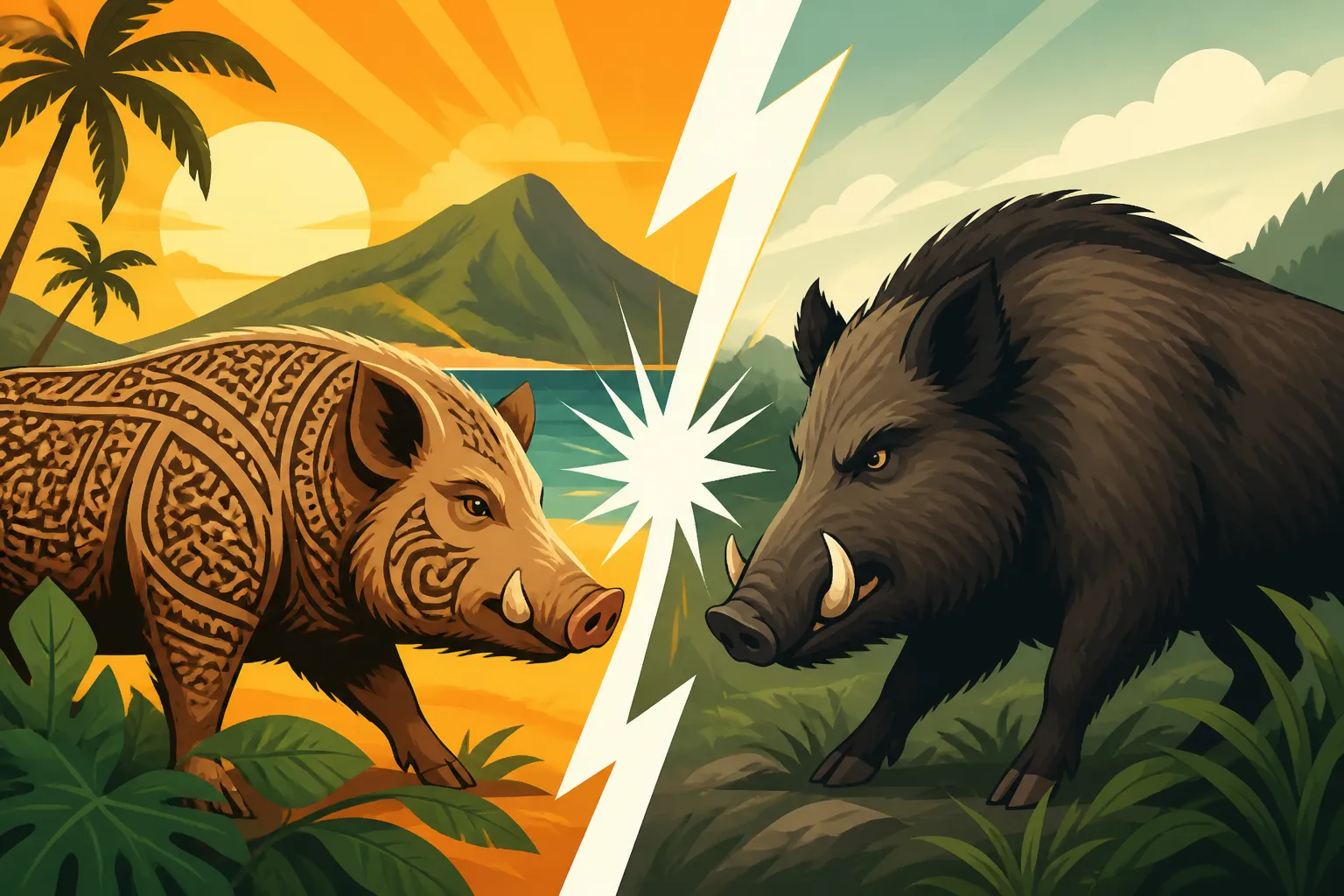
The original Polynesian pig, or pua'a, was a creature of utility and sustenance, carefully selected by early voyagers. Imagine a smaller, leaner animal, well-suited for canoe travel and subsequent foraging in a novel environment. Historically, these pigs were generally smaller in stature, rarely exceeding 150-200 pounds, though island conditions could vary this. Their coats tended to be smoother, with finer hair, often solid black or dark brown, though spotted varieties were not unheard of. Their heads were typically more elongated, with a longer, narrower snout and a less prominent, more delicate jawline. If you ever spot a pig with these traits, even today, it's a subtle nod to its ancient lineage.
One of the most distinguishing features, especially in males, was the tusks. While present, they were generally smaller and less formidable than those found in European boars. The tail was often long and straight, sometimes with a slight curl at the very end, usually carried higher than a European boar's. Their body shape was more agile, designed for navigating dense undergrowth rather than brute force. They were not the short-legged, massive-shouldered tanks that European boars are. These pigs, in their pure form, were perhaps more "domesticated-looking" if you consider their original purpose, reflecting a direct evolutionary line from their Southeast Asian ancestors rather than the heavier European stock.
The Imposing Presence of the European Boar
When European domestic pigs and wild boars were introduced, they brought a very different genetic blueprint. These animals were chosen for their robust build, rapid growth, and, in some cases, their inherent wildness for sport hunting. The traits of the European boar, therefore, are often much more imposing. Picture a thicker, stockier animal, often weighing in at 300 pounds or more, with some exceptionally large individuals pushing even further. You can read more about what a Hawaii feral boar weighs to get a better sense of their formidable size. Their bodies are built like battering rams, with powerful shoulders and shorter, thicker legs designed for pushing through obstacles and digging.
The coat of a European boar, or a pig with significant European ancestry, tends to be much coarser and thicker, often grizzled or a mix of black, brown, and reddish hues. They might even display a distinctive "mane" of bristly hair along their spine. The head is broad and robust, with a shorter, wider snout and a powerful jaw. For males, the tusks are perhaps the most iconic feature. These can grow quite long, curving upwards and outwards, presenting a truly formidable defensive and offensive weapon. Understanding how big Hawaii pig tusks get can give you an appreciation for the challenges of encountering a large boar. The tail is generally shorter, thicker, and often carried low, sometimes even tucked between the legs, a stark contrast to the Polynesian pig's higher-held tail. These physical traits, when observed in the field, often indicate a strong genetic link to the European introductions, showcasing the evolutionary advantages of a larger, tougher animal in a truly feral environment.
Behavior, Habitat, and Impact on the Hawaiian Ecosystem
The varying origins of Hawaii's feral pigs have not only shaped their physical appearance but also profoundly influenced their behavior, the habitats they prefer, and, critically, their ecological impact on the delicate Hawaiian ecosystem. Understanding these nuances is vital for anyone engaging with these animals, whether as a hunter or a conservationist.
Different Foraging Styles and Dietary Preferences
The ancestral Polynesian pigs, being smaller and having evolved alongside humans in their initial homeland, likely had a more varied and perhaps less destructive foraging style. They would have browsed on fruits, roots, and insects, but their smaller size and limited numbers meant their impact was relatively contained. They were part of a more integrated, controlled system.
In contrast, the European boar and its hybrid descendants are notorious for their highly destructive rooting behavior. Driven by a larger body mass and a more aggressive search for sustenance, these pigs will systematically tear up large swaths of forest floor in their relentless pursuit of roots, tubers, earthworms, and other invertebrates. This behavior is what feral pigs eat in the islands, but the consequences are dire. This intense rooting destroys native understory plants, disrupts delicate soil structures, and creates channels for erosion, especially on steep slopes. They are also highly opportunistic, feasting on fallen fruits of native plants, consuming seeds that would otherwise germinate, and predating on ground-nesting birds and their eggs, including those of endangered species. The presence of European boar genes amplified this destructive capacity, turning pigs into ecological bulldozers that fundamentally alter forest composition and function.
Habitat Utilization and Territoriality
Polynesian pigs, in their early feral existence, probably occupied less extensive ranges, perhaps sticking closer to lower elevations or areas where resources were readily available. They might have been less inclined to push into extremely dense, remote forests.
However, the introduction of European boar genetics led to pigs that are incredibly adaptable and resilient, capable of thriving in a vast array of challenging habitats across the islands. You'll find them ranging from the humid, dense rainforests of the windward slopes to the dry, rocky uplands of the leeward sides. They are particularly fond of the thick cover offered by gulches and steep valleys, providing both shelter and access to water. This is why you'll often find yourself hunting pigs in Hawaii's rainforest gulches, where the terrain is incredibly challenging. Their territorial behavior, especially in larger boars, is also a significant factor. While not strictly territorial like some other species, dominant boars will often control prime feeding and bedding areas, displaying aggression towards intruders. They often use established trails, known as "pig trails," which are worn paths through dense vegetation. Reading pig sign along a muddy trail can give you invaluable clues about their movements and preferences, revealing how they navigate and utilize their chosen habitats. Their ability to adapt to diverse Hawaiian landscapes, from wet to dry, from sea level to higher elevations, is a testament to the hardiness inherited from both their Polynesian and European ancestors.
Ecological Consequences and Hybridization
The most significant impact of the interbreeding between Polynesian pigs and European boars is the creation of a highly invasive, incredibly destructive hybrid feral pig. This hybrid animal combines the worst ecological traits of both lineages: the rapid reproductive rate and adaptability of the Polynesian pig with the larger size, aggressive foraging, and destructive rooting of the European boar. The result is an animal that has fundamentally altered Hawaii's unique and fragile ecosystems. You can learn more about what feral pigs do to Hawaii's forests to understand the severity of their impact.
These hybrid pigs contribute to severe soil erosion, which degrades water quality and silts up coral reefs. They are also major vectors for the spread of invasive plant species, as they consume seeds and deposit them in new areas through their droppings. Their rooting behavior damages the delicate root systems of native trees, leaving them vulnerable to disease and further erosion. They also create open areas where invasive weeds can quickly take hold, outcompeting native flora. The ongoing battle against feral pigs in Hawaii is a direct consequence of this historical hybridization. While hunters appreciate the challenge and the food source, the broader environmental community views these pigs as one of the most pressing threats to Hawaii's native biodiversity. Effective management strategies, often involving hunting, trapping, and fencing, are crucial to mitigating their impact and protecting what remains of Hawaii's unique natural heritage.
Hunting Considerations for Each Type (and Their Hybrids)
While pure strains of Polynesian pigs or European boars are largely historical footnotes in Hawaii's wild, the characteristics of their descendants still influence hunting strategies. Recognizing the subtle physical and behavioral cues of the prevailing lineage in a particular area can give you an edge in the field.
Spotting the Differences in the Field
When you're out hunting Hawaii's feral pigs, you're primarily pursuing hybrids. However, you might still observe individuals that lean more heavily towards one ancestral type or another. A pig with more "Polynesian-like" traits might be smaller, sleeker, with finer hair and a longer snout. These pigs often appear more agile and might be found in more open, less dense areas, or traveling quickly through established trails. They might be harder to pinpoint on a larger scale, often blending into the shadows.
On the other hand, a pig with strong "European-like" features will be noticeably larger, stockier, with coarser hair, a broader head, and potentially impressive tusks. These are often the "boars" that hunters actively seek for their size and challenge. They might be found in thicker, more rugged terrain, perhaps near wallows or areas with abundant rooting sign. Observing these differences, subtle as they may be, can inform your approach. For instance, a very large, dark, grizzled boar might indicate a deeply embedded European lineage, suggesting a more aggressive and formidable opponent. While GoHunt might not delineate specific pig types in their regulations, being observant in the field is a skill that any hunter needs, allowing you to adapt to the animal in front of you.
Tailoring Hunting Strategies
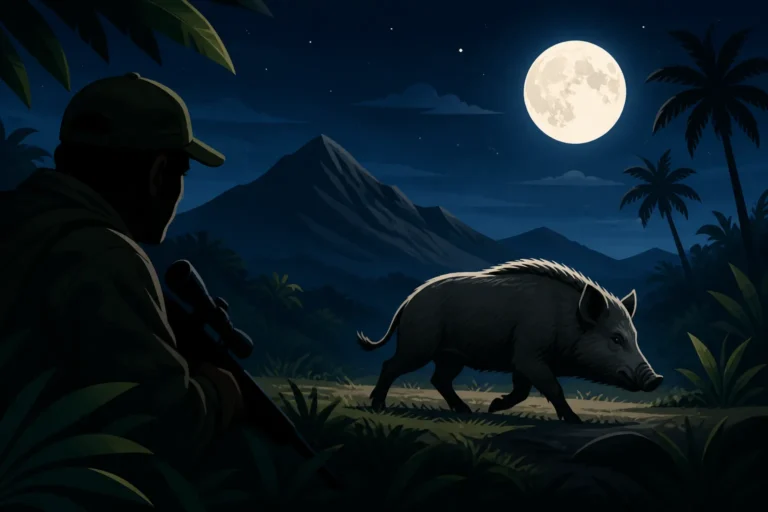
Given the mixed genetic heritage, hunters often employ a variety of strategies to target Hawaii's feral pigs. For smaller, more "Polynesian-like" pigs, which might be more wary and quick, stealth and patience are paramount. This often means still-hunting pigs in Hawaii's wet forest, moving slowly and quietly, utilizing the dense vegetation for cover, and relying on your senses to detect subtle movements or sounds. These pigs might be less prone to standing their ground, choosing instead to bolt through the undergrowth.
For larger, more "European-like" boars, especially those with impressive tusks, a different approach might be necessary. These animals can be incredibly tough and, when cornered or wounded, can be aggressive. Many hunters prefer dog and knife pig hunting in Hawaii for these formidable animals, where well-trained dogs are used to bay the pig, allowing the hunter to move in for a quick, humane kill. This method combines the dogs' ability to navigate thick cover with the hunter's skill to dispatch a powerful animal safely. Regardless of the pig's apparent lineage, understanding their preferred habitats, their feeding patterns, and their general demeanor will lead to a more successful hunt. Always remember that even smaller pigs can be tenacious, and larger boars demand respect and a carefully planned approach.
Understanding Hawaii's Feral Pig Management
It's important for hunters to remember that, from the perspective of wildlife management in Hawaii, all feral pigs are treated as an invasive species. Whether a pig displays more Polynesian or European traits, its impact on the native ecosystem is generally viewed as detrimental. Therefore, the Hawaii Department of Land and Natural Resources (DLNR) Division of Forestry and Wildlife (DOFAW) manages all feral pigs under a unified framework aimed at population control and ecosystem protection. You can find detailed information on Hawaii's feral pigs, island by island, through DOFAW's resources.
Hunting plays a critical role in this management strategy. By removing pigs, hunters help to alleviate the pressure on native forests, reduce erosion, and protect endangered plant and bird species. This is why Hawaii bag limits for feral pigs are often quite liberal, reflecting the state's ongoing efforts to control these populations. Hunters contribute directly to conservation efforts by participating in these hunts. Moreover, understanding the characteristics of both ancestral pig types helps scientists and managers track population dynamics and the effectiveness of control measures. While the origins differ, the present-day reality is that all feral pigs in Hawaii pose a significant challenge. Hunters, through their passion and efforts, are an invaluable part of the solution, helping to maintain ecological balance in this unique island environment.
| Feature | Predominant Polynesian Pig Traits (Original) | Predominant European Boar Traits (Original) | Hybrid Feral Pig Traits (Commonly Found Today) |
|---|---|---|---|
| Size | Smaller, leaner (avg. 100-200 lbs) | Larger, stockier (avg. 200-400+ lbs) | Highly variable, often leaning larger (150-350+ lbs) |
| Coat/Hair | Finer, smoother, often solid black/dark brown | Coarser, thicker, grizzled, varied colors | Mix of both, often coarse, varied colors, sometimes a mane |
| Head Shape | Longer, narrower snout, delicate jaw | Broader head, powerful jaw, shorter snout | Variable, often broader with robust jaw |
| Tusks (Males) | Smaller, less prominent, often straight | Longer, thicker, curving upwards/outwards | Present, can be impressive or moderate, depending on genetics |
| Tail Carriage | Often carried higher, sometimes curled | Often carried low, straight, or tucked | Variable, often mid-to-low |
| Build | More agile, slender, longer legs | Muscular, powerful shoulders, shorter legs | Robust, powerful, often combining agility with strength |
| Foraging Impact | Localized, less intense rooting | Extensive, highly destructive rooting | Significant rooting, high ecological impact |
| Behavior | Wary, quick to flee | Can be aggressive, stand ground when threatened | Combination of wary and aggressive tendencies |
Disclaimer
Hunting is an inherently dangerous activity. Always prioritize safety, follow all local, state, and federal regulations, and obtain proper licenses and permits. The information provided in this guide is for informational purposes only and should not replace professional advice, hunter education, or official regulations from the Hawaii Department of Land and Natural Resources (DLNR) Division of Forestry and Wildlife (DOFAW). Be aware of current conditions, weather, and terrain when planning any hunting trip in Hawaii.