Why Hawaii Game Animals Have No Predators
One of the biggest head-scratchers for anyone new to hunting in Hawaii, or even just observing the islands' unique ecosystem, is realizing that many of our common game animals thrive here without the kind of natural predators you'd expect to find on the mainland. It’s a reality that creates unique challenges for the environment and an interesting dynamic for hunters. This guide will explore why Hawaii's introduced game animals lack natural predators and what that means for both the wildlife and the islands' delicate balance.
The Ecological Paradox: Why Hawaii's Isolation Matters
Hawaii's existence as a remote island chain has shaped its native biodiversity in extraordinary ways, but it also created an ecological vacuum when non-native species were introduced. Our game animals didn't evolve here, and the environment they landed in was utterly unprepared for them.
Evolutionary Isolation and Native Species
The Hawaiian Islands were formed by volcanic activity far from any continental landmass, meaning that only species capable of making the epic journey across vast oceans could ever colonize them. Think of birds, insects, and plants whose seeds could hitch a ride on wind or waves. Large land mammals, the kind that typically include apex predators like wolves, bears, or big cats, simply couldn't get here on their own. Our native ecosystem developed without the presence of these top-tier predators.
This long history of isolation meant that Hawaii's native plants and birds evolved without the need for strong defenses against grazing mammals or large carnivores. There was no need to grow thorns, produce toxic compounds, or develop evasive behaviors to escape being eaten by a large, hoofed animal. Consequently, many native Hawaiian plants are incredibly fragile, and our native birds nested on the ground, oblivious to the dangers that introduced predators would later bring.
When you hike through some of our older, more pristine forests, you can almost feel this vulnerability. The ground is often soft, the undergrowth lacks the protective spines you might see elsewhere, and the birdsong is different, a testament to a world that existed before human introductions. It's a stark contrast to the rugged, predator-savvy ecosystems found on most continents.
Missing Links in the Food Chain
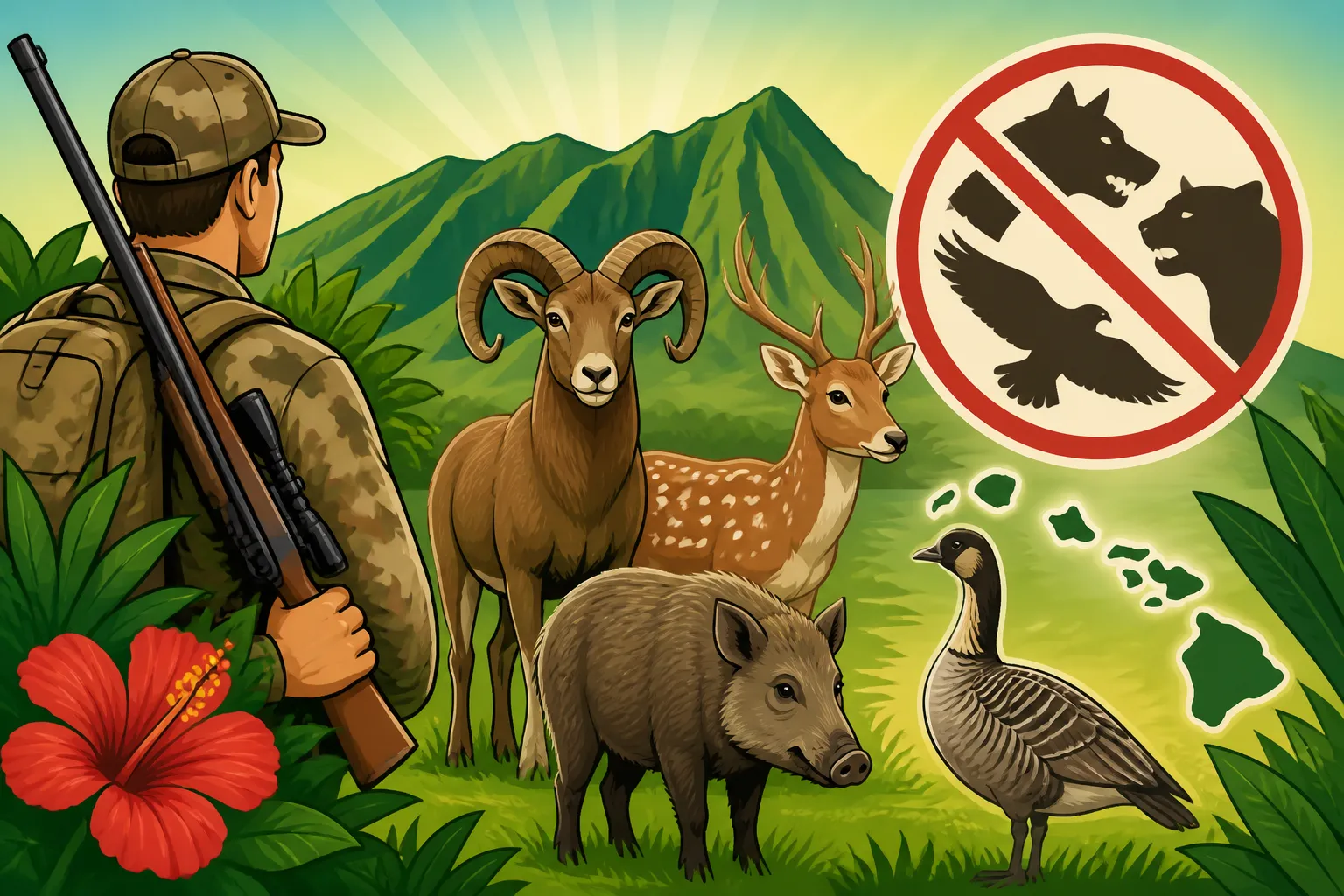
Because Hawaii's native ecosystem never had large land mammals, it never developed the complex predator-prey relationships that define continental food chains. There's no equivalent of a mountain lion to chase a deer, or a coyote to hunt feral pigs. The largest native predator on land was likely the 'io (Hawaiian hawk), which primarily hunts birds and small rodents, or the pueo (Hawaiian owl), which also targets small prey. Neither of these can tackle a full-grown Axis Deer, Hawaii's Signature Big Game or a massive Hawaii's Feral Pigs, Island by Island.
This absence of large carnivores means that when animals like Axis deer, mouflon sheep, or feral goats were introduced, they essentially stepped into an all-you-can-eat buffet with no bill to pay. They could reproduce freely, unhindered by the natural population controls that would exist in their native habitats. This ecological "missing link" is the fundamental reason why these populations can explode and cause significant damage to the environment.
It’s an entirely different dynamic from what you'd find anywhere else. If you've ever hunted elsewhere and are used to looking for signs of predator activity as a clue to game movement, you'll quickly realize that particular strategy doesn't apply here. Our game animals move with a confidence born of knowing they aren't being stalked by a larger, hungrier beast.
A History of Introductions: How Game Animals Arrived
Understanding why Hawaii's game animals lack predators requires a look at how they got here in the first place. None of our popular big game species are native; every single one was intentionally or unintentionally introduced over centuries.
Polynesian Voyagers and Early Introductions
The very first "game" animals, if you can call them that, arrived with the Polynesian voyagers. These were animals vital for survival: pigs, dogs, and chickens. The Polynesian pig, in particular, adapted quickly to Hawaii's diverse habitats and became the progenitor of our widespread feral pig populations. These animals were brought for food, companionship, and cultural purposes, not as game animals in the modern sense, but they laid the groundwork for future introductions.
These early pigs established themselves on all the major islands, thriving in the dense forests and gulches. Without any natural predators, their numbers began to grow, impacting the native vegetation. Why Every Hawaii Game Animal Was Introduced is a topic that delves deeper into this fascinating history, showcasing how each species has its own story of arrival, driven by human needs and desires.
The impact of these early introductions was profound, though perhaps not immediately apparent to the first settlers. These animals began to alter the landscape, rooting up native plants and preying on ground-nesting birds, setting a precedent for the ecological changes to come.
European Settlers and Later Game Releases
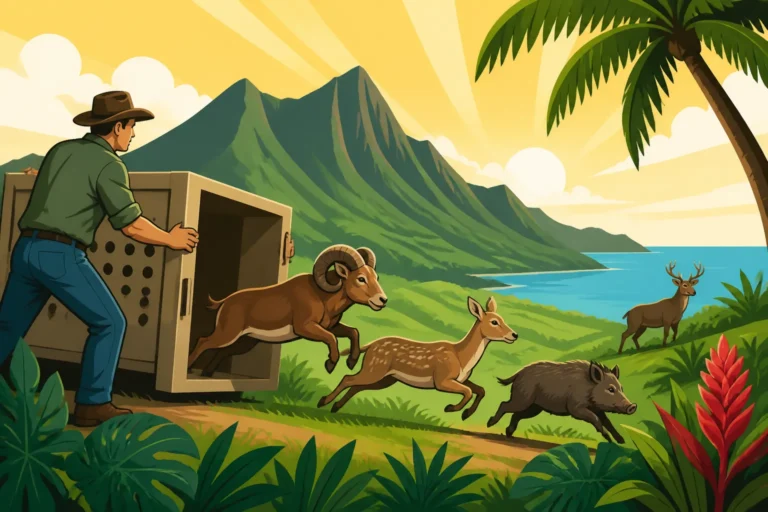
The arrival of Captain Cook and subsequent European settlers brought an entirely new wave of introductions. This era saw the deliberate release of various species for ranching, sport hunting, and sometimes, purely for aesthetic reasons. Cattle, goats, and sheep were brought in for agriculture. Then, animals like Axis deer, mouflon sheep, and feral goats were introduced, often specifically to establish game populations for hunting. For instance, Axis deer were introduced to Molokai in the late 1800s and later to Maui and Lanai. Axis Deer, Hawaii's Signature Big Game explains their history and spread.
The motivations behind these introductions varied. Some sought to replicate the hunting experiences of their homelands, while others saw an economic opportunity in ranching livestock. Regardless of the intent, these animals quickly found themselves in a paradise free of the large carnivores that would typically keep their numbers in check. This lack of natural predation allowed them to multiply rapidly, leading to the large, sometimes problematic, populations we see today.
This is where the term "game animal" truly comes into play in the Hawaiian context. These species were often considered valuable resources, but the long-term ecological consequences of introducing hoofed mammals into an ecosystem that never had them were largely unforeseen or underestimated. The short-term benefit often outweighed any perceived long-term environmental risk at the time.
| Game Animal Species | Original Native Predators (Mainland) | Hawaii's Natural Predators |
|---|---|---|
| Axis Deer | Tigers, Leopards, Dholes, Wolves | None |
| Feral Pigs | Wolves, Bears, Coyotes (feral only) | None |
| Mouflon Sheep | Wolves, Bears, Lynx, Eagles | None |
| Feral Goats | Wolves, Mountain Lions, Bears, Eagles | None |
| Feral Cattle | Wolves, Bears, Cougars | None |
The Impact of No Predators: Ecological Consequences
The absence of natural predators for Hawaii's introduced game animals isn't just an interesting biological quirk; it has profound, often devastating, consequences for the islands' incredibly fragile native ecosystems. These animals, left unchecked, can quickly become an overwhelming force.
Overgrazing and Habitat Degradation
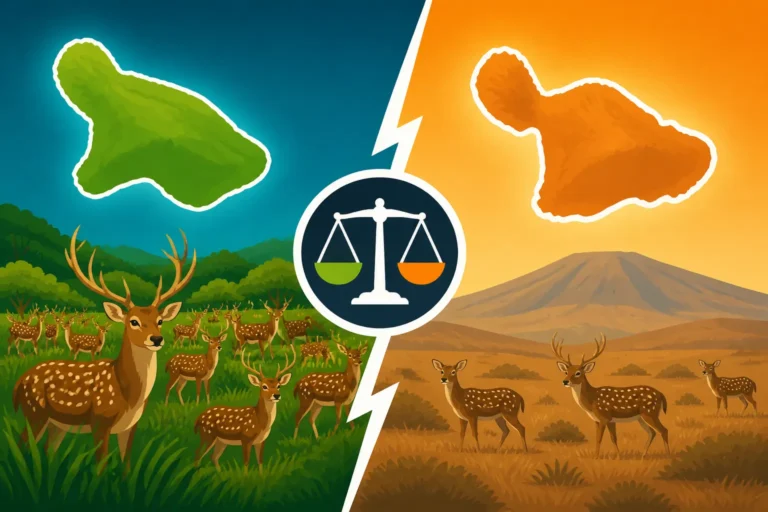
When populations of grazers like Axis deer, mouflon sheep, and feral goats grow exponentially without anything to rein them in, they exert immense pressure on vegetation. They eat everything from native grasses and shrubs to the seedlings of rare trees, effectively stripping the landscape bare. This isn't just about a few plants; it leads to widespread habitat degradation.
Imagine a sensitive forest where the understory is constantly being browsed down to nothing. Young trees can't grow, and the natural regeneration process grinds to a halt. This overgrazing contributes to soil erosion, especially on steep slopes, as the protective layer of vegetation is removed. Rainwater runs off unchecked, carrying valuable topsoil into streams and out to the ocean, impacting coral reefs. The impact of What Ungulates Cost Hawaii's Watersheds is a significant concern for land managers across the islands.
You can witness this firsthand when you see the stark line between a fenced conservation area and an unprotected section. Inside the fence, native plants flourish, and the forest feels vibrant. Outside, it can look like a barren wasteland, a testament to the unchecked appetites of these introduced herbivores.
Threat to Native Flora and Fauna
The native flora and fauna of Hawaii are uniquely vulnerable to these introduced game animals. As mentioned, native plants didn't evolve defenses against large grazers, and many are now endangered or extinct due to being a preferred food source for pigs, goats, deer, and sheep. When a rare plant is wiped out, the insects and birds that depend on it for food or habitat are also impacted, creating a ripple effect through the ecosystem.
Feral pigs are particularly destructive. Their rooting behavior, where they churn up the soil looking for roots and invertebrates, destroys delicate plant communities, creates mud wallows that become breeding grounds for mosquitoes (which spread avian malaria, decimating native bird populations), and facilitates the spread of invasive weeds. They also directly prey on ground-nesting birds and their eggs. This widespread destruction is why Hawaii's Feral Pigs, Island by Island often highlights the severe challenges these animals present to conservation efforts.
It's a constant battle for conservationists, who work tirelessly to protect remaining pockets of native forest through fencing and targeted removal programs. Every new piglet, every deer fawn, represents another mouth to feed in an ecosystem that simply wasn't designed to support them in such numbers.
Human Hunters: The Role of Management and Population Control
Given the lack of natural predators, human hunters play a critical, albeit complex, role in managing Hawaii's introduced game animal populations. It's not just about sport; it's about ecological responsibility and balancing human interests with conservation needs.
Hunters as the "New Apex Predators"
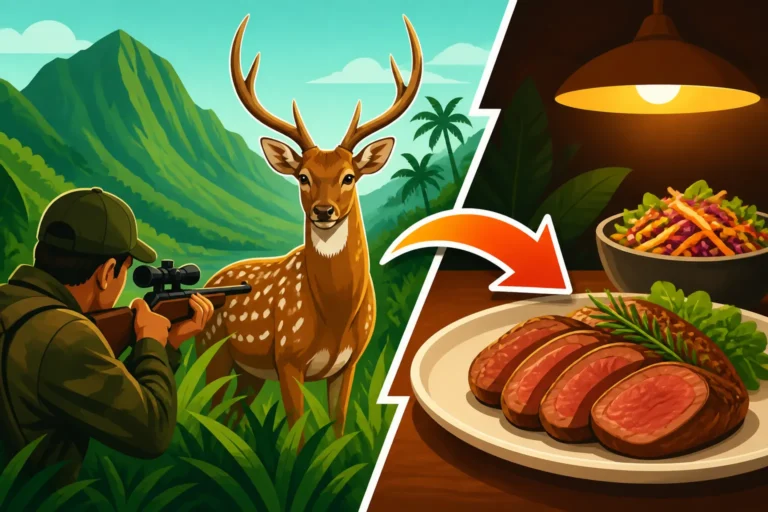
In Hawaii, hunters effectively step into the role of the missing apex predators. Without hunting pressure, populations of Axis deer, feral pigs, mouflon sheep, and feral goats would rapidly outstrip the carrying capacity of their habitats, leading to widespread environmental damage, disease among the animals themselves, and potential starvation. Through regulated hunting seasons and bag limits, the Department of Land and Natural Resources (DLNR), Division of Forestry and Wildlife (DOFAW) attempts to control these populations.
This is a heavy responsibility, and it's why ethical hunting practices are so important here. Hunters are contributing directly to the health of the ecosystem and the welfare of the animals by helping to maintain sustainable numbers. It's a very direct form of conservation. When planning your hunting adventures, platforms like GoHunt can be incredibly useful for checking current regulations, unit statuses, and drawing information, ensuring you're always operating within the guidelines set to manage these populations.
For many local hunters, this isn't just a hobby; it's a deep cultural connection to the land and a recognition of the role they play in its stewardship. They understand that every animal taken is part of a larger effort to protect Hawaii's unique and irreplaceable natural heritage.
Management Challenges and Conservation Efforts
Despite the best efforts of hunters, managing these introduced species is an ongoing, uphill battle. The sheer numbers of animals, the rugged and often inaccessible terrain they inhabit, and the rapid reproductive rates of species like Axis Deer, Hawaii's Signature Big Game make comprehensive control incredibly difficult. DOFAW employs various strategies, including public hunting seasons, special drawn hunts like those for Hawaii's Drawn Hunts and Lotteries, and sometimes even aerial control programs in remote or ecologically sensitive areas.
One major challenge is the constant tension between providing hunting opportunities and protecting native ecosystems. Hawaii's Fenced Conservation Boundaries are often established to create refuges for native species, but these fences require constant maintenance and can be controversial among some hunting communities. There's also the logistical hurdle of getting hunters into remote areas, with Helicopter Access for Remote Hawaii Hunts sometimes being the only viable option for certain units.
Ultimately, hunting is a vital tool in the conservation toolbox here in Hawaii. It's not the only solution, but it's an indispensable one. As hunters, we are part of the solution to a problem created by human activity centuries ago, helping to restore some semblance of balance to an ecosystem that evolved without its biggest challenge. Tools like GoHunt can help you stay informed on the latest season dates, bag limits, and unit rules, which are constantly evolving as DOFAW adapts its management strategies. This commitment to staying current helps ensure that hunting remains a responsible and effective part of Hawaii's conservation efforts.
Disclaimer
This article is for general informational purposes only and does not constitute professional advice. Laws, prices and regulations vary by location and change over time. Consult a qualified professional for guidance on your specific situation.