What Hunting Pressure Does on Small Islands
The frustration of hitting your favorite hunting grounds, only to find the animals have seemingly vanished or become ghosts, is a feeling every hunter on Hawaii's smaller islands knows all too well. It often feels like the game simply disappears, when in reality, they've just adapted to intense human activity. This comprehensive guide will dive deep into understanding what hunting pressure truly means for our unique island ecosystems, how it impacts our game animals, and crucially, what you can do to adapt and still find success in Hawaii.
The Basics of Hunting Pressure in an Island Ecosystem
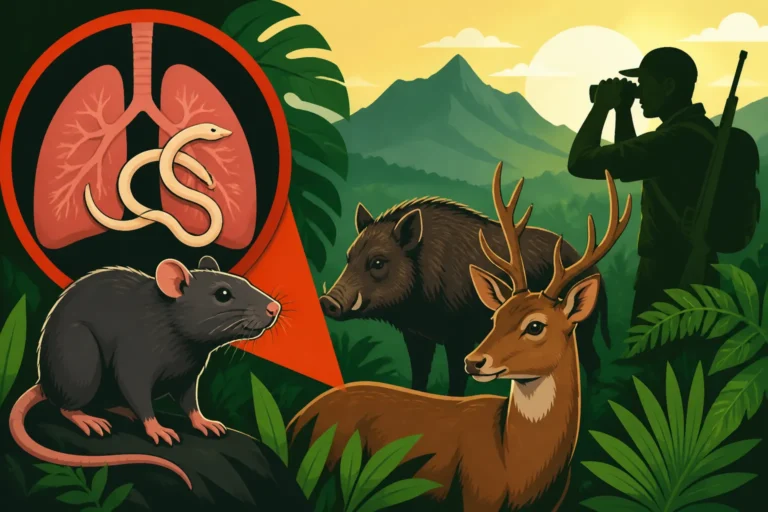
Hunting pressure is more than just a phrase; it's a very real, measurable impact on game animal behavior and distribution. On a large continent, animals have vast areas to retreat to, disappearing into remote wilderness for days or weeks. Here in Hawaii, with our finite landmasses and often fragmented habitats, that luxury simply doesn't exist for our feral pigs, goats, Axis deer, or Mouflon sheep. Every step you take, every sound you make, every whiff of human scent you leave behind contributes to this pressure.
What "Pressure" Really Means for Game Animals
When we talk about "pressure," we're essentially talking about the cumulative effect of human presence on wildlife. Think about it:
- Human Scent: We carry a distinct odor that game animals, with their incredibly sensitive noses, can detect from a surprisingly long distance. Every hunter walking through a unit leaves a scent trail.
- Noise and Visual Disturbances: The sound of a truck on a dirt road, human voices, the glint of a hunter's gear, or even the subtle movement of someone walking through the brush – these are all signals to animals that a potential threat is nearby.
- Vehicle Traffic: Roads, even unimproved two-tracks, act as arteries for human activity. Vehicles moving through an area can push animals deeper into cover or away from accessible food sources.
- Frequency of Encounter: The more often animals encounter humans, the more conditioned they become to perceive us as a threat. On smaller islands with limited public hunting units, these encounters happen far more frequently than in expansive wilderness.
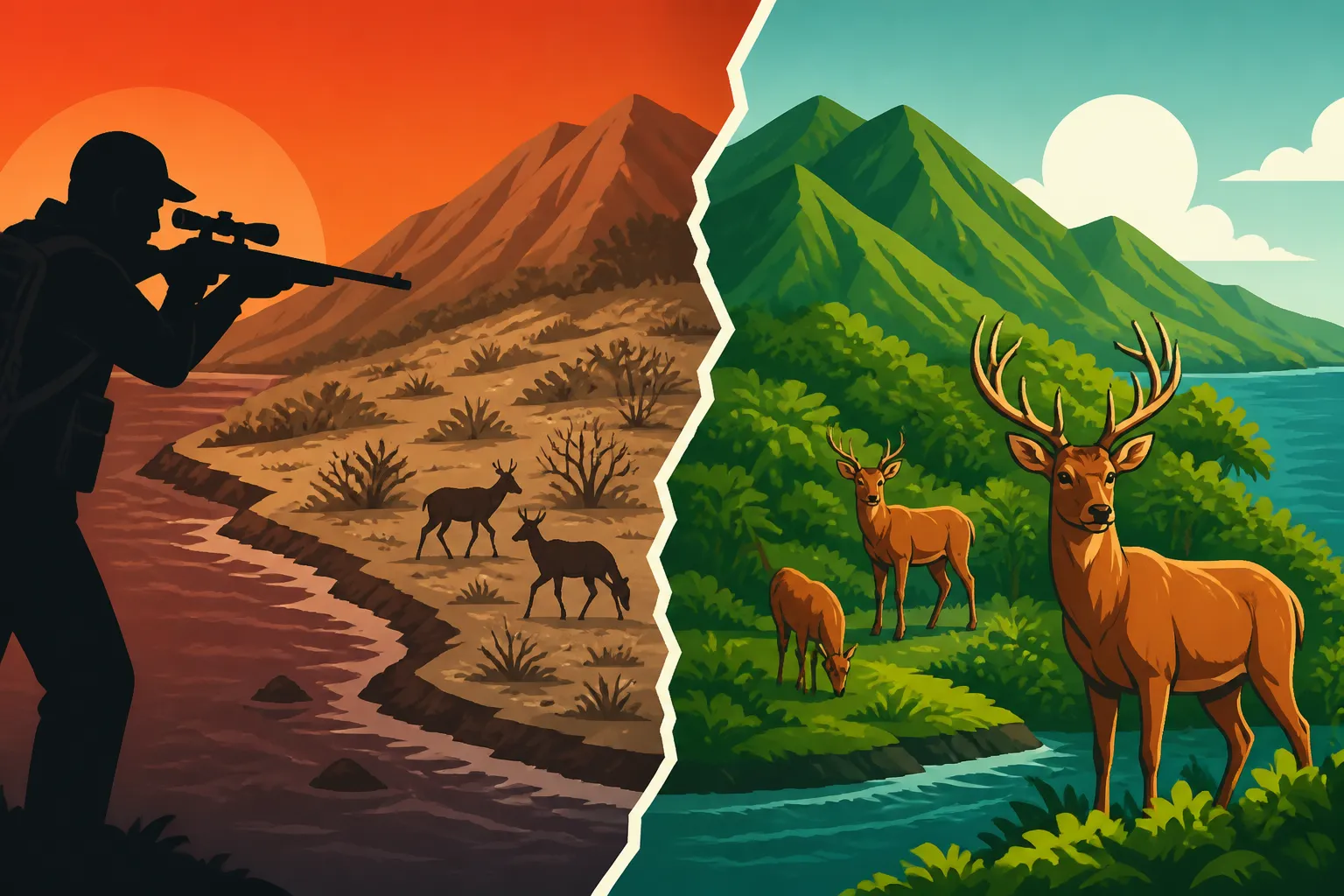
On a small island, these factors are magnified. There are fewer places for game to go where they won't encounter human influence. This means the animals learn quickly, adapting their daily routines and movement patterns to avoid us. It's a constant game of cat and mouse, and the mouse is becoming incredibly good at hiding.
How Island Geography Exacerbates Pressure
Hawaii's unique geography plays a huge role in how game animals experience hunting pressure. We're not talking about endless national forests here; we're talking about specific, often relatively small, public hunting units, frequently bordered by private land, urban development, or vast stretches of uninhabitable lava.
Consider a unit on Maui or Molokai for Axis deer. You might have open kiawe flats, bordered by a steep gulch or a densely forested area. When hunters enter the kiawe flats, the deer don't have hundreds of miles to run. Their escape routes are limited to those gulches, the thicker forest, or adjacent private property. They'll quickly learn that these dense cover areas offer sanctuary, and they'll adjust their movements to be in or near them during daylight hours, especially on weekends when pressure is highest.
Furthermore, many of our hunting units are linear, following ridges or coastlines, or are essentially "kipukas" – islands of vegetation surrounded by lava flows. This creates predictable corridors and pinch points, which are great for hunters who know them, but also mean that animals get funneled into specific areas where they are more likely to be encountered. There's simply less room for error for the animals, and less room for true wilderness escape. This is why understanding Hawaii's Hunting Units and How They Work is so critical.
Observable Impacts of Hunting Pressure on Hawaii's Game
When game animals are constantly pressured, their behavior shifts dramatically. This isn't just theory; it's something every experienced Hawaii hunter witnesses firsthand. These changes are designed for survival, but they certainly make our job harder!
Changes in Animal Behavior
The most immediate and obvious impact of hunting pressure is a change in animal behavior.
- Increased Nocturnal Activity: Animals that might be active during the day in low-pressure areas will become predominantly nocturnal. Axis deer, for example, will bed down deep in cover during daylight hours and only emerge to feed under the cover of darkness. Pigs become even more adept at moving silently through dense undergrowth at night. This means hunters need to be out at first light or last light, catching those brief windows when animals are transitioning.
- Use of Denser Cover: Game animals will seek out the thickest, nastiest, most impenetrable vegetation they can find. This might be a strawberry guava thicket, a dense stand of kiawe, or a steep, overgrown gulch. These areas offer both visual and scent cover, making them incredibly difficult for hunters to penetrate silently. You might know the animals are there, but getting to them is another story entirely.
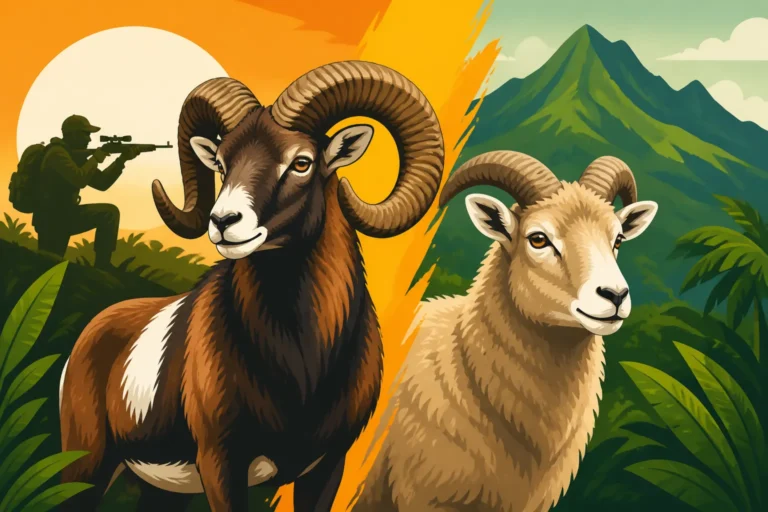
- Increased Wariness and Sensitivity: Animals become incredibly attuned to subtle cues. A snapping twig, a faint human scent carried on the wind, or an unusual silhouette can send them fleeing. They become hypersensitive, often busting out long before a hunter even knows they're there. This is especially true for species like Mouflon sheep on open, high-elevation terrain, where they have an unobstructed view for miles.
- Shifting Feeding Patterns: Instead of feeding in open, accessible areas, pressured animals will stick to edges, feeding quickly and retreating, or foraging in areas with immediate escape cover. They might bypass prime food sources if those areas expose them to too much risk.
These behavioral shifts are why successful hunting in Hawaii often boils down to stealth, patience, and adapting to the animals' schedule, not your own.
Displacement and Habitat Shifts
Beyond just changing when they move, pressured animals often change where they move. They can be displaced from prime feeding or bedding areas if those spots receive too much human traffic.
- Movement to Less Ideal Habitat: Animals might abandon lush, easy-to-access food plots or water sources in favor of poorer quality, but safer, areas. This can impact their overall health and reproductive success over time, though it's usually more about survival in the short term. For example, Hunting Molokai's Axis Deer Country often involves animals retreating to steeper, more rugged terrain during peak seasons.
- Boundary Hopping: A common frustration on many islands is animals moving onto adjacent private land where hunting isn't allowed. Public units often border private ranches or residential areas. Game animals, particularly intelligent ones like Axis deer and feral pigs, quickly learn these invisible boundaries and use them as sanctuaries when pressure on public land becomes too high. You see them from afar, just across the fence, mocking you with their safety.
- Alteration of Migration Routes: While true migrations are rare in Hawaii, animals do have seasonal or daily movement patterns. Heavy pressure can disrupt these patterns, forcing animals to use less efficient or more exposed routes, or to abandon traditional areas altogether.
These habitat shifts mean that what was a reliable hunting spot one season might be barren the next, simply because the animals have been pushed out. Hunters constantly need to scout and adapt, rather than relying on historical knowledge alone. Tools like GoHunt can help you identify public and private land boundaries to better understand potential escape routes for game.
Perceived or Actual Decline in Numbers
It's a common complaint: "The animals aren't here like they used to be." While sometimes there might be an actual population decline due to overharvest or environmental factors, often what hunters are experiencing is a perceived decline driven by pressure-induced behavior changes.
- Invisible Animals: Animals are still there, but they are so wary, so nocturnal, and so good at hiding in dense cover that they become virtually invisible to the casual hunter. A unit might hold a healthy population, but if every animal is bedded down in a kiawe thicket or a lava tube from sunrise to sunset, it feels empty.
- Actual Population Impacts: However, sustained, heavy hunting pressure can lead to actual population impacts, especially on smaller islands with limited recruitment. If animals are constantly stressed, or if young animals are harvested before they can reproduce, it can affect population dynamics. Bag limits, season lengths, and drawn hunts are all management tools designed to counteract this, as seen in Hawaii Game Mammal Seasons and Hawaii's Drawn Hunts and Lotteries.
- The "Burnout" Effect: Some easily accessible units can experience a "burnout" effect, where early season pressure pushes most animals out, making later season hunting very challenging. This is especially true on units open year-round or for extended periods. Understanding Hawaii's Weekend and Holiday Hunting Rules can help you predict when pressure will be highest.
Recognizing the difference between animals being "gone" and animals being "wary" is crucial for a hunter's mindset and strategy.
| Characteristic | Low Pressure Environment | High Pressure Environment (Small Island) |
|---|---|---|
| Activity Pattern | More diurnal (daytime) | Mostly nocturnal or crepuscular (dawn/dusk) |
| Cover Preference | May utilize open areas for feeding/bedding | Seeks densest, most impenetrable cover |
| Wariness | More curious, tolerant of human presence | Extremely wary, bolts at slightest disturbance |
| Movement | Predictable, follows consistent routes | Erratic, uses obscure routes, boundary hops |
| Habitat Use | Utilizes full range of available habitat | Concentrated in secure, often marginal, areas |
| Vocalization | More vocal (calls, grunts) | Quieter, relies on stealth and senses |
| Encounter Rate | Higher chance of visible encounters | Lower chance of visible encounters, animals are "ghosts" |
Strategies for Hunting Pressured Island Animals
So, the animals are pressured – now what? This is where good hunting strategy comes into play. You can't change the geography or the number of other hunters, but you can absolutely change your approach.
Adapting Your Approach for Wary Game
Hunting pressured animals demands a different mindset and skillset.
- Stealth and Scent Control are Paramount: This cannot be stressed enough. Move slowly, deliberately, and quietly. Every rustle of leaves, every branch you break, sends a signal. Pay extreme attention to the wind, always trying to keep it in your favor. Use scent control measures religiously, from specialized washes to carbon-activated clothing. Even on the walk-in, be conscious of your scent. On an island, thermals often drop down gulches in the morning and rise in the afternoon; learn these local wind patterns.
- Patience is Your Best Ally: Forget "run and gun" on pressured public land. Find a good vantage point, settle in, and wait. Glassing for long periods, especially at first light and last light, can reveal animals moving between bedding and feeding areas. This is where Spot-and-Stalk Tactics on Open Country can shine, but only if you have the patience to truly spot before you stalk.
- Hunt Overlooked Areas: Everyone hunts the obvious trails and easy-access spots. Instead, look at your map – physically or using an app like GoHunt or OuterSpatial – and identify the areas that look miserable to access: the steepest, thickest gulches; the furthest, least appealing ridges; the nasty lava fields. Often, these are the untouched sanctuaries where animals retreat. Sometimes, just walking a little further, or approaching from an unexpected angle, makes all the difference. Walking In to a Remote Hawaii Unit is a tactic often employed for this reason.
- Go Mid-Week or Off-Peak: If your schedule allows, hunting during weekdays can drastically reduce pressure. Weekends, especially opening weekends, see a surge of hunters. If you can only hunt weekends, consider hunting after lunch when many morning hunters have packed up, or focusing on late afternoons.
Utilizing Technology and Intelligence
Modern tools and old-fashioned scouting are critical for dealing with pressured game.
- Mapping Apps and Satellite Imagery: Invest in a good mapping app like GoHunt or OuterSpatial. These apps provide invaluable satellite imagery, topo maps, and crucially, public/private land boundaries. Use them to identify dense cover, potential escape routes onto private land, water sources, and hidden pockets that other hunters might overlook. You can even mark pig wallows or deer trails you find during scouting. Using the OuterSpatial App to Check In is also a good habit for accountability and safety.
- Pre-Season Scouting: Nothing beats boots on the ground. Walk your chosen unit weeks or even months before the season opens. Look for fresh sign: tracks, scat, rubs, bedding areas. Pay attention to water sources in dry country, and thick cover in wet forests. Learning to read the land before the pressure hits is key. This is the essence of Scouting a Hawaii Hunting Unit Before Opening.
- Understand Game Behavior Calendars: While Axis deer rut year-round in Hawaii, there are still peak times of activity. Knowing general patterns for Why Axis Deer Rut Timing Is Different or when sows typically farrow (for pigs) can help you predict when and where animals might be concentrated.
- Monitor Draw Results and Season Announcements: For drawn hunts, knowing the results and how many tags were issued can give you a sense of potential pressure. Always check the DOFAW website for Hawaii Drawn Hunt Application Deadlines and results. These are often the only official sources for this critical information.
Considering Less Pressured Opportunities
Sometimes, the best strategy for pressured public land is to find alternatives, if possible.
- Private Land Access: If you have the means, gaining access to private ranch land can offer a completely different hunting experience. These lands often have lower hunting pressure and healthier, less wary animal populations. Many outfitters specialize in Hawaii Private Ranch Hunting Access. While there's usually a cost involved, the increased success rates and quality of the hunt can be well worth it.
- Remote Public Units: Hawaii has some incredibly remote public hunting units that require significant effort to access. This might mean long hikes, camping, or even helicopter access for Hawaii hunters. While challenging, these areas often hold less pressured animals. Places like Hunting Hawaii's Kipuka Islands of Forest or deep into certain forest reserves can offer a reprieve from the crowds, if you're willing to put in the work.
- Targeting Different Species/Methods: If Axis deer or pigs are heavily pressured in one unit, consider targeting goats on a sea cliff, or trying a Hawaii Game Bird Hunting opportunity if the seasons align. Sometimes, a change of pace and species can lead to success when your primary target is proving elusive. Similarly, exploring Bowhunting Hawaii's Public Units or Muzzleloader Hunting in Hawaii might open up different season dates with less competition.
The Role of Management and Community
Hunting pressure isn't just a hunter's problem; it's a management challenge that the Department of Land and Natural Resources (DLNR) Division of Forestry and Wildlife (DOFAW) constantly grapples with. And as hunters, we have a vital role to play in ensuring sustainable hunting opportunities.
How DOFAW Manages Pressure
DOFAW uses various tools to manage hunting pressure across the islands:
- Drawn Hunts and Limited Entry: For popular species like Axis deer on Lana'i or specific Mouflon units, a lottery system is used to limit the number of hunters. This directly reduces pressure on the animals and improves the quality of the hunt for those drawn. This is explicitly laid out in Hawaii's Drawn Hunts and Lotteries.
- Season Dates and Bag Limits: Setting specific Hawaii Game Mammal Seasons and strict bag limits helps control harvest rates and gives animals periods of reprieve from hunting activity. For instance, some units might only be open on Hawaii's Weekend and Holiday Hunting Rules, while others might be year-round.
- Unit Rotations and Closures: Occasionally, DOFAW may close or rotate units to allow animal populations to recover or to redistribute themselves. These decisions are made based on population surveys and habitat health.
- Habitat Improvement: While not directly managing pressure, improving habitat can support healthier animal populations, making them more resilient to the impacts of hunting and providing more cover.
These management strategies are designed to strike a delicate balance: providing hunting opportunities while ensuring the long-term health and sustainability of Hawaii's game animals. It's a complex task, especially on small, isolated landmasses.
Hunter Ethics and Responsibility
Ultimately, hunters themselves bear a significant responsibility in mitigating the effects of hunting pressure.
- Self-Regulation and Respect: Be mindful of other hunters. Avoid crowding popular spots if you can. If you see another hunter, give them space. A little courtesy goes a long way in fostering a positive hunting environment.
- Adhere to All Regulations: This seems obvious, but it's crucial. Respect bag limits, season dates, and unit boundaries. Poaching or harvesting animals outside of legal means only exacerbates pressure and harms the resource for everyone. Learn the rules about Tagging an Animal Correctly in Hawaii and Checking In and Out of Hawaii Hunting Units.
- Report Violations: If you witness illegal activity, report it to DOFAW. This isn't "snitching"; it's protecting our shared resource and ensuring that unethical behavior doesn't undermine the hard work of responsible hunters and managers.
- Educate Others: Share your knowledge and promote ethical hunting practices. The more informed and responsible hunters there are, the better off our game populations will be. This includes understanding the unique challenges of What Hunting Pressure Does on Small Islands and how our collective actions impact the game.
Hunting in Hawaii, especially on our smaller, more densely populated islands, requires a mindful and adaptive approach. The game animals here are truly a testament to nature's resilience, constantly learning and evolving to survive. By understanding the forces of hunting pressure, observing animal behavior, and employing smart, ethical strategies, we can continue to enjoy the challenge and reward of hunting in paradise. It's a journey of continuous learning, but one that deepens our connection to the land and its wild inhabitants.
Disclaimer
This article is for general informational purposes only and does not constitute professional advice. Laws, prices and regulations vary by location and change over time. Consult a qualified professional for guidance on your specific situation.