Why Hawaii Has No Native Deer
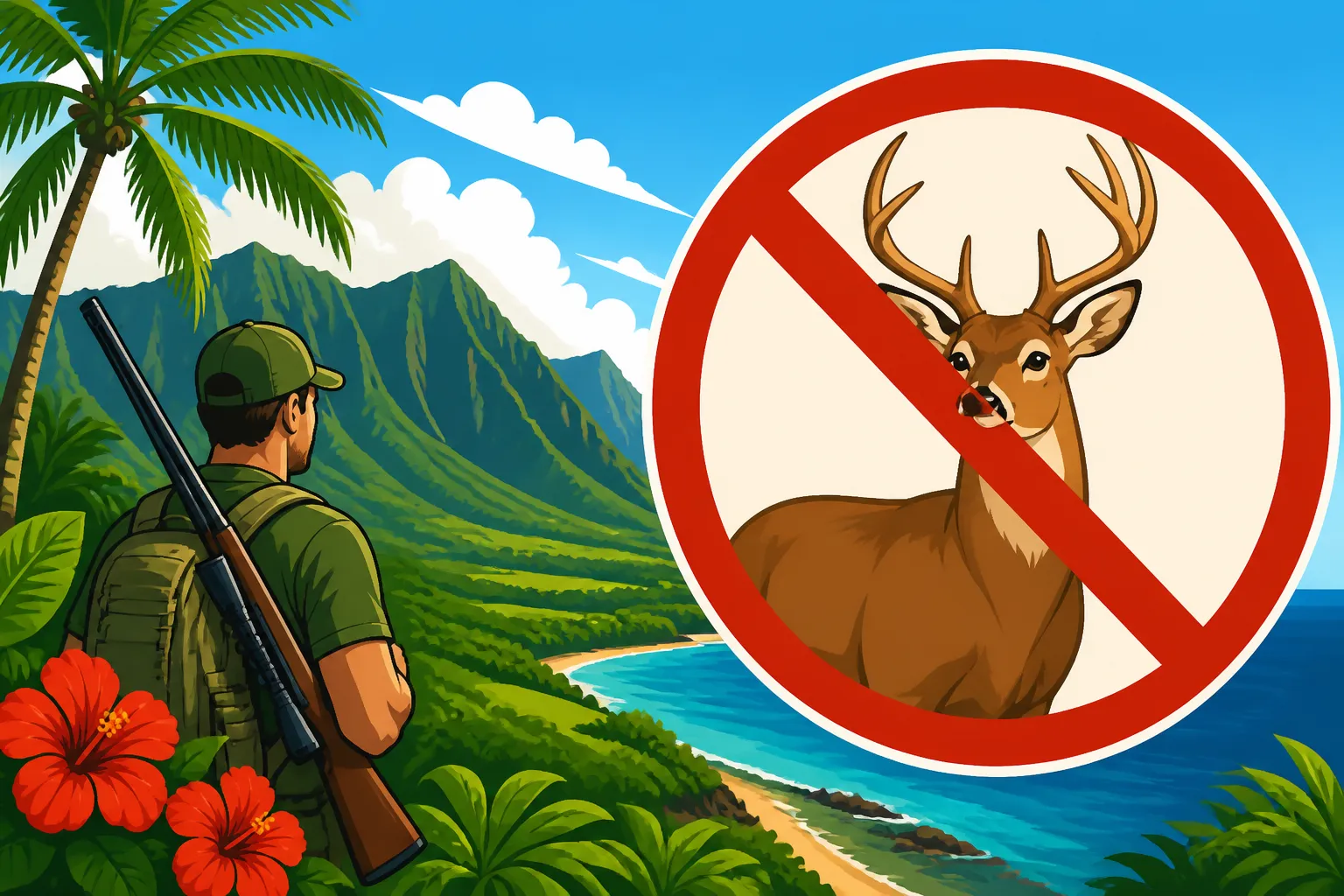
Many visitors to Hawaii, especially those interested in the islands' unique ecosystem or its thriving hunting scene, often wonder why a place so rich in diverse wildlife seems to lack a common animal found almost everywhere else: deer. It's a valid question, particularly when you consider the vibrant populations of axis deer that roam some islands today. This guide will dive deep into the fascinating geological and biological reasons why Hawaii, in its natural state, never hosted any native deer species, and how that history shapes the islands we know today.
The Deep Isolation of Hawaii's Formation
To understand why Hawaii lacks native deer, we have to go back millions of years and look at how these islands were born. They didn't just pop up overnight, and they certainly weren't connected to a mainland by any land bridge, ever. This fundamental truth about Hawaii's geology is the bedrock of its unique ecological story.
Volcanic Origins in the Middle of Nowhere
The Hawaiian Islands are a testament to volcanic activity, forming over a "hotspot" in the middle of the Pacific Ocean. Imagine a slow-moving conveyor belt of oceanic crust passing over a stationary plume of magma deep within the Earth. As the crust moves, new islands are continuously formed, while older ones slowly erode and subside. This process means the islands are, and always have been, incredibly isolated. They are literally thousands of miles from the nearest continental landmass—North America to the east, Asia to the west, and Australia to the south. This extreme isolation made it virtually impossible for terrestrial mammals, especially large ones like deer, to reach them on their own.
Think about it: a deer isn't exactly built for an epic swim across thousands of miles of open, shark-infested ocean. Even if a small group somehow survived a colossal tsunami and drifted on natural rafts (like fallen trees and debris), the chances of that raft making it to Hawaii, the deer surviving the journey, and then finding suitable habitat and mates to establish a breeding population, are astronomically low. It's truly a biological lottery with almost impossible odds.
No Land Bridges, Ever
Unlike some island chains closer to continents that saw land bridges form during periods of lower sea levels (like during ice ages, connecting Britain to Europe or parts of Indonesia to Asia), Hawaii never had such a connection. The ocean between Hawaii and any continent is simply too vast and too deep. This is a critical distinction, because land bridges are precisely how many terrestrial animals colonized islands that are now separated by water. Without this terrestrial highway, Hawaii remained an untouched sanctuary for life forms capable of long-distance dispersal by air or sea.
The Ocean: An Impenetrable Barrier for Land Mammals
The sheer scale of the Pacific Ocean acted as Hawaii's ultimate bouncer, preventing almost all large land mammals from entering nature's exclusive club. For deer, or any similar creature, the journey was simply insurmountable.
Thousands of Miles of Open Water
Picture the vast expanse of the Pacific. We're not talking about a quick hop across a narrow strait. The distance from the nearest continent to Hawaii is roughly 2,500 miles. Try to imagine a deer—any deer—surviving that kind of journey. Even if they managed to float on natural debris for a while, they'd face starvation, dehydration, exposure to harsh sun and storms, and the constant threat of marine predators. The odds are so slim that, over millions of years, it just never happened.
Consider the physical adaptations of deer: they are built for land, for grazing, for running through forests and plains. Their biology is entirely terrestrial, not oceanic. They can swim short distances, across rivers or lakes, but not across an entire ocean. This fundamental limitation is why the native Hawaiian ecosystem developed without the presence of large browsers and grazers.
Deep Water Channels and the Island-Hopping Myth
Some might wonder if smaller islands in between could have acted as stepping stones. The reality is that the deep-ocean trenches surrounding Hawaii mean there's no continuous shallow shelf for island-hopping. The islands are isolated peaks rising from the deep sea. Any intermediate islands would also need to be close enough to one another to allow for successive, shorter journeys, and large enough to sustain a viable deer population at each stop. This chain of conditions simply doesn't exist for Hawaii.
The very few mammals that did make it to Hawaii on their own were either highly specialized for long-distance oceanic travel (like the Hawaii's Hoary Bat and What Hunters Should Know which can fly across vast distances, or marine mammals like the Hawaiian monk seal), or were carried by currents and could survive the journey (like certain insect larvae or plant seeds). Deer don't fit into any of these categories.
How Introduced Ungulates Shaped a New Reality
While Hawaii originally had no native deer, that all changed with the arrival of humans. European explorers and later settlers intentionally introduced various animals, including deer, for sport, ranching, or as food sources. These introductions fundamentally altered the Hawaiian landscape and created the "game" animals that hunters pursue today.
The Arrival of Axis Deer
The most prominent deer species in Hawaii, the Axis deer, is a perfect example of this introduction. How Axis Deer Reached Hawaii is a story that begins in the mid-1800s when they were brought from India to Molokai and later to Lanai and Maui. These deer thrived in the dry, open country of these islands, finding abundant forage and no natural predators to keep their numbers in check.
Their populations exploded, and what started as an exotic novelty soon became a significant ecological concern. Axis deer are beautiful animals, but they were never meant for Hawaii. Their constant browsing and grazing inflict immense pressure on native plants that never evolved defenses against such large herbivores. This leads to habitat degradation, soil erosion, and impacts on fragile watersheds. Hunters today play a crucial role in managing these populations, helping to mitigate some of their environmental impact. If you're planning a hunt, checking resources like GoHunt Hawaii can provide essential information on current regulations and open units for these introduced species.
Other Introduced Ungulates: Pigs, Goats, and Sheep
It wasn't just deer. Other ungulates (hoofed mammals) like Hawaii's Feral Pigs, Island by Island and Hawaii's Feral Goats and Why They Matter were also introduced, both intentionally and unintentionally, over centuries. These animals, too, found an ecological paradise without natural predators and with an abundance of palatable native vegetation.
The pigs, goats, and feral sheep (which are distinct from the introduced Mouflon sheep that inhabit high elevations of the Big Island, but often hybridize) have also wreaked havoc on Hawaii's unique flora and fauna. Why Every Hawaii Game Animal Was Introduced is a critical piece of the islands' modern history, explaining why these species, now integral to the hunting experience, were never part of the original Hawaiian ecosystem. Their presence highlights the significant and lasting impact of human activity on these isolated islands. Understanding the difference between native and introduced species is key to appreciating Hawaii's complex conservation challenges.
Here's a quick look at the difference:
| Feature | Native Hawaiian Terrestrial Mammals | Introduced Terrestrial Mammals (e.g., Deer, Pigs, Goats) |
|---|---|---|
| Means of Arrival | Self-dispersal (flight or sea) | Human introduction (intentional or accidental) |
| Origin | Species capable of long-distance travel | Continental landmasses |
| Impact on Ecosystem | Adapted, maintain balance | Often invasive, cause significant habitat degradation |
| Population Control | Natural ecological processes | Hunting, culling, fencing, or lack of control |
| Evolutionary Adaptations | Unique adaptations to island life | Adaptations for continental environments |
Beyond Deer: Hawaii's Truly Native Mammals
When we say Hawaii has no native deer, it doesn't mean it has no native mammals at all. The very few mammalian species that call Hawaii home naturally are a testament to the incredible selective pressures of oceanic dispersal. They highlight the specific biological traits required to colonize such a remote archipelago.
The Hawaiian Hoary Bat: A Flying Colonist
The ōpeape`a, or Hawaiian Hoary Bat (Lasiurus cinereus semotus), is Hawaii's only truly native terrestrial mammal. Yes, it flies! This small, insect-eating bat likely colonized the islands by being blown off course during migration or by slowly expanding its range across islands over millennia. Its ability to fly across vast stretches of ocean is the key to its successful, natural colonization.
Unlike deer, bats are perfectly equipped for long-distance aerial travel. They don't need land bridges or rafts. They simply need favorable winds and the stamina to endure the journey. The Hawaiian Hoary Bat is a unique subspecies, endemic to Hawaii, and is listed as endangered, facing threats from habitat loss and human activities. It's a powerful reminder of how precious and rare Hawaii's original mammalian fauna truly is. Hunters should always be aware of Protected Species Hawaii Hunters Must Know and take great care to avoid disturbing these delicate creatures, especially when venturing into remote areas.
The Hawaiian Monk Seal: A Marine Resident
While not a terrestrial animal in the conventional sense, the Hawaiian Monk Seal (Neomonachus schauinslandi) is another native mammal that has long called these waters home. As a marine mammal, the ocean is its highway, not a barrier. These seals forage in the waters around the islands and haul out on secluded beaches to rest and pup. Their existence further illustrates that for mammals to naturally colonize Hawaii, they needed to be either airborne or sea-faring. They are incredibly rare and highly protected, representing a vital part of Hawaii's natural heritage.
The incredible journeys of these two species underscore just how impenetrable the ocean was for land-bound animals like deer. Their stories are a stark contrast to the introduced species, like axis deer, which required human intervention to reach the islands. Understanding this distinction is fundamental to appreciating the uniqueness of Hawaii's natural history and the ecological challenges it faces today. Whether you're interested in Hawaii Game Mammal Seasons or simply learning about the islands' natural wonders, this history provides crucial context.
The Ecological Impact of Introduced Species
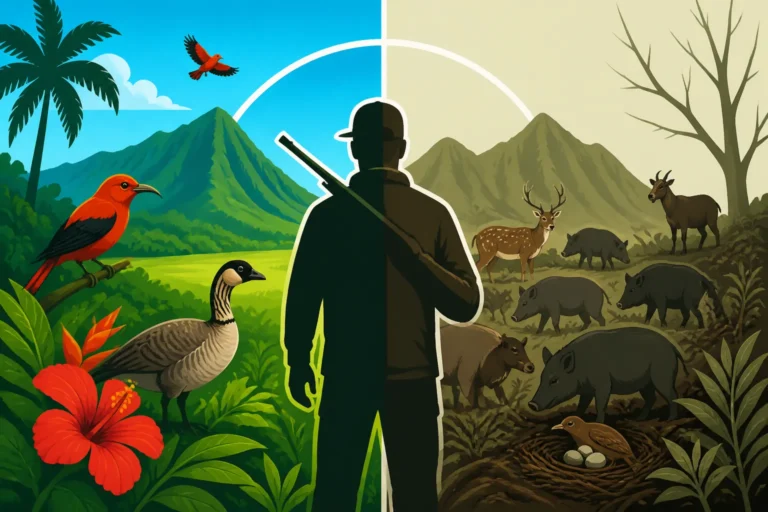
The absence of native large herbivores meant Hawaii's plants never developed the defenses common in continental ecosystems, like thorns, tough bark, or chemical deterrents. This evolutionary "naivety" made them incredibly vulnerable when introduced ungulates like deer, pigs, and goats arrived.
Vulnerable Native Flora
Imagine a forest where every plant has evolved without the threat of being browsed or rooted up by large animals. That was Hawaii. The native ōhia, koa, and mamane trees, along with countless unique shrubs and ferns, were defenseless against the relentless appetites of deer, pigs, and goats. These introduced animals strip bark, browse leaves, eat seeds, and trample seedlings, often consuming entire plant communities that are found nowhere else on Earth.
This unchecked feeding disrupts the delicate balance of the ecosystem, leading to significant habitat degradation. Over time, it changes the very composition of the forest, favoring non-native invasive plants that can withstand browsing pressure, further outcompeting native species. This is why managing populations of species like Axis Deer, Hawaii's Signature Big Game is so important for conservation efforts today.
Watershed Degradation and Erosion
Beyond direct plant damage, the presence of large ungulates has profound impacts on Hawaii's critical watersheds. Pigs, in particular, are notorious for rooting up the forest floor, destroying the delicate mosses, ferns, and root systems that hold soil in place. This activity leads to increased soil erosion, especially on steep slopes and during heavy rains.
When soil erodes, it silts up streams and nearshore coral reefs, impacting marine life. The loss of ground cover also reduces the forest's ability to absorb and hold rainwater, which is essential for recharging underground aquifers that supply fresh water to the islands. What Ungulates Cost Hawaii's Watersheds is a significant and ongoing battle. It's a complex issue where hunting plays a dual role: providing recreational opportunity while also serving as a vital tool for ecological management. When hunters check into units, often using platforms like GoHunt Hawaii, they become part of this ongoing effort to manage the ecological footprint of these introduced animals.
Conclusion: A Legacy of Isolation and Introduction
Hawaii's geological isolation is the definitive answer to why there are no native deer. The immense distances of the Pacific Ocean acted as an insurmountable barrier for millions of years, shaping an ecosystem utterly unique and fragile, devoid of large terrestrial mammals. The few native mammals that did make it, like the Hawaiian Hoary Bat and the Hawaiian Monk Seal, highlight the extraordinary adaptations required for such journeys.
However, human arrival irrevocably changed this natural order. The introduction of species like axis deer, feral pigs, and goats, while providing valuable game for hunters today, also unleashed a cascade of ecological challenges on the vulnerable native flora and fauna. These animals, thriving in an environment without natural predators, have reshaped landscapes and continue to pose significant management dilemmas. Understanding this history is crucial not only for appreciating the islands' rich biodiversity but also for engaging responsibly in its modern hunting traditions. Hunting these introduced species is not just a sport; for many, it's also a vital part of managing these populations and protecting Hawaii's irreplaceable natural heritage.
Disclaimer
This article is for general informational purposes only and does not constitute professional advice. Laws, prices and regulations vary by location and change over time. Consult a qualified professional for guidance on your specific situation.