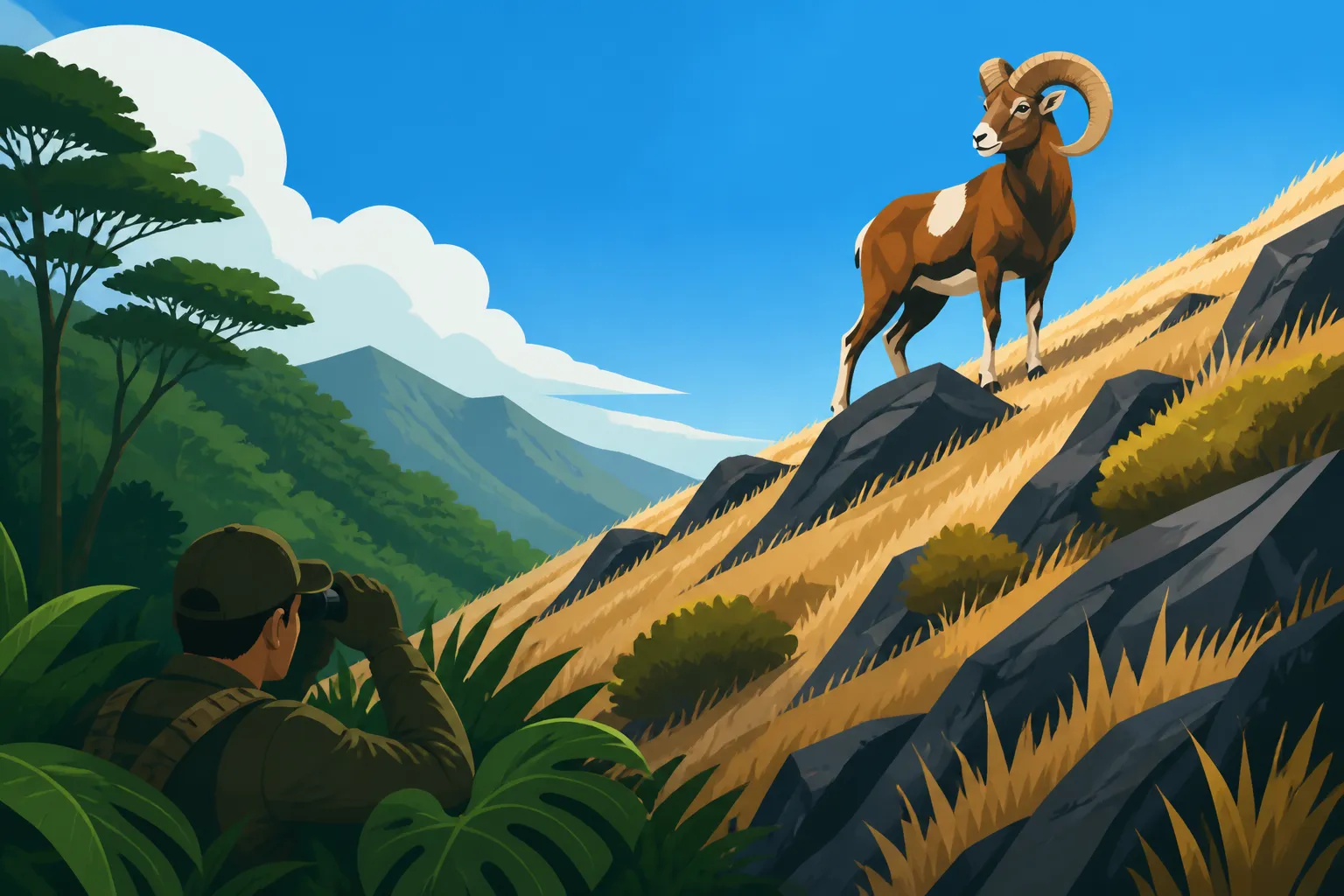
Why Mouflon Live Above the Tree Line
If you've ever gazed up at the towering volcanic slopes of Mauna Kea or Mauna Loa on Hawaii Island, you might wonder how any substantial game animal could possibly survive up there. It looks like a barren, windswept moonscape, often cloaked in clouds, yet it's precisely where Hawaii's mouflon sheep thrive. It's not just a preference; there are very real, compelling reasons why these magnificent animals choose to live above the tree line, facing incredible challenges in an environment that would quickly break most other creatures. This guide will take a deep dive into the unique world of Hawaii's high-elevation mouflon, exploring the ecological pressures, physiological adaptations, and behavioral strategies that make this stark habitat their chosen home.
The High-Altitude Haven: Understanding Hawaii's Mouflon Habitat
When we talk about hunting mouflon sheep on Hawaii Island, we're almost always talking about the high country, the zones above where the dense forests give way to more open, rocky, and often brutal terrain. This isn't just picturesque scenery; it's a critical environmental niche that the mouflon have come to dominate, largely due to a combination of climate, vegetation, and historical factors.
Why Mauna Kea is Different
Mauna Kea isn't just Hawaii's tallest mountain; it's a unique ecological island within an island. As you ascend its slopes, the lush, wet windward forests transition through dry, leeward mamane-naio woodlands, eventually giving way to vast expanses of cinder cones, lava flows, and sparse alpine grasslands. This extreme altitudinal gradient creates distinct zones, each with its own set of challenges and resources. For mouflon, the high slopes of Mauna Kea offer something that lower elevations simply can't: a refuge from certain pressures and a specific type of forage that they are uniquely adapted to utilize. This is where you'll be Hunting Mouflon in Mauna Kea's Thin Air. The air is thin, the sun is intense, and the nights are often frigid, sometimes even bringing snow. It's a land of extremes, and it shapes the very existence of these sheep.
Imagine walking up these slopes yourself, feeling the air thin out, noticing the sparse vegetation clinging to the rocks. It becomes clear very quickly that this isn't an easy place to live. Yet, the mouflon are not just surviving; they are flourishing in specific areas. Their population density might not be as high as axis deer on Maui, for example, but their presence is a testament to their incredible hardiness and adaptability to such a demanding environment.
The "Tree Line" Defined in Hawaii
The concept of a "tree line" in Hawaii, especially on volcanoes like Mauna Kea, isn't always as straightforward as in other parts of the world. It’s not necessarily a sharp, uniform boundary where all trees suddenly cease. Instead, it’s a gradual transition zone, heavily influenced by elevation, rainfall patterns, soil depth, and historical land use. On Mauna Kea, the tree line largely consists of the upper limits of the mamane-naio forest, a hardy dryland forest ecosystem. Above this, the landscape becomes increasingly barren, dominated by smaller shrubs, grasses, and lichens that can withstand the intense sun, high winds, and often freezing temperatures.
This elevation, often around 8,000 to 10,000 feet, marks a significant shift in the available habitat. Below it, the forest offers cover and different forage, but also potentially more dense vegetation that makes spotting threats or navigating difficult. Above it, while food might be sparser, the open terrain offers distinct advantages for an animal like a mouflon, which relies on its eyesight and agility to evade danger. Understanding this dynamic boundary is crucial when you are trying to find and pattern these animals, whether you are Glassing a Lava Flow for Mouflon Rams or simply observing their movements.
Survival Strategies: How Mouflon Thrive in Thin Air
It's one thing to exist above the tree line; it's another to truly thrive. Mouflon sheep, originally from Mediterranean islands, have adapted remarkably well to Hawaii's high volcanic slopes. Their survival in this extreme environment is a masterclass in resilience, combining specialized dietary habits with physiological and behavioral adjustments to the harsh climate.
Dietary Adaptations to Sparse Forage
Above the tree line, the plant life is tough, sparse, and often low-growing. Forget lush pastures; we're talking about hardy grasses, small shrubs, and various forbs that can cling to rocky slopes and weather extreme conditions. Mouflon are ruminants, equipped with a four-chamber stomach that allows them to efficiently digest fibrous plant material. This is a huge advantage in an area where quality forage can be hard to come by. They are not picky eaters in the way a deer might be, often browsing on whatever resilient vegetation they can find, including lichen and mosses growing on rocks during lean times. This opportunistic grazing allows them to extract nutrients from plants that other animals might pass over.
Particularly important are species like pukiawe and 'a'ali'i, which are common at these elevations and provide crucial browse. They also feed heavily on certain alpine grasses that manage to take root in pockets of cinder and ash. Knowing Where Mouflon Feed on Mauna Kea is key to locating them, and understanding their diet helps you appreciate how they extract sustenance from such a seemingly barren landscape. It's a testament to nature's efficiency that they can maintain their body mass and grow impressive horns, which, if you're lucky enough to see one, will have you Judging a Mouflon Ram's Horn Curl from a distance.
Behavioral Thermoregulation in Extreme Climates
The high elevations of Mauna Kea present a unique suite of climatic challenges: intense solar radiation during the day, strong winds that cut through any insulation, and plummeting temperatures at night, often dropping below freezing. Mouflon have developed several behavioral strategies to cope with these extremes.
- Sun and Shade: During the day, especially when the sun is beating down, mouflon will often seek out the scant shade offered by large boulders or the lee side of cinder cones. This helps them avoid overheating and conserves energy that would otherwise be spent on cooling.
- Wind Breaks: The constant winds at higher altitudes can rapidly strip away body heat. Mouflon are masters at finding natural windbreaks – dips in the terrain, the sheltered side of a ridge, or the protective cover of a lava flow. These microclimates offer significant relief from the relentless gusts.
- Nocturnal Activity: While they are primarily diurnal (active during the day), their activity patterns can shift depending on temperature and lunar cycles. On warmer nights, they might graze, but during cold periods, they'll often bed down in sheltered spots to conserve heat.
- Seasonal Movements: While generally inhabiting the high country year-round, severe storms or prolonged cold spells can push mouflon to slightly lower elevations, usually remaining within the upper reaches of the mamane forest, to find more shelter or accessible forage.
Their dense coats provide excellent insulation against the cold, and their dark coloring helps absorb solar radiation, which can be beneficial on cold, sunny days. This combination of physical attributes and smart behavior allows them to navigate the dramatic temperature swings and environmental harshness of their alpine home.
Predator Avoidance and Human Pressure
One of the most compelling reasons for mouflon to inhabit the higher, more exposed elevations is the relative lack of natural predators and the ability to detect threats, both animal and human, from a great distance. This strategic advantage profoundly influences their habitat selection.
Escaping Terrestrial Threats
Hawaii's ecosystem is unique in that it lacks large native terrestrial predators. However, introduced predators like feral dogs can pose a significant threat to game animals, especially to lambs and even adult sheep in certain areas. Feral pigs are also present at lower elevations and, while not direct predators of adult mouflon, they can impact forage resources and create disturbances. The dense, brushy terrain at lower altitudes provides ample cover for these predators, making it easier for them to ambush prey.
By contrast, the open, expansive landscapes above the tree line offer mouflon an unparalleled advantage: visibility. From a high vantage point, a mouflon ram can spot potential threats approaching from miles away. This early detection allows them ample time to react, whether by moving to an even higher, more inaccessible ridge or simply fleeing to safety. The broken, rocky terrain also presents a challenge for dogs, whose paws are not as adapted to the sharp, uneven surfaces as the mouflon's hooves. This natural defense mechanism is a key factor in why these sheep choose to make the upper slopes their home.
Minimizing Human Interaction
While feral animals are a concern, for many game species in Hawaii, humans are the primary "predator." The remote, rugged, and often difficult-to-access high country naturally deters many hunters. While dedicated hunters will go Hunting Mouflon on Hawaii's Highest Slopes, the sheer physical exertion, the thin air, and the challenging terrain mean that the hunting pressure is generally less intense than in more accessible lowland units.
Many public hunting areas for mouflon require significant physical effort to reach, often involving long walks, steep climbs, and navigation over unforgiving lava fields. This natural barrier provides a sanctuary, allowing mouflon to live with less constant disturbance. This isolation is a double-edged sword: it protects them, but it also means that hunters who do pursue them must be well-prepared and fit. The use of certain hunting methods, such as archery or muzzleloader, which may be restricted to certain seasons or units like Hunting Lanai's Mouflon Muzzleloader Days, can also play a role in how and when these animals are pursued, further contributing to varying levels of human pressure. Even for those using more modern methods, the terrain itself is a formidable obstacle.
Ecological Dynamics: Mouflon's Role in High-Elevation Ecosystems
Mouflon, like all introduced ungulates in Hawaii, have an impact on the ecosystems they inhabit. Understanding their role, both positive and negative, helps paint a complete picture of why they live where they do and what that means for the broader Hawaiian environment.
Impact on Native Vegetation
The high-elevation ecosystems of Mauna Kea are home to some unique and often fragile native plant species, many of which are adapted to the harsh conditions but are not necessarily adapted to grazing pressure from large mammals. Mouflon, as herbivores, certainly exert pressure on these plant communities. They browse on mamane and naio, which are keystone species in these dryland forests, and they graze on various alpine grasses and forbs.
However, the impact varies. In areas where populations are managed through hunting, the grazing pressure can be somewhat mitigated. In other areas, particularly those with higher sheep densities, their browsing can hinder the regeneration of native plants, potentially altering the species composition of the landscape over time. This is a complex ecological dance, and efforts are often made to balance hunting opportunities with the conservation of native flora. The health of certain native plant communities, like the mamane forest, is critical, as highlighted in topics like What Mamane Trees Mean to Mauna Kea, and continuous monitoring helps assess the mouflon's impact.
Coexistence with Other Introduced Ungulates
Mouflon don't live in total isolation. While their preference for the extreme high-elevation rocky terrain minimizes direct competition with some other species, they do overlap with others, particularly feral sheep and, in some areas, feral goats. The interaction between mouflon and feral sheep is particularly interesting, as they can interbreed, leading to Mouflon and Feral Sheep Hybrids. This hybridization can affect the genetic purity of the mouflon population and introduce different traits into the gene pool.
Feral goats, while generally favoring steeper, more arid coastal or canyon country, can also be found in high-elevation areas that offer similar rugged, open conditions. However, the precise niche partitioning often keeps direct competition for forage and space to a minimum. Mouflon typically prefer the more open, grassy to sparse shrublands of the cinder cones and lava flows, while goats might be found in slightly different, often even steeper, cliff-like terrains. This subtle difference in habitat preference allows for a degree of coexistence, even as all these introduced ungulates exert pressure on Hawaii's unique and often vulnerable ecosystems.
When considering a hunt for mouflon, or any other game animal in Hawaii, it's helpful to understand these interconnected dynamics. It's not just about the animal you're pursuing; it's about the entire tapestry of life in these islands, both native and introduced, and how they all interact within these extraordinary landscapes. Tools like the GoHunt platform can often provide insights into unit-specific regulations that might impact how these various species are managed and where you can find them.
Mouflon Habitat and Adaptation Overview
| Feature | High-Elevation Habitat (Above Tree Line) | Mouflon Adaptation | Benefit for Mouflon |
|---|---|---|---|
| Terrain | Open lava flows, cinder cones, rocky ridges | Strong hooves, agile climbing | Easy movement, escapes predators, good vantage |
| Vegetation | Sparse, low-growing grasses, shrubs, lichens | Efficient ruminant digestion, opportunistic feeder | Utilizes marginal forage, less competition |
| Climate (Day) | Intense sun, high UV | Dark coat absorbs heat, seeks shade | Manages body temperature, conserves energy |
| Climate (Night) | Freezing temperatures, strong winds | Dense insulating coat, seeks windbreaks | Stays warm, conserves energy |
| Predators/Threats | Fewer terrestrial predators (e.g., feral dogs) | Excellent eyesight, wide visibility | Early detection of threats, increased survival |
| Human Pressure | Remote, difficult access | Avoids crowded areas, less disturbance | Reduced hunting pressure, sanctuary from humans |
This table summarizes how the unique conditions above Hawaii's tree line align perfectly with the mouflon's adaptations, creating a strong survival advantage in this challenging environment.
Disclaimer
This article is for general informational purposes only and does not constitute professional advice. Laws, prices and regulations vary by location and change over time. Consult a qualified professional for guidance on your specific situation.