How Axis Deer Herds Are Structured
One of the biggest head-scratchers for new hunters in Hawaii, or even seasoned folks from the mainland, is figuring out Axis deer. They don't behave quite like the deer you might be used to, and that often leads to frustration when you're trying to pattern them. Understanding how Axis deer herds are structured here in the islands is absolutely crucial to knowing where to focus your efforts and why these beautiful animals move the way they do. This guide will peel back the layers on their social world, giving you the insights you need to think like an Axis deer.
The Basics of Axis Deer Social Dynamics in Hawaii
If you've spent any time hunting whitetails or mule deer on the mainland, you're probably used to very distinct patterns of behavior tied to the seasons. You know when the rut hits, when bachelor groups form, and when does are pushing off yearlings. With Axis deer in Hawaii, you need to throw a lot of those assumptions out the window. Their social dynamics are influenced by their unique history here and the year-round mild climate, creating a much more fluid and less predictable structure.
Why Axis Deer Aren't Like Mainland Deer
The first thing to understand is that Axis deer (or Chital, as they're known in their native India) evolved in a tropical environment without the dramatic seasonal changes that dictate breeding cycles for temperate deer species. This fundamental difference means their biological clocks tick differently. Unlike the rigid, short breeding seasons of many mainland deer, Axis deer in Hawaii can breed year-round. This continuous reproductive cycle means there isn't a single, intense rut period where bucks are singularly focused on breeding, leading to a breakdown of traditional antler cycles and social structures seen elsewhere.
Imagine a whitetail forest in November, where all the big bucks are chasing does, and then in January, they've shed their antlers and are starting to group up. That's a clear, seasonal playbook for hunters. With Axis, you might see a hard-horned buck chasing a doe, another buck in velvet, and a third with shed antlers all in the same week, in the same general area. This constant state of flux makes reading their sign and predicting their movements a constant challenge, but also offers unique opportunities since there's always some rut activity happening. If you're keen to learn more about these fascinating animals, check out our guide on Axis Deer, Hawaii's Signature Big Game.
The Year-Round "Rut" and Its Influence on Herds
Because there isn't one defined rut, the concept of a "rutting herd" is a bit different for Axis deer. Instead, you have individual bucks coming into rutting condition at various times throughout the year. This means you won't typically see huge aggregations of mature bucks all battling it out for dominance during a specific window. Instead, buck groups are more transient, with individuals joining and leaving as their hormonal cycles dictate. A buck might be in hard velvet one month, shed his antlers the next, and then be growing new ones two months after that. This means you might spot a trophy-caliber buck in full velvet while his buddy next to him is already hard-horned and chasing does.
This constant, staggered breeding activity impacts the stability of buck groups significantly. While groups of bucks will form, they are rarely as stable or as large as the bachelor groups you'd find with whitetails outside the rut. A particular challenge is understanding Why Axis Deer Rut Timing Is Different from what many hunters expect. When a doe comes into estrus, she attracts bucks from nearby, but this attraction is localized and temporary, rather than a widespread, seasonal event. This creates opportunities for smaller, more intimate interactions between individual bucks and does, rather than massive, predictable gatherings.
The Different Groups You'll Encounter in the Field
When you're out scouting or hunting, you'll generally observe Axis deer forming into a few distinct types of groups, though these groups are often fluid and can merge or break apart depending on factors like food availability, water, safety, and breeding activity. Recognizing these different group types can help you anticipate their behavior and improve your hunting strategy.
Doe and Fawn Groups (Maternity Herds)
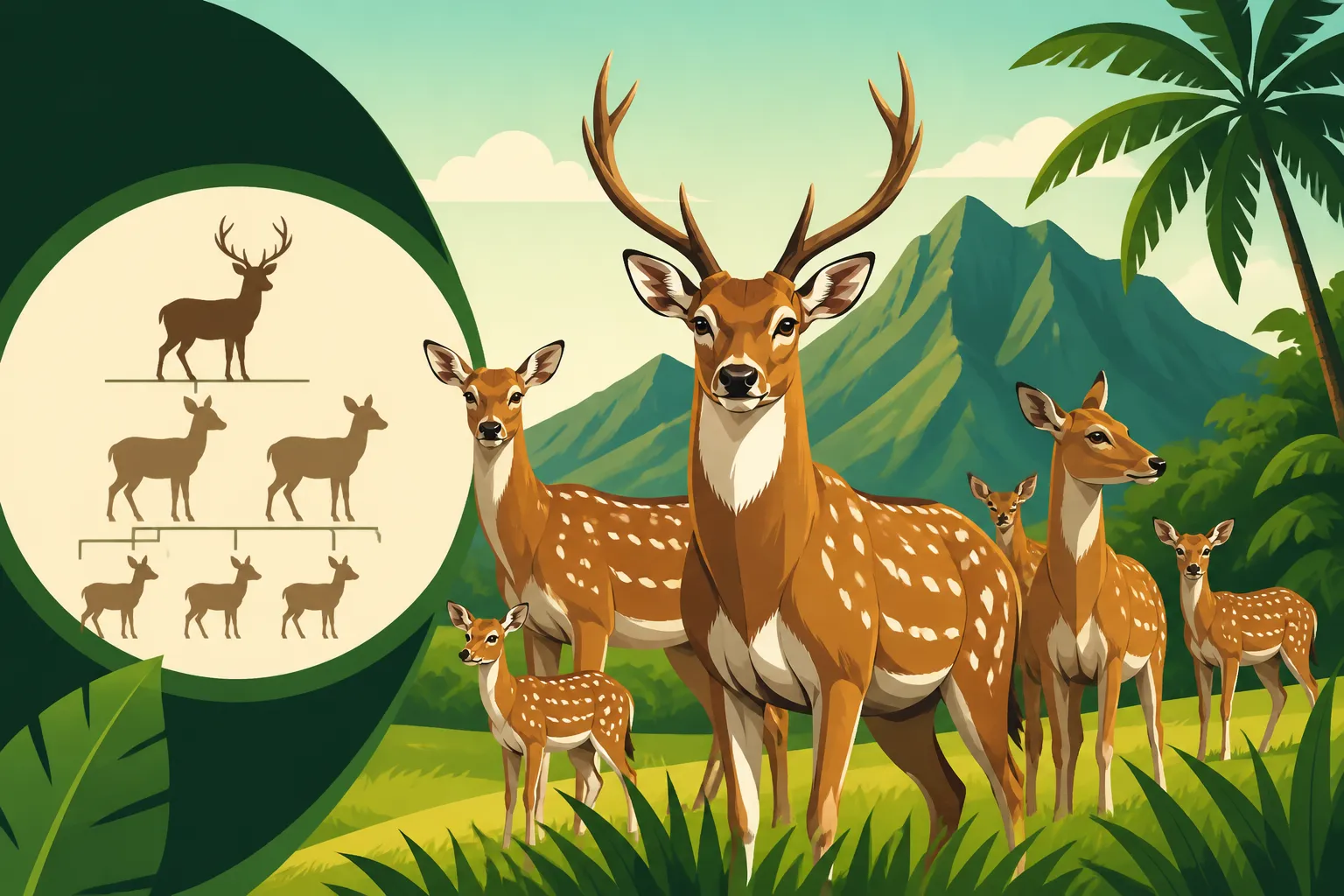
These are arguably the most stable social units among Axis deer. Often referred to as "maternity herds," these groups are primarily composed of adult does, their fawns, and sometimes yearling does from previous births. They tend to be led by an older, experienced doe who knows the best feeding grounds, water sources, and escape routes. These groups can range in size from just a few animals to several dozen, particularly in areas with abundant resources and lower hunting pressure.
Within these doe and fawn groups, you'll see strong social bonds, with older does often acting as guardians for younger, vulnerable fawns. Their primary focus is usually feeding and raising their young. They will bed down together, move together, and display collective vigilance against perceived threats. When spooked, these groups often move as a cohesive unit, following their leader to known safe havens. Hunters often find that understanding these groups is key, as a rutting buck will often seek out these doe groups. Learning to differentiate their tracks and droppings is a part of Reading Axis Deer Sign in Dry Country. You might find these larger female aggregations especially pronounced on private ranch lands or in less-pressured public units, as they feel safer in numbers.
Bachelor Groups of Bucks
Bachelor groups are where the dynamics get a bit more complex. These are usually smaller, less stable groupings of male deer, often ranging from two to ten individuals, though sometimes more. Unlike mainland deer, where bachelor groups consist of bucks in similar antler growth stages, Axis deer bachelor groups in Hawaii can be a real mix. You might see a mature, hard-horned buck alongside a younger buck still in velvet, or one that has recently dropped his antlers and is beginning a new cycle. This reflects the asynchronous breeding cycle.
These buck groups typically focus on feeding, sparring (which helps establish dominance hierarchies), and resting. They are often more alert and cautious than doe groups, especially if they include older, wiser bucks. The composition of these groups can change daily; a buck might leave to pursue an estrus doe and then rejoin his companions, or move to another group entirely. Observing their sparring rituals is a good way to gauge the health and competitiveness of the local buck population. Knowing What an Axis Buck Weighs helps set expectations when pursuing these animals. The platform, GoHunt, often has resources or maps that can show popular hunting units where you might find these bachelor groups, helping you narrow down your search.
Solitary Bucks and Older Males
While Axis deer are generally social animals, you'll also encounter solitary bucks, particularly older, more dominant males or those that have been pushed out of a group. These lone rangers are often the most challenging to hunt, precisely because they are alone and have learned to be incredibly wary. An older, mature buck that has survived several hunting seasons might choose to spend a good portion of his time by himself, only joining doe groups when a breeding opportunity arises or briefly linking up with a bachelor group for feeding.
These solitary bucks are often seeking out thick cover or secluded spots, only venturing into more open areas during low light conditions or when feeling less pressured. They are masters of using the terrain to their advantage, slipping through dense vegetation like kiawe or deep gulches almost unseen. Hunting these animals often requires extreme patience, stealth, and a keen eye for subtle sign. Learning Judging an Axis Buck's Antlers in the Field is critical if you encounter a lone, impressive animal. Sometimes, a seasoned hunter will tell you that the biggest Axis bucks on Molokai or Maui are often found away from the main herds, having earned their solitude through cunning and experience.
The Impact of Environment and Hunting Pressure on Herd Structure
The structure and behavior of Axis deer herds in Hawaii aren't just dictated by their biology; they are heavily influenced by the environment they live in and the pressure they experience from hunters. These external factors can cause significant shifts in group sizes, locations, and overall patterns, making it essential for hunters to adapt their strategies.
How Food and Water Availability Dictate Movement
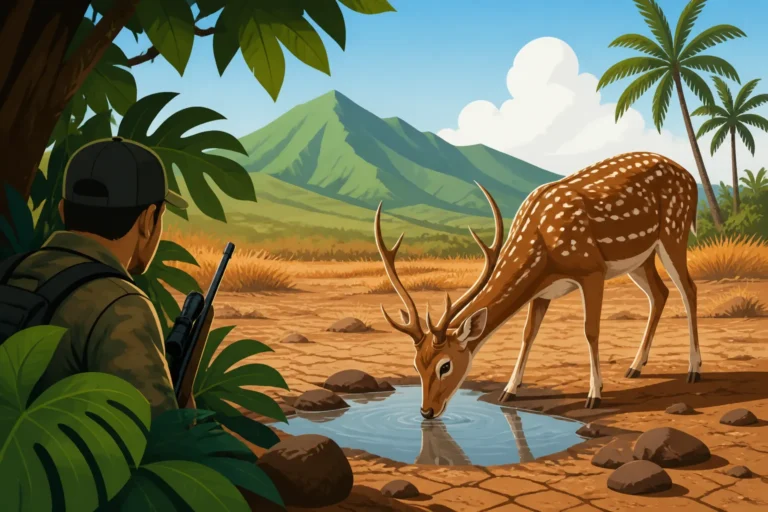
Hawaii's varied landscape, from arid leeward slopes to lush, wet forests, directly impacts where Axis deer congregate. In dry country, like much of Maui's leeward side or vast stretches of Lanai, water is a precious commodity. During dry seasons, Axis deer will naturally concentrate around reliable water sources such as stock ponds, seeps, or deep gulches that retain moisture. This forces smaller, fragmented groups to merge, leading to larger, albeit temporary, herds gathering near these essential resources. This can be a boon for hunters who know where to find these crucial water points.
Conversely, in areas with more widespread food and water, such as wetter valleys or areas benefiting from recent rains, deer can spread out more. This allows for smaller, more dispersed groups as animals don't need to compete for limited resources. Understanding how these factors play out is key to finding them. For example, if you're hunting in a drought year, knowing that deer will be tied to a water source is far more important than if it's been a wet season and they can find moisture everywhere. Resources like GoHunt can help you understand the terrain and locate potential water sources or food plots that might concentrate deer. This focus on water sources is similar to Hunting a Water Source in Dry Hawaii Country.
The Role of Terrain and Cover in Shaping Groups
The physical landscape of Hawaii also plays a huge role in how Axis deer herds are structured. In vast, open grasslands or fields, you might see much larger groups of deer. These expansive areas allow deer to see threats from a distance, and there's less need to break into smaller units for navigation or concealment. Spot-and-stalk hunting in these environments often involves identifying a large group and then carefully planning an approach.
However, once you move into denser vegetation, like the notoriously thick kiawe forests or steep, brushy gulches, herd structure changes dramatically. These dense environments naturally fragment larger groups into smaller, more intimate pockets. Deer will use these areas for bedding, escape, and concealment. A large doe group might split into several smaller ones as they navigate a tangled kiawe flat, making it feel like there are fewer deer than there actually are. Hunting these areas requires different tactics, often involving still-hunting or methodical pushes. If you find yourself in such an environment, our article on Hunting a Kiawe Flat for Axis Deer might offer some useful pointers. Understanding Hunting Hawaii's Dry Kiawe Forest is crucial for success here.
Hunter Pressure and Herd Fragmentation
Perhaps one of the most significant external factors shaping Axis deer herd structure, especially on Hawaii's smaller islands and more accessible public lands, is hunting pressure. When a unit sees consistent hunting activity, deer become warier, more nocturnal, and often break down into smaller, more elusive groups. This is particularly true for older, more experienced bucks. They learn quickly to avoid large, open areas during daylight hours and to utilize the densest cover available.
High pressure can lead to what we call "herd fragmentation," where deer that might typically group up will instead scatter or form into smaller, more wary units. This is a common phenomenon in highly-hunted public areas, where deer are constantly being pushed and disturbed. This makes them much harder to pattern and predict. It's why a hunter might walk into a unit on opening weekend and see a large herd, only to return a week later and find only scattered singles or pairs. Understanding What Hunting Pressure Does on Small Islands is absolutely essential for adapting your approach. Sometimes, the best strategy in pressured areas is to focus on less accessible terrain, or to hunt midweek when crowds are thinner, leveraging digital tools like GoHunt to check unit opening days or potential closure announcements.
Axis Deer Herd Structure Comparison
To give you a clearer picture, here's a quick comparison of the general characteristics you might find in the different Axis deer groups in Hawaii:
| Feature | Doe & Fawn Groups (Maternity Herds) | Bachelor Groups (Bucks) | Solitary Bucks (Older/Dominant) |
|---|---|---|---|
| Typical Size | 5-50+ individuals | 2-10 individuals | 1 individual |
| Stability | Generally stable, especially core family units | Fluid, individuals join/leave frequently | Very stable, intentionally isolated |
| Primary Focus | Feeding, fawning, security | Feeding, sparring, seeking does | Survival, breeding opportunities |
| Vigilance | High collective vigilance | High, especially with older bucks present | Extremely high, very cautious |
| Antler State | N/A | Mixed (velvet, hard horn, shedding, growing) | Mixed, often hard-horned or recently shed |
| Habitat Use | Varied, seeks good feed & cover | Varied, seeks feed, spar areas, near does | Seeks dense cover, secluded spots |
| Predictability | More predictable in movement to resources | Less predictable, can shift rapidly | Least predictable, highly elusive |
This table isn't set in stone, as deer are wild animals, and exceptions always exist. But it provides a solid framework for how to interpret what you're seeing in the field. Ultimately, becoming a successful Axis deer hunter in Hawaii means becoming a keen observer, constantly analyzing the terrain, understanding the available resources, and adjusting your expectations for herd structure based on the specific conditions of your hunt.
Disclaimer
This article is for general informational purposes only and does not constitute professional advice. Laws, prices and regulations vary by location and change over time. Consult a qualified professional for guidance on your specific situation.