What Hawaii’s Kalij Pheasant Looks Like
Many hunters planning a trip to Hawaii understandably focus on the larger game animals like axis deer or feral pigs, often overlooking the incredibly rewarding experience of upland bird hunting. But if you're like many folks, you might not even know what kinds of pheasants call these islands home, let alone how to tell them apart in the dense cover. This guide is dedicated to painting a clear picture of the Kalij pheasant, a truly striking bird that offers an exciting challenge, ensuring you can identify it confidently when you encounter one in Hawaii's unique landscapes.
The Distinctive Appearance of the Kalij Pheasant
When you're slogging through the damp, tangled undergrowth of a Hawaiian forest, spotting a game bird can be a fleeting moment. But with a keen eye, the Kalij pheasant reveals itself with some truly unique visual cues that set it apart. They aren't just 'another brown bird'; there's a definite elegance to their form, especially the males. Knowing what to look for can make all the difference between a missed opportunity and a successful hunt.
Males: The Black and Blue Beauty
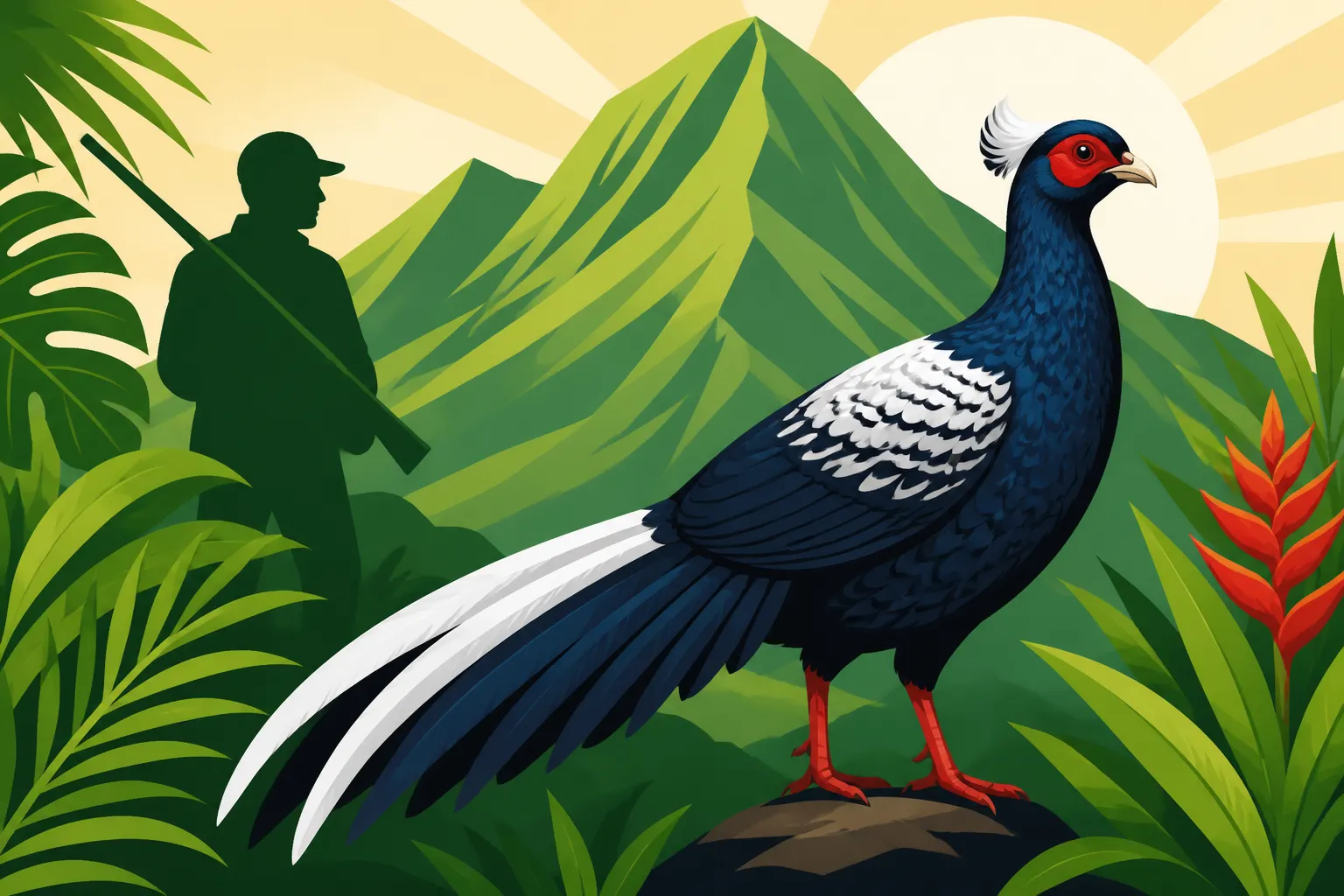
The male Kalij pheasant, often simply called a "cock," is quite the showstopper. If you see a dark, pheasant-like bird with a rich, almost purplish-blue sheen to its plumage, you've likely found your target. Their bodies are predominantly a deep, glossy blue-black, which can sometimes appear almost charcoal in certain lighting conditions, but always with that iridescent metallic quality. This dark body contrasts sharply with a bright, crisp white rump patch. This white patch is a key identifier and can really pop when the bird is in flight or when it slightly spreads its tail.
Another unmistakable feature of the male Kalij is its face. Surrounding their eyes, they have prominent, featherless crimson-red wattles. These vivid red patches stand out dramatically against their dark head and provide an immediate recognition point. Their crest, a tuft of feathers on the crown of their head, is typically dark and blends with the head plumage. Their tail feathers are generally shorter and more rounded than, say, a Ring-necked Pheasant, usually a dark, barred pattern that matches the body tones. Observing these beautiful birds in their natural habitat, often scratching through the leaf litter, is a sight to behold, even before the flush.
Females: Camouflage in the Undergrowth
While the males are designed to attract, the female Kalij pheasant, or "hen," is built for discretion. Her plumage is a masterclass in camouflage, allowing her to blend seamlessly into the dense, dappled light of the Hawaiian forests where they thrive. You won't find the flashy blues or the bright red wattles here. Instead, hens are a more subdued, earthy brown, often with subtle mottling and barring in lighter shades of brown and tan across their feathers. This pattern helps them disappear into the ferns, fallen leaves, and thick undergrowth, making them a much harder target to spot.
Despite their drabber coloring, there are still ways to identify a hen Kalij. Look for the general pheasant shape – a relatively robust body with a somewhat elongated neck and tail, though her tail will be shorter than a male's and less dramatic than a Ring-necked hen's. Sometimes, a very faint hint of the male's dark head coloration can be present, but it's usually just a darker shade of brown, not the iridescent blue-black. Their legs are typically a dark gray, and their bills are horn-colored. When a hen bursts from cover, she often flies lower and less flamboyantly than a male, adding to the challenge of positive identification. It’s all about looking for that classic pheasant silhouette and the right, camouflaged coloration in her environment.
Distinguishing Kalij from Other Hawaii Game Birds
Hawaii is home to a variety of introduced game birds, and while they each have their preferred niches, there can be overlap, especially for the untrained eye. Knowing the specific characteristics of the Kalij pheasant is crucial not just for identification, but also for adhering to Hawaii Game Bird Bag Limits and regulations. It’s not uncommon for hunters to confuse them with other species, particularly in the excitement of a flush.
Kalij vs. Ring-necked Pheasant
This is perhaps the most common identification challenge for pheasant hunters in Hawaii. Both are pheasants, but their appearances are quite different once you know what to look for.
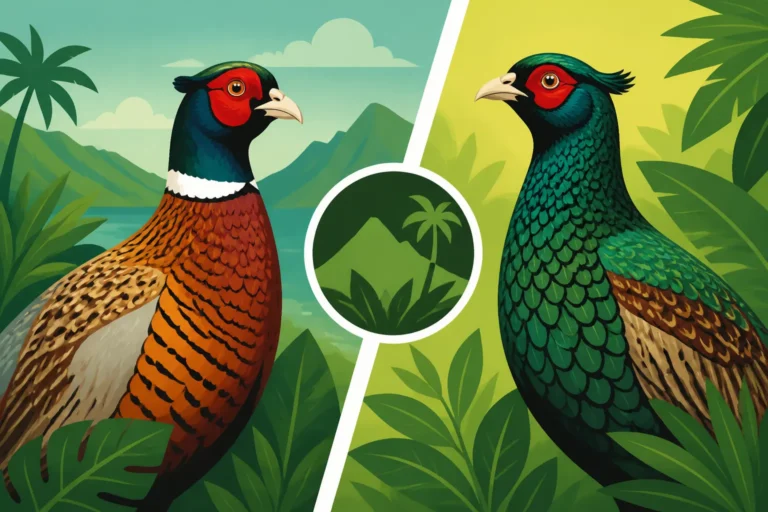
The male Ring-necked Pheasant (often simply "Ringneck") is significantly flashier and more colorful than the Kalij. Instead of the deep blue-black body, the male Ringneck boasts a vibrant, iridescent green head, a distinct white ring around its neck (hence the name), and a body that's a mix of golden-brown, copper, and purplish hues, often with intricate black barring. Its tail is also much longer, often exceeding half the bird's total length, and is striped with dark bands. When a Ringneck male takes flight, that long, pointed tail is unmistakable.
Female Ring-necked pheasants are also different from Kalij hens. While both are camouflaged, the Ringneck hen tends to be a lighter, more buff-brown color, often with darker mottling, but generally lacks the richer, darker tones you might see on a Kalij hen. Her tail is also noticeably longer than a Kalij hen's, though not as exaggerated as the male's. The key takeaway is the overall color palette: Kalij are dark blue/black (males) or darker brown (females), while Ringnecks are much more colorful with green heads and prominent white neck rings (males) or lighter buff-brown (females) with very long tails.
Kalij vs. Francolin Species
Hawaii hosts several species of francolin, including the Erckel's, Gray, and Black Francolin. These birds are generally smaller and more quail-like than pheasants, but they can still be confused, especially in dense cover where only a brief glimpse is possible. Francolins are more compact, with shorter, stubbier tails, and tend to run more often than flush.
The Erckel's Francolin, for example, is a popular game bird often found in similar wet forest edges or grassy areas. Its males and females are quite similar in appearance, featuring a distinctive chestnut belly, mottled brown and gray plumage on the back, and a streaky brown and white head pattern. They have prominent yellow-orange legs. This is a stark contrast to the Kalij's dark blue-black or rich brown and dark gray legs. Another key difference is size; francolins are usually smaller and stockier than Kalij pheasants.
Gray Francolin are even smaller, with a more muted gray and brown pattern and a rusty throat patch. Black Francolin are characterized by a black belly and chest, and white spots on their flanks, again distinctly different from the Kalij. When you're in the field, it's about paying attention to the overall size, body shape, tail length, leg color, and the dominant colors and patterns of the plumage. If you are hunting in a unit where both might be present, carrying a small field guide or checking online resources like GoHunt can be incredibly helpful. You want to make sure you're targeting the right species for the season.
Here’s a quick visual comparison table to help differentiate the male birds at a glance:
| Feature | Kalij Pheasant (Male) | Ring-necked Pheasant (Male) | Erckel's Francolin (Male) |
|---|---|---|---|
| Primary Color | Deep glossy blue-black | Iridescent green head, golden-brown body | Mottled brown/gray, chestnut belly |
| Head/Face | Red facial wattles, dark crest | Red facial wattles, green crest, white collar | Streaky brown/black, white throat |
| Rump | Prominent white patch | Variable, often barred brown | Blends with back |
| Tail Feathers | Shorter, dark, slightly curved, barred | Very long, pointed, distinctly barred | Very short, stubby |
| Legs | Dark gray | Dark gray | Bright yellow/orange |
| Size | Medium (similar to a domestic chicken) | Larger, more elongated | Smaller, stockier (partridge-like) |
Kalij Pheasant Habitat and Behavior Clues
Knowing what a Kalij pheasant looks like is only half the battle; understanding where they live and how they behave can greatly increase your chances of finding them. These birds aren't just pretty faces; they are adaptable and cunning, perfectly suited to the challenging environments they inhabit in Hawaii. When you're out there, pay attention not just to what you see, but what you hear and what the landscape tells you.
Where to Find Their Feathered Trails
Kalij pheasants are creatures of cover, particularly favoring the dense, wet forest environments found on islands like Hawaii Island and Maui. You'll often find them in areas with a thick understory, such as guava thickets, fern gulches, and the edges of larger forest reserves where there’s plenty of low-lying vegetation to provide both food and concealment. They thrive in these areas because the dense foliage offers protection from predators and ample foraging opportunities, often scratching around in the leaf litter for seeds, insects, and small fruits. Where Kalij Pheasant Live in Wet Forest goes into more detail about these specific locations.
Look for their sign along old logging roads, game trails, or the fringes of agricultural clearings where the forest begins to take over. They love areas where wet forest meets more open ground, providing a buffet of food sources and quick access to thick escape cover. Early mornings and late afternoons are prime times to spot them, as they tend to be most active when foraging. You might see dust baths in dry patches, or faint tracks in soft dirt or mud, indicating their presence. Unlike some other game birds that prefer open grasslands, Kalij pheasants are true forest dwellers, often requiring hunters to venture into thicker, more challenging terrain. This means getting comfortable with pushing through tangles of vegetation and having patience.
Vocalizations and Alert Behavior
Kalij pheasants, like many game birds, have a distinct set of vocalizations that can betray their presence, even when you can't see them. The males have a surprisingly loud and somewhat harsh crowing call, especially at dawn and dusk, which can sometimes be heard echoing through the forest. It's not as piercing as a Ring-necked pheasant's cackle, but it's certainly attention-grabbing. Listen for this call, as it can often pinpoint a male's general location.
When alarmed, both males and females will often let out a series of sharp, clucking or cackling calls as they flush. This can be startling, especially if you're deep in quiet woods, and it's their way of alerting other birds to potential danger. They are typically quick to flush once disturbed, often bursting explosively from cover with rapid wing beats and then gliding away through the trees. However, if they feel less threatened or are in exceptionally dense cover, they might also choose to run rather than fly, slipping silently through the undergrowth. A good bird dog can be invaluable in these situations, helping to locate and flush birds that might otherwise remain hidden. Using a Bird Dog in Hawaii Terrain discusses how to work with dogs in these challenging conditions.
Why Visual Identification Matters in the Field
Hunting in Hawaii is a privilege that comes with the responsibility of understanding and adhering to local regulations. Correctly identifying your target species is not just about bragging rights; it's a fundamental aspect of ethical hunting and effective wildlife management. The state's Department of Land and Natural Resources (DLNR) Division of Forestry and Wildlife (DOFAW) has specific rules for each game animal, and mistaking one species for another can lead to serious consequences.
Bag Limits and Species-Specific Rules
Hawaii's hunting regulations are clear: different species have different rules. This applies directly to bag limits, which specify how many of a particular species you can harvest in a day or during a season. For example, the bag limit for Kalij pheasants might differ from that of Ring-necked pheasants or various francolin species. Taking the wrong bird, even accidentally, can result in a violation. Hunters are expected to know what they are shooting at before pulling the trigger.
These regulations are put in place for a reason – to manage populations, ensure sustainable hunting opportunities, and protect non-target species. Having a solid understanding of Hawaii Game Bird Seasons and Bag Limits before you head out is paramount. Check the current regulations on the official GoHunt Hawaii website or through their application to ensure you have the most up-to-date information for your specific hunting unit and island. It can change year to year, so always confirm before your hunt. This attention to detail not only keeps you on the right side of the law but also ensures the health of Hawaii's game bird populations for future generations of hunters.
Ethical Hunting and Conservation
Beyond the legal implications, positive identification speaks to the core principles of ethical hunting. Responsible hunters take the time to learn their quarry, understand its ecology, and ensure they are targeting only legal animals within legal parameters. This includes being able to tell a protected species from a game species, and differentiating between two similar game species that may have different seasons or bag limits. Kalij pheasants are an introduced species in Hawaii, meaning they are not native to the islands, and are managed as game animals. However, this doesn't mean indiscriminate hunting; it means managing them within a framework that supports both hunting opportunities and the broader ecosystem.
Conservation in Hawaii is a complex issue, often involving the management of introduced species to protect fragile native ecosystems. By precisely identifying the Kalij pheasant, you're contributing to this management effort. You're ensuring that your harvest aligns with the state's conservation goals, which might involve focusing hunting pressure on certain introduced species that are more abundant, while leaving others to flourish. Being able to correctly identify the Kalij pheasant is a skill that comes with experience and preparation, fostering a deeper connection to the land and the animals you pursue. It’s a part of becoming a true steward of Hawaii’s unique and precious natural resources.
Disclaimer
This article is for general informational purposes only and does not constitute professional advice. Laws, prices and regulations vary by location and change over time. Consult a qualified professional for guidance on your specific situation.